




















Sound absorption – reduces echoes and reverberation in the office
A more focused and professional acoustic environment in the office
In office environments, sound absorption is often the most effective measure for reducing echoes and creating a functional acoustic environment. Modern offices are characterized by open floor plans, glass partitions, hard floors, and a scarcity of soft surfaces. This causes sound to reflect between walls, ceilings, and furnishings, leading to prolonged reverberation, increased noise levels, and a less conducive work environment. With the right sound-absorbing solutions, acoustics can be significantly improved, creating better conditions for concentration, conversation, and collaboration.
What is sound absorption?
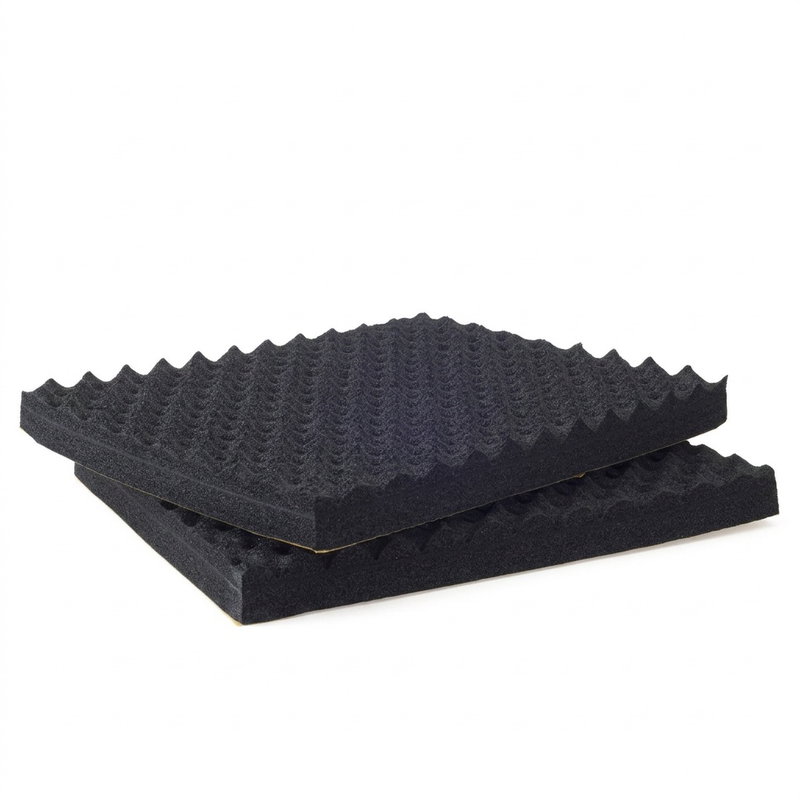
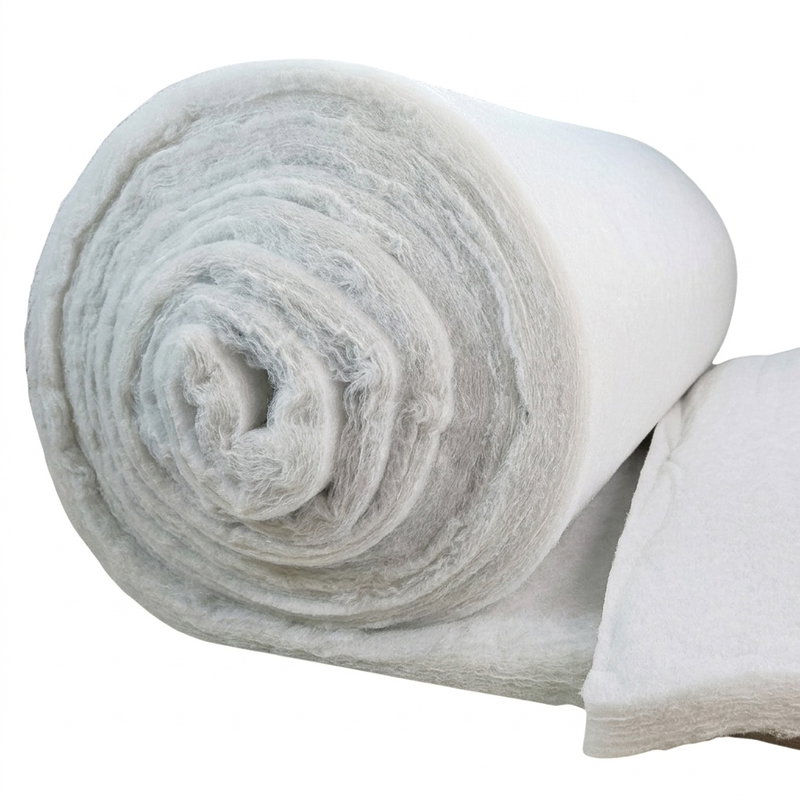
Sound absorption means that sound waves are captured by porous materials and converted into thermal energy, which reduces reflections in the room. This differs clearly from sound insulation, which aims to prevent sound from spreading between rooms, and vibration damping, which reduces vibrations and structure-borne noise from, for example, installations and technical equipment. Sound absorption is thus used to improve the acoustics in the room where the sound originates, not to stop sound leakage.
Common problems with echo and reverberation in offices
Echo and long reverberation are common in open-plan offices, meeting rooms, hallways, and common areas. Conversations blend together, background noise is perceived as stressful, and concentration suffers. In environments where phone calls, video conferences, and collaboration are part of daily life, poor acoustics can quickly have a negative impact on both efficiency and the work environment.
How sound-absorbing solutions work
Sound-absorbing products are placed on surfaces where sound reflections are strongest. When sound waves hit the absorbent material, they are slowed down, which shortens the reverberation time and creates a more controlled sound environment.
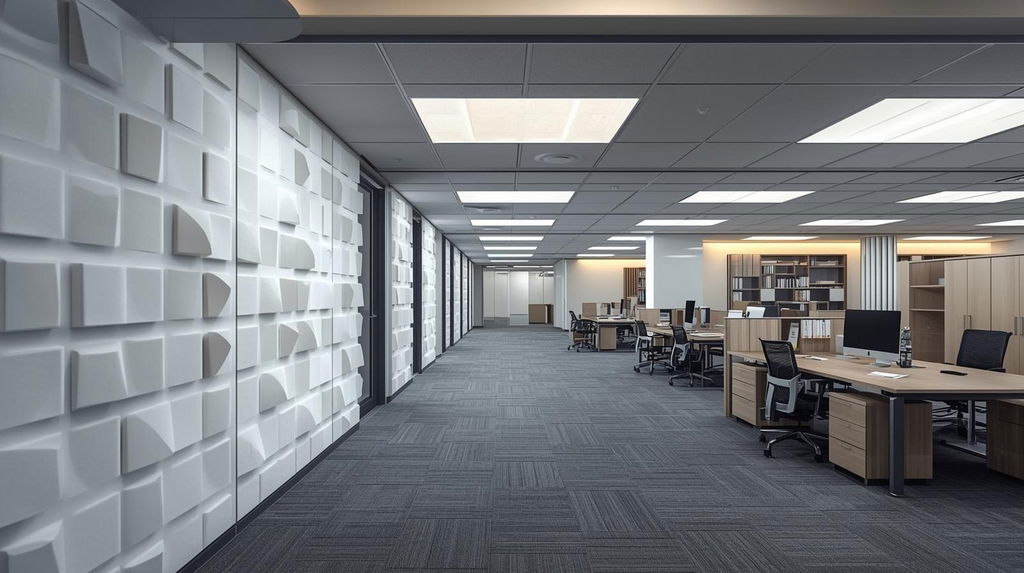
Sound absorption on walls
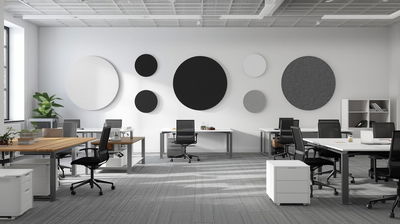
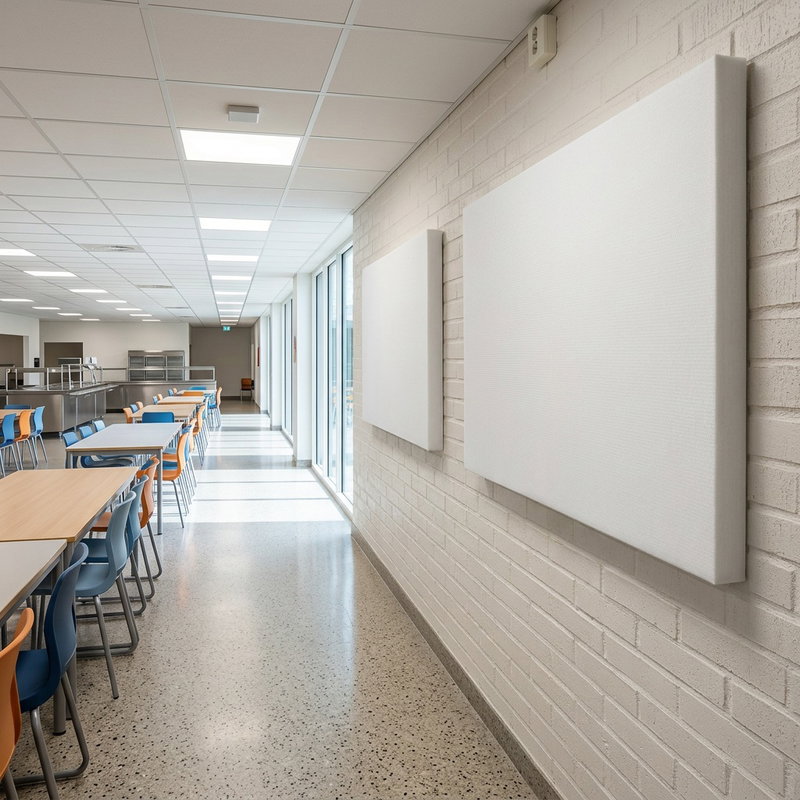
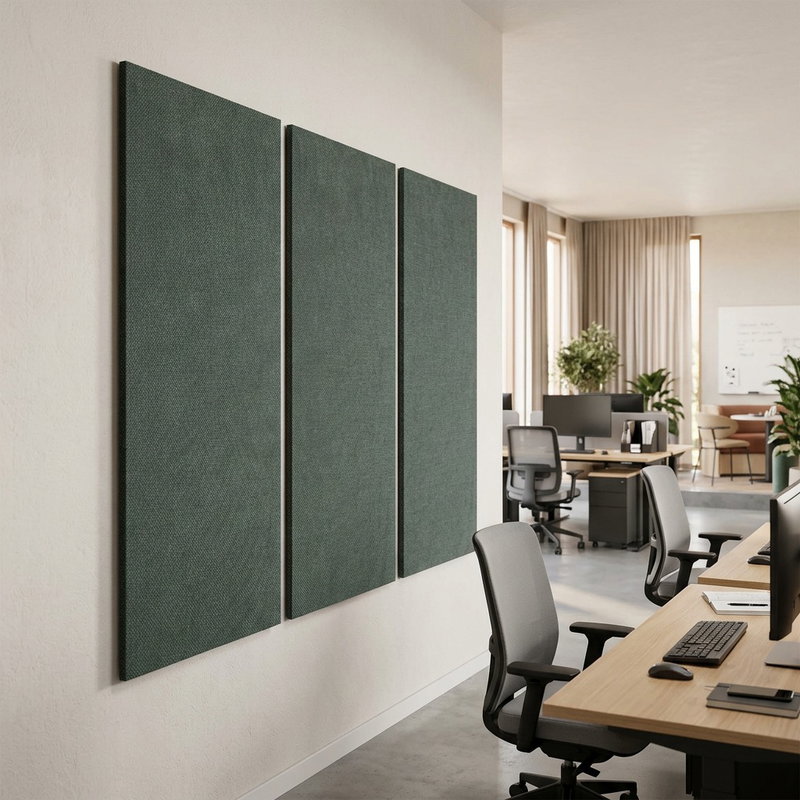
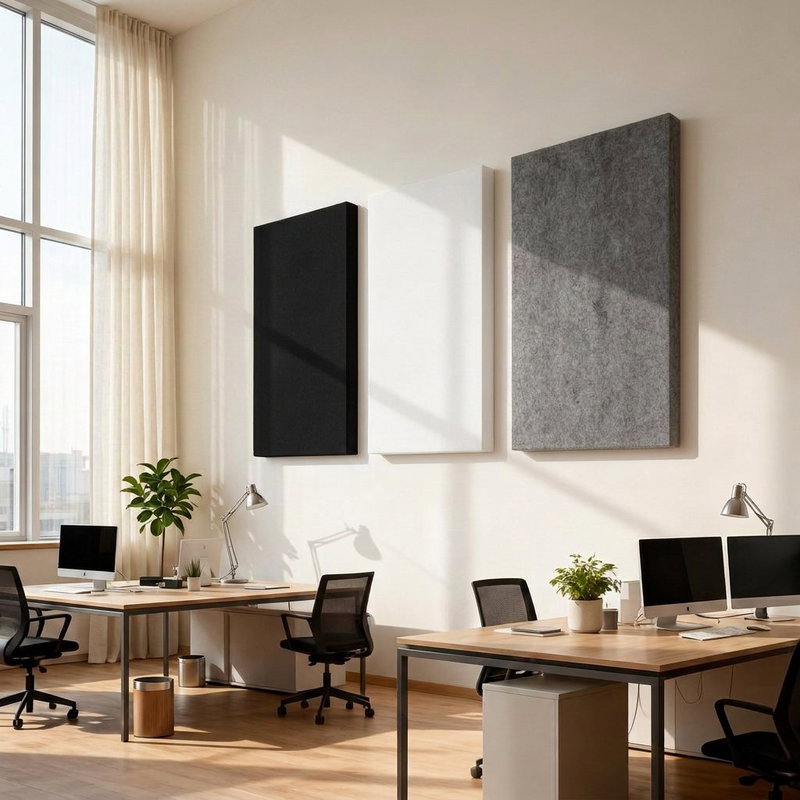
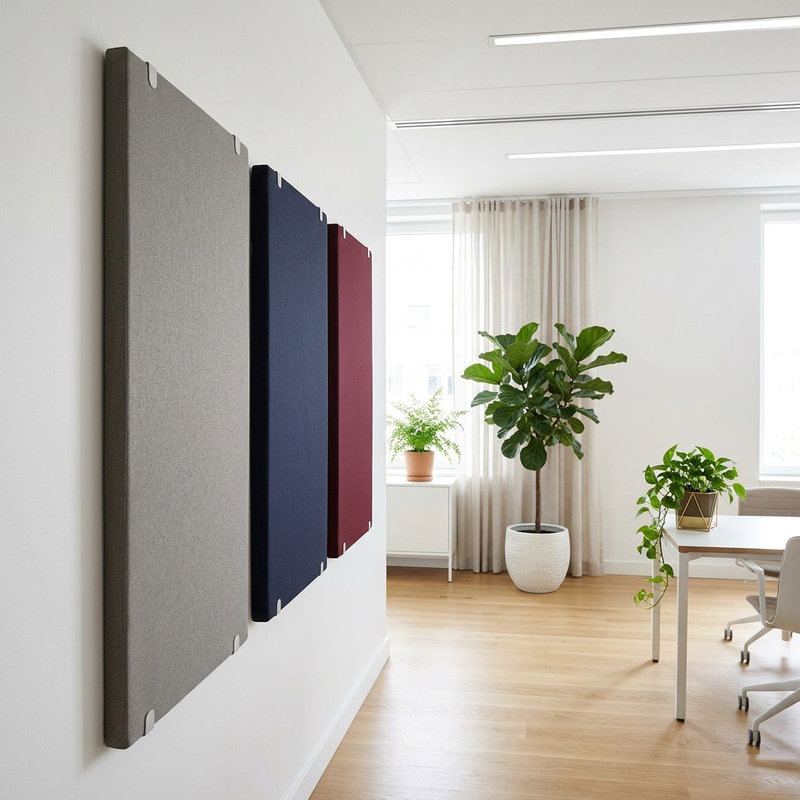
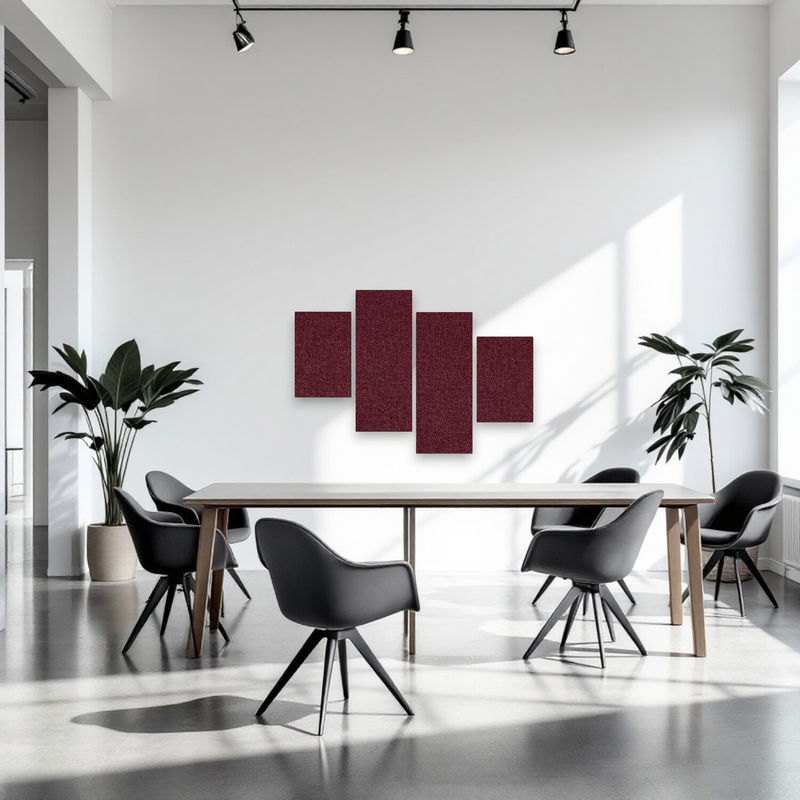
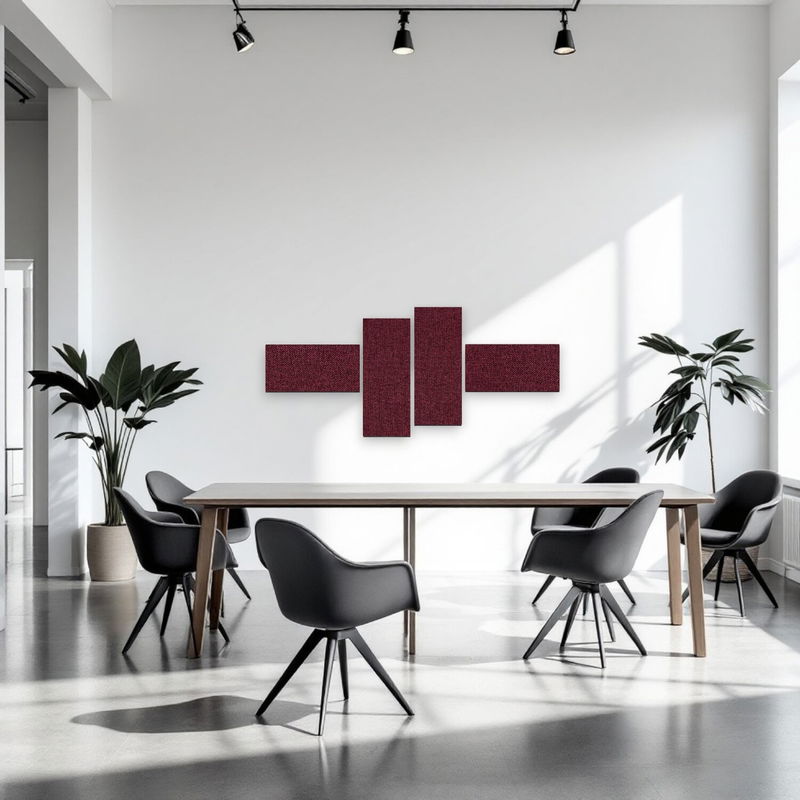
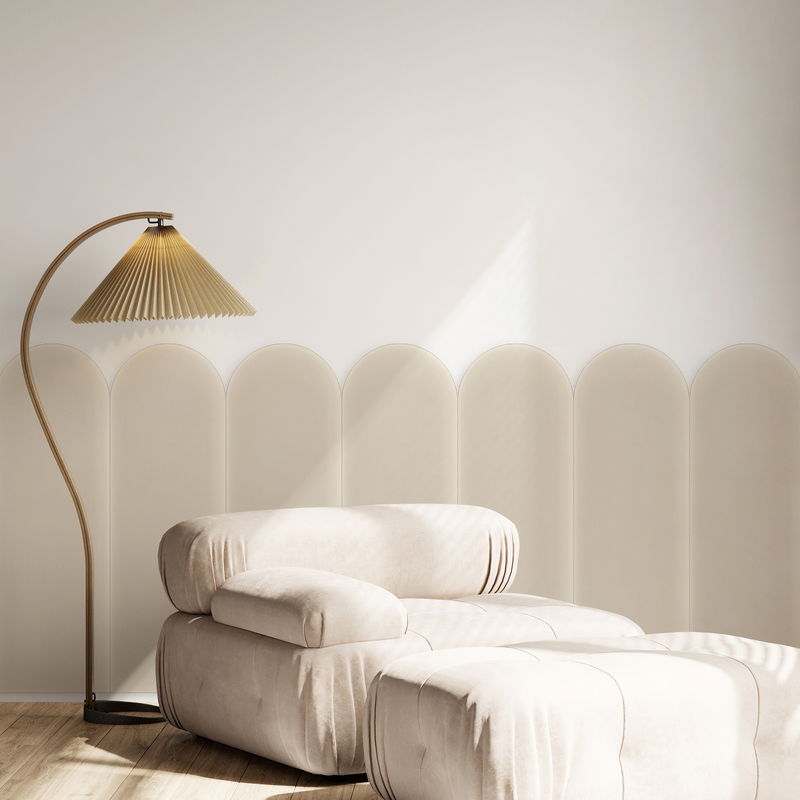
Wall absorbers capture reflections at ear level and improve speech intelligibility in offices, meeting rooms, and hallways.
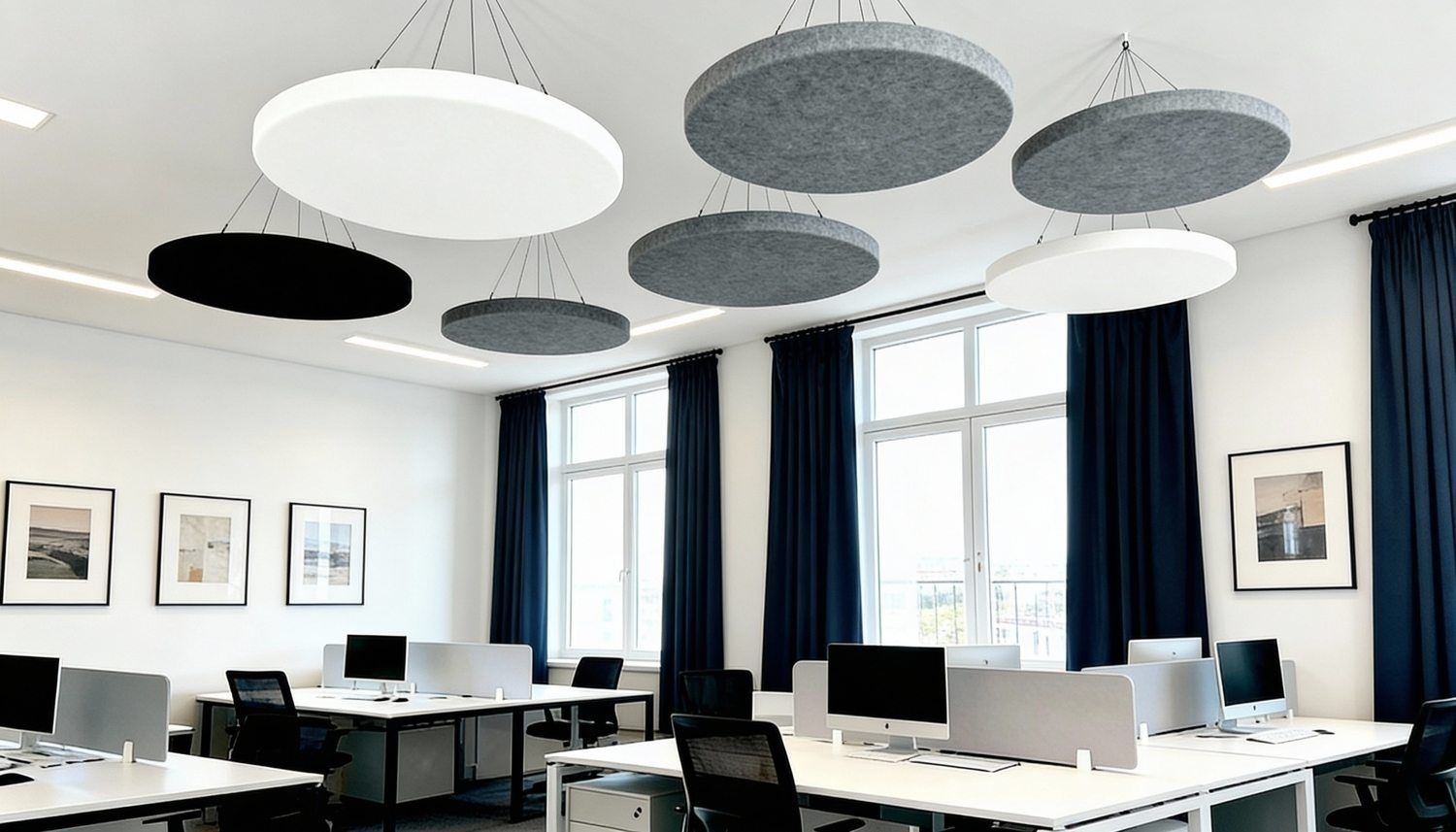
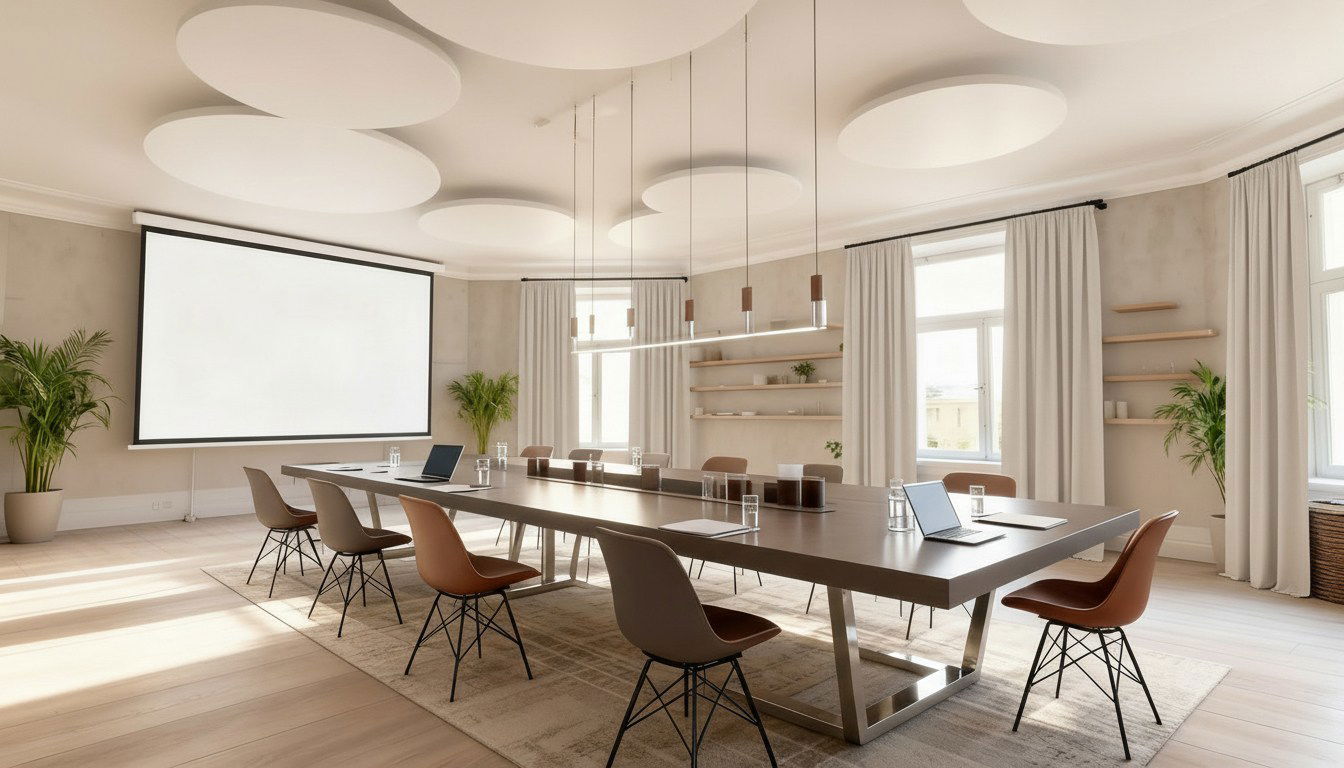
Sound absorption on ceilings
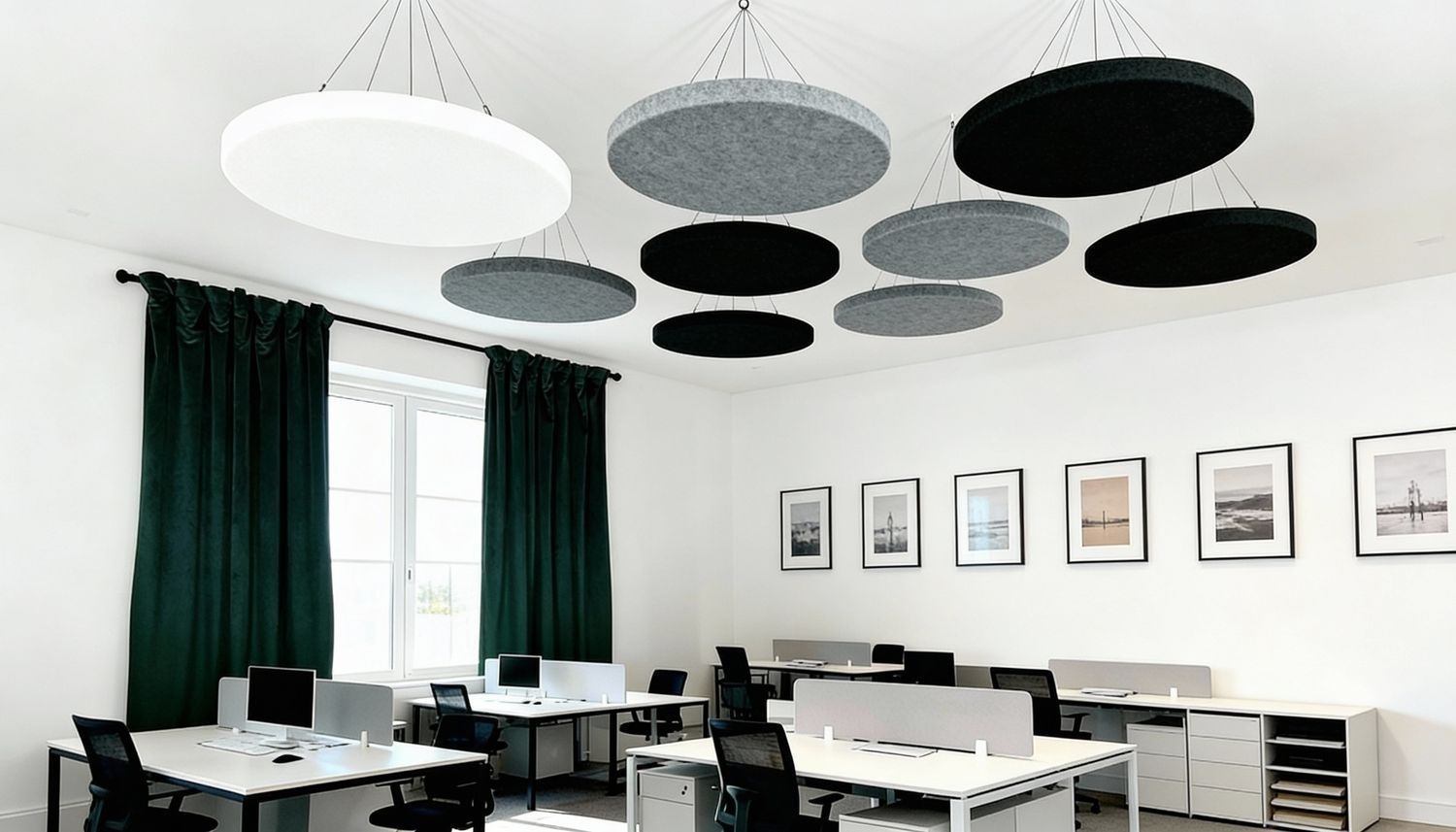
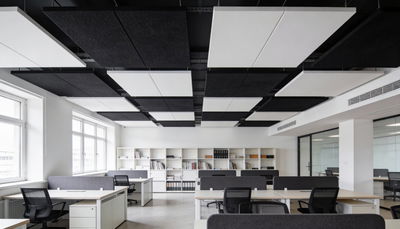
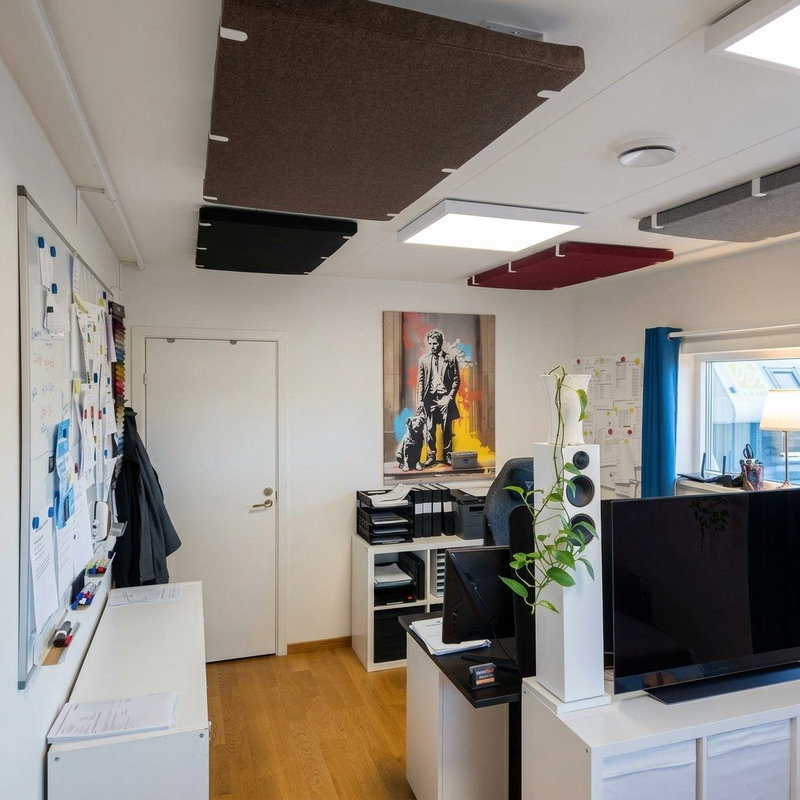
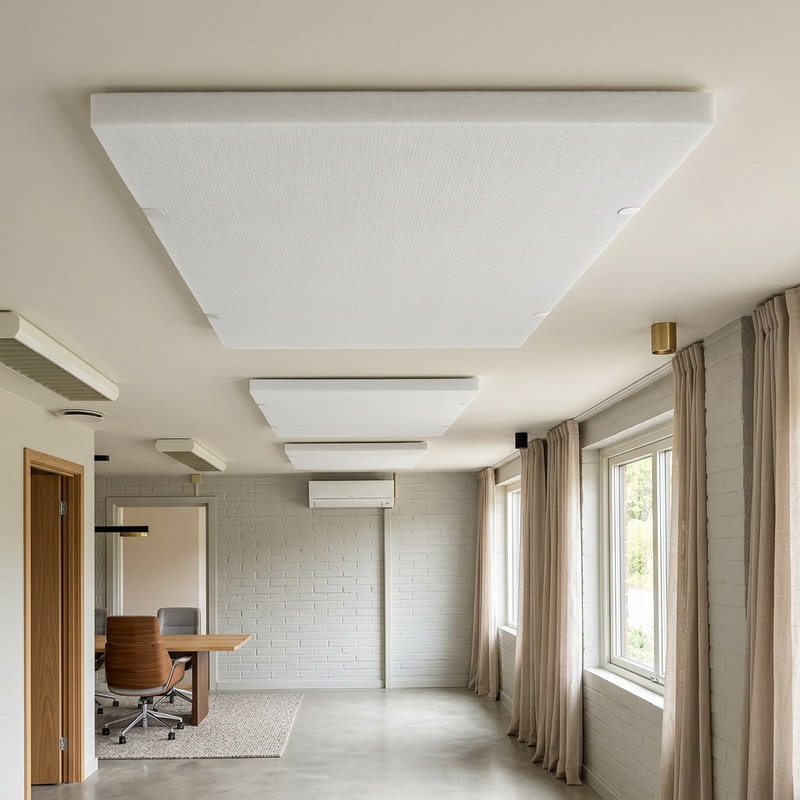
Ceiling absorbers are often the most effective basic measure in open-plan office environments where large surfaces contribute to significant reverberation.
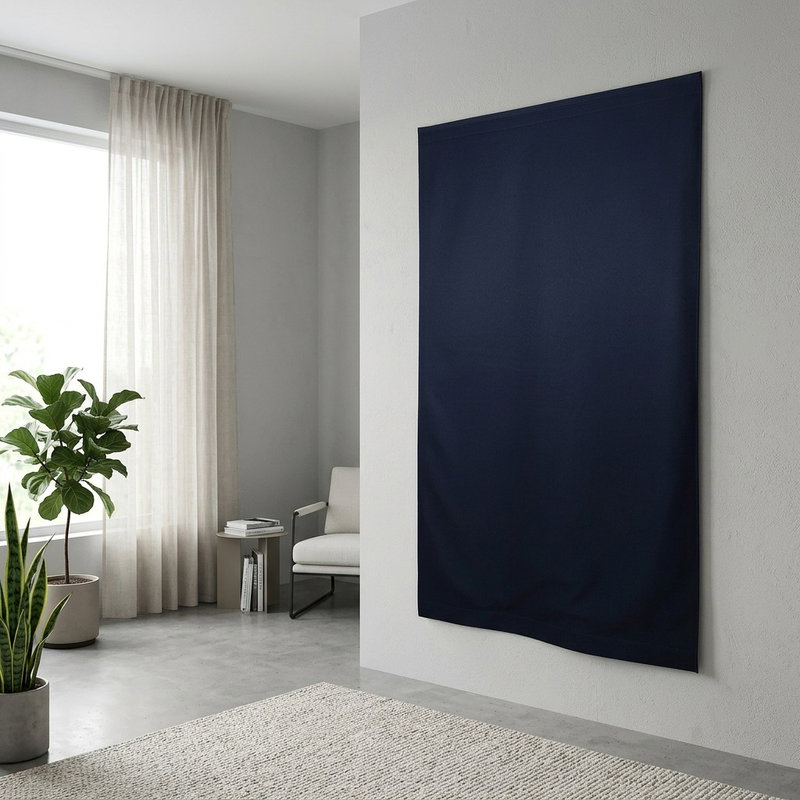
Sound-absorbing curtains
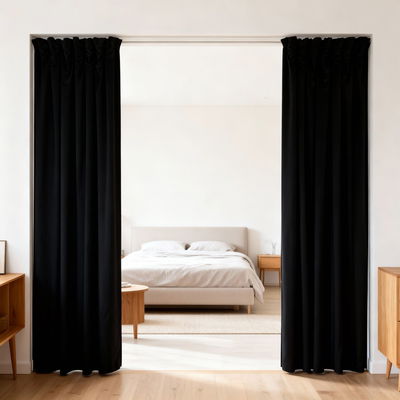
Curtains dampen reflections from glass partitions and windows and serve as a soft complement in modern office environments.
Sound-absorbing room dividers
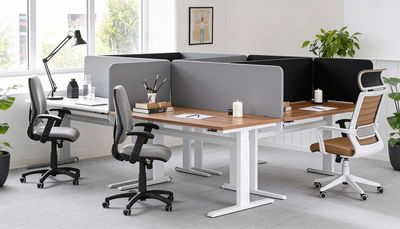
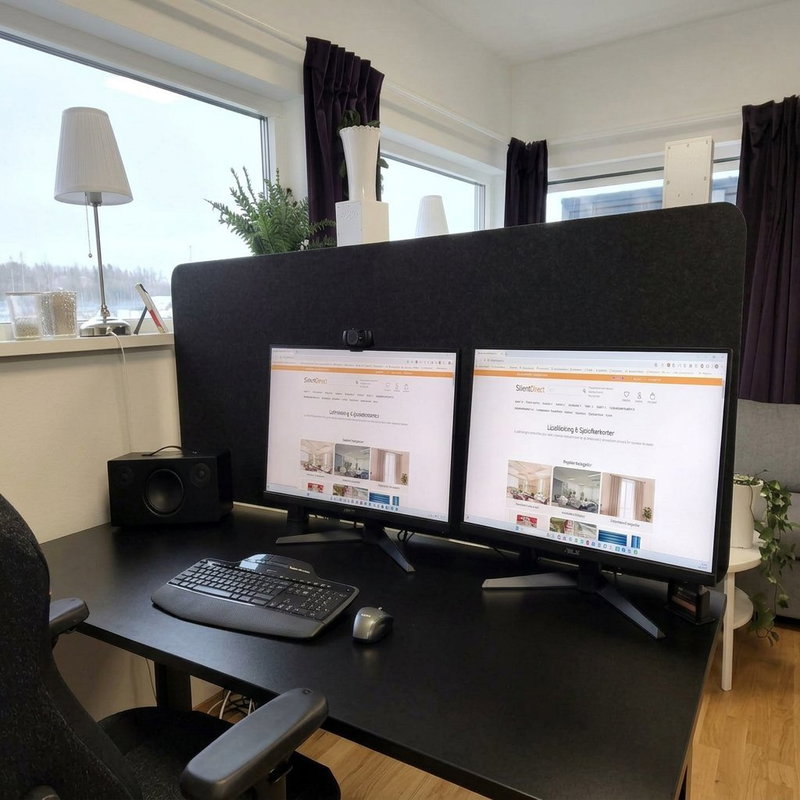
Room dividers combine privacy screening and sound absorption and are particularly useful for creating zones in open-plan offices.
Why choose sound absorption in offices?
Sound absorption provides an immediate improvement to the work environment without requiring structural modifications. The solution is flexible, scalable, and easy to adapt as business needs change. The results are noticeable through improved speech intelligibility, lower perceived noise levels, and increased comfort. In certain office environments, sound absorption can be effectively combined with sound insulation or vibration damping to address more complex acoustic issues.
Well-considered advice for best results
The size, layout, and furnishings of the office affect how reverberation is perceived. Smaller rooms can be improved with a limited number of well-placed absorbers, while larger and open spaces often require a combination of ceiling, wall, and freestanding solutions. A common mistake is to use too little sound absorption or to concentrate the measures on the wrong surfaces. By distributing the measures evenly, a long-term, functional, and professional acoustic environment is created.
Sound absorption is therefore a fundamental measure for reducing echoes in office environments and creating a more focused, pleasant, and efficient workplace.