













Ceiling sound absorbers – reduce echoes in schools and school environments
A fundamental measure for better acoustics and a quiet learning environment in school facilities
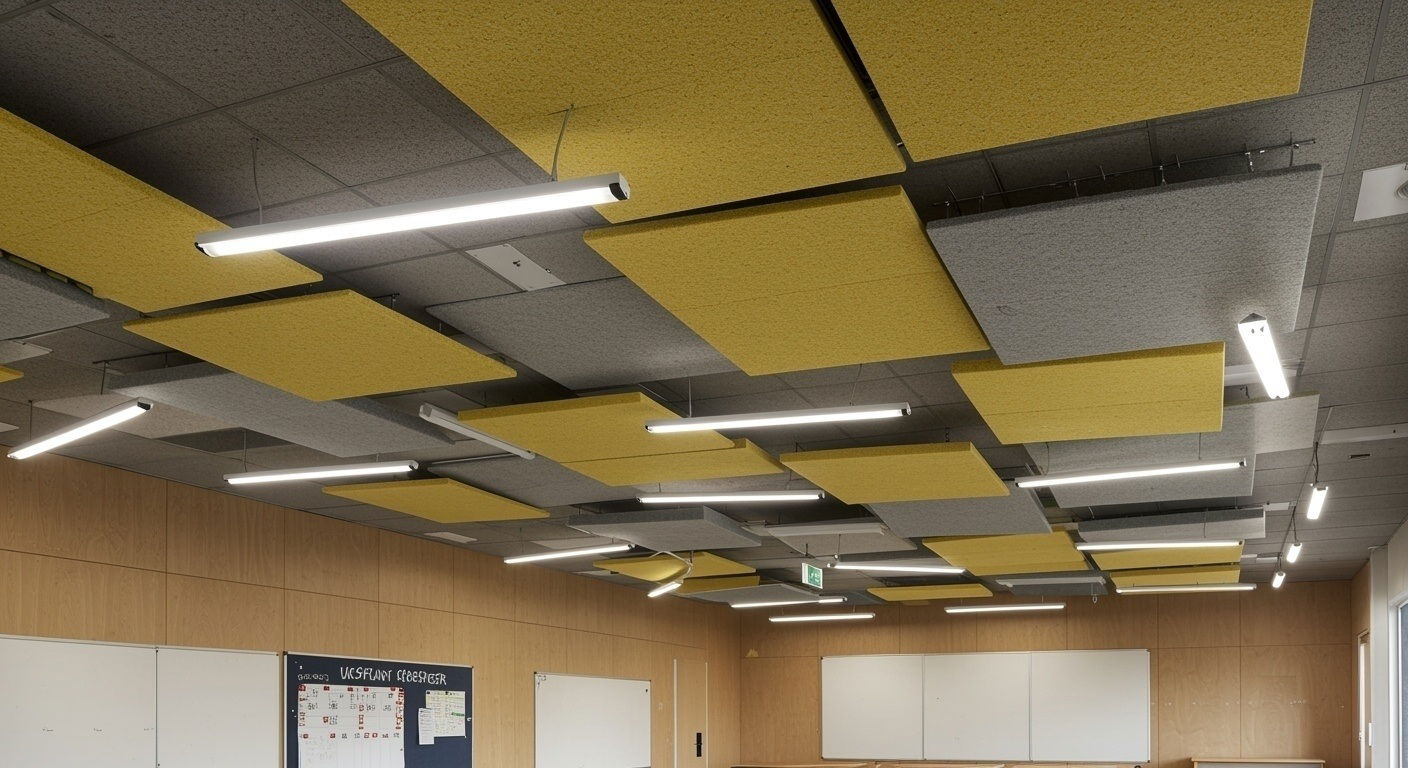
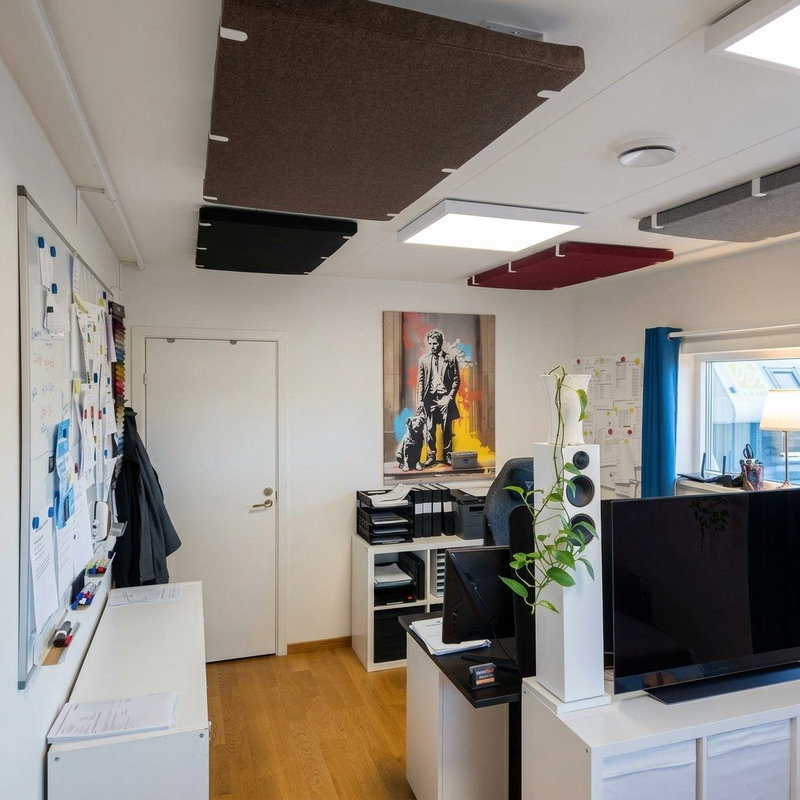
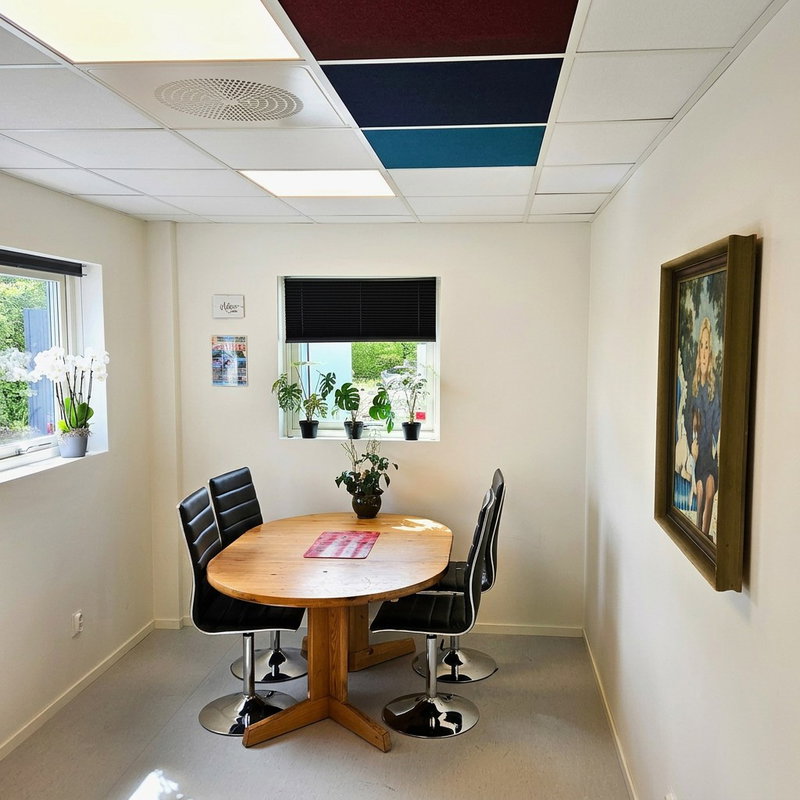
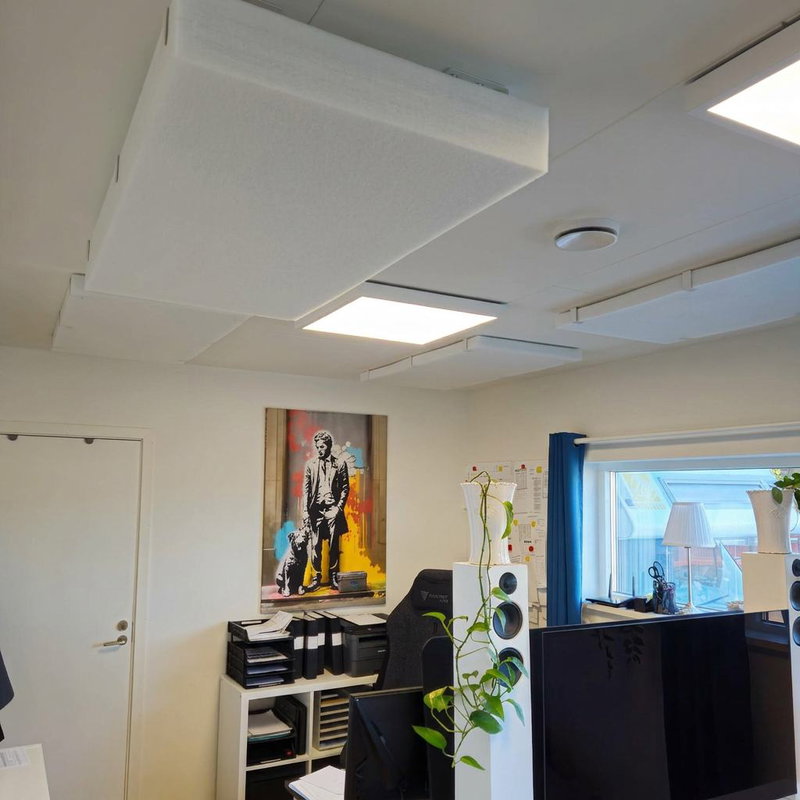
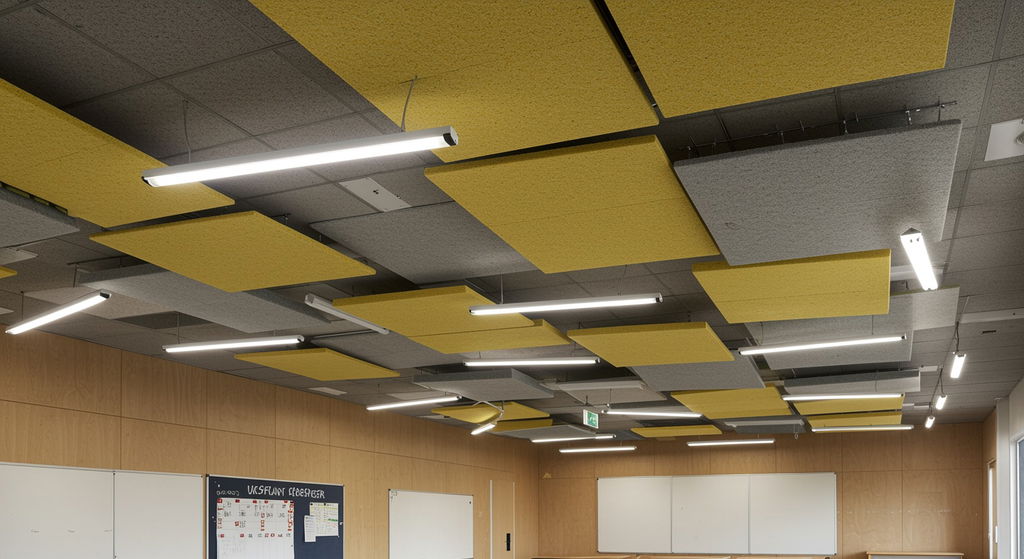
In schools and educational settings, the acoustic environment is crucial for both student learning and staff working conditions. Classrooms, hallways, cafeterias, and common areas are often characterized by hard surfaces, high ceilings, and multiple simultaneous sound sources. Conversations, movement, chairs being moved, and the sounds of teaching bounce between floors, walls, and ceilings, creating echoes and long reverberation. Ceiling sound absorbers are one of the most effective measures for reducing echoes in a room and creating a calmer, more controlled, and pedagogically effective sound environment in a school setting.
What are ceiling sound absorbers?
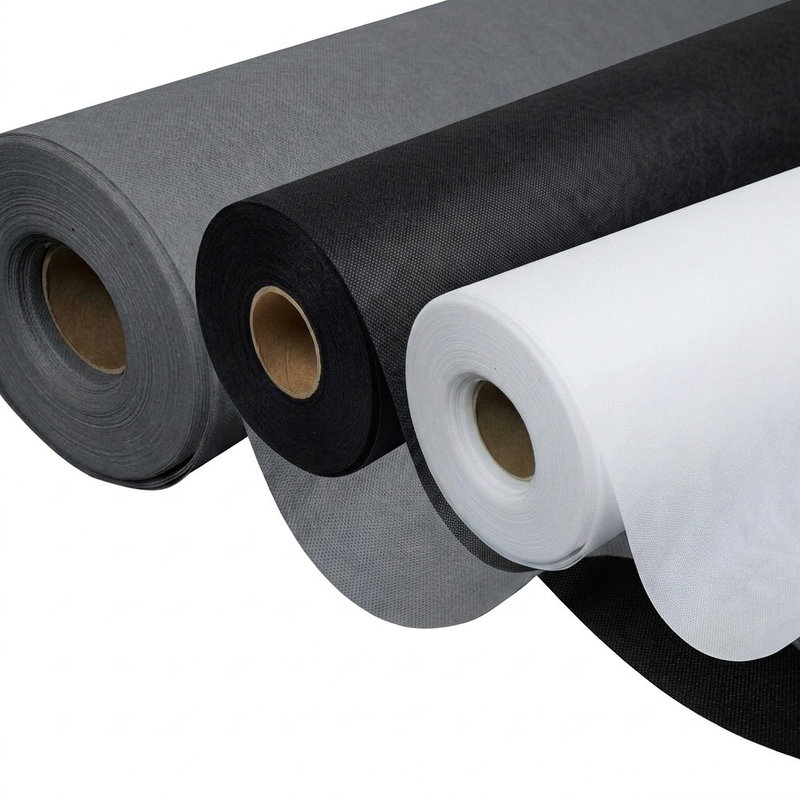
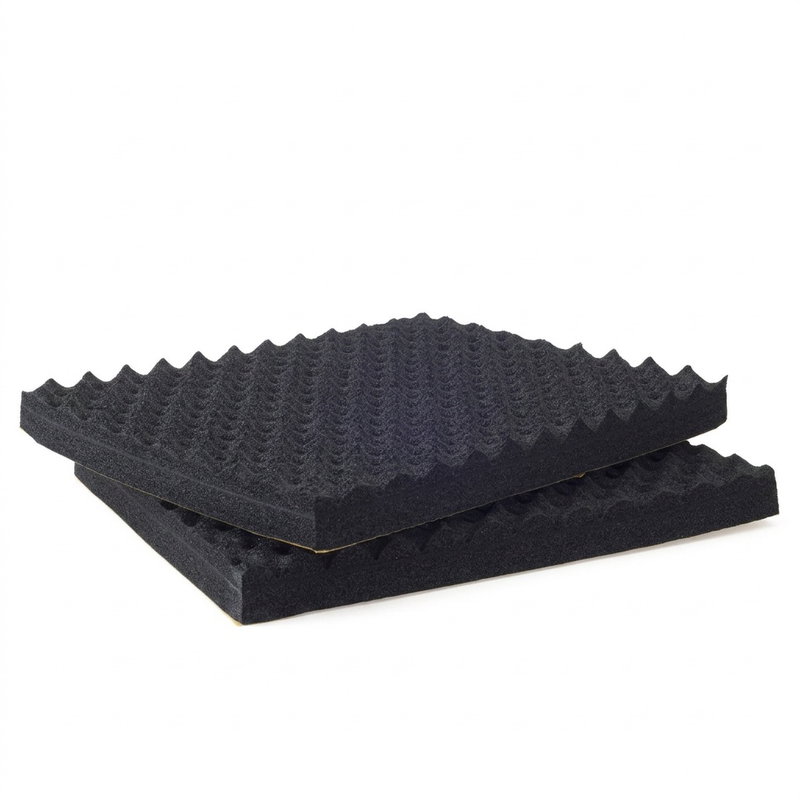
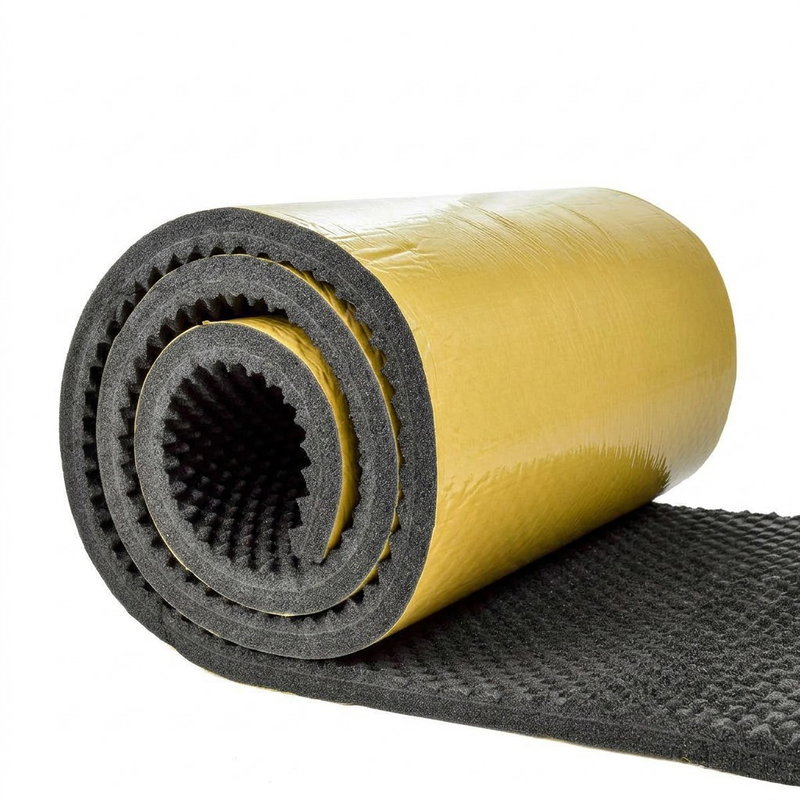
Ceiling sound absorbers consist of porous materials that capture sound waves and convert sound energy into heat energy. This reduces sound reflections in the room and shortens the reverberation time. It is important to distinguish sound absorption from sound insulation, which blocks sound between different rooms, as well as vibration damping, which reduces vibrations and structure-borne noise from, for example, installations and equipment. Ceiling absorbers are used to improve the acoustics in the space where the sound originates.
Common acoustic problems in school environments
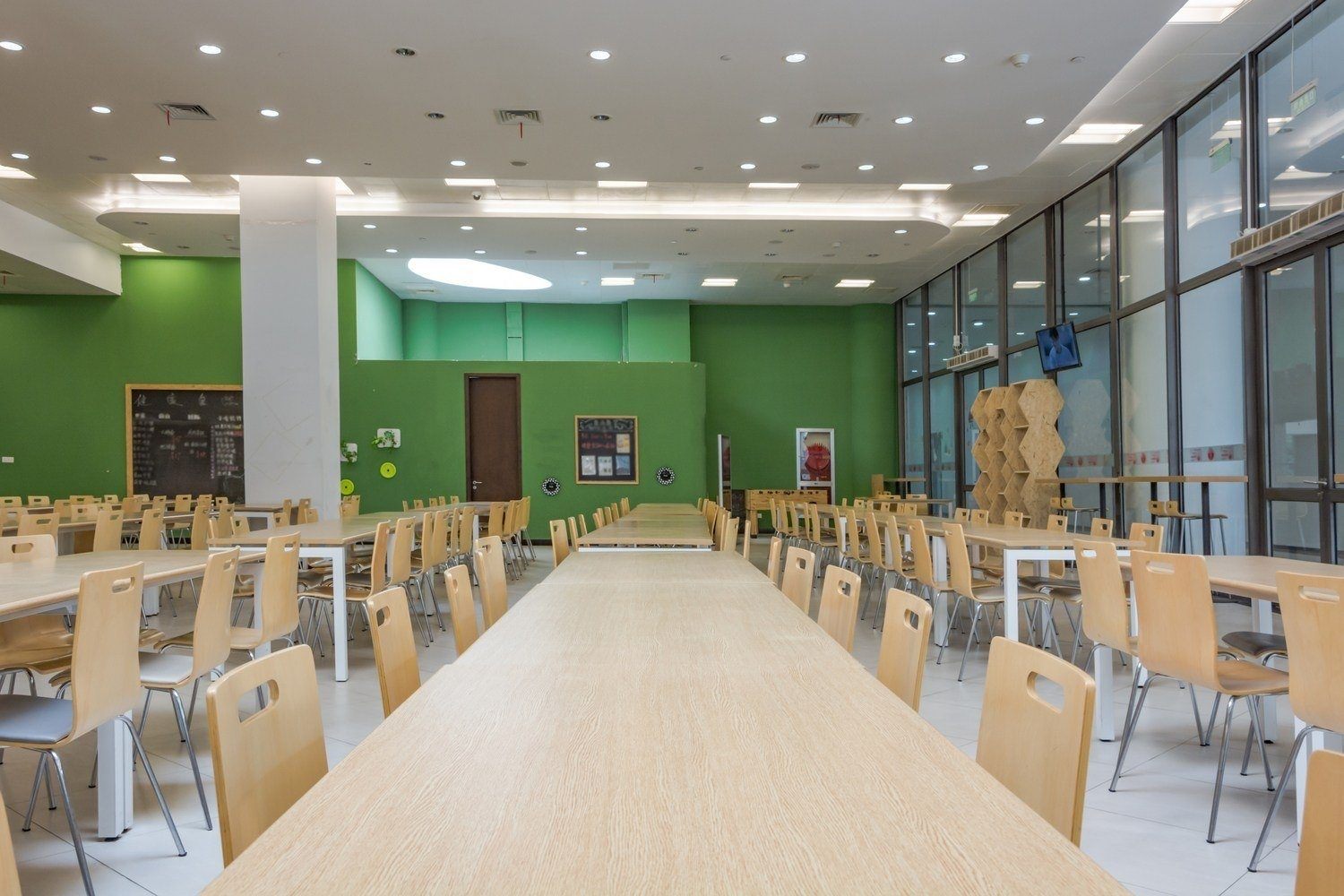
Echoes and excessive reverberation are common in classrooms, group rooms, gyms, and cafeterias. When many students are in the same room, the sound level rises rapidly, making it harder to hear speech and instructions. This can lead to increased stress, reduced concentration, and fatigue among both students and teachers. In learning environments where clear communication is crucial, poor acoustics become a pedagogical obstacle.
How ceiling sound absorbers work in practice
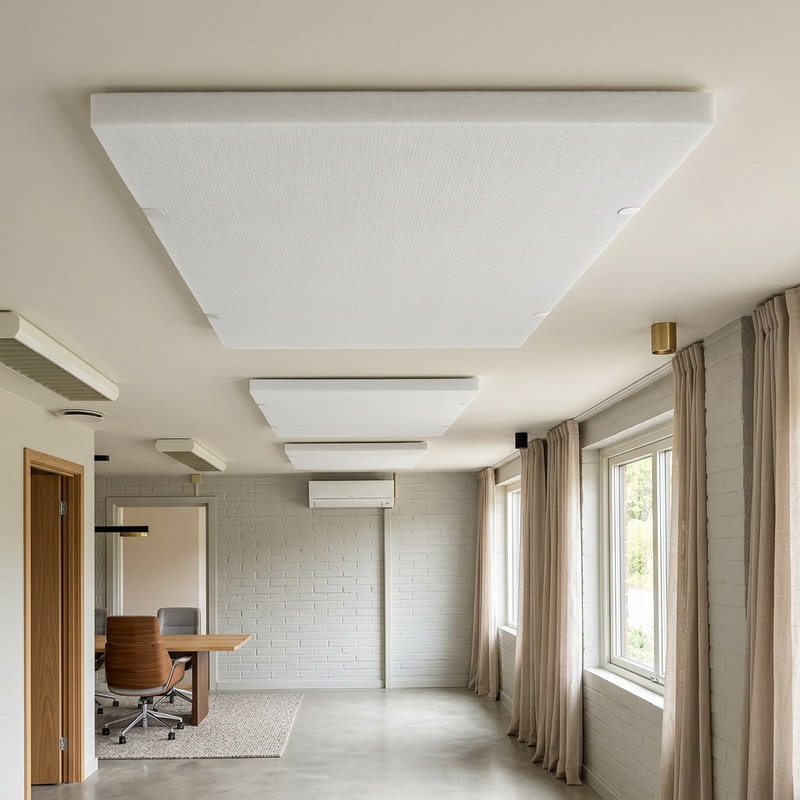
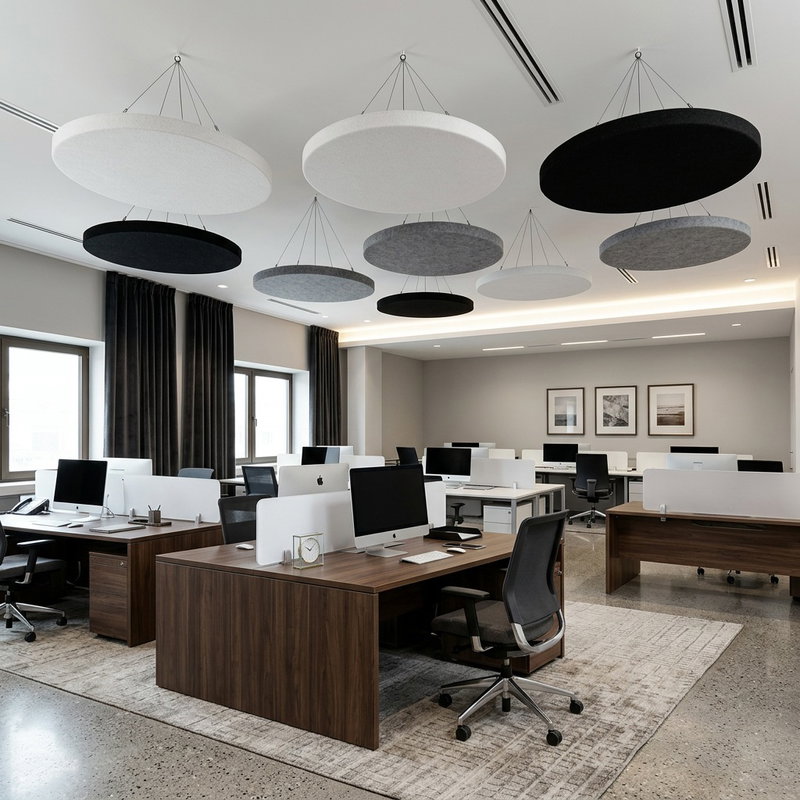
When sound waves reach the ceiling surface, they are absorbed by the material’s structure instead of being reflected back into the room. Since sound spreads in all directions and often bounces between the floor and ceiling, the ceiling is a strategically important surface to treat in order to create even sound absorption throughout the room.
Even sound absorption throughout the room
Ceiling absorbers help reduce reverberation across large areas, creating a more balanced acoustic environment.
Particularly effective in classrooms and larger spaces
In rooms where wall space is limited or used for educational materials, ceiling absorption often provides the greatest effect.
Interaction with other sound-absorbing solutions
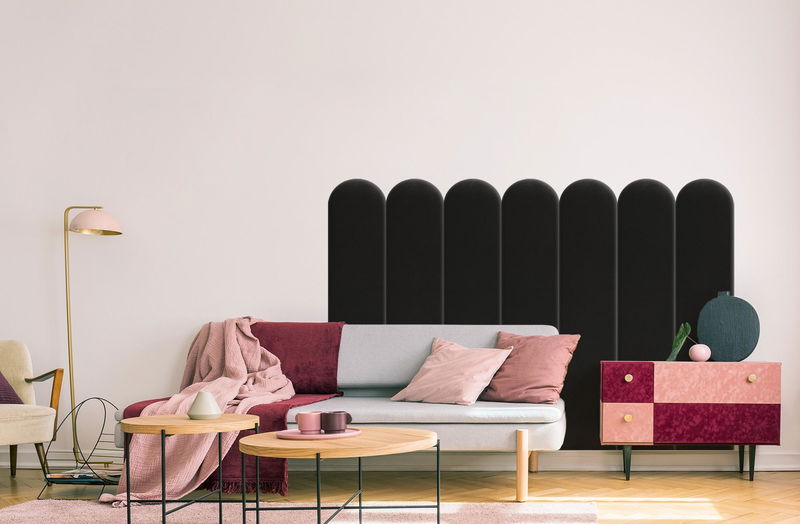
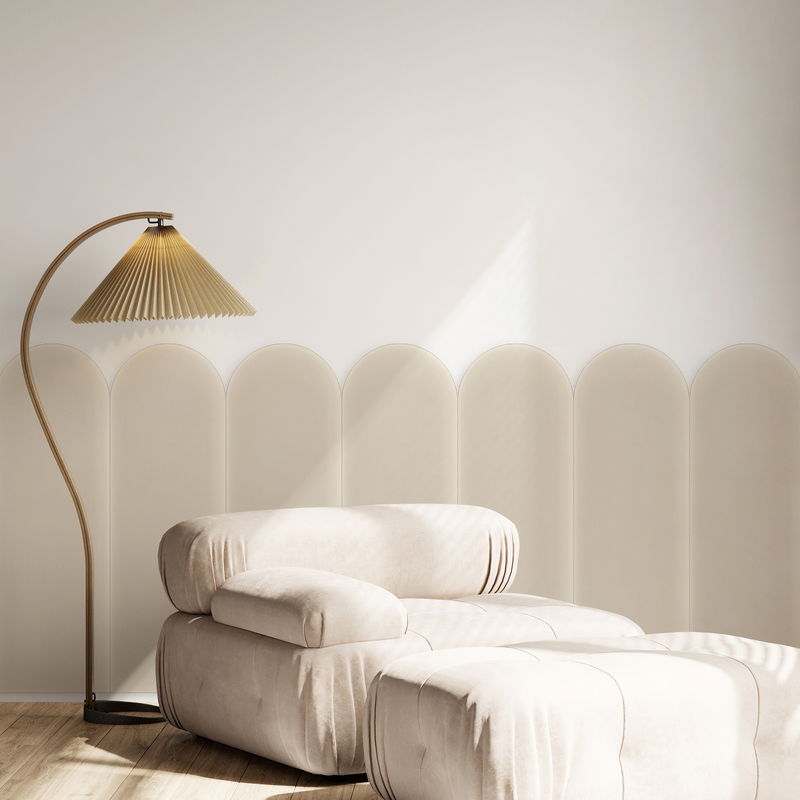
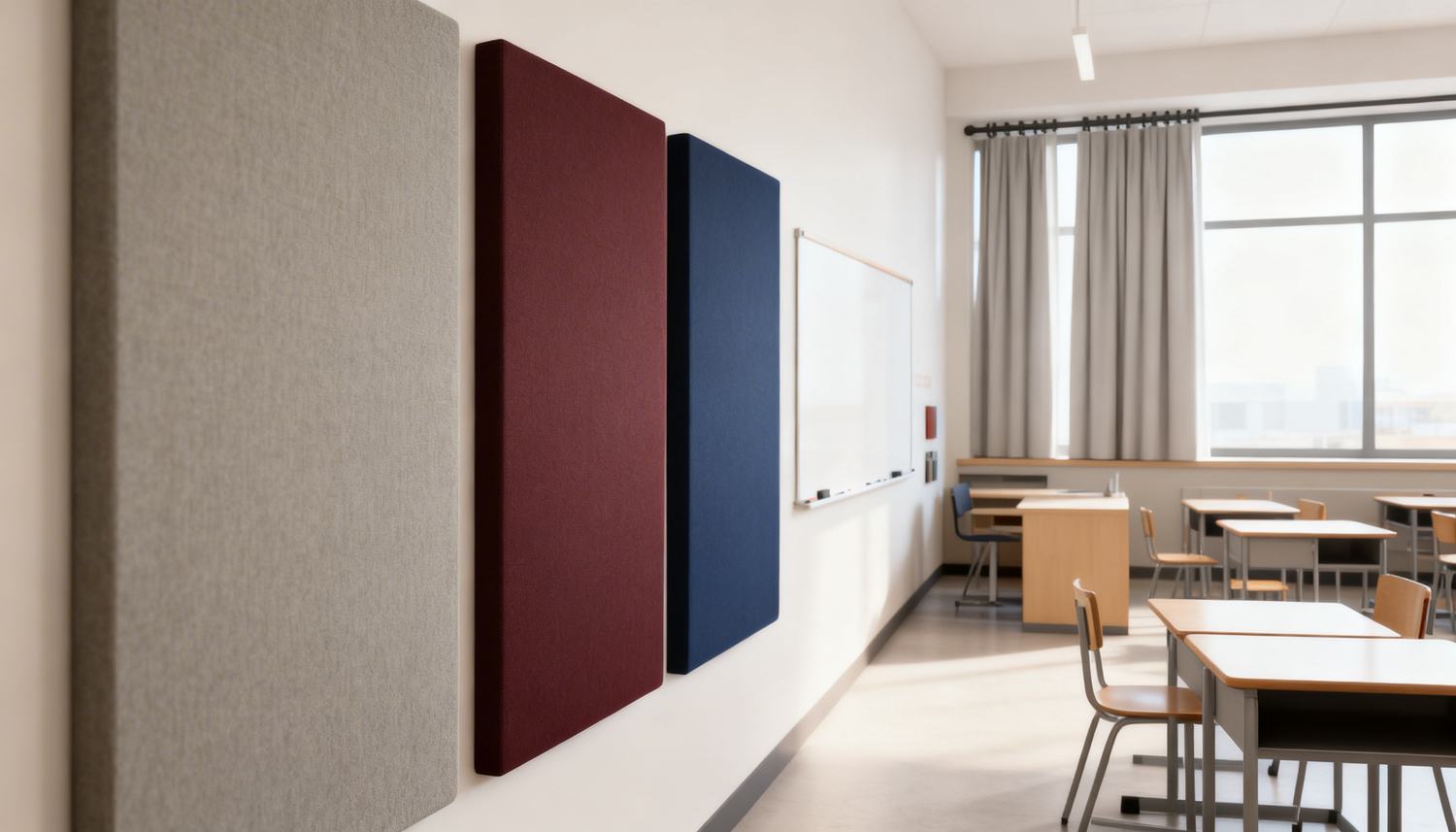
Ceiling sound absorbers work best as part of a comprehensive solution. Wall absorbers capture reflections at ear level, sound-absorbing curtains reduce reflections from windows and glass partitions, and room dividers can be used to create smaller teaching zones with improved acoustics.
Why choose ceiling sound absorbers in schools?
Ceiling absorbers provide a quick and noticeable improvement in the acoustic environment without affecting the room’s functionality. The results are evident in better speech intelligibility, reduced noise stress, and a quieter learning environment. In schools with more complex acoustic issues, ceiling absorption can be effectively combined with sound insulation between rooms or vibration damping from technical equipment.
Well-considered advice for best results
For maximum effectiveness, ceiling absorbers should be placed where noise levels are highest, such as above student areas and teaching zones. In larger school environments, multiple absorbers are often required for even attenuation, while smaller classrooms can be improved with fewer but strategically placed solutions. A common mistake is to underestimate the role of the ceiling in the acoustic environment. The right scope ensures a long-term, effective, and pedagogically adapted acoustic environment.
Ceiling sound absorbers are therefore a fundamental and effective measure for reducing echo and improving acoustics in schools and school environments.