











Sound insulation – blocks sound between rooms in industrial settings
Create clearer separation and better sound control in industrial facilities
In industrial environments, sound transmission between different spaces is a common and often complex problem. Noise from production, machinery, internal transport, and technical installations can travel through walls, floors, ceilings, and openings between zones. When sound moves freely between rooms, it negatively impacts the work environment, safety, and communication. Sound insulation is the measure used to stop this sound transmission and create a clearer separation between different parts of the facility.
What is sound insulation?
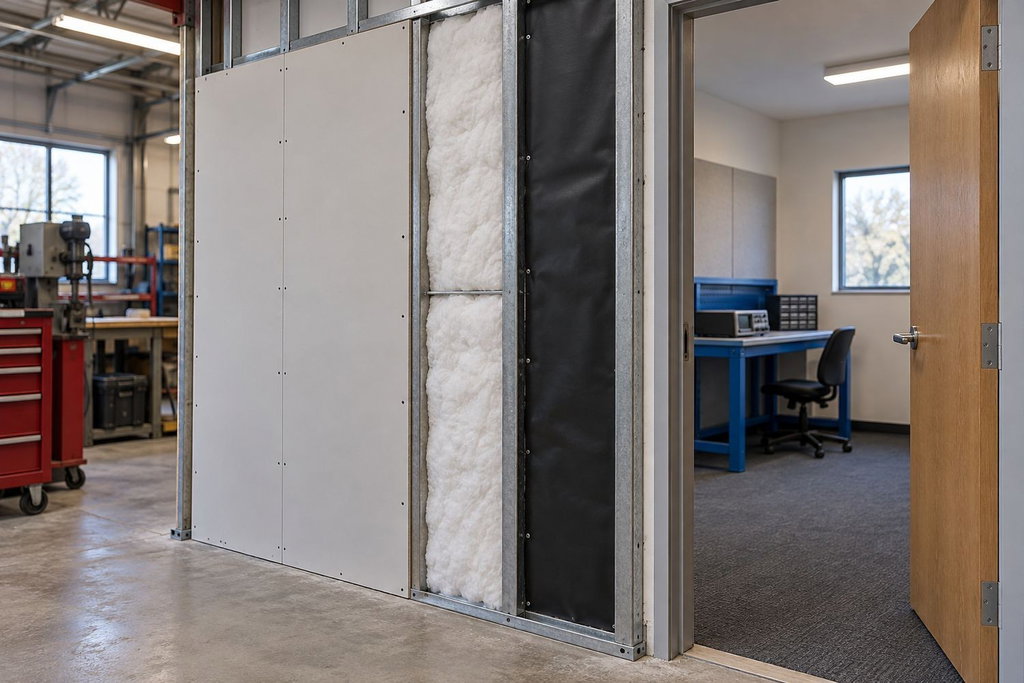
Sound insulation involves limiting how sound spreads from one space to another through the building’s structure. Unlike sound absorption, which reduces echoes and reverberation within a room, sound insulation focuses on blocking sound’s path through walls, floors, ceilings, doors, and other partitions. Vibration damping, in turn, is aimed at reducing structure-borne noise that occurs when vibrations are transmitted through the building. Sound insulation is therefore crucial when the problem is noise heard in adjacent rooms or zones.
Common issues with sound transmission between rooms in industrial environments
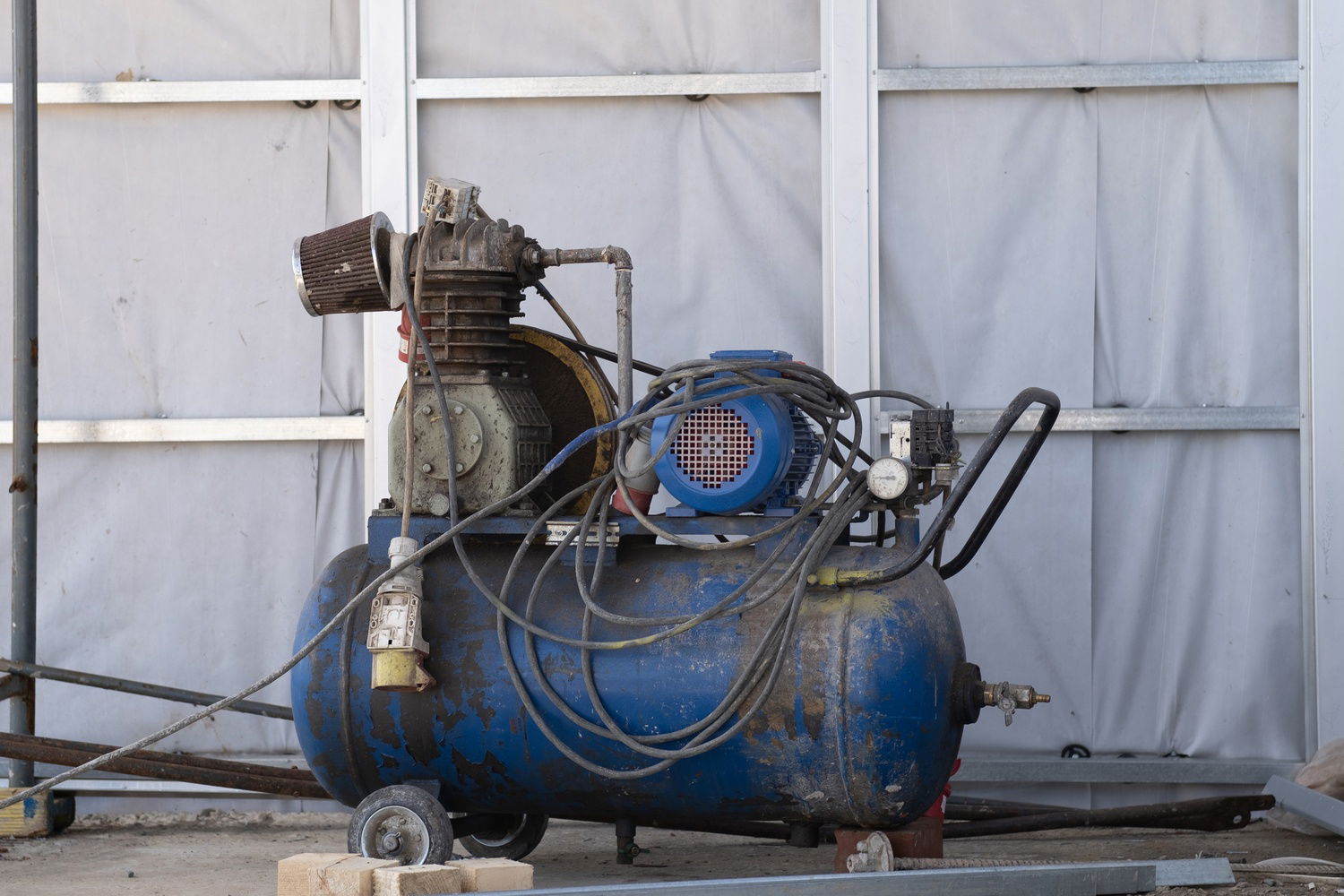
In industrial facilities, sound between rooms is often perceived as production noise that spreads to offices, staff areas, or other work zones. Machinery and equipment can generate both airborne sound and structure-borne sound that propagates through the building’s structure. Gates, doors, and windows also often act as weak points where sound leaks through. The result is a poorer working environment, increased noise exposure, and in some cases, compromised safety.
How does sound propagate in industrial facilities?
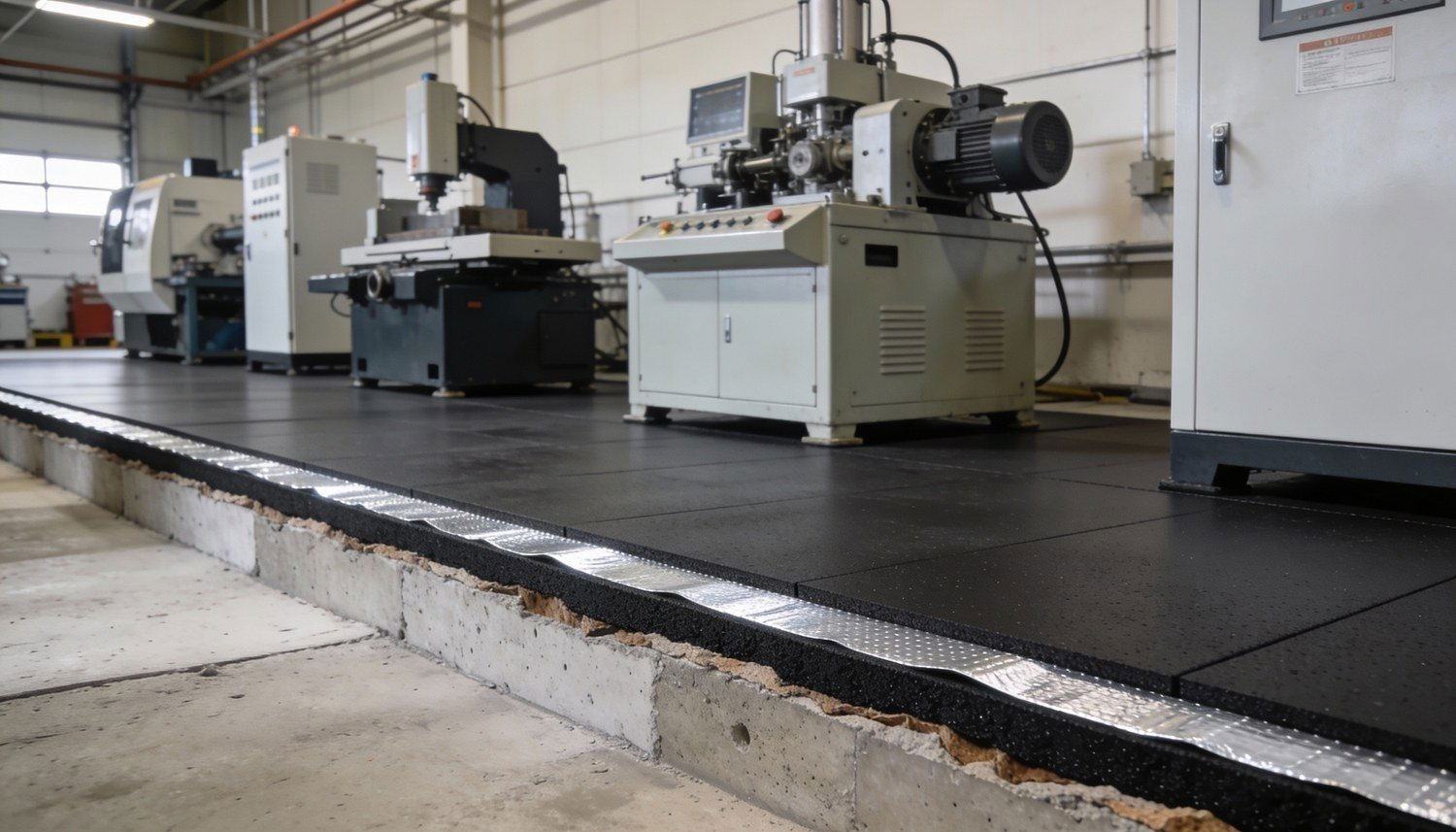
Sound spreads through the building’s interconnected structure. Floors and joists can transmit noise between floors, while walls and ceilings allow sound to pass between adjacent spaces. Machinery and technical equipment can also create vibrations that amplify sound transmission through the building’s structure. Therefore, different insulation principles are required depending on where the sound originates and how it propagates through the building.
Sound insulation in various parts of the industrial environment
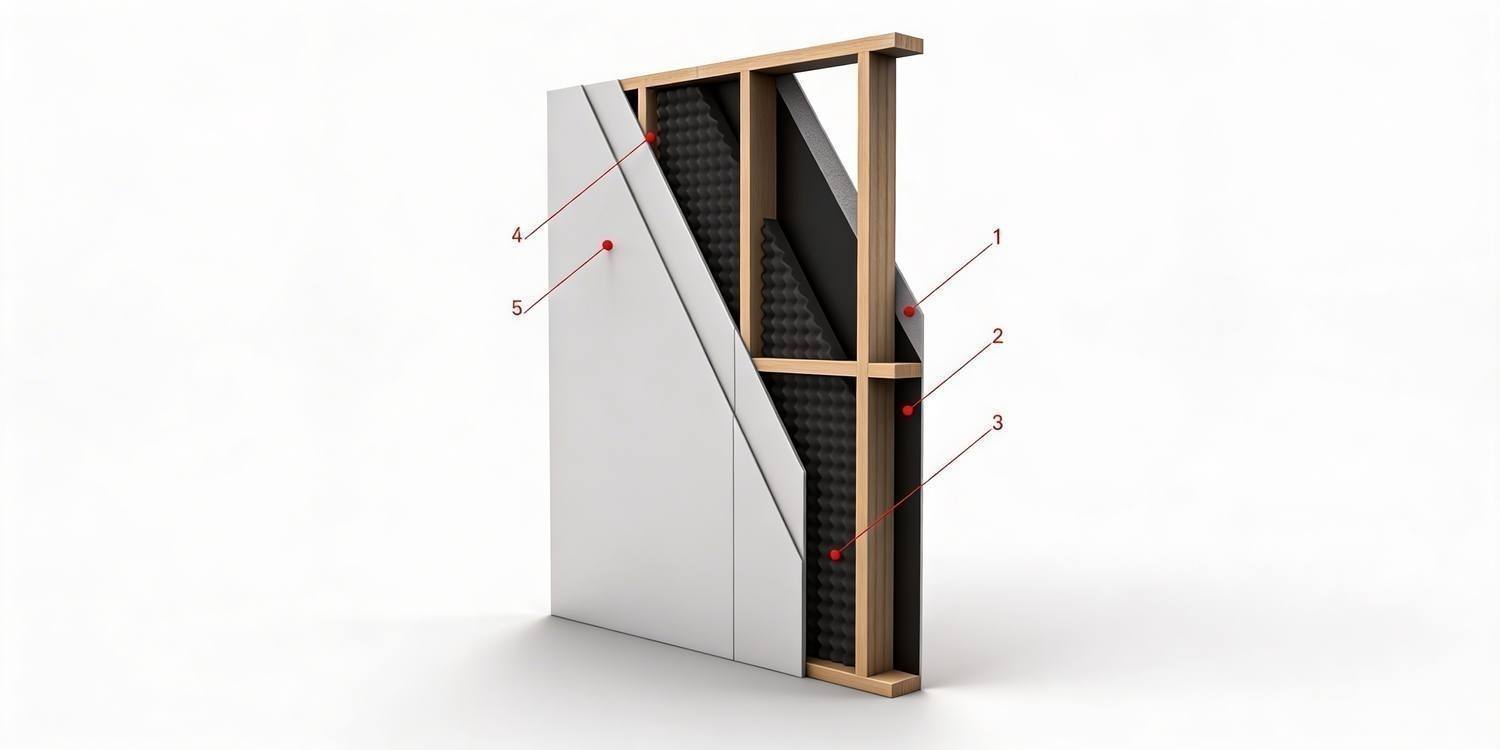
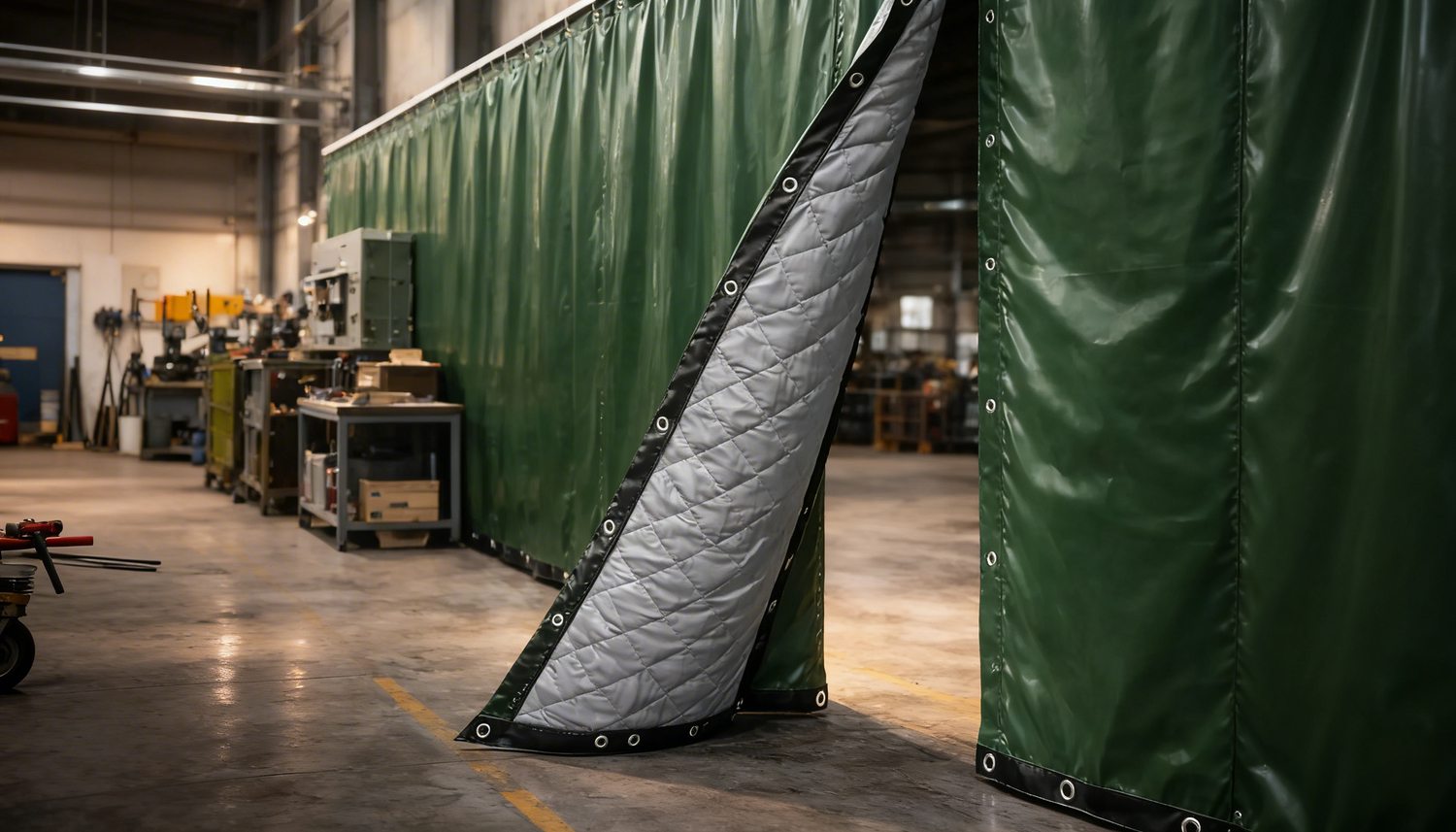
In industrial environments, sound insulation is used in various building components and contexts. Floors are insulated to reduce noise and impact sounds between floors. Walls and ceilings are treated to block sound between production zones, warehouses, and office spaces. Doors and windows are often critical points where sound leakage must be limited. Machinery and equipment are insulated to reduce how noise spreads to surrounding areas. By tailoring the measures to the right area, a more effective overall result is achieved.
Relationship to sound absorption in industrial environments
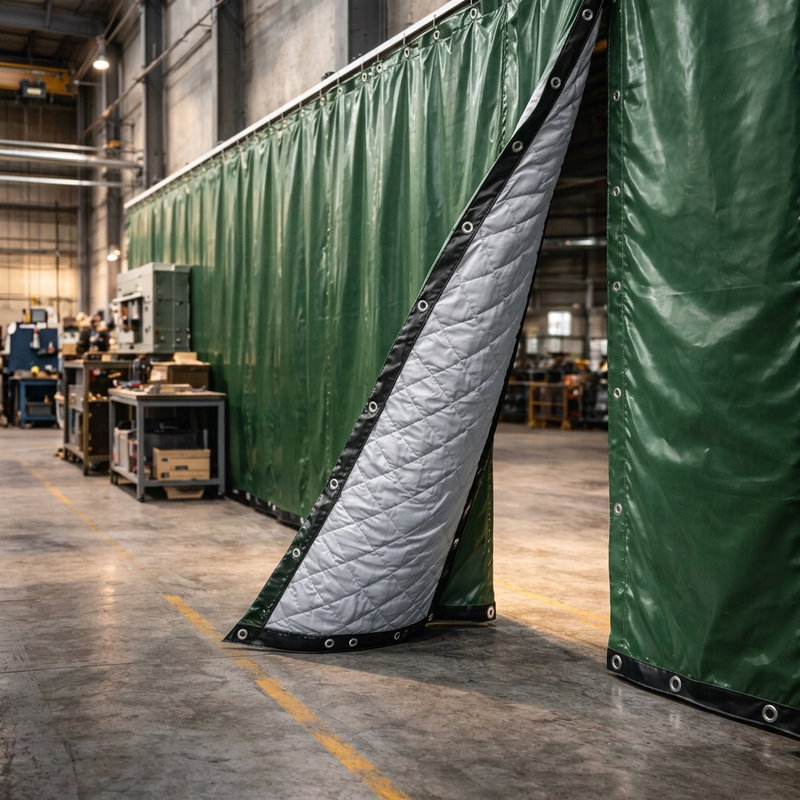
Sound insulation should not be confused with sound absorption. While sound insulation blocks sound between rooms, sound-absorbing solutions—such as wall and ceiling treatments, sound-dampening curtains, or room dividers—are used to reduce echoes and reverberation within the same space. In many industrial environments, these measures are combined to both limit sound propagation and create a more controlled acoustic environment where work takes place.
Why choose sound insulation in industrial environments?
Soundproofing provides clear improvements by reducing disruptive noise and creating better separation between different operational areas. This measure is particularly important in facilities where multiple processes are running simultaneously or where noise risks affecting the work environment and safety. In practice, soundproofing is often a prerequisite for other acoustic measures to be fully effective.
Well-considered advice for best results
For best results, sound insulation should be planned based on how sound actually propagates within the industrial facility. A common mistake is to treat the surface where the sound is perceived, even though the sound source is located in a different space. By analyzing sound paths, identifying weak points, and combining the right measures, long-term effective and sustainable sound insulation is achieved.
Sound insulation is therefore a key measure for blocking sound between rooms and creating better structure, a quiet working environment, and functionality in industrial settings.