



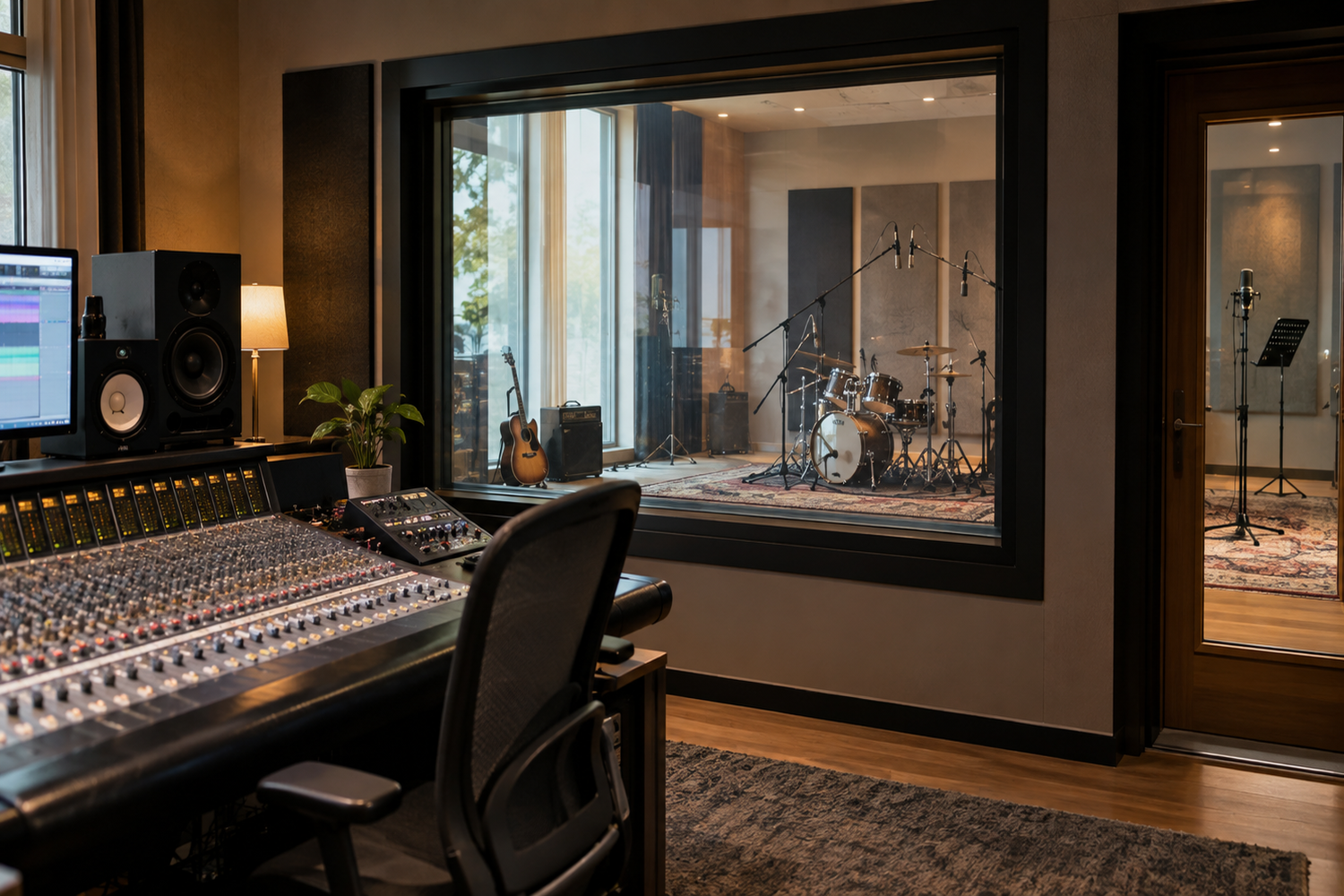
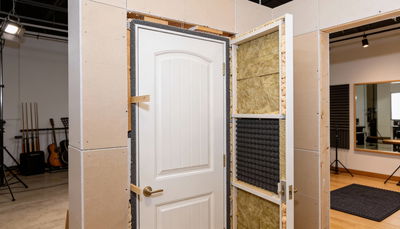
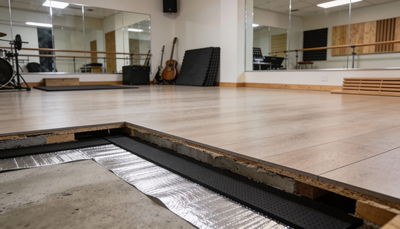
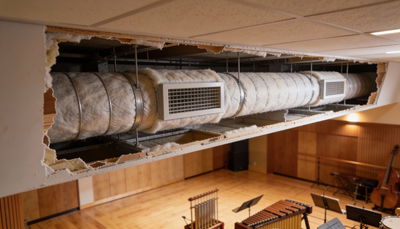







Soundproofing – blocks sound between rooms in studios and studio environments
Create privacy and control sound propagation in studios and studio environments
In studios and studio environments, sound that travels between rooms is a common and often critical problem. Whether it’s recording studios, podcast studios, film and TV studios, dance studios, rehearsal studios, or home studios, sound from adjacent spaces can disrupt production, concentration, and workflow. Conversations, music, movements, machinery, or technical equipment can travel through walls, floors, ceilings, doors, and windows. Sound insulation is the measure used to stop this sound transmission and create clearer boundaries between the studio’s various rooms and functions.
What is soundproofing?
Soundproofing involves limiting how sound spreads from one room to another through the building’s structure. Unlike sound absorption, which reduces echoes and reverberation inside a room, soundproofing focuses on preventing sound from passing through walls, floors, ceilings, doors, and other building components. Vibration damping is a separate measure that reduces structure-borne noise by limiting vibrations in the building’s structure. In studio environments, sound insulation is crucial when the issue is sound that can be heard outside the room where it originates.
Common problems with sound transmission between rooms in studio environments
In studios and studio environments, sound transmission between rooms is often experienced as music or voices heard in adjacent spaces, recordings disrupted by activity in other parts of the facility, or noise from machinery and technical equipment. In larger facilities, such as film and television studios or sports-inspired studio environments, impact noise and low-frequency sound can also propagate effectively. These problems are exacerbated in buildings with lightweight interior walls, open-floor plans, or doors and windows that do not seal properly.
How does sound propagate in a studio and studio environment?
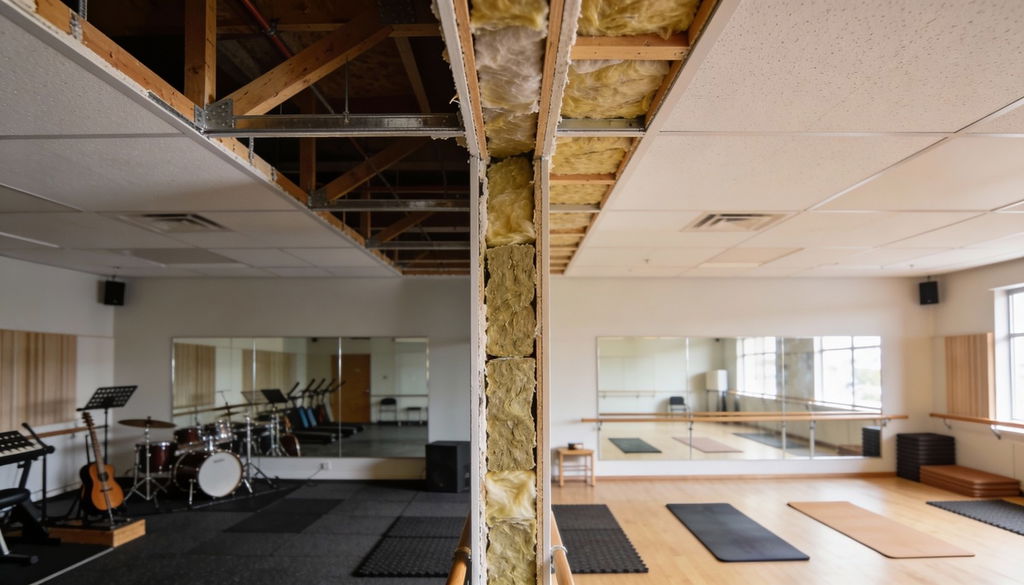
Sound propagates through the building’s entire structural framework. Walls can allow voices and music to pass through; floors and joists transmit footfall and movement between floors; and ceilings can carry sound from rooms above. Doors and windows are often weak points where sound leakage occurs, and machinery or equipment can create vibrations that travel through the building frame. Effective soundproofing therefore requires treating the correct building components based on how sound actually travels.
Sound Insulation in Different Parts of the Studio
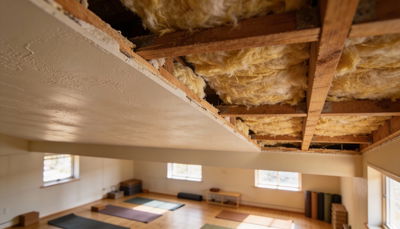
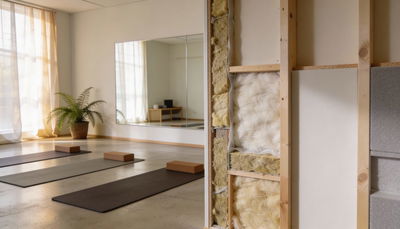
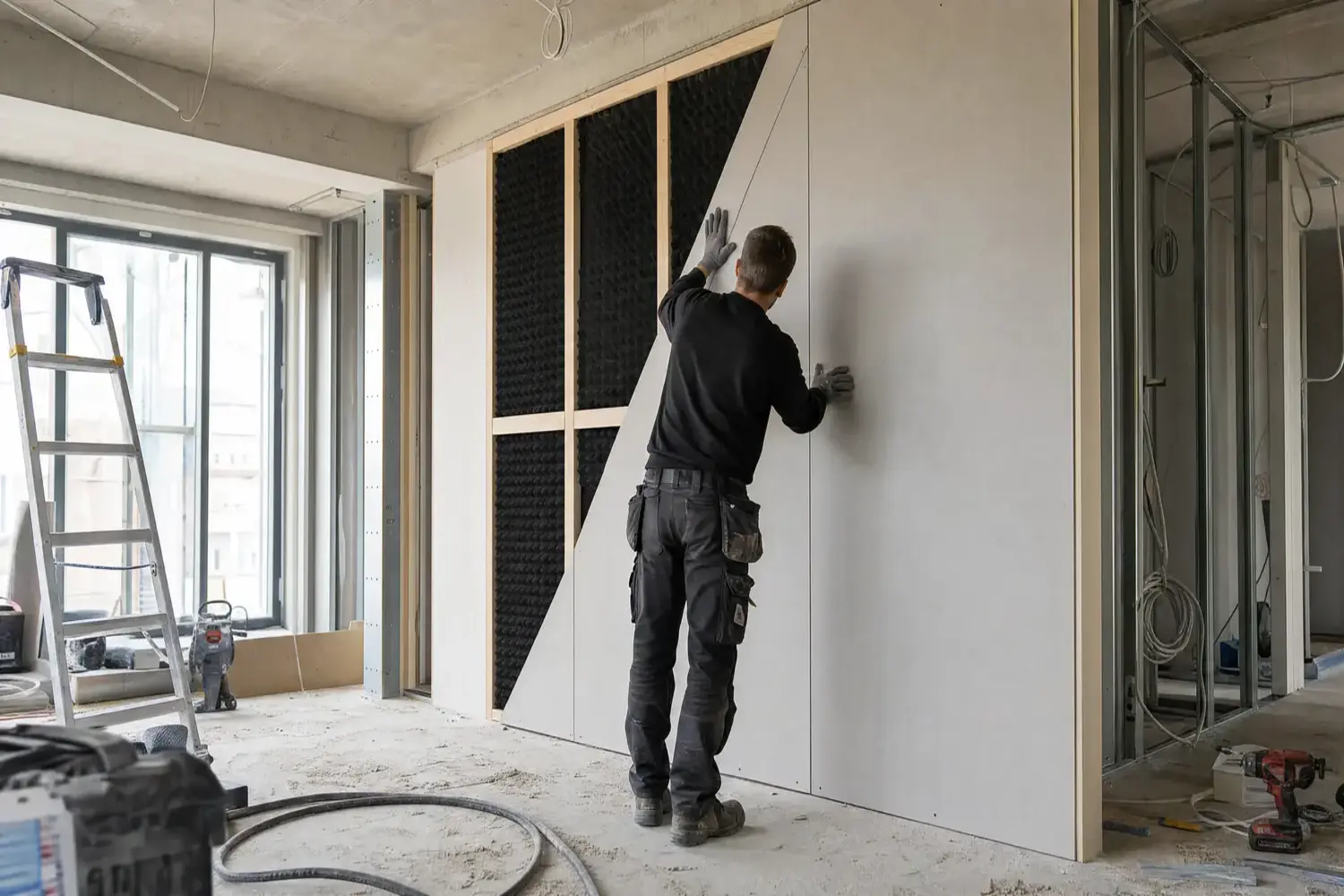
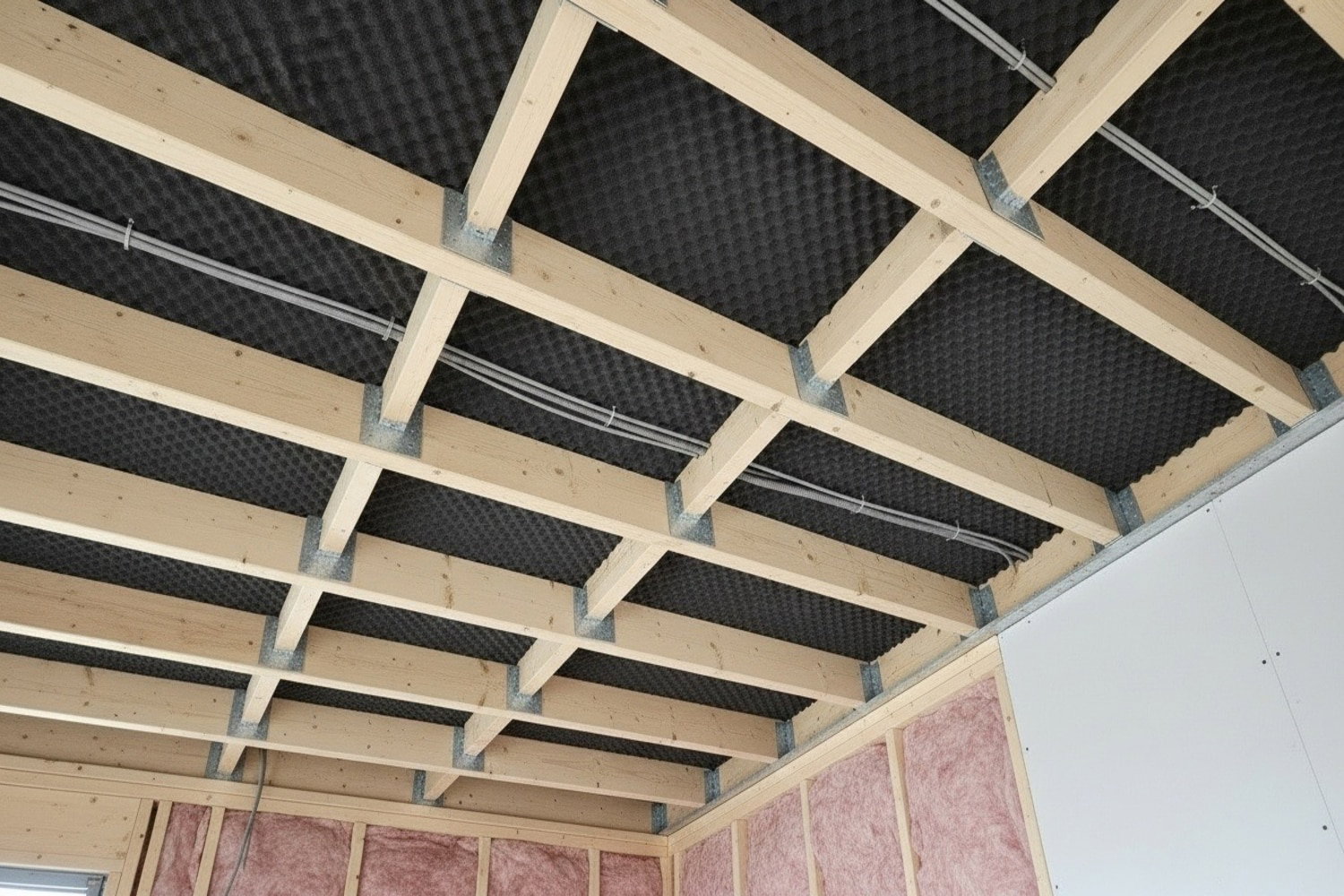
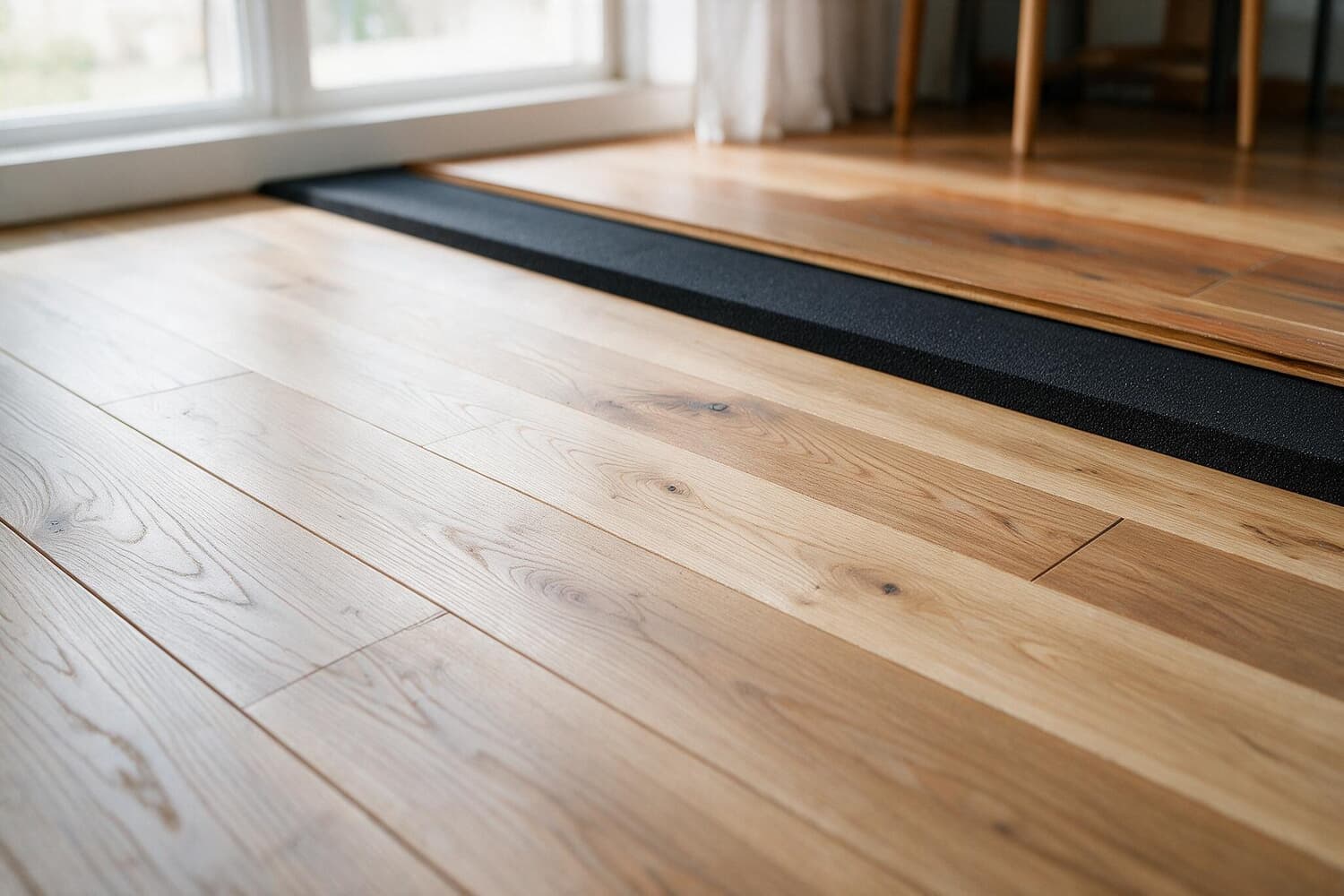
In studios and studio environments, sound insulation is primarily used in walls, floors, and ceilings to block sound between recording rooms, control rooms, and adjacent spaces. Floors are insulated to reduce footfall noise and movement, while ceilings are used to limit sound transmission between floors. Doors and windows require special attention because even small gaps can lead to significant sound leakage. Machinery and technical equipment can also contribute to both airborne sound and vibrations, which means that soundproofing often needs to be combined with vibration damping.
Why Choose Sound Insulation in Studios and Studio Environments?
Sound insulation creates the conditions for undisturbed production and clear room division in studios and studio environments. By blocking sound between rooms, it improves both the quiet working environment, recording quality, and collaboration between different operations within the same building. In many cases, sound insulation is complemented by sound absorption to improve the acoustics inside the room and by vibration damping to manage structure-borne noise from equipment and installations.
Well-thought-out advice for the best results
For maximum effectiveness, sound insulation in a studio environment should be planned based on where the sound originates and how it spreads. A common mistake is to treat only the room where the sound is heard, even though the problem often lies in adjacent structures. By considering the big picture and tailoring the measures to the correct building component, you can create a long-term, functional, and professional sound environment.
Sound insulation is therefore a fundamental measure for blocking sound between rooms and creating clear, functional boundaries in studios and studio environments.