







Desk screens – sound-absorbing desk screens
Reduce echoes and create a quieter workspace
In office environments, home offices, and open workspaces, noise is one of the most common causes of reduced concentration and increased mental strain. Conversations, keyboard sounds, phone rings, and movements easily spread between workstations and bounce off walls, ceilings, and furniture. Sound-absorbing desk screens, also known as desk partitions, are an effective way to reduce these sound reflections and create a more focused and comfortable work environment.
What are sound-absorbing desk screens?
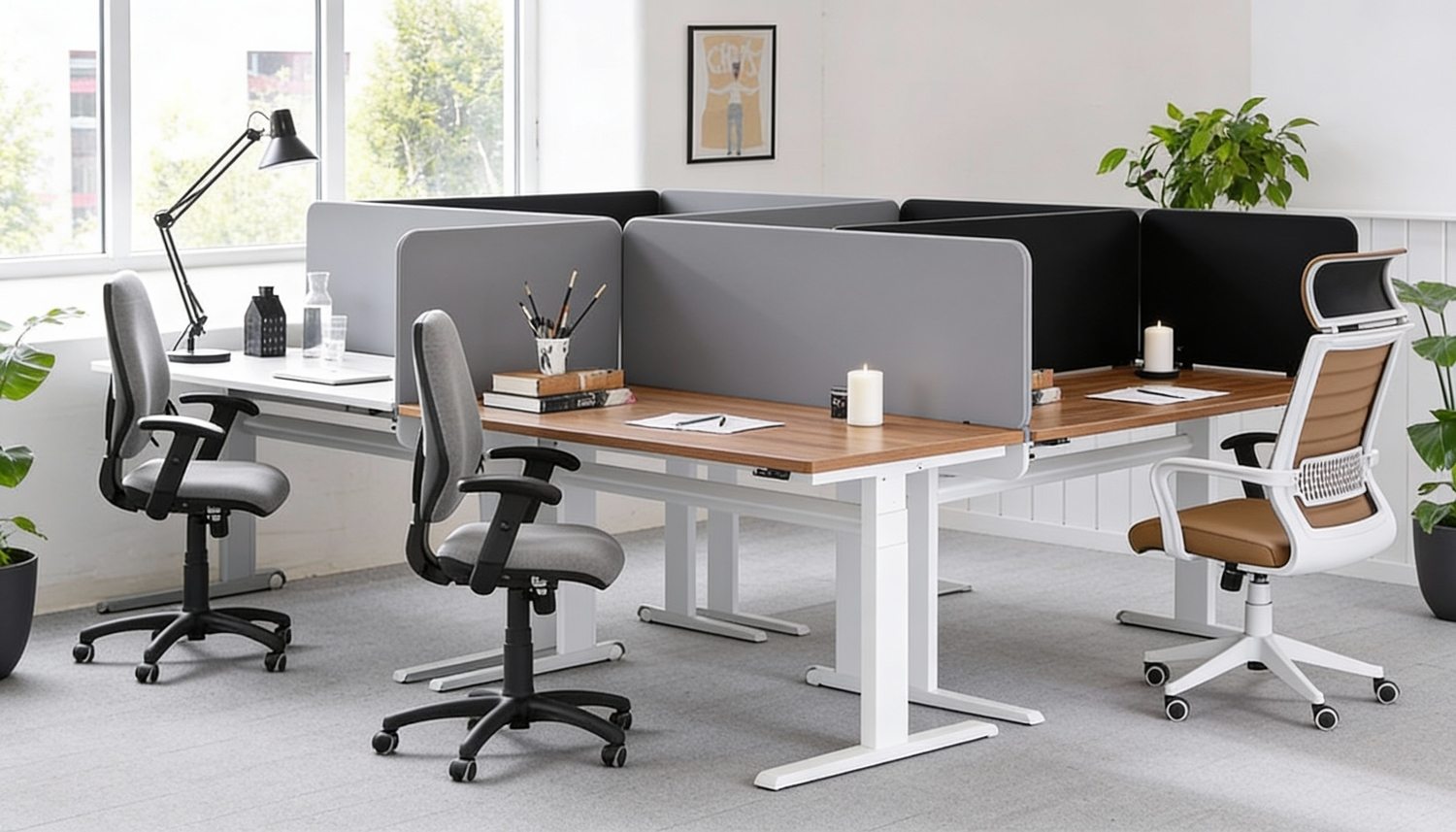
Sound-absorbing desk screens are screens mounted on or between desks and constructed from porous materials that capture sound waves. When sound hits the screen’s surface, the sound energy is converted into heat energy, which reduces reflections in the room. It is important to distinguish sound absorption from sound insulation, which blocks sound between rooms, as well as vibration damping, which reduces vibrations and structure-borne noise. Desk screens are used to improve acoustics locally where the sound originates.
Common acoustic problems at desks and workstations
In open-plan offices and shared workspaces, echoes and long reverberation often occur. Hard surfaces such as desks, screens, glass partitions, and smooth walls reflect sound effectively, causing conversations to carry far and be perceived as disruptive even at a distance. The result is poorer speech intelligibility, reduced concentration, and increased noise stress, both in professional work environments and in home offices.
How sound-absorbing solutions work in the workplace
Sound-absorbing products are placed near the sound source to dampen sound waves early on and reduce their spread throughout the room.
Desk screens
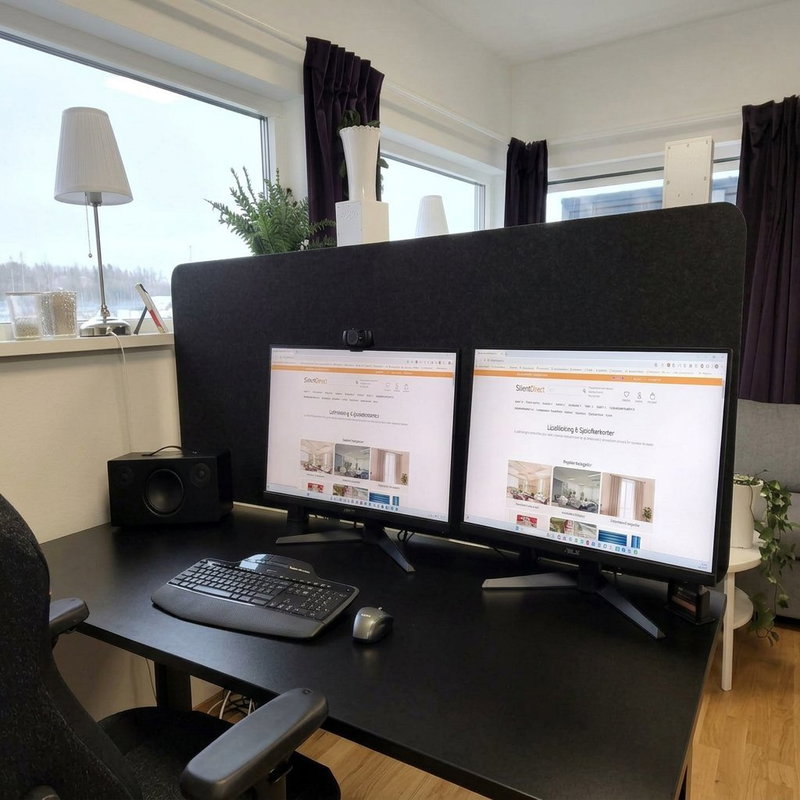
Desk screens absorb sound from conversations, keyboards, and work activities in the immediate vicinity and reduce disturbances between adjacent workstations.
Combination with wall and ceiling absorbers
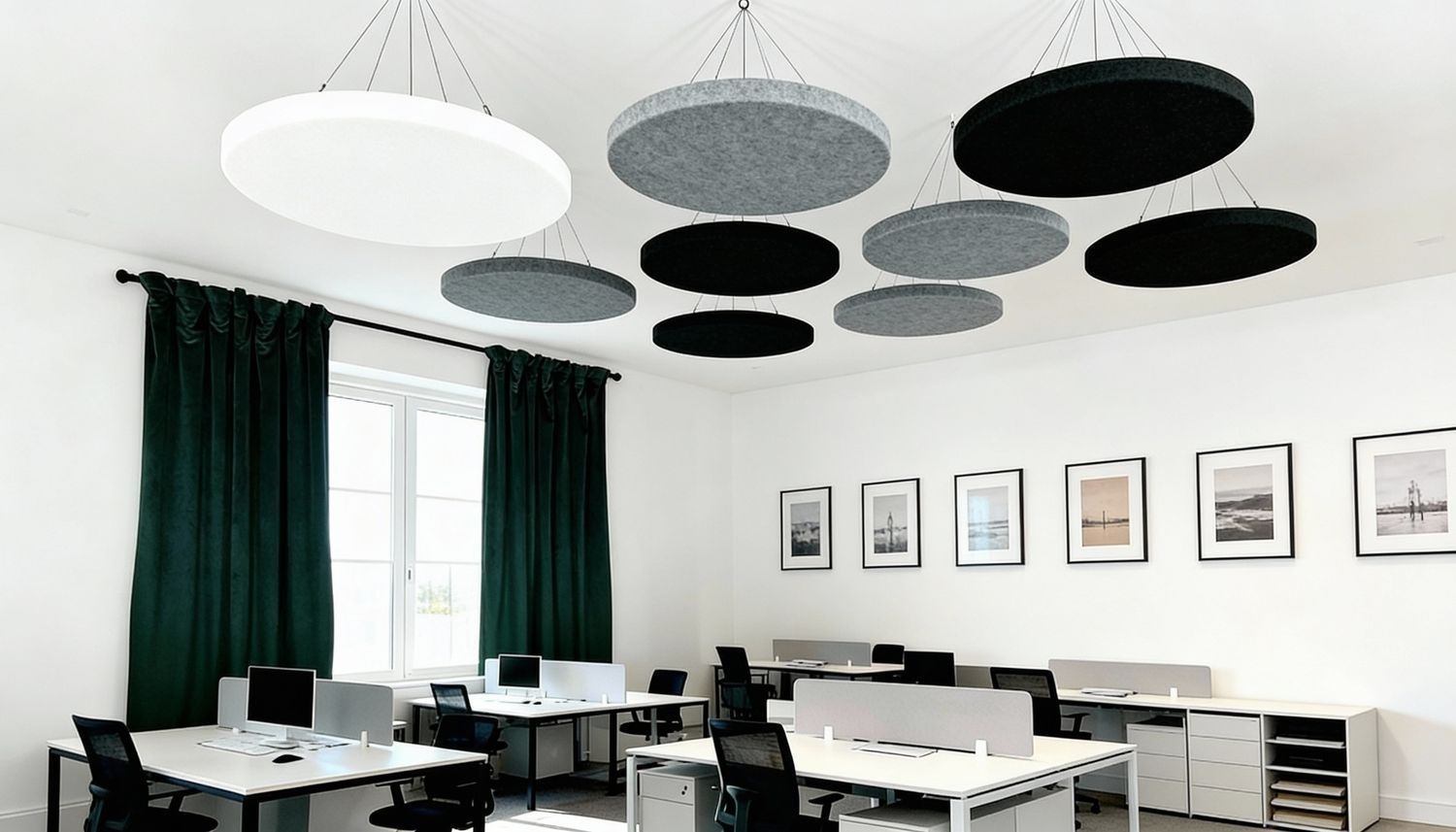
In larger spaces, desk screens are most effective when combined with sound absorption on walls and ceilings, creating more even and balanced acoustics.
Complement with curtains and room dividers
Sound-absorbing curtains and room dividers can further reduce reflections and divide open spaces in an acoustically effective way.
Why choose sound-absorbing table screens?
Sound-absorbing desk screens provide a quick and noticeable improvement to the work environment without requiring structural modifications. They enhance quiet working conditions, increase privacy between workstations, and contribute to better concentration throughout the workday. The solution is flexible and easy to adapt as the office layout changes. In many environments, desk screens serve as an important part of a comprehensive solution for good acoustics.
Well-considered advice for best results
For maximum effectiveness, desk screens should be of sufficient height and positioned to block the direct path of sound between workstations. A common mistake is using too few sound-absorbing surfaces in the room, which limits the overall effect. By viewing desk screens as part of the room’s overall sound absorption, you create a long-term comfortable and functional work environment.
Sound-absorbing desk screens are therefore an effective and reliable choice for those who want to reduce echoes, improve concentration, and create a quieter work environment in both offices and home offices.