


















Sound absorption – reduces echoes and reverberation in industrial environments
A more controlled and functional acoustic environment in industry and manufacturing
In industrial environments, high noise levels and long reverberation times are a common problem. Large spaces with hard surfaces made of concrete, steel, and glass cause sound to reflect rather than be absorbed. Machinery, work processes, and internal communication create a constant sound pressure that bounces between walls, ceilings, and floors. When reverberation time becomes too long, the environment is perceived as noisy, difficult to navigate, and exhausting to work in. Sound absorption is therefore a fundamental measure for reducing echoes and creating a more controlled and safe working environment in industrial operations.
What is sound absorption?
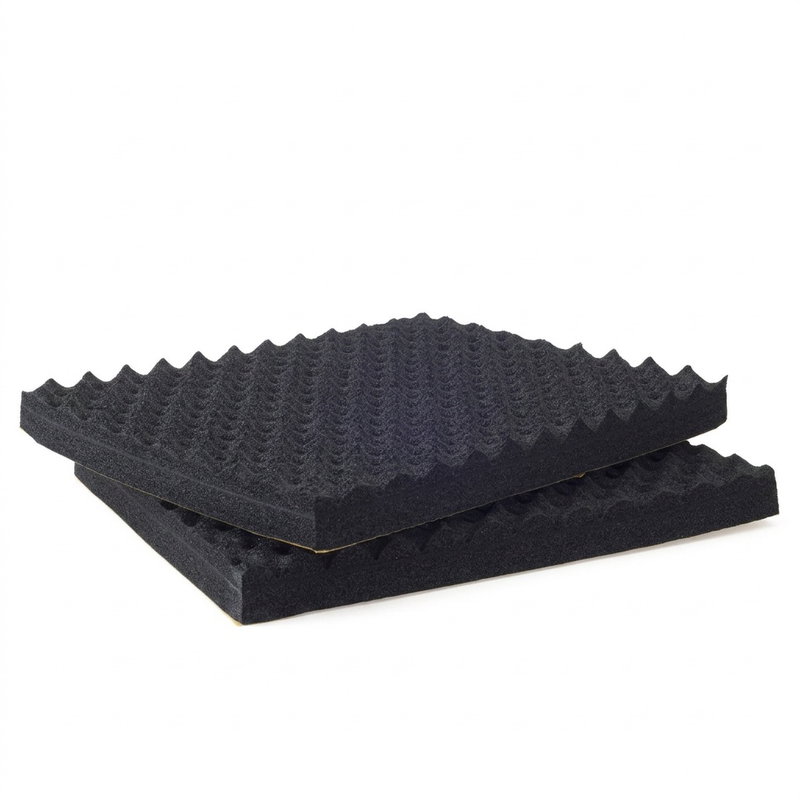
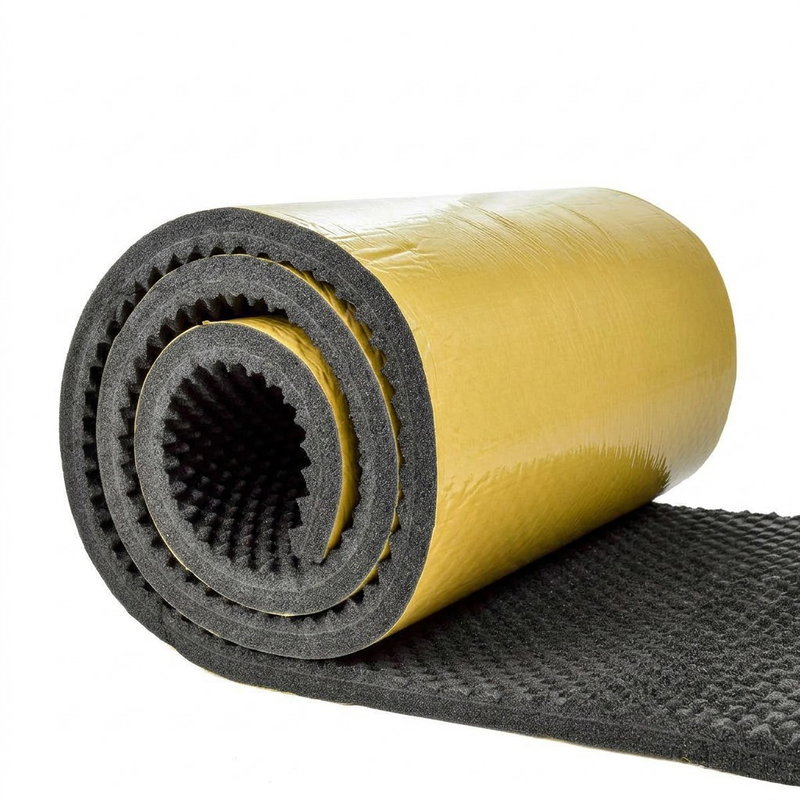
Sound absorption involves sound waves being captured by porous materials and converted into thermal energy, which reduces reflections within the room. It differs significantly from sound insulation, which aims to prevent sound from spreading between different rooms or spaces, as well as vibration damping, which reduces vibrations and structure-borne noise from machinery and installations. Sound absorption is used to improve acoustics where sound already exists and is particularly important in industrial facilities with many simultaneous sound sources.
Common problems with echo and reverberation
In production halls, warehouses, workshops, and other industrial facilities, long reverberation causes machine noise to amplify and blend together. Speech becomes difficult to understand from a distance, instructions risk being misunderstood, and the noise level is perceived as higher than it actually is. This can affect the work environment, efficiency, and safety. Without sound-absorbing measures, these noise problems risk becoming permanent and difficult to manage over time.
How sound-absorbing solutions work
Sound-absorbing products are placed on surfaces where sound reflections occur most frequently. When sound waves hit the material, they are slowed down, which shortens the reverberation time and creates a more balanced soundscape even in large, open industrial spaces.
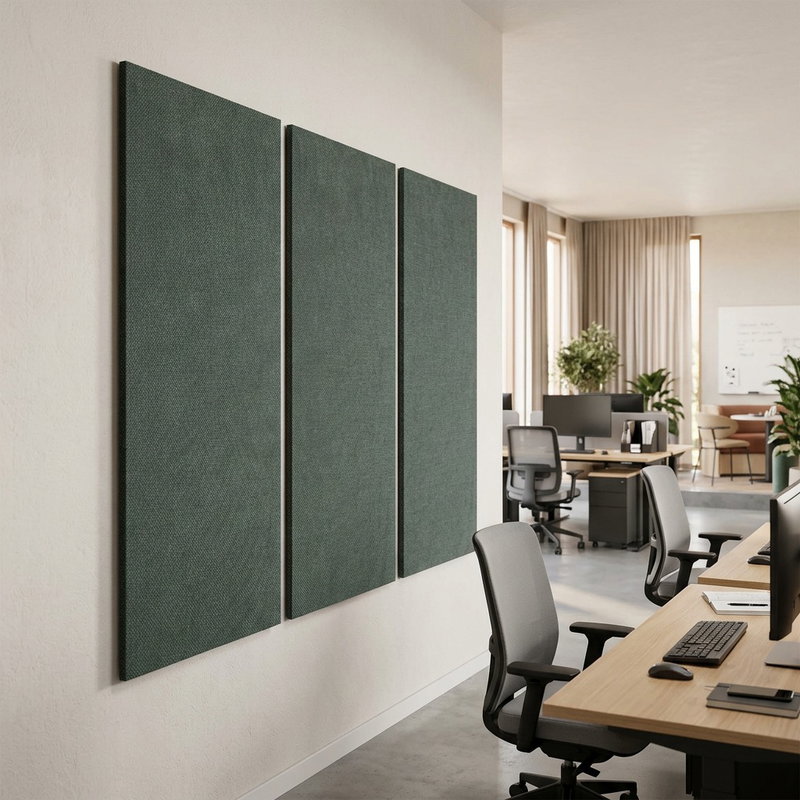
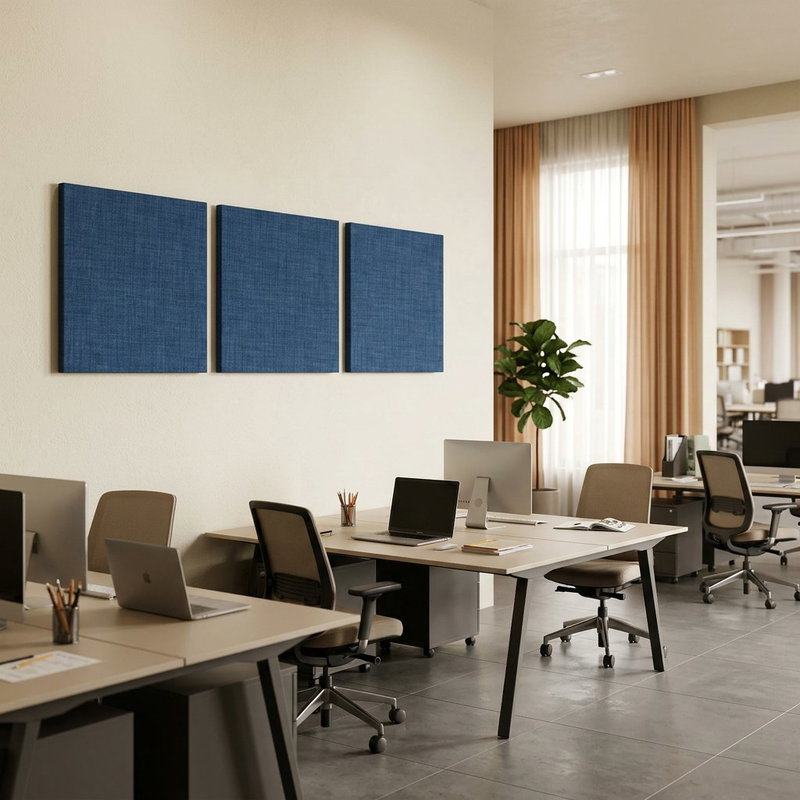
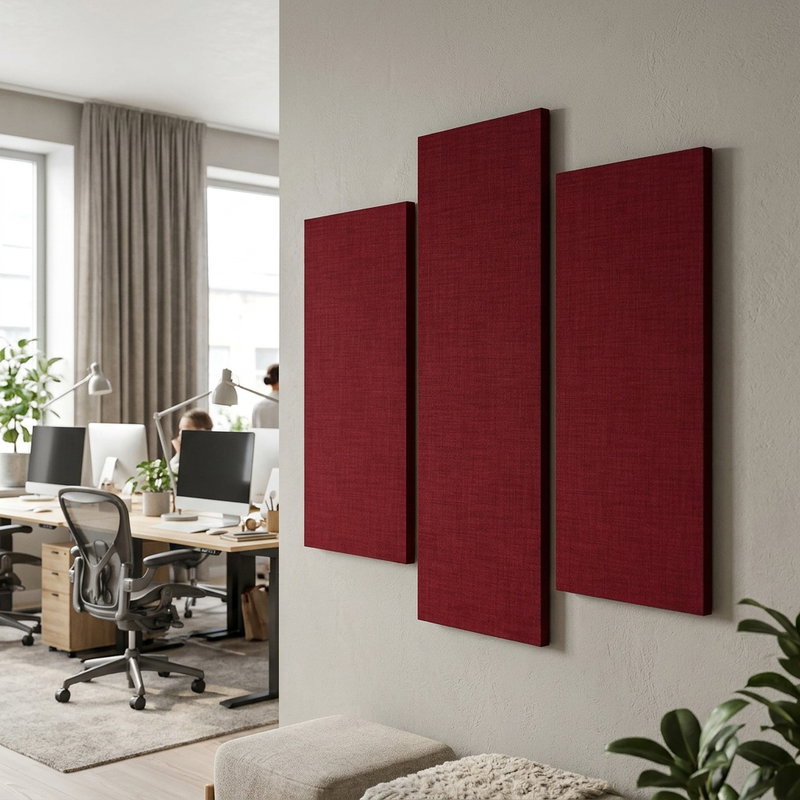
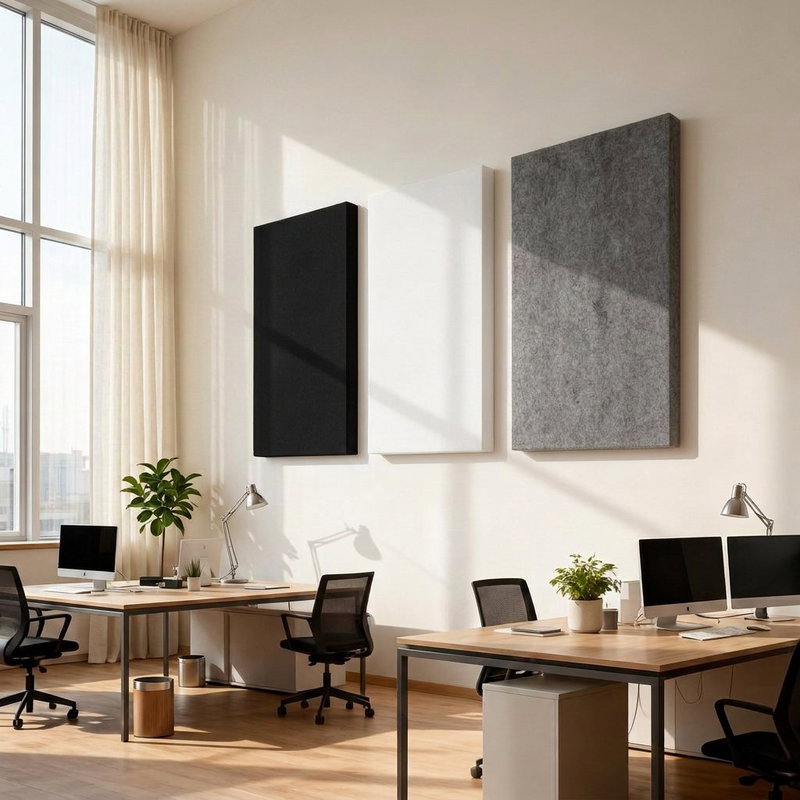
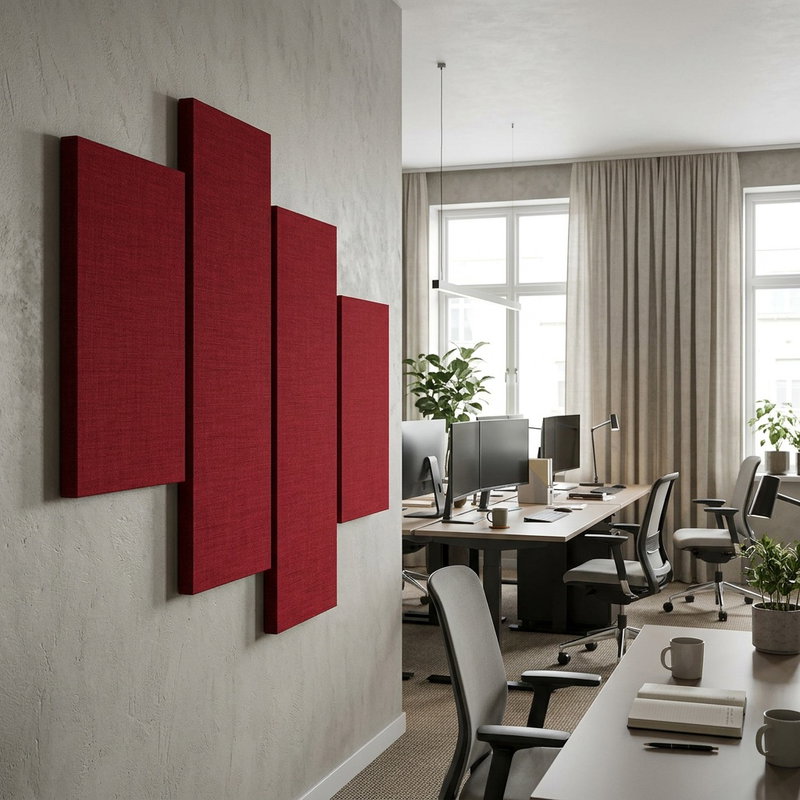
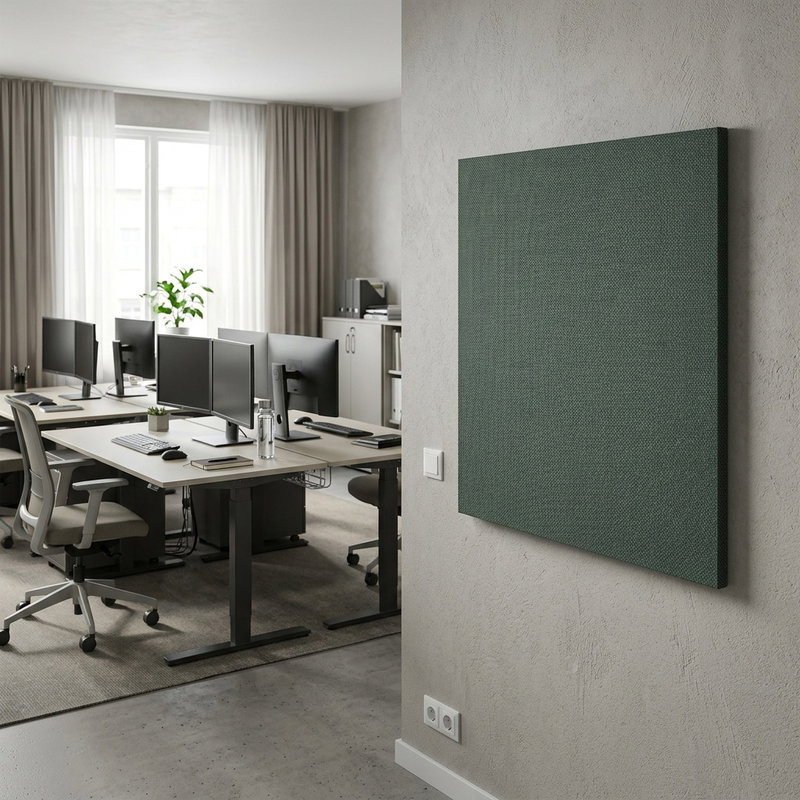
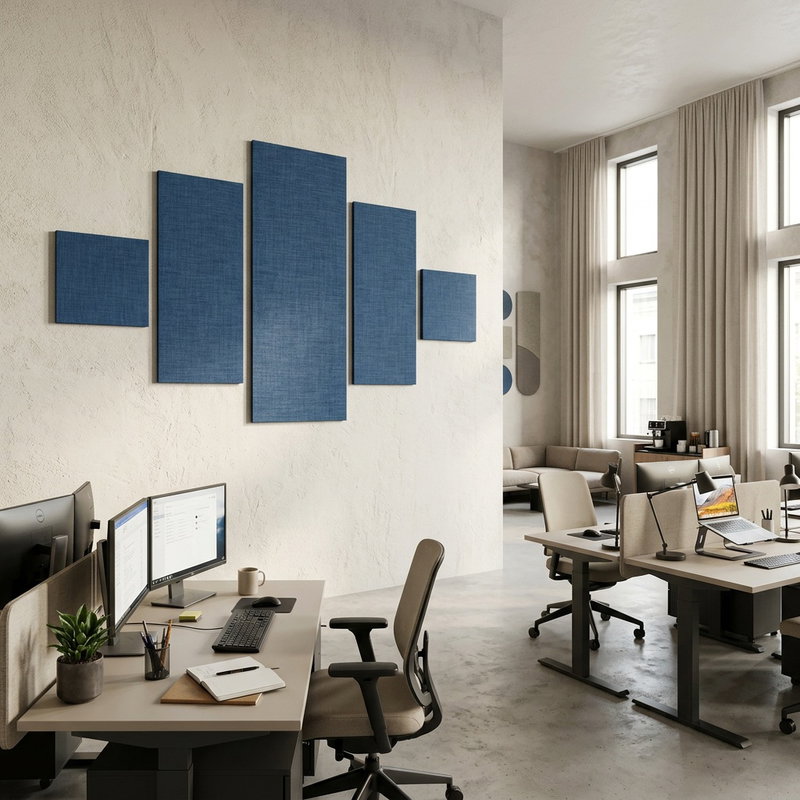
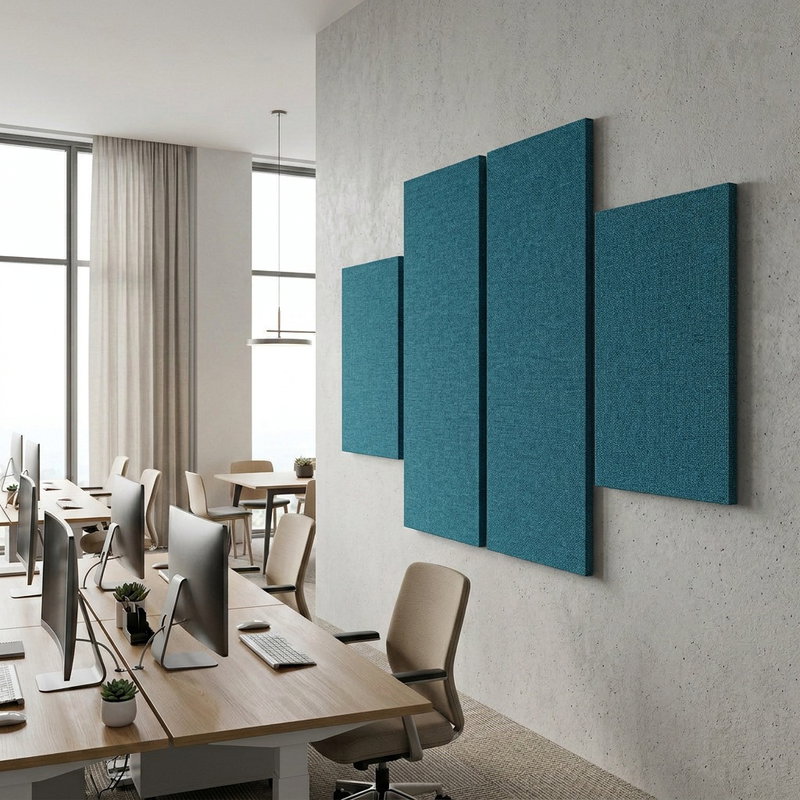
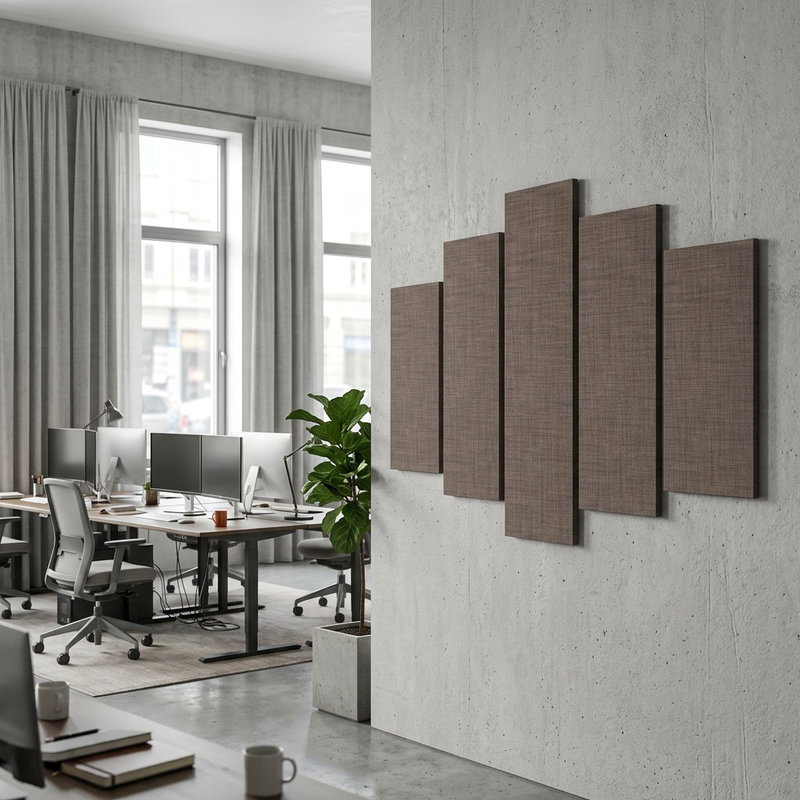
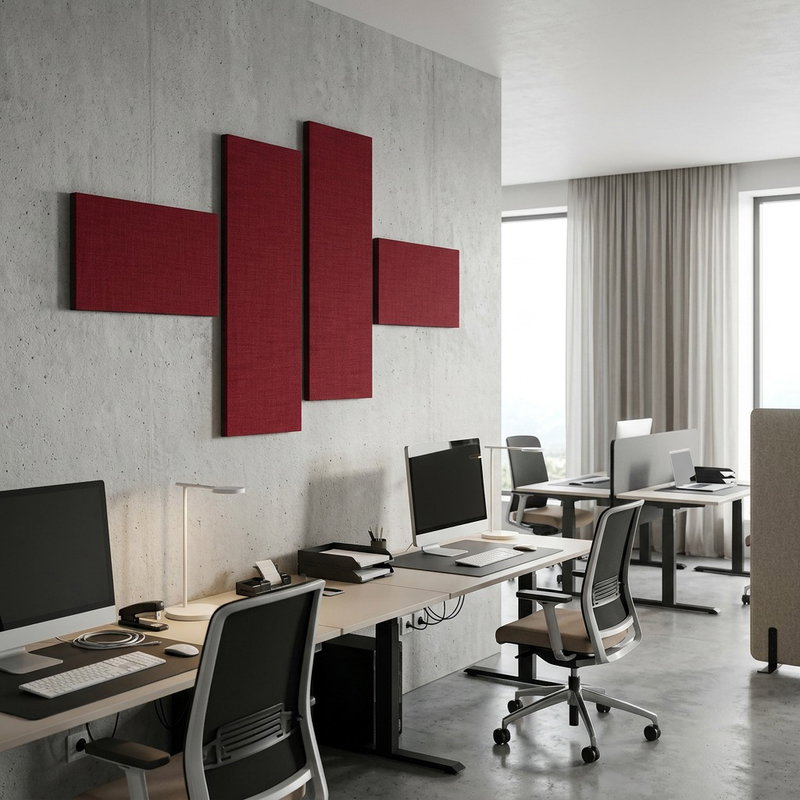
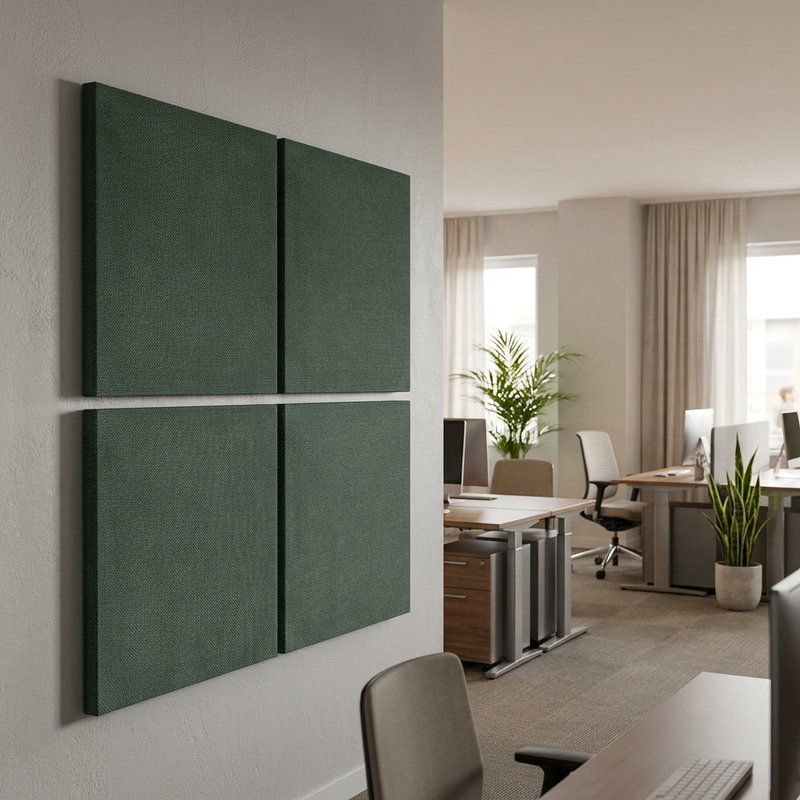
Sound absorption on walls
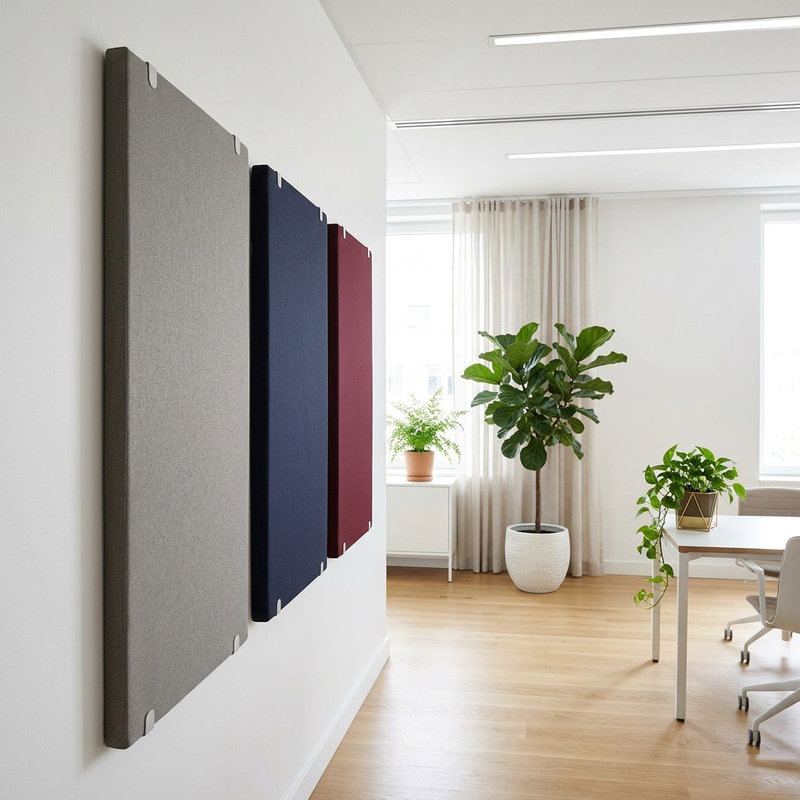
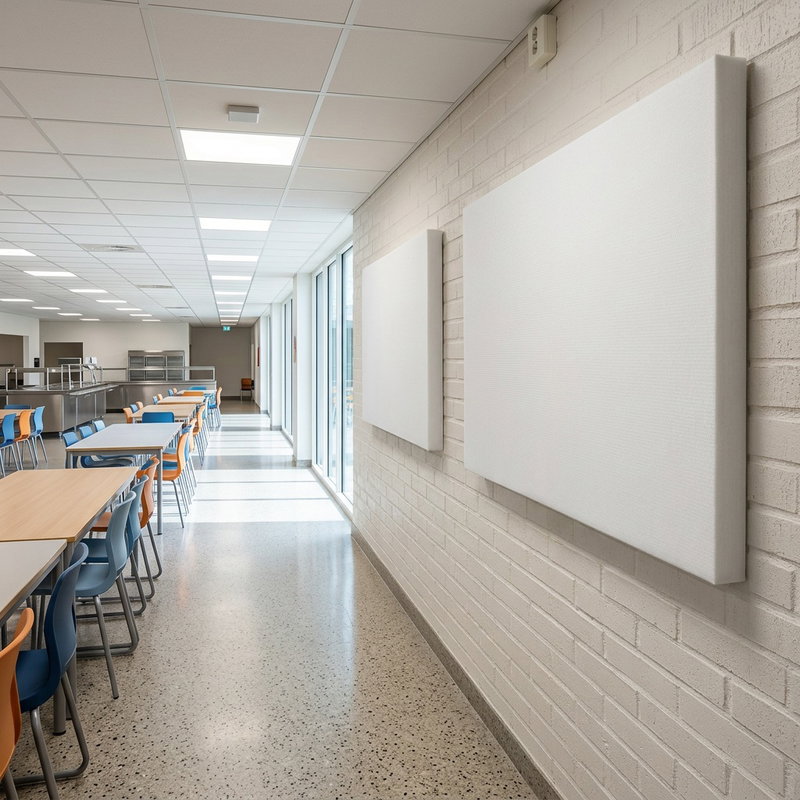
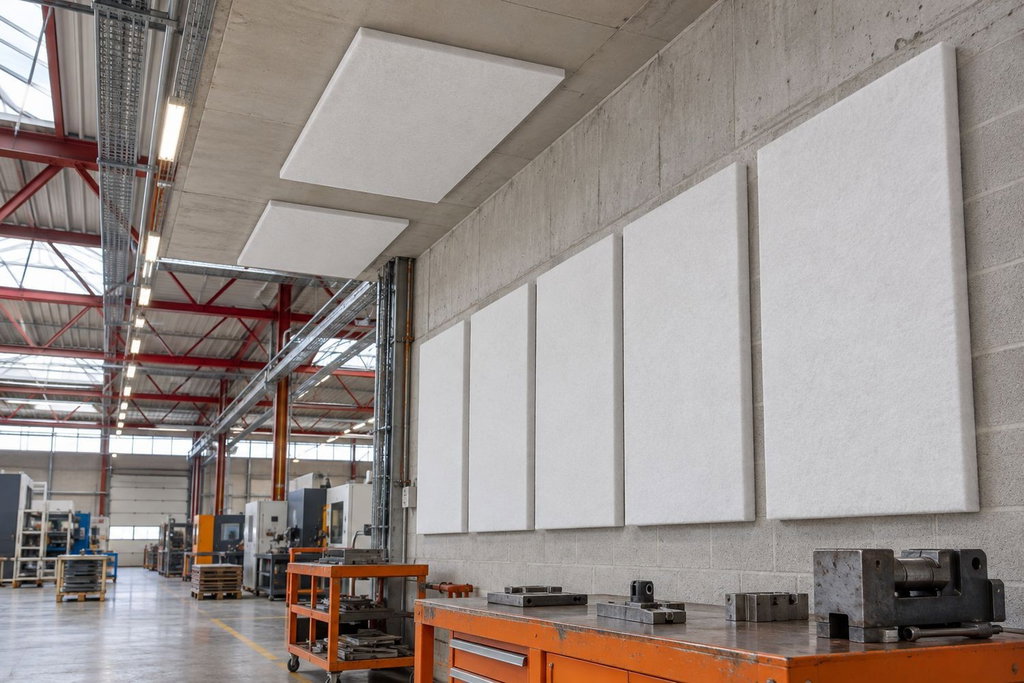
Wall absorbers reduce reflections in work zones and improve speech intelligibility in environments where communication is important.
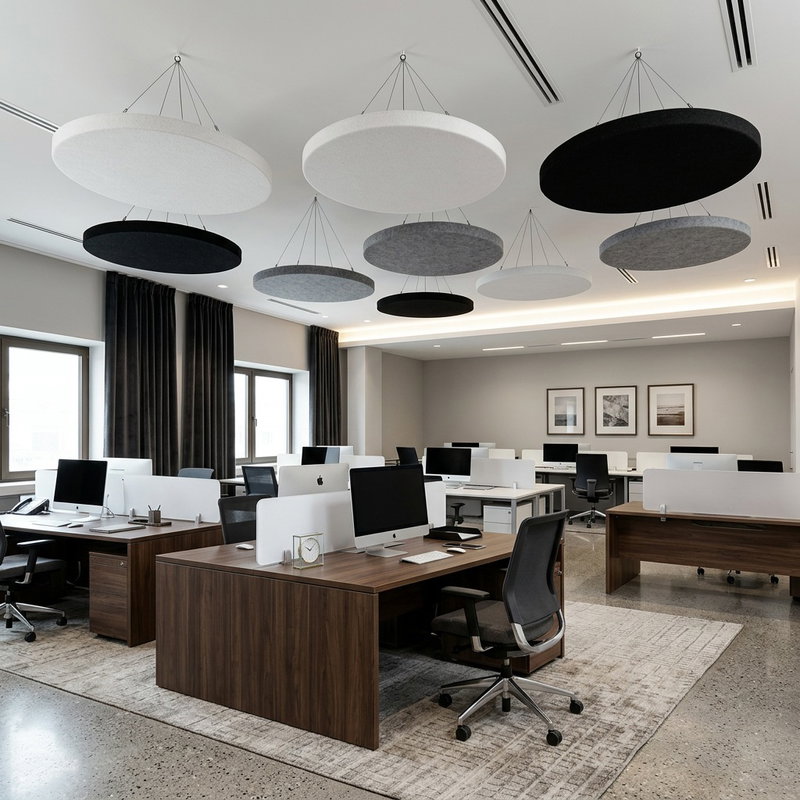
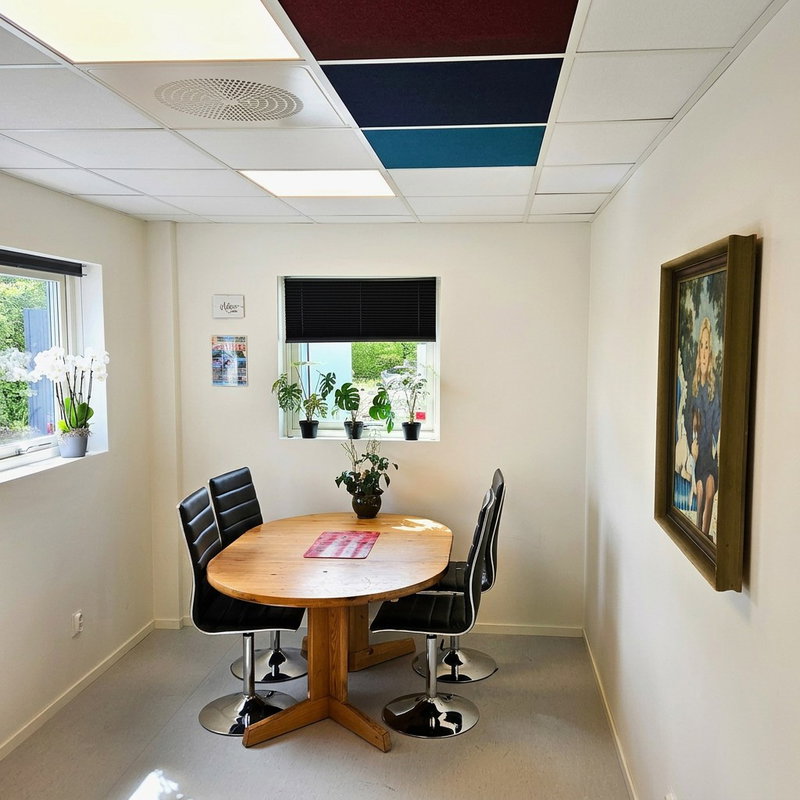
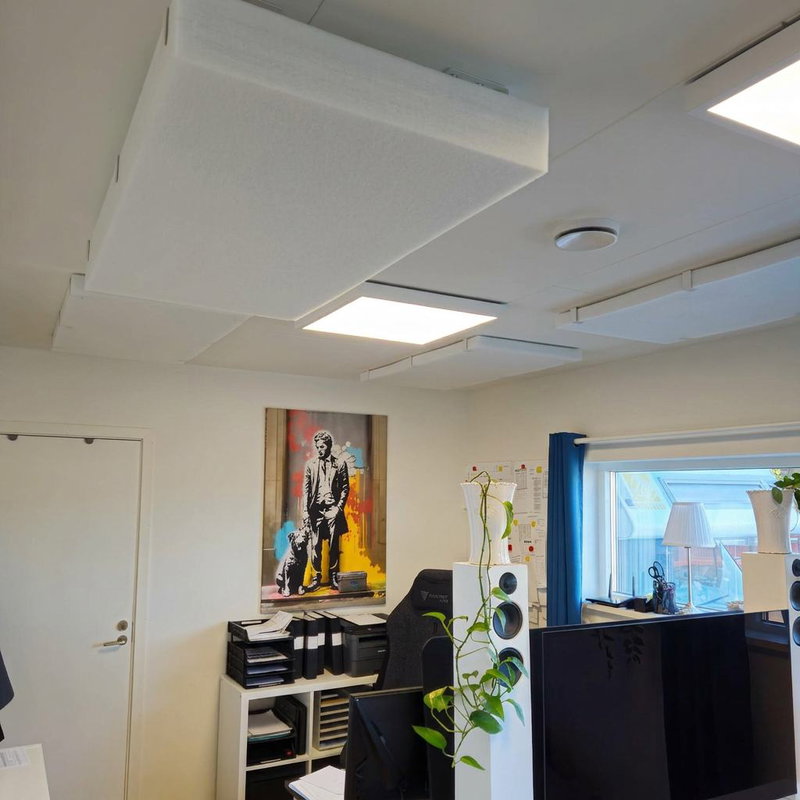
Ceiling sound absorption
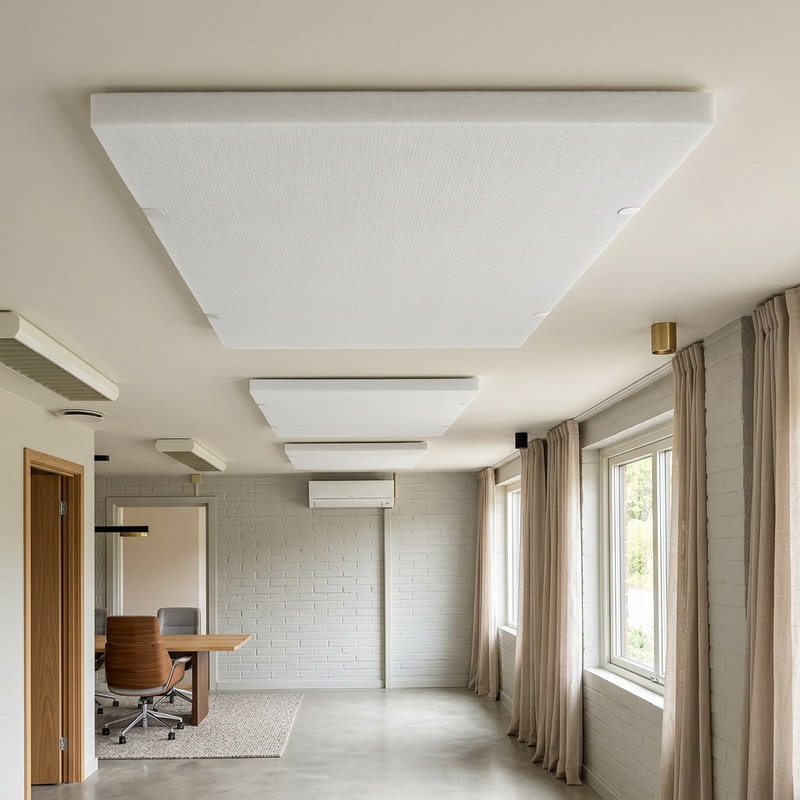
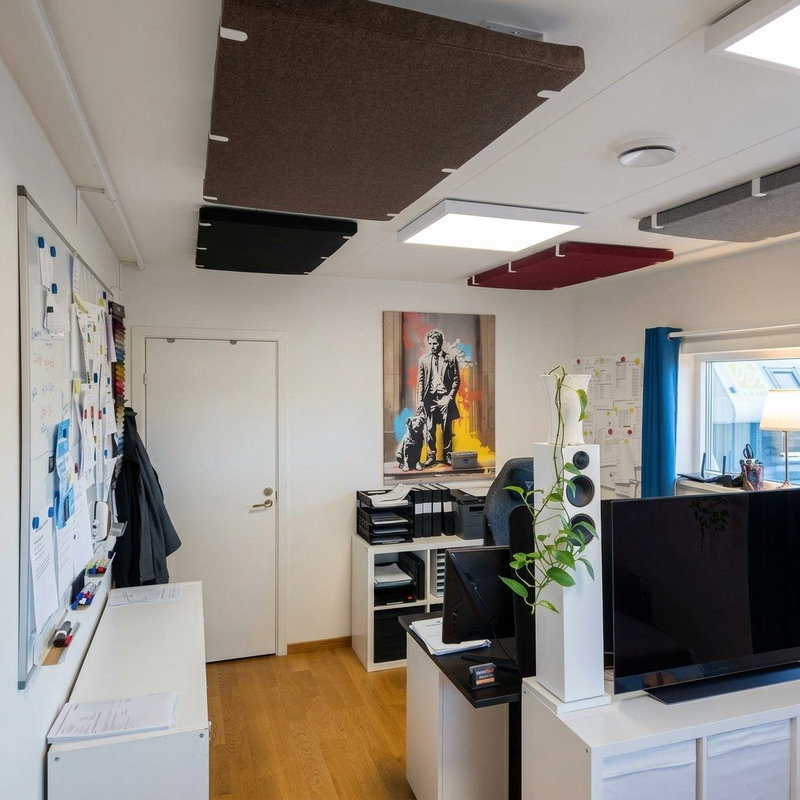
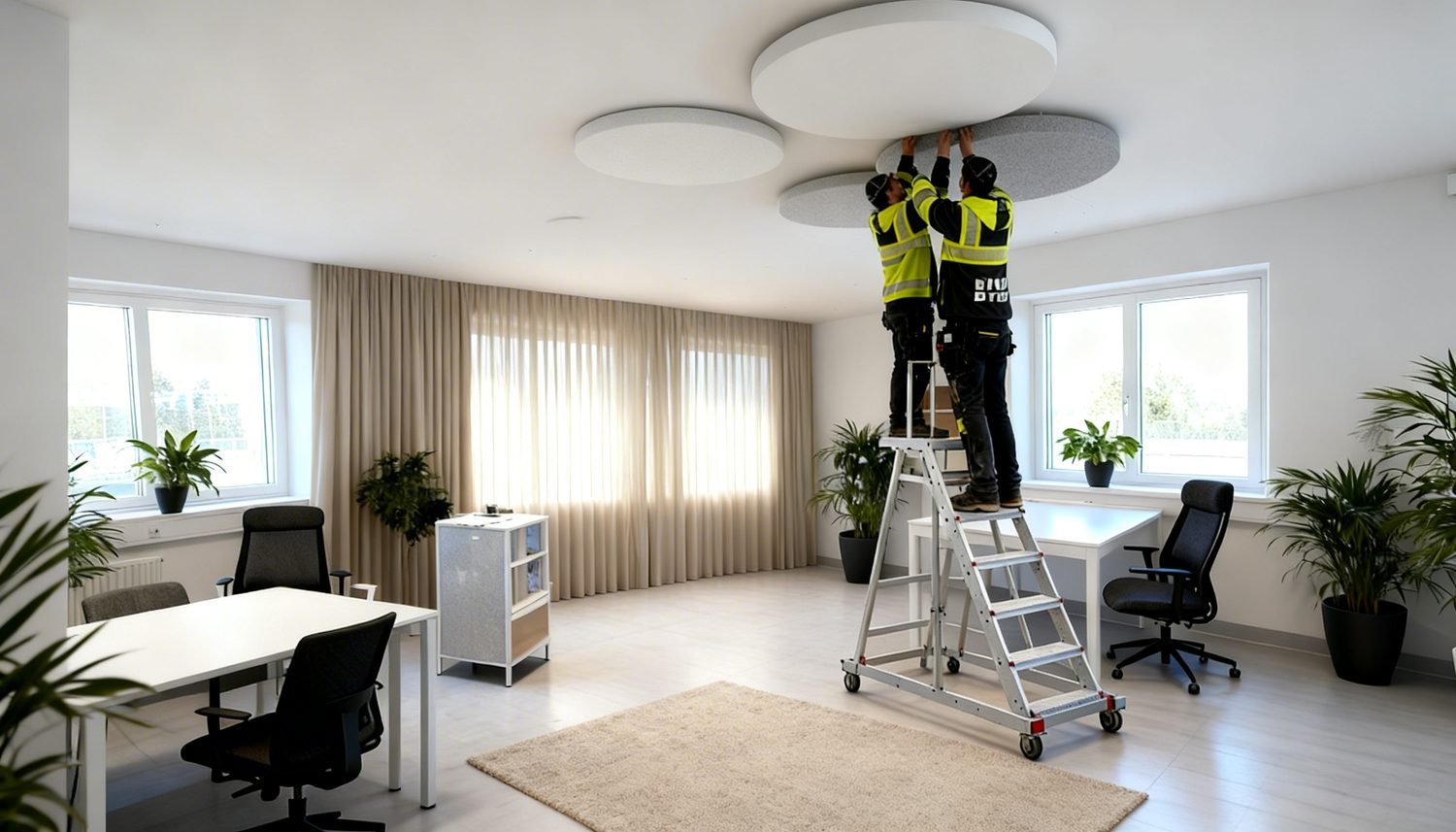
Ceiling absorbers are often the most effective first step in industrial spaces with high ceilings and large open areas.
Sound-absorbing curtains
Curtains are used to dampen reflections from hard surfaces and can also serve as flexible partitions between different areas of the facility.
Sound-absorbing room dividers
Room dividers combine physical screening with sound absorption and are particularly useful for creating quieter work zones in open industrial environments.
Why choose sound absorption?
Sound absorption provides an immediate improvement in the acoustic environment without requiring changes to the building’s structure. The solution is flexible, scalable, and can be adapted to changing needs in production and logistics. The results are noticeable through lower perceived noise levels, clearer communication, and a more functional work environment. In some cases, sound absorption can be effectively combined with sound insulation or vibration damping to achieve a better overall result.
Well-considered advice for the best results
The size, ceiling height, and type of activity in the industrial facility determine how much sound absorption is required. Large, open spaces often require a combination of ceiling absorbers, wall solutions, and flexible partitions. A common mistake is using too few absorbers or placing them where sound impact is low. By distributing the measures evenly and adapting them to the specific operations, you create long-term, effective, and sustainable acoustics.
Sound absorption is therefore a safe and effective choice for industrial environments seeking to reduce room echo and create better conditions for the work environment, safety, and communication.