







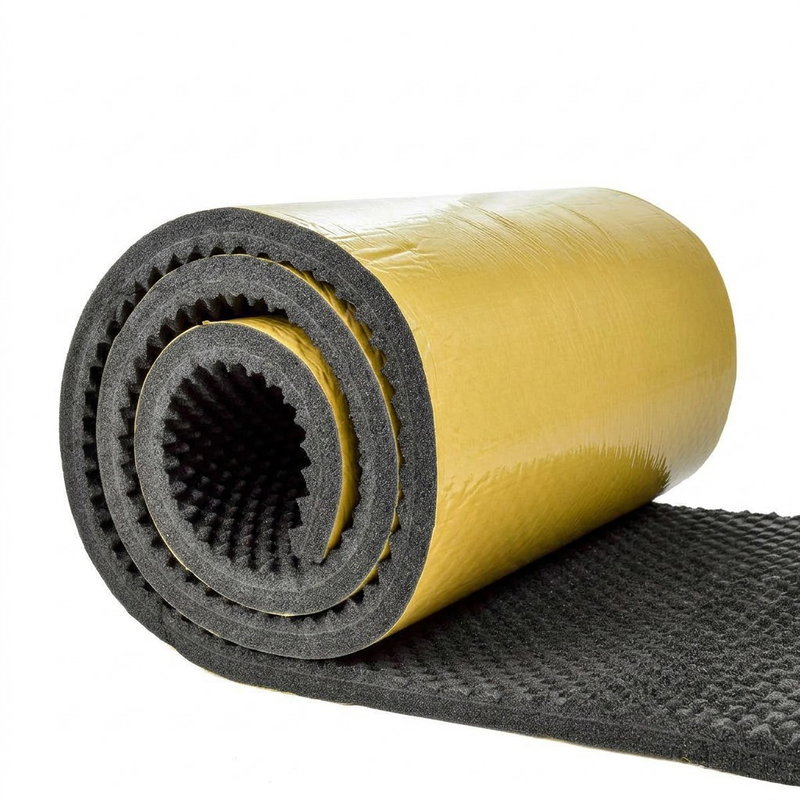

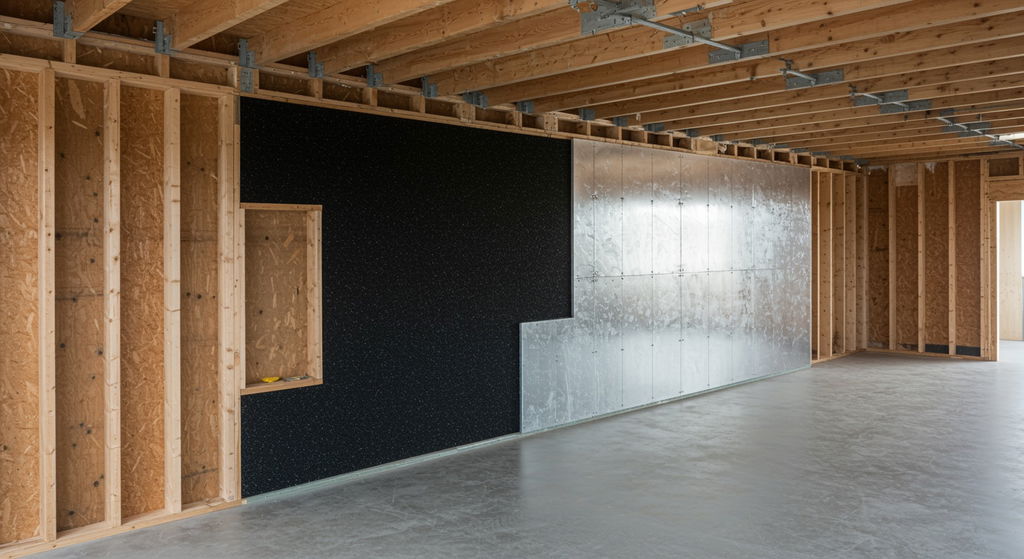
Sound insulation – stops sound between rooms in schools
Create clearer separation and better sound control between different spaces
When sound spreads between rooms, it affects comfort, privacy, and functionality in a building. Voices, music, machine noise, or activity in adjacent spaces can travel through walls, floors, ceilings, and openings, creating a disruptive sound environment. Sound insulation is the measure used to limit this sound transmission and create clear acoustic boundaries between different rooms and functions.
What is sound insulation?
Sound insulation means preventing sound from spreading between separate spaces through the building's construction. It differs significantly from sound absorption, which is used to reduce echo and reverberation within a room, and from vibration damping, which reduces structure-borne noise that occurs when vibrations are transmitted through the building's structure. Sound insulation therefore focuses on stopping sound from traveling between rooms, not on changing the acoustics where the sound is generated.
Common problems with sound between rooms
Problems with sound transmission between rooms are often experienced as voices being heard through walls, music penetrating into adjacent spaces, or noise from technical equipment spreading throughout the building. Even low-frequency sounds can travel long distances and be perceived as particularly disturbing. These problems are particularly evident in buildings with lightweight structures, glass partitions, or inadequate sealing.
How does sound spread in a building?
Sound can spread both as airborne sound and through the building's frame. Walls, floors, and ceilings act as interconnected structures through which sound can travel if the construction is not sufficiently insulated. Machines and technical equipment can also create vibrations that amplify sound transmission between rooms. To achieve effective sound insulation, it is therefore necessary to understand both the sound source and how sound travels through the building.
Sound insulation in different parts of a building
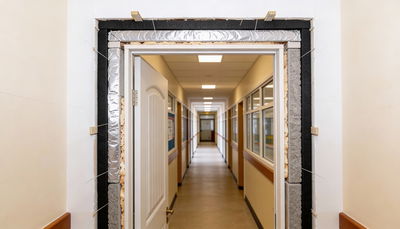
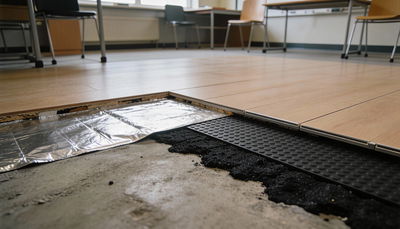
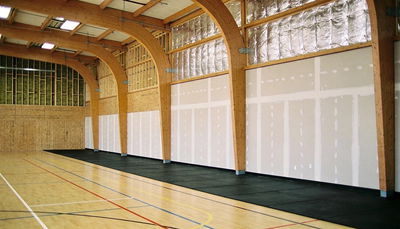
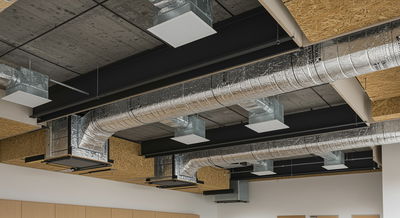
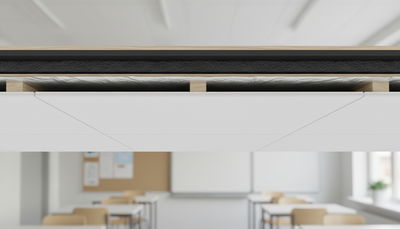
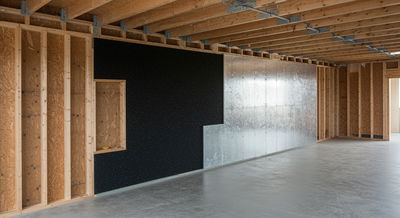
Sound insulation is used in several different parts of a building, depending on where the sound leakage occurs. Walls are insulated to limit conversations and activity between rooms. Floors are treated to reduce footfall and movement noise between floors. Ceilings are used to stop sound from above. Doors and windows are often weak points where sound easily leaks through and require special attention. Machines and technical equipment may also need to be insulated to limit how sound spreads to surrounding rooms.
Relationship to sound absorption and vibration damping
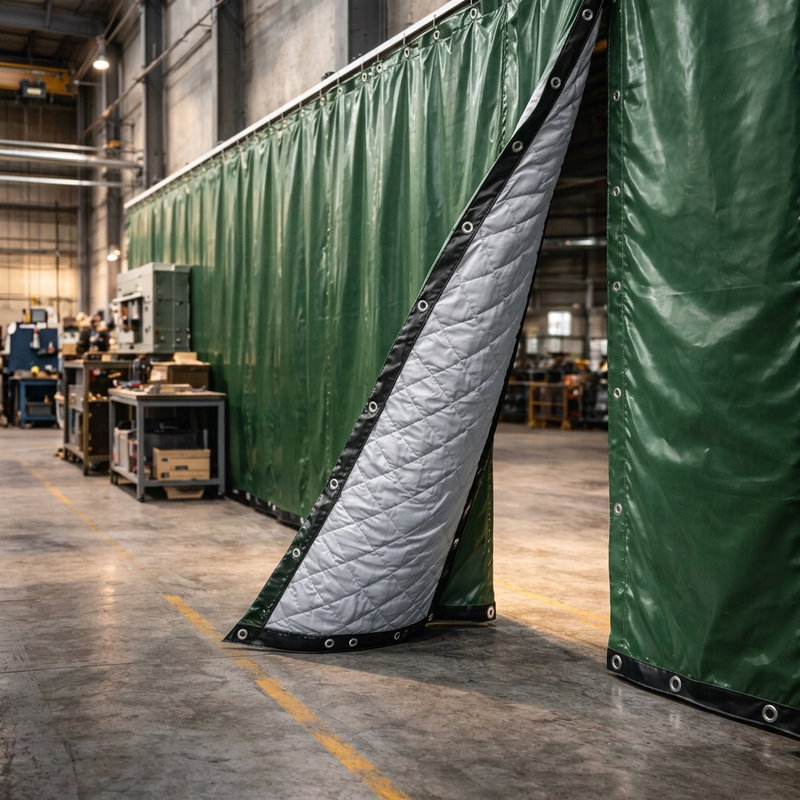
Sound insulation should not be confused with sound absorption. Sound-absorbing solutions on walls, ceilings, curtains, or room dividers are used to reduce echo and improve speech intelligibility within a room. Vibration damping is used when sound is transmitted via mechanical vibrations in the structure. In many environments, these measures are combined to achieve a balanced and functional sound environment.
Well-considered advice for best results
For best results, it is important to identify where the sound originates and how it spreads between rooms. A common mistake is to focus on the space where the sound is heard, even though the sound source is located elsewhere. By working systematically with the right insulation principles and addressing weak points, long-term effective sound insulation can be achieved.
Sound insulation is therefore a fundamental measure for stopping sound between rooms and creating better privacy, comfort, and functionality in both private and professional environments.