



















Sound absorption – reduces echo and reverberation in studio rooms
A controlled and functional sound environment in different types of studios
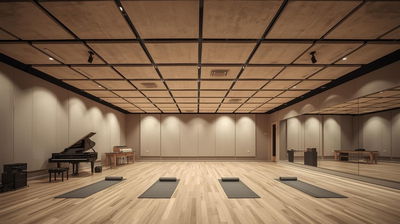
Today, studios and studio environments encompass many different activities – from recording studios and podcast studios to film, TV, photo, and dance studios, as well as home studios, art studios, and rehearsal studios. Common to all these environments is the need for controlled acoustics. Hard surfaces such as concrete, plaster, glass, and wood cause sound to reflect strongly in the room, creating echo and long reverberation. This affects everything from sound quality and speech intelligibility to concentration and working comfort. With the right sound absorption, the studio environment can be adapted to its function and become both more precise and more comfortable to work in.
What is sound absorption?
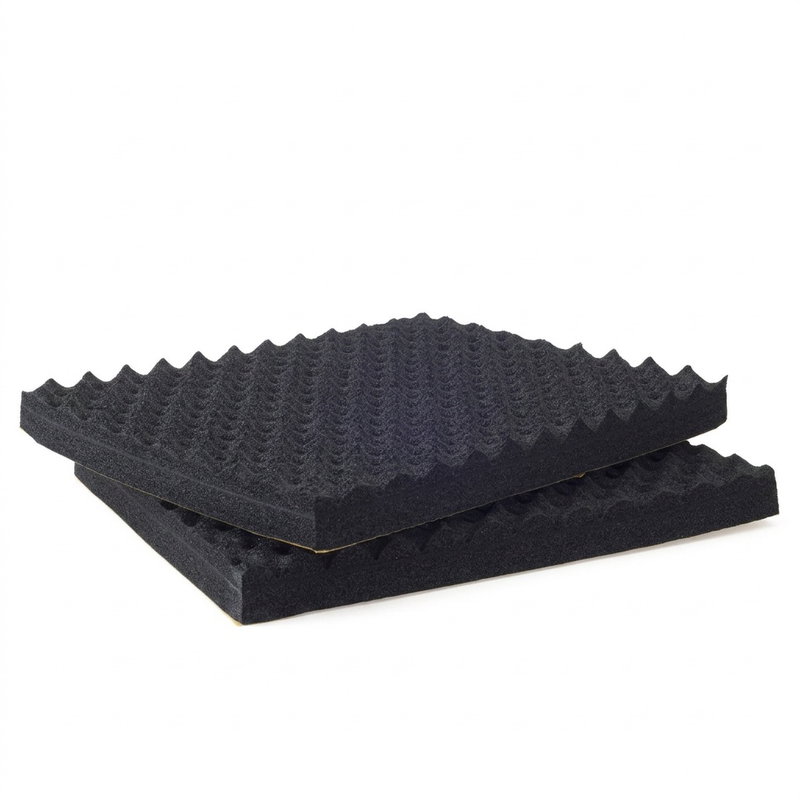
Sound absorption means that sound waves are captured by porous materials and converted into heat energy, which reduces reflections in the room. This improves the acoustics where the sound already exists. This is clearly different from sound insulation, which aims to stop sound between rooms, and vibration damping, which reduces vibrations and structure-borne noise in the building's construction. In studio and studio environments, sound absorption is used to create a more controlled and predictable sound field, regardless of whether the focus is on sound production, movement, image, or creative work.
Common problems with echo and reverberation
Echo and long reverberation create different problems depending on the type of studio. In recording, podcast, and home studios, speech intelligibility, microphone pickup, and mixing precision are negatively affected. In TV and film studios, large volumes and high ceilings can cause difficult-to-control reflections that color the sound. Dance studios and rehearsal studios often experience high noise levels and lack of comfort, while art and photo studios can suffer from disruptive room resonance that affects work peace and communication. What they all have in common is that reverberation impairs both the function and experience of the studio environment.
How sound-absorbing solutions work
Sound-absorbing solutions are placed on strategic surfaces where reflections occur in the studio environment. When sound waves hit the material, they are dampened, which shortens the reverberation time and creates a more balanced acoustics adapted to the use of the room.
Sound absorption on walls
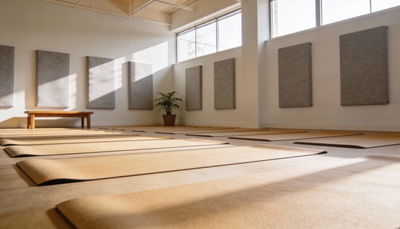
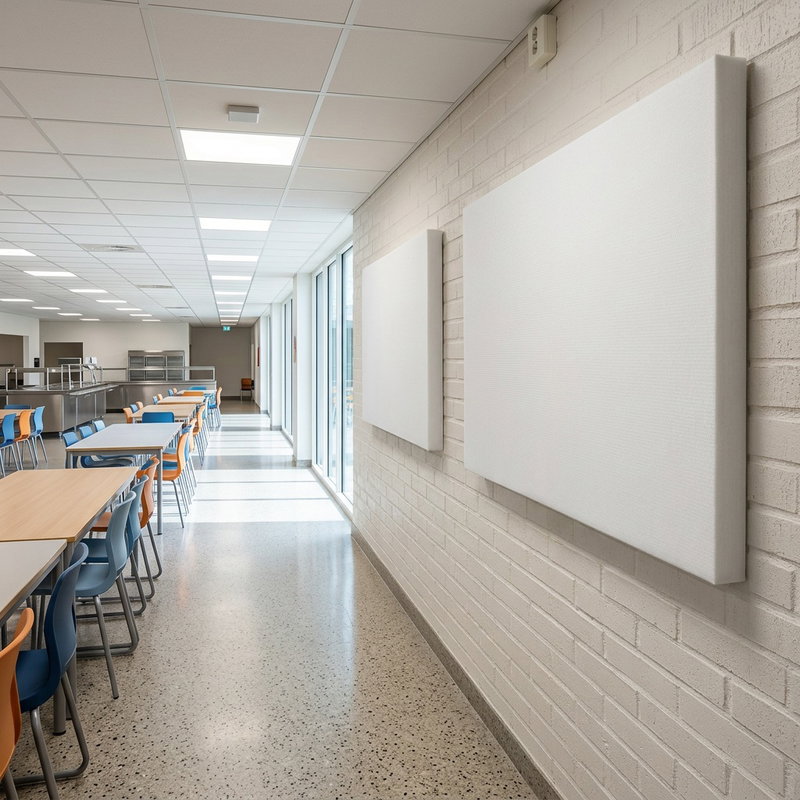
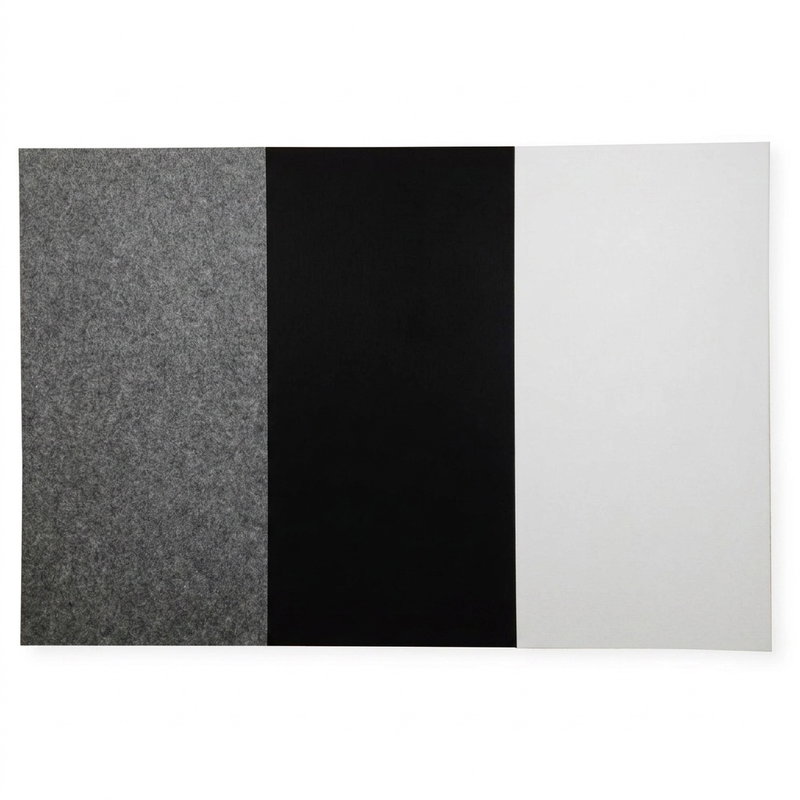
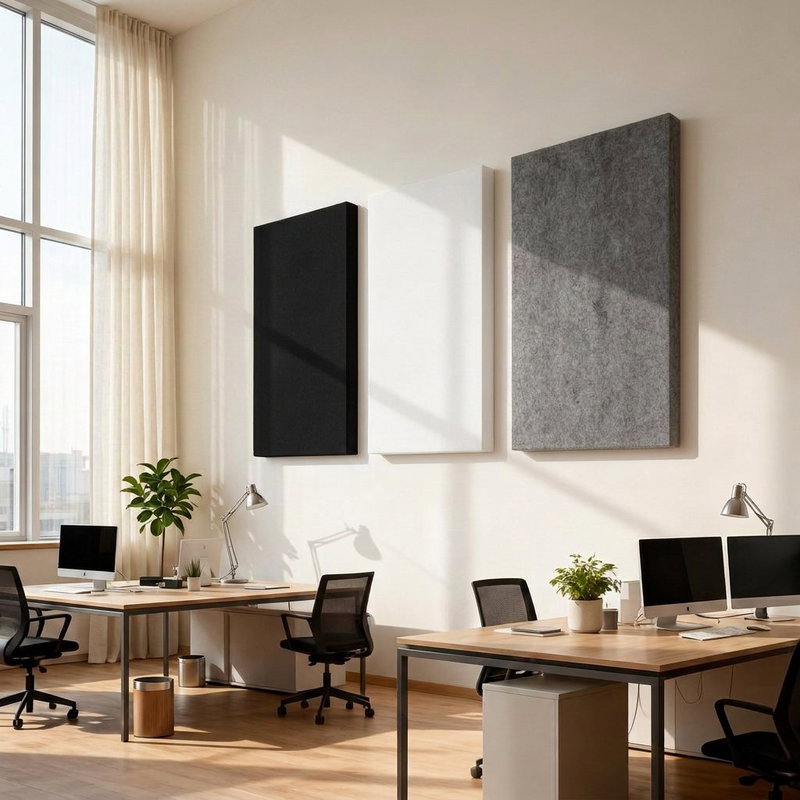
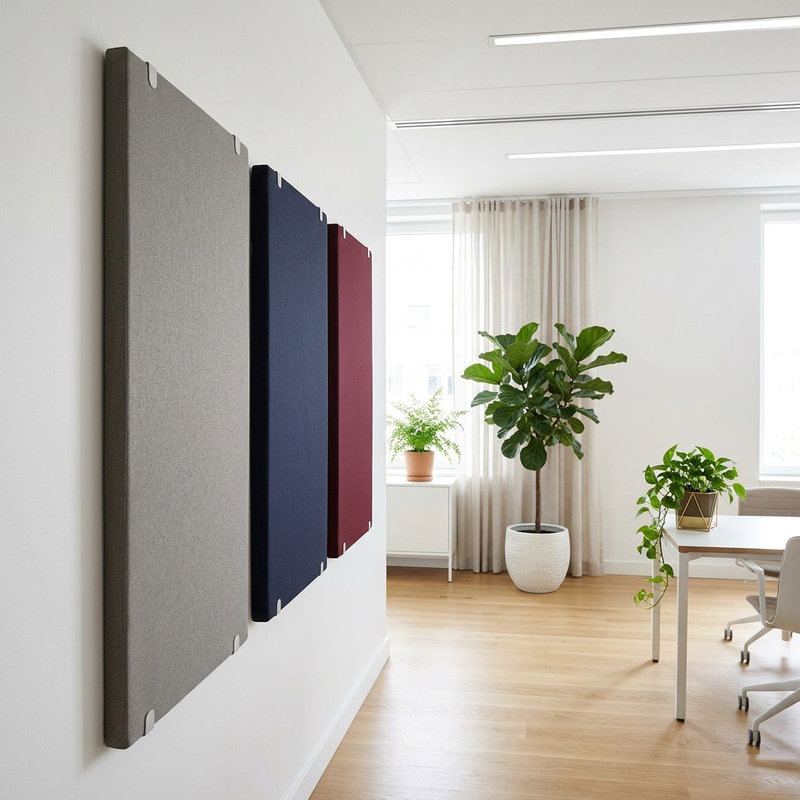
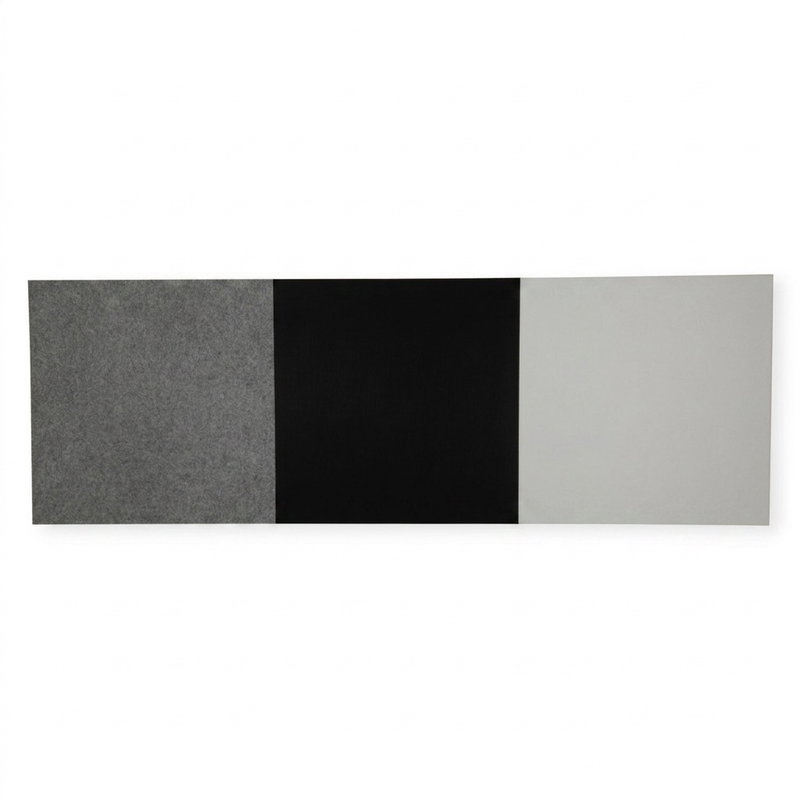
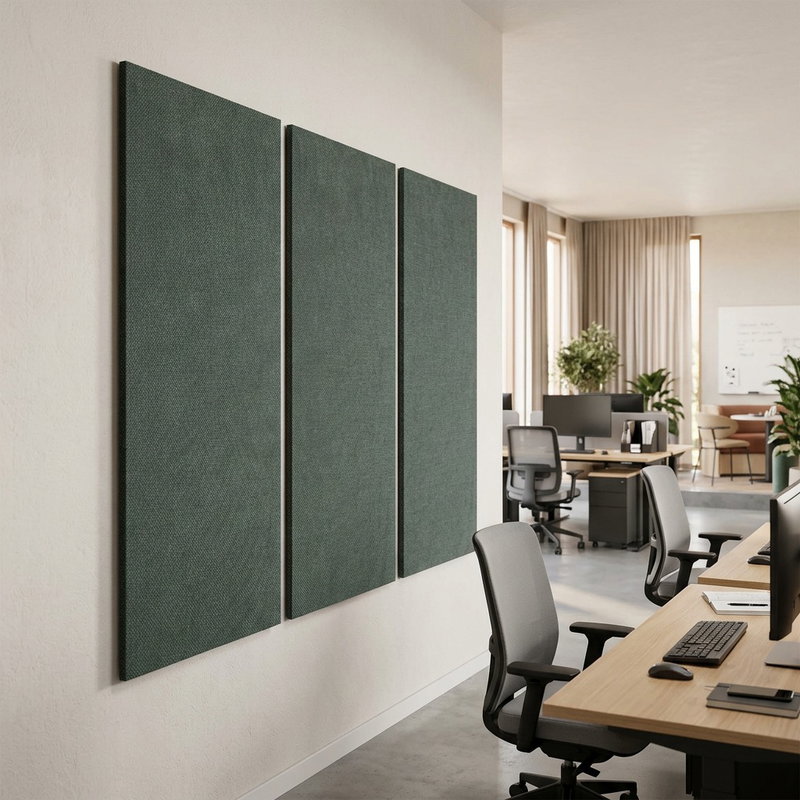
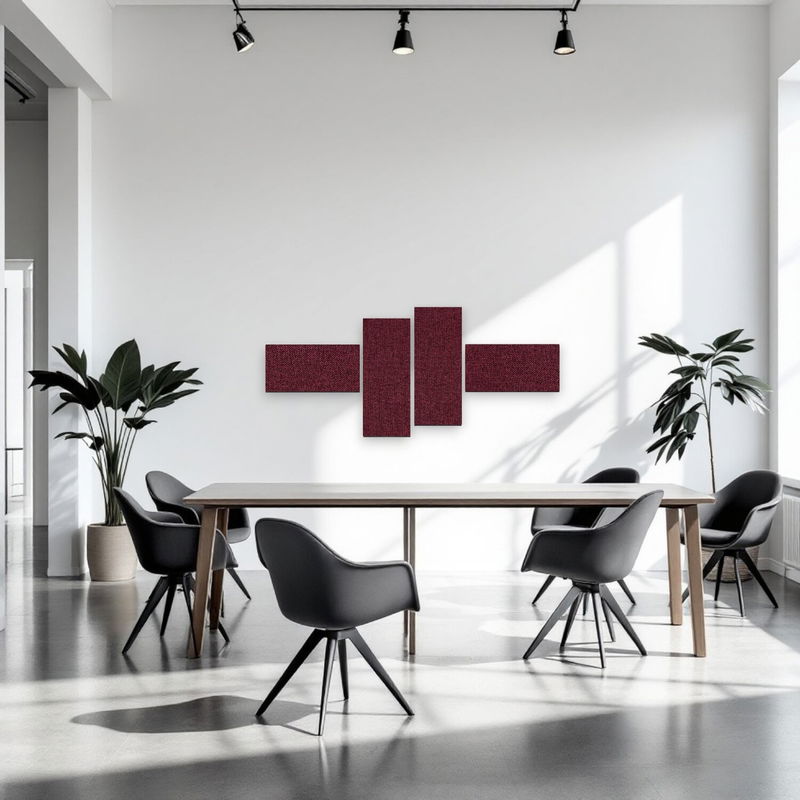
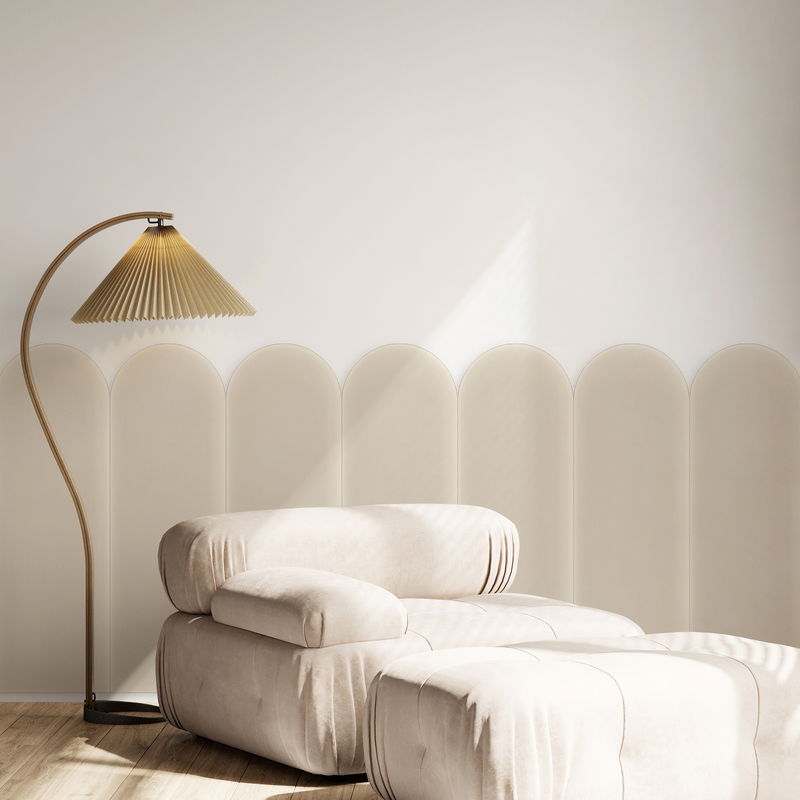
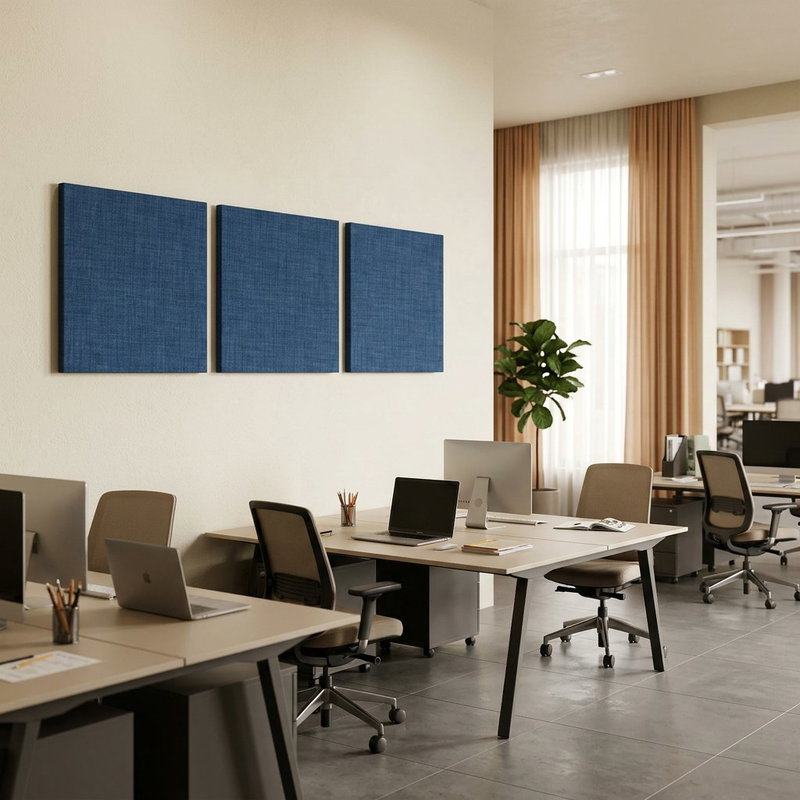
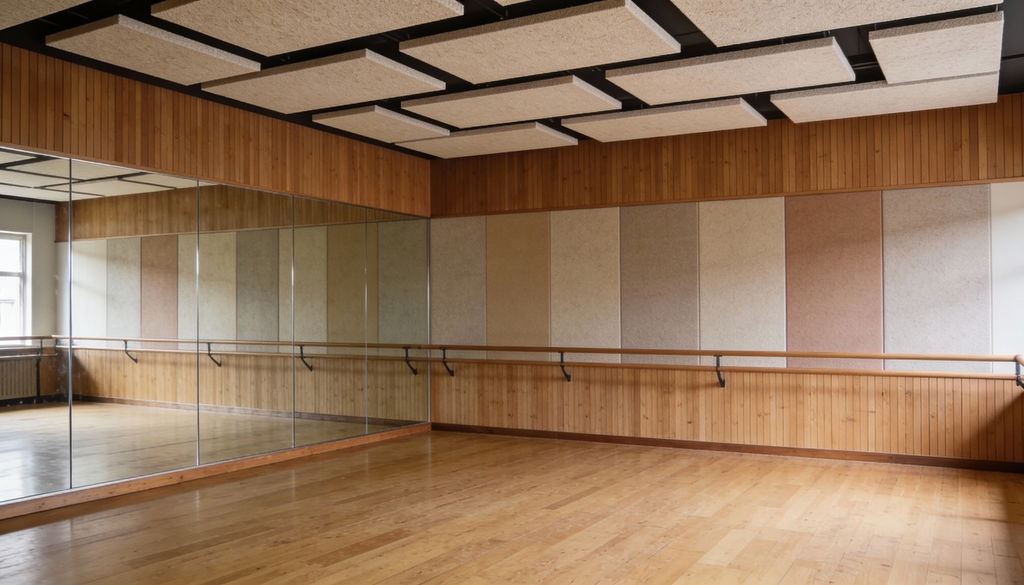
Wall absorbers reduce early reflections at ear level and are particularly important in recording studios, podcast studios, and control rooms where speech and listening must be clear and neutral.
Sound absorption on ceilings
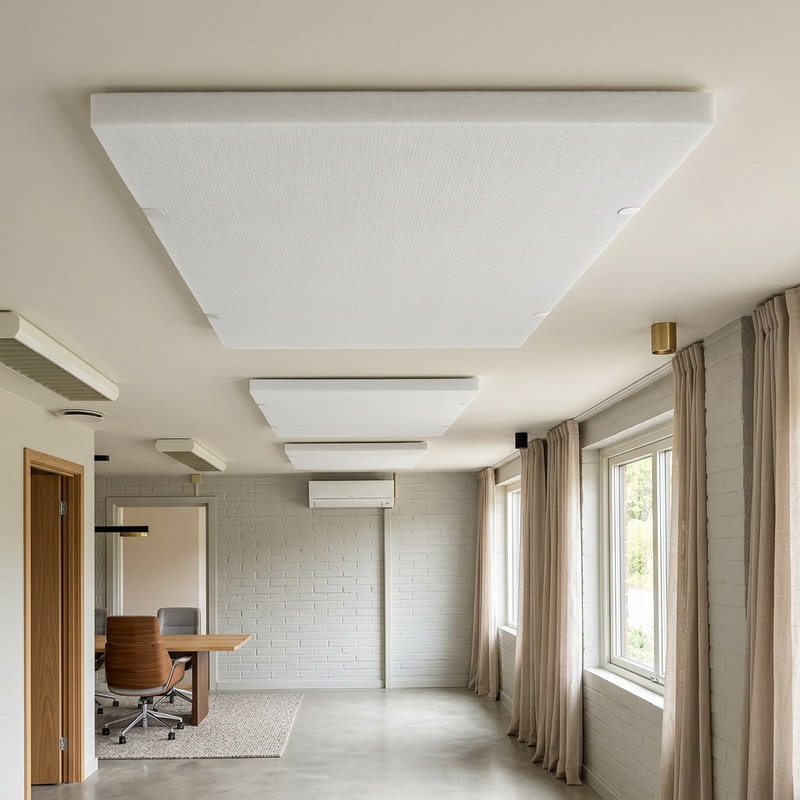
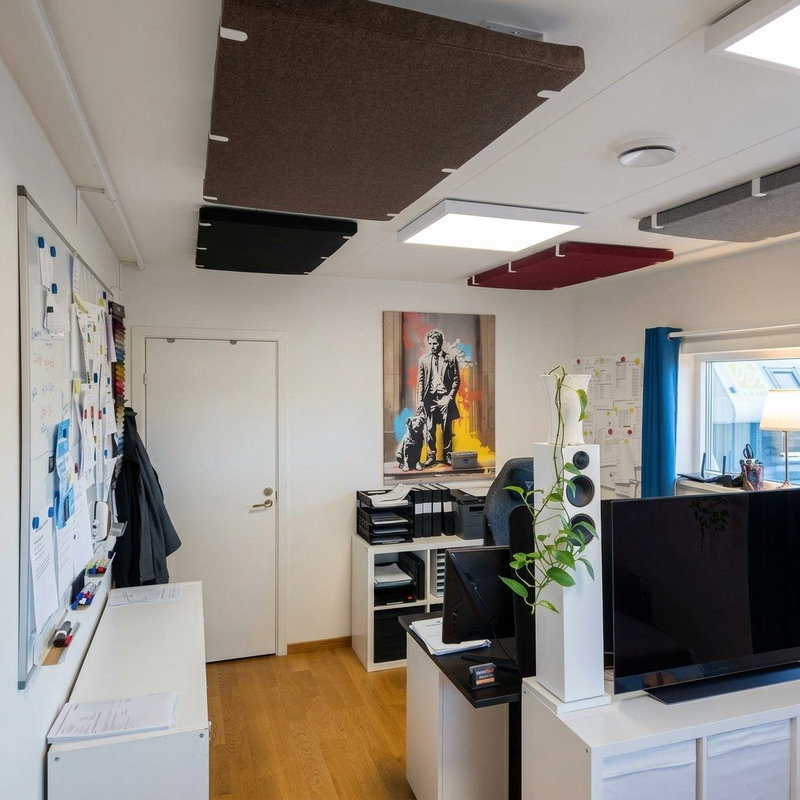
Ceiling absorbers are often the most effective basic measure in larger studio environments such as TV, film, and dance studios, where high ceilings otherwise contribute to long reverberation times.
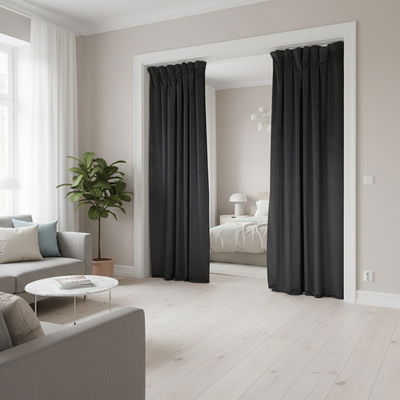
Sound-absorbing curtains
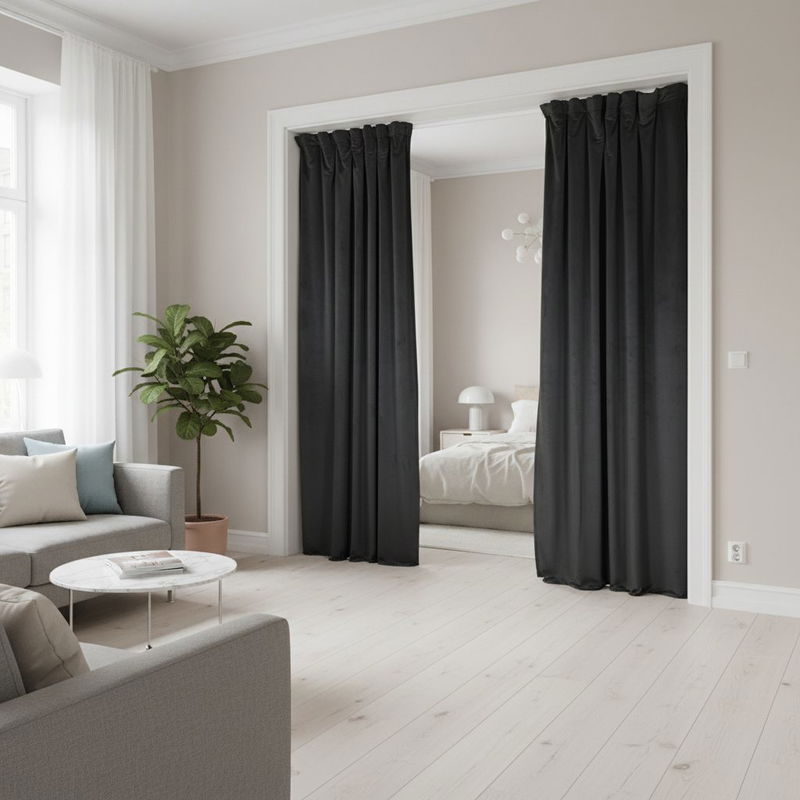
Curtains dampen reflections from glass surfaces and are often used in photo studios, film studios, and multifunctional studios where flexibility is important.
Room dividers and table screens with sound-absorbing properties
Room dividers and table screens are used to divide larger studio environments, create separate work zones, and improve acoustics in, for example, art studios, shared studios, and editorial environments.
Why choose sound absorption?
Sound absorption provides immediate results in studios and studio environments without requiring permanent construction measures. The solution is flexible and can be adapted to different types of studios and changing needs. The result is better speech intelligibility, more controlled sound reproduction, and a studio environment that supports both creativity and precision. If necessary, sound absorption can be combined with sound insulation or vibration damping to deal with external disturbances or structure-borne noise.
Well-thought-out advice for the best results
The function, size, and working method of the studio determine how sound absorption should be designed. Smaller home studios and podcast studios often require carefully placed absorbers, while larger film, TV, and dance studios need an even distribution across multiple surfaces. Furniture and furnishings contribute to some damping but are rarely sufficient on their own. A common mistake is to treat only one surface or to underestimate the volume of the room. A well-thought-out overall solution provides a stable and long-lasting acoustic result.
Sound absorption is therefore a fundamental measure for reducing echo and reverberation in all types of studios and studio environments, and for creating a sound environment that works in practice.