






Vibration damping for machinery and equipment – reduces vibrations
Reduce structure-borne noise and vibrations from technical equipment in restaurant environments
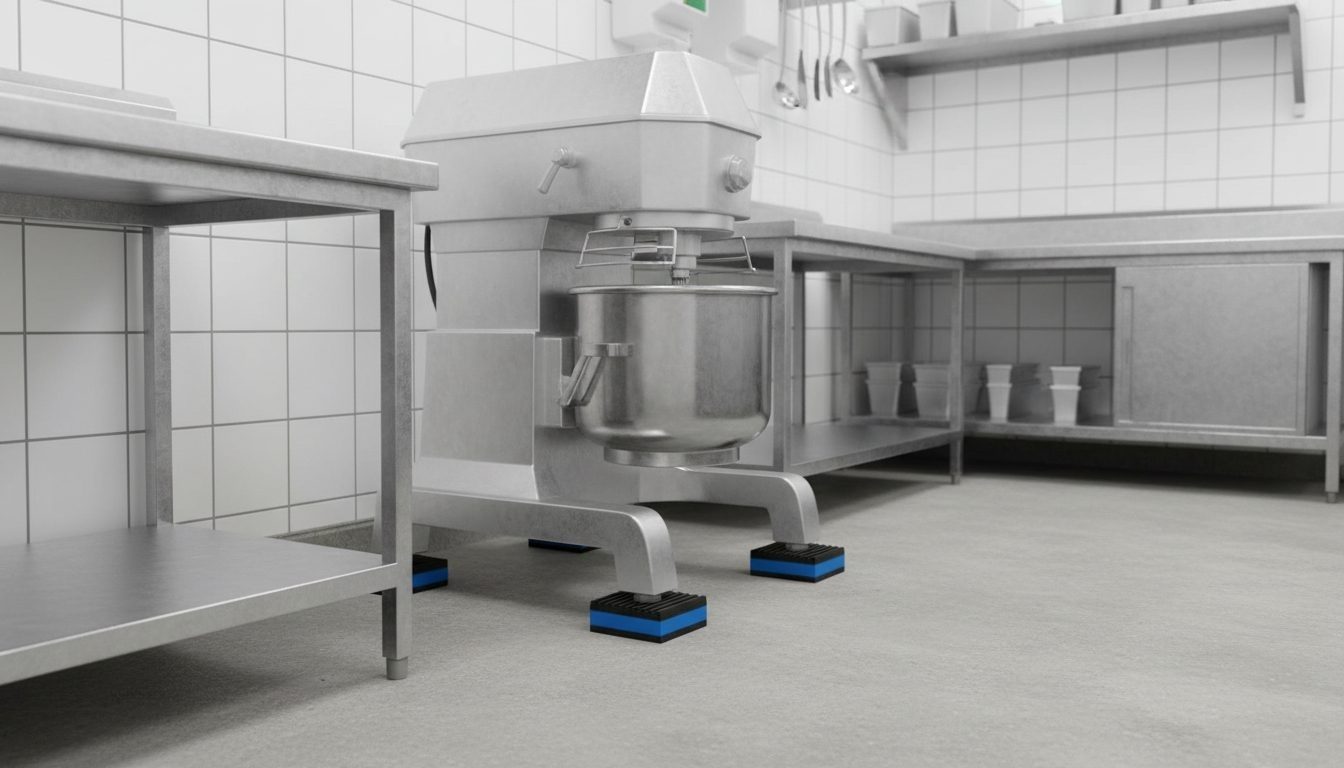
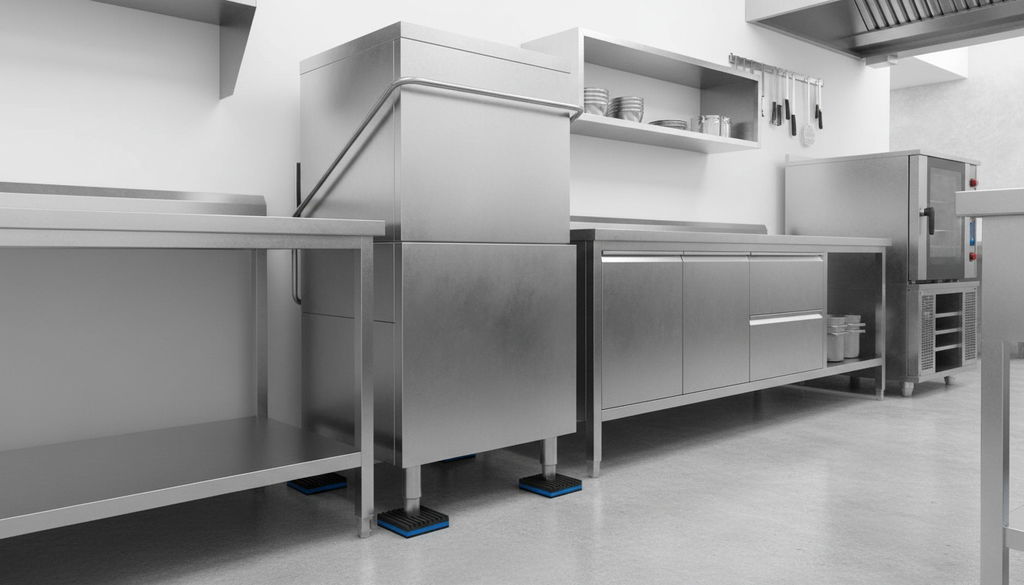
In restaurant environments, machines and technical equipment are a common source of disruptive vibrations. Dishwashers, refrigeration and freezer units, ventilation equipment, and kitchen appliances often operate continuously and can generate vibrations that are transmitted through floors, walls, and installations. These vibrations are not always felt where the machine is located, but spread as structure-borne noise to dining areas, service areas, or adjacent spaces. Vibration damping of machines and equipment aims to reduce this mechanical transmission and create a more controlled and pleasant acoustic environment.
What does vibration damping of machines entail?
Vibration damping involves limiting how mechanical movements are transmitted from a machine to the building’s structure. Unlike sound insulation, which blocks airborne sound between rooms, and sound absorption, which reduces echoes and reverberation within a room, vibration damping focuses on reducing the vibrations within the structure itself. By reducing vibrations at the source, the risk of low-frequency noise and disruptive structure-borne noise is also reduced.
Common sources of vibration in restaurants
In restaurants, vibrations often originate from dishwashers, ice machines, refrigerators and freezers, ventilation fans, as well as pumps and compressors. Even smaller equipment such as coffee machines, mixers, and food preparation equipment can generate continuous vibrations, especially when placed directly on the floor or mounted to counters and walls.
Since many of these machines are in use for much of the day—and sometimes even at night—the vibrations can affect both the guest experience and the staff’s work environment if not properly managed.
How do vibrations from machines spread?
When a machine vibrates, the motion is transferred to the floor and further through the building’s structure. Floors, walls, piping, and ventilation ducts act as effective transmission paths. In restaurant spaces with hard materials and interconnected structures, vibrations can therefore travel far from the machine itself and be perceived as a hum or shaking in entirely different parts of the space.
Principles of Effective Vibration Damping
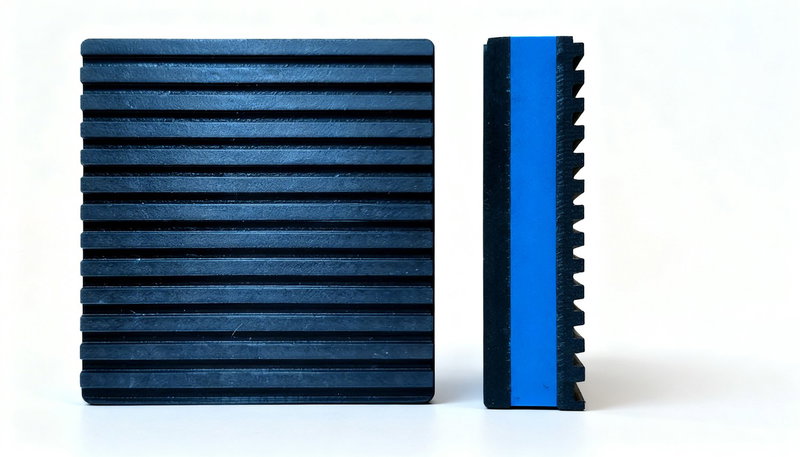
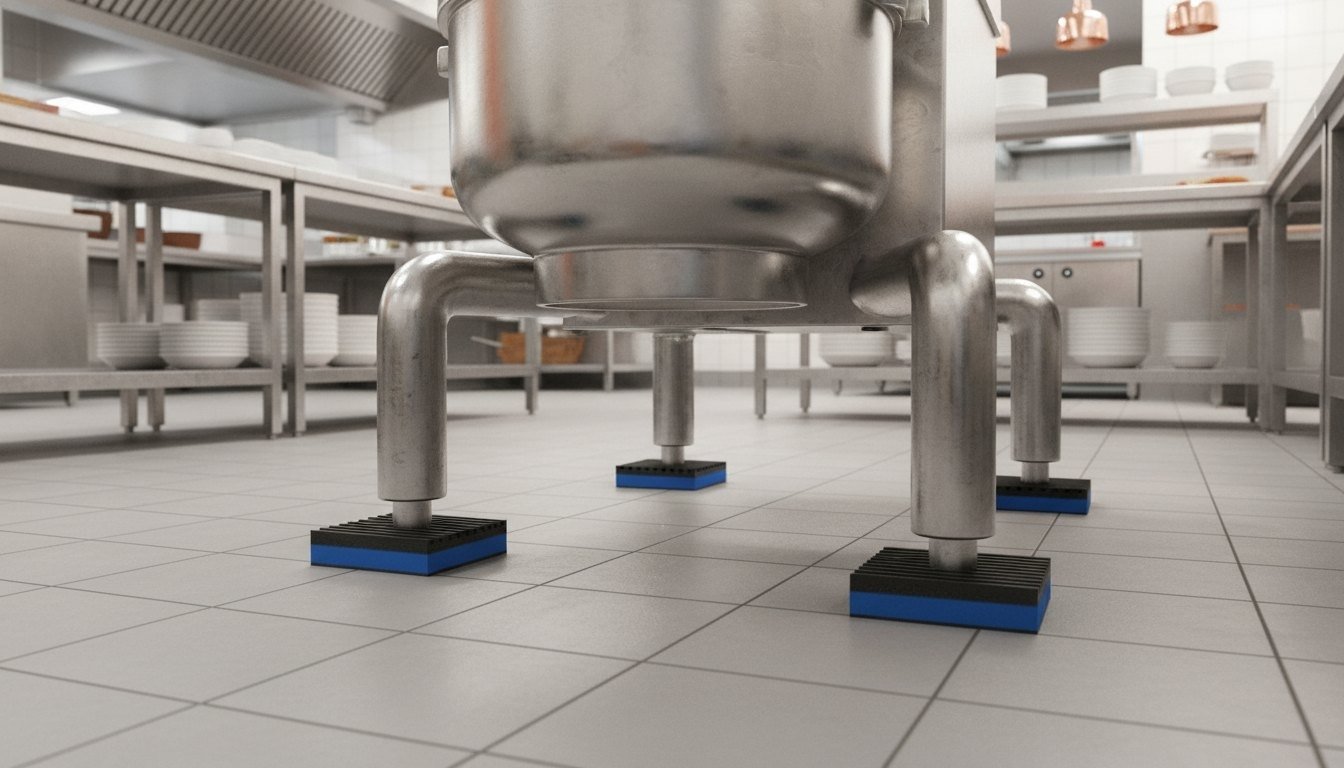
Effective vibration damping is based on reducing direct contact between the machine and the building frame. By utilizing decoupling, elastic intermediate layers, and proper placement, vibrations can be dampened before they are transmitted further. The goal is to address the problem at the source, rather than attempting to mitigate the consequences afterward.
Why choose vibration damping for machines in a restaurant environment?
Machine vibration damping contributes to a quieter dining room, a better working environment in the kitchen, and a reduced risk of disturbances to surrounding premises or residences. This measure is often crucial in restaurants where technical equipment is used intensively and where noise problems cannot be solved with sound absorption or sound insulation alone.
Well-considered advice for best results
For maximum effectiveness, each machine should be assessed based on its location, frequency of use, and how vibrations propagate through the building. A common mistake is to focus on the room where the noise is heard, even though the cause is often mechanical transmission from kitchen equipment. By systematically implementing vibration damping at the machines, a more stable and long-term pleasant restaurant environment is created.
Vibration damping of machines and equipment is therefore a key measure for reducing disruptive vibrations and structure-borne noise in restaurant environments.