



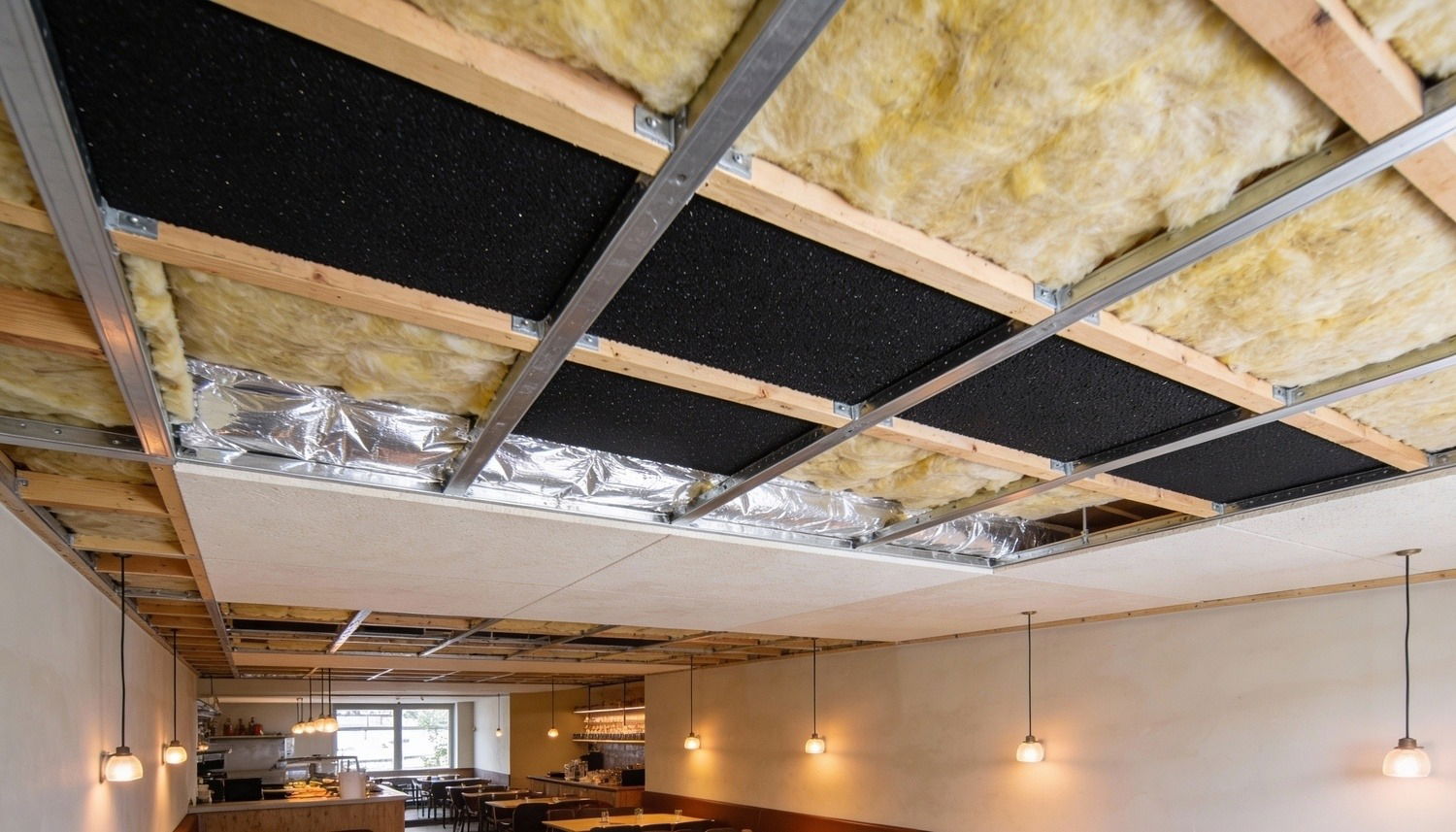

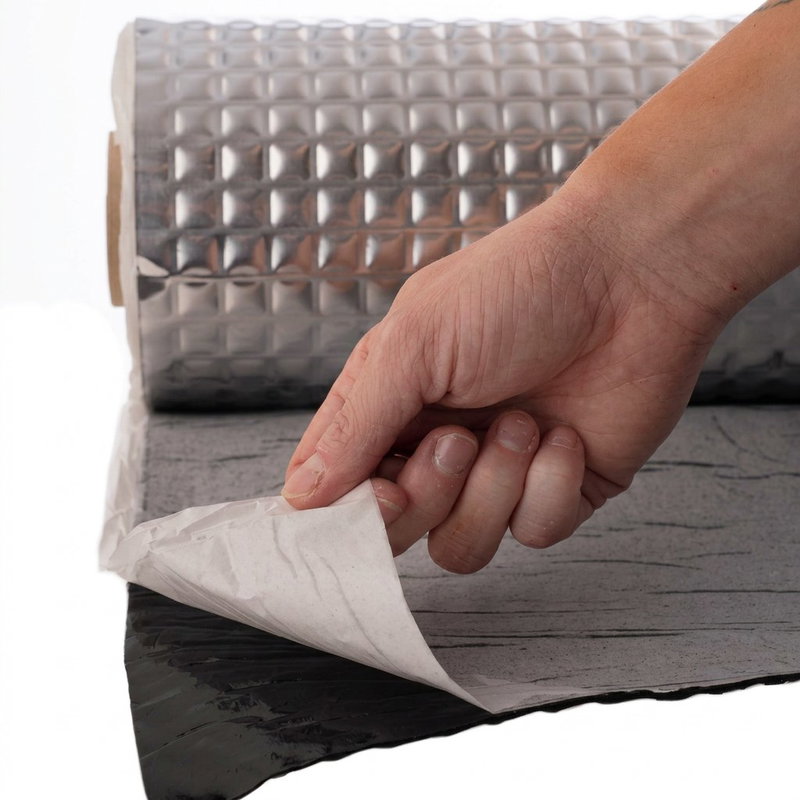
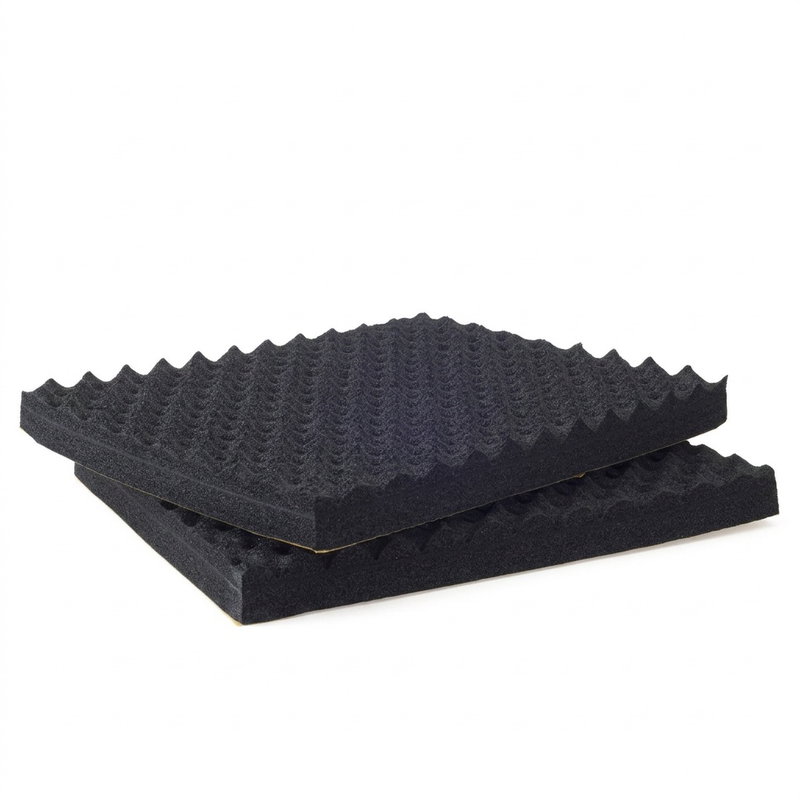
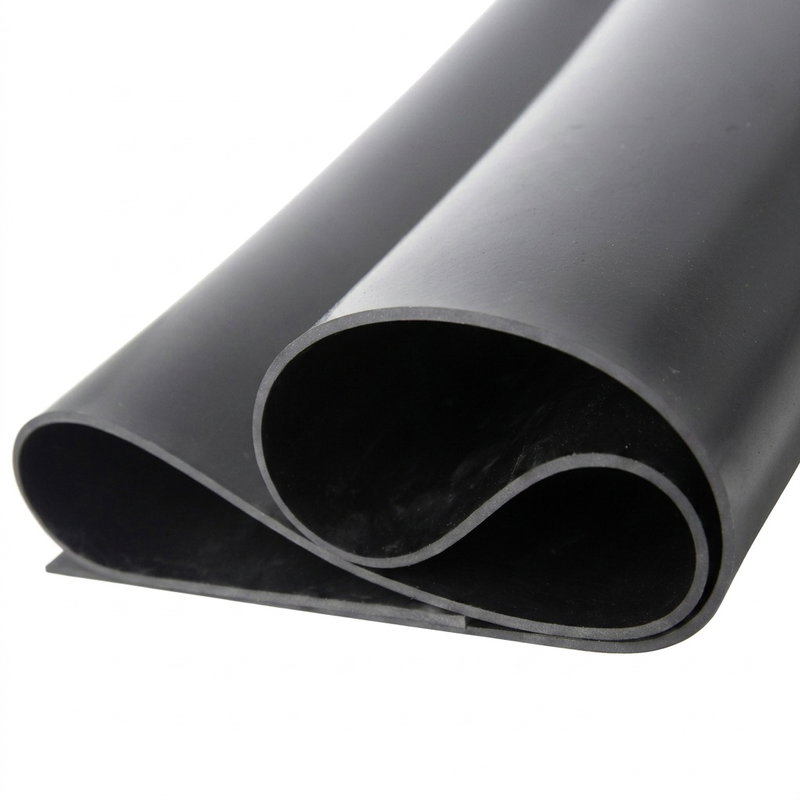



Roof soundproofing – blocks sound between rooms
Reduce sound transmission between floors and operational areas in restaurants
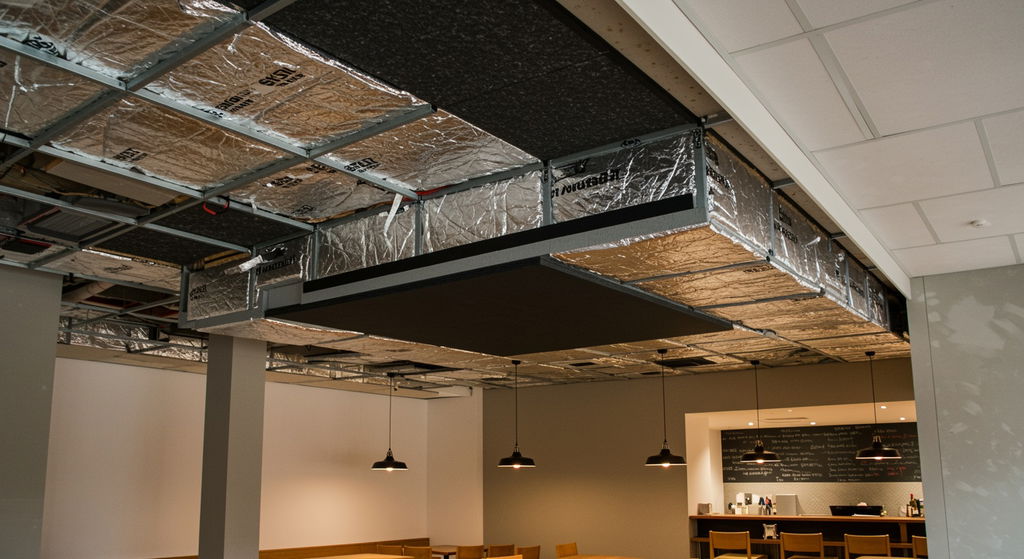
In restaurant environments, the ceiling is often a critical pathway for sound transmission between different spaces. Conversations, movements, music, and kitchen sounds can travel through floor joists and ceiling structures and be heard in spaces above or below the restaurant. Ceiling soundproofing aims to stop this sound transmission and create better separation between the dining area, kitchen, staff areas, and adjacent businesses or residences.
What does ceiling soundproofing entail?
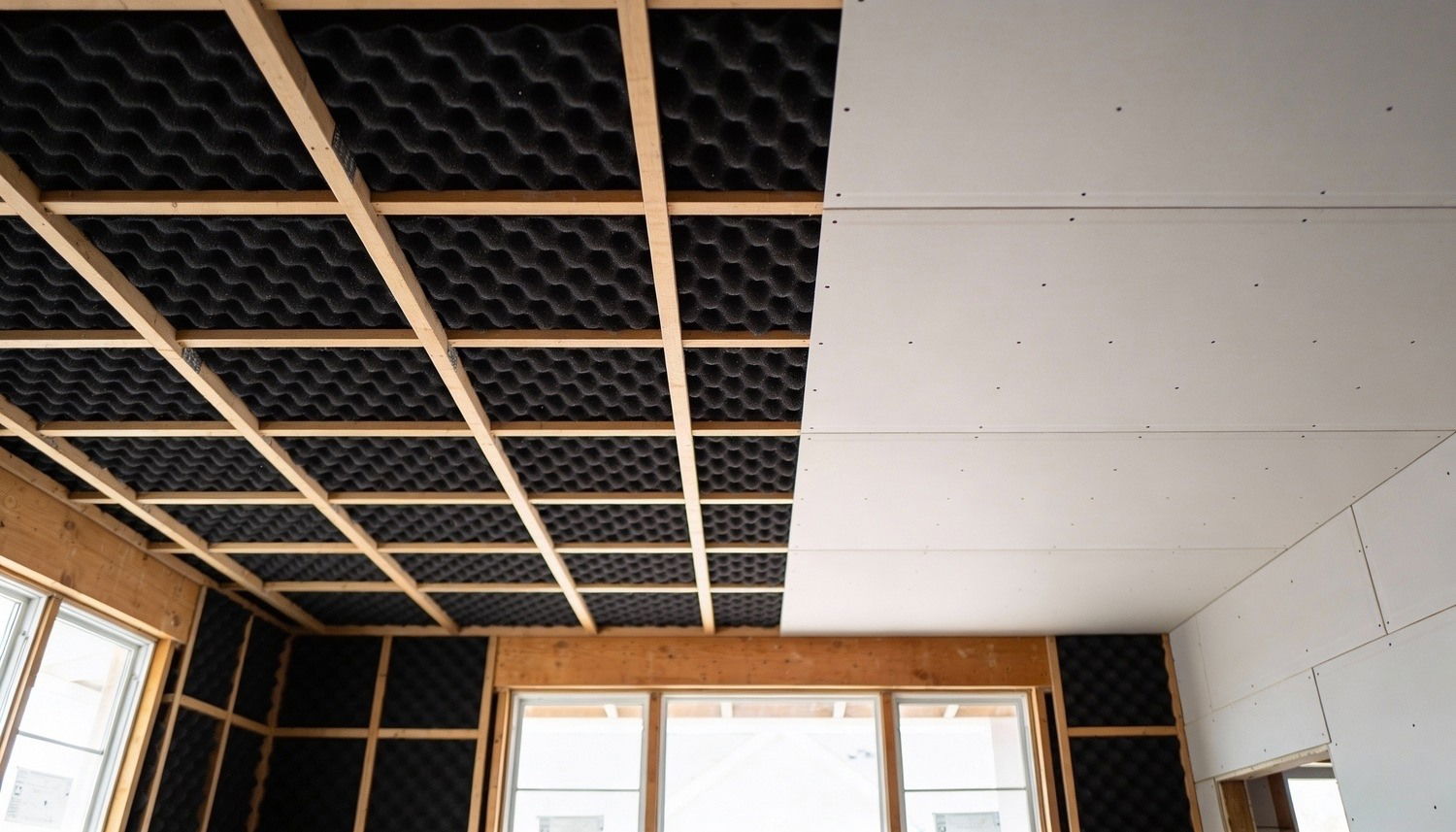
Roof soundproofing involves limiting how both airborne sound and structure-borne noise spread through the roof and floor structures. Unlike sound absorption, which reduces echoes and reverberation within the same room, sound insulation focuses on blocking the path of sound between different spaces. Vibration damping is used when sound is transmitted via mechanical movements in the structure. In restaurants, a clear combination of these principles is often required.
Common problems with sound through ceilings in restaurants
Sound issues through ceilings often arise in restaurants located on the ground floor with residential units or offices above, or in spaces with multiple levels of operations. Guest noise, music, movement, and kitchen work can be clearly heard in the spaces above, which can lead to complaints and operational restrictions. Sound from adjacent spaces can also negatively impact the restaurant’s acoustic environment.
How does sound travel through ceilings and floor joists?
When sound is generated in the restaurant, vibrations and sound waves are transmitted through the roof structure and the floor joists’ connections to walls and floors. This allows sound to travel over large areas and be heard far from the source. The roof thus becomes a critical structural element to address when dealing with sound issues between floors.
Airborne sound traveling upward
Conversations, music, and background noise can pass through inadequately insulated roof structures.
Structure-borne sound
Movement and activity can create vibrations that spread through the floor structure.
Why choose sound insulation for restaurant ceilings?
Roof sound insulation is often crucial for restaurants to operate without disturbing the surrounding area. This measure contributes to better compliance with noise regulations, increased operational flexibility, and a safer acoustic environment for both guests and nearby residents. In many cases, roof insulation is combined with sound absorption in the dining area to achieve a balanced overall result.
Well-considered advice for best results
For the best results, the ceiling structure should be analyzed as a whole, including connections to walls and penetrations. A common mistake is to focus solely on the room’s acoustics, even though the problem is sound transmission to other spaces. By taking a structured approach to ceiling sound insulation, a long-term sustainable and professional sound environment is created in the restaurant.
Ceiling sound insulation is therefore a key measure for blocking sound between rooms and floors and ensuring the smooth operation of the restaurant.