










Vibration damping – reduces vibrations in homes
Reduce structure-borne noise and vibrations from everyday installations
In homes, disruptive sounds often occur that are not transmitted through the air, but rather through vibrations in the building’s structure. When machines, installations, or movements cause shaking in floors, walls, or ceilings, the sound can travel throughout the house and be heard in multiple rooms. Vibration damping is a measure designed to reduce these vibrations and thereby reduce structure-borne noise in the home.
What is vibration damping?
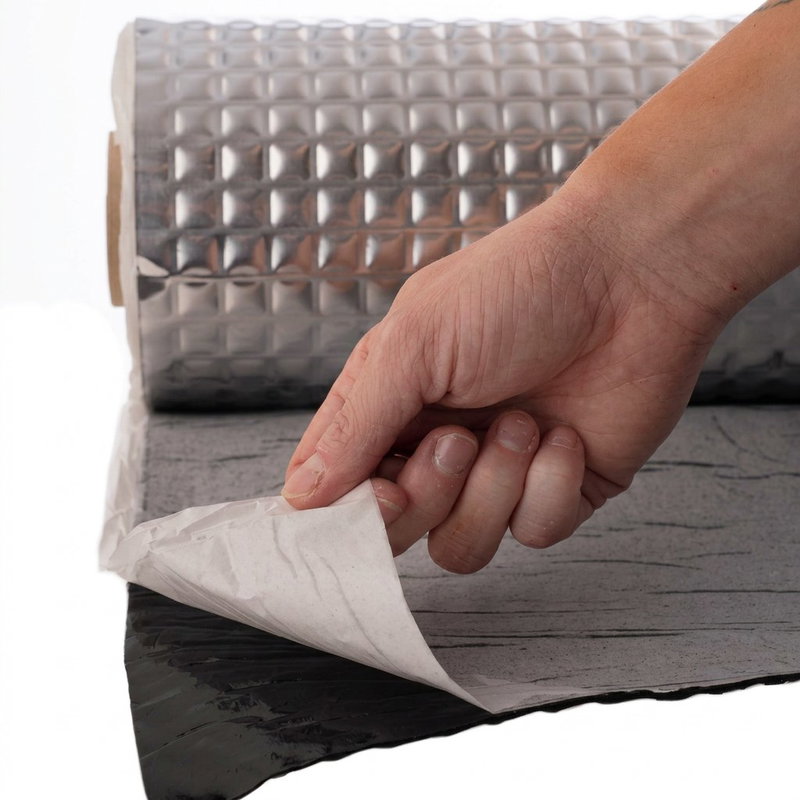
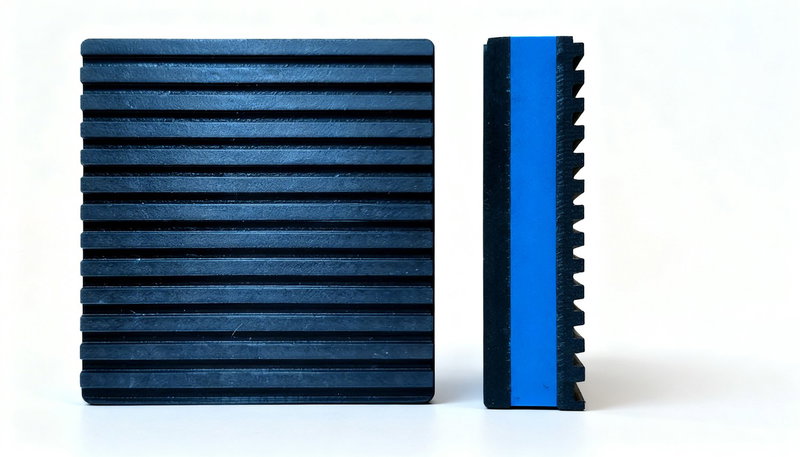
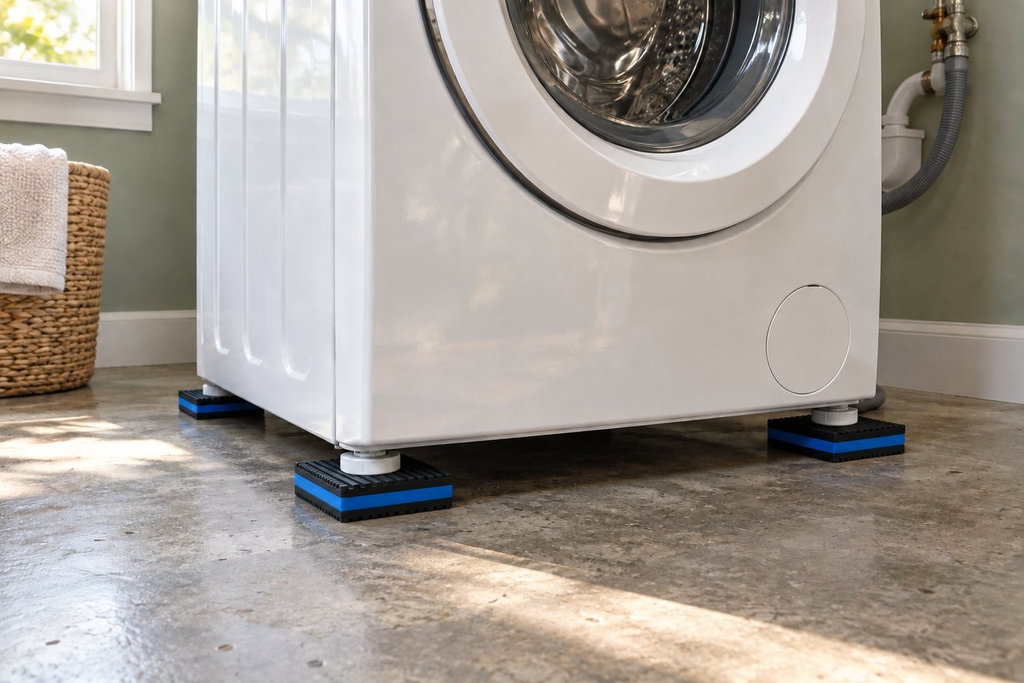
Vibration damping involves limiting how mechanical vibrations are transmitted from a source to the building’s structure. Unlike sound insulation, which blocks airborne sound between rooms, and sound absorption, which reduces reverberation within a room, vibration damping focuses on reducing the movement within the structure itself. The measure is often targeted at contact points where vibrations are transmitted, such as between a machine and the floor or between an installation and a wall.
Common vibration problems in homes
Vibrations in homes are often experienced as a dull hum, shaking, or recurring disturbances, especially at night. Common sources include washing machines, dryers, heat pumps, ventilation equipment, and pumps. Even movements in floors or structures can cause vibrations that spread through the building’s frame and affect multiple rooms simultaneously.
How do vibrations spread through a building?
When a machine or installation vibrates, the motion is transferred to the subfloor and further through floors, walls, and ceilings. This means that the sound is not always perceived where the source is located, but rather in adjacent or distant rooms. Since vibrations travel efficiently through solid materials, special measures are required to break this transmission.
Vibration damping in different parts of the house
In residential buildings, vibration damping is primarily used for floors, machinery, and technical equipment, as well as in some cases for walls and ceilings. Floors are a common transmission path for vibrations from machinery, while walls and ceilings can act as transmitting surfaces. By tailoring the solution to where the vibrations occur, disturbances can be effectively reduced.
Why choose vibration damping?
Vibration damping provides a clear improvement in living comfort by reducing low-frequency noise and disruptive shaking. This measure is often crucial for problems that cannot be solved with sound insulation or sound absorption alone. In many cases, vibration damping is combined with other measures to create a quieter and more harmonious living environment.
Well-considered advice for best results
For the best results, it is important to identify where the vibrations originate and how they spread throughout the building. A common mistake is to treat only the room where the sound is heard, even though the source is often located elsewhere. By focusing on vibration transmission at the source, disturbances can be reduced more effectively and sustainably.
Vibration damping is therefore a key measure for reducing disruptive structure-borne noise and creating a quieter and more comfortable home.