



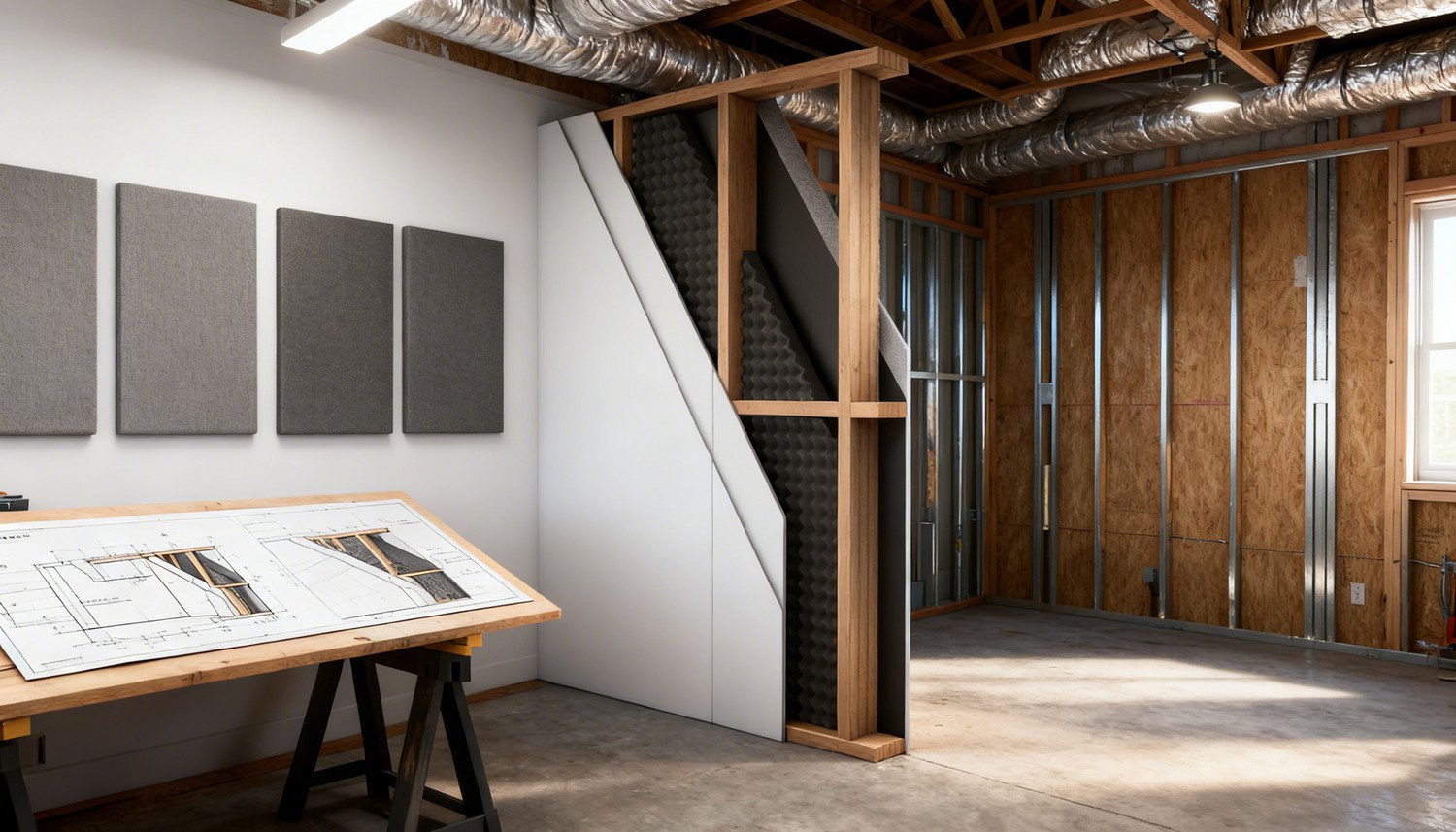

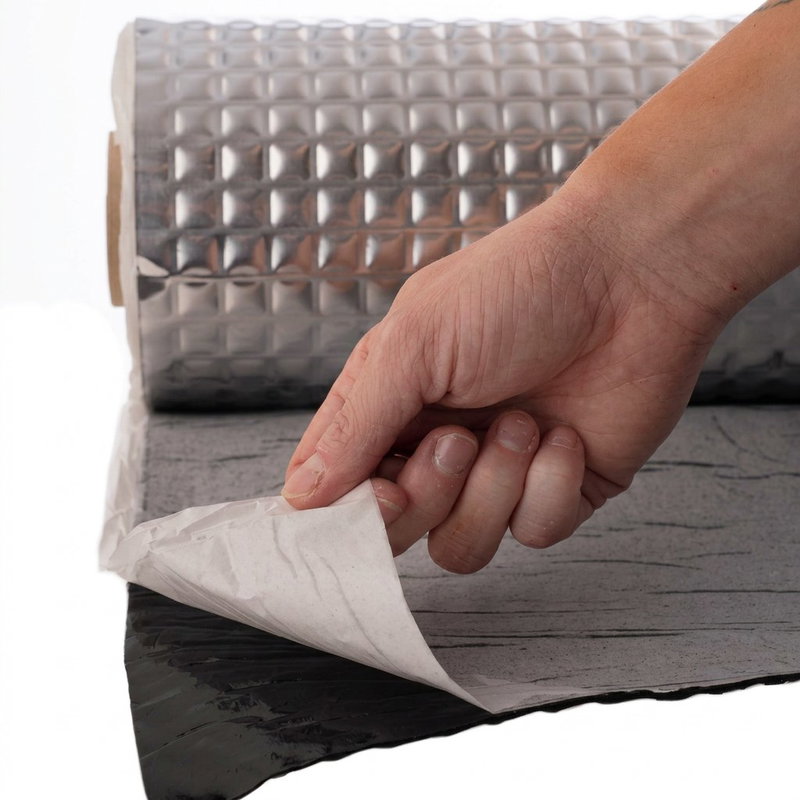


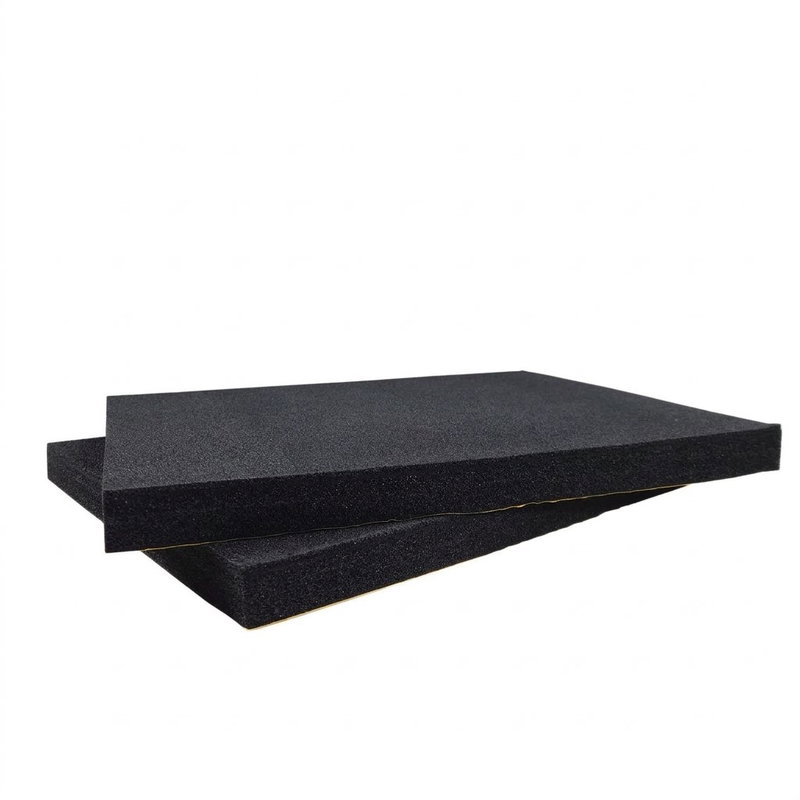


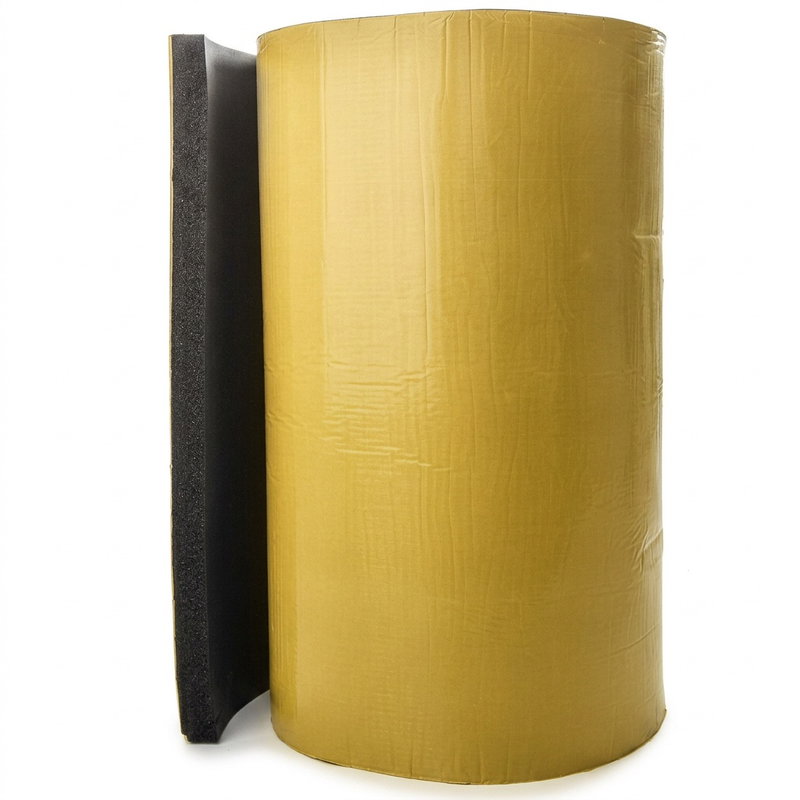


Floor vibration damping – reduces vibrations in industrial environments
Stabilize the floor structure and limit structure-borne noise in industrial environments
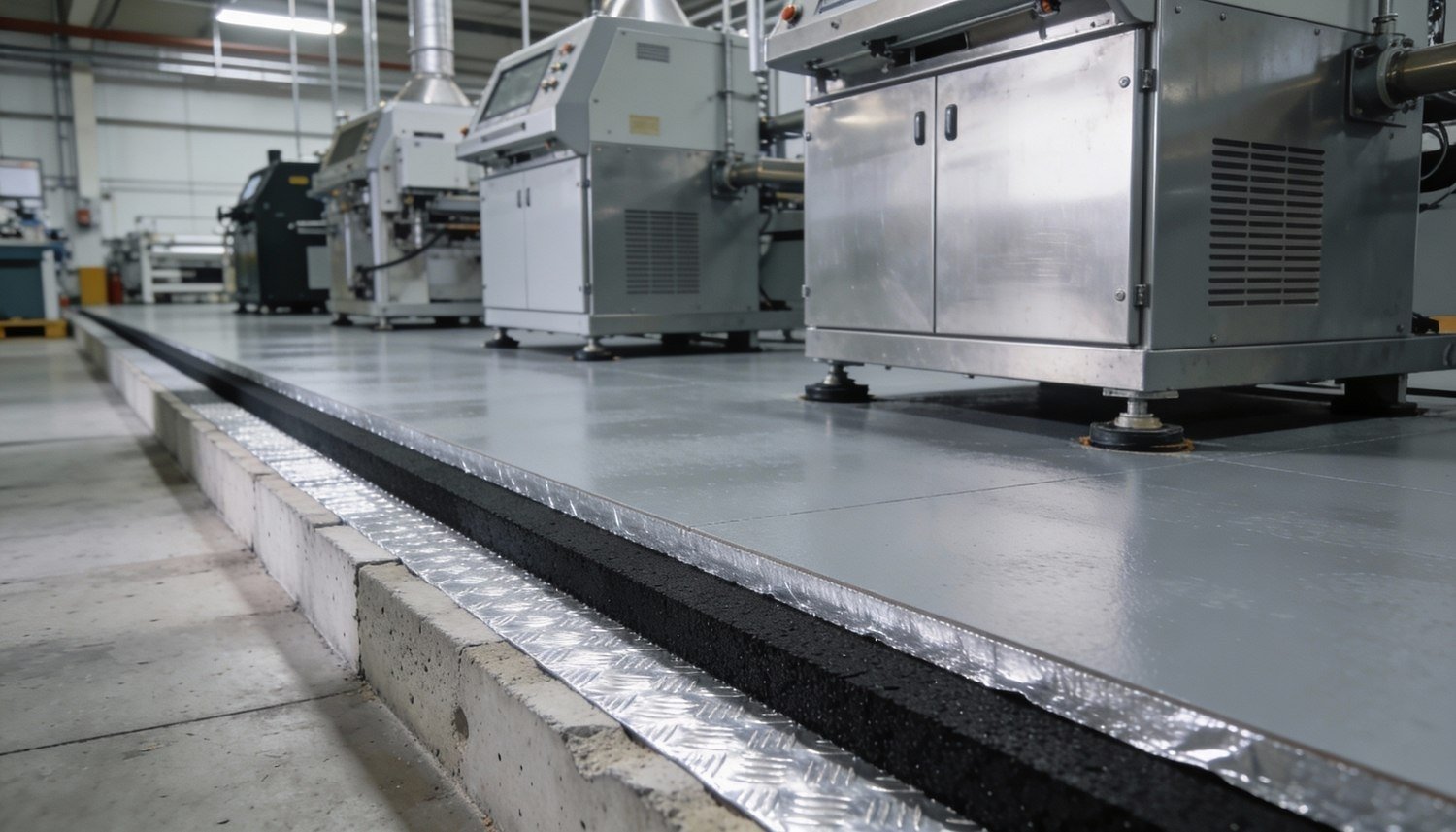
In industrial environments, the floor is often the primary transmission path for vibrations from machinery, production, and internal transport. When heavy equipment, rotating machinery, or recurring loads impact the floor, vibrations are transmitted through the building’s structure and can be perceived as disruptive noise or shaking in other parts of the facility. Floor vibration damping aims to break this transmission and create a more stable, controlled, and functional industrial environment.
What does floor vibration damping entail?
Floor vibration damping involves reducing how mechanical movements are transmitted from a source to the building’s structure via the floor. Unlike sound insulation, which blocks airborne sound between rooms, and sound absorption, which reduces echoes and reverberation within a room, vibration damping focuses on reducing the actual movement in materials and the structural frame. The measures target contact points where vibrations would otherwise be transmitted.
Common vibration problems in industrial floors
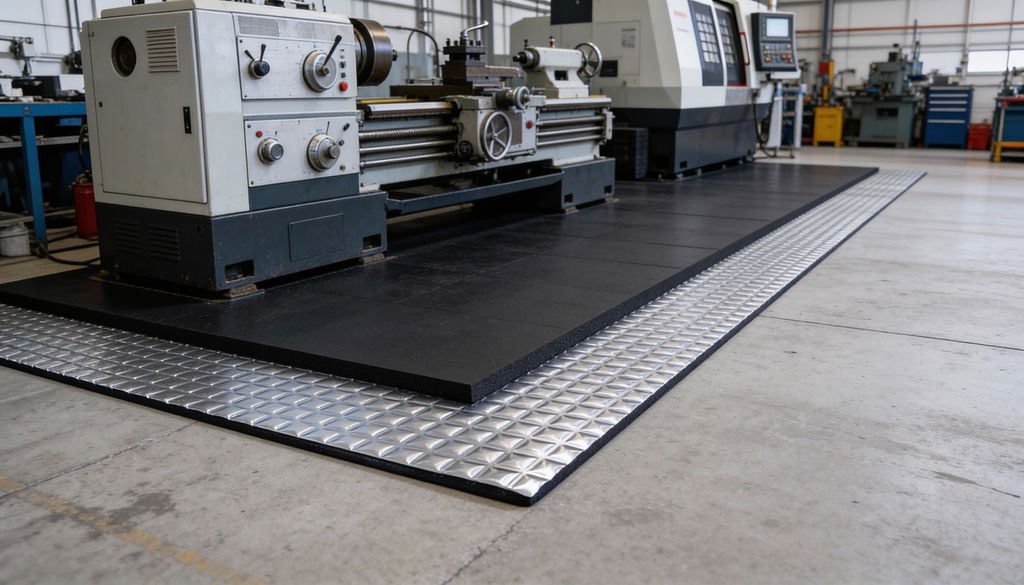
In industrial operations, floor vibrations often originate from production machinery, compressors, pumps, and other technical equipment standing directly on the subfloor. Forklift traffic, material handling, and recurring point loads can also create vibrations that spread through joists and concrete slabs. These issues are often experienced as low-frequency humming, shaking, or resonance that affects both the work environment and equipment.
How do vibrations spread through the floor structure?
When a machine vibrates, the motion is transferred to the floor surface and further into the building’s structure. Since industrial floors are often continuous and load-bearing, vibrations can spread over large areas and reach walls, ceilings, and adjacent spaces. The floor thus acts as an effective transmission surface for structure-borne noise in industrial buildings.
Machinery and equipment
Heavy equipment in operation creates continuous vibrations that easily propagate through the floor structure.
Movement and Loads
Forklifts, transport, and dynamic loads can generate vibrations that propagate further into the building.
Why choose floor vibration damping in industrial environments?
Floor vibration damping significantly improves the industrial environment’s acoustics and working conditions by reducing disruptive structure-borne noise and shaking. This measure contributes to increased stability, reduced wear on equipment, and better conditions for precision work. In many cases, floor vibration damping is a necessary measure when noise problems cannot be solved with sound insulation or sound absorption alone.
Well-considered advice for best results
For maximum effectiveness, floor vibration damping should be planned based on both load and transmission paths. A common mistake is to focus on where the disturbance is perceived, rather than where the vibrations originate. By identifying the source and interrupting vibration transmission in the floor structure, problems can be reduced more effectively and sustainably. The result is a more stable and predictable industrial environment.
Floor vibration damping is therefore a key measure for reducing vibrations, structure-borne noise, and structural disturbances in industrial environments.