





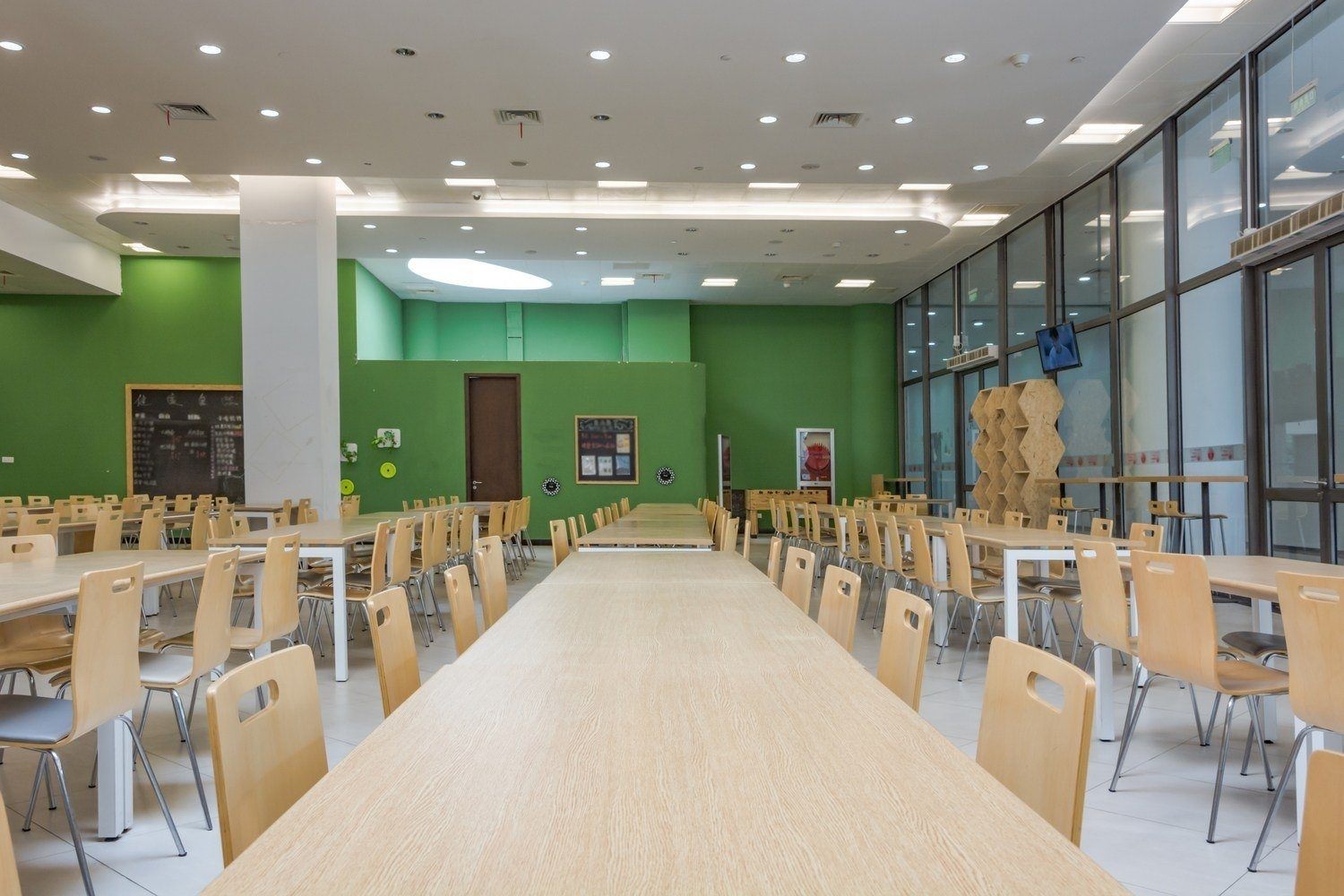


Sound-absorbing curtains in schools and educational settings – reduce echoes in the room
A flexible and effective solution for better acoustics in classrooms and common areas
In schools and other educational settings, the acoustic environment is crucial for both student learning and staff working conditions. Classrooms, hallways, cafeterias, and common areas often have hard surfaces such as glass, concrete, and linoleum, which create echoes and prolonged reverberation. When sound bounces between walls, ceilings, and windows, speech intelligibility is impaired, and the noise level is perceived as higher than it actually is. Sound-absorbing curtains are an effective form of sound absorption that helps break up sound reflections and create a calmer and more pedagogically effective school environment.
What are sound-absorbing curtains?
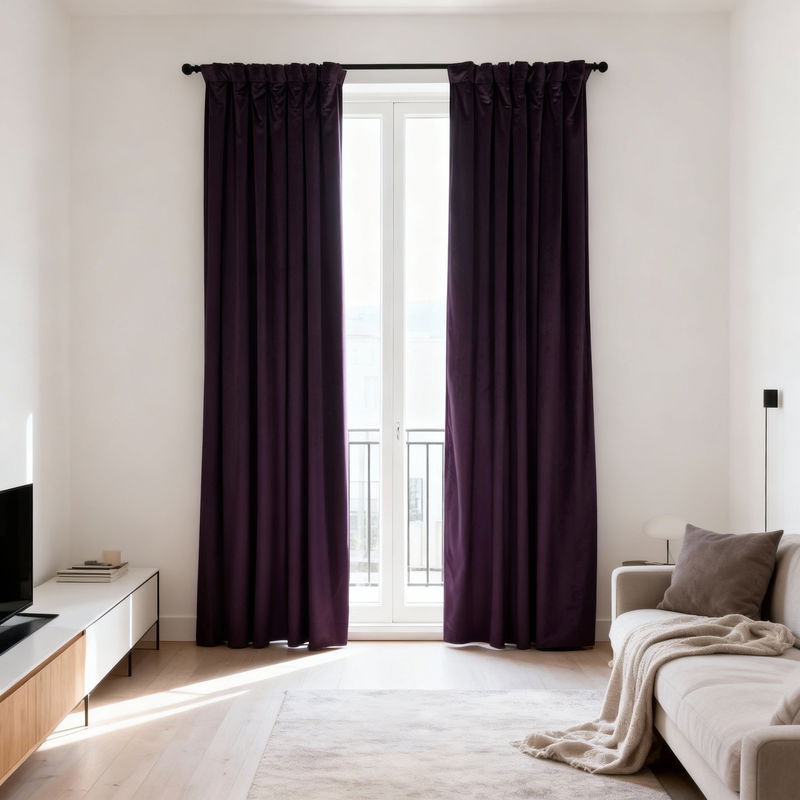
Sound-absorbing curtains consist of dense and porous textiles designed to absorb sound waves when they strike the fabric’s surface. By reducing reflections in the room, reverberation time is shortened, which improves speech intelligibility and concentration. This should not be confused with sound insulation, which blocks sound between rooms, or vibration damping, which reduces vibrations and structure-borne noise from, for example, installations. Curtains are used to improve the acoustics in the space where the sound originates.
Common acoustic problems in school environments
Echoes and reverberation are common in classrooms with large windows, in cafeterias with high ceilings, and in hallways where many students are moving around at the same time. The teacher’s voice may sound unclear, students have to strain to hear, and background noise takes over. This affects both the study environment, the work environment, and ultimately learning outcomes, especially for younger students and those with concentration difficulties.
How sound-absorbing curtains work in practice
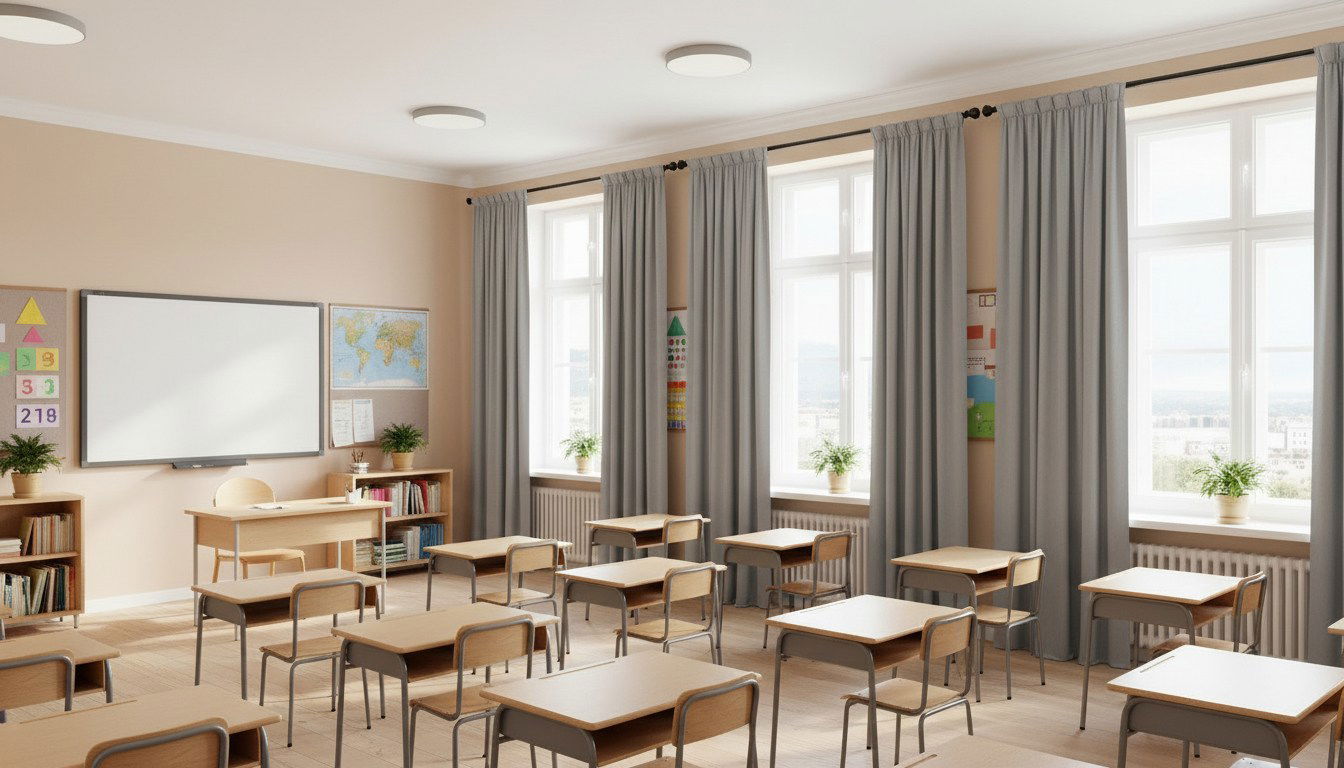
When sound waves hit the curtain fabric, they are slowed down and absorbed by the material’s structure. Curtains that cover larger areas, such as along window walls or glass partitions, help reduce reflections from surfaces that would otherwise be highly reflective.
Placement near windows and glass partitions
Glass is common in school buildings and strongly reflects sound. Sound-absorbing curtains reduce these reflections and improve the acoustics in classrooms and group rooms.
Complement to wall and ceiling absorbers
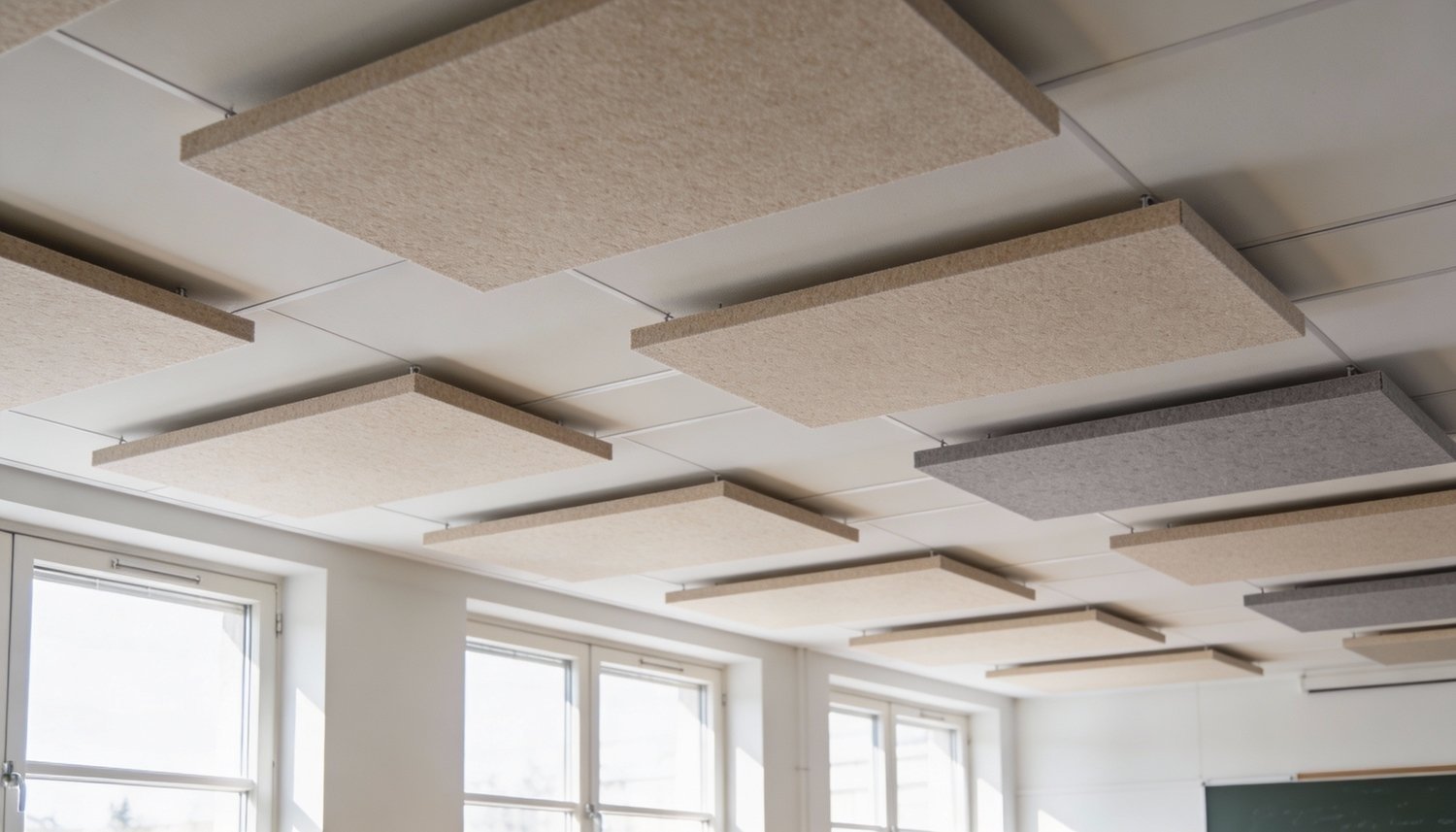
In school environments, curtains work excellently as a soft complement to sound absorption on walls and ceilings to create even and balanced sound dampening.
Partitioning in flexible learning environments
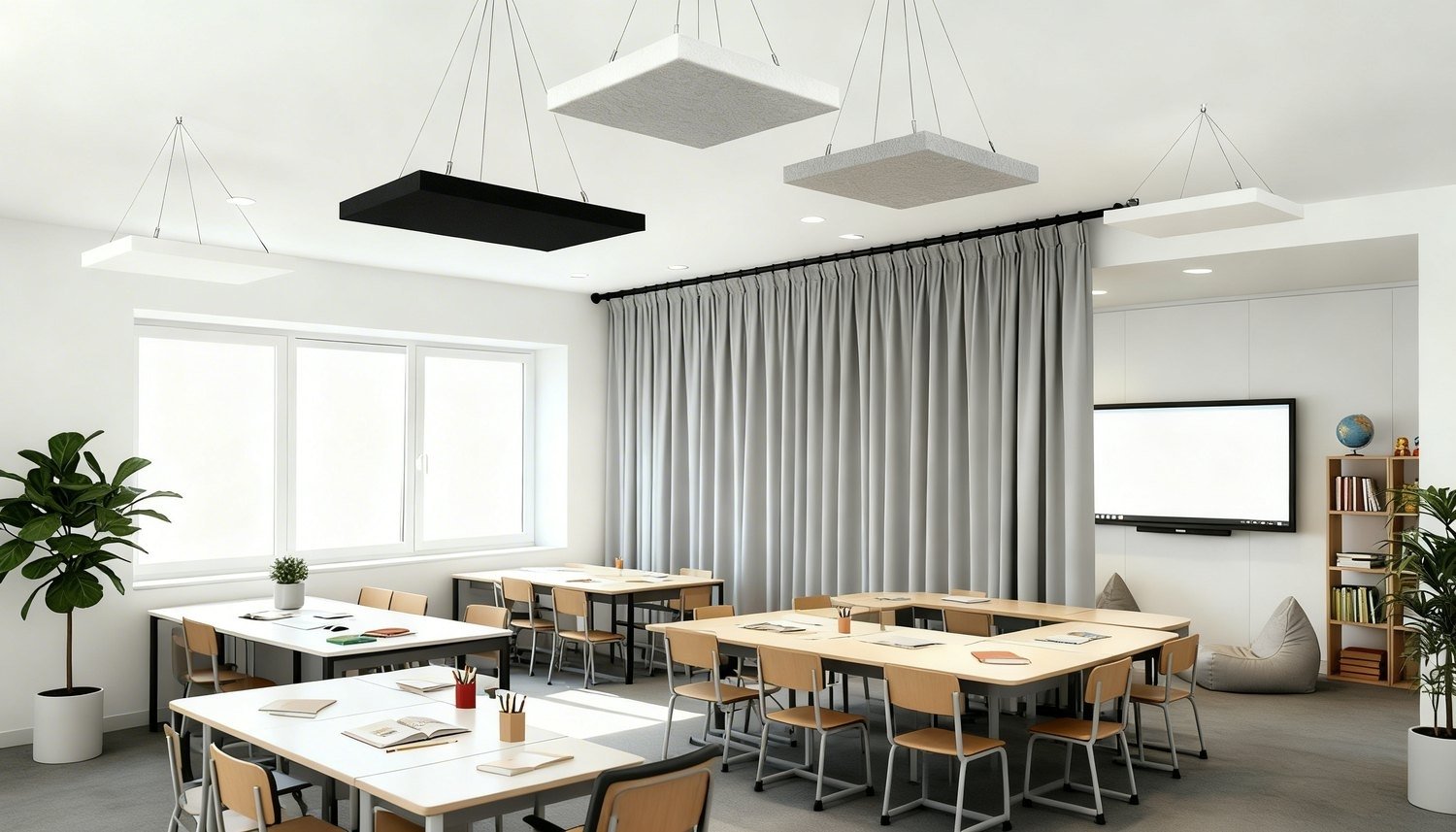
Curtains can also be used to partition larger spaces and create temporary work zones with an improved acoustic environment.
Why choose sound-absorbing curtains in schools?
Sound-absorbing curtains provide a quick improvement to the acoustic environment without structural modifications, which is particularly valuable in existing school buildings. The solution is flexible, easy to customize, and contributes to better speech intelligibility, lower perceived noise levels, and a quieter study environment. In more complex school environments, curtains can be effectively combined with sound insulation or vibration damping for a more comprehensive result.
Well-considered advice for best results
For maximum effectiveness, sound-absorbing curtains should be sufficiently thick and cover a generous area. In larger classrooms and common areas, multiple sound-absorbing measures are often required, while smaller rooms can be improved with strategically placed curtains. A common mistake is to underestimate the need for absorbent surface area. The right solution creates a long-term calm, clear, and functional acoustic environment in the school.
Sound-absorbing curtains are therefore an effective and pedagogically appropriate choice for schools that want to reduce echoes in the room and create better conditions for learning and well-being.