



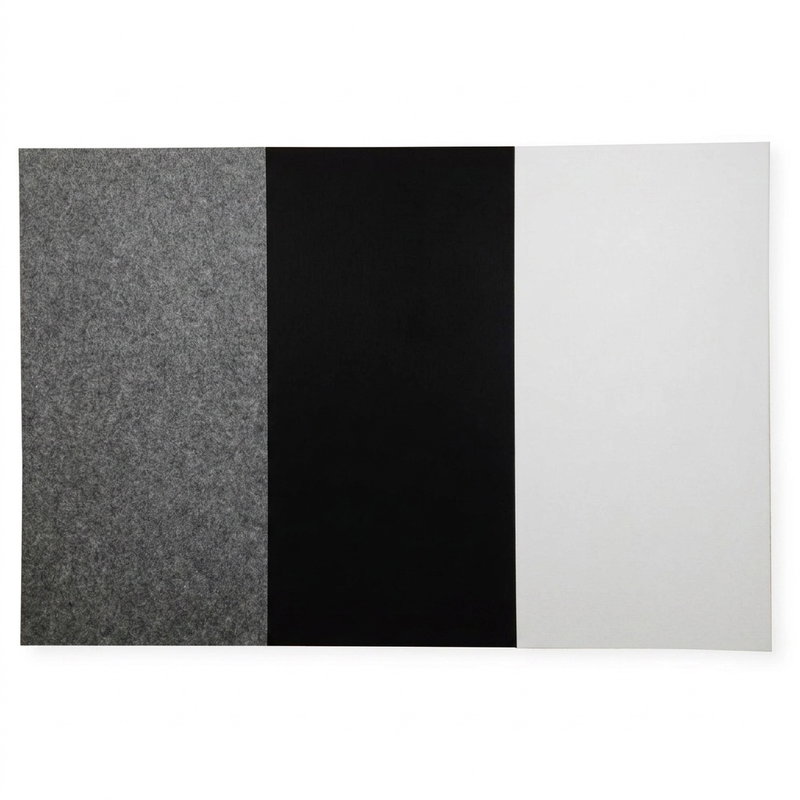
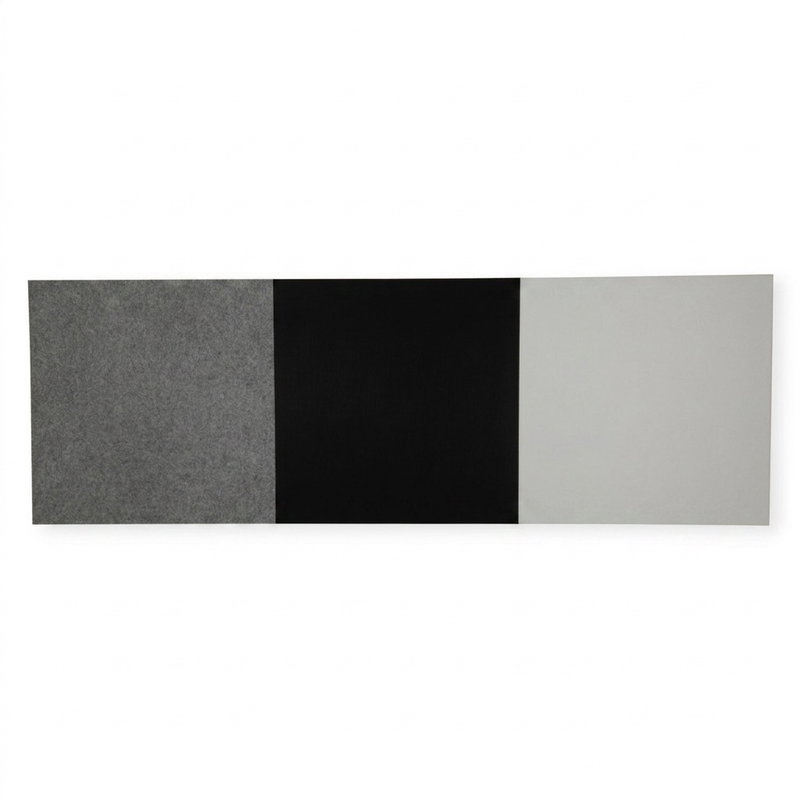

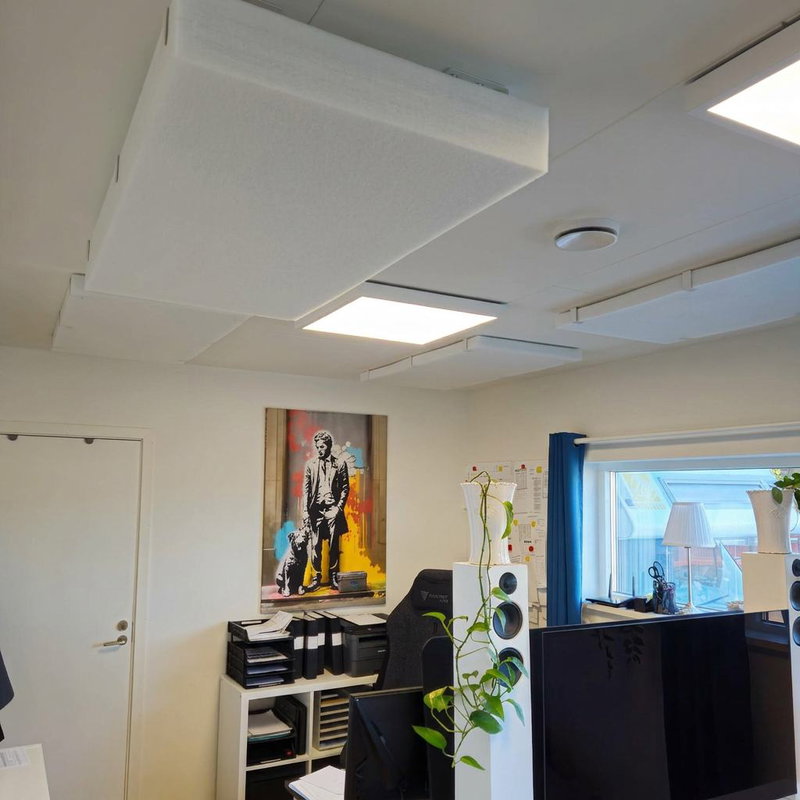

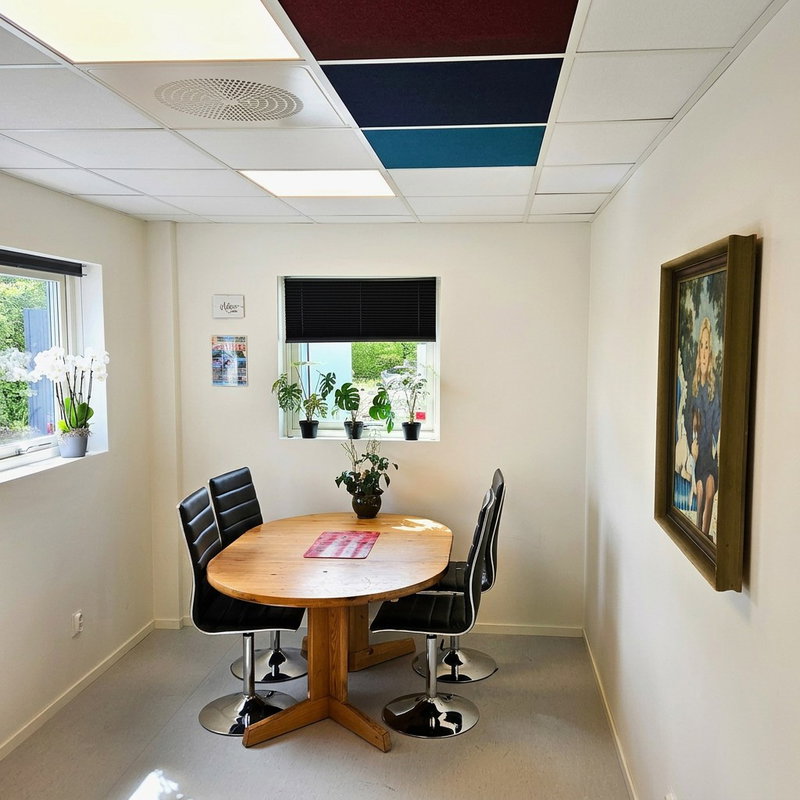


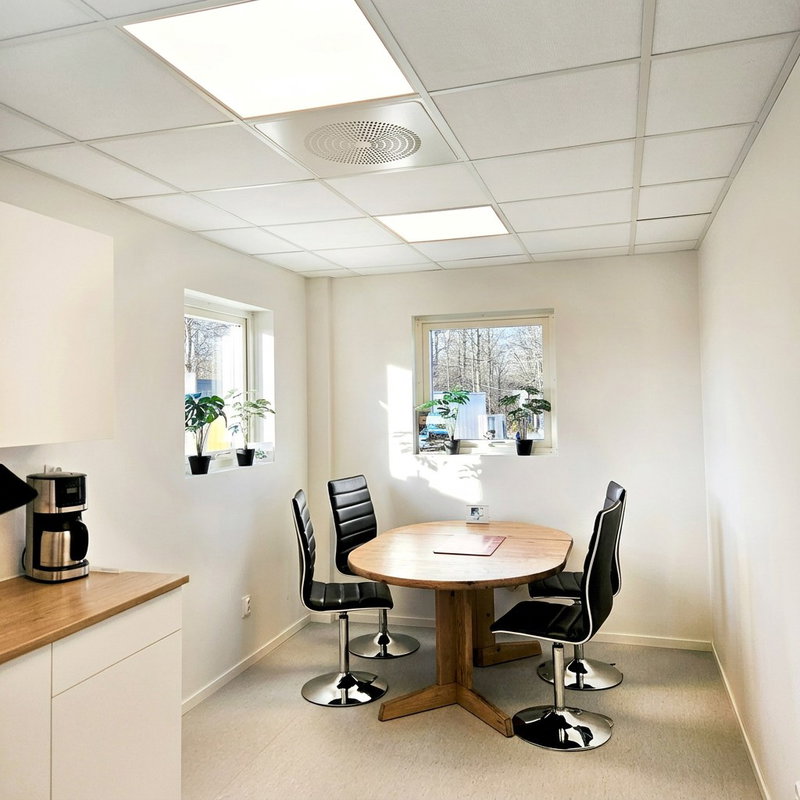
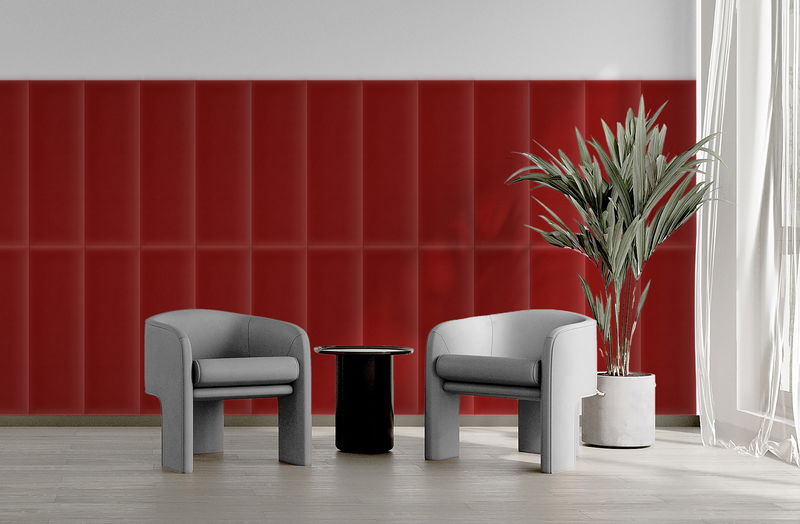
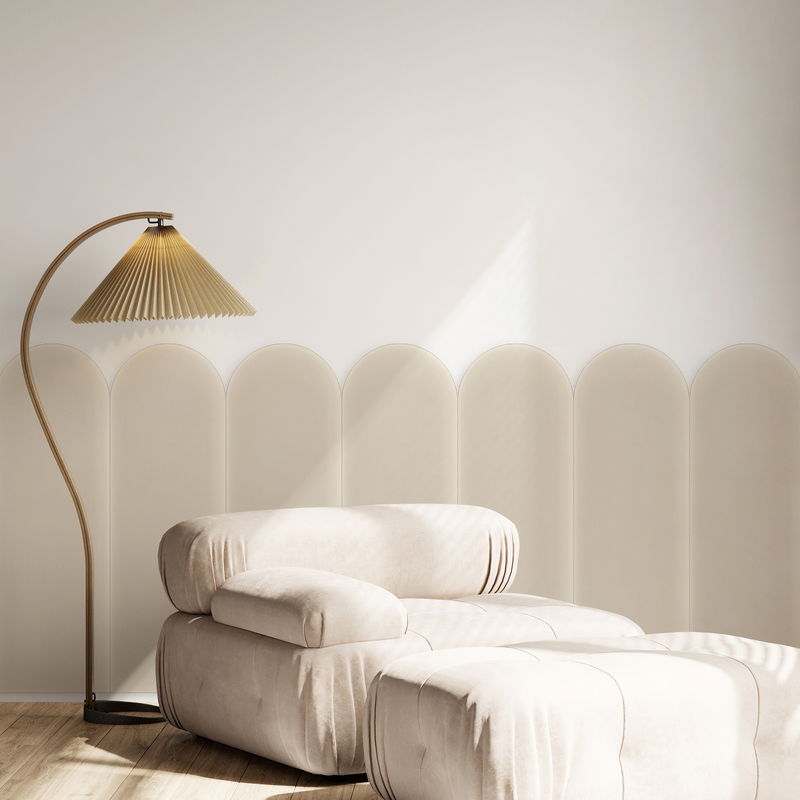
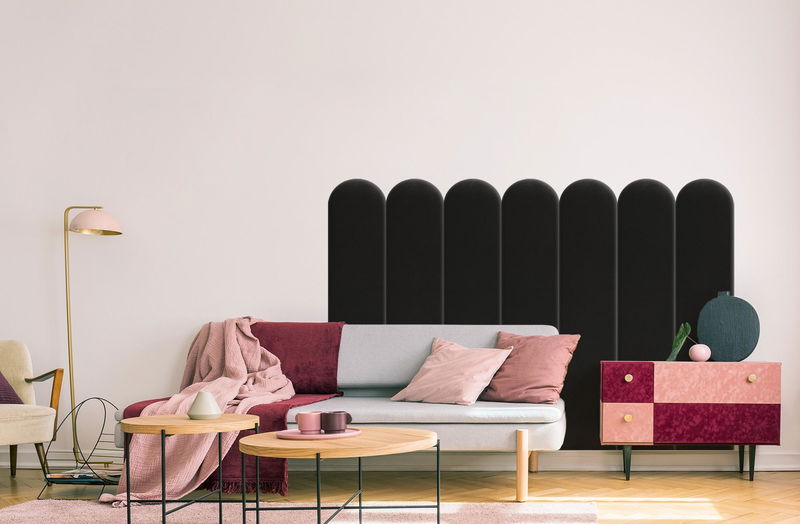



Ceiling sound absorbers – reduce echo in studios and recording rooms
A stable foundation for controlled acoustics in studios
Studios and recording studios place high demands on the sound environment. Whether the space is used for recording, podcasting, film and TV production, dance, teaching, or creative work, the room's acoustics affect both precision and working comfort. Hard surfaces and open volumes cause sound to reflect between the floor, walls, and ceiling, leading to echo and long reverberation. Sound absorbers in ceilings are often the most effective basic measure for reducing these reflections and creating a more even, controlled sound environment in studio environments.
What is ceiling sound absorption?
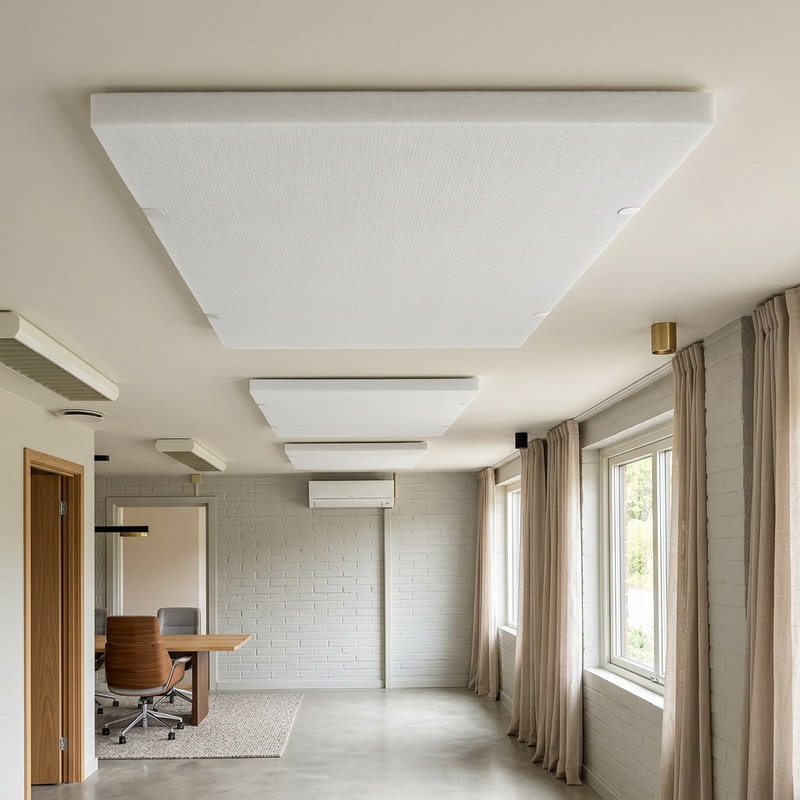
Sound absorption in ceilings involves installing porous absorbers in or under the ceiling surface to capture sound waves that would otherwise be reflected back into the room. When sound energy is absorbed, it is converted into heat, which shortens the reverberation time and improves both speech clarity and sound control. This is clearly different from sound insulation, which stops sound between rooms, and vibration damping, which reduces structure-borne noise from equipment and installations, for example. Ceiling absorbers are therefore used to improve the acoustics where the sound already exists in studios and recording rooms.
Common acoustic problems in studio environments
Echo and unbalanced acoustics are common in studios with high ceilings, large open spaces, or a limited amount of soft materials. In recording and podcast studios, this can lead to colored sound and poorer microphone pickup, while larger studios for film, television, or dance often experience long reverberation times that affect communication and the overall experience. In home studios, the problems are often exacerbated by small rooms with parallel surfaces and hard surface layers.
How sound absorbers work on ceilings
Since sound waves spread in all directions and are strongly reflected off the ceiling, the ceiling surface is a strategically important surface to treat. When sound waves hit a ceiling absorber, they are slowed down and absorbed into the structure of the material, resulting in a more balanced and controlled sound image throughout the studio.
Even attenuation throughout the room
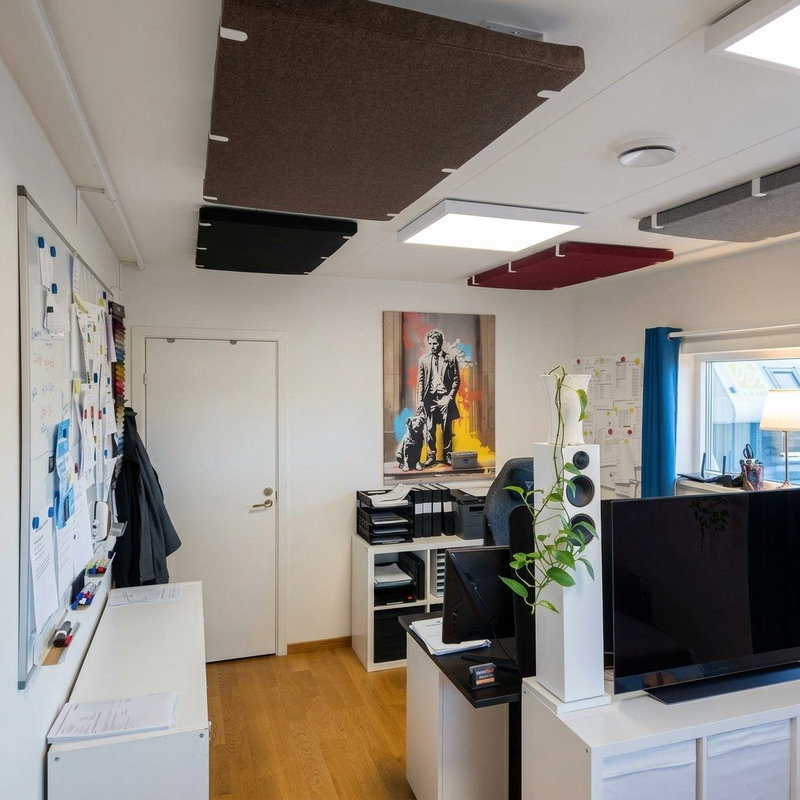
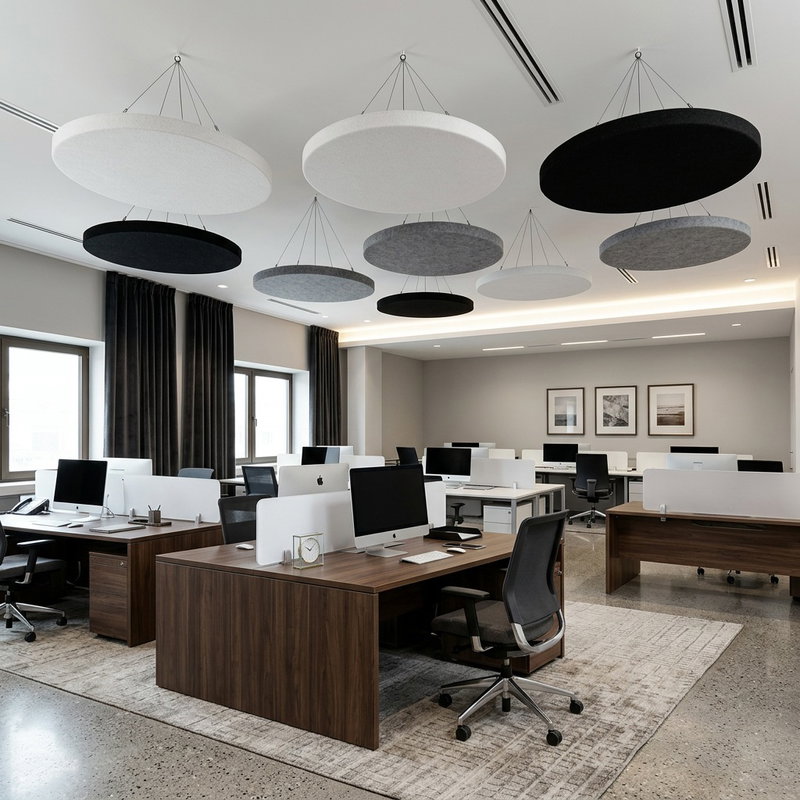
Ceiling absorbers help reduce reflections over larger areas and create stable basic acoustics in both small and large studios.
Particularly effective with limited wall space
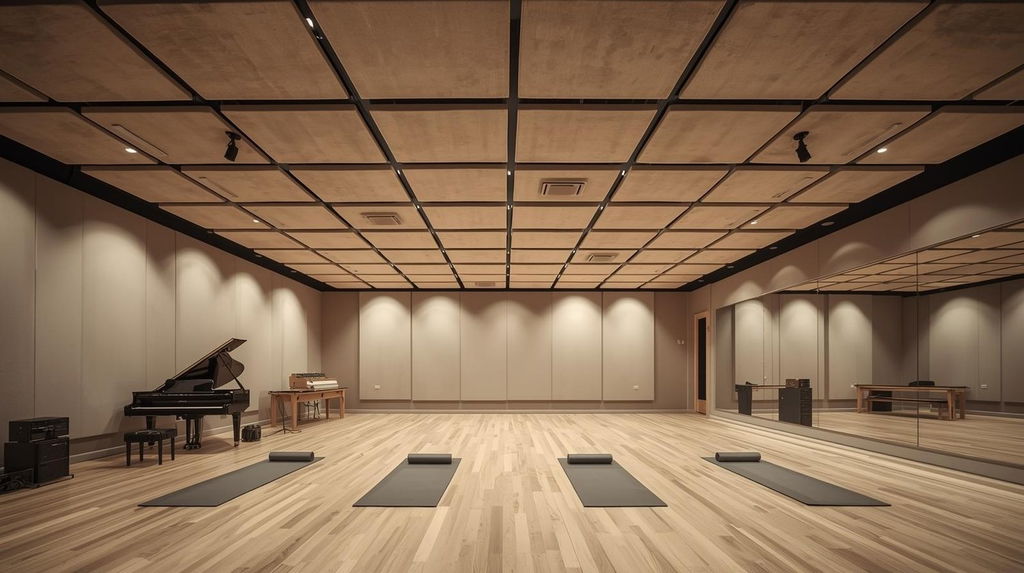
In studios where the walls are used for equipment, mirrors, or stage design, ceiling absorption is often the most practical solution.
Why choose ceiling sound absorbers in studios and recording studios?
Ceiling sound absorbers provide a clear and long-term improvement in studio acoustics without affecting floor space or workflow. The measure is discreet and works equally well in professional studios and smaller home-based environments. The result is noticeable in shorter reverberation times, better speech intelligibility, and a sound environment that is easier to work in for longer periods. In many studio environments, ceiling absorbers are combined with wall absorbers, sound-absorbing curtains, or room dividers for a more comprehensive result.
Well-considered advice for the best results
For the best effect, ceiling absorbers should be placed where sound activity is greatest, such as above recording areas, work zones, or open parts of the studio. Larger studios often require an even distribution of several absorbers, while smaller studios can be improved with a more concentrated solution. A common mistake is to underestimate the role of the ceiling in the overall acoustics. Correctly placed ceiling absorption creates a stable and functional sound environment over time.
Ceiling sound absorbers are therefore a fundamental and effective measure for reducing echo and improving acoustics in studios and recording rooms.