









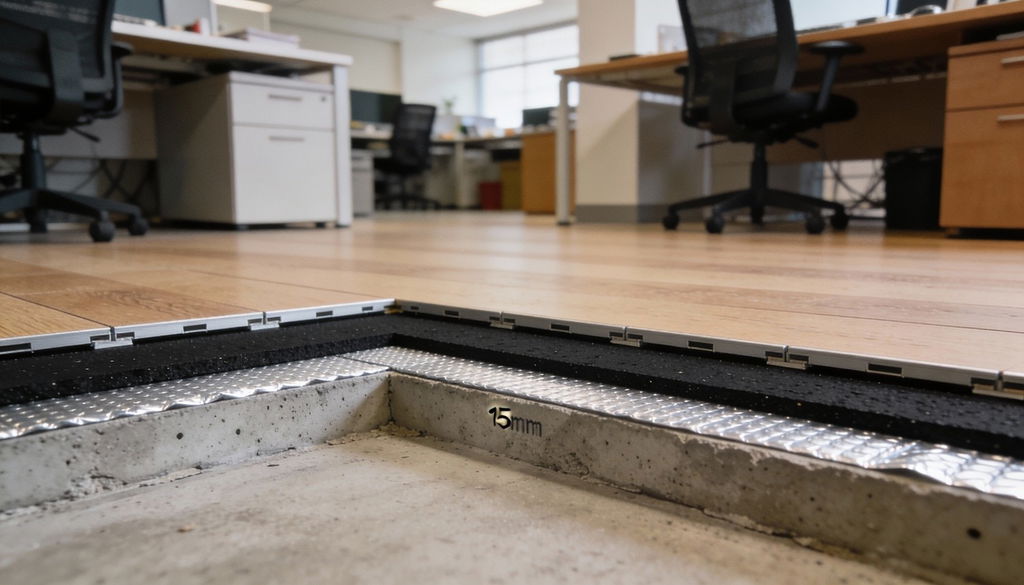
Floor vibration damping – reduces vibrations in offices
Reduce structure-borne noise and shaking through the floor structure in office environments
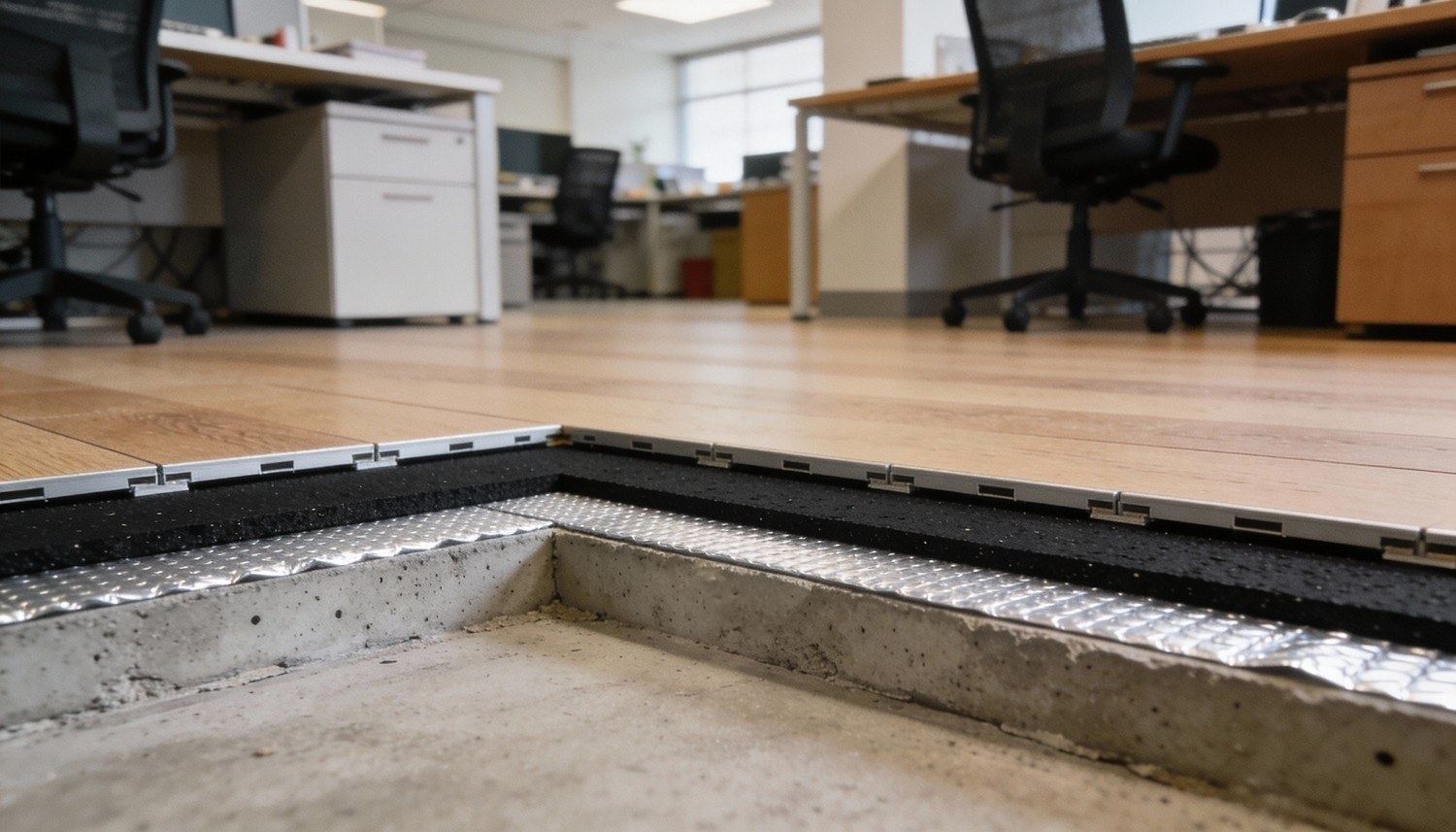
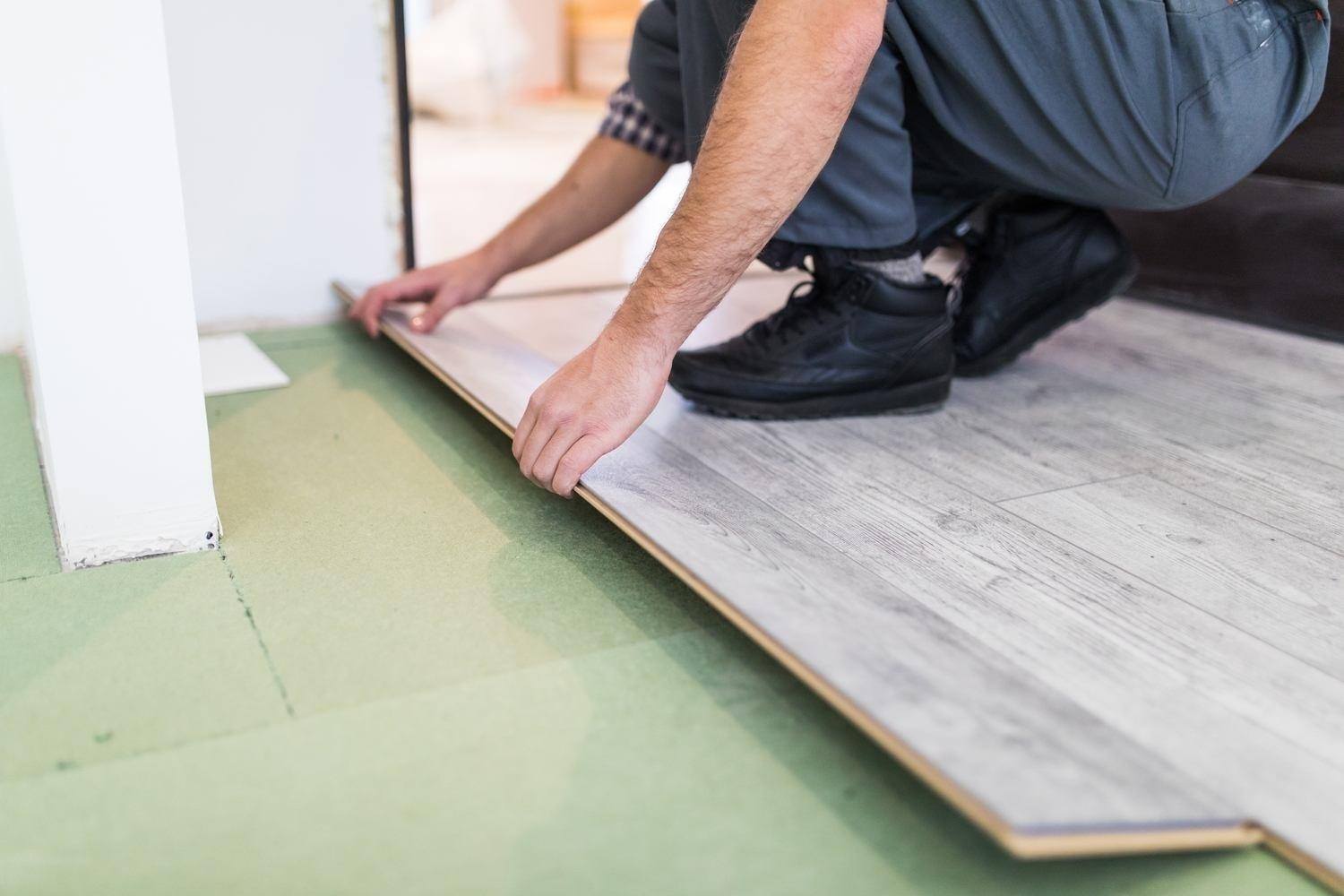
In office environments, the floor is one of the most common transmission paths for vibrations. When technical equipment, installations, or daily movements place stress on the floor structure, vibrations can propagate throughout the building and be perceived as disruptive noise or shaking in other parts of the office. Floor vibration damping aims to limit this transmission and thereby reduce structure-borne noise that affects work tranquility and comfort.
What does floor vibration damping entail?
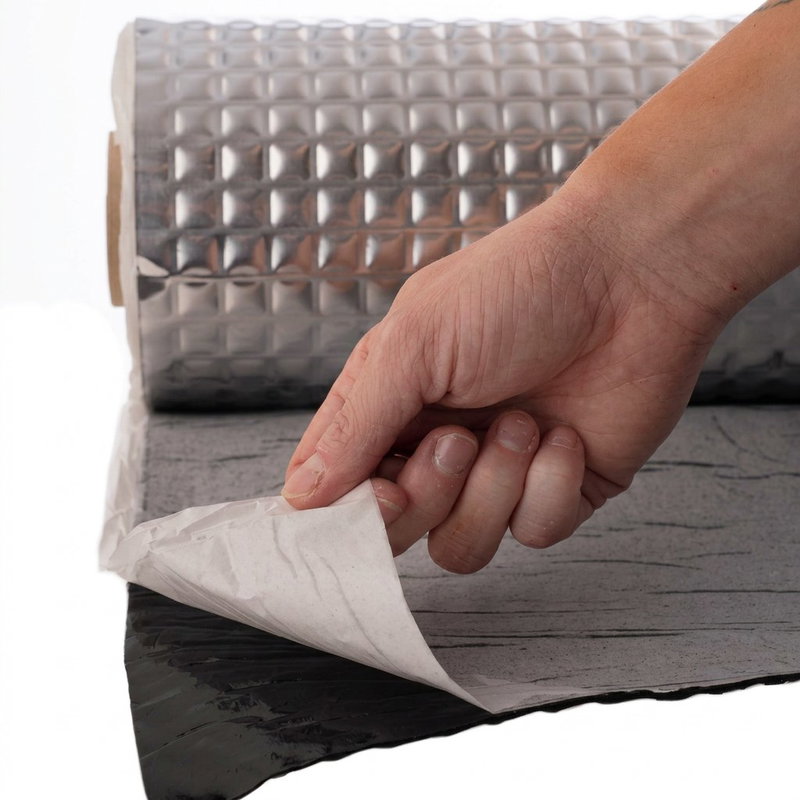
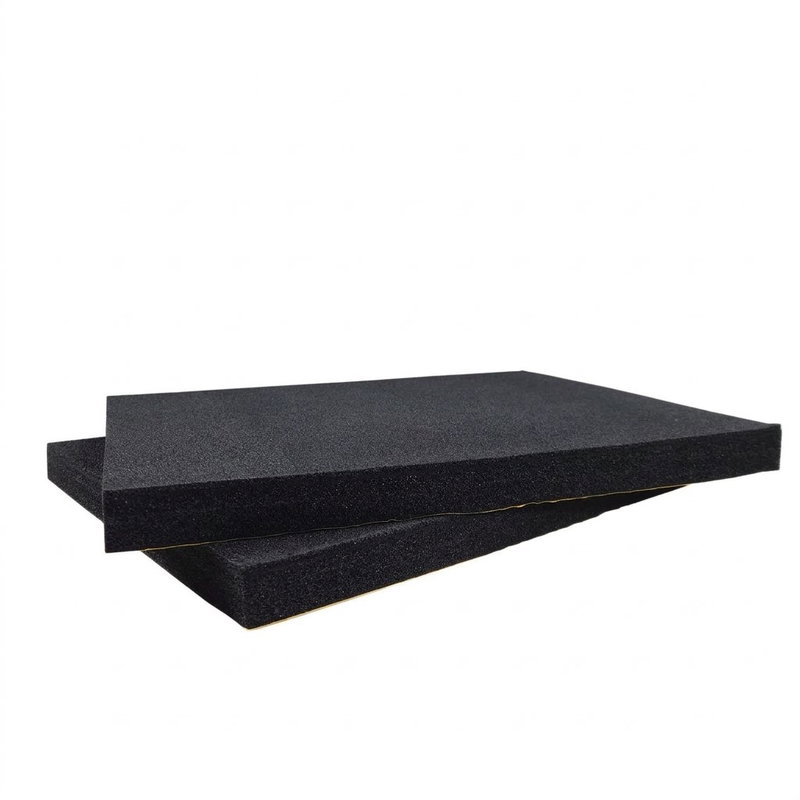
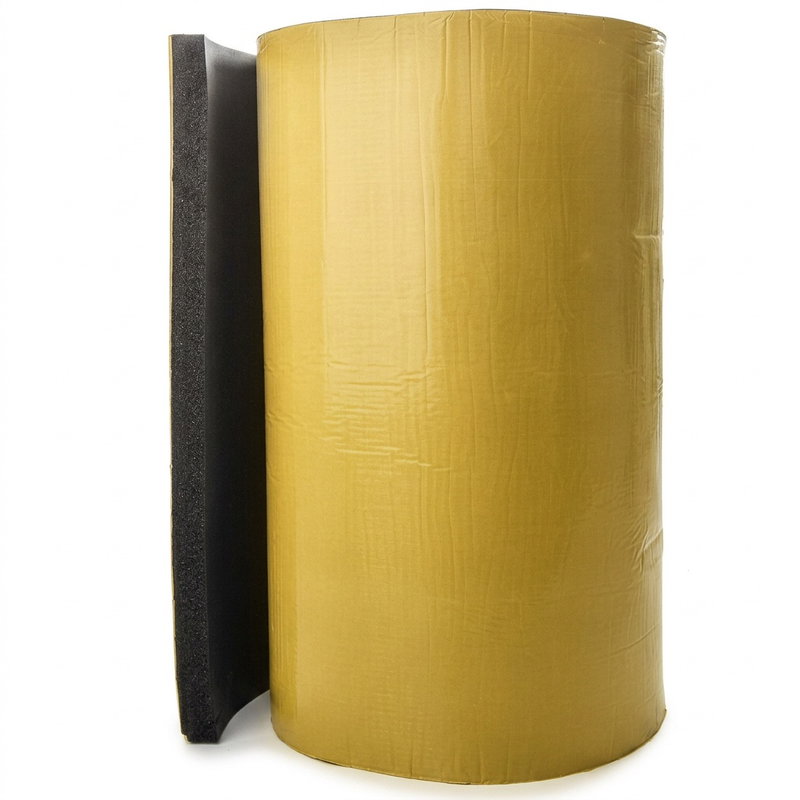
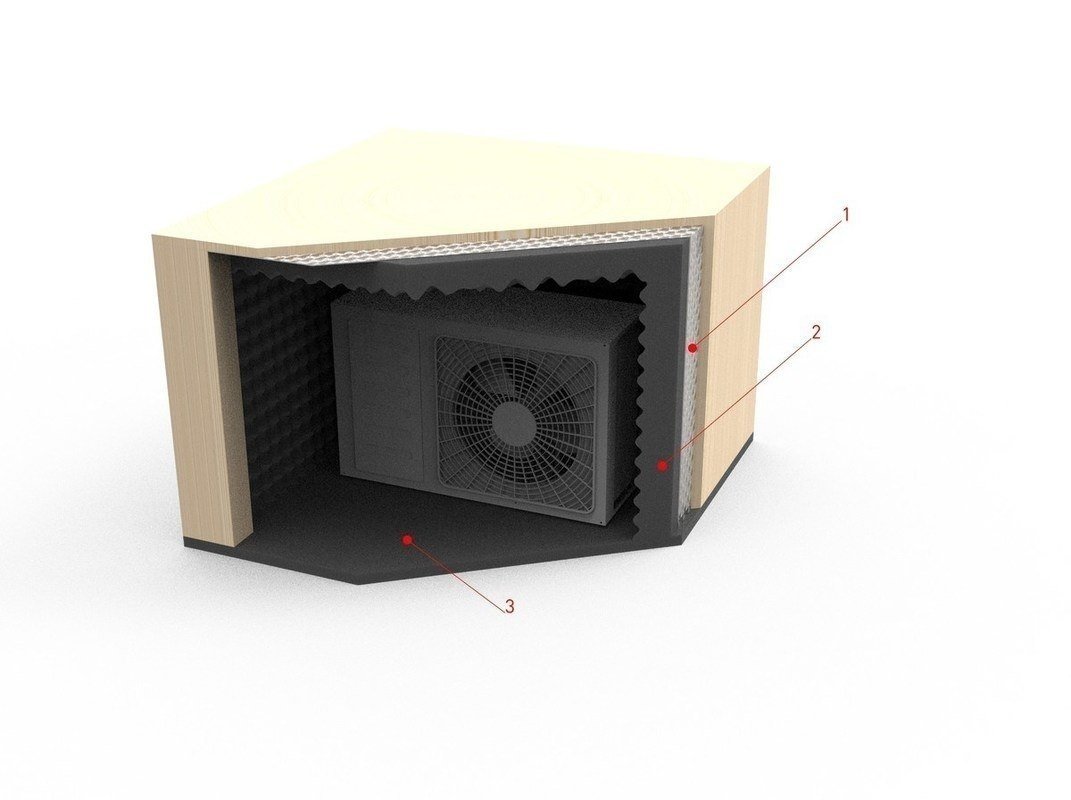
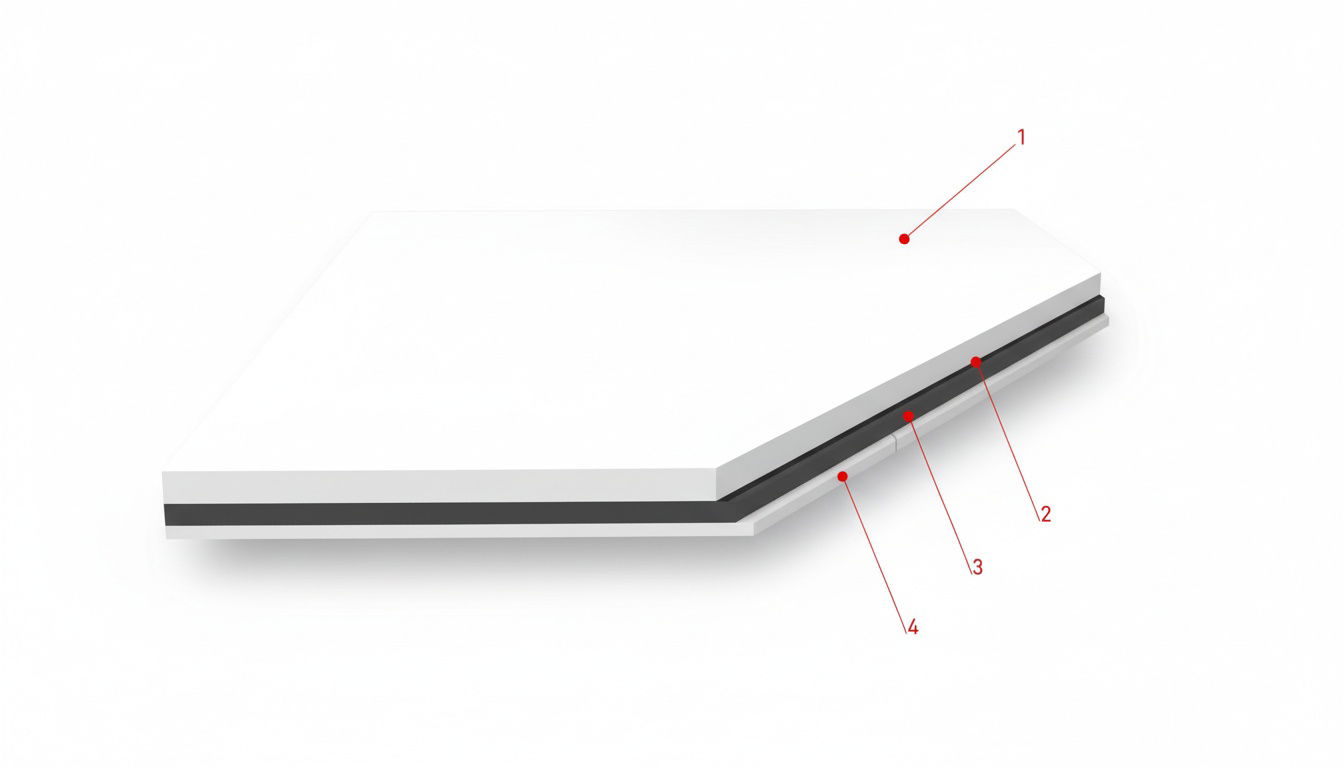
Floor vibration damping involves reducing how mechanical movements are transmitted from a source to the building’s structure via the floor structure. Unlike sound insulation, which blocks airborne sound between rooms, and sound absorption, which reduces echoes and reverberation within a room, vibration damping focuses on reducing the vibrations within the structure itself. The measure is often targeted at contact points where vibrations are transmitted, such as between equipment and the floor.
Common problems associated with vibrations in office floors
In offices, floor vibrations often originate from technical equipment such as printers, server racks, ventilation equipment, coffee machines, or other equipment placed directly on the floor. Even moving chairs, high-traffic walkways, and recurring loads can create vibrations that spread through the floor structure. These issues are often perceived as a dull hum, shaking, or low-frequency disturbances that can affect concentration and well-being.
How do vibrations spread through the floor?
When vibrations occur in the floor surface, the movement is transmitted to the floor structure and further up into walls and ceilings. This means that the disturbance is not always perceived where the source is located, but rather in adjacent office spaces, meeting rooms, or common areas. The floor thus acts as an effective transmission surface for vibrations in office buildings.
Equipment placed directly on the floor
Operating technical equipment creates continuous vibrations that are easily transmitted through the structure.
Movement and Loads
Daily movements, walking, and furniture placement can cause recurring vibrations in the floor.
Why choose floor vibration damping in offices?
Floor vibration damping contributes to a significantly improved work environment by reducing low-frequency noise and disruptive shaking. This measure is particularly important in offices with technical equipment or high activity levels, where vibrations can otherwise spread uncontrollably. In many cases, floor vibration damping is combined with sound insulation or sound absorption measures to achieve the best possible overall results.
Well-considered advice for best results
For maximum effectiveness, it is important to identify both the source of the vibration and how the motion spreads through the floor structure. A common mistake is to focus solely on the room where the disturbance is heard, even though the problem often originates elsewhere. By interrupting the vibration transmission at the right point, a more stable and comfortable office environment is created in the long term.
Floor vibration damping is therefore a key measure for reducing vibrations and structure-borne noise in office environments.