



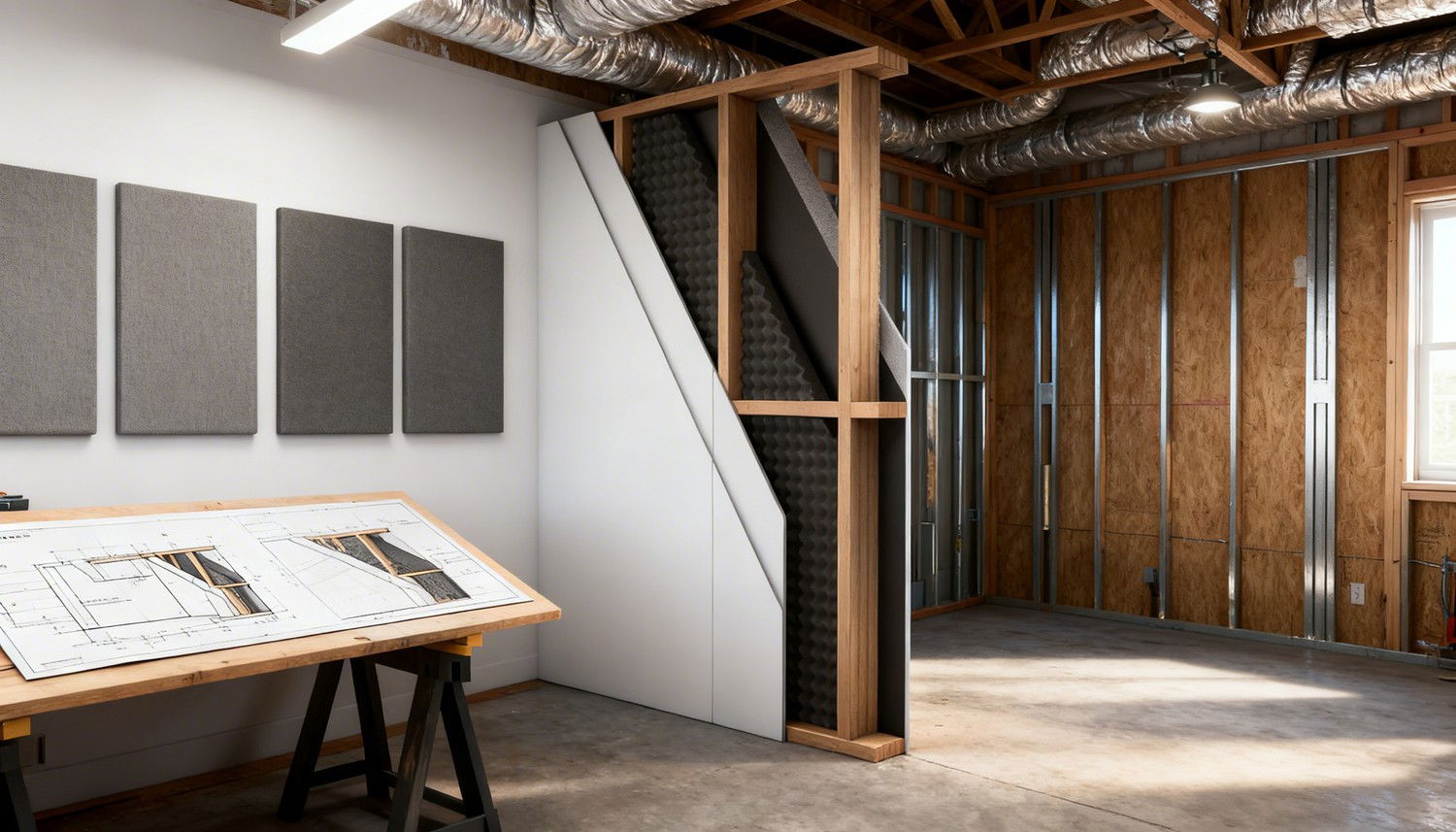


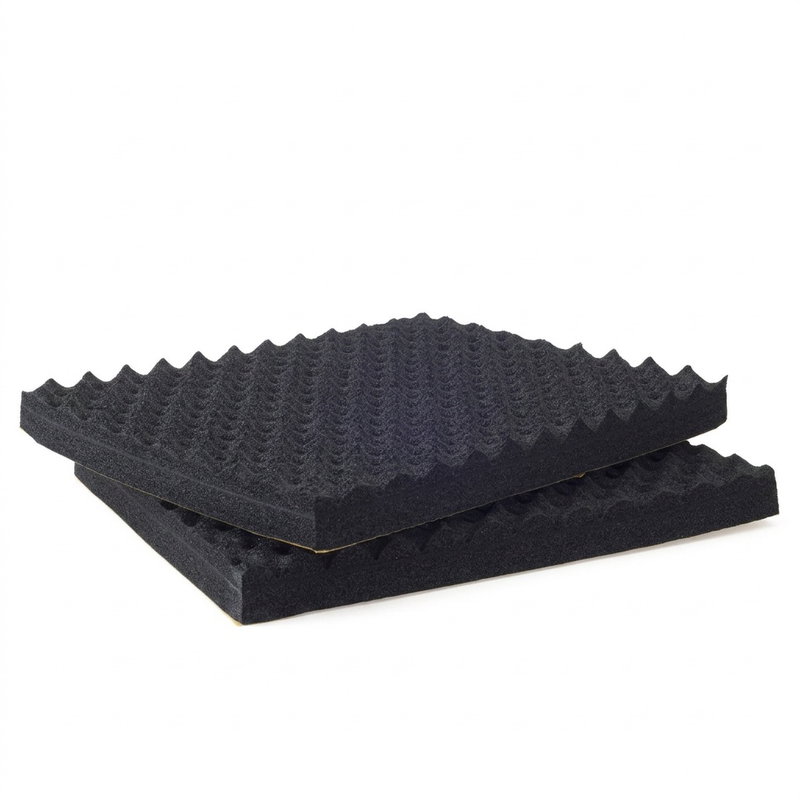
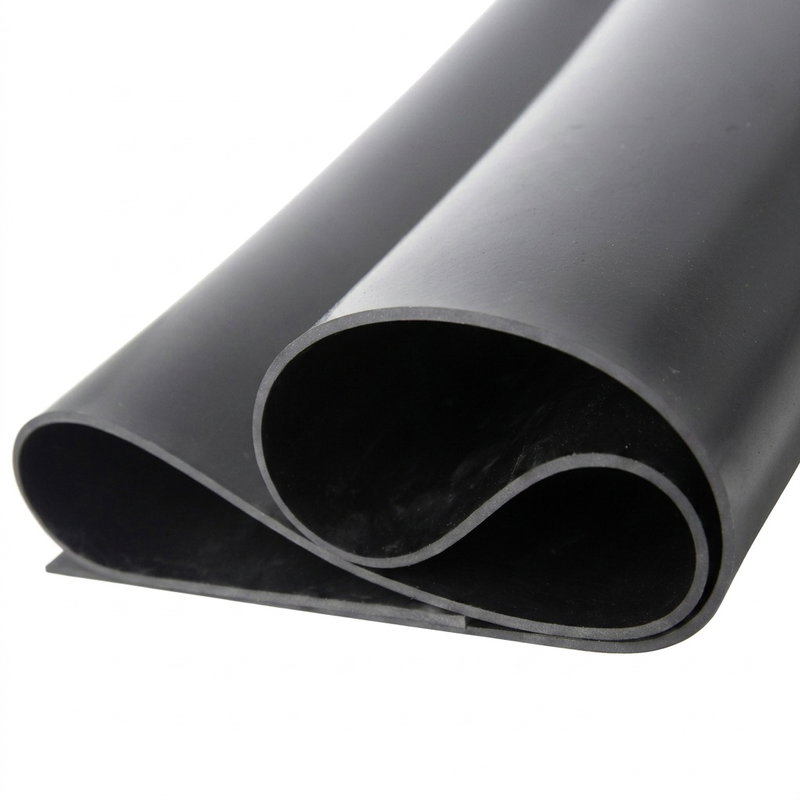
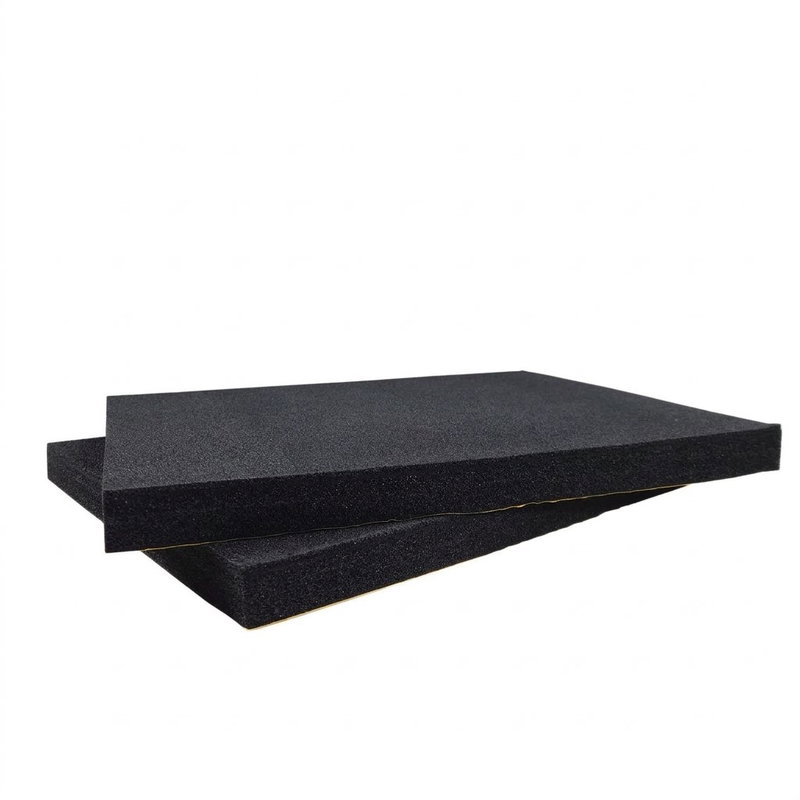



Wall soundproofing – blocks sound between rooms in industrial settings
Clearer separation between production areas and work zones
In industrial environments, walls are one of the most important building components for controlling how sound spreads between different parts of the facility. Production, machinery, internal transport, and technical equipment generate noise that can easily travel through walls and affect offices, staff areas, or adjacent work zones. Wall sound insulation aims to limit this sound transmission and create a more structured, safe, and functional industrial environment.
What does wall sound insulation entail?
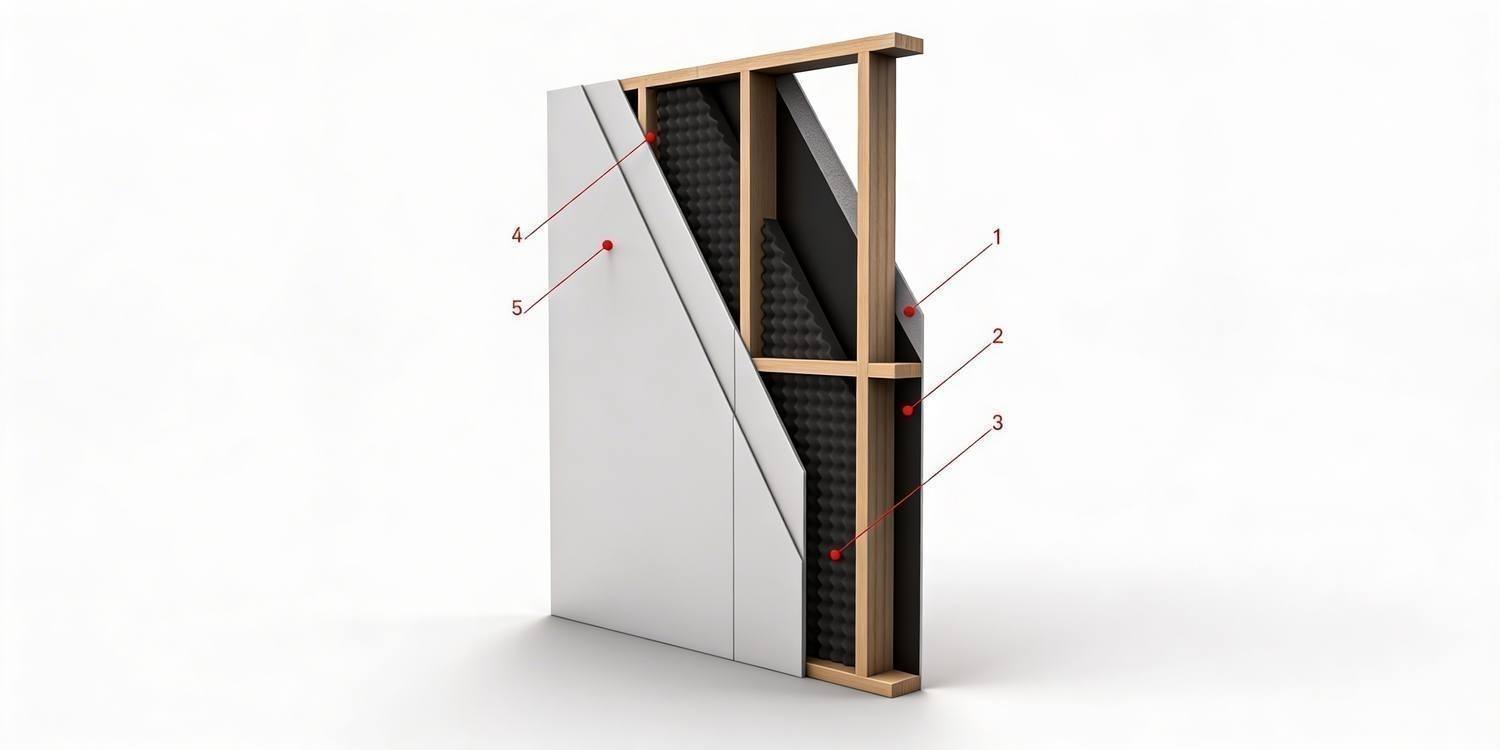
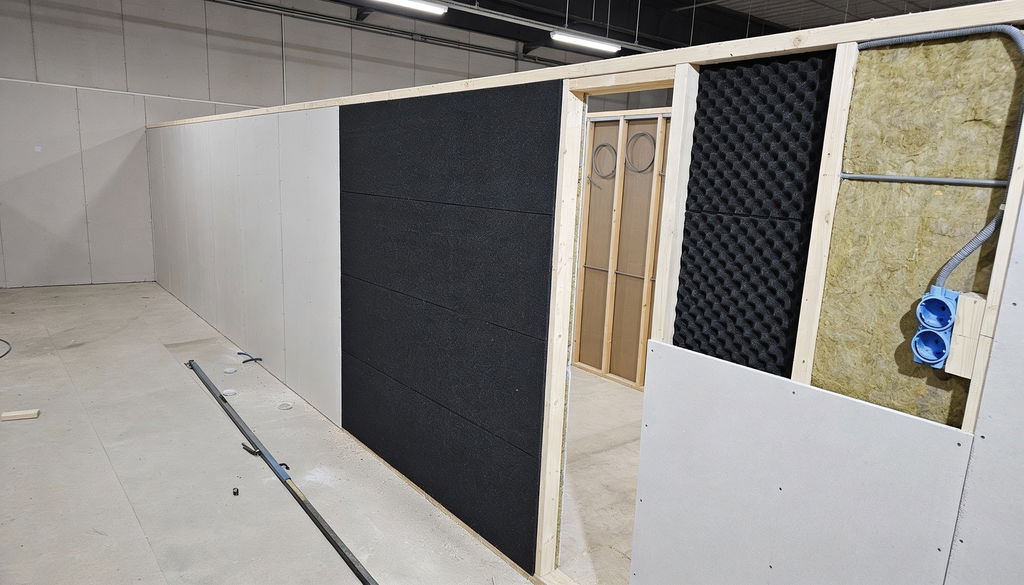
Wall sound insulation involves stopping sound from spreading between rooms through the wall structure. This applies to both airborne sound, such as machine noise and voices, and structure-borne sound that occurs when vibrations are transmitted through the building’s frame. This differs significantly from sound absorption, which is used to reduce echoes and reverberation in a room, and vibration damping, which reduces shaking from machinery and installations. Wall insulation is used when the goal is to create physical and acoustic separation between operational areas.
Common problems with sound transmission through walls in industry
In industrial operations, sound transmitted through walls is often perceived as production noise penetrating offices, meeting rooms, or control rooms. Sound from compressors, fans, or other technical installations can also travel through walls and disrupt the work environment. Low-frequency sounds are particularly problematic because they propagate effectively through the building’s structure and can be heard over long distances.
How sound spreads through wall structures
When sound is generated in an industrial environment, vibrations are transmitted through the wall materials, fasteners, and connections to the floor and ceiling. Since walls are often interconnected with other load-bearing structures, the sound can spread further into multiple spaces. Walls are therefore a critical area to address when sound transmission between rooms affects work peace, safety, or communication.
Airborne industrial noise
Machines, processes, and conversations can pass through walls with inadequate sound insulation.
Structure-borne noise via the building frame
Vibrations can spread through the walls’ connections to floors, ceilings, and other walls.
Why choose wall sound insulation in industrial environments?
Wall sound insulation provides a significant improvement in the industrial sound environment by reducing disturbances between different operational areas. This measure contributes to a quieter work environment, increased safety, and clearer zoning. In many cases, wall insulation is combined with ceiling or floor sound insulation and vibration damping to achieve a more comprehensive and long-term result.
Well-considered advice for best results
For the best results, walls should be considered as part of the entire structure and the facility’s sound flow. A common mistake is to insulate a single wall without considering adjacent surfaces, which allows sound to take alternative paths. By analyzing sound sources, transmission paths, and the function of the walls, the correct insulation principles can be applied. The result is a more controlled and sustainable acoustic environment in industrial settings.
Wall sound insulation is therefore a key measure for blocking sound between rooms and creating better structure, work environment, and functionality in industrial settings.