






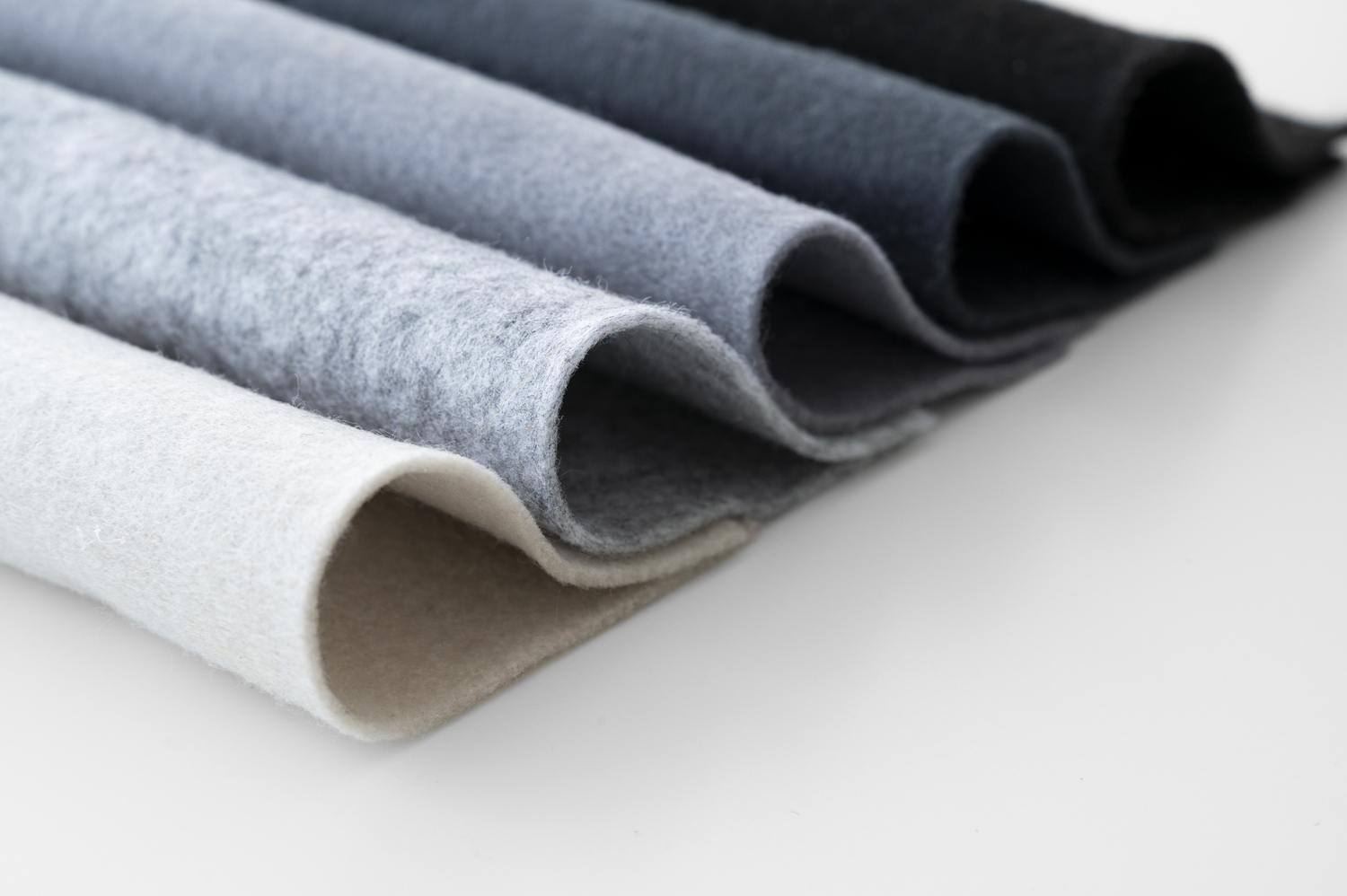

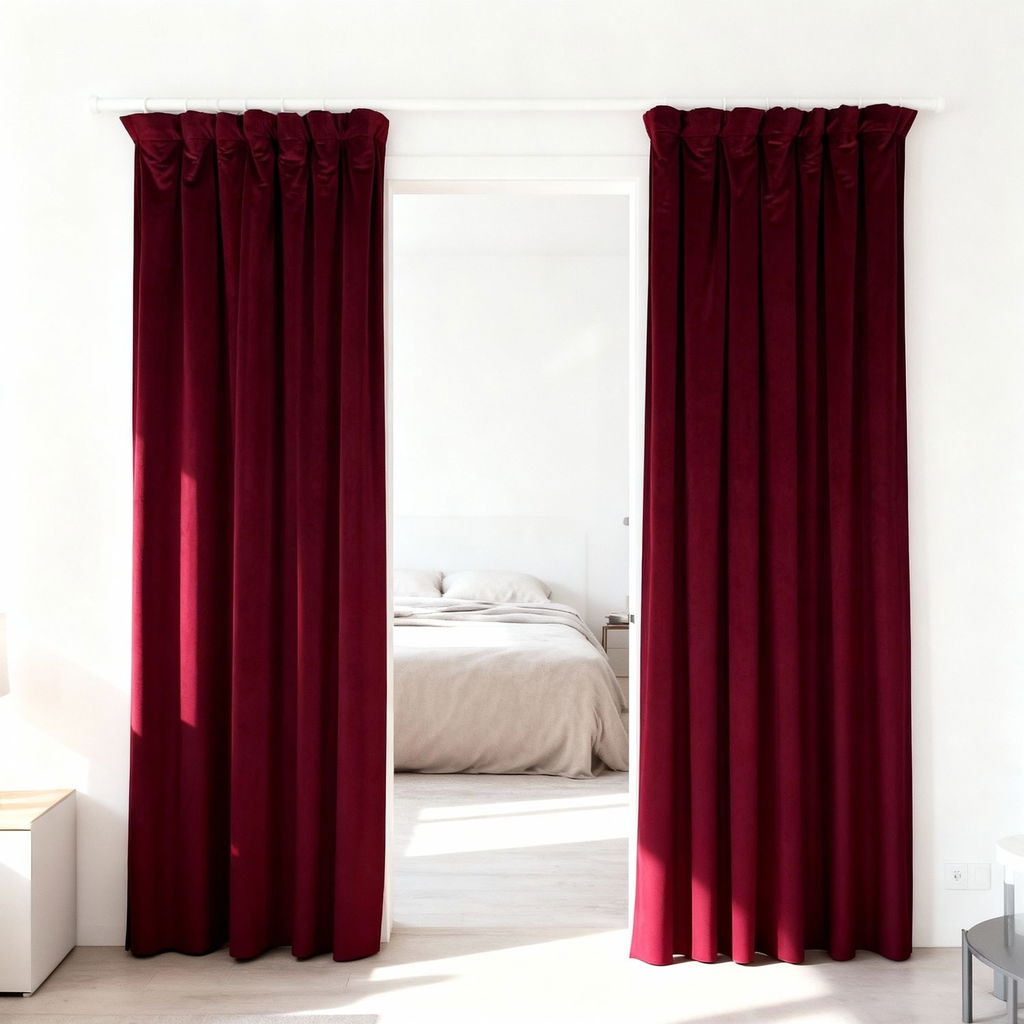
Sound-absorbing fabric room dividers – reduce echoes in the room
Flexible sound absorption and screening in industrial and warehouse settings
In industrial and warehouse environments with large open spaces, echoes and long reverberation times are a common problem. High ceilings, hard floors, metal walls, and large volumes cause sound to be strongly reflected and spread over long distances. This affects the work environment, communication, and safety. Fabric sound-absorbing room dividers are an effective form of sound absorption that both partition spaces and reduce sound reflections without requiring permanent construction work.
What are fabric sound-absorbing room dividers?
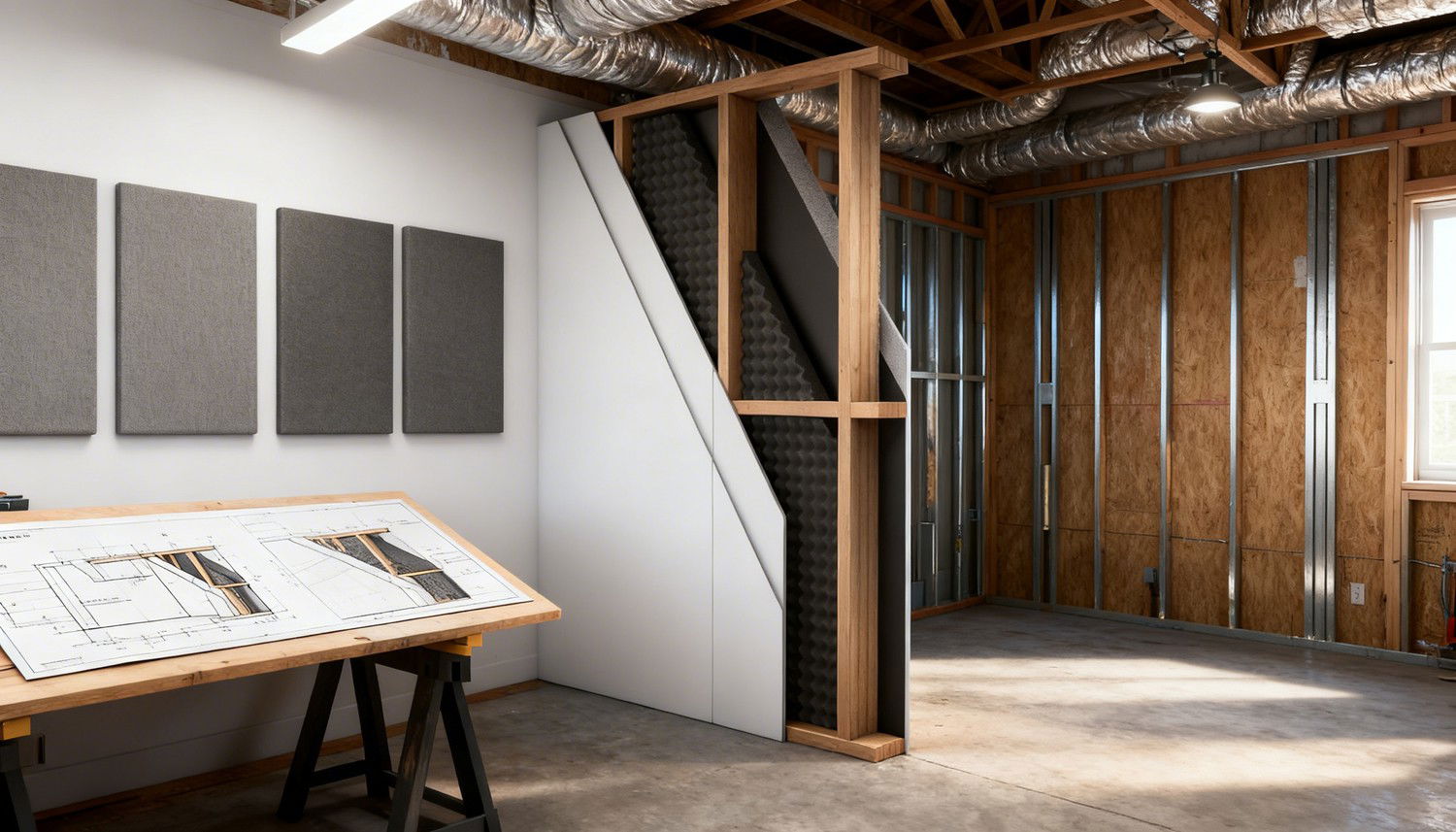
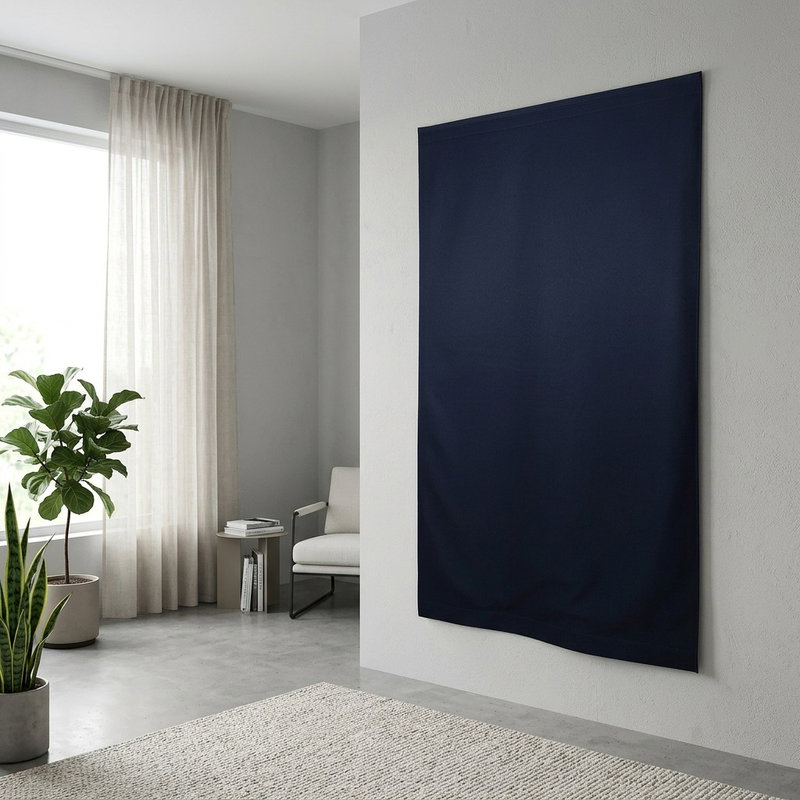
Acoustic fabric room dividers consist of porous, sound-absorbing materials covered with fabric. When sound waves hit the surface, some of the sound energy is converted into heat, which reduces reflections and shortens the reverberation time in the room. It is important to distinguish sound absorption from sound insulation, which blocks sound between rooms, as well as vibration damping, which reduces vibrations and structure-borne noise. Room dividers are used to improve the acoustics in the space where the sound already exists.
Common acoustic challenges in industry and warehouses
In warehouses, production areas, and logistics environments, problems often arise with noise bouncing between surfaces. Conversations and instructions become difficult to hear, warning signals can be drowned out by background noise, and the perceived noise level becomes unnecessarily high. In environments where multiple work tasks are carried out simultaneously, these problems are further exacerbated if the surfaces lack sound-absorbing materials.
How sound-absorbing room dividers work in practice
Room dividers are placed freestanding within the space, often between different work zones or traffic flows. Since they absorb sound from multiple directions simultaneously, they are particularly effective in open and large spaces where sound would otherwise spread freely.
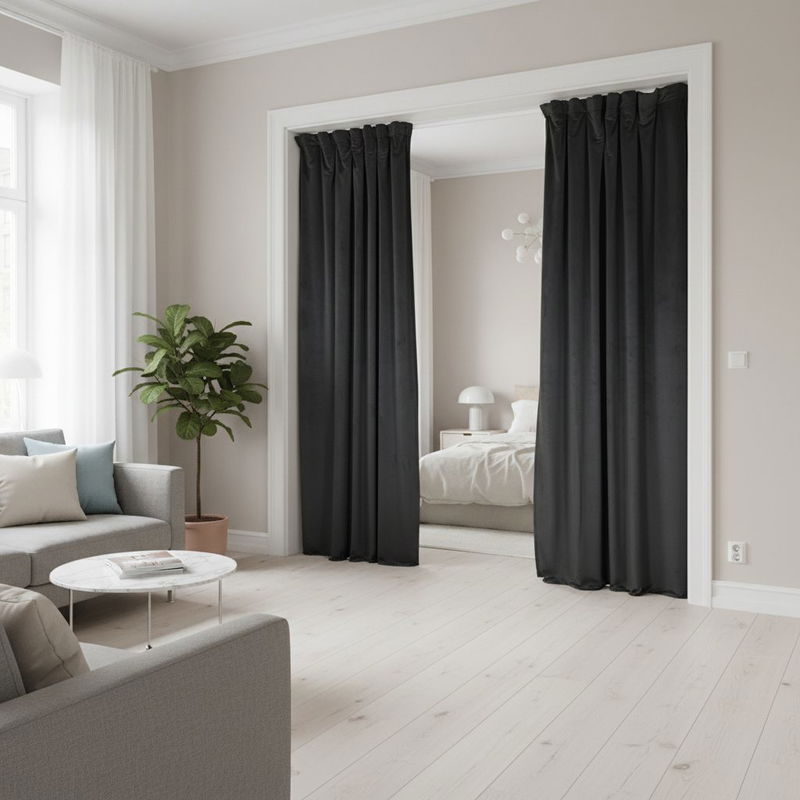
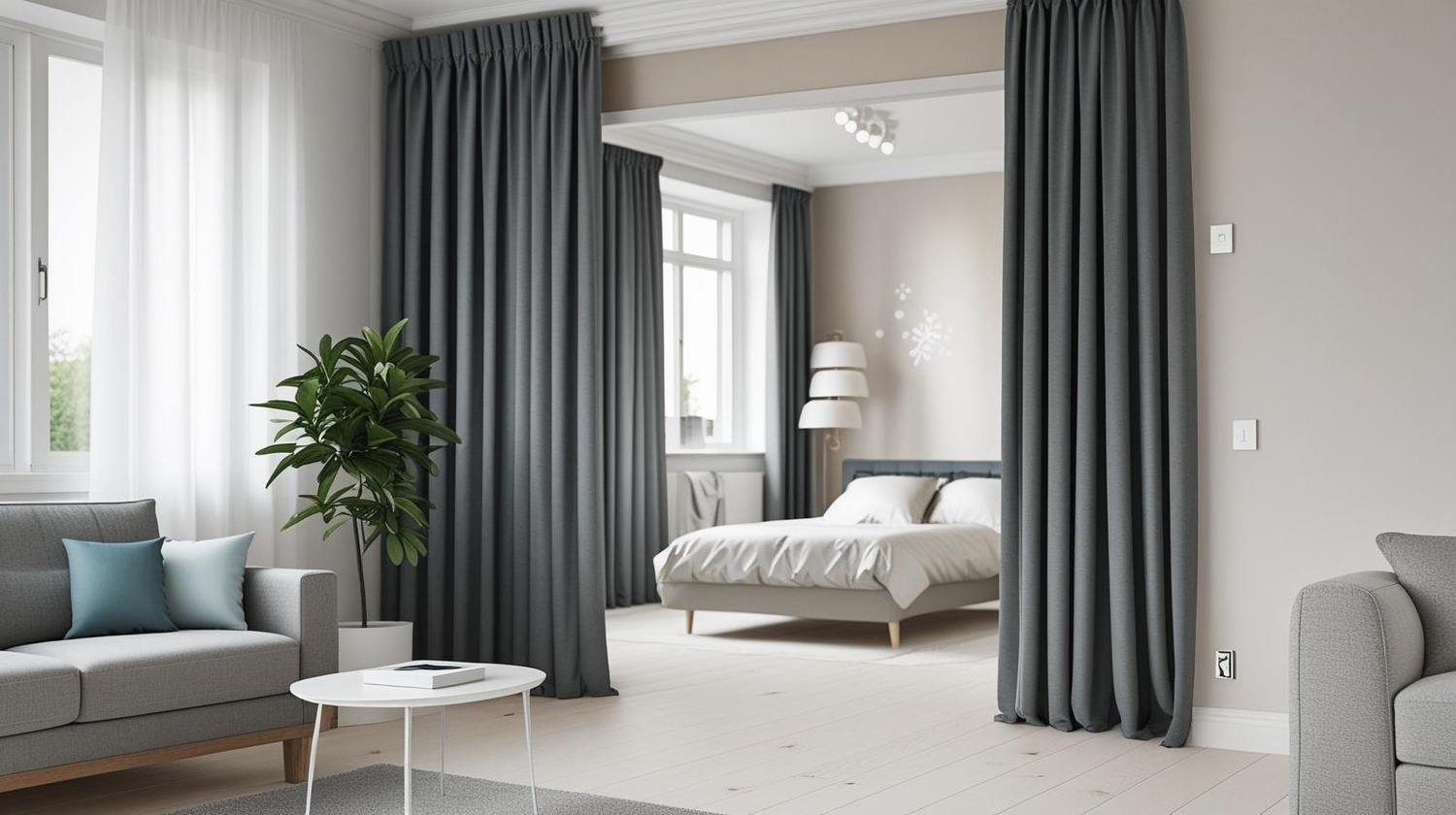
Screening and sound absorption in one
Room dividers combine visual separation with acoustic enhancement, making them useful in production, warehouses, and internal workspaces.
Flexible and adaptable solution
Since the room dividers do not require permanent installation, they can be moved and adapted as operations change.
Why choose fabric sound-absorbing room dividers?
Sound-absorbing room dividers provide a quick improvement to the acoustic environment without requiring structural modifications. They are particularly suitable for industrial and warehouse environments where flexibility is crucial and where permanent walls are not an option. The result is improved speech intelligibility, a lower perceived noise level, and a more controlled work environment. In many cases, room dividers are combined with ceiling or wall absorbers, and, if necessary, with sound insulation or vibration damping, for the best overall results.
Well-considered advice for best results
For maximum effectiveness, room dividers should be placed where sound passes between work zones or where reflections are strongest. In larger spaces, multiple room dividers can be used to gradually break up sound propagation, while smaller areas are often improved by a strategically placed solution. A common mistake is using too little absorptive surface area relative to the room’s volume. Proper sizing ensures a long-term functional acoustic environment in industrial and warehouse settings.
Sound-absorbing fabric room dividers are therefore an effective and flexible tool for reducing echoes and improving the work environment in industrial and logistics settings.