



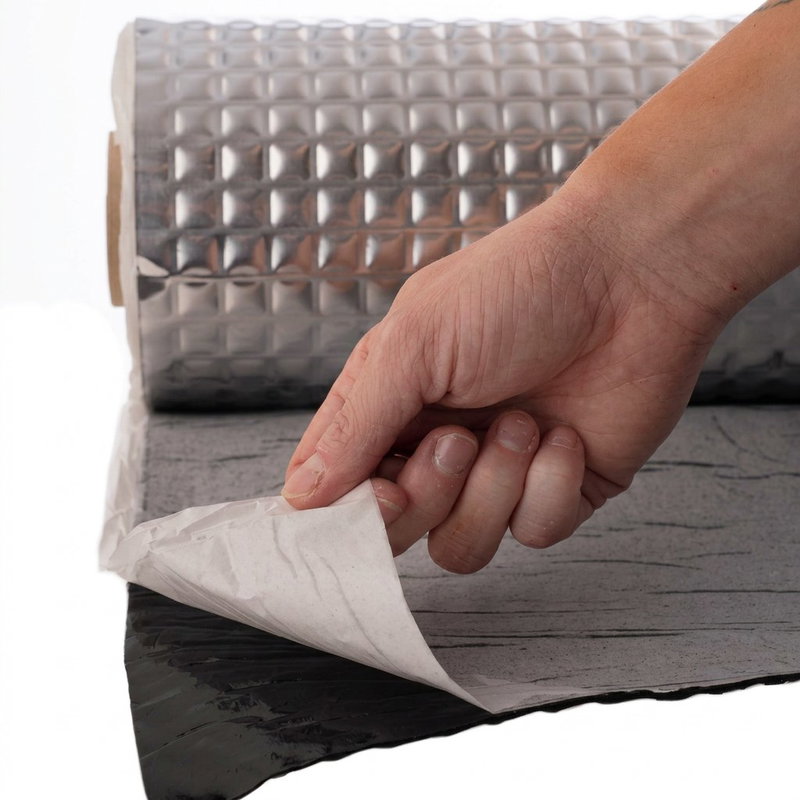

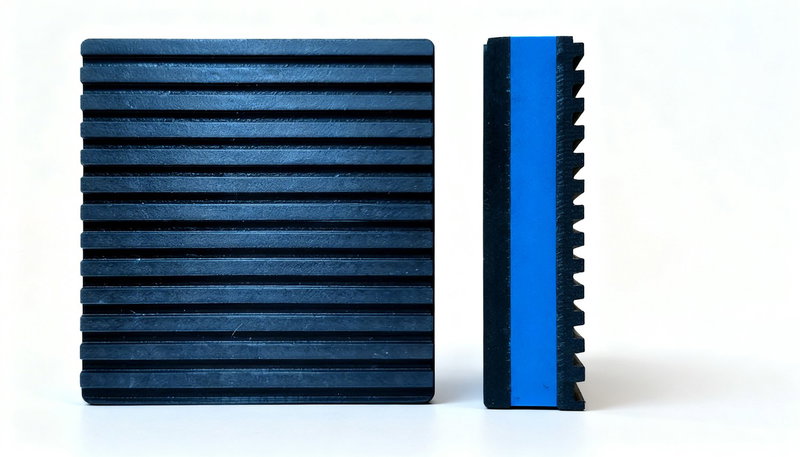
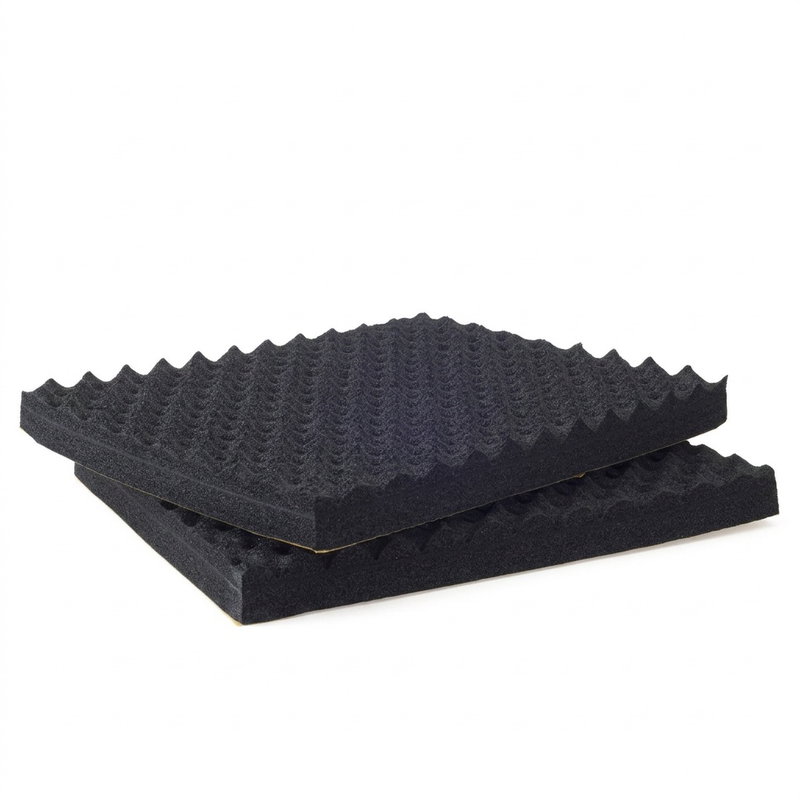
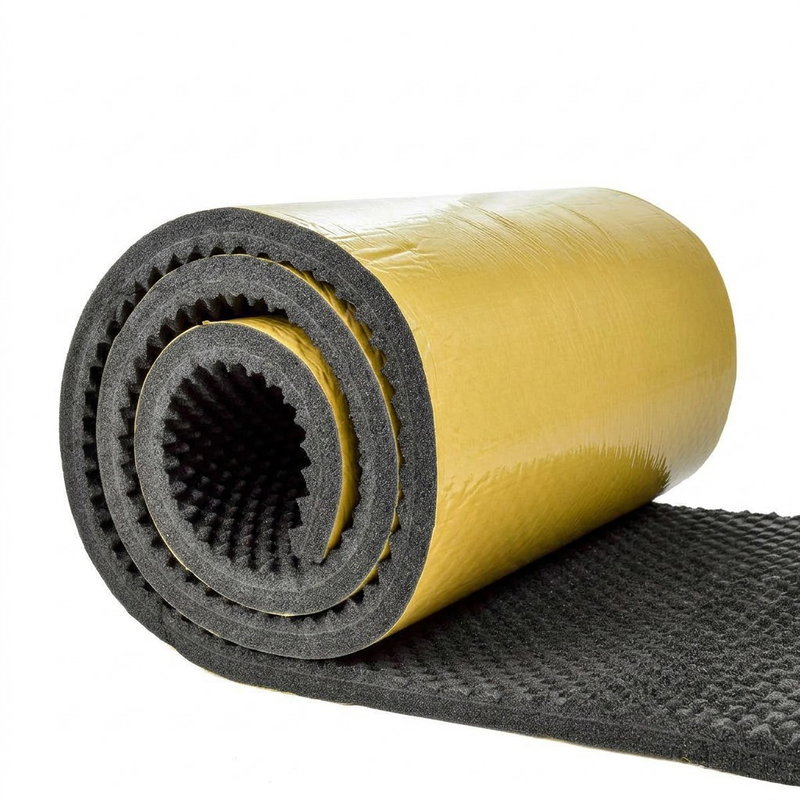
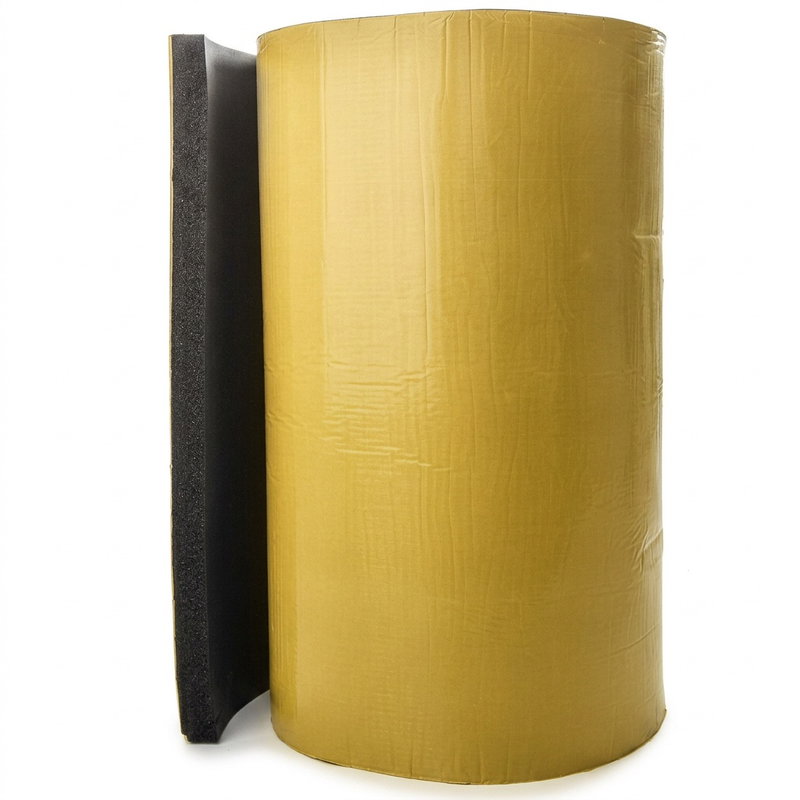

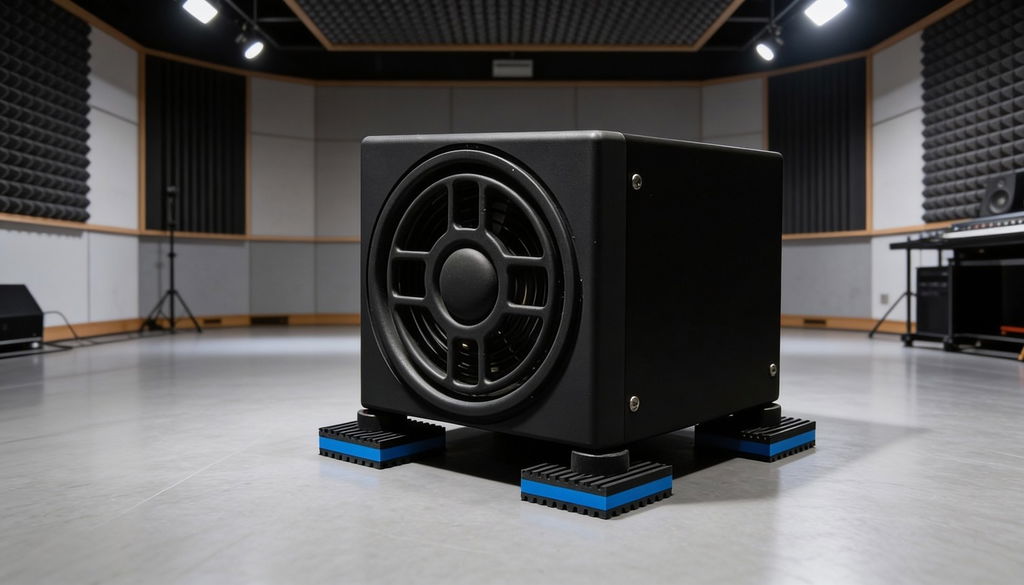
Vibration damping of machines and equipment in studios and studio environments
Reduce structure-borne noise and disruptive vibrations from technical equipment in studio environments
In studios and recording facilities, machines and equipment are often an underestimated source of vibrations that affect both working peace and sound precision. Fans, cooling systems, racks, pumps, compressors, recording-related equipment, and various installations can create mechanical movements that are transmitted through floors, walls, ceilings, and fixtures. When the vibrations are connected to the building's frame, structure-borne noise occurs that can be heard far from the source itself and is perceived as a dull hum, resonance, or recurring shaking. Vibration damping of machines and equipment aims to break this transmission at the right point, before the disturbance spreads in the studio environment.
What does vibration damping of machines and equipment involve?
Vibration damping means reducing how mechanical movements are transmitted from a machine or piece of equipment to the building structure. Unlike sound insulation, which stops airborne sound between rooms, and sound absorption, which reduces echo and reverberation in the room, vibration damping focuses on the actual movement in materials and fixings. When vibrations are reduced at the source, the resulting problems are also reduced, such as structure-borne noise and resonances that otherwise affect studios and multi-room studios simultaneously.
Common sources of vibration in studios
In studios, vibrations often arise from ventilation solutions, fans, cooling units, and technical equipment that is in operation for long periods of time. Racks with fan-cooled units, UPSs, and network equipment can create a constant hum that spreads through the floor and fixtures. In some studio environments, compressors, pumps, or other peripheral equipment used in production, stage, or lighting environments are also added.
Even smaller equipment can be problematic if it is placed directly on the floor or is firmly attached to the wall. When a unit vibrates slightly but continuously, it can be enough to create disturbances that are more noticeable in control rooms, recording rooms, or nearby studios where silence is required.
How do vibrations spread in the building?
When a machine vibrates, the movement is mechanically transferred to the surface and further through the building's frame. Floors, walls, ceilings, pipes, and brackets act as conducting structures where vibrations can be amplified through resonance. In studios and recording rooms, this can cause the problem to be experienced in a different location than where the equipment is located, which often makes troubleshooting difficult unless the propagation paths are mapped out.
Principles for effective vibration damping
Effective vibration damping is based on reducing direct contact between equipment and the building frame. Mechanical decoupling, elastic intermediate layers, and well-designed mountings can slow down vibrations before they are transmitted into the structure. In studio environments, this is often more effective than trying to deal with the effect after the fact, as the disturbance can otherwise spread to several rooms at once.
Well-thought-out advice for best results
For best results, each piece of equipment should be assessed based on its location, operating time, and how it is connected to the floor, wall, or ceiling in the studio and studios. A common mistake is to focus on the room where the hum is heard, even though the source is often located in a technical room or behind a wall. By breaking the vibration transmission at the source, structure-borne noise can be reduced more effectively and in the long term.
Vibration damping of machines and equipment is therefore a key measure in creating a quieter, more stable, and professional studio environment.