



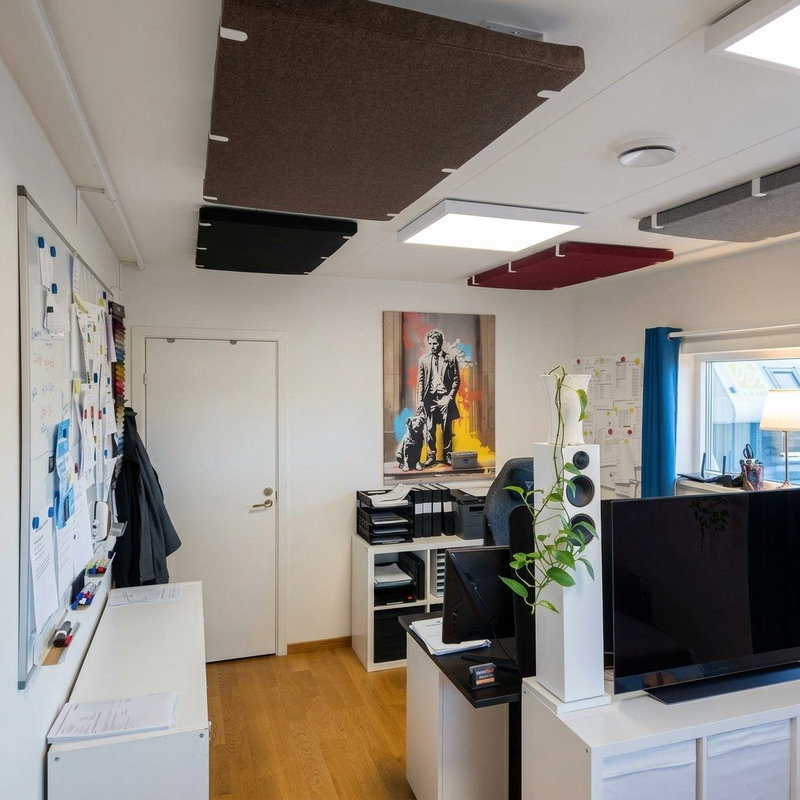
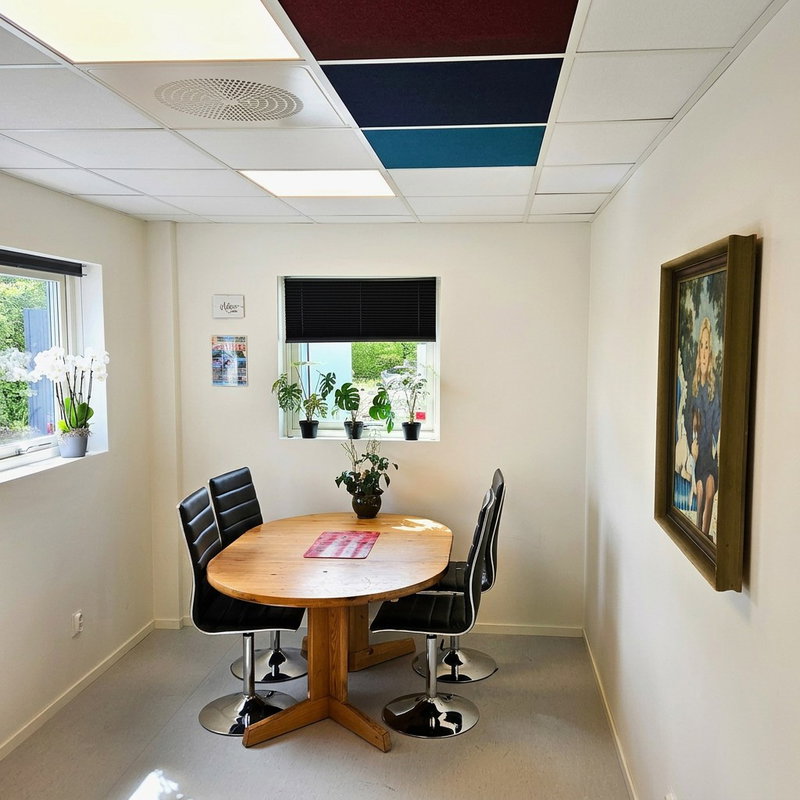
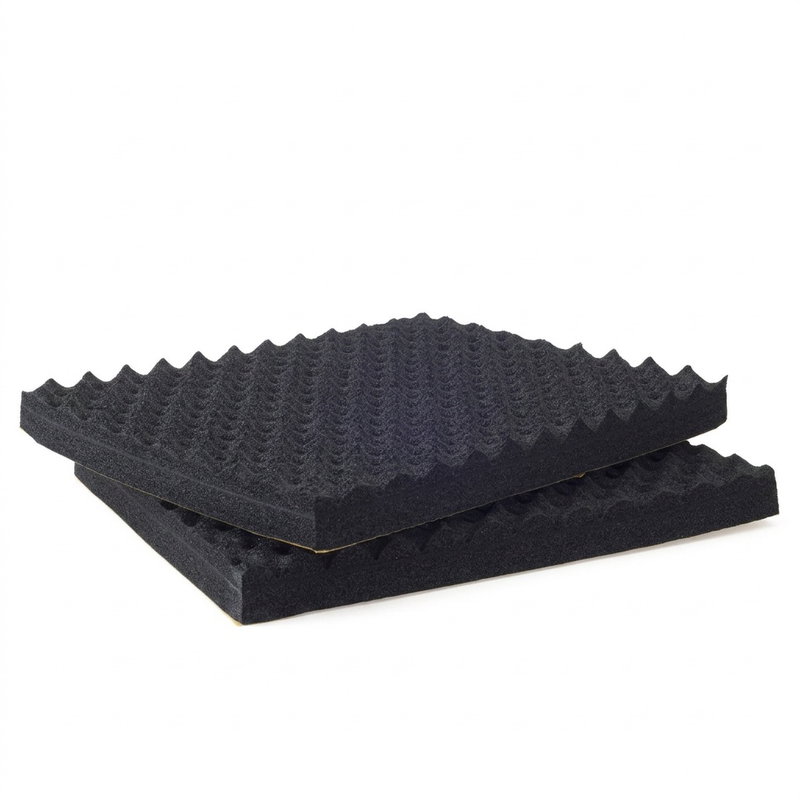
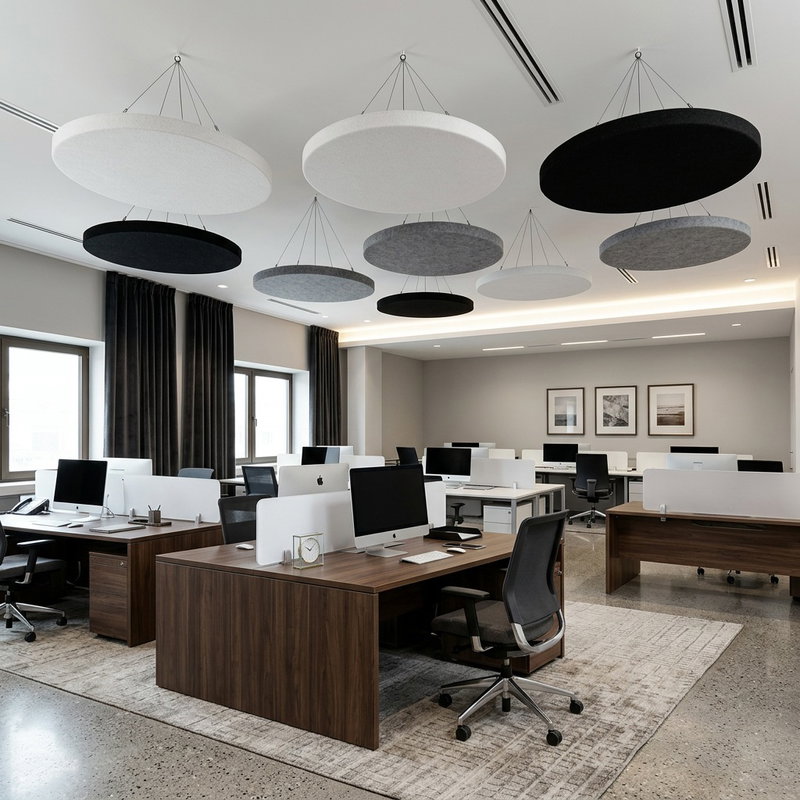






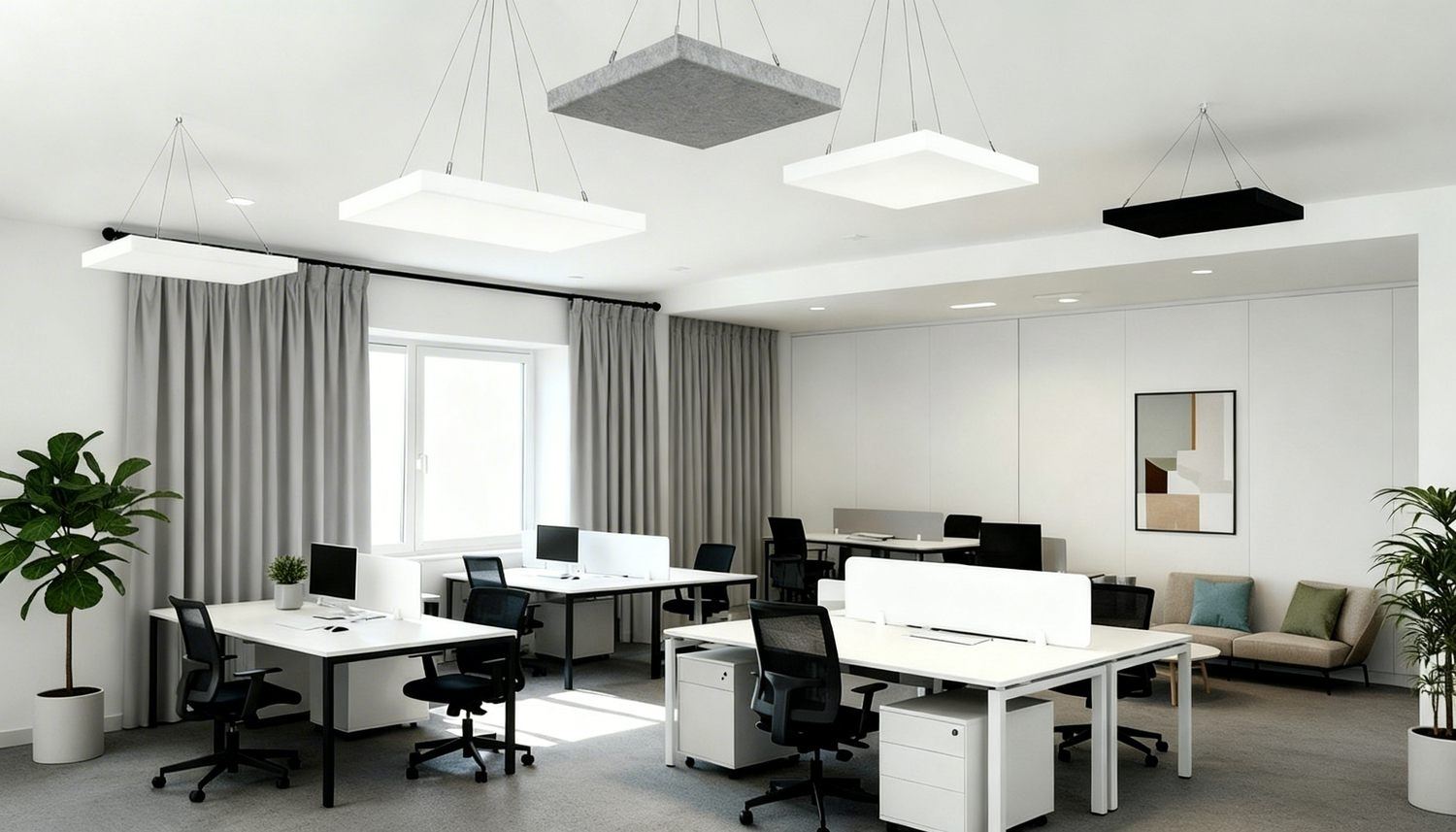


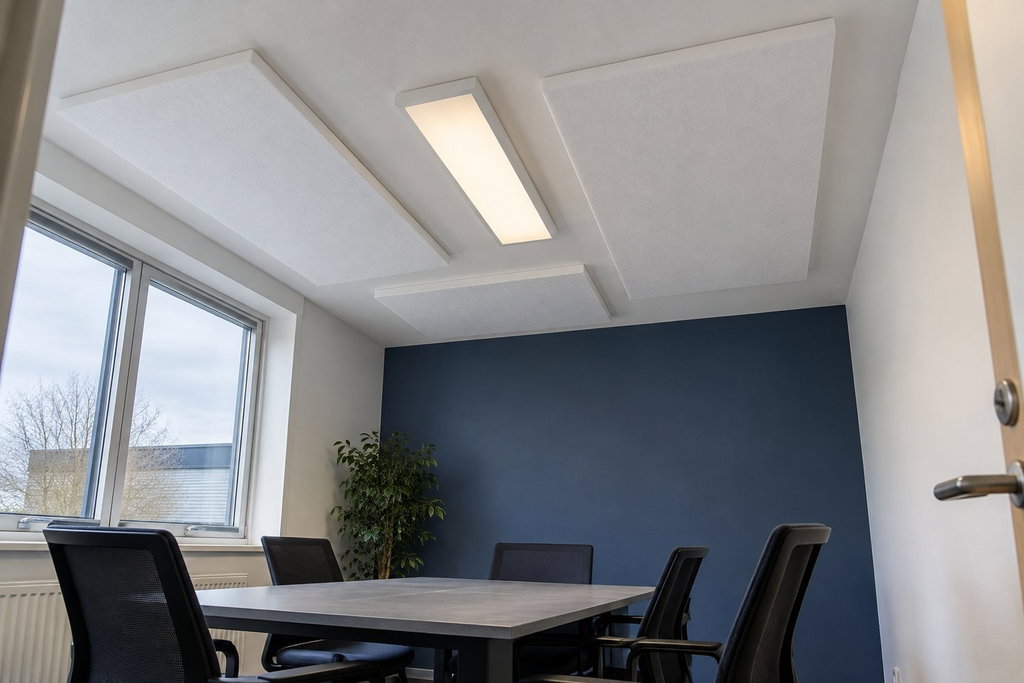
Ceiling sound absorbers – reduce echoes in office environments
A fundamental measure for better acoustics and a quiet working environment in offices
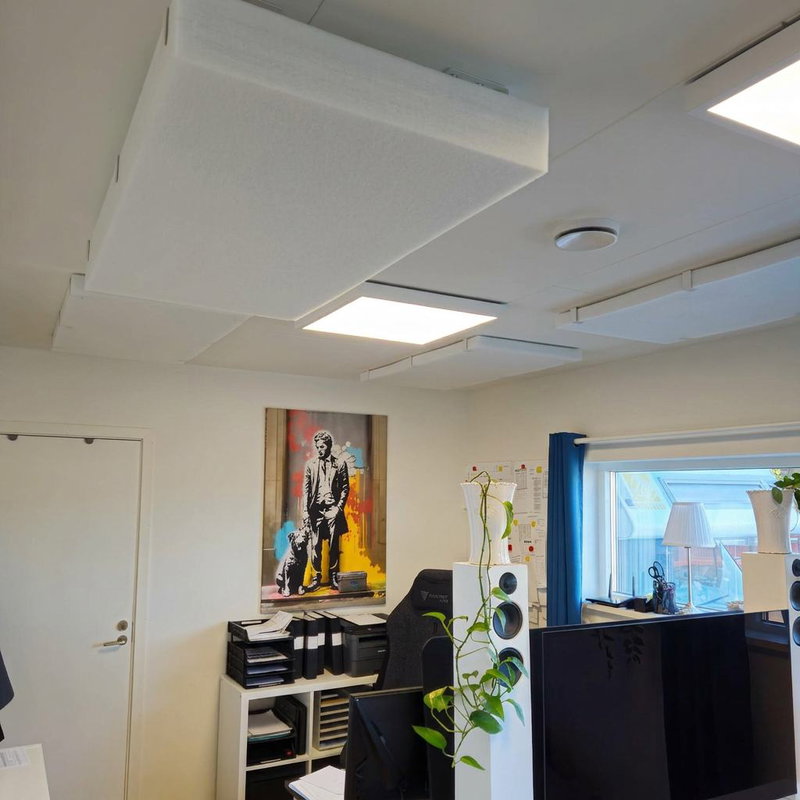
In office environments with open spaces, hard surfaces, and many simultaneous sound sources, problems with echoes and prolonged reverberation often arise. Conversations, phone calls, meetings, and movement are reflected between floors, walls, and ceilings, making the sound level seem higher than it actually is. Ceiling sound absorbers are one of the most effective and discreet ways to reduce echoes in a room and create a more focused, comfortable, and professional work environment.
What is ceiling sound absorption?
Ceiling sound absorption involves installing porous sound absorbers in or beneath the ceiling surface to capture sound waves and reduce reflections in the room. When sound energy is absorbed, it is converted into heat, which shortens the reverberation time and improves speech intelligibility. This differs significantly from sound insulation, which blocks sound between rooms, and vibration damping, which reduces structure-borne noise from sources such as machinery and installations. Ceiling absorbers are thus used to improve acoustics where sound is already present.
Common acoustic problems in offices
Echoes and poor room acoustics are common in open-plan offices, meeting rooms, hallways, and activity-based work environments. Sound travels freely and is amplified by smooth surfaces such as glass, concrete, and drywall. The result is reduced concentration, poorer speech intelligibility, and increased mental strain for employees. In environments where communication is central, this can negatively impact both efficiency and the work environment.
How ceiling sound absorbers work
Since sound waves travel upward and reflect between the floor and ceiling, the ceiling is a strategically very important surface to treat. When sound waves hit a ceiling absorber, they are slowed down and absorbed into the material’s structure, resulting in a more even and controlled sound distribution throughout the room.
Even sound absorption across larger areas
Ceiling absorbers help reduce reflections throughout the room and create balanced acoustics even in larger office spaces.
Particularly effective in open-plan offices
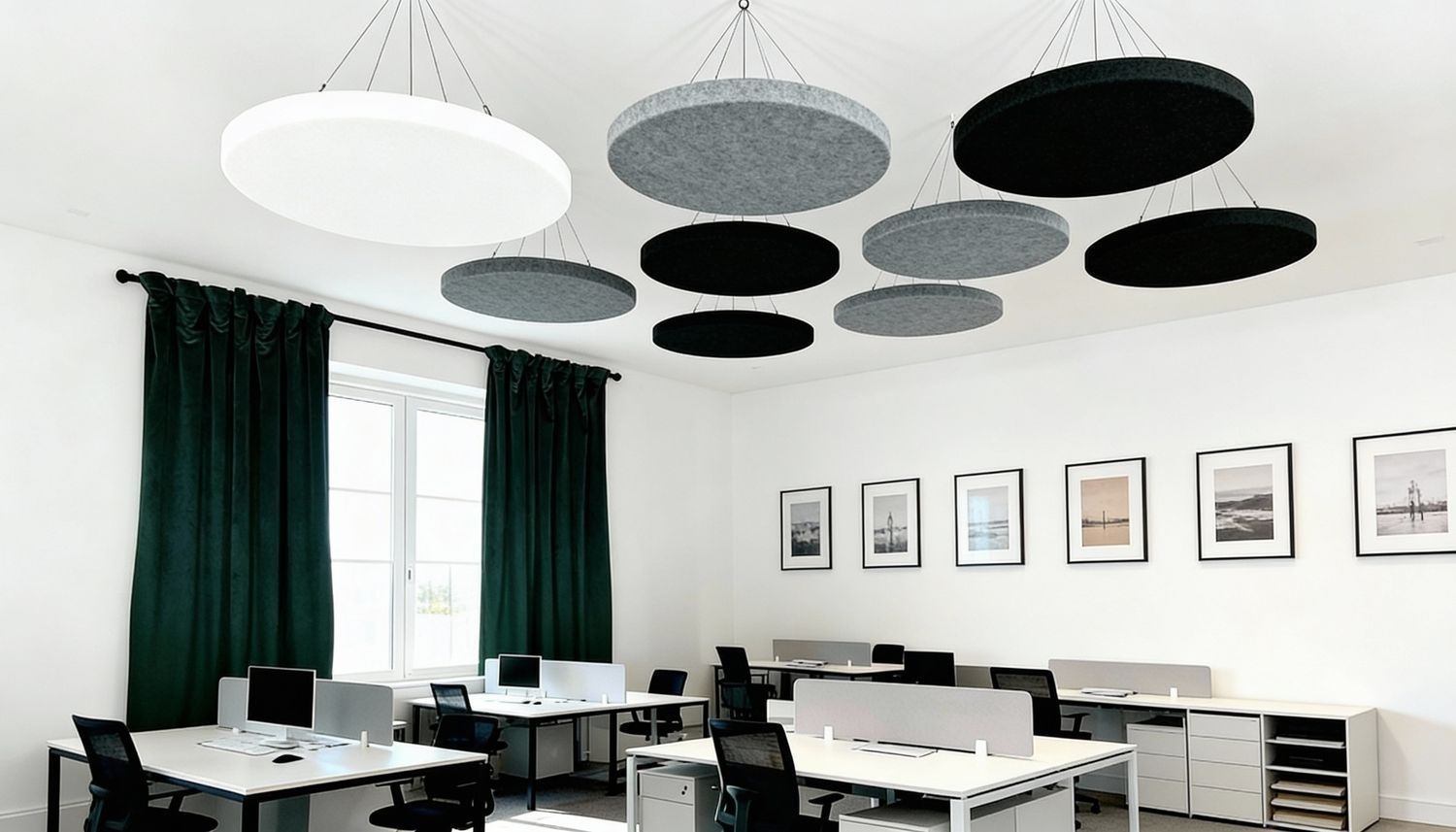
In environments where wall space is limited or cannot bear additional weight, ceiling absorption is often the most effective solution.
Why choose ceiling sound absorbers in offices?
Ceiling sound absorbers provide a quick and noticeable effect without disrupting operations or requiring extensive construction work. The solution is long-term, discreet, and does not affect the room’s function or furnishings. The results are evident through improved speech intelligibility, a lower perceived noise level, and increased peace and quiet. In many office environments, ceiling absorbers are combined with wall absorbers, sound-absorbing curtains, or room dividers for a more comprehensive acoustic solution.
Well-thought-out advice for best results
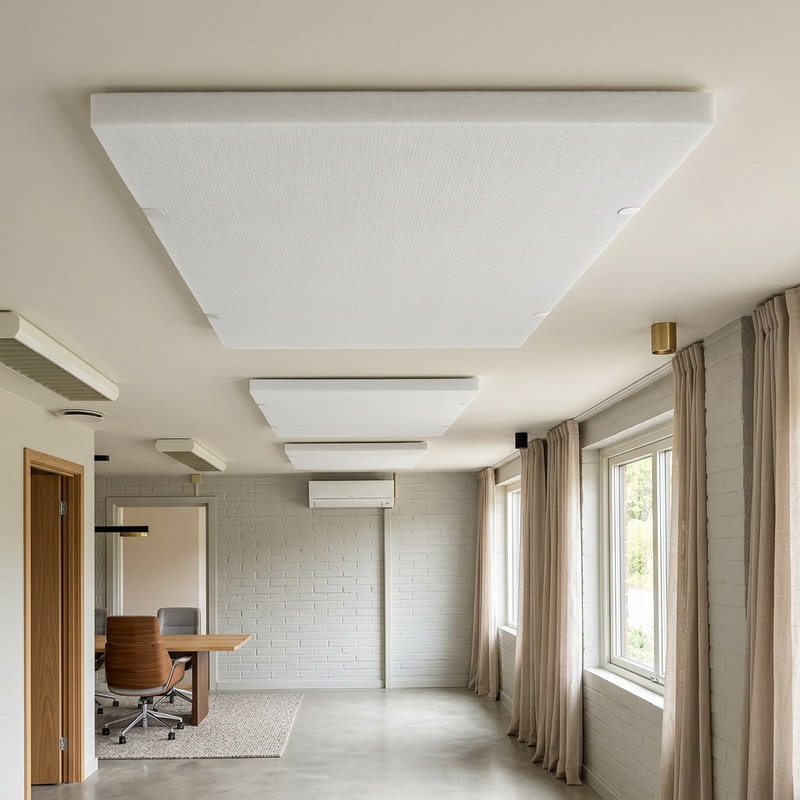
For maximum effectiveness, ceiling absorbers should be placed where sound activity is highest, such as above work zones, meeting areas, or common spaces. Larger offices often require an even distribution of multiple absorbers, while smaller rooms can benefit from a more concentrated solution. A common mistake is to underestimate the ceiling’s importance for acoustics. Properly sized and positioned ceiling absorption creates a calmer and more functional office environment over time.
Ceiling sound absorbers are therefore a safe and effective choice for offices seeking to reduce echoes in the room and create better conditions for focus, communication, and well-being.