






Sound-absorbing curtains – reduce echoes in the room
A flexible and effective solution for better acoustics in office environments
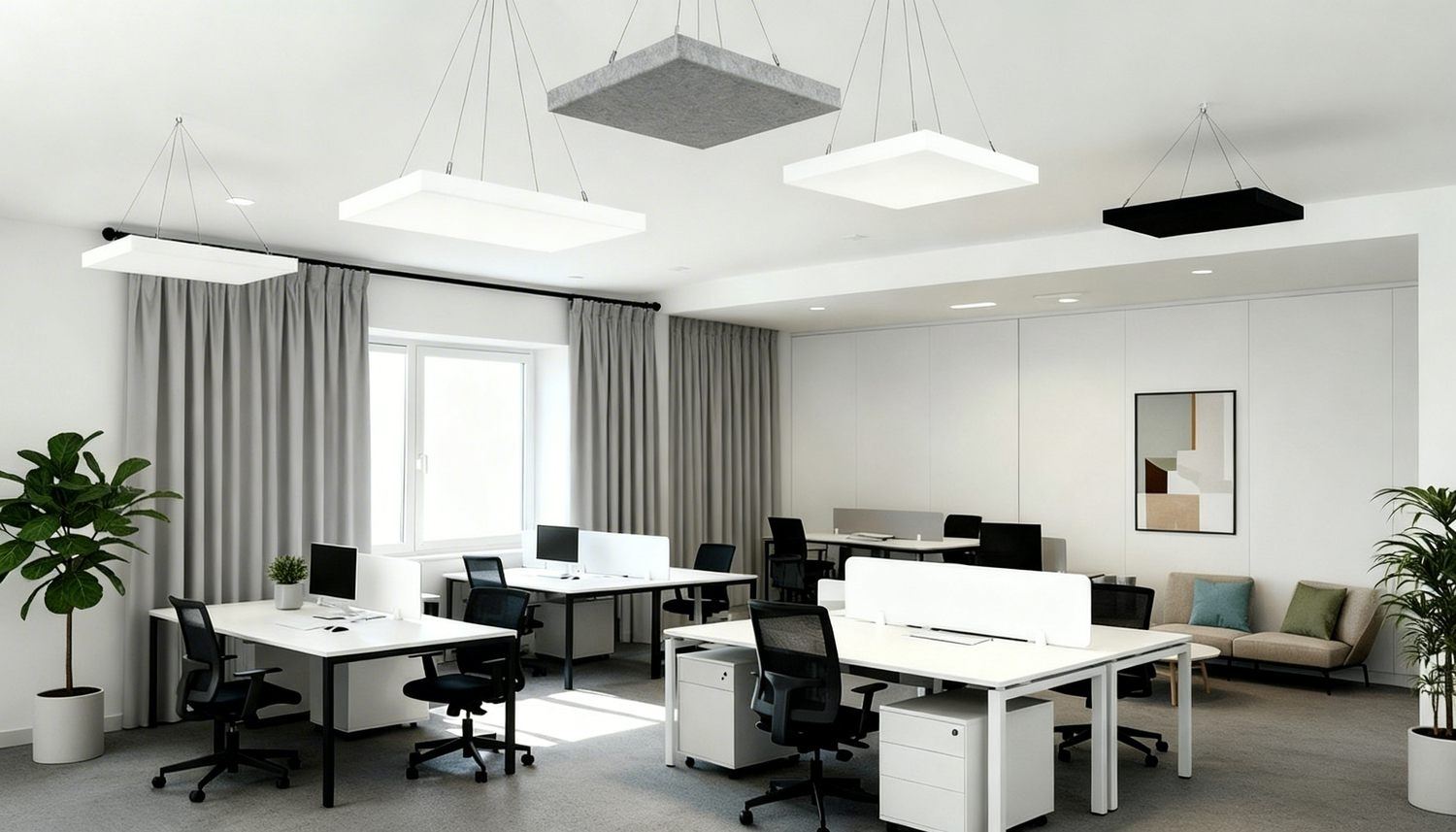
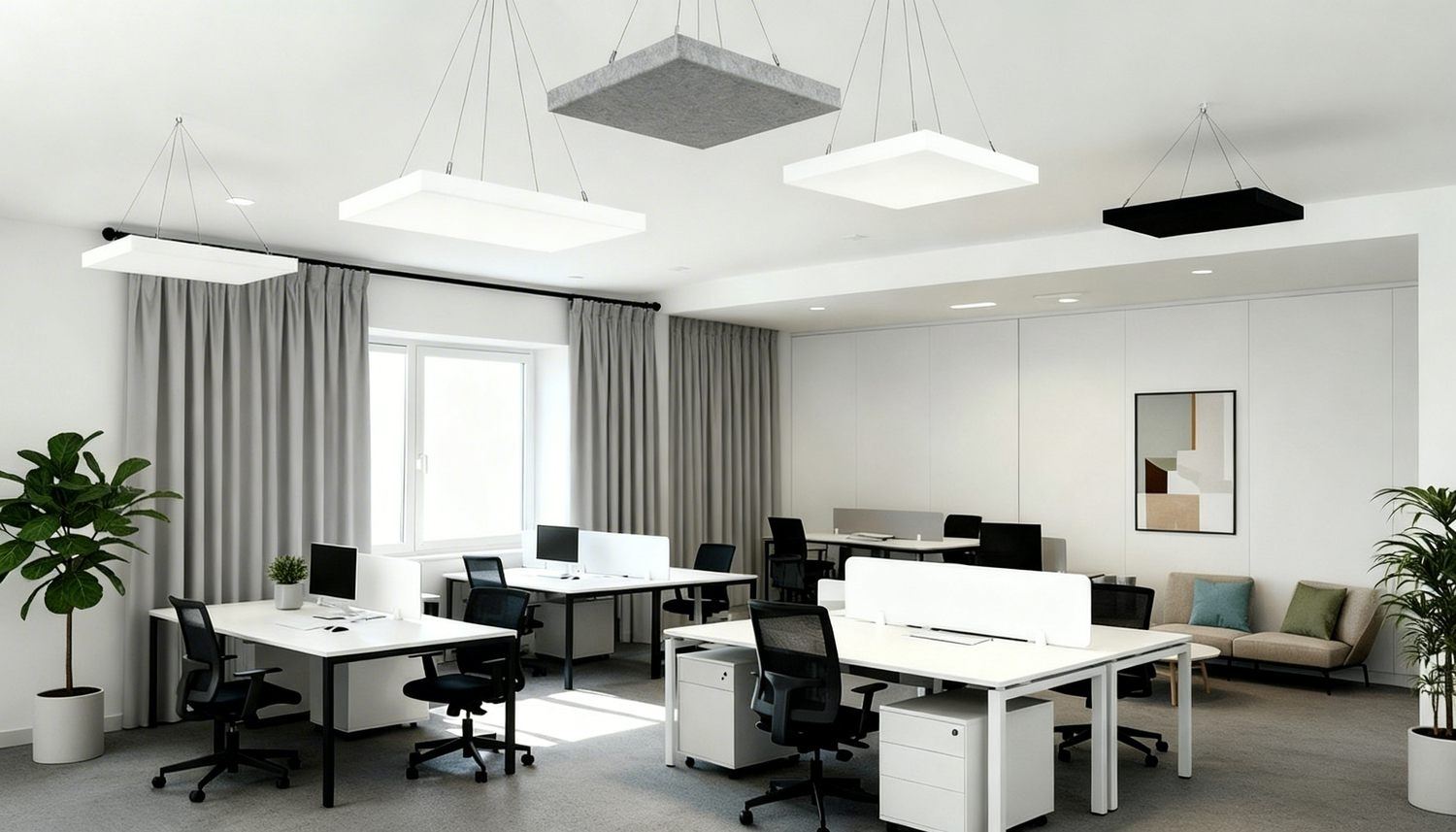
In modern offices with open floor plans, glass partitions, and hard surfaces, echoes and prolonged reverberation are common problems. Conversations, meetings, and everyday work sounds bounce off walls, ceilings, and windows, creating a chaotic and stressful acoustic environment. Sound-absorbing curtains are an effective form of sound absorption that helps break up sound reflections and create a calmer, more balanced work environment without permanent installations.
What are sound-absorbing curtains?
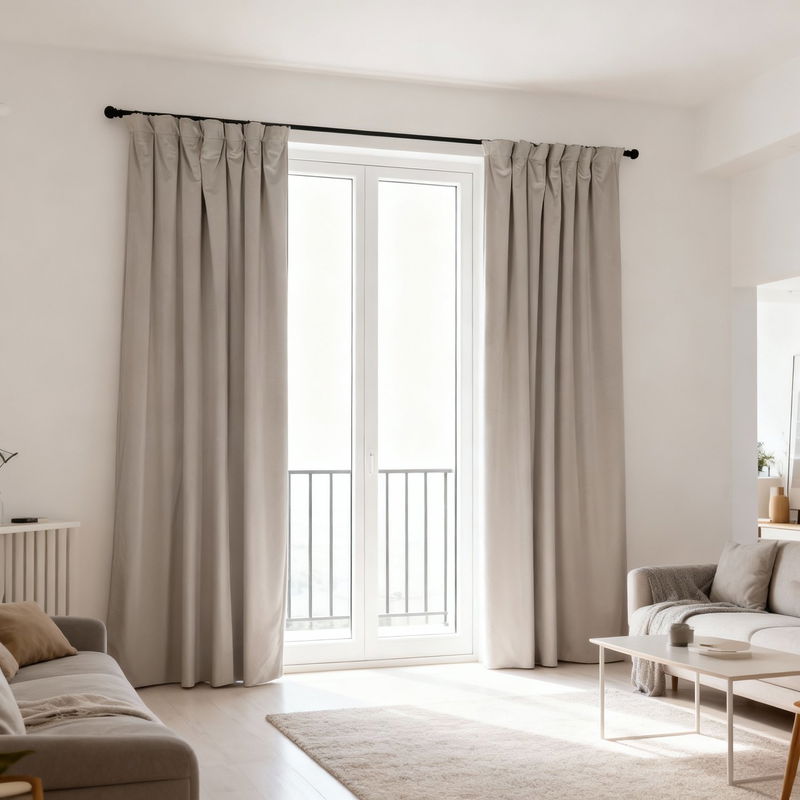
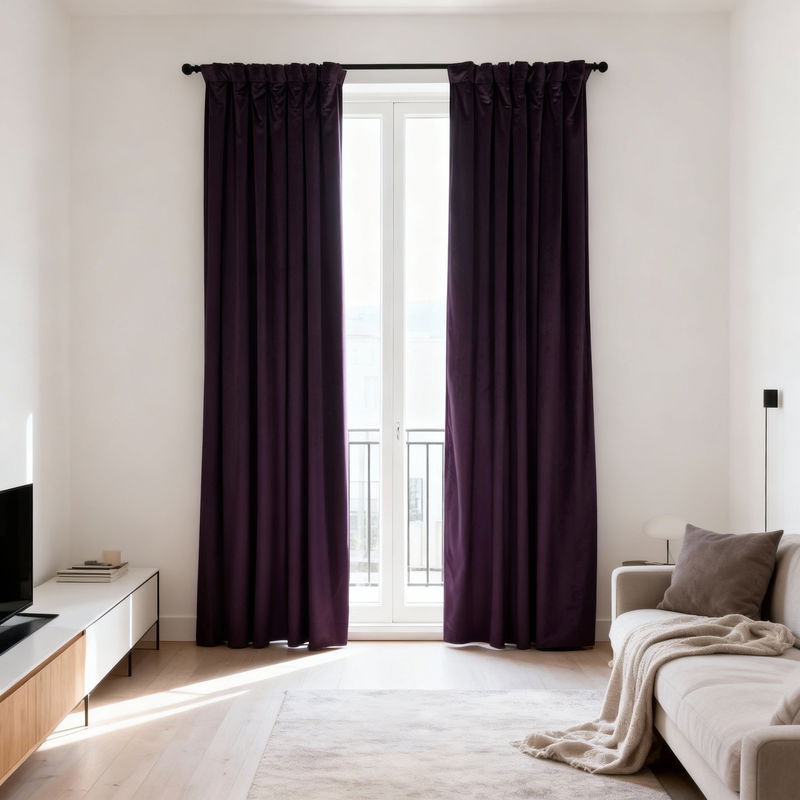
Sound-absorbing curtains consist of dense and porous textiles designed to absorb sound waves when they strike the fabric’s surface. By reducing reflections in the room, reverberation time is shortened, which improves speech intelligibility and acoustic comfort. It is important to distinguish sound absorption from sound insulation, which blocks sound between rooms, as well as vibration damping, which reduces vibrations and structure-borne noise. Curtains are used to improve acoustics where sound is already present.
Common acoustic problems in office environments
Echoes and reverberation are common in offices with large windows, glass walls, and a scarcity of soft materials. Conversations carry far, meetings feel exhausting, and background noise seems constantly present. This can lead to reduced concentration, decreased productivity, and increased noise stress, especially in open-plan offices and shared workspaces.
How sound-absorbing curtains work in practice
When sound waves hit the curtain fabric, they are slowed down and absorbed into the material’s structure. Curtains that cover larger surfaces help reduce reflections from otherwise very hard and sound-reflective surfaces.
Placement in front of windows and glass partitions
Glass is one of the most reflective surfaces in an office. Sound-absorbing curtains effectively reduce reflections and significantly improve the room’s acoustics.
Complement to wall and ceiling absorbers
Curtains work particularly well in combination with sound absorption on walls and ceilings to create a uniformly dampened sound environment.
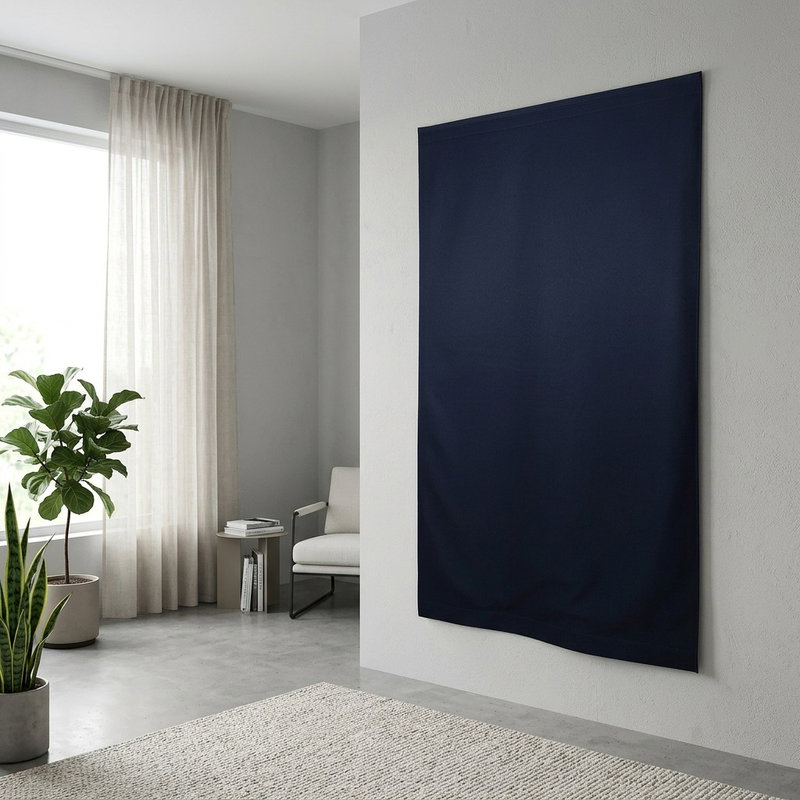
Screening with sound-absorbing effect
In open-plan offices, curtains can also be used as soft room dividers that both provide privacy and improve acoustics.
Why choose sound-absorbing curtains?
Sound-absorbing curtains provide a quick and noticeable improvement to the acoustic environment without requiring structural modifications. They are flexible, easy to adapt to changing needs, and contribute to both functionality and aesthetics. The result is improved speech intelligibility, a lower perceived noise level, and a more pleasant work environment. In some offices, curtains can be effectively combined with sound insulation or vibration damping for a more comprehensive overall result.
Well-considered advice for best results
For maximum effectiveness, sound-absorbing curtains should be sufficiently thick and cover a generous area. Larger spaces often require multiple sound-absorbing measures, while smaller offices can be improved with strategically placed curtains. A common mistake is choosing fabrics that are too thin or underestimating the need for sound-absorbing surface area. The right solution provides a long-term calm and functional acoustic environment.
Sound-absorbing curtains are therefore a safe and effective choice for offices that want to reduce echoes, improve acoustics, and create a more pleasant work environment.