




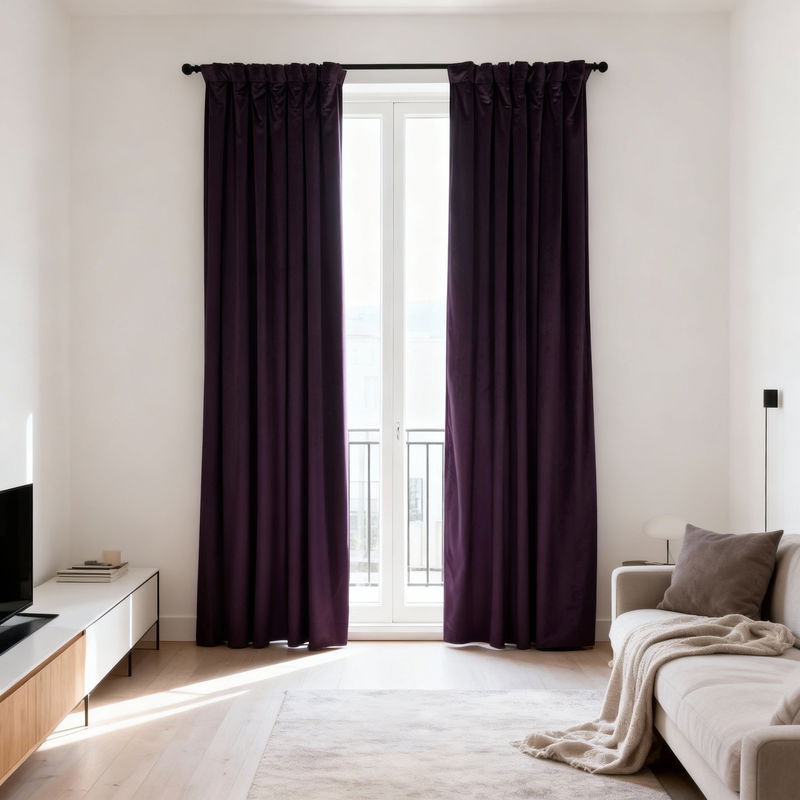


Sound-absorbing curtains – reduce echo in rooms in studios and studios
Flexible sound absorption for better acoustics in studios
Studios and recording studios often face acoustic challenges related to hard surfaces, large glass areas, and open room layouts. Whether it's recording studios, podcast studios, film and TV studios, dance studios, or home studios, sound reflections can create echoes and long reverberations that affect both sound quality and working comfort. Sound-absorbing curtains are a form of sound absorption used to reduce these reflections and create a more controlled and comfortable sound environment without making permanent changes to the studio's construction.
What are sound-absorbing curtains?
Sound-absorbing curtains consist of dense, porous textiles that absorb sound waves when they hit the surface of the fabric. By reducing sound reflections in the room, the reverberation time is shortened, which improves speech clarity and acoustic balance in the studio environment. It is important to distinguish between sound absorption and sound insulation, which stops sound between rooms, and vibration damping, which reduces vibrations and structure-borne noise. Curtains are used to improve the acoustics where the sound already exists, not to prevent sound from spreading to other rooms.
Common acoustic challenges in studio environments
Echo and reverberation are common in studios with glass walls, windows, bare wall surfaces, or high ceilings. In recording and podcast studios, this can lead to colored sound and poorer microphone pickup, while larger film, television, and dance studios often experience difficult-to-control reflections that affect both communication and experience. In home studios, these problems are often exacerbated by limited furnishings and small rooms with parallel surfaces.
How sound-absorbing curtains work in practice
When sound waves hit the curtain fabric, they are slowed down and absorbed into the structure of the material. Curtains covering larger areas effectively help to reduce reflections from otherwise hard and sound-reflecting surfaces in the studio environment.
Placement in front of windows and glass surfaces
Glass is highly reflective and common in studios and recording rooms. Sound-absorbing curtains reduce these reflections and contribute to a more balanced sound image.
Complement to wall and ceiling absorption
In studio environments, curtains work particularly well in combination with sound absorption on walls and ceilings to create evenly dampened acoustics.
Flexible screening in studios
Curtains can also be used as temporary room dividers in larger studios to divide spaces while improving acoustics.
Why choose sound-absorbing curtains in studios?
Sound-absorbing curtains have a rapid effect on the acoustics in studios without the need for permanent construction measures. The solution is flexible and can be easily adapted when the studio's function or layout changes. The result is better speech intelligibility, more controlled sound reproduction, and a studio environment that feels calmer and more professional. In some cases, curtains can be combined with sound insulation or vibration damping to address other types of sound problems.
Well-thought-out advice for best results
For sound-absorbing curtains to work effectively, sufficient fabric mass and surface coverage are required. Larger studio environments often require multiple absorption measures, while smaller studios can be improved with strategically placed curtains. A common mistake is to choose fabrics that are too thin or to underestimate how much surface area needs to be covered. Properly sized curtains contribute to long-term functionality and pleasant acoustics.
Sound-absorbing curtains are therefore an effective and flexible choice for reducing echo and improving acoustics in studios and recording rooms.