











Sound absorption – reduces echoes in restaurant settings
In restaurant environments, sound absorption is a crucial factor in how the space is perceived by both guests and staff. Conversations, the clinking of dishes, movement between tables, serving, and background music often interact in spaces with hard surfaces and open floor plans. This leads to echoes, prolonged reverberation, and a noise level that quickly becomes exhausting. Sound absorption is used to reduce these reflections and create a more balanced, pleasant, and functional acoustic environment in the restaurant.
What is sound absorption, and how does it differ from other measures?
Sound absorption involves sound waves being captured by porous materials and converted into thermal energy, which reduces echoes and reverberation in the room. It differs from sound insulation, which is used to block sound between different rooms or operations, as well as vibration damping, which reduces structure-borne noise from technical equipment. In restaurants, sound absorption is the primary measure for improving the acoustic environment where guests and staff spend time.
Common Acoustic Problems in Restaurants
Restaurants are often characterized by high ceilings, large glass surfaces, concrete, tile, and other hard materials that reflect sound effectively. When many guests are in the space at the same time, a self-reinforcing sound environment arises where voices are raised to drown out background noise. The result is poorer speech intelligibility, increased stress levels, and an environment that can feel stressful rather than inviting.
How sound-absorbing solutions work in restaurant environments
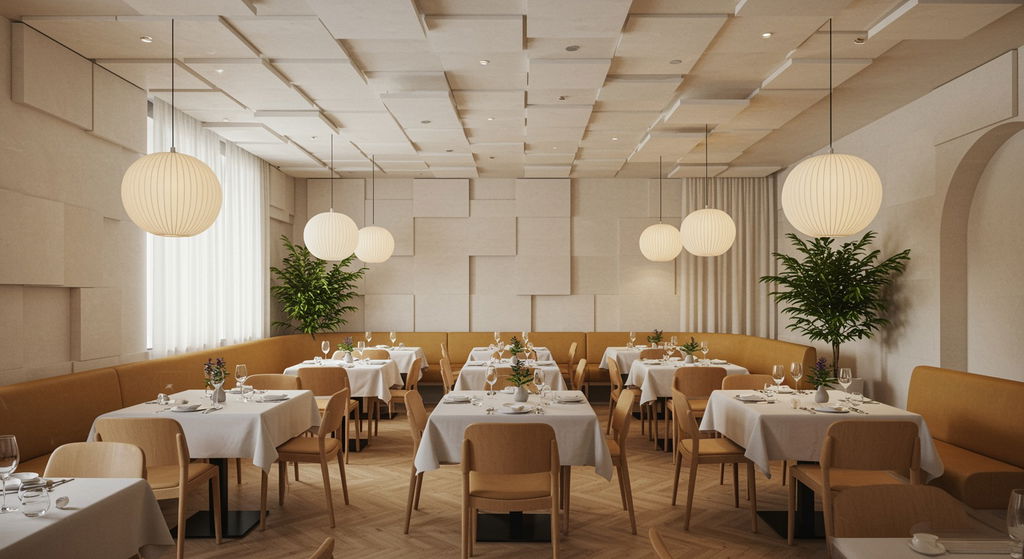
Sound-absorbing solutions are placed on strategic surfaces where sound reflections are greatest. By treating both vertical and horizontal surfaces, reverberation time can be effectively reduced and the sound environment made more controlled.
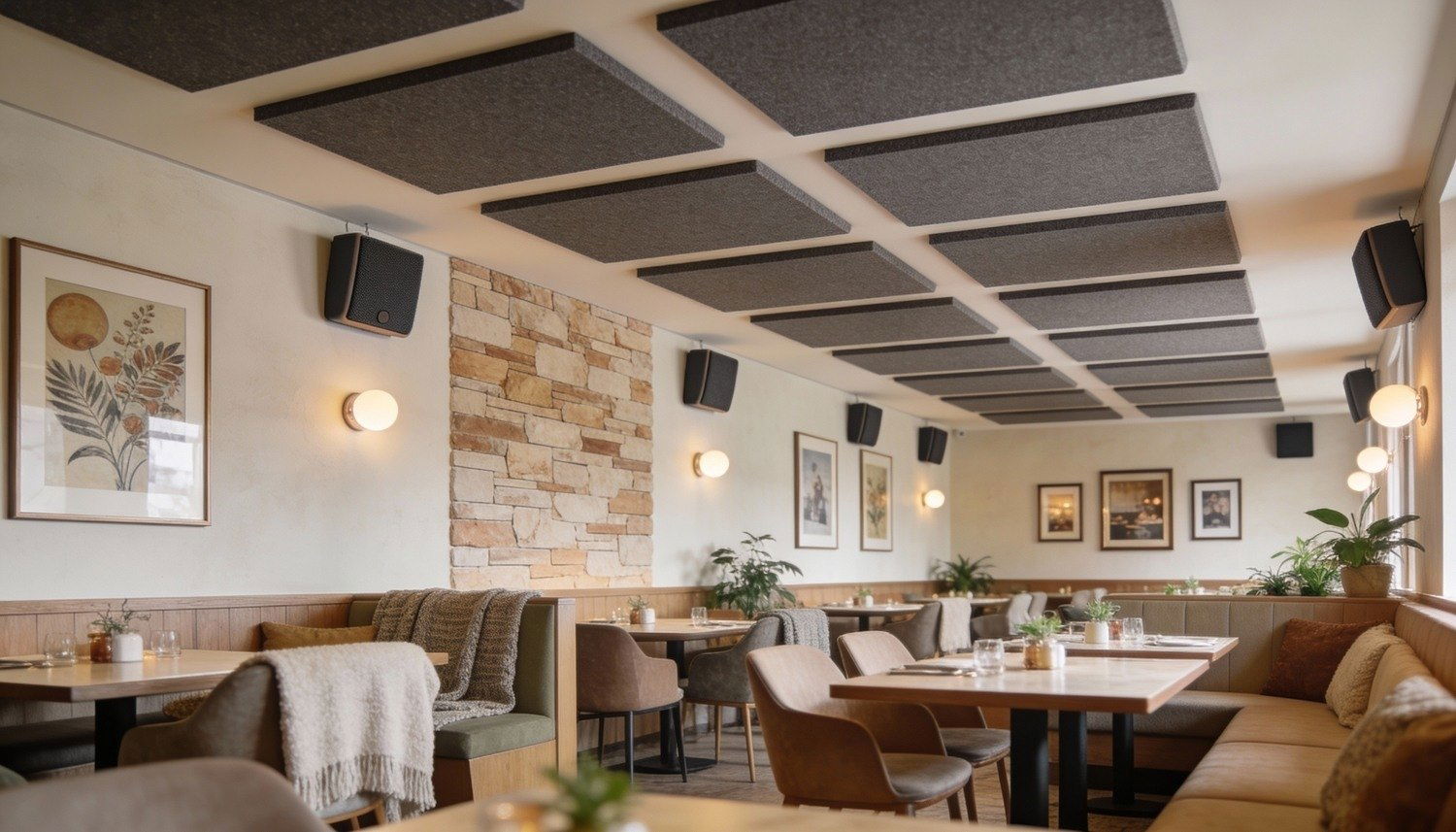
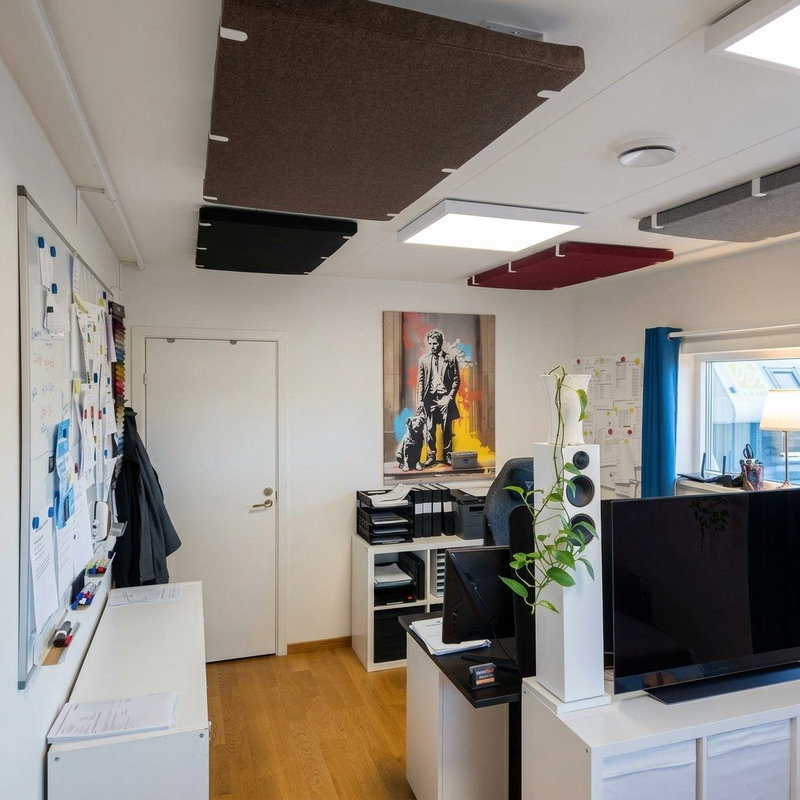
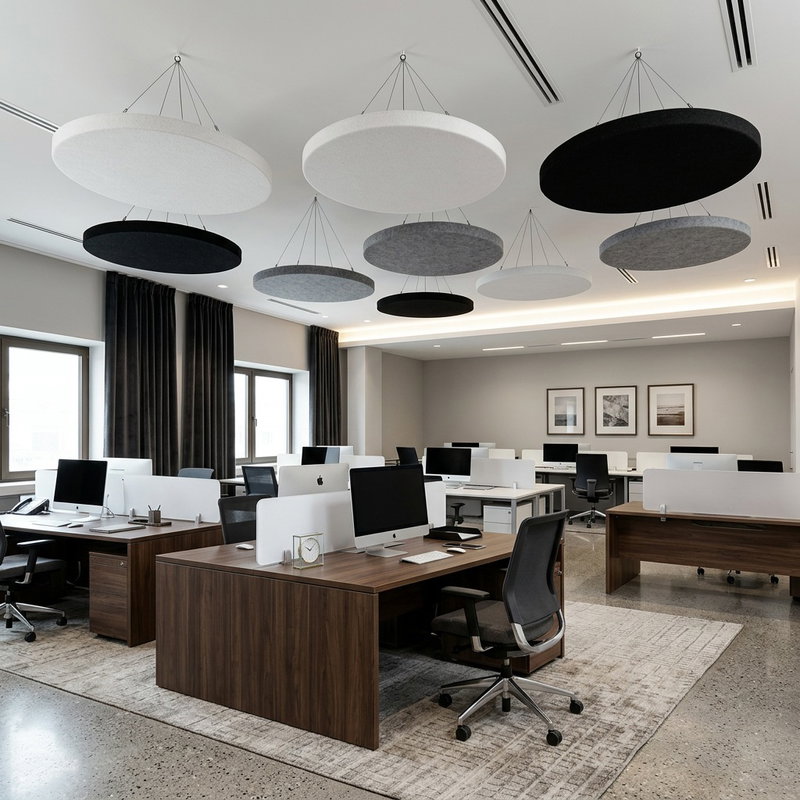
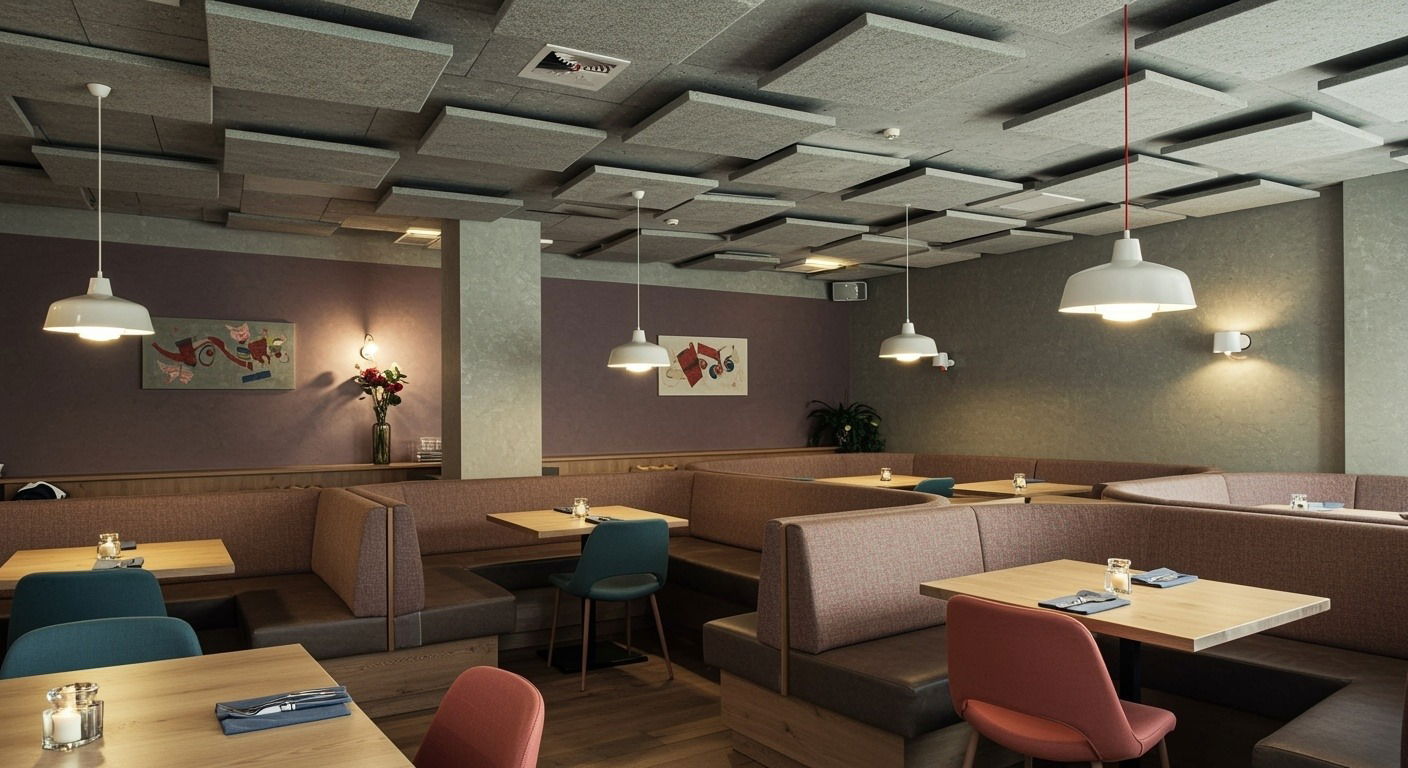
Sound absorption in ceilings
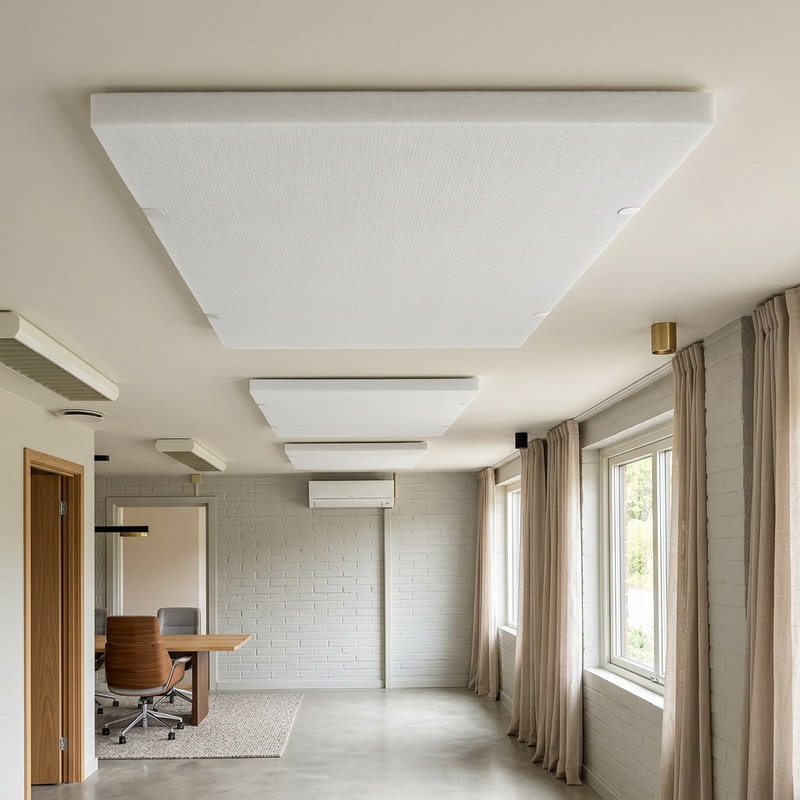
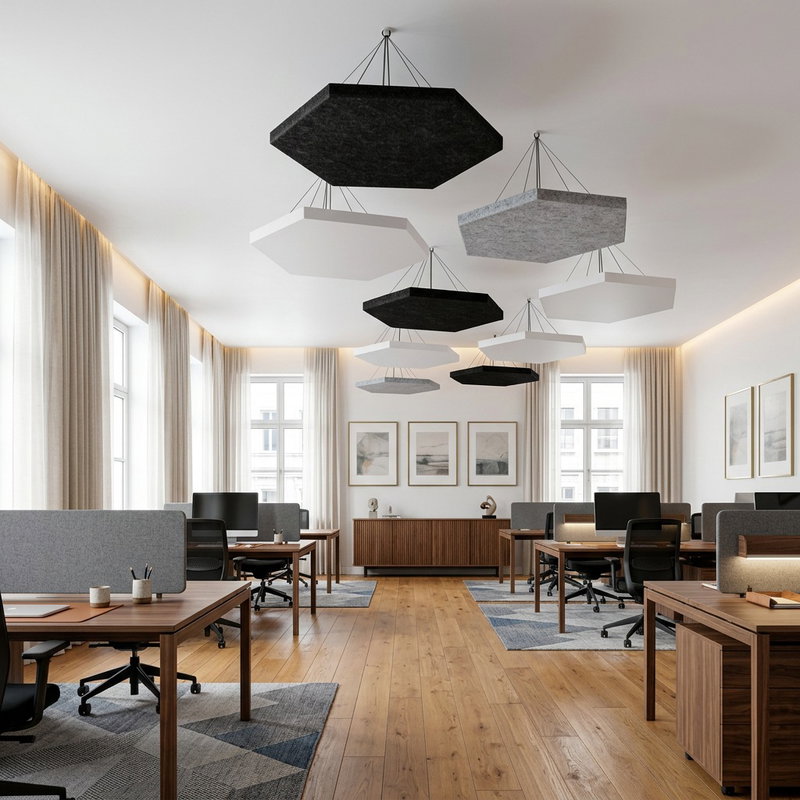
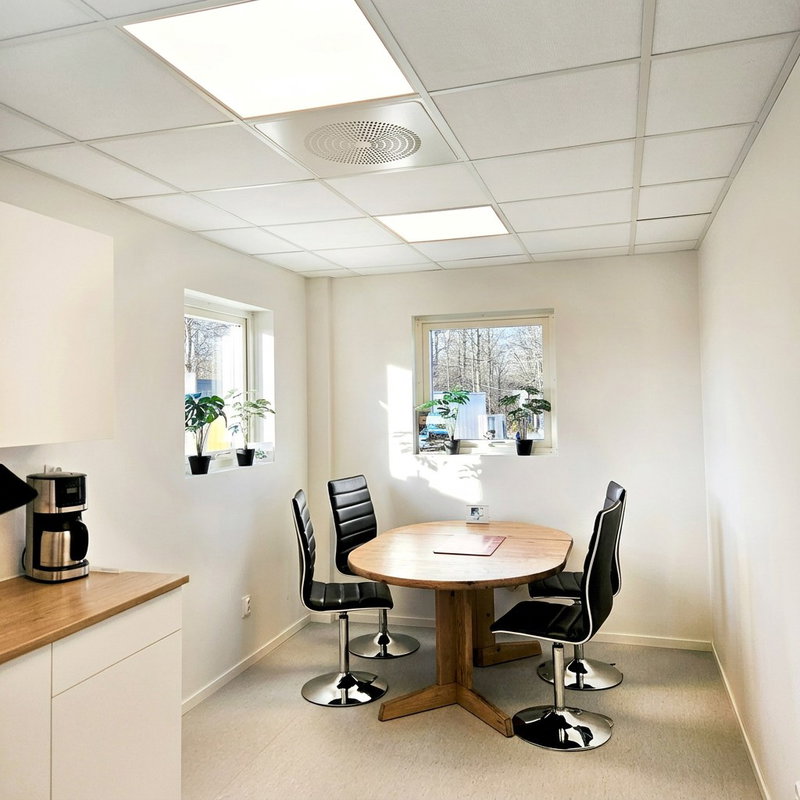
Ceiling absorbers are often the most effective basic measure in dining rooms and larger dining areas, where they dampen sound throughout the entire room.
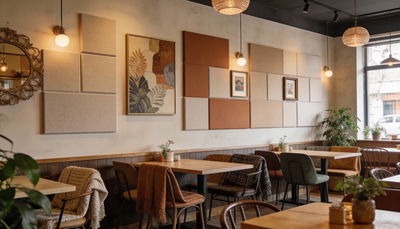
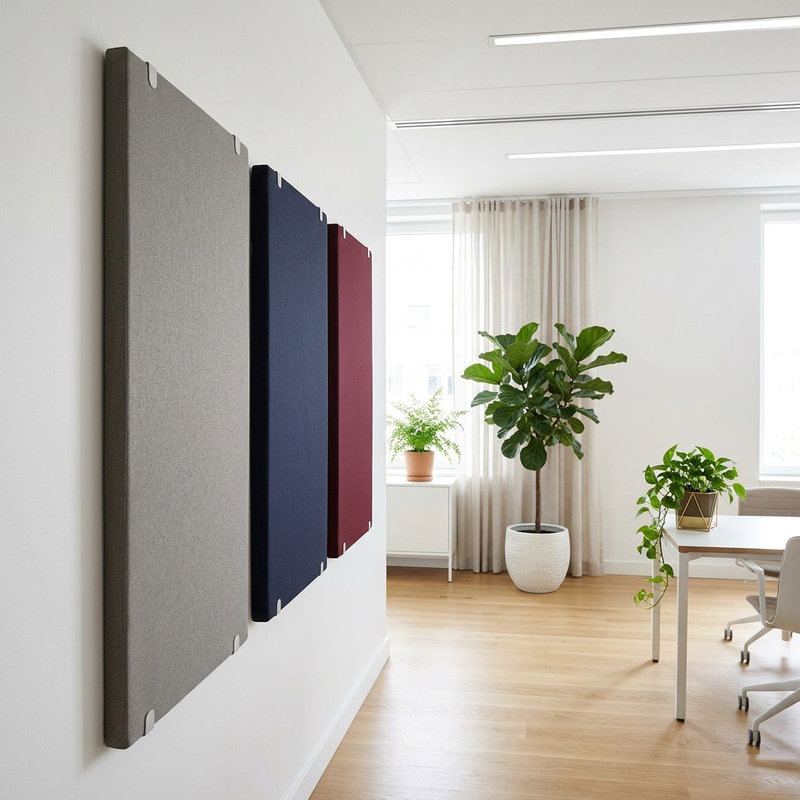
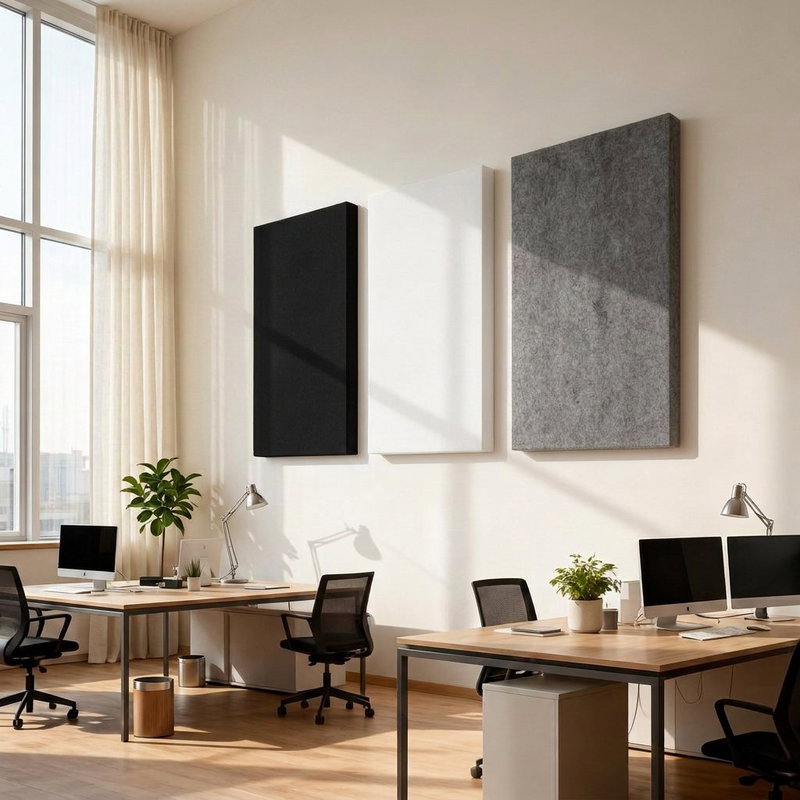
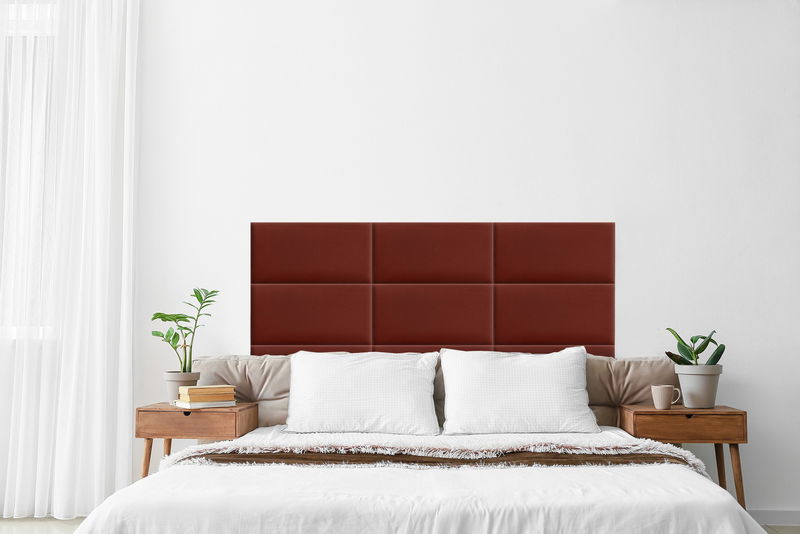
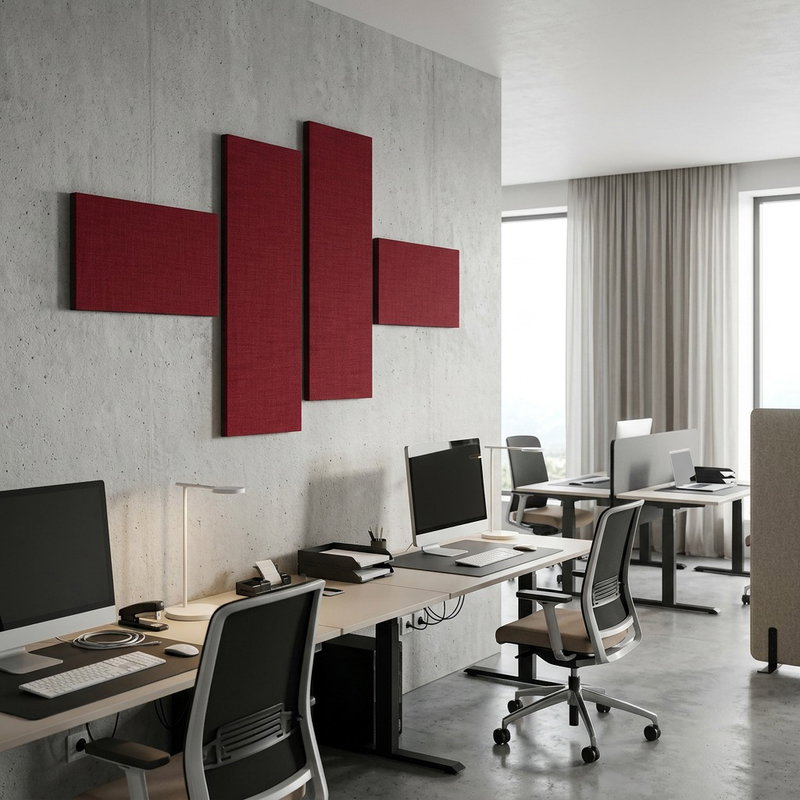
Wall sound absorption
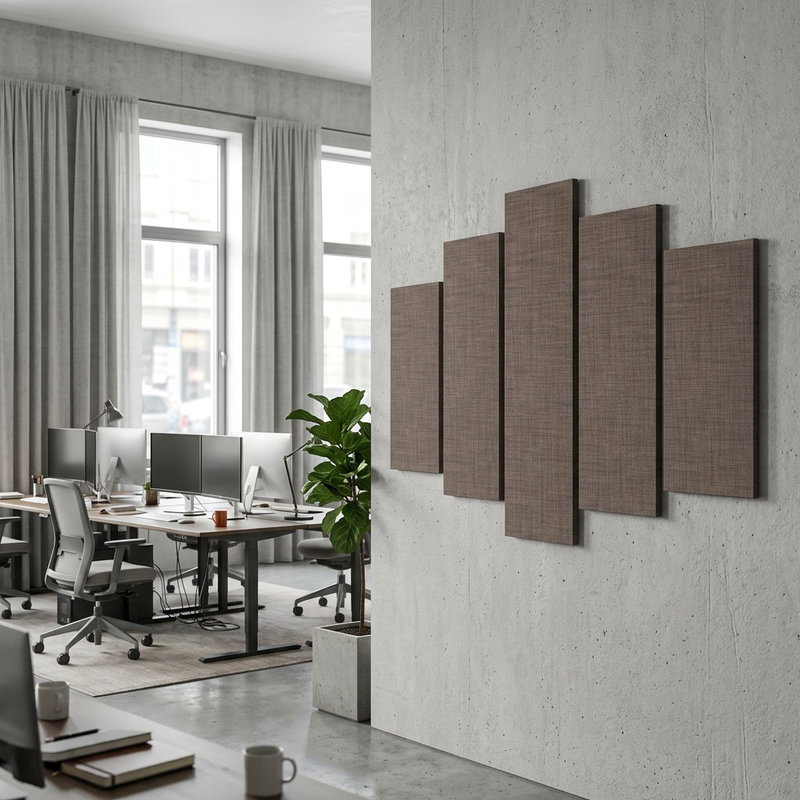
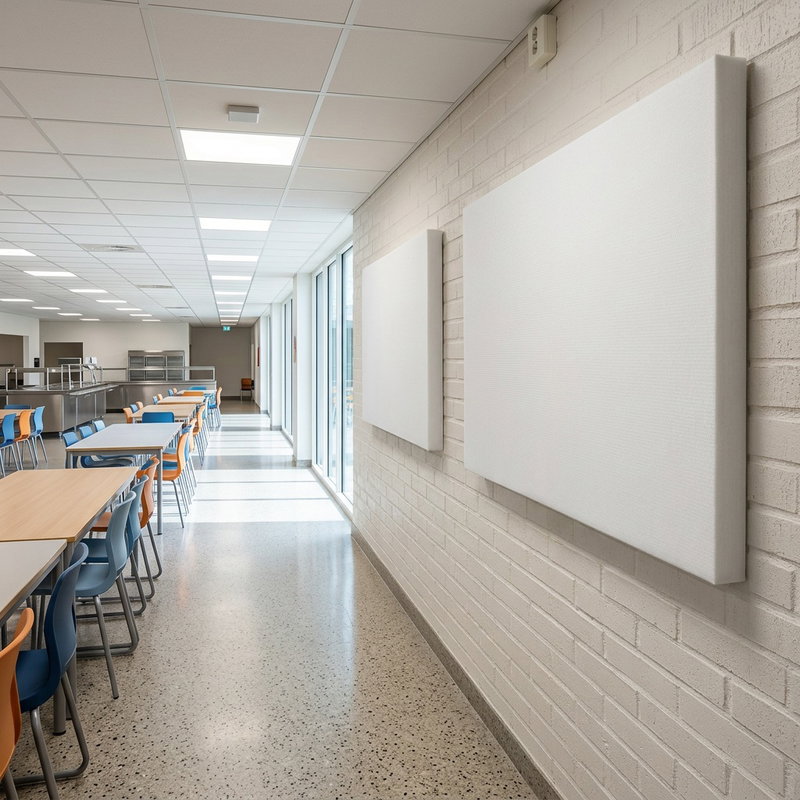
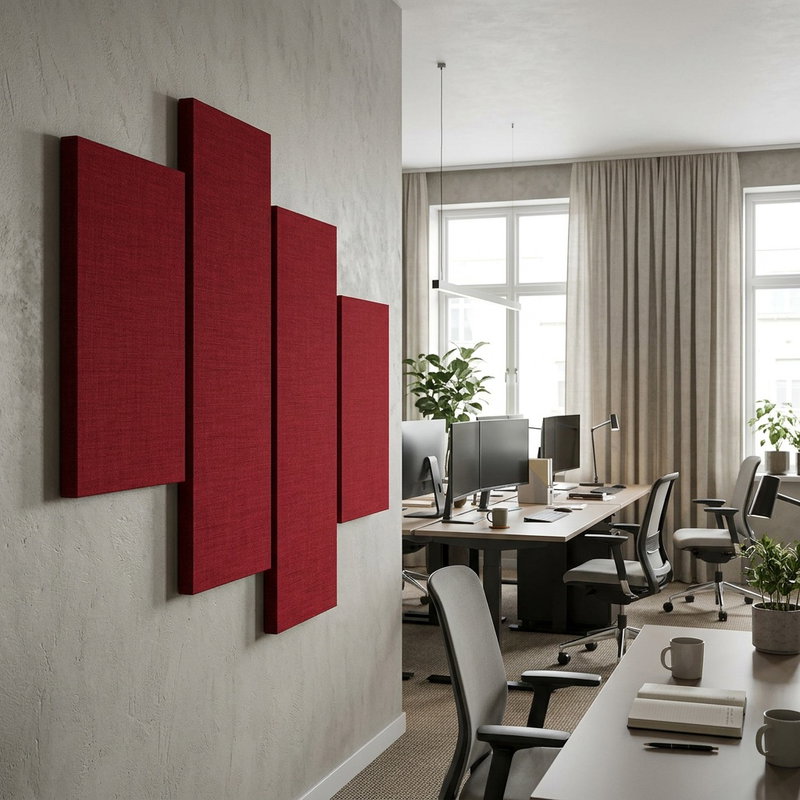
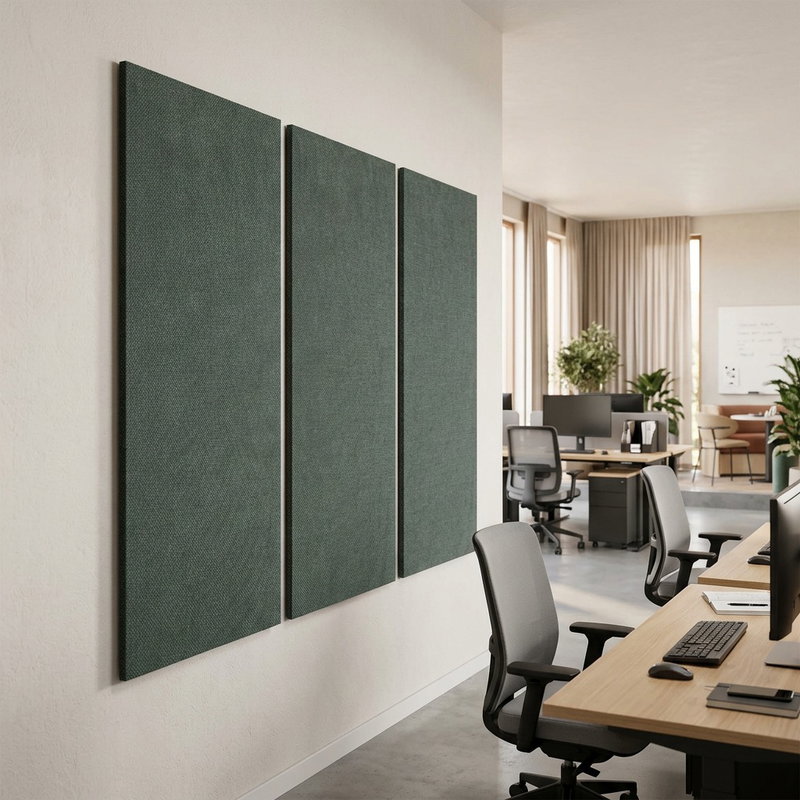
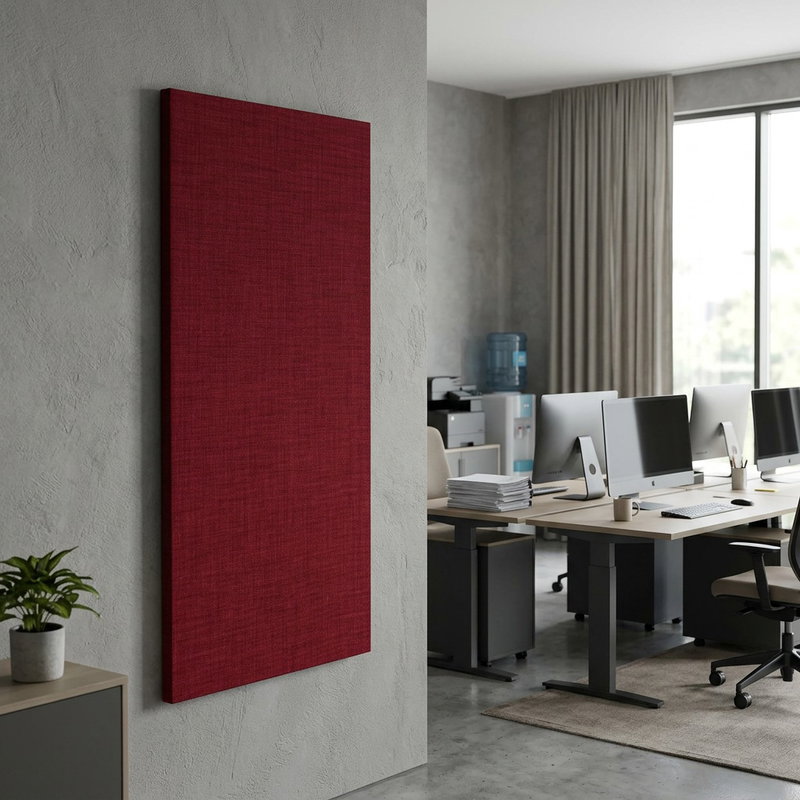
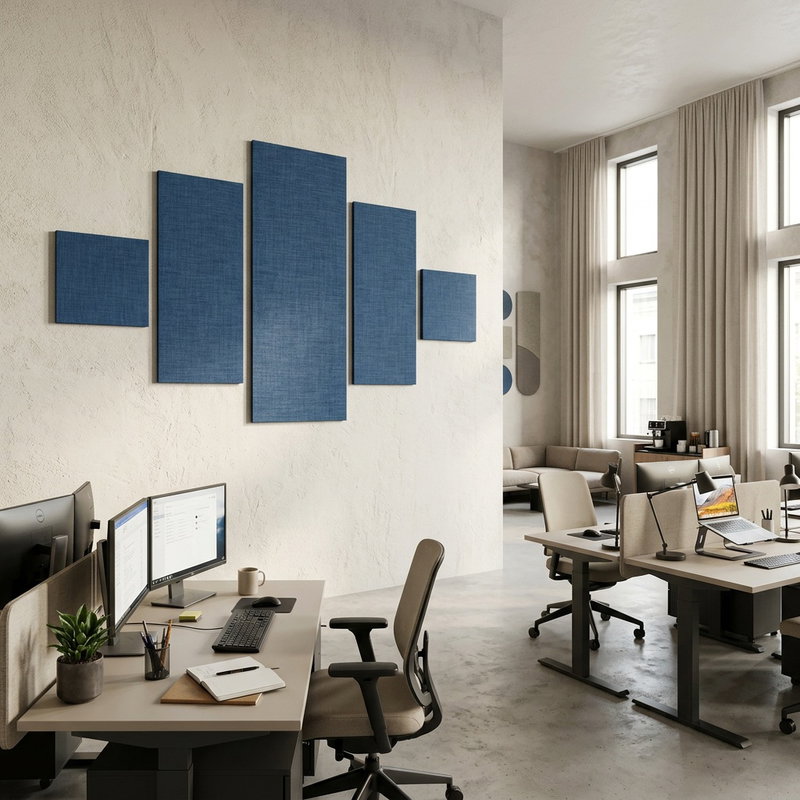
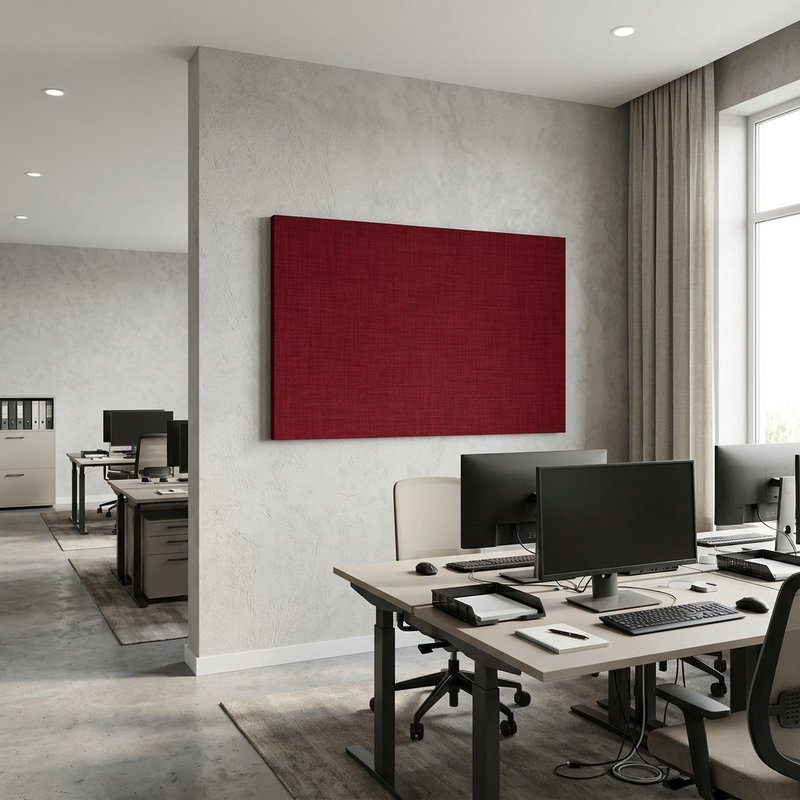
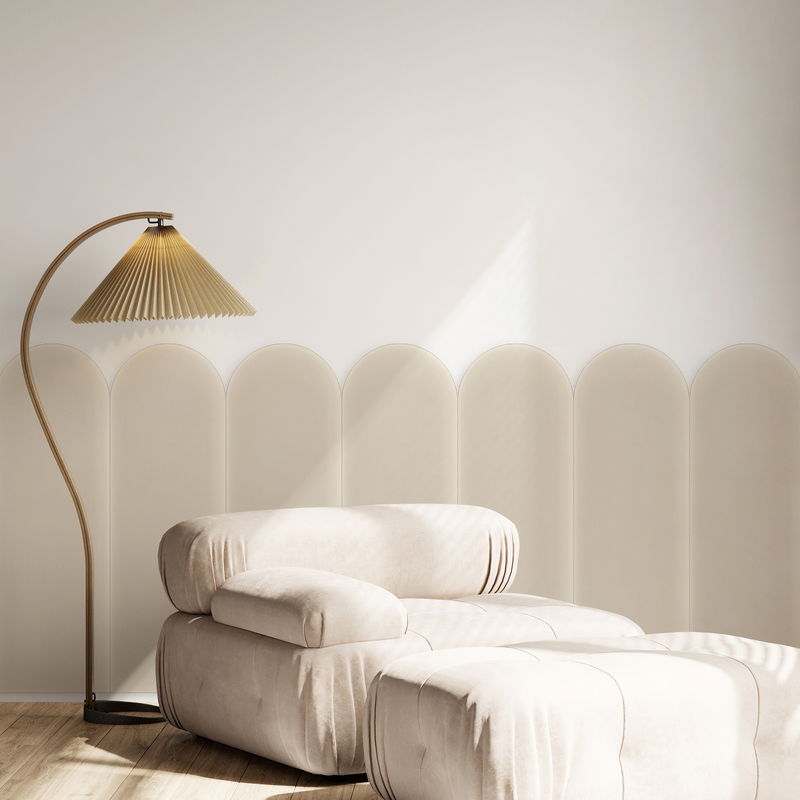
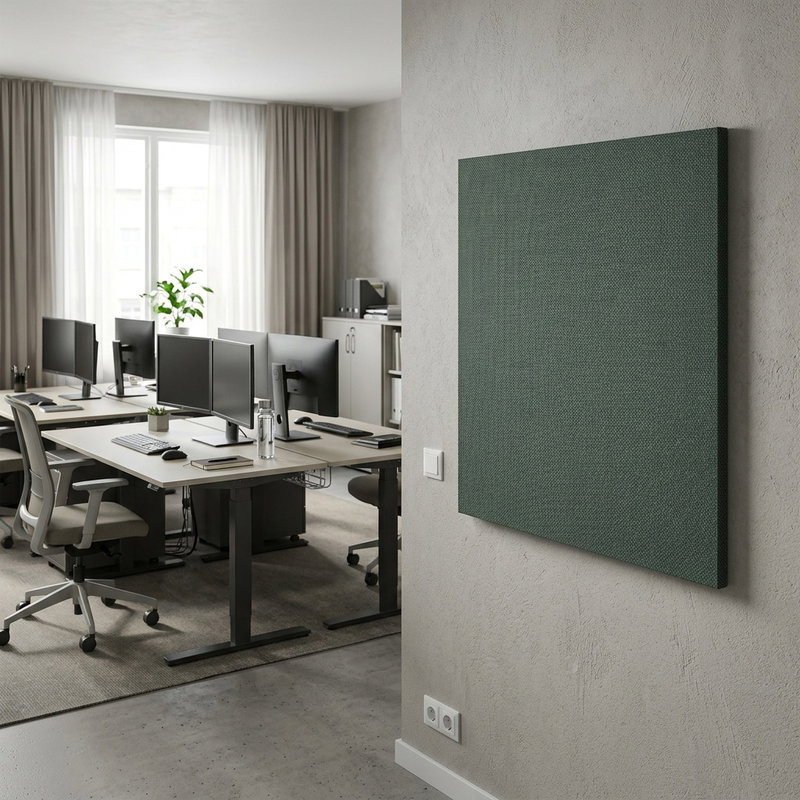
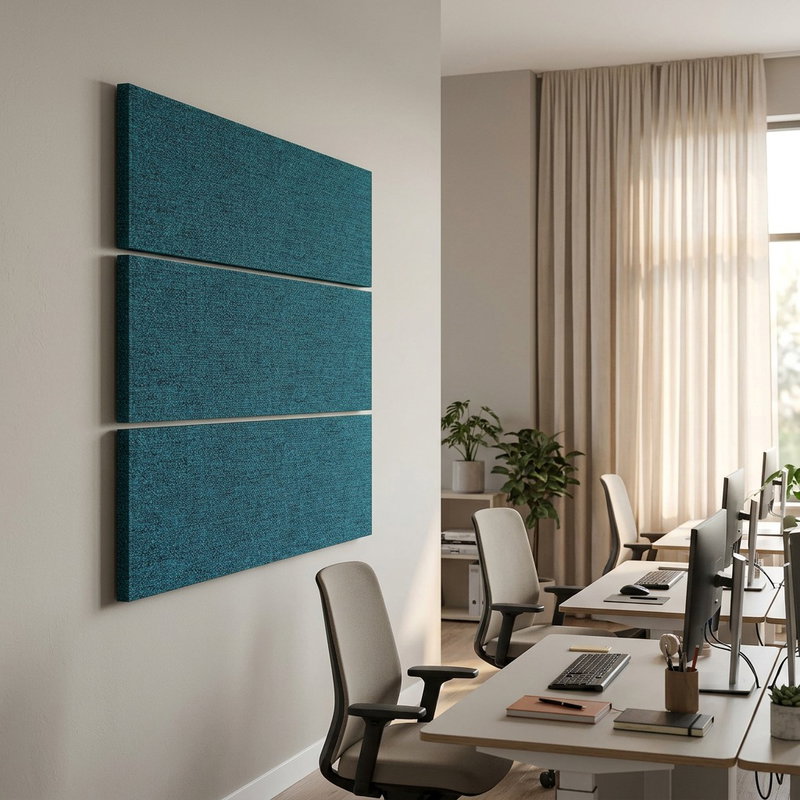
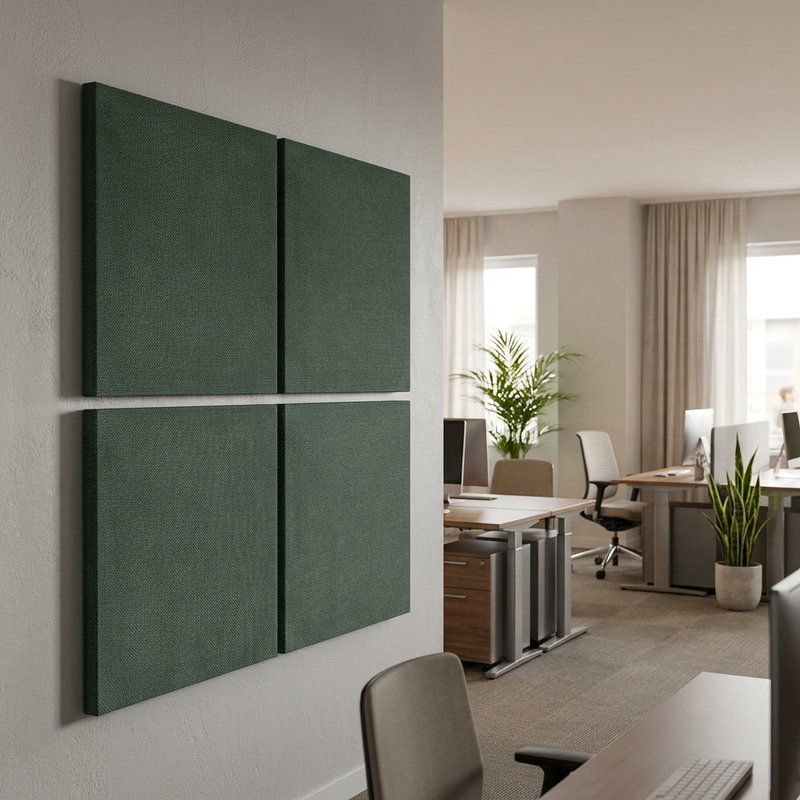
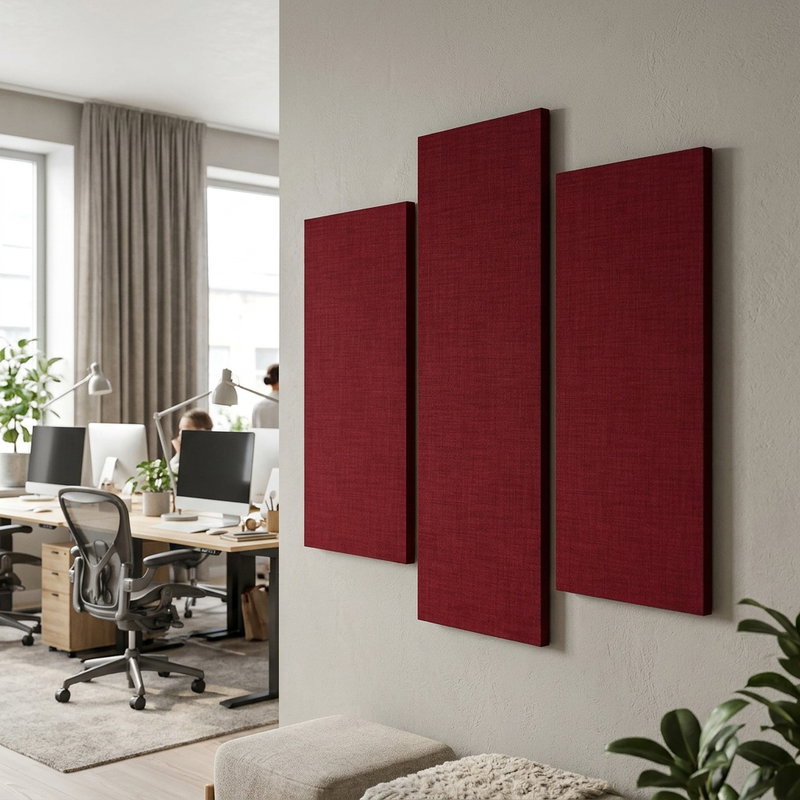
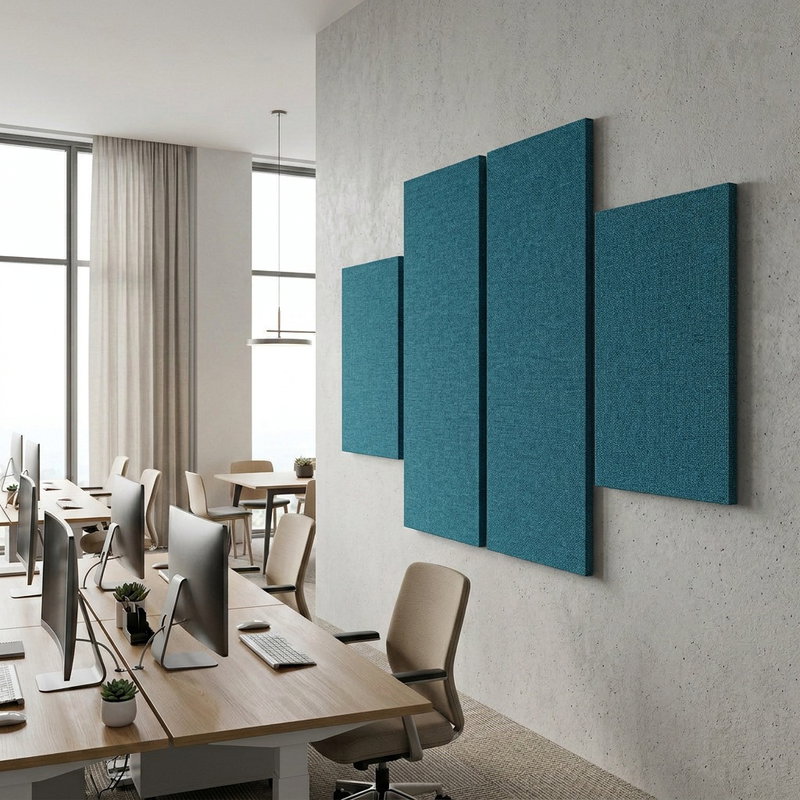
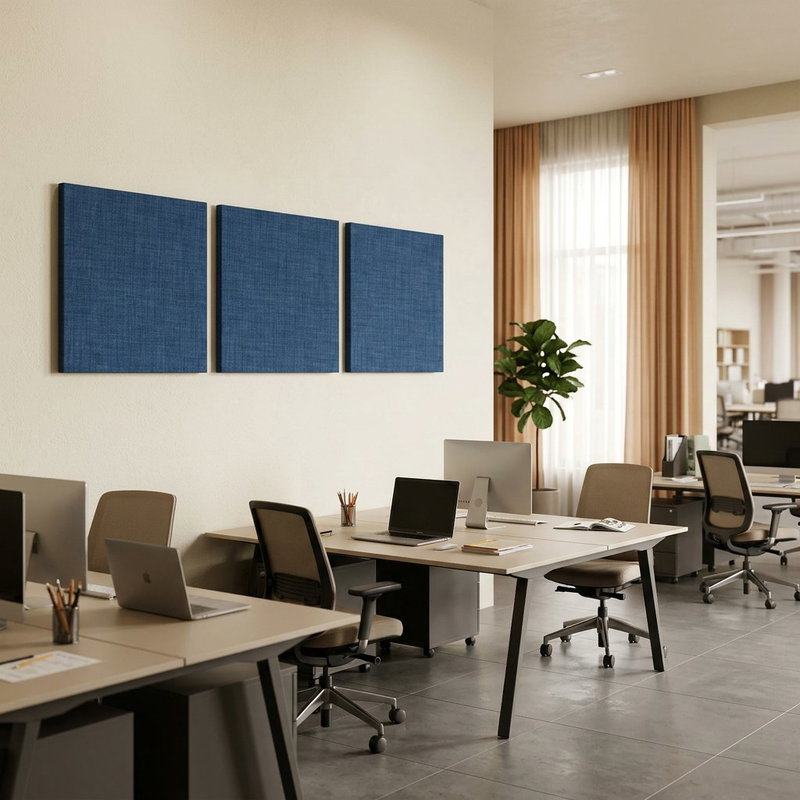
Wall absorbers improve speech intelligibility in seating areas and reduce reflections at ear level.
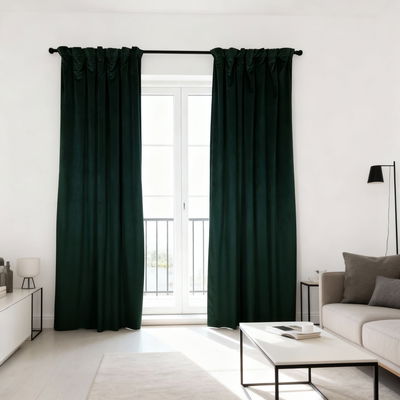
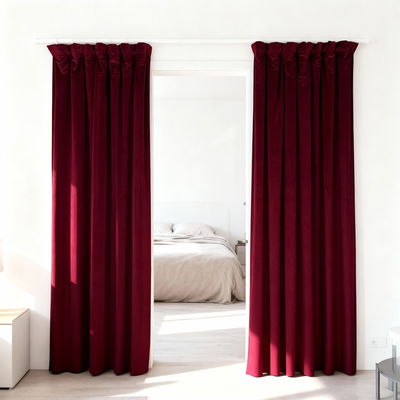
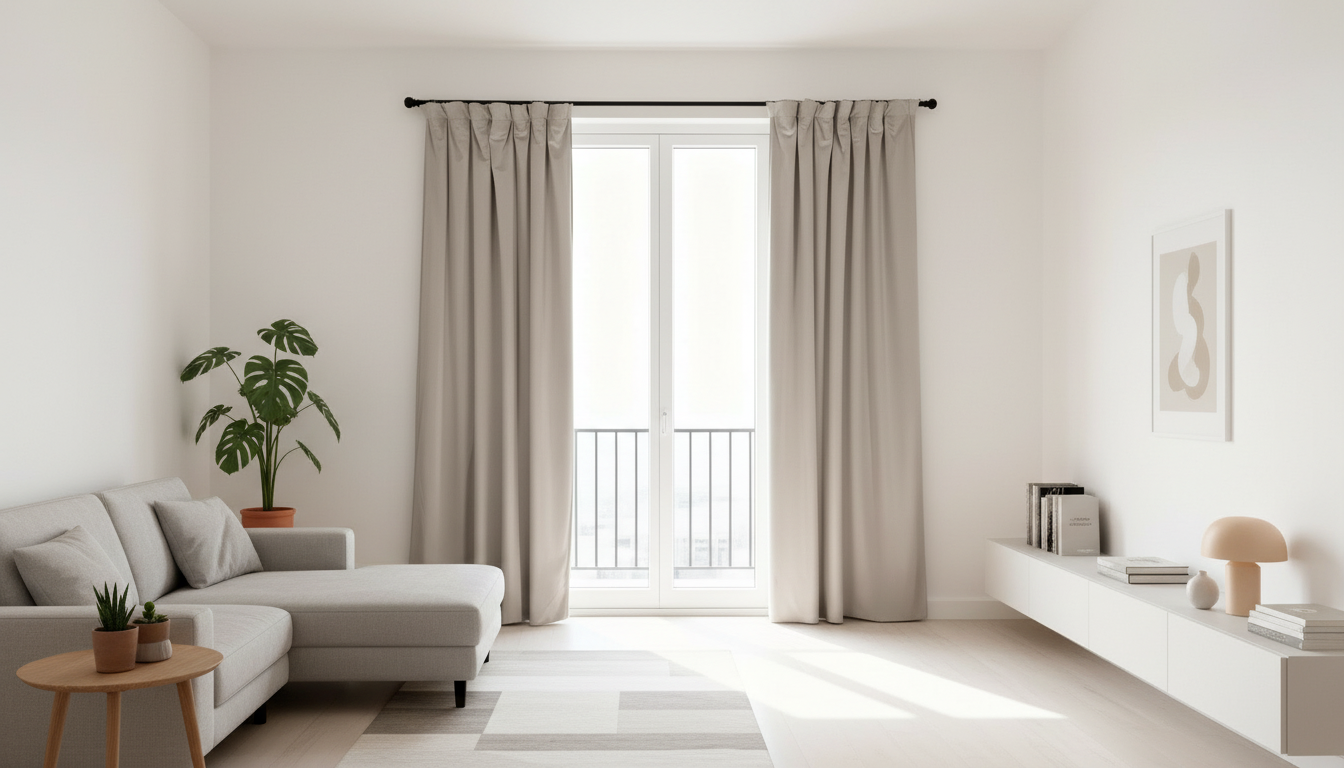
Sound-absorbing curtains
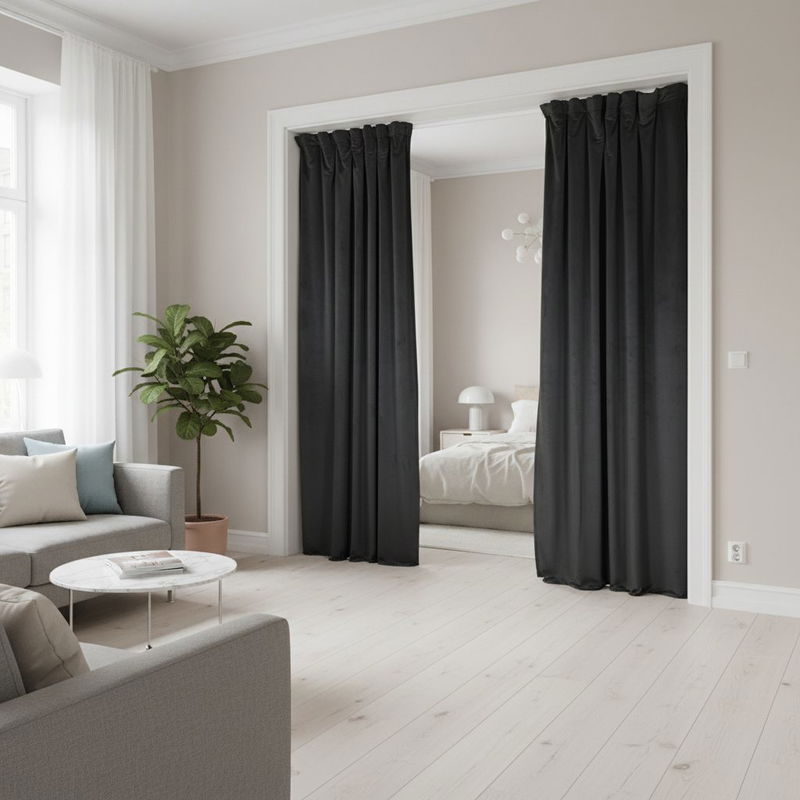
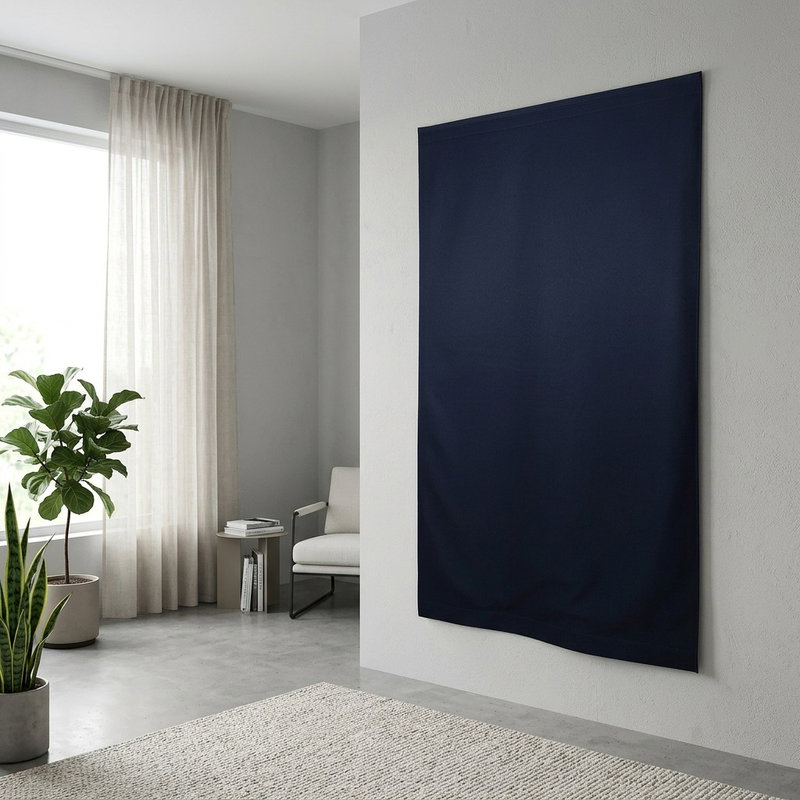
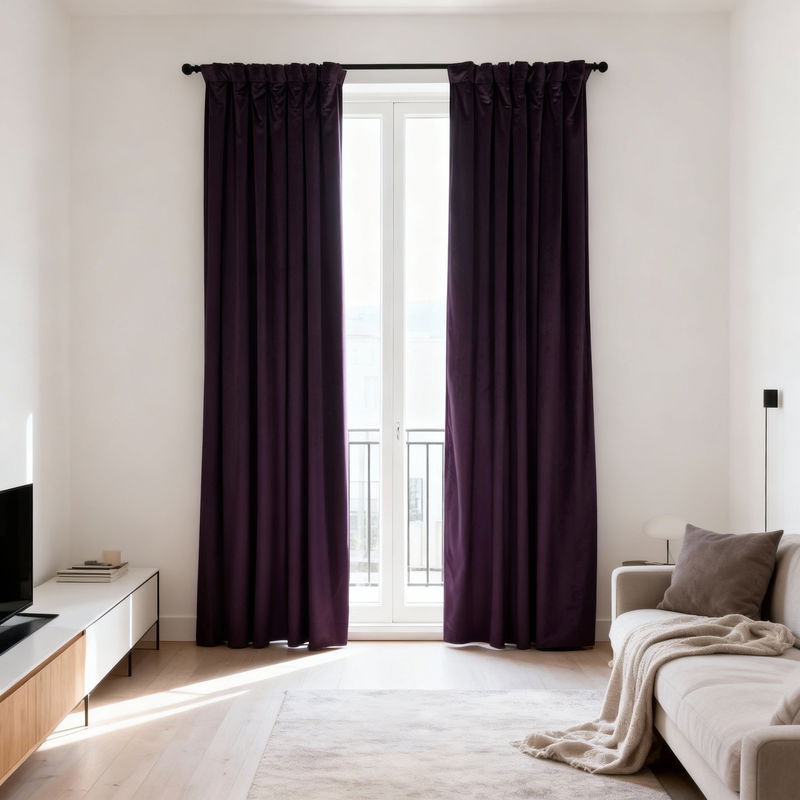
Curtains dampen reflections from windows and glass partitions while contributing to a softer acoustic experience.
Sound-absorbing room dividers
Room dividers are used to partition larger spaces and create quieter zones without compromising acoustics.
When are additional measures needed?
In some restaurants, sound absorption may need to be supplemented with sound insulation or vibration damping. This applies, for example, when sound travels between the kitchen and dining room or when technical equipment causes vibrations that propagate through the building’s structure. Sound absorption, however, does not solve sound leakage between rooms but focuses on the acoustics within the space itself.
Well-thought-out advice for best results
For the best effect, sound-absorbing measures should be tailored to the room’s size, ceiling height, and furnishings. A common mistake is installing too little absorbent surface or treating only one surface. By combining ceilings, walls, curtains, and room dividers, a long-term balanced sound environment is created that benefits both the guest experience and the work environment.