





• Free shipping
  • 5-year warranty
  • Fast delivery

Reduce Noise with Sound-Absorbing Panels

Sound-absorbing panels are used to reduce echoes, reverberation, and disruptive sound reflections inside a room. When sound from conversations, music, TV, or activities hits a hard wall, a large portion is reflected back into the room. A panel with an absorbent core absorbs some of the sound energy, resulting in less sound bouncing between the walls.

The effect depends on the panel’s absorptive properties, thickness, size, and placement. A smaller panel can soften sound in a limited area of the room, while several large panels can treat a significantly larger reflective surface. It is therefore better to plan for the total absorptive surface area rather than simply choosing a design to fill an empty spot on the wall.

Place the panels on solid walls near the areas where sound is generated and where people gather. In a living room, this might be the wall behind or across from the sofa. In a meeting room, they work well near the table and on walls facing each other. In restaurants and dining rooms, wall surfaces near seating areas are often relevant because conversation and the clinking of dishes create many simultaneous reflections.

Sound-absorbing panels should not be confused with sound insulation. They improve the acoustic environment within the same room but do not normally prevent sound from passing through a wall into an adjacent room. If the goal is to reduce noise from neighbors or between rooms, the structure needs to be sound-insulated.

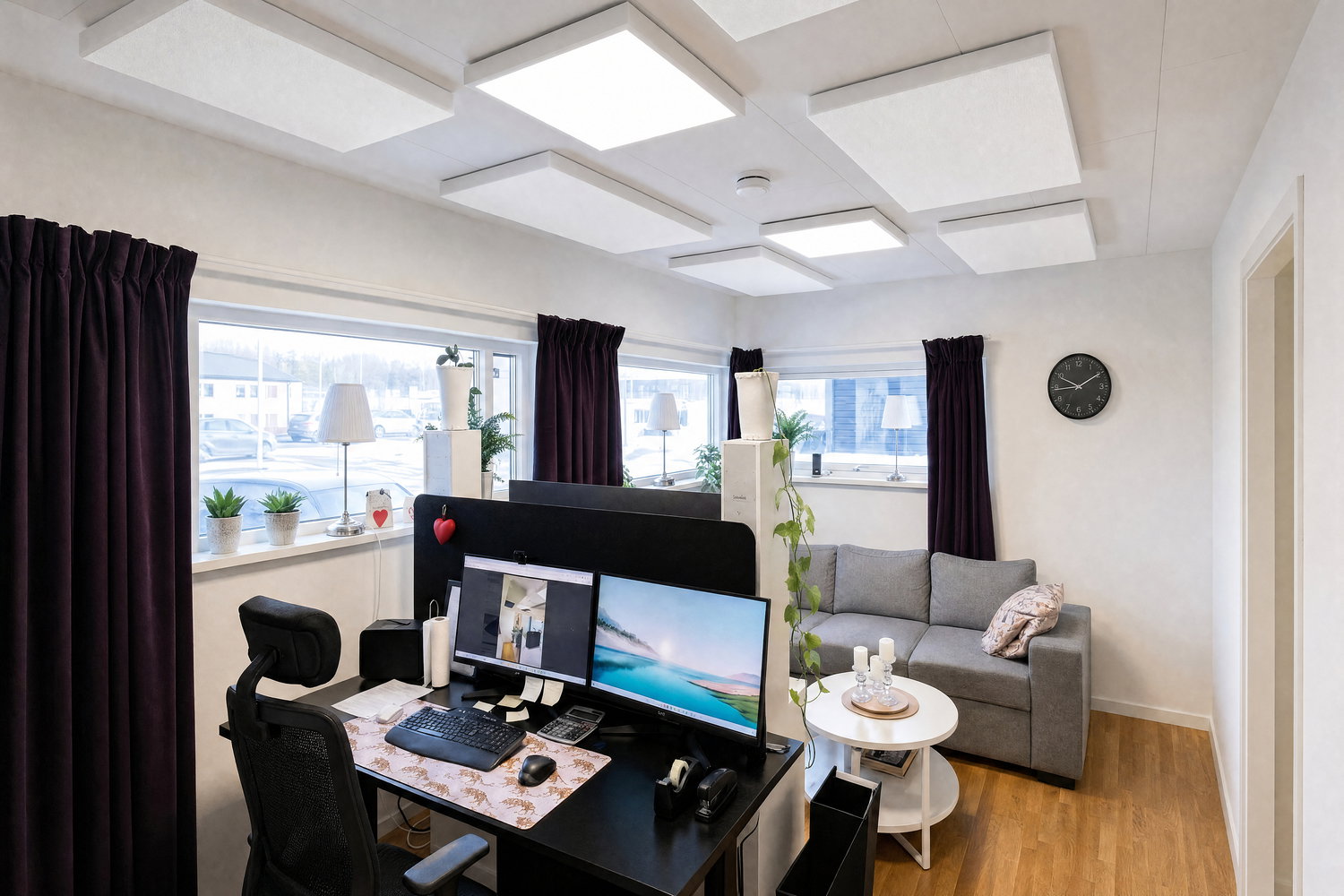
When the acoustics of the entire room need to be improved, we typically recommend treating the ceiling first, as it is often the room’s largest exposed surface. Panels on the walls are an effective complement and are particularly well-suited when the acoustic treatment is also intended to serve as a visible part of the interior design.

Recommended Products

Benefits of Installing Sound-Absorbing Panels on Walls

Sound-absorbing panels are an effective and aesthetically pleasing solution for improving acoustics in various types of environments. By absorbing sound waves and reducing reverberation, these panels can help create a quieter and more harmonious acoustic environment. They are particularly useful in open-plan offices, meeting rooms, schools, restaurants, and home environments where acoustic comfort is crucial for both well-being and productivity.

Effective Sound Reduction and Reduced Reverberation
Sound-absorbing panels are designed to absorb sound and reduce reverberation in a room. By reducing sound reflections, they contribute to more balanced acoustics and a more pleasant sound environment. In rooms with hard surfaces such as glass, concrete, and wood floors, noise levels can easily become high, creating an echoing and disruptive sound. By placing sound-absorbing panels in strategic locations, you can reduce noise and create a quieter, more controlled acoustic experience.

Improved Concentration and Increased Productivity
High noise levels and excessive reverberation can be among the biggest distractions in a work environment. By reducing noise disturbances with sound-absorbing panels, workplaces can create a more focused atmosphere where employees can concentrate more easily. This, in turn, leads to increased productivity and a more efficient workday. In study environments and schools, sound absorption can improve learning by reducing background noise and making it easier to understand speech and instructions.

Better speech intelligibility in meeting rooms and public spaces
Sound absorption from sound-absorbing panels improves speech intelligibility, which is particularly important in meeting rooms, conference rooms, and other spaces where clear communication is essential. By reducing sound reflections and background noise, these panels can contribute to a clearer and more pleasant conversational environment, making it easier to hear and understand what is being said. This is beneficial both in professional settings and in homes where acoustics can affect everyday conversations.

Echo Reduction and Improved Acoustics
Echoes can be a major problem in rooms with large, hard surfaces, creating an unbalanced and disruptive sound environment. Sound-absorbing panels capture sound waves and prevent them from bouncing between walls, floors, and ceilings. This contributes to more controlled and pleasant acoustics, making it easier to carry on conversations without the sound feeling harsh or amplified.

Aesthetic Integration and Design Options
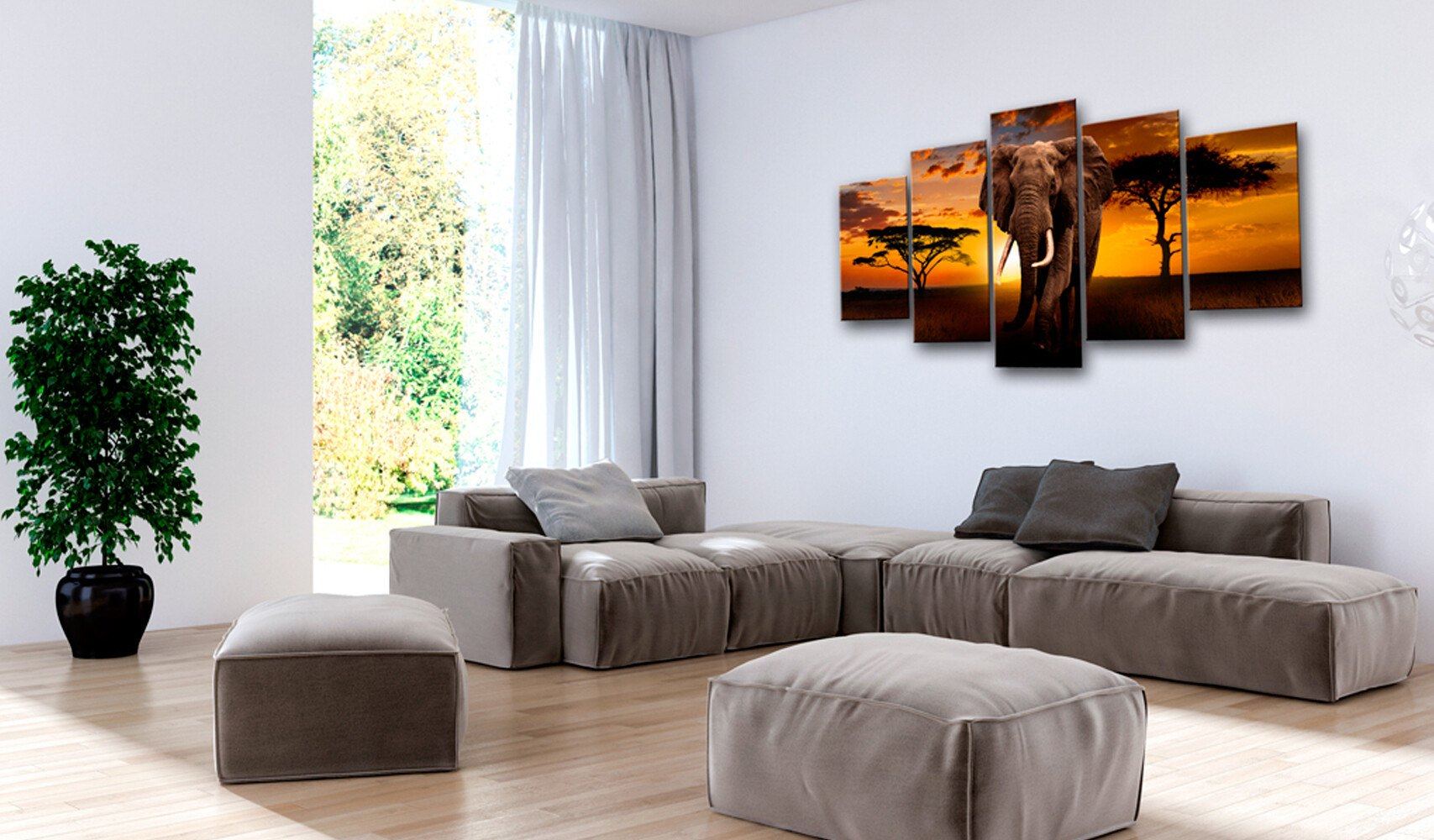
Sound-absorbing panels come in a wide variety of designs, colors, and sizes, making it possible to integrate them into different interior styles. They can be customized to serve both as works of art and as a natural part of the room’s decor. With the option to choose between discreet, neutral colors or more artistic motifs, sound-absorbing panels can help create a comfortable and visually appealing environment.

Flexibility and Adaptability
One of the major advantages of sound-absorbing panels is their flexibility. They can be easily adapted to the specific needs of a room and installed where they are most effective. You can choose to place them on the walls in workspaces, in lounge areas, or in the noisiest parts of your home. By adjusting the placement and number of panels, you can optimize sound absorption and create a well-balanced acoustic environment.

Easy Installation and Minimal Maintenance
Many sound-absorbing panels are easy to install and require minimal maintenance. They can be mounted directly on the wall using screws, self-adhesive mounts, or mounting frames, making them a practical solution for both permanent and temporary acoustic improvements. Since they are designed to last a long time, they rarely require any updates or maintenance beyond regular cleaning.

Reduces Stress and Improves Well-Being
A quiet acoustic environment can have a positive impact on both mental and physical health. By reducing noise and reverberation, sound-absorbing panels can help lower stress levels and create a more harmonious atmosphere. This is particularly valuable in work environments where high noise levels can contribute to increased fatigue and reduced concentration. A better acoustic environment can also improve sleep quality at home by reducing disruptive noise in the evenings and at night.

Installing sound-absorbing panels is an effective and aesthetically pleasing way to improve the acoustic environment in various types of rooms. By combining functionality and design, these panels can contribute to better acoustics, increased comfort, and a more pleasant atmosphere. Whether in offices, restaurants, homes, or public spaces, sound-absorbing panels are a simple and flexible solution for creating a more pleasant sound experience.

Why buy sound-absorbing panels?

Investing in sound-absorbing panels is an effective way to improve the acoustics in a room while maintaining a stylish and aesthetically pleasing interior. Sound reflections and reverberation can create a noisy and unpleasant acoustic environment, especially in rooms with hard surfaces such as glass, concrete, and hardwood floors. By using sound-absorbing panels, you can reduce distracting background noise and create a more pleasant atmosphere, whether in offices, restaurants, conference rooms, or home environments.

An aesthetically pleasing solution for a better sound environment
Sound-absorbing panels offer a visual and functional solution for reducing noise levels in a room. They combine effective sound absorption with design, making them a popular choice for those who want to improve acoustics without compromising the room’s appearance. By using sound-absorbing panels, you can create a quieter environment where conversations are clearer, reverberation is reduced, and the ability to concentrate is improved.

To achieve the best possible results, we recommend placing panels on at least two walls that are not directly opposite each other. This reduces the risk of sound bouncing back and forth in the room. In rooms with a wall length of approximately three meters, we recommend a panel that is at least 120–200 cm wide and as tall as possible. For even better sound absorption, these panels can be effectively combined with other types of sound absorbers, such as ceiling absorbers or acoustic panels.

Optimal Coverage for Best Sound Absorption
To achieve a noticeable improvement in the acoustic environment, we recommend that at least 20–30% of the room’s total surface area be covered with sound-absorbing material. This can include sound-absorbing panels, acoustic panels, or other custom-designed sound absorbers. In larger rooms, it may be beneficial to install multiple panels or a multi-panel sound-absorbing panel that covers a larger area and thus improves sound absorption.

The advantage of larger and multi-panel sound-absorbing panels
The larger the sound-absorbing surface area, the more effective the sound absorption. Larger panels are better at capturing sound waves and reducing reverberation time in a room. An additional benefit of multi-panel sound-absorbing panels is that they can provide even better sound absorption thanks to the small air gap between each panel. This gap helps further break up sound waves and increase the absorption effect.

In summary, sound-absorbing panels are a practical and aesthetically pleasing solution for improving acoustics in both work and home environments. By strategically placing and adjusting the number of sound-absorbing panels, you can effectively reduce disruptive noise and create a more pleasant and functional acoustic environment.

What should you consider before buying sound-absorbing panels?

Investing in sound-absorbing panels is an effective way to improve a room’s acoustics and reduce disruptive sound reflections. By choosing the right panels and placing them strategically, you can create a more harmonious sound environment tailored to the room’s needs. Acoustic issues can vary depending on the room’s size, shape, and choice of materials, making it important to carefully analyze which solutions are most effective.

Identify Sound Sources and Acoustic Problems
Before choosing sound-absorbing panels, it’s important to identify which sound sources are affecting the room’s acoustics. Common problems include echoes, high noise levels, or disruptive background noise from electronics and conversations. If sound bounces off hard surfaces such as glass, concrete, or wooden floors, the reverberation time can increase, making the sound environment feel unbalanced and noisy. By pinpointing the biggest problems, you can place sound-absorbing panels where they’ll be most effective.

Choose the Right Sound-Absorbing Panels
Sound-absorbing panels come in various materials and designs depending on the specific acoustic issue you need to address. Materials such as acoustic foam, mineral wool, and specially treated textiles are common options, and each material has its own unique properties. To effectively reduce reverberation and reflections, you should choose panels that are tailored to the room’s acoustic profile while also complementing your interior design. Sound-absorbing panels can also be part of the aesthetic design by serving as works of art or decorative elements in the room.

Placement of Sound-Absorbing Panels
To maximize sound absorption, panels should be placed where sound reflections are most noticeable. Walls and ceilings are often the surfaces where sound bounces off, creating an acoustic imbalance in the room. By installing panels near sound sources or on the walls where reflected sound is most noticeable, you can create a more controlled acoustic environment. In offices and conference rooms, placing panels near conversation areas can improve speech intelligibility and reduce distracting background noise.

Distribution of Panels for Optimal Effect
Distributing sound-absorbing panels evenly throughout the room provides more balanced and effective sound absorption. If all panels are placed on a single wall, sound reflections may still be a problem on other surfaces. A good strategy is to cover at least two walls that are not directly opposite each other, which helps break up sound waves and reduce reverberation time in the room. If the room is large, it may be necessary to use a combination of wall and ceiling absorbers to create an optimal acoustic environment.

Adapt the design to the room’s aesthetics
Sound-absorbing panels don’t have to be purely functional; they can also contribute to the room’s visual appeal. Many sound-absorbing panels are available in various colors, shapes, and patterns, making it possible to combine acoustic performance with a stylish design. By choosing panels that harmonize with the room’s interior, you can create an aesthetically pleasing environment while improving acoustic comfort.

How many panels are needed?
The number of sound-absorbing panels required depends on the room’s size, its materials, and the specific acoustic issues to be addressed. As a general guideline, it is recommended to cover 20–30% of the room’s wall surface with sound-absorbing material. This can be adjusted depending on the room’s layout and the severity of the acoustic issues. If the acoustic environment still feels unbalanced, more panels or other types of sound absorbers may be needed.

Measure and Adjust for Best Results
To ensure that the sound-absorbing measures produce the desired effect, you can use a sound level meter to measure sound levels before and after installation. By analyzing the results, you can determine whether the placement needs to be adjusted or if more sound-absorbing panels are needed to achieve optimal acoustic comfort. Continuously evaluating and adjusting the acoustic solution is particularly important in work environments and public spaces where acoustic comfort is crucial for productivity and well-being.

Investing in sound-absorbing panels is a smart solution for creating a more pleasant acoustic environment. By choosing the right panels, placing them strategically, and making adjustments as needed, you can reduce noise levels and improve acoustics both at home and in the workplace.

Sound calculation software.

Sound calculation software.

If you need to estimate the room's acoustic requirements, you can use SilentDirect's sound calculation program. You can also read more about how to calculate the reverberation time and use the wall as a starting point with the tool to calculate the size of your wall.

How to Place and Install Sound-Absorbing Panels

Start by determining whether the problem is actually related to room acoustics. Sound-absorbing panels are appropriate when voices sound sharp, clapping produces a lingering echo, or the noise level quickly becomes tiring when several people are talking. If the disturbance is instead coming through the wall from another room, you’ll need to look into sound insulation.

1. Listen for echoes and harsh reflections

Walk around the room and listen while someone speaks or claps their hands. Note where the reverberation is most pronounced and which walls are large, bare, and hard. Rooms with glass, painted walls, tile, hardwood floors, and few textiles often have multiple surfaces that reflect sound.

Perform the same check from the spots where people normally sit or work. A room can sound different from the sofa, the dining table, and the desk. The placement should be based on actual use, not just on which wall is easiest to decorate.

2. Determine which surface to prioritize

For general acoustic treatment, we typically recommend treating the ceiling first. The ceiling is often a large, unobstructed surface that can be treated without doors, windows, or furniture restricting placement. Sound-absorbing panels are then a good complement on the walls.

If ceiling installation isn’t possible, the panels can be used as the primary treatment on the walls. In that case, prioritize large wall sections near sound sources and conversation areas. These might include the wall behind a sofa, near a dining table, behind workstations, or along a conference table.

3. Calculate a reasonable total panel area

A small panel affects only a limited portion of the room’s total reflective surface. The larger and more reverberant the room, the greater the absorptive surface area is typically needed for the change to be noticeable. Therefore, measure the wall sections that can be used and plan for one or more panels with sufficient total size.

If you’re unsure about the scope, start with the most exposed part of the room, listen for the change, and then add more as needed. However, don’t expect a very small painting to solve the problem of long reverberation in a large space.

4. Choose the format based on the furniture and wall

A landscape-oriented artwork often works well above a sofa, sideboard, bed, or desk. A portrait-oriented format suits narrower wall sections, columns, and spaces between doors and windows. On a wide wall, a multi-panel artwork can provide both greater coverage and a clear visual unity.

For a wide, continuous surface, the Wall Rectangle (landscape) is a natural choice. On narrower walls, the Wall Rectangle (portrait) may be a better fit. Where multiple smaller sections need to be arranged, the Wall Square can be placed individually or in a group.

5. Distribute the panels across relevant walls

If multiple panels are used, it’s often better to distribute them across the walls that contribute to significant reflections rather than concentrating all the absorption in one corner. In a meeting room, for example, panels can be placed along the long sides of the table. In a living room, a larger panel behind the sofa can be complemented by a panel on a nearby solid wall.

Avoid placing them behind large cabinets, densely packed bookshelves, or other furniture that blocks the absorptive surface. The panel needs to be exposed to the room so that sound can reach it.

6. Measure the placement carefully

Lightly mark the panel’s outer edges on the wall and check the result from several angles in the room. Use a level to ensure the panel is straight. For multi-panel designs, measure each panel separately and maintain an even distance between the panels.

Also make sure the artwork doesn’t obstruct doors, curtains, lighting, or furniture. Place it where it effectively captures sound while remaining stable and protected in your everyday environment.

7. Adapt the mounting to the model and wall type

Always follow the installation instructions for the selected product. The Wall models in the product catalog have an MDF backing with hidden CNC-milled keyhole mounts and are screwed directly onto the wall. Not all available mounts need to be used, but the mounting must be sized according to the panel’s size, weight, and the wall material.

Use anchors and screws designed for materials such as drywall, concrete, brick, or wood. Check for wires and pipes before drilling. If you are unsure about the wall’s load-bearing capacity or the correct mounting method, consult a qualified professional.

8. Check the sound quality after installation

Repeat the same listening test you performed before installation. Clap your hands and have a conversation from the same locations. Assess whether the reverberation subsides more quickly, whether voices become clearer, and whether the room feels less harsh when multiple sounds occur simultaneously.

If the reverberation is still noticeable, more sound-absorbing surfaces may be needed. Start by adding treatment to untreated reflective surfaces. For more significant issues, we recommend combining wall panels with ceiling absorbers, since the ceiling is typically the first surface we prioritize for general sound absorption.

Brief Conclusion

A good result requires correctly identifying the problem, sufficient absorptive surface area, and placement on walls that actually contribute to sound reflections. Sound-absorbing panels can then reduce echoes and make the room quieter, while the acoustic treatment becomes a natural part of the interior design.

Did you know that…

Did you know that sound-absorbing panels not only dampen sound but can also affect how we perceive a room? By placing them strategically, you can create the illusion of a larger or cozier room, since dampened reflections make the sound feel more pleasant and natural. In addition, some panels act as baffles, which means they can break up sound waves and reduce echoes even more effectively. By choosing panels with varying depths and surfaces, you can both improve the acoustics and give the room a more dynamic sound environment!

Selected Articles

How do you soundproof a room with sound absorbers?

What makes a sound-absorbing material effective?

Eco – Here's How to Reduce Your Eco Footprint

Products for sound-absorbing panels.

Here you’ll find eight wall absorbers that are ideal when the acoustic solution is intended to be a visible part of the interior design. Your choice should be based on the width of the wall, the size of the room, and how much absorptive surface area is needed. The products are available in various formats and panel configurations for everything from narrow wall sections to wide surfaces above sofas, desks, and meeting areas.

The horizontal Wall Rectangle is suitable for use above sofas, desks, and other wide pieces of furniture, where a continuous horizontal panel can treat a longer wall section.

Wall Rectangle (portrait ) is designed for narrower wall surfaces, columns, and niches, where a portrait format makes the most of the height without requiring significant width.

Wall Square is a square wall absorber that can be used alone or combined in groups to create a larger sound-absorbing composition.

Wall 3-parts one (horizontal) provides a wide, three-part solution for larger wall sections behind, for example, sofas, desks, and meeting areas.

Wall 3-parts one (vertical ) combines a three-part design with a vertical format for narrower wall sections.

Wall 3-parts three is ideal when the panel division of the panel is intended to be a distinct part of the interior design while also providing sound absorption across multiple wall sections.

Wall 4-parts four is designed for larger wall surfaces, where four sections provide wide coverage and help reduce reverberation.

Wall 5-parts one provides extensive wall coverage with five sections and is suitable for rooms where multiple hard reflections need to be addressed with a cohesive visual solution.

*Free shipping

Free shipping to a pickup location

5-Year Warranty

5-Year Product Warranty

Fast Delivery

Usually ships the same day

Sound-Absorbing Panels – Effective Sound Absorption with an Aesthetic Design

Sound-absorbing panels are a practical and stylish solution for reducing reverberation and creating a more pleasant acoustic environment. In environments where sound reflections from hard surfaces such as glass, concrete, and wood floors can create an unbalanced and noisy acoustic environment, sound-absorbing panels serve as both functional and decorative elements. By combining advanced sound absorption with aesthetically pleasing designs, you can effectively improve acoustics without compromising the room’s design.

These panels are designed to absorb sound waves and reduce distracting background noise, making them ideal for offices, conference rooms, restaurants, schools, and home environments. They help create a more harmonious atmosphere where conversations and work can take place without interruptions. Whether it’s a modern open-plan office, a bustling restaurant, or a home with open spaces and high ceilings, sound-absorbing panels can make a noticeable difference in acoustic comfort.

How do sound-absorbing panels work?

Sound-absorbing panels are constructed from materials with high sound absorption capacity, such as acoustic foam or mineral wool, which effectively capture and dampen sound waves. When sound hits a hard surface, it is reflected back into the room, creating reverberation and unbalanced acoustics. By placing sound-absorbing panels in strategic locations, you can reduce these reflections and create a more subdued and controlled sound environment.

An important factor in maximizing sound absorption is the placement of the panels. They should be mounted on walls where sound reflections are greatest, such as opposite glass partitions or hard surfaces. Installing panels in corners or on multiple walls can further improve the sound environment by breaking up sound waves before they bounce around the room.

Benefits of Sound-Absorbing Panels

Using sound-absorbing panels in various environments offers several benefits for both acoustic comfort and interior design. One of the most noticeable effects is reduced reverberation and an improved acoustic environment. By dampening sound reflections, you can create a calmer and more pleasant atmosphere, which is particularly important in open-plan offices, restaurants, and other environments with high noise levels.

In work environments, sound-absorbing panels contribute to better concentration and increased productivity. Noise and distracting background sounds can be among the biggest causes of reduced efficiency in the workplace. By lowering noise levels, a more focused work environment is created where employees can work undisturbed and communicate more clearly.

Another important aspect is improved speech intelligibility in meeting rooms and public spaces. When sound reflects off hard surfaces, conversations can become harder to understand, which can lead to frustration and misunderstandings. Sound-absorbing panels help create a more balanced acoustic environment where speech is heard more clearly and conversations can take place without having to raise one’s voice.

Reducing echoes and unpleasant sound reflections is another benefit. In environments with a lot of glass and hard materials, echoes can be a major problem. Sound-absorbing panels work by capturing and absorbing sound waves, creating more controlled and pleasant acoustics.

Aesthetic and Flexible Solutions

Sound-absorbing panels are not only functional but also a stylish solution for enhancing a room’s interior design. They come in a wide variety of colors, patterns, and sizes, making it possible to integrate them into various interior styles. Whether you prefer a modern, minimalist look or a more artistic and colorful design, there are sound-absorbing panels to suit your specific needs.

Many people choose to use sound-absorbing panels as part of their interior design to create a harmonious and visually appealing environment. The panels can serve as works of art while effectively dampening sound, making them a practical and stylish solution for both private and public spaces.

Versatility and Easy Installation

One of the major advantages of sound-absorbing panels is their flexibility. They can be tailored to the specific needs of a room and installed in various locations to maximize sound absorption. By selecting the right number of panels and placing them strategically, you can create an optimal acoustic environment tailored to the room’s unique acoustic challenges.

Many sound-absorbing panels are easy to install and require minimal maintenance. They can be mounted directly on the wall using screws, self-adhesive mounts, or mounting frames, making them a practical solution for both permanent and temporary sound improvements. Since they are designed to last a long time, they rarely require any updates or maintenance beyond regular cleaning.

A Better Acoustic Environment with Sound-Absorbing Panels

Installing sound-absorbing panels is a simple and effective way to improve the acoustic environment in various types of rooms. By combining functionality and aesthetics, these panels can contribute to better acoustics, increased comfort, and a more pleasant atmosphere. Whether in offices, restaurants, homes, or public spaces, sound-absorbing panels are a flexible and stylish solution for creating a more pleasant acoustic experience.