







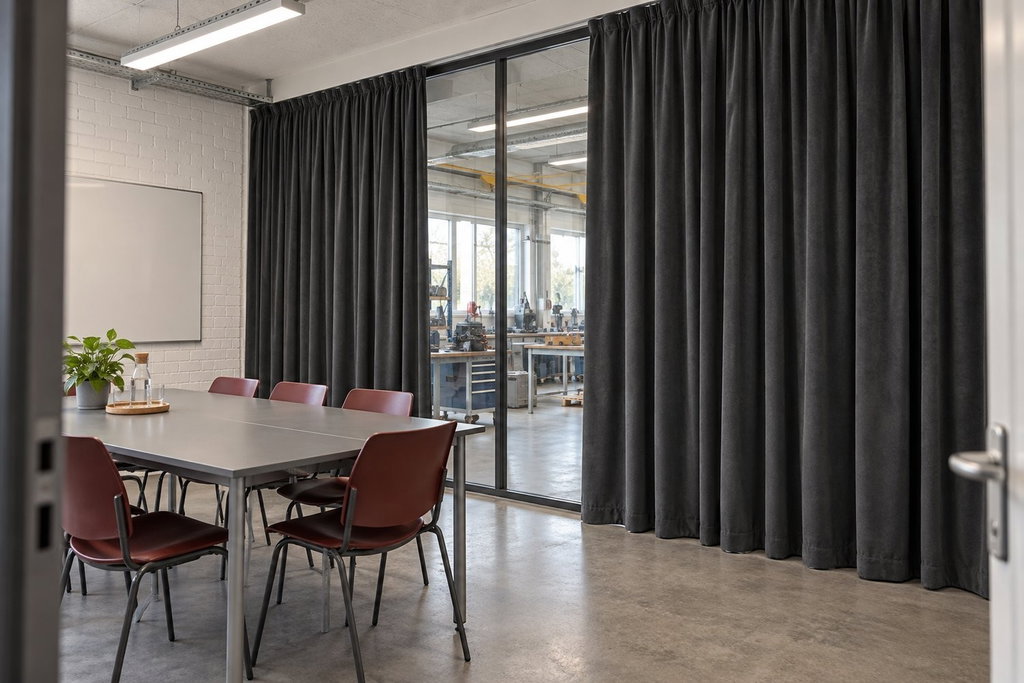
Sound-absorbing curtains – reduce echoes in industrial environments
A flexible and effective solution for improved acoustics in industrial and manufacturing settings
In industrial environments with large open spaces, hard materials, and many simultaneous sound sources, problems with echoes and prolonged reverberation often arise. Walls, ceilings, and floors made of concrete, steel, and glass reflect sound rather than dampening it, causing machine noise, internal transport, and conversations to spread uncontrollably throughout the space. This can create a noisy work environment where communication is hindered and the perceived noise level becomes higher than necessary. Sound-absorbing curtains are a flexible and practical form of sound absorption that helps reduce echoes and create a more controlled acoustic environment in industrial facilities.
What are sound-absorbing curtains?
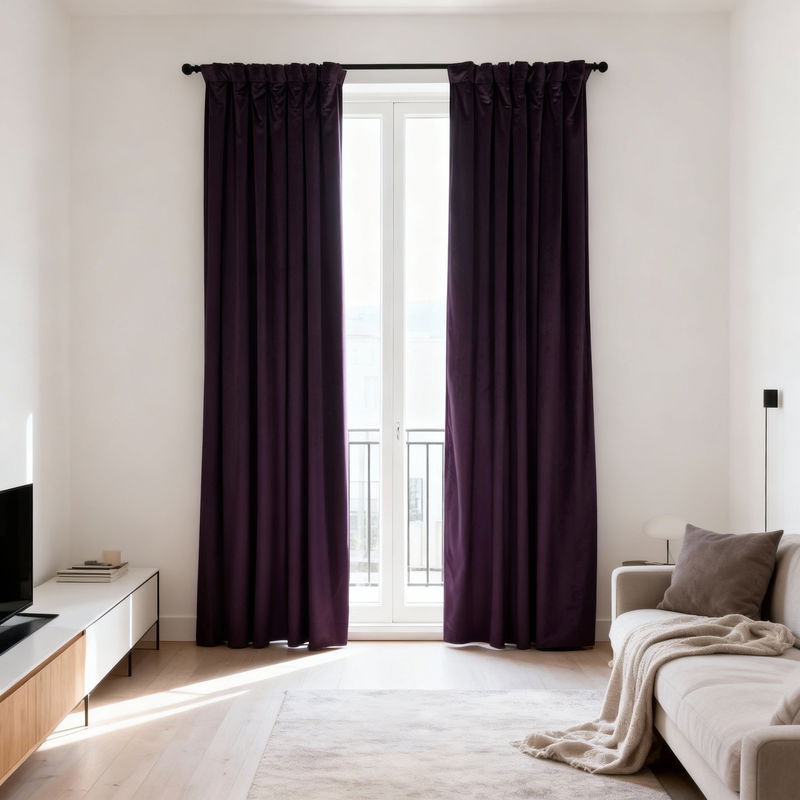
Sound-absorbing curtains are made of dense and porous textiles that absorb sound waves when they strike the material. By capturing and slowing the movement of sound, reflections and reverberation in the room are reduced. It is important to distinguish sound absorption from sound insulation, which is designed to prevent sound from spreading between different rooms or spaces, as well as vibration damping, which reduces vibrations and structure-borne noise from machinery and installations. Curtains are used to improve acoustics where sound is already present, not to prevent sound leakage between rooms.
Common acoustic problems in industrial environments
In production halls, warehouses, and workshops, long reverberation times cause sound to amplify and blend together. Speech becomes difficult to understand from a distance, instructions can be misunderstood, and the work environment is perceived as stressful. In environments where safety and clear communication are critical, this can impact both workflow and well-being. Without sound-absorbing measures, these acoustic issues risk becoming permanent as the business grows.
How sound-absorbing curtains work in practice
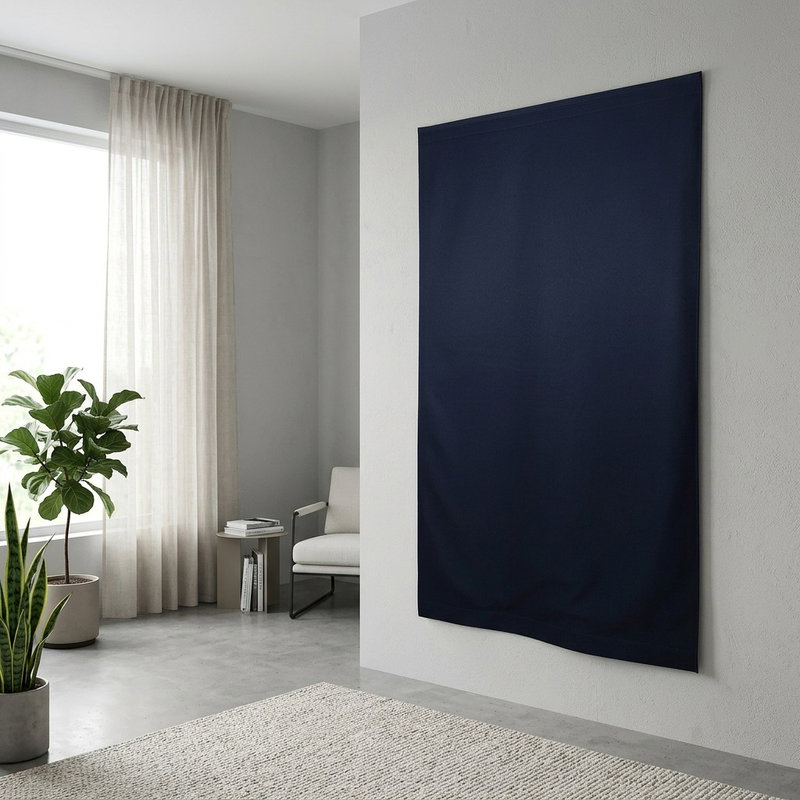
When sound waves hit the curtain’s surface, a large portion of the energy is absorbed by the fabric’s structure. This shortens the reverberation time and reduces sound propagation within the space. Curtains can be placed along walls, in front of large openings, or used as movable partitions to divide spaces and create quieter zones.
Placement along walls and open spaces
Sound-absorbing curtains can be used to cover large reflective surfaces, thereby reducing sound reflections in work zones.
Complement to ceiling and wall absorbers
Curtains work well in conjunction with fixed sound-absorbing solutions and contribute to more even sound absorption in large industrial spaces.
Why choose sound-absorbing curtains in industrial environments?
Sound-absorbing curtains provide a quick improvement to the acoustic environment without requiring changes to the building’s structure. They are flexible, easy to customize, and can be moved or adjusted in response to changes in production or layout. The result is a lower perceived noise level, improved speech intelligibility, and a more functional work environment. In many cases, curtains can be combined with other sound-absorbing measures for a more comprehensive acoustic solution.
Well-considered advice for best results
To achieve good acoustic performance, sound-absorbing curtains should cover sufficiently large areas and have the correct material thickness. In larger industrial spaces, a combination of multiple sound-absorbing solutions is often required, while smaller areas can be improved by strategically placed curtains. A common mistake is to underestimate the need for absorbent surface area or to place curtains where the impact of sound is limited. Thoughtful placement creates a long-term, functional, and more pleasant acoustic environment.
Sound-absorbing curtains are therefore a safe and effective choice for industrial environments seeking to reduce echoes in the room and create better conditions for communication, workplace safety, and overall safety.