














• Free shipping
  • 5-year warranty
  • Fast delivery

Soundproof mobile offices and work sheds – block out noise and reduce reverberation

Mobile offices and work sheds are practical, flexible, and quick to set up—but acoustically, they often pose a challenge.
These structures have thin walls, lightweight construction, and hard surfaces, which allow sound to easily travel both in and out.
Rain hitting the roof, machine noise from the worksite, conversations in small spaces, and vibrations from the building can quickly create a noisy and stressful work environment.
For those working in a job site trailer or a temporary office, this affects concentration, call quality, and peace of mind.

Unlike permanent office buildings, mobile units are often built with a focus on transport and quick assembly—not sound insulation.
This means that structure-borne noise, airborne noise, and resonance can be amplified in walls, floors, and ceilings.
The result is that even relatively low sound levels are perceived as disruptive.

Especially in environments such as construction sites, industrial sites, or temporary project offices, the need for effective soundproofing is therefore particularly high.

To soundproof a mobile office or a work shed, a well-thought-out strategy is required that combines several measures.
This involves both blocking external noise with the right sound barriers and reducing vibrations in the structure while simultaneously improving the interior room acoustics.
By working systematically with walls, ceilings, floors, and penetrations, you can create a significantly more controlled sound environment—even in a lightweight structure.

In this guide, we’ll walk you through how to reduce noise in mobile offices and work sheds step by step.
You’ll get practical tips on how to deal with traffic noise, machine noise, rain on metal roofs, and disruptive conversations.
We’ll also explore which types of solutions are most effective in this specific type of environment.

The goal is to create a quieter, more professional, and more productive workplace, no matter where it’s located.

Recommended products

Benefits of Soundproofing Mobile Offices and Work Cabins

Less ambient noise
Mobile offices and work sheds are often located near construction sites, roads, or machinery.
By soundproofing walls, ceilings, and floors, you create a quieter work environment where conversations and tasks requiring concentration can be carried out without disruption.

Better concentration and productivity
High noise levels affect both focus and performance. When reverberation and background noise are reduced, speech intelligibility improves and employees can work more efficiently. A quieter environment reduces the risk of misunderstandings during phone calls and digital meetings.

Improved speech clarity during meetings
In small modular offices, sound can bounce off hard surfaces such as metal, glass, and laminate.
By combining sound insulation with sound absorption, echoes and disruptive reflections are reduced, resulting in clearer dialogue and more professional meetings.

Less sound transmission between rooms
Thin walls in cubicles often allow conversations and machine noise to pass through.
With the right sound barriers and sealing of joints, sound transmission between office areas is reduced, increasing privacy and a quiet working environment.

Better work environment in accordance with occupational health and safety requirements
The Swedish Work Environment Authority’s guidelines emphasize the importance of a good acoustic environment.
By lowering noise levels, you reduce stress and mental strain, contributing to a healthier and more sustainable workplace—even in temporary spaces.

Increased comfort year-round
Many sound-insulating materials also contribute to improved thermal insulation.
This can create a more consistent temperature in the shed and reduce drafts, making the work environment more comfortable during both cold and hot periods.

A professional impression and greater well-being
A work shed with good acoustics is perceived as more well-thought-out and professional.
When noise levels are controlled, the environment feels more structured and pleasant, which strengthens both the work culture and the impression made on customers and partners.

Selected articles on "Guides for choosing soundproofing in mobile offices and work sheds"

Guide to Choosing the Right Sound Insulation for Different Frequencies

Different frequencies behave differently. This means that no single solution works for all types of sound problems.

What methods are used to measure sound?

There are several methods for measuring sound, and the choice of method depends on which aspect of the sound you want to evaluate.

How we perceive a decrease in decibels

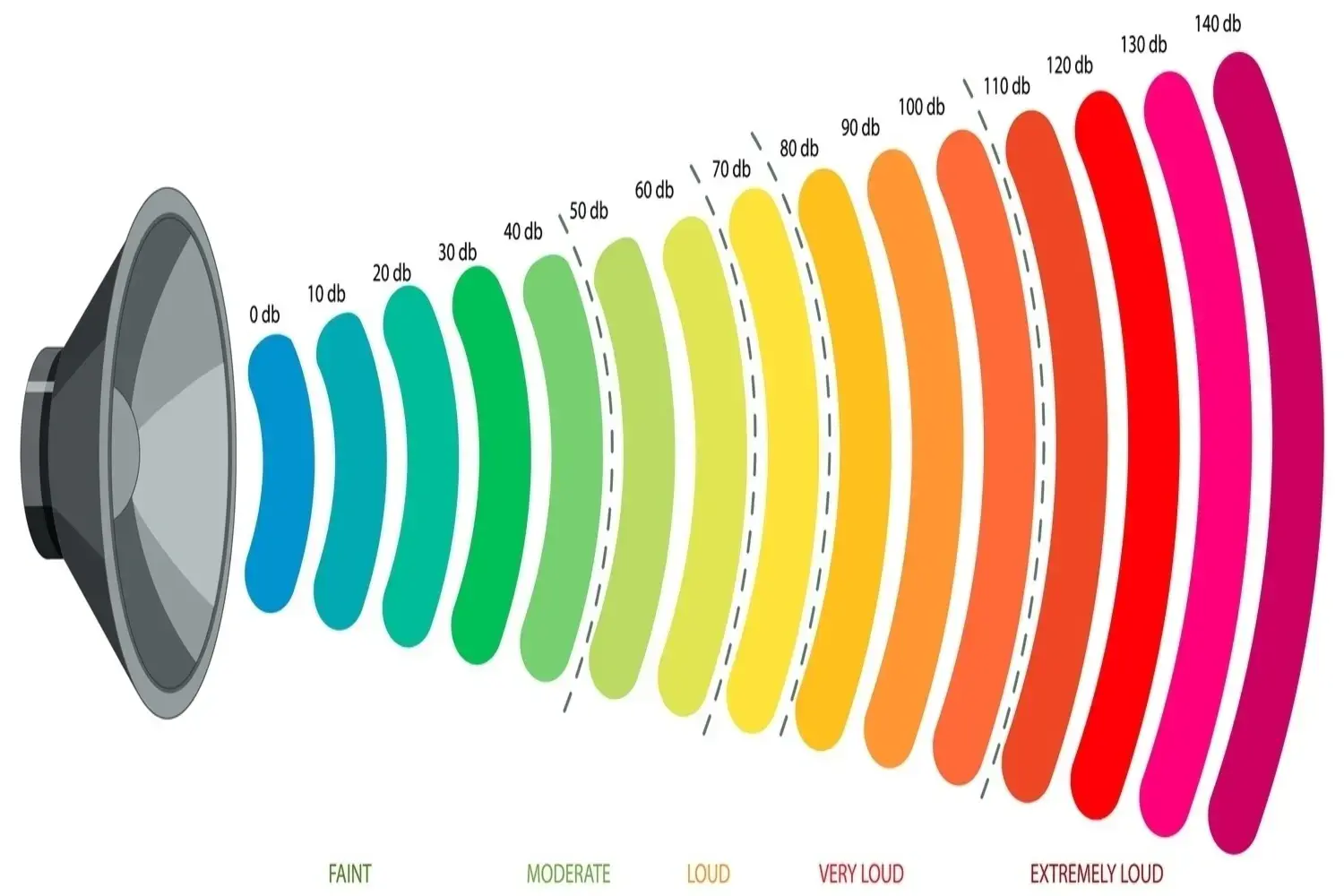
How is a reduction in decibels perceived? Here, we explain in simple terms how different levels of decibel reduction are perceived.

How can you effectively reduce structure-borne noise?

Structure-borne sound is sound that is transmitted through vibrations from structures such as walls, floors, and ceilings rather than through the air.

Step-by-step: How to soundproof mobile offices and work sheds – for a quieter work environment

Mobile offices and work sheds are often constructed from lightweight materials to make them easy to transport and assemble. This makes them versatile—but also more susceptible to noise.
Noise can penetrate from outside, sound can travel between rooms, and hard surfaces create reverberation that makes everything feel “noisier” than it needs to be.
For the best results, you therefore need to take a multi-step approach: seal leaks, reduce vibrations, build mass to block airborne sound, and then improve the interior acoustics.
Here is a clear guide that follows this logic.

Step 1: Identify the noise and decide what to prioritize

Start by identifying which sounds are the most disruptive and when they occur. In work sheds, it’s often a combination of several types of noise:

– Constant noise from traffic, fans, or machinery (airborne noise)
– Thumping and vibrations in the floor and structure (structure-borne noise)
– Rain/hail hitting roofs or metal surfaces (impact noise)
– Conversations audible between rooms (sound leakage)

Once you know what the dominant sources are, it becomes easier to start with the right measures and achieve maximum impact per effort.

Step 2: Seal all gaps – the easiest path for sound to enter

Inside mobile offices, sound often leaks in through small gaps that are otherwise barely visible. If doors, frames, penetrations, or joints aren’t sealed, sound can “sneak” in even if the walls themselves feel sturdy.

– Seal around doors and windows with elastic weatherstripping
– Check openings for electrical, ventilation, and cable conduits
– Inspect joints in wall and ceiling connections, especially in corners

This step is often the most cost-effective because it directly reduces sound leakage without requiring any remodeling.

Step 3: Stop vibrations in the floor and frame – make the shed “more stable”

Vibrations from the subfloor, outdoor machinery, or internal installations can cause the entire shed to resonate.
When the structure vibrates, the sound is amplified and spreads further through the building’s frame. Therefore, start from the bottom.

– Soundproof the floor.
– Use a thick wall-to-wall carpet.
– Place vibration-damping material under points of stress (e.g., furniture, equipment, floor areas where vibrations are felt)
– Make sure nothing is pressed against walls or cabinets that could start rattling
– If there is an equipment area (fan/unit), prioritize vibration isolation there

When vibrations decrease, the room often feels quieter immediately, even before you build additional sound barriers.

Step 4: Build sound barriers in walls and ceilings – block airborne noise

To reduce noise from outside, you need to increase the “mass” of the structure.
Lightweight walls and ceilings let more sound through, especially lower frequencies from engines, traffic, and machinery. A heavy sound barrier in the right place makes a big difference.

– Reinforce the inside of walls with a heavy (MLV) barrier to reduce sound transmission
– Don’t forget the ceiling—rain noise and outdoor noise often travel through the ceiling surface
– Prioritize the wall facing the noise source (e.g., road, machinery, or work area)

This is the “barrier layer” that prevents sound from entering the shed as easily.

Step 5: Place absorption behind/before reflection – reduce resonance and the “boxy” sound

Even if you block outside noise, mobile offices can still sound noisy inside due to reverberation. Hard surfaces cause voices to bounce and build up.
With sound absorption, you reduce reflections and create a softer acoustic environment.

– Install absorbers on the ceiling to shorten the reverberation time throughout the room
– Add wall absorbers where voices bounce the most (large empty wall surfaces)
– In small rooms, relatively few absorbers often make a big difference

The result is better speech intelligibility, lower stress, and a room that feels more like an “office” than a “construction site.”

Step 6: Create zones and reduce sound transmission between workstations

In shared cubicles with multiple people, disturbances often arise because sound travels directly between workstations.
By creating simple partitions, you can block sightlines and reduce direct sound transmission.

– Use sound-absorbing room dividers where possible
– Place conversation areas and focus areas in different parts of the site office
– If you have a meeting corner: add extra sound absorption to the ceiling and nearby walls

Step 7: Address the “small noises” that make a big difference in daily life

In small spaces, scraping, clicking, vibrations, and rattling are often more noticeable than you might think.
Eliminate these noise spikes, and the environment will feel calmer even when the overall noise level remains the same.

– Dampen chair legs and contact points with the floor
– Check cabinets, doors, and loose panels that may vibrate
– Secure cables and pipes so they don’t hit walls when vibrating

Step 8: Test, evaluate, and fine-tune where sound is still entering

Finish by evaluating the results. Listen at different times of the day and compare with your assessment from Step 1.

– Is most of the noise still coming from a specific wall? Reinforce that surface further
– Does most of the noise come from the ceiling when it rains? Prioritize more ceiling measures
– Can conversations be heard between rooms? Seal joints and reinforce doorways

Small additions in the right places can often provide the final improvement that makes the shed feel truly usable for office work.

When you soundproof mobile offices and work sheds step by step, you achieve a clear overall improvement:
Less external noise, fewer vibrations in the structure, and an interior sound environment where conversations and focus work better.
This makes the workplace more pleasant, more productive, and more professional—even when it’s located in the middle of a noisy work environment.

Selected articles on "Soundproofing mobile offices and work sheds"

Soundproof a wall

Soundproofing and sound-absorbing a wall involves reducing the transmission of sound from one side of the wall to the other, as well as reducing the amount of sound that penetrates the wall.

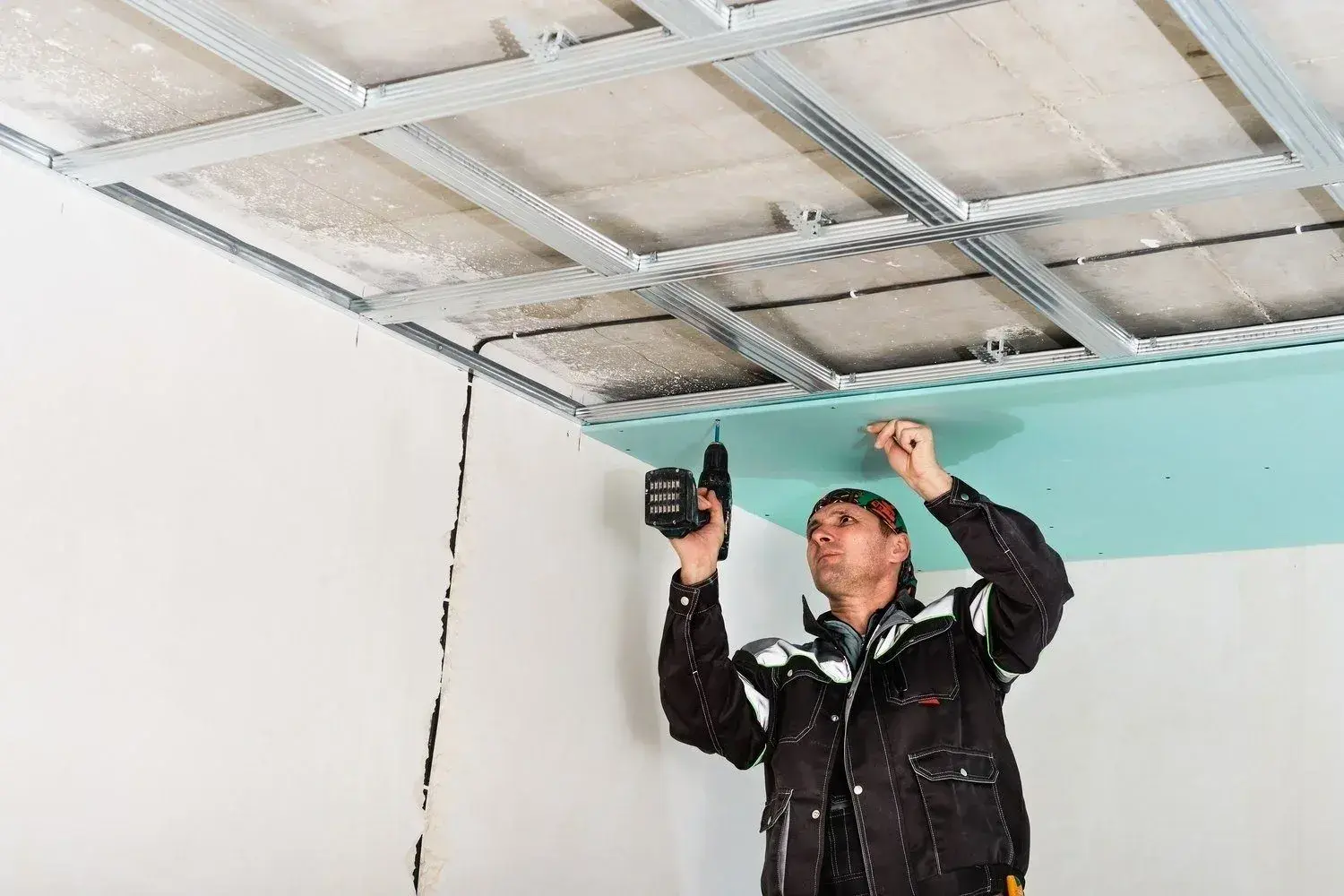
Soundproof a ceiling

Soundproofing and sound-absorbing a ceiling involves reducing the transmission of sound from one side of the ceiling to the other, as well as reducing the amount of sound that penetrates the ceiling.

Soundproof a floor

Soundproofing and sound-absorbing a floor involves reducing the transmission of sound from one side of the floor to the other, as well as reducing the amount of sound that penetrates the floor.

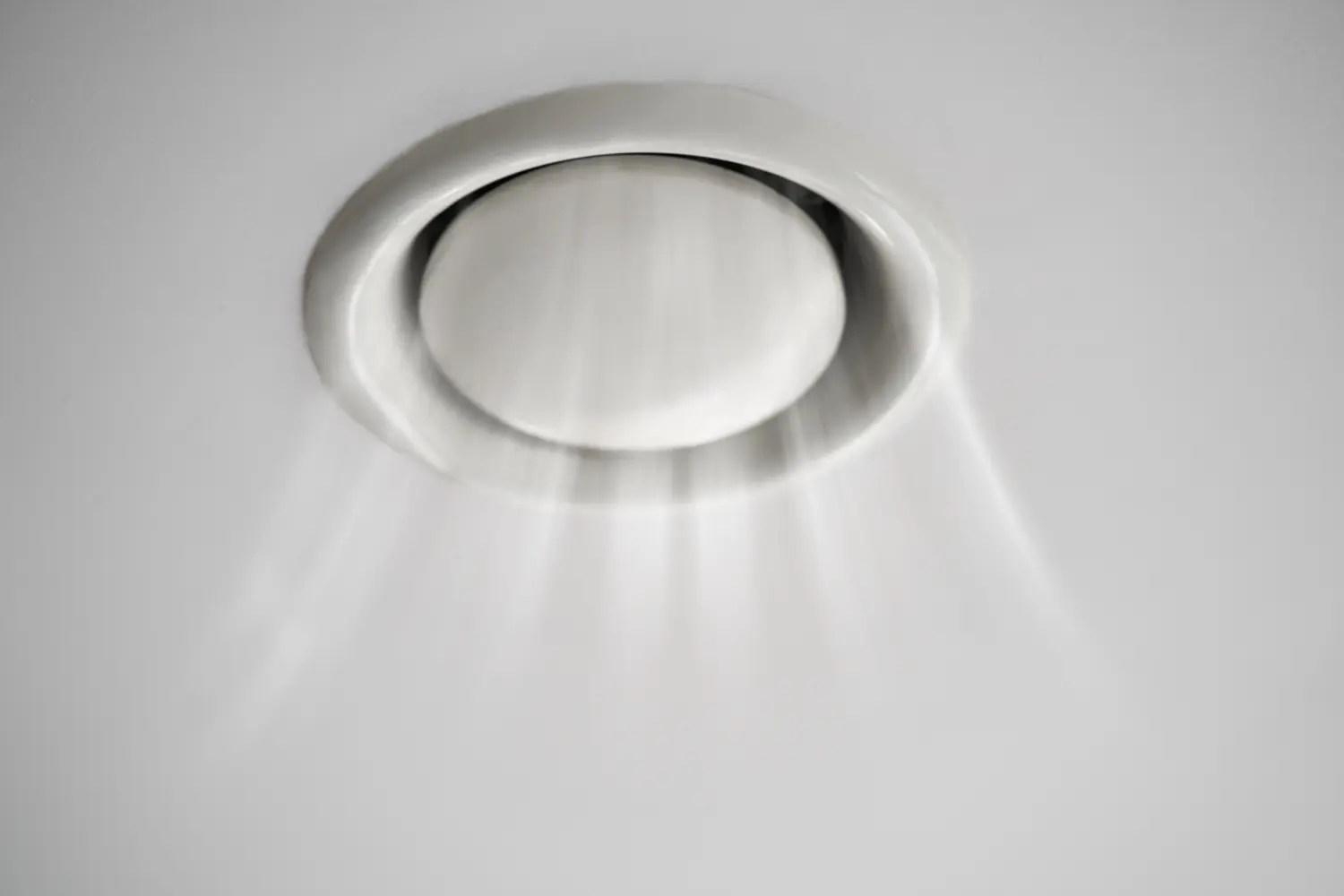
Soundproof ventilation ducts

Soundproofing and sound-absorbing ventilation ducts involves reducing the transmission of sound from one side of the duct to the other, as well as reducing the amount of sound that penetrates through.

Products that are effective for soundproofing mobile offices and work sheds

To effectively soundproof mobile offices and work sheds, you need to combine products that address several different types of noise issues at the same time.
In these types of lightweight structures, it is common to encounter airborne noise from outside, vibrations in the frame and floor, as well as resonance in walls, ceilings, and interior fixtures.
That’s why a multi-layer solution works best, where each material has a specific role.

SilentDirect MLV – heavy sound barrier against airborne noise
MLV is a heavy and flexible sound barrier used to reduce noise coming from outside, such as traffic noise, machinery noise, or voices from adjacent workspaces.
It works very well in walls, ceilings, and other structures where you need to increase mass to prevent airborne sound from passing through lightweight panel materials.

SilentDirect Polaric – vibration damping and resonance control
Polaric is a heavy damping mat used to reduce vibrations and resonance in sheet metal, walls, floors, and ceilings.
In mobile offices and work sheds, this is particularly important because thin and lightweight structures easily amplify sound.
Polaric works very well as the first layer against the surface where you want to stabilize the structure and reduce how much it “resonates.”

SilentDirect Egg – sound absorption and damping in cavities
Egg is a high-density absorber with a profiled surface that helps capture sound energy and reduce resonance in cavities and interior structures.
It is often used behind a barrier such as MLV or in wall and ceiling structures where you want to reduce bouncing sound and improve the interior acoustic environment.

SilentDirect Neo – smooth vibration-damping mat
Neo is a smooth NBR rubber mat used to reduce vibrations and provide a softer intermediate layer in structures.
It works well in combination with Polaric, or where you need a thinner and more flexible material than Egg. Neo also works well under furniture, small equipment, and on surfaces where you want to reduce structure-borne noise.

SilentDirect Seal – sealing strip for joints and sound leaks
Seal is a flexible sealing strip used to seal gaps, joints, and penetrations where sound would otherwise easily leak in or out.
In all sound insulation projects, this is a very important product because small openings around doors, windows, cable runs, and wall joints are often a major cause of sound problems.
Seal helps make the structure tighter and more effective in terms of sound.

SilentDirect Dampio – point damping at loaded contact points
Dampio are vibration-damping pads used where the load is concentrated at specific points.
For example, under tables, cabinets, technical equipment, or other components that can generate localized vibrations.
Dampio is a great complement when you want to reduce contact noise and stabilize specific parts of the interior.

When you combine these products correctly, you get a work shed or mobile office that both:
Blocks outside noise, reduces vibrations in the structure, and creates a quieter and more professional work environment inside.

Selected articles on "Optimal acoustic environments in mobile offices and work sheds"

How many sound absorbers do I need to install?

With our reverberation time calculator, you can easily determine how many sound absorbers you should install to create an acoustically pleasant environment.

Where should sound absorbers be placed?

Proper placement determines how effectively the absorbers dampen sound. Whether you want to improve the acoustic environment in an office, conference room, or home studio.

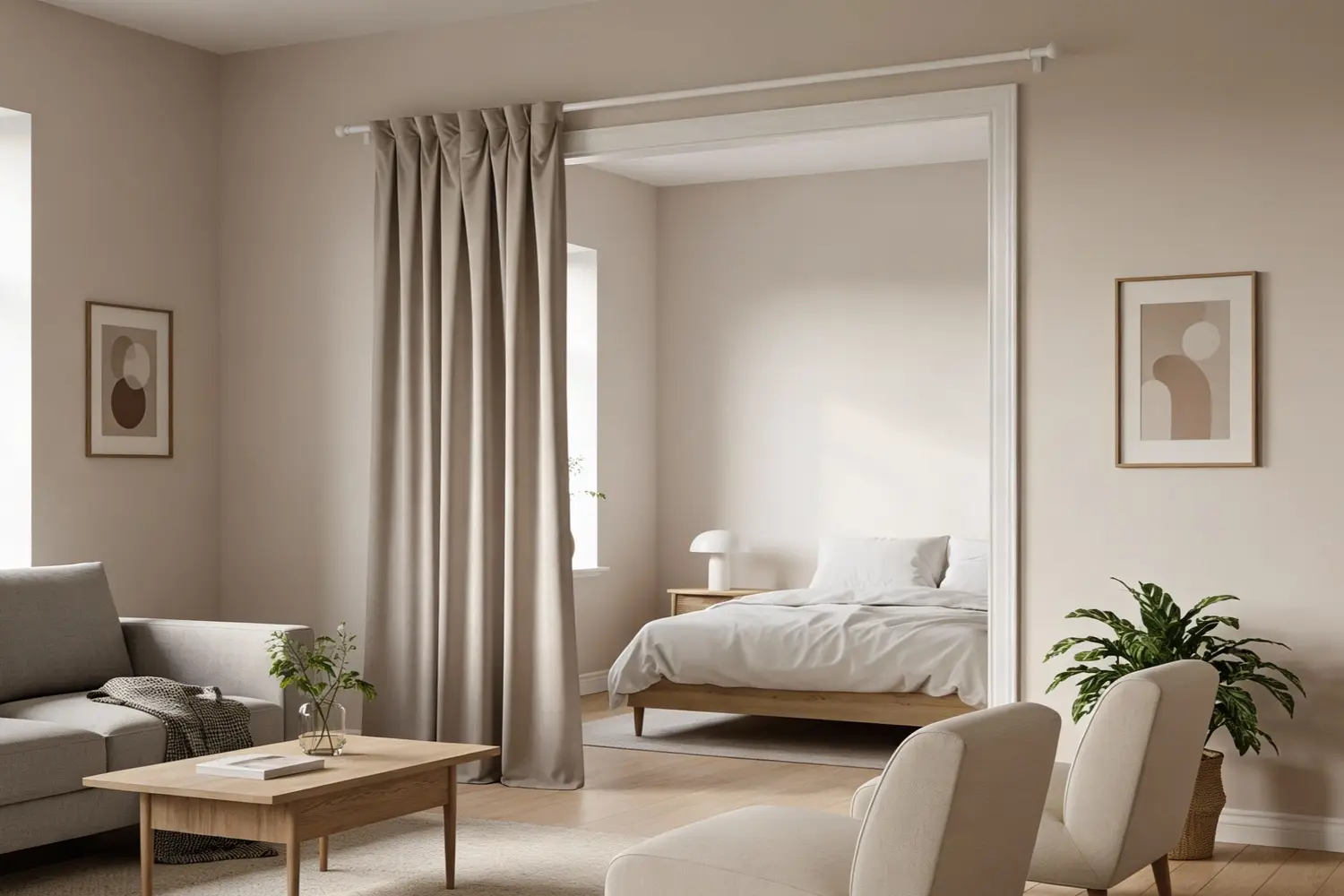
Sound-absorbing fabric room dividers.

Fabric sound-absorbing room dividers are a practical solution for reducing noise, minimizing reverberation, and creating a more focused and pleasant atmosphere.

Sound-absorbing and sound-dampening curtains

Sound-absorbing curtains are an excellent way to improve noise levels and acoustics in a room and create a more pleasant atmosphere.

Did you know that…

A thin wall in a work shed can let through more sound than you might think—especially at low frequencies?
Since mobile offices are often built with lighter-weight materials, airborne sound and vibrations travel faster through the walls and ceiling than in traditional buildings.

Many people think that simply “insulating the walls” is enough, but in practice, it’s often the ceiling and floor that account for a large portion of sound transmission.
Sound doesn’t always take the shortest path—it takes the easiest one. That’s why vibrations can travel through the structure and appear in places completely different from where the noise originated.

Reverberation can also amplify the perception of noise.
In a small space with hard surfaces, the sound level can feel significantly higher than it actually is, simply because the sound bounces between walls, ceilings, and floors.
By reducing reverberation, you can therefore make the room feel quieter—even if the actual decibel level doesn’t change dramatically.

That is why a combination of sealing, mass, and absorption yields the best results.
When you break up the sound’s path in several stages—instead of relying on a single solution— you create a work environment that feels significantly more professional.

Selected articles on "Soundproof mobile offices and work sheds"

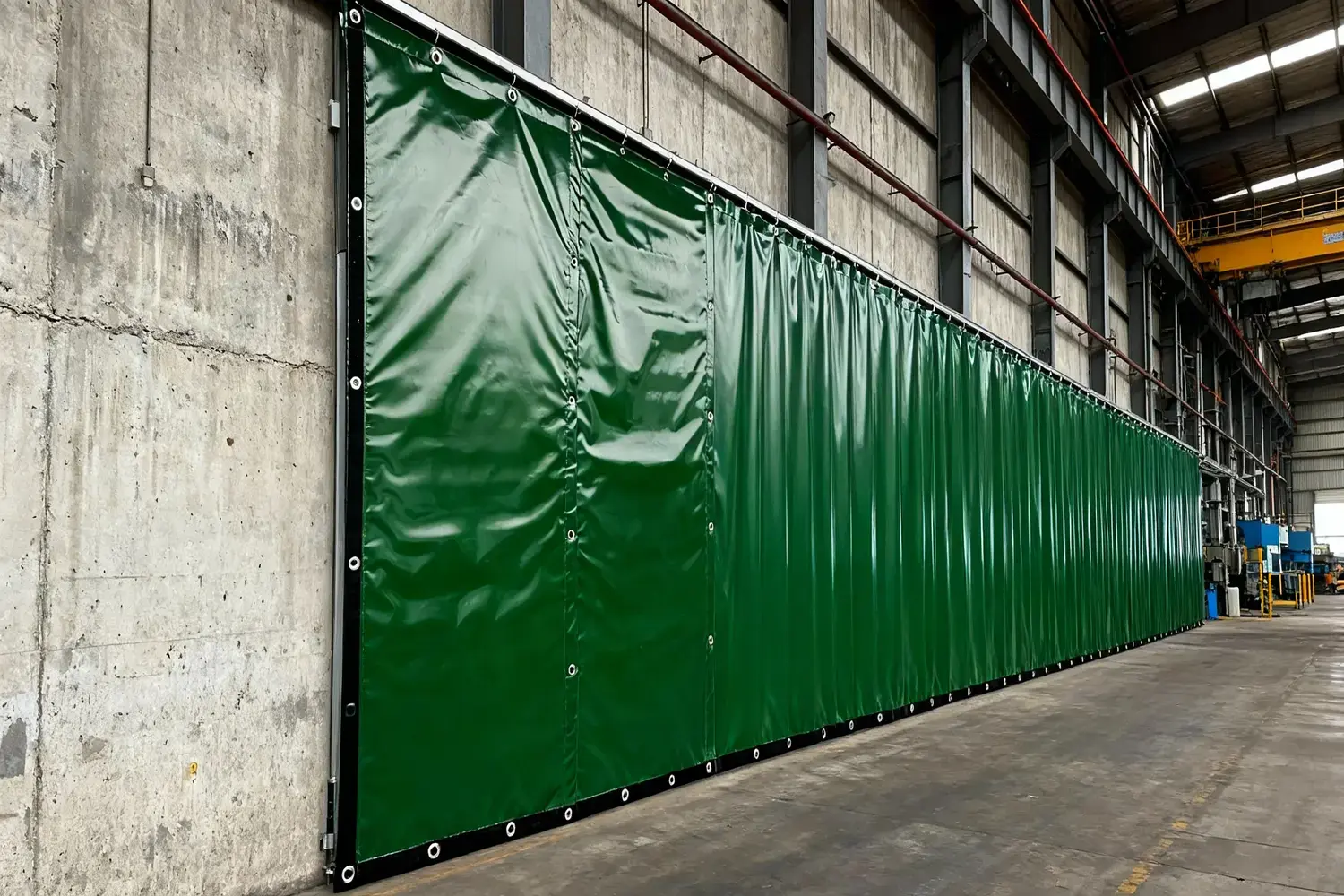
Sound-absorbing industrial curtains

Sound-absorbing industrial curtains are a flexible and effective solution for reducing noise directly at the source, whether it involves machinery, workstations, or larger spaces where traditional walls are impractical.

Soundproof doors

Soundproofing and sealing a door or doors, including the door frame and threshold, can make a big difference in reducing sound transmission between rooms or between indoor and outdoor environments.

Soundproof windows

There are various methods for achieving sound insulation and sound absorption in windows, including the use of sound-insulating glass, weatherstripping, and the installation of sound-absorbing materials around the window.

Tightness is key

Here, we’ll go over various solutions for airtightness. Airtightness is crucial for achieving effective sound insulation and preventing sound leakage. Gaps in the construction can create a weak link through which sound can penetrate.

*Free shipping

Free shipping to a pickup location

5-year warranty

5-year product warranty

Fast delivery

Usually ships the same day

How to Soundproof Mobile Offices and Construction Cabins

Mobile offices and work sheds are practical solutions for construction sites, temporary workspaces, or rental purposes. However, their simple construction often leaves them poorly equipped to handle noise from machinery, traffic, weather, and other environmental factors. With the right soundproofing, you can create a quieter and more functional work environment—no matter where the shed is located.

Why is sound insulation important in mobile work environments?

The noise level in or around a work shed can be both distracting and harmful to health. Prolonged exposure to noise affects concentration, communication, and well-being. By soundproofing walls, ceilings, floors, and doors, you can significantly reduce disruptive noise from the surroundings while improving acoustic comfort inside the shed.

Soundproof walls and ceilings with heavy materials

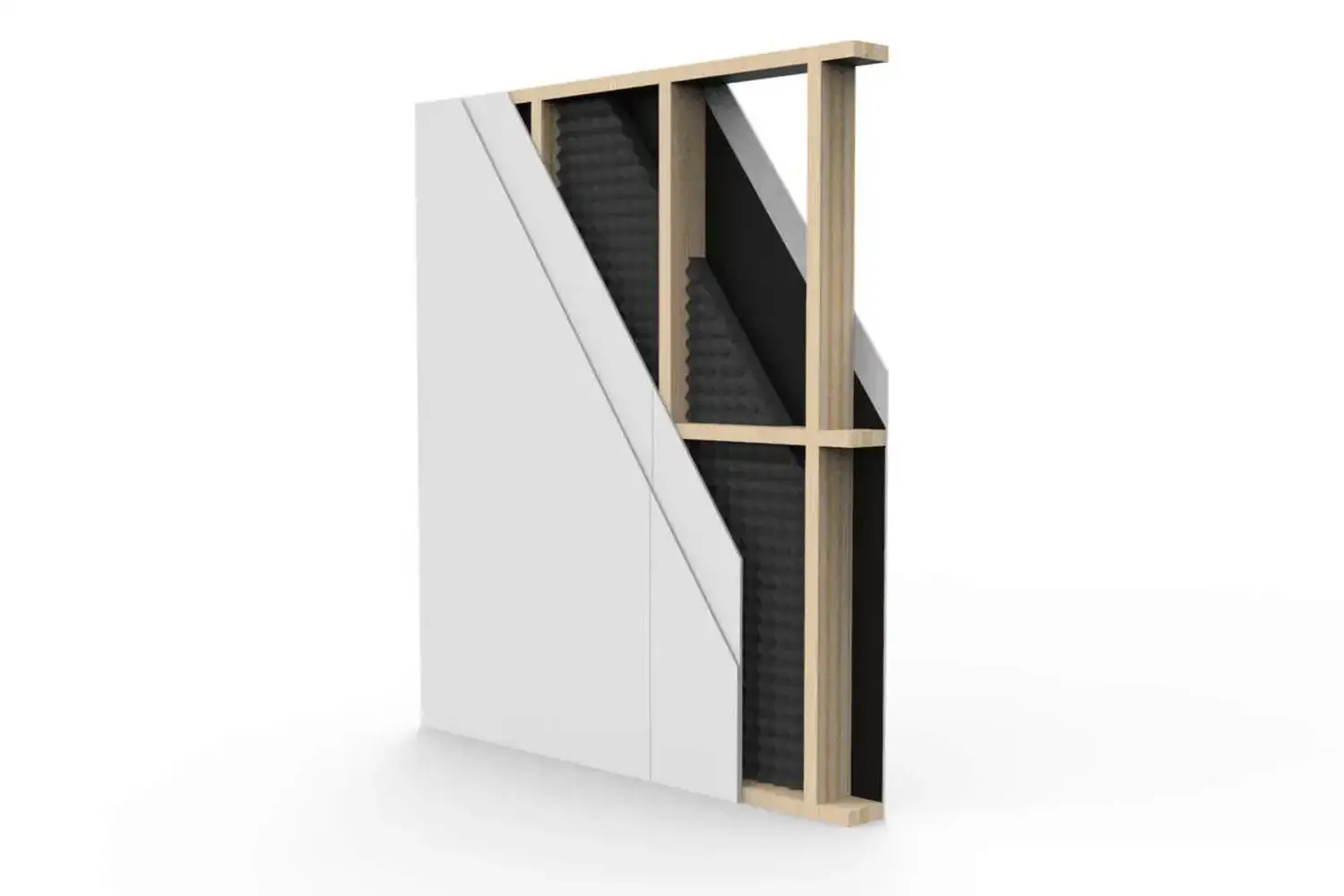
The thin walls of mobile offices easily allow both low-frequency and high-frequency sound to pass through. A proven method is to combine SilentDirect MLV, which effectively blocks airborne sound, with vibration-damping materials such as SilentDirect Neo or SilentDirect Polaric. By first covering the inside of the walls or ceiling with Neo or Polaric and then installing MLV on the outside, you create a multi-layer system that effectively dampens both structure-borne and airborne sound.

Floor insulation against sound from below

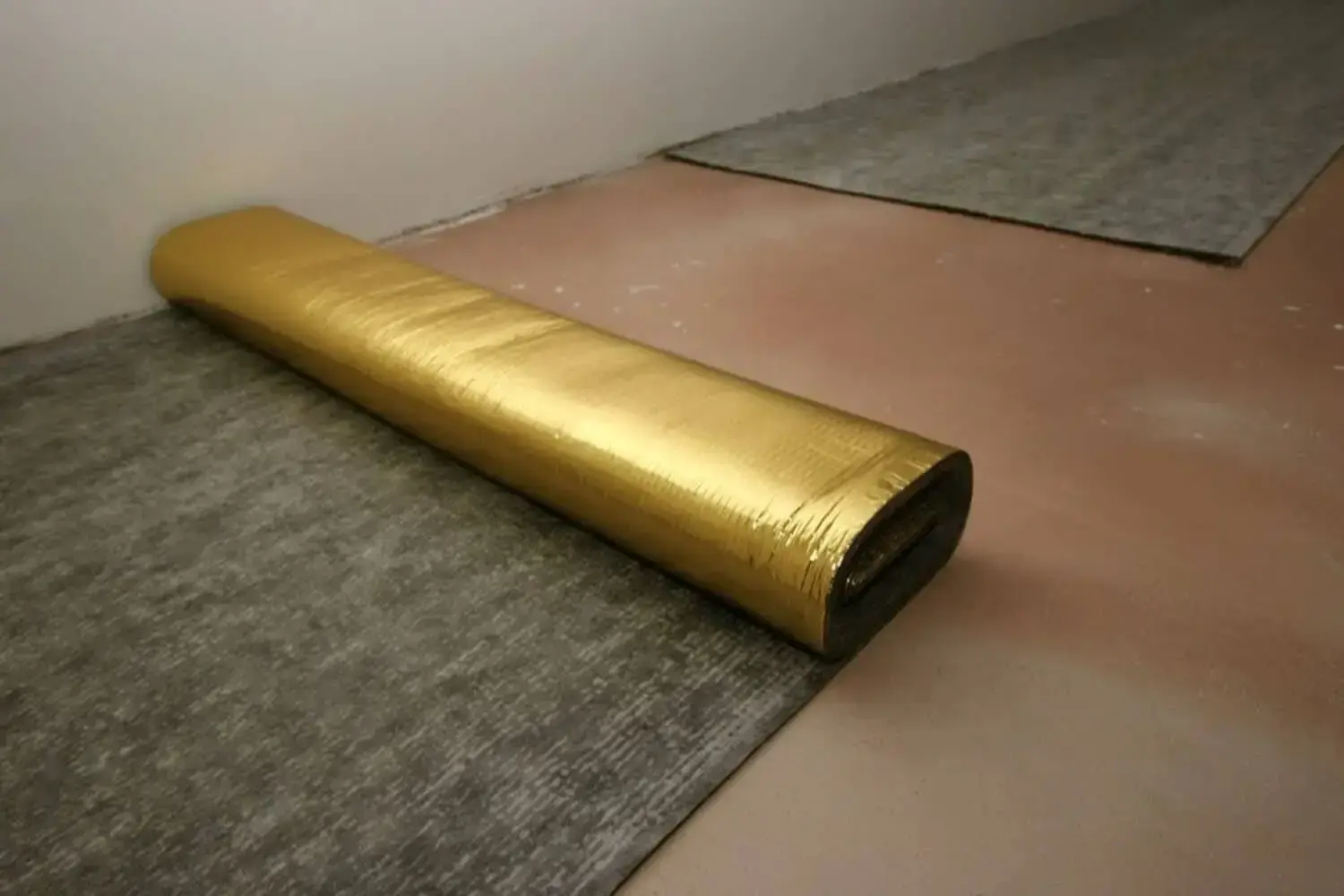
Work sheds are often raised on pedestals or stand on hard surfaces, which makes the floor particularly susceptible to vibrations and noise from the ground. Here, SilentDirect Neo or Polaric are excellent choices for reducing structure-borne noise, while SilentDirect MLV acts as a barrier against airborne noise. The combination creates a stable, quiet floor that provides greater comfort throughout the workday.

Seal doors and windows with the right materials

Doors and windows are usually the weakest points in a work shed from a sound perspective. By using SilentDirect Seal—a sealing strip made of vibration-damping NBR rubber—you can effectively prevent sound from entering through cracks and gaps. Feel free to complement this with sound-absorbing curtains or mobile soundproofing screens if you want to further enhance the effect.

Sound absorption for better indoor acoustics

In addition to blocking outside noise, you also need to manage sound reflections inside the shed. Bare walls and ceilings in small spaces easily create reverberation and a tinny sound. Here, sound absorbers like SilentDirect PES Wall, PES Ceiling, or SilentDirect Egg work very well. These products are mounted on walls or ceilings and make a big difference for a quiet work environment, conversation clarity, and concentration.

Combine sound insulation with workplace improvements

A well-insulated work shed is not only quieter but also more energy-efficient. Several of the materials used for sound insulation—such as SilentDirect MLV, Neo, and Polaric—also provide thermal insulation. This means more consistent temperatures, lower heating costs, and greater comfort on cold or hot days.

Create a quiet and productive workspace—wherever you are

With the right sound insulation, a simple work shed can be transformed into a functional workspace where you can focus, talk undisturbed, and work efficiently. Whether the shed is used as an office, meeting room, break room, or on-site office, there are solutions that make a big difference. A quieter work environment leads to happier employees—and better results.