












• Free shipping
  • 5-year warranty
  • Fast delivery

Soundproofing against neighbors – effective solutions for a quieter home

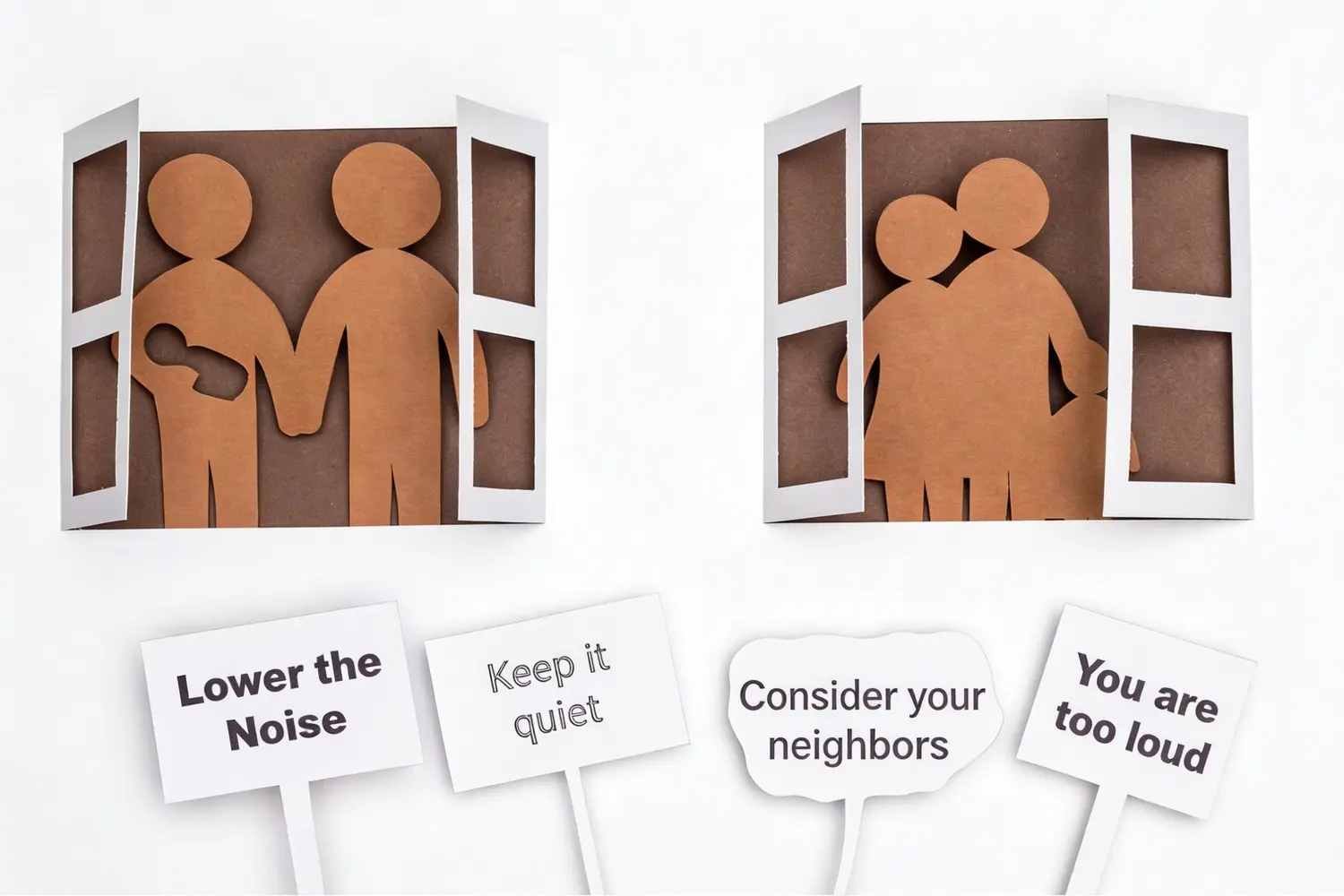
Noisy neighbors are one of the most common problems in both apartments and townhouses.
Footsteps from above, voices through walls, music late at night, or vibrations from everyday activities can quickly affect sleep, concentration, and quality of life. The noise is often perceived as particularly stressful because it is not only heard—it is felt, as vibrations travel through walls, floors, and ceilings.

Soundproofing against neighbors is not about a single solution, but about understanding how sound spreads in buildings.

Airborne sound —such as speech and music—travels through walls and unsealed structures.
Structure-borne sound —such as footsteps, furniture being moved, or washing machines vibrating—is conducted through the building structure itself.

To achieve clear and lasting results, measures are therefore required that tackle the sound at its source, along its path of propagation, and at the points where it leaks through.

In this guide, we go through proven methods for reducing disturbing neighbor noise in an effective and sustainable way.
You will learn how to identify the type of noise that affects you most and which building components are most critical.
And how the right combination of sound insulation, vibration damping, and sound absorption can make a noticeable difference in everyday life.

Whether you live in an older property with thin walls or in a newer house where sound still gets through.
With the right strategy, you can create a quieter, more private, and comfortable home—where noise from your neighbors no longer controls your everyday life.

Recommended products

Here are some advantages of soundproofing against neighbors

Reduced disturbance from surrounding noise
Sound insulation effectively reduces noise from neighbors, such as voices, music, TV sound, and footsteps.
By blocking and dampening the sound entering the home, a quieter and more comfortable home environment is created, especially in apartment buildings and townhouses.

Better sleep and recovery
Disturbing noises during the evenings and nights can affect both sleep quality and recovery.
With the right sound insulation, the risk of waking up and stress is reduced, contributing to better health, increased energy, and improved well-being.

Increased privacy and personal space
Sound insulation works both ways; it not only dampens noise for you or your neighbor—you can both enjoy the difference.
By reducing sound transmission between homes, you gain increased privacy and don't have to worry about your own conversations, music, or activities being heard by your neighbors.

Improved living comfort
When noise is reduced, your home feels more harmonious and pleasant.
Less noise stress makes it easier to relax, work from home, or socialize in peace and quiet without being affected by your surroundings.

Better working environment at home
As more people work or study from home, the sound environment is becoming increasingly important.
Sound insulation from neighbors creates a stable and quiet working environment where concentration improves and productivity increases.

Higher perceived home value
A quiet and well-insulated home is often perceived as more attractive. Just by walking around and listening during a sale, you can sometimes hear the quality of the sound insulation.
A home with good sound insulation is perceived as quiet and comfortable, creating a feeling of premium living.
Good sound comfort can be a decisive factor when selling or renting and also contributes to a higher perceived value of the home.

Long-term and sustainable solution
By investing in sound insulation, you create a sustainable improvement to your home.
Properly executed measures provide long-lasting effects without requiring ongoing maintenance, making sound insulation a cost-effective solution that lasts over time.

Step-by-step: Soundproofing against neighbors – reduce disturbing noise in your home

Noisy neighbors are a common problem in both apartments and townhouses.
Voices through the wall, music late at night, or footsteps from above can quickly affect sleep, work peace, and well-being.
To achieve a lasting result, the sound needs to be stopped where it penetrates—not just superficially dampened.

Here is a comprehensive step-by-step guide showing you how to effectively soundproof against neighbors.
Learn how to combine barriers, vibration damping, absorption, and sealing.

Step 1: Identify the type of noise and direction that is disturbing you

Start by listening and determining what type of noise dominates. Different noises require different solutions.

Voices, TV, or music are usually airborne sounds that travel through walls, doors, and gaps.
Footsteps, thuds, and bangs are structure-borne noise that spreads through the building's construction.
A hollow or amplified sound often indicates resonance in thin walls or surface layers.

Where is the sound coming from? Which neighbor? How is the sound traveling?

By understanding the type of noise you are dealing with and the direction in which it is travelling, it becomes easier to choose the right measures in the next step.

Step 2: Seal doors, gaps, and penetrations

Small openings are often the main reason for sound leakage between homes. Sound behaves like air – if air can pass through, sound can also pass through.

Seal around door frames and thresholds with SilentDirect Seal.
Check for gaps around baseboards, crown moldings, and corners.
– Seal around pipes, electrical outlets, and penetrations where the wall is broken.

This step often has an immediate effect, especially against voices and high-frequency sounds.

Step 3: Dampen structure-borne noise and vibrations via floors, walls, and ceilings

Impact noise and vibrations are often transmitted through floors, joists, and floorboards. To reduce this, the vibrations need to be dampened at the contact surfaces.

– Lay SilentDirect Polaric as the first layer against the floor, wall, or ceiling to reduce vibration transmission.
– Combine with SilentDirect Neo on top for a softer and more relaxing intermediate layer.
– On joists, install Seal 50/4mm on all sides to prevent propagation between materials.
– For point loads, SilentDirect Dampio can be used locally, for example under the washing machine.

This reduces the amount of sound transmitted to and from adjacent rooms and dwellings.

Step 4: Stop airborne sound with a heavy sound barrier

If the sound comes straight through the wall, there is often a lack of mass in the construction. To stop airborne sound, a heavy barrier layer is therefore required.

Install SilentDirect MLV on the wall or in a built-up structure.
We recommend installing it on studs covered with Seal 50/4 mm to reduce vibration transfer and create a membrane effect.
(The membrane effect means that MLV is allowed to vibrate when the sound hits the material, which helps to further convert and dissipate the sound energy.

– Make sure to cover as large, contiguous areas as possible.
– Seal all joints carefully with SilentDirect Seal.

MLV acts as an effective sound barrier that significantly reduces the transmission of all airborne sound, such as speech, TV, and music.

Step 5: Reduce resonance with absorption behind the barrier

When sound is stopped by a barrier, it can otherwise bounce around in the structure and find its way out through other routes, or in the worst case, be amplified in the structure.
Absorption is therefore an important complement.

Install SilentDirect Egg behind the barrier as thickly as possible where space allows.
If space is limited, SilentDirect Neo can be used as a thinner alternative.

This step softens the sound and reduces resonance that could otherwise amplify the noise.

Step 6: Soundproof the room for greater comfort

Even if you effectively block sound from neighbors, the room can still feel noisy and stressful if the sound bounces between hard surfaces.
Reverberation causes sound to linger longer and feel both louder and more stressful than it actually is.
By reducing reverberation in the room, the sound level is perceived as lower and significantly softer.

Install SilentDirect PES on walls or ceilings to absorb reflected sound.
(We recommend aiming for 20-30% of the room's square footage to achieve good results).

– For a more aesthetic solution that blends in with the interior, SilentDirect PES Fabric is an excellent alternative.

This step will significantly improve the comfort of your home and make it easier to relax, work undisturbed, and sleep better.

Step 7: Test, adjust, and fine-tune

Once the measures are in place, listen again. Stand in the same places as before and note the difference.

Has the noise level decreased?
– Does the sound seem softer?
Are there still points where sound is leaking through?

Often, small adjustments, such as sealing an extra gap or adding localised absorption, are enough to achieve the best results.

Summary – how to create a quieter home

Effective sound insulation against neighbors involves combining several measures:
Sealing sound leaks, heavy barriers against airborne sound, vibration damping against structure-borne sound, and sound absorption for better comfort.

When you break the sound path at every stage, you get a home that feels calmer, more private, and significantly more comfortable to be in
– whether you want to sleep, work, or just relax.

Products that are good for soundproofing against neighbors

Effective sound insulation often requires a combination of solutions that block sound, stop vibrations, and absorb reflected sound.
Below is a list of products that are particularly suitable for the most common sound problems when you want to reduce disturbing neighbor noise.

SilentDirect MLV – sound barrier for walls and structures

SilentDirect MLV (Mass Loaded Vinyl) is a heavy and flexible sound barrier that slows down airborne sound.
The product works very well in walls where neighbor noise penetrates, such as TV sound or voices through thin boards and structures.
MLV is installed behind the wall, on boards, panels, or studs, and effectively reduces sound transmission by adding mass to the wall.

SilentDirect Egg – sound absorber for resonance and reverberation

SilentDirect Egg is a sound absorber with a patterned surface that effectively captures sound energy and reduces resonance in cavities or behind barriers.
Egg is excellent for use behind MLV, in partition walls or in rooms that echo to dampen reflected sound and create a softer sound image.

SilentDirect Neo – smooth vibration damper and absorbent layer

SilentDirect Neo is a vibration-damping and sound-absorbing mat made of NBR rubber that works both as a separate absorber and as a complement to other materials. Neo is perfect where space is limited or where you want to create a soft contact between boards, panels, or fastenings to reduce structure-borne noise and vibrations.

SilentDirect Polaric – damping of structure-borne sound and vibrations

SilentDirect Polaric is a heavy damping mat used to break resonance in floors, ceilings, and larger surfaces where vibrations spread.
The product is effective when you want to reduce structure-borne noise, such as footsteps or thumping from the apartment above, by absorbing and dampening vibrations at the source.

SilentDirect Dampio – point vibration damping

SilentDirect Dampio is designed to dampen point vibrations where sound propagates through contact points, such as at feet and fastenings.
Dampio is often used together with Neo or Polaric to optimize damping at specific contact points.

SilentDirect Seal – elastic sealing strip for sound leaks

SilentDirect Seal is a flexible rubber sealing strip used to seal gaps, joints, and openings where sound can leak out.
By using Seal around door frames, window joints, and penetrations, you reduce sound leakage and enhance the effect of other sound-insulating materials.

SilentDirect PES / PES Fabric – acoustic absorbers for rooms

SilentDirect PES and SilentDirect PES Fabric are sound absorbers for walls or ceilings that reduce reverberation and make the sound softer and more pleasant in a room.
These products are often used in more sensitive rooms where you want to create a quieter living environment, such as living rooms, kitchens, or bedrooms.

By combining these products in a customized solution, you get effective sound insulation that both reduces disturbing neighbor noise and increases comfort in your home.

Did you know that...

...noise from neighbors rarely travels the way you think it does?
In many cases, sound does not travel straight through the wall, but spreads around via the floor, ceiling, and connecting structures.
This means that you can soundproof an entire wall – and still hear your neighbor, because the sound has taken a detour through the building's frame.

...a thin wall can start to act like a speaker?
When sound hits a light structure, the wall can start to vibrate and amplify the sound instead of stopping it.
This is why certain voices or bass sounds seem louder than they actually are – the wall helps to amplify the sound.

...low-frequency sounds, such as bass and footsteps, can travel several floors in a building?
These frequencies spread effectively through concrete, wooden floors, and steel, which means you can be disturbed by neighbors who don't even live next door to you.

...small gaps are one of the most common causes of failed sound insulation?
A gap of just a few millimeters around a door, pipe, or electrical outlet can let through as much sound as a much larger open area.
Sound behaves just like water – if it finds a way out, it will take it.

...the room can feel quieter without the outside noise actually decreasing?
When the reverberation in the room is shortened, the sound level is perceived as lower and less stressful, even if the decibel level from the neighbor is the same.
This is why sound absorption plays such an important role in how quiet a room feels.

So next time sound insulation doesn't have the desired effect, remember that sound is not just about volume, but also about how it spreads, reflects, and amplifies.
It is often the combination of small details that determines whether a home feels quiet or noisy.

*Free shipping

Free shipping to agent

5-year warranty

5-year product warranty

Fast delivery

Usually ships the same day

Selected articles on "Soundproofing against neighbors"

The difference between sound insulation and sound absorption?

Here we explain the difference between sound insulation and sound absorption so that you can more easily identify your problem and then find a solution.

How to soundproof a room – Complete guide

Here we go through step by step how to soundproof your room in the best way possible – and what details you absolutely must not miss for a really good result.

How do you soundproof a room with sound absorbers?

How should you soundproof a room? Where should you start soundproofing? On a wall, the ceiling? Here you will find the answer to how best to soundproof and dampen sound in a room.

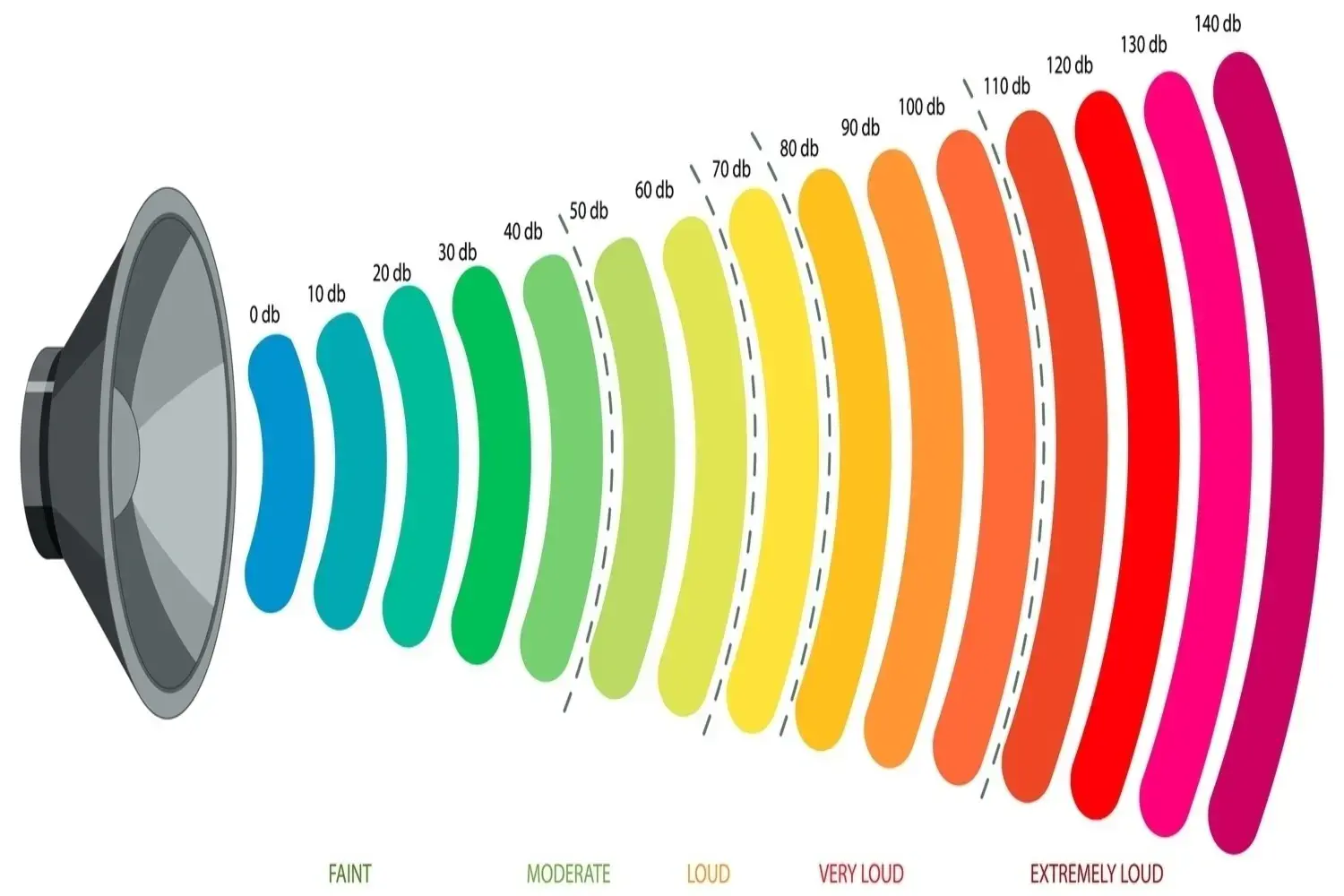
The perception of decibel (dB) reduction and sound

Here we explain in simple terms how different levels of decibel reduction are perceived in practice and what the difference means for you and your sound environment.

Sound attenuation at different frequencies – a practical guide

Understand the difference between the various frequencies, airborne sound, low-frequency vibrations, and how mid-high-frequency sounds are best dampened.

How can you reduce structure-borne noise and vibrations?

Structure-borne noise is sound that is transmitted through vibrations from structures such as walls, floors, and ceilings rather than through the air.

How do you soundproof noise from ventilation ducts?

Ventilation ducts are a common and annoying problem, as they usually connect all rooms. We have the solution!

How to create a soundproof garden

A garden should be a place for family and friends to relax without lots of disturbing noise. Here's the solution!

Soundproof and sound-absorb a living room

Create a balanced and comfortable sound environment in your living room that enhances your overall well-being and improves your quality of life.

Soundproof and sound-absorb a bedroom

Noise from neighbors and traffic can disturb your sleep and affect your well-being. Soundproof your bedroom so you can finally sleep without these disturbances.

Soundproof and sound-absorb a kitchen

Soundproofing the kitchen in a house or apartment can offer several benefits for overall quality of life. Enjoy a quieter and more comfortable environment in the kitchen.

Soundproof and sound-absorb a shower room.

Bathrooms, shower rooms, and toilets are among the most sound-reflective environments in the home. Learn how to best soundproof and absorb sound here.

Soundproofing against neighbors – solutions for disturbing noise

Soundproofing your home against neighbors is a common need, whether you live in an apartment, townhouse, or house with thin walls. Unwanted noise from adjacent homes – such as conversations, footsteps, music, televisions, or doors slamming – can cause stress and affect your daily life. With the right materials and methods, you can effectively soundproof walls, ceilings, and floors to achieve peace and quiet in your own home.

Understand the difference: soundproofing vs. sound absorption

It is important to distinguish between sound insulation and sound absorption. Sound insulation is about blocking sound from passing between rooms or homes – in other words, shutting out or in sound. Sound absorption, on the other hand, is used to improve the sound environment in a room, for example to reduce echo and reverberation. Products such as SilentDirect PES Ceiling and PES Ceiling Fabric are excellent for absorbing sound within a room, but they do not insulate against neighbors. This text focuses on sound insulation – that is, preventing sound from passing between different spaces.

Soundproof the walls against neighbors

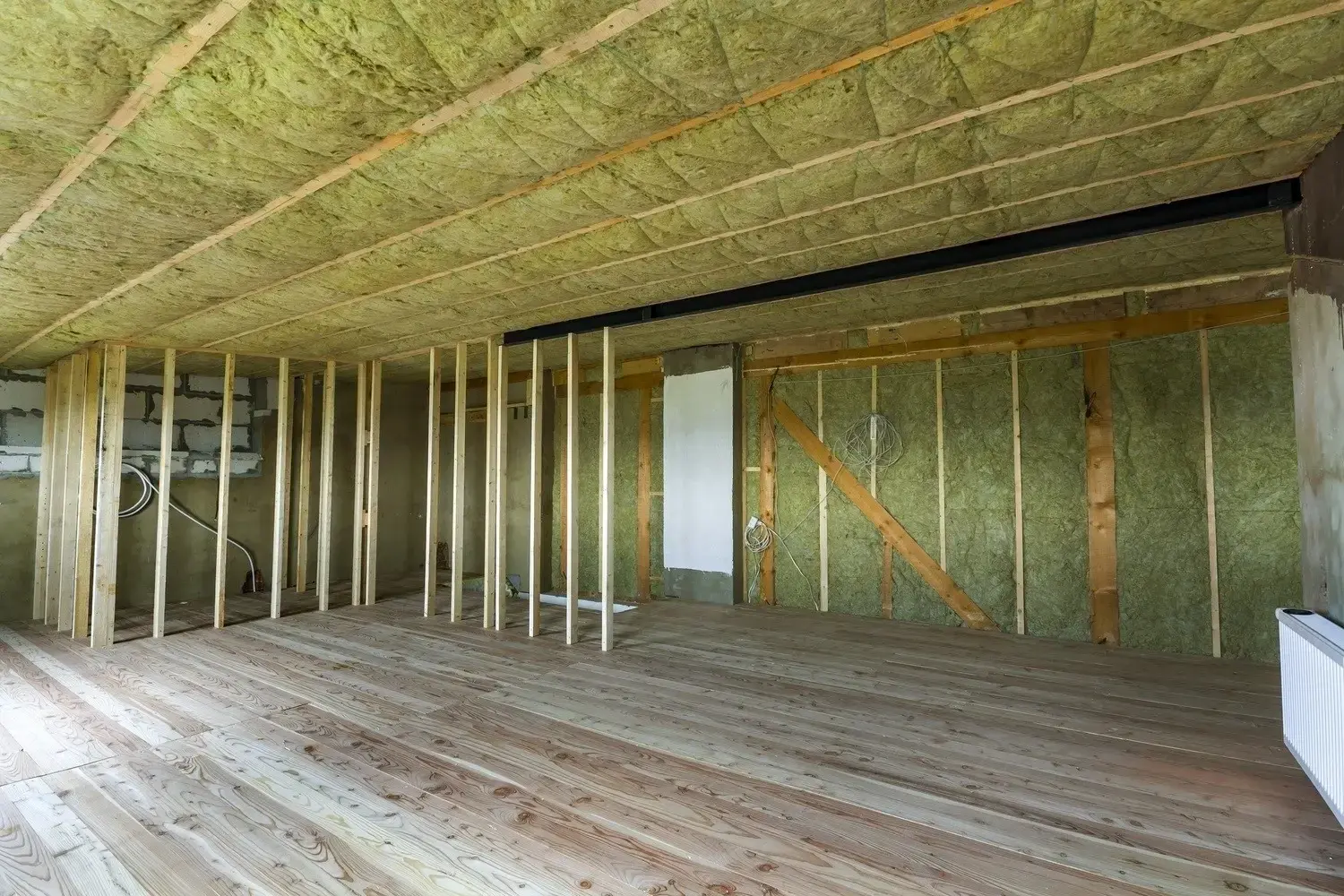
Walls between homes often allow conversations, TV sound, or music to pass through. The most effective solution is to build a new wall layer with a free-standing framework that is not directly connected to the existing wall. To maximize the effect, use SilentDirect Seal sealing strips around the studs, SilentDirect Egg inside the structure for absorption, SilentDirect MLV as a sound barrier, and two to three layers of plasterboard or OSB/plasterboard in the surface layer. SilentDirect Neo or Polaric can also be added if you want to further reduce vibrations.

Soundproof the ceiling against noise from above

If you are disturbed by neighbors above, for example by footsteps, furniture being moved, or children jumping, the ceiling should be soundproofed with a new ceiling mounted with vibration-damping rails. SilentDirect MLV is used as a sound barrier and is often combined with SilentDirect Neo or Polaric to dampen structure-borne sound. The construction is completed with at least two layers of plasterboard. SilentDirect Seal should always be used along edges and joints to minimize sound leakage. A floating construction is often the most effective solution.

Soundproof the floor against noise from below

If you experience noise from the floor below – such as footsteps, doors slamming or conversations – the floor needs to be insulated against both structure-borne sound and airborne sound. SilentDirect Neo or SilentDirect Polaric are particularly effective at dampening vibrations and footfall noise, as they absorb the mechanical movements that would otherwise be transmitted through the floor construction. To also block airborne sound, such as voices or music, SilentDirect MLV is used on top of the vibration-damping layer. By combining, for example, Neo and MLV, or Polaric and MLV, you get complete protection against both structure-borne and airborne sound. The result is a quieter and more pleasant sound environment without disturbances from the floor below.

Don't forget doors, electrical outlets, and penetrations

Sound often finds its way through the smallest gaps. Therefore, seal all cavities in the walls, including around electrical outlets and pipe penetrations, with SilentDirect Seal. Doors should also be reviewed – switch to solid door leaves, use sealing strips around the frame, and install SilentDirect Seal Door under the door to reduce sound leakage through the gap.

Complement with sound absorbers for greater comfort

Although sound insulation is the focus when dealing with noisy neighbors, it may be wise to supplement with sound absorbers inside the room. This reduces sound reflections and creates a calmer acoustic environment. SilentDirect PES Ceiling and PES Wall are perfect for ceilings and walls, and help reduce reverberation – especially in rooms with hard surfaces such as parquet, plaster, and tile.

Create a quieter home – invest in the right materials

Soundproofing against neighbors requires careful planning, but the results can be life-changing. By combining vibration-damping materials such as SilentDirect Neo and Polaric with sound-blocking materials such as SilentDirect MLV and sealing strips such as SilentDirect Seal, you get a comprehensive solution for walls, ceilings, and floors. If you add sound absorbers to the room, you get both silence and better sound comfort—an investment in both health and well-being.