






Soundproofing of machinery and equipment – blocks sound between rooms
Control noise and sound transmission from technical equipment in industrial environments
In industrial environments, machines and technical equipment are often the primary cause of disruptive noise that spreads between different spaces. Production machinery, fans, pumps, and technical installations generate both airborne sound and vibrations that can travel through the building’s structure. As a result, the noise is not only heard near the source but also in adjacent rooms, offices, or staff areas. Soundproofing of machinery and equipment aims to limit this sound transmission and create a clearer separation between different parts of the facility.
What is meant by machinery and equipment?
In an industrial setting, machinery and equipment refer to technical installations that are not part of the building’s load-bearing structure but generate sound or vibrations during operation. This can include both stationary and mobile equipment used continuously or intermittently. Unlike walls, floors, and ceilings, these are active noise sources that can affect multiple spaces simultaneously. Sound insulation here focuses on reducing how sound propagates throughout the building, not on altering the room’s acoustics.
Common noise sources in industrial environments
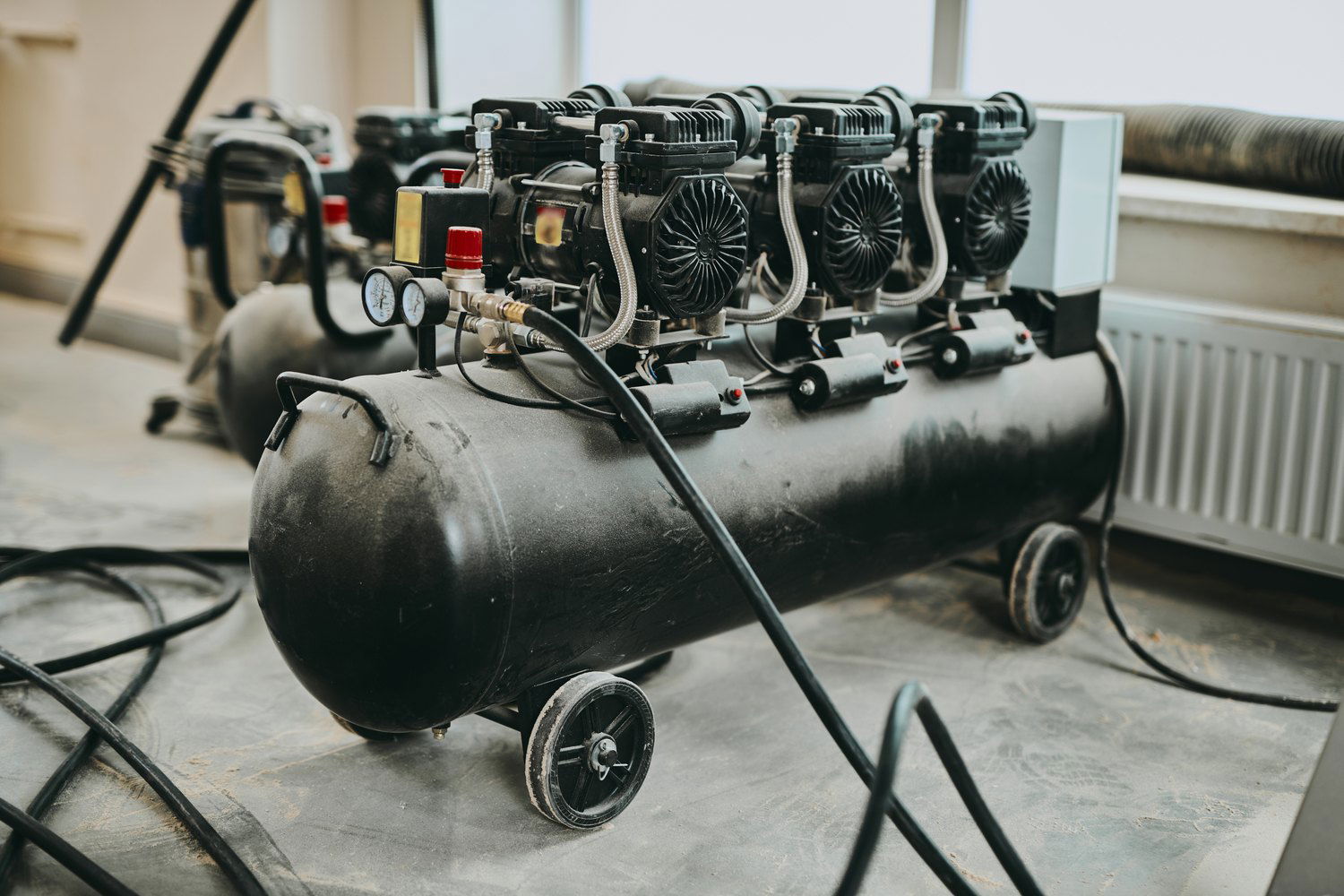
Typical problems arise from production machinery, ventilation systems, fans, compressors, and pumps. Noise transmitted through ducts, pipes, and service shafts can also be perceived as disruptive in other parts of the facility. Equipment in continuous operation often generates low-frequency noise and recurring vibrations that are amplified as they travel through the building’s structure.
Other common sources include cooling and heating systems, hydraulic units, transport equipment, and technical installations in machine rooms or service areas. What these have in common is that the sound often spreads through floors, walls, and mountings, meaning the problem can be perceived far from the actual sound source.
Why does sound from machinery propagate so effectively?
Machines generate not only airborne sound but also vibrations that propagate through the building’s structure. When vibrations are transmitted via floors, walls, pipes, or ducts, structure-borne noise occurs that can be amplified in adjacent structures. This makes machine noise particularly difficult to manage without targeted measures that address sound transmission at the source.
Relationship to sound absorption and vibration damping
Sound insulation of machinery should not be confused with sound absorption, which is used to reduce echoes and reverberation within a room. Sound-absorbing solutions on walls, ceilings, curtains, or room dividers improve the acoustic environment within the same space but do not block sound between rooms. Vibration damping, in turn, focuses on reducing the vibrations from the machine itself. In industrial environments, these measures are often combined to achieve the best possible overall result.
Principles of Machine Sound Insulation
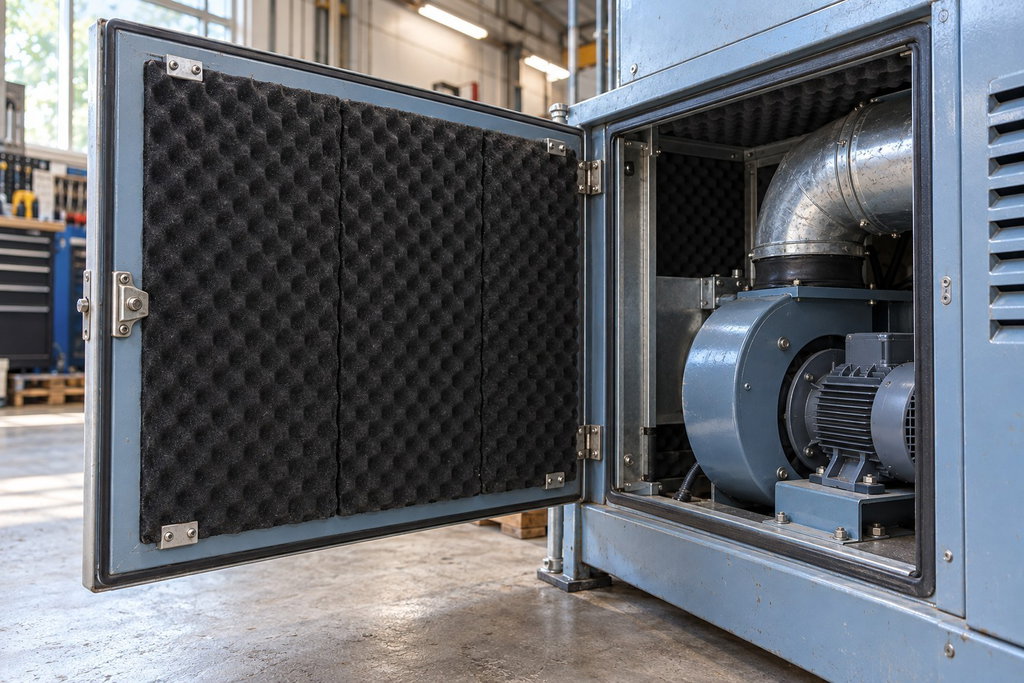
Effective sound insulation of machines and equipment is based on limiting the path of sound out into the building. This may involve reducing direct contact between the machine and the structure, shielding the noise source, or preventing sound from spreading through adjacent structures. The goal is to stop the sound before it reaches other areas, rather than trying to address the consequences further away.
Well-considered advice for best results
For the best results, each machine should be assessed based on its location, how often it is used, and how sound propagates through the building. A common mistake is to focus solely on the room where the machine is located, even though the noise is often experienced in entirely different parts of the facility. By treating machines and equipment as active noise sources and applying the correct insulation principles, a more controlled and sustainable acoustic environment is created.
Sound insulation of machinery and equipment is therefore a key measure for stopping disruptive noise between rooms and creating better peace and quiet, safety, and functionality in industrial environments.