





Soundproofing doors and windows – blocking noise in industrial environments
Reduce sound leakage through gates, doors, and windows in industrial facilities
In industrial environments, doors, gates, and windows are often critical weak points when it comes to sound insulation. Even if walls, floors, and ceilings are designed to handle noise, sound can easily pass through movable building components and gaps. Machine noise, production, internal transport, and operational noise can thus spread between work zones, to adjacent premises, or out into the surrounding area. Soundproofing doors and windows is therefore an important measure to block airborne sound and create better privacy in industrial facilities.
Why do doors and windows let sound through?
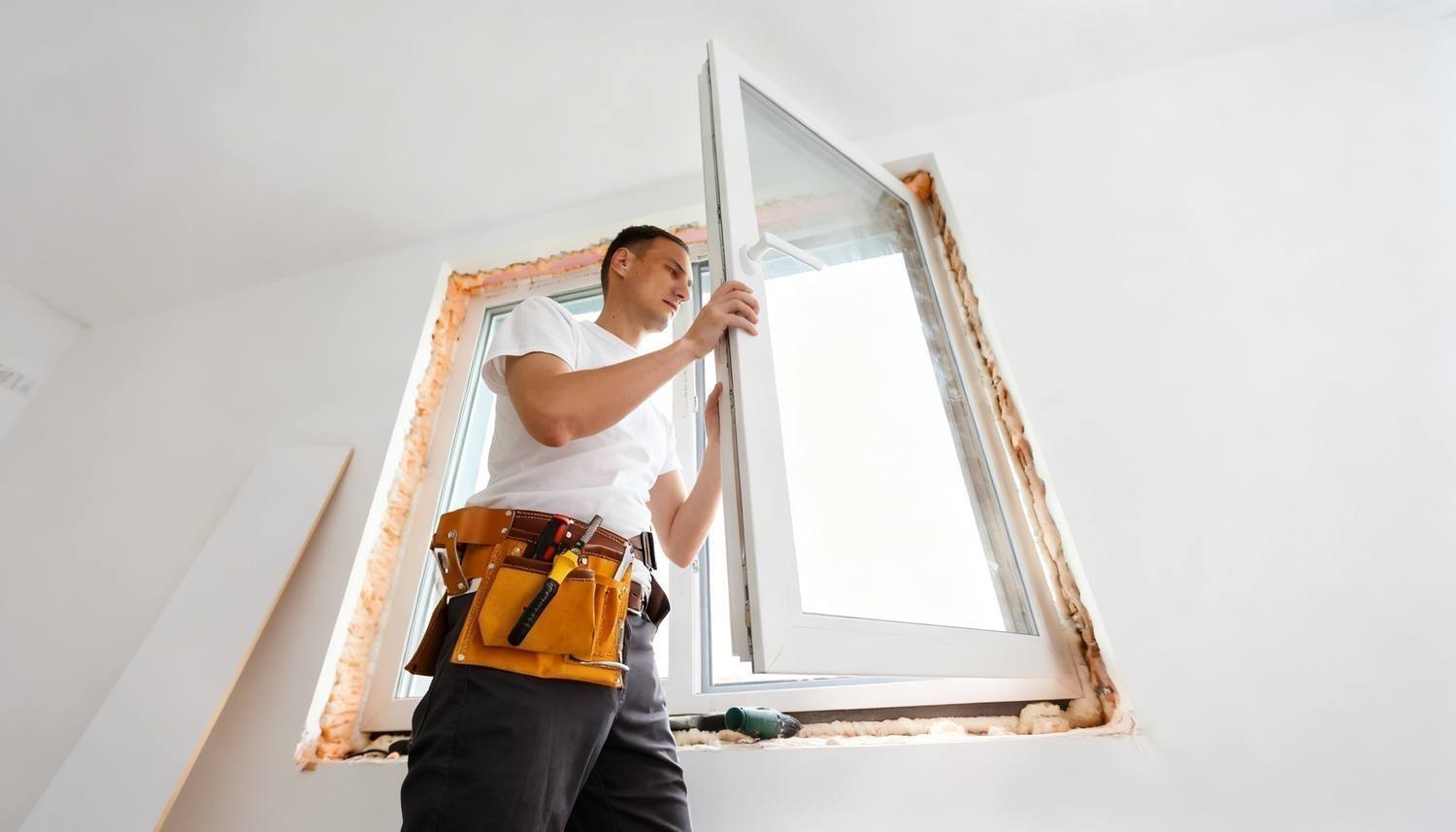
Doors and windows are movable structures that often have lower weight, poorer sealing, and more penetrations than other building components. Sound can pass both through the structure itself and through gaps around frames, thresholds, and fastenings. In industrial environments, the problem is exacerbated by frequent use, wear and tear, and vibrations, meaning that even small gaps can have a significant impact on noise levels.
Common problems in industrial environments
Typical problems include sound leaking between production areas, disruptive noise spreading to offices or staff areas, and sound escaping through doors and windows into the surrounding environment. Noise between different process zones can also negatively affect the work environment, safety, and communication. Since sound always takes the path of least resistance, a single leaky door or a poorly sealed window is often enough to compromise the entire sound insulation.
How does sound insulation for doors and windows work?
Sound insulation for doors and windows involves limiting the passage of sound through increased tightness, improved construction, and reduced air leakage. The focus is on stopping airborne sound, not on changing the room’s acoustics or reverberation.
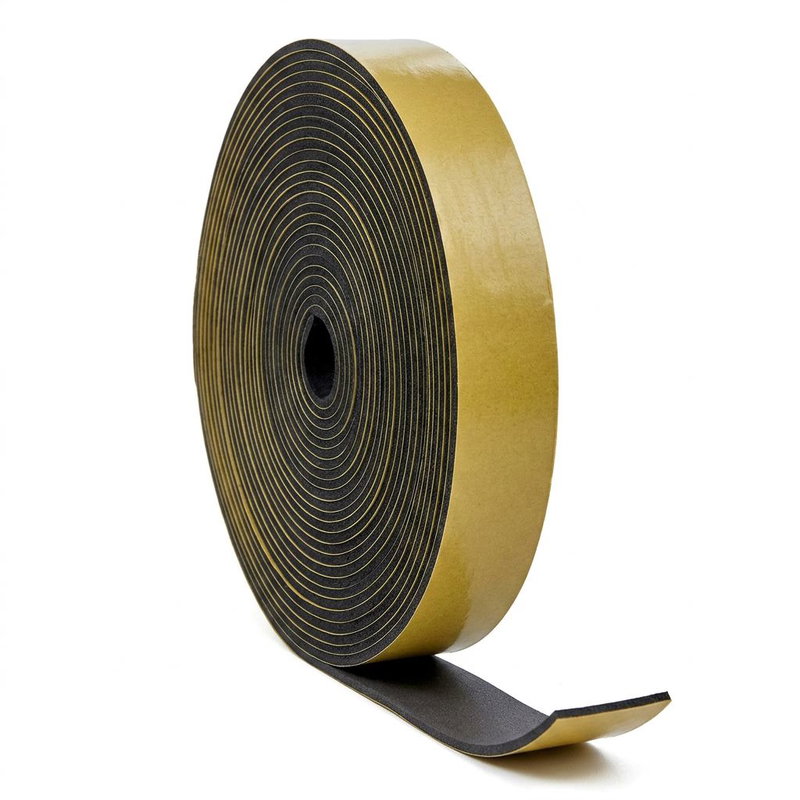
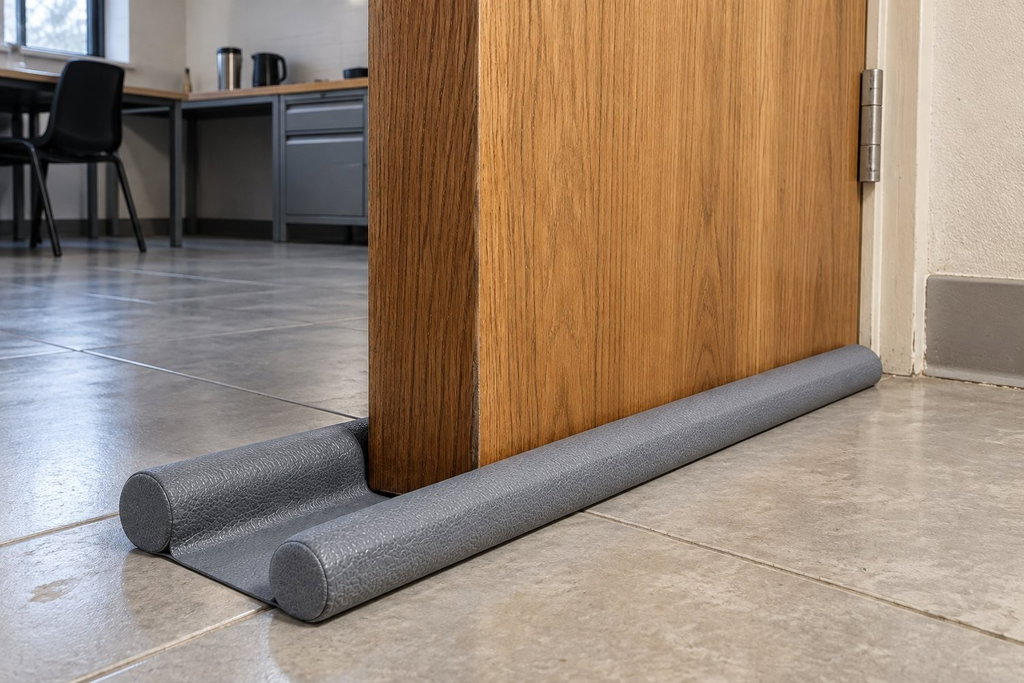
Sealing gaps and joints
Gaps around frames, thresholds, and penetrations are often the main cause of sound leakage.
Improved insulation performance
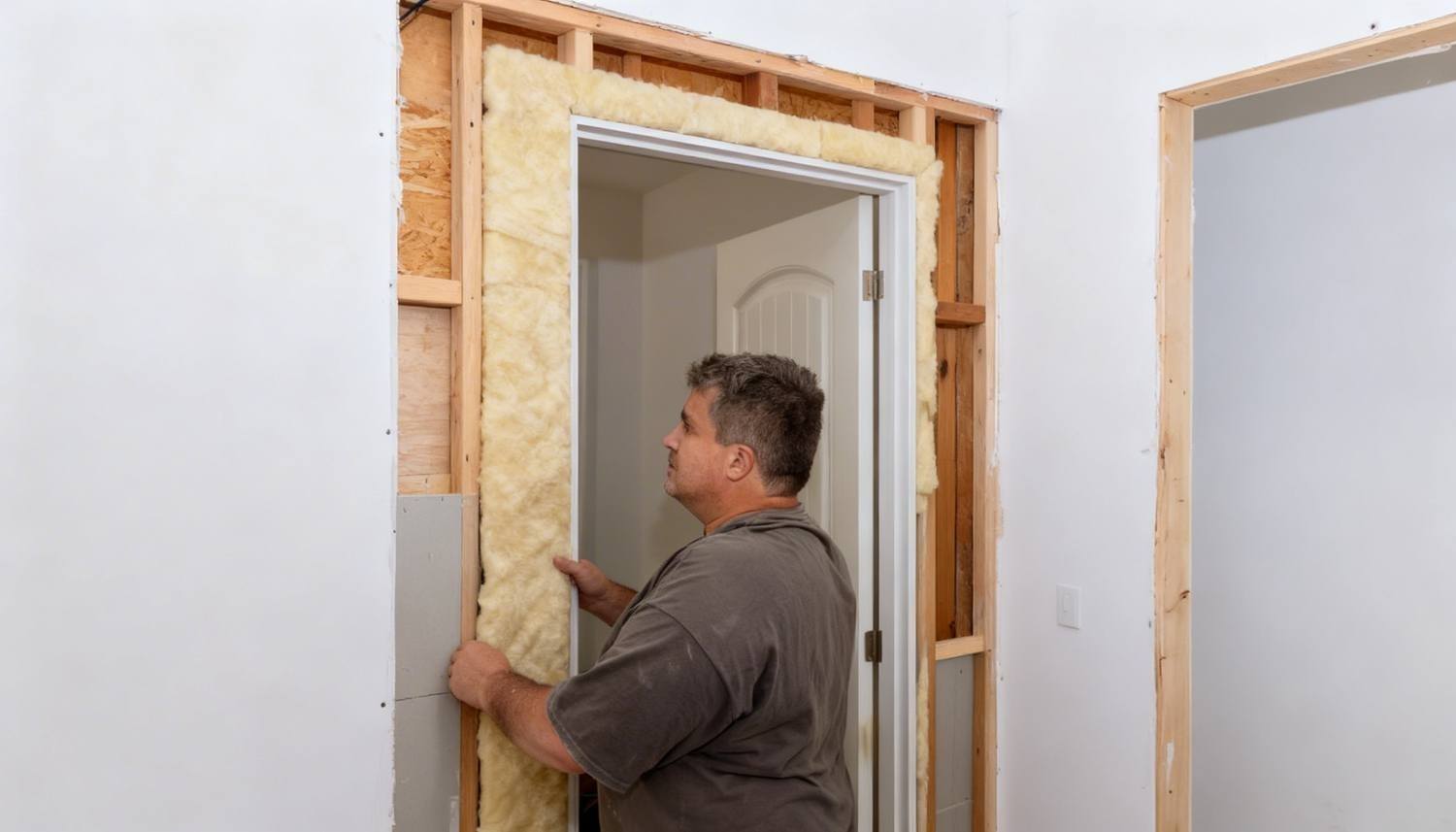
Doors, gates, and windows with low sound insulation can be reinforced through targeted measures that increase their resistance to sound transmission.
Relationship to sound absorption and vibration damping
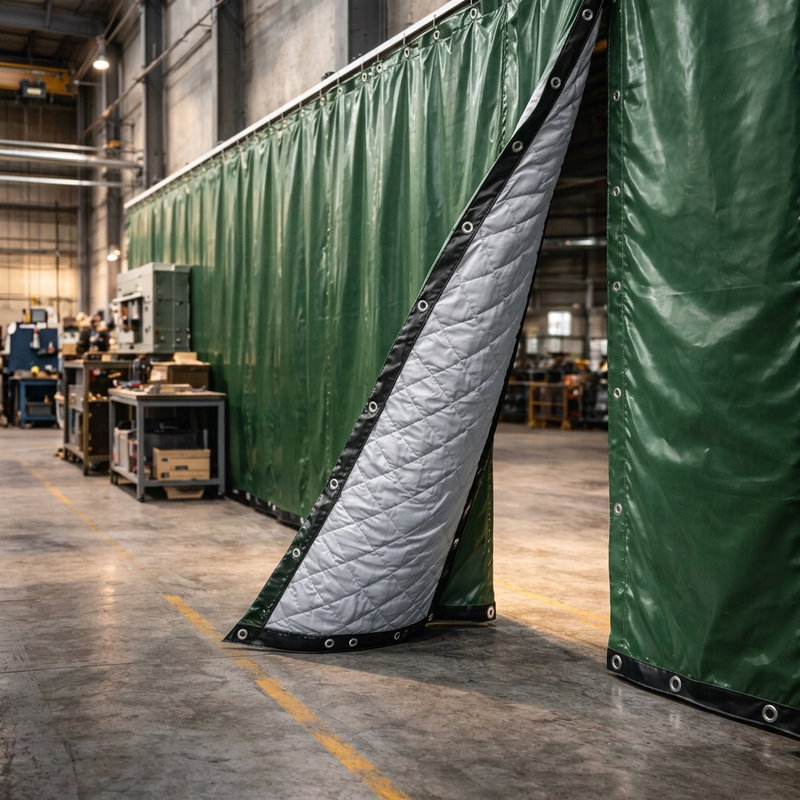
It is important to distinguish sound insulation from sound absorption and vibration damping. Sound insulation blocks sound between spaces, while sound absorption reduces echoes and reverberation within a room through solutions on walls, ceilings, or using sound-absorbing curtains or room dividers. Vibration damping is used to reduce structure-borne noise from machinery and installations. In industrial environments, these measures are often combined for the best overall results.
Why prioritize doors and windows?
Soundproofing doors and windows often yields significant results relative to the effort, as these surfaces otherwise limit the sound insulation of the entire space. This measure contributes to clearer zoning, a better work environment, and reduced sound transmission between different areas of the facility. In many cases, this is a crucial complement to soundproofing walls, floors, and ceilings.
Well-considered advice for best results
For best results, doors and windows should always be analyzed as part of the whole. A common mistake is to focus on heavy building components while overlooking movable structures. By identifying where sound leakage occurs and addressing these points, sound insulation in industrial facilities can be significantly improved and provide long-term benefits.
Soundproofing doors and windows is therefore a key measure for blocking noise in industrial environments and creating better control, a quiet working environment, and privacy.