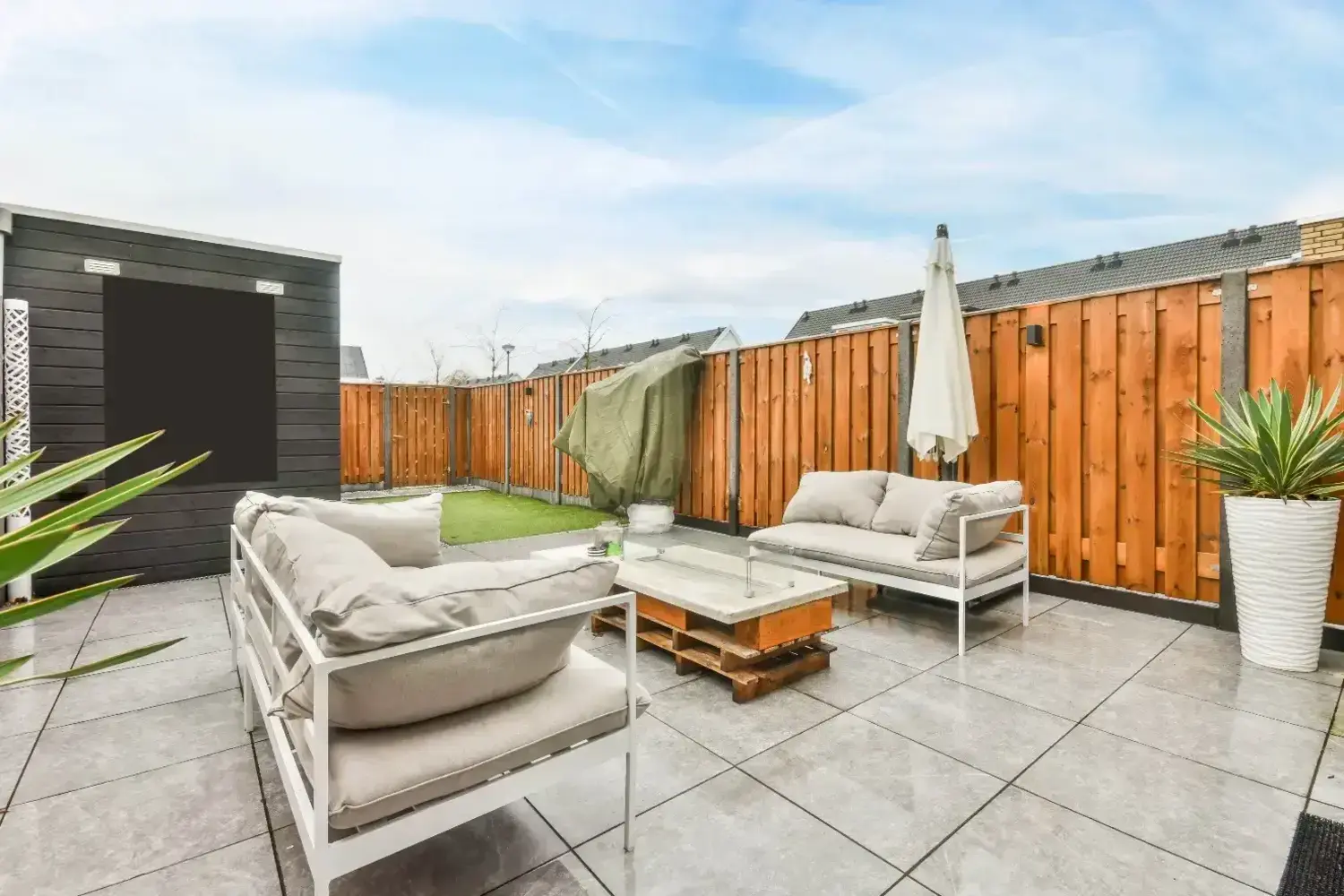
A garden should be a place for relaxation, but noise from traffic, neighbors, or nearby activities can quickly destroy the feeling of tranquility.
Outdoors, sound behaves differently than indoors—it can travel further, bounce off hard surfaces, and find its way through open spaces and small gaps.
That's why you need a well-thought-out strategy that both stops the sound, dampens reflections, and reduces vibrations from your own installations.
Here is a clear step-by-step guide with practical solutions and recommended products to help you create a noticeably quieter outdoor environment
– whether you want to dampen traffic noise, reduce noise from neighbors, or create a more private outdoor space.
Step 1: Identify where the noise is coming from
Start by standing in several places in the garden and listening. Outdoors, sound can be "angled" depending on facades, terrain, fences, bushes, and wind direction. Consider:
– Does the noise come from a road, railroad, or parking lot?
– Is it voices, music, or activities from neighbors?
– Is the noise constant (traffic noise) or variable (play, conversation)?
– Where in the garden is the noise most disturbing?
This survey will enable you to take the right action in the right place and achieve maximum effect immediately.
Step 2: Decide where your "quiet zone" should be
You don't need to soundproof your entire property to achieve a clear effect. The most common and cost-effective strategy is to create a quiet zone at:
– The patio
– The dining area
– The hot tub or lounge area
– A relaxation area with sun loungers
Once you have a clear target, it becomes easier to build noise barriers that block the sound before it reaches the place where you actually want peace and quiet.
Step 3: Build a noise barrier that actually stops the sound (most effective)
The most effective way to reduce noise in the garden is to create a physical barrier between the source of the noise and your quiet zone. For a noise barrier to work, it must be:
– Tall enough to block the sound's "line of sight"
– Tight so that sound does not leak through
– Solid so that even low-frequency noise is blocked
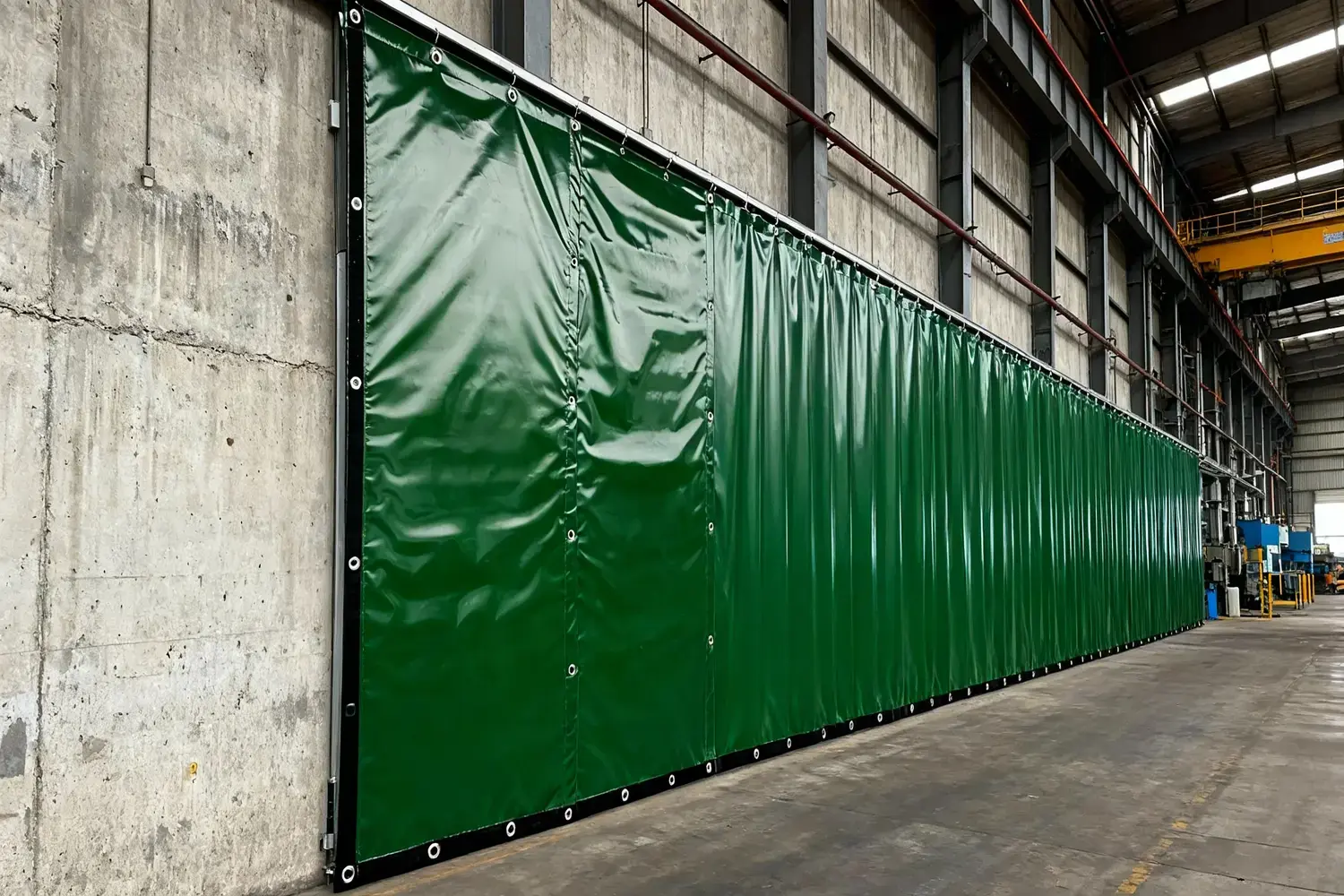
If you want a quick and effective solution , the SilentDirect Sound Barrier 2.48 m is one of the best options.
It is a heavy noise barrier that can be used freestanding or mounted in a structure and helps to stop airborne noise from traffic, neighbors, and machines.
Here's how to do it step by step:
– Place the Sound Barrier as close to the sound source as possible or as close to your quiet zone as is practically reasonable.
– Make sure the barrier covers the width of the area you want to protect, not just the center.
– Anchor it securely so that the barrier does not sway (a moving barrier lets more sound through).
– If possible: build an angle (L-shape) towards the sound source for better effect.
Step 4: Upgrade a plank or fence with Polaric + MLV (for a real sound barrier)
A standard plank may look good but still let sound through if it is thin or has gaps.
To make a fence or plank truly soundproof, you need to add mass and damping to the construction.
A combination of SilentDirect MLV and SilentDirect Polaric works very well here.
Here's how to build it step by step:
– Create a double wall construction (e.g., plank + backing board or panel).
– Install SilentDirect MLV as a heavy barrier layer in the construction, for example between boards or behind panels.
– Add SilentDirect Polaric to resonant surfaces (plank/board parts) to reduce vibrations and "ringing" in the material.
– Finish with a dense outer panel to create a stable, dense, and robust sound barrier.
This method makes the biggest difference to traffic noise because it is based on mass, density, and damping – which is exactly what low-frequency noise requires.
(Note that a sound barrier without sound absorption can create a sound-amplifying zone where the sound bounces between the barriers and is amplified without being absorbed.)
Step 5: Add absorption to your fence or barrier with Egg or Neo to reduce sound reflections
Outdoors, sound can be reflected between planks, facades, walls, glass railings, and hard stone surfaces. This can make the noise seem louder as the sound bounces back toward the patio. Absorption is the key here.
SilentDirect Egg works very well when you want to reduce bounce and reflections on the inside of the noise barrier or in a more built-in solution. If space is limited, SilentDirect Neo can be used as a thinner alternative.
Here's how to do it step by step:
– Identify hard surfaces near the patio where sound bounces back.
– Install Egg on the inside of the noise barrier/fence where you want to "absorb" the sound.
– If space is limited or you want a smoother surface, use Neo instead.
– Feel free to combine absorption on the inside of the barrier with the sound barrier in the structure itself for the best overall result.
The result is a garden that is not only quieter, but also feels softer and calmer in terms of sound.
Step 6: Seal gaps and joints – small openings make a big difference
One of the most common reasons why noise barriers do not work optimally is sound leakage.
A small opening at the bottom near the ground or a gap between fence panels can let a lot of sound through, especially if the sound source is close to ground level.
Here's how to do it step by step:
– Check for gaps between planks/boards.
– Seal joints at posts and corners.
– Seal the bottom edge against the ground where possible (or build a ground-level finish).
– Use SilentDirect Seal in joints and transitions to reduce sound leakage and create a more cohesive construction.
The tighter the protection, the greater the effect in terms of actual sound reduction.
Step 7: Reduce noise from your own installations in the garden
In many gardens, noise comes not only from the surroundings, but also from your own installations such as pool pumps, heat pumps, hot tubs, or compressors.
These create both airborne noise and vibrations that are transmitted through the ground and walls.
Here's how to do it step by step:
– Place SilentDirect Polaric as a base under the unit to reduce vibrations.
– Place SilentDirect Neo on top as an intermediate layer if you want additional relaxation and stability.
– For point loads: use SilentDirect Dampio under the feet.
– If the device is close to a wall or plank: use MLV as a barrier on the surface behind and supplement with Egg for absorption.
This creates a clear "sound zone" that makes the garden quieter, even if you cannot fully control traffic noise.
Step 8: Use plants and greenery – as a complement (not the main solution)
Plants are great for comfort, privacy, and the feeling of a peaceful garden.
But it is important to know that greenery alone does not block much noise unless it is very dense and thick.
On the other hand, plants can:
– Dampen certain higher frequencies.
– Break up wind and create a quieter sound environment.
– Create a psychological "calming effect" by blocking your view of the source of the noise.
– Reduce reflections in combination with fences or walls.
A good strategy is to combine noise protection/sound barriers with hedges, climbing plants, or green walls to achieve both functionality and an attractive result.
Step 9: Test the effect and fine-tune
Once your solutions are in place, go back to the same points as in step 1 and listen again:
– Has the noise level decreased?
– Does the sound seem softer and less sharp?
– Is the noise now coming from "above" (in which case the protection may need to be higher)?
– Is there still leakage through gaps?
Often, small adjustments – sealing an opening, adding an extra layer of absorption, or slightly raising the protection in the right place – are enough to achieve that final, crucial improvement.
Create a garden where peace and quiet reign
By working step by step with barriers (Sound Barrier/MLV), vibration damping (Polaric/Neo/Dampio), absorption (Egg/Neo), and sealing (Seal):
you can create a garden that feels noticeably calmer, more private, and more pleasant to be in. When noise is reduced, the outdoor space becomes more usable
– not just in summer, but for most of the year. The result is an outdoor environment where you can talk in a normal tone of voice, relax, and actually enjoy the silence.