















• Free shipping
  • 5-year warranty
  • Fast delivery

Soundproofing conference rooms – ensure clear communication and better acoustics

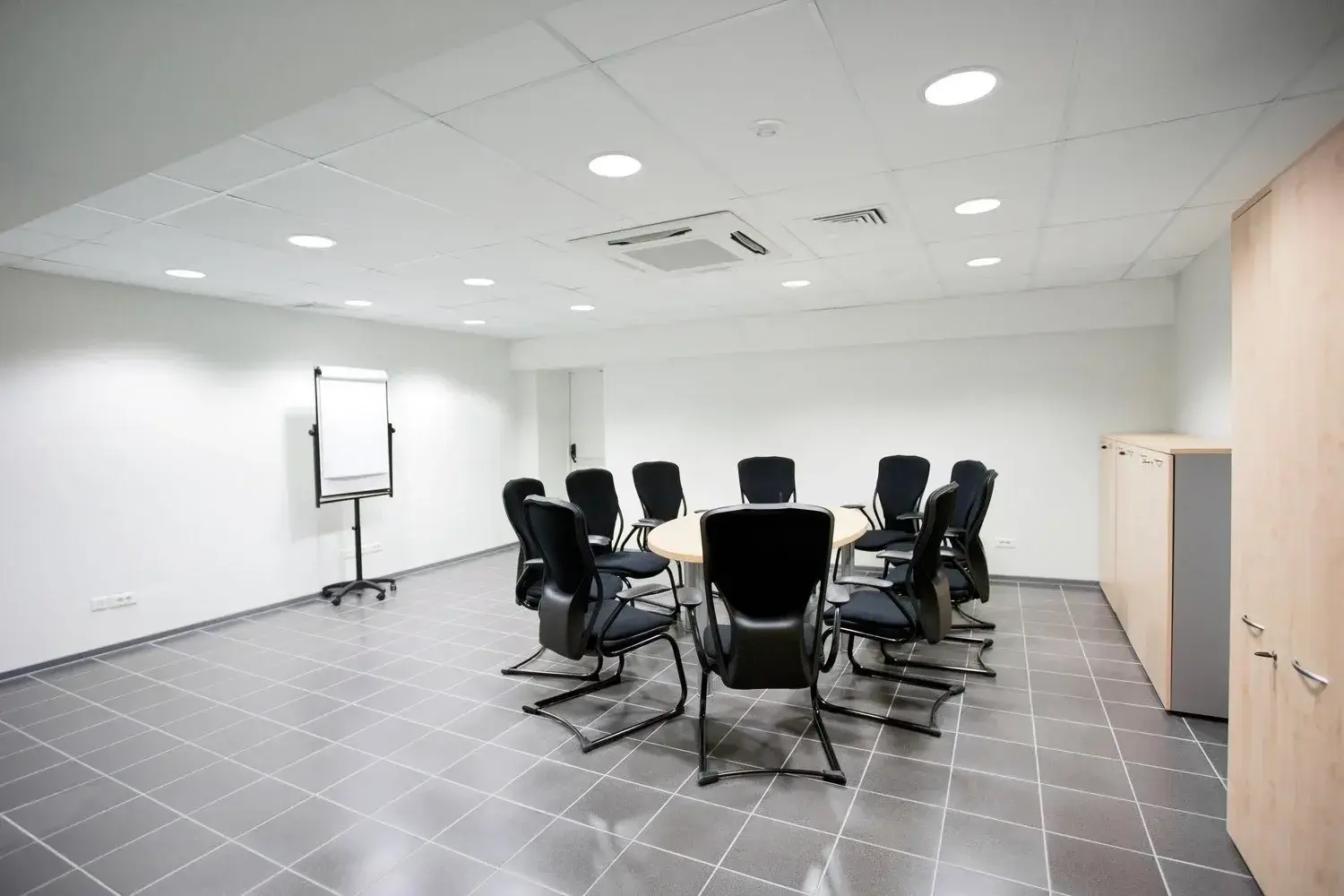
A conference room should be a place for clear communication, focus, and productive meetings.
Yet it is common for conference rooms in particular to suffer from poor acoustics—resulting in echoes, reverberation, and difficulty understanding speech.
Hard surfaces such as glass walls, drywall, concrete tables, and smooth ceilings cause sound to bounce around the room, which quickly degrades both sound quality and the work environment.

When speech becomes unclear, participants have to raise their voices, meetings become more taxing, and concentration drops.
This not only affects the meeting’s efficiency but can also contribute to fatigue and stress, especially during longer meetings or video conferences where sound is already a critical factor.
In hybrid meetings and digital calls, these problems are further exacerbated if the room’s acoustics are not optimized.

Creating a conference room with good speech intelligibility requires more than just good technology.
Proper sound absorption in the ceiling, on the walls, and in strategic zones of the room is crucial for reducing reverberation and controlling sound propagation.
By working methodically with acoustic solutions, you can create a conference room where everyone hears and is heard—without having to strain.

In this guide, we’ll walk you through the best ways to soundproof a conference room, which surfaces provide the greatest effect, and how to create balanced acoustics.
All of which improves both meeting quality and the work environment.

Recommended products

Here are some benefits of soundproofing the conference room

Improved speech intelligibility
Sound absorption reduces reverberation and echoes, making speech clearer to all participants.
This is particularly important in conference rooms where multiple people are speaking, presentations are being given, or video meetings are taking place.

More efficient meetings
When everyone hears and is heard effortlessly, meetings flow more smoothly.
Fewer misunderstandings and less need to repeat oneself save both time and energy.

Better work environment
A quiet environment reduces mental strain, stress, and fatigue.
It creates a more comfortable conference room where participants can focus longer and contribute more actively.

Improved audio quality during video meetings
In hybrid and digital meetings, room acoustics are crucial.
Sound absorption allows microphones to pick up voices more clearly and reduces background noise, providing a better experience even for remote participants.

Less need to raise your voice
When reverberation is reduced, no one needs to raise their voice to be heard over the room.
This creates a more relaxed tone of conversation and reduces vocal fatigue during longer meetings.

Increased privacy
By reducing sound propagation and reflections in the room, conversations become more private.
This is particularly important in conference rooms where sensitive information is often discussed.

Aesthetic and flexible solution
Modern sound absorbers come in various shapes, colors, and materials.
This makes it possible to improve acoustics without compromising the room’s design or overall impression.

Selected articles on "Guides for measurements in conference rooms"

Guide to Choosing the Right Sound Insulation for Different Frequencies

Different frequencies behave differently. This means that no single solution works for all types of sound problems.

What methods are used to measure sound?

There are several methods for measuring sound, and the choice of method depends on which aspect of the sound you want to evaluate.

How we perceive a decrease in decibels

How is a reduction in decibels perceived? Here, we explain in simple terms how different levels of decibel reduction are perceived.

Echo - How to reduce echo in a room

Reducing reverberation in a room means reducing sound reflections and preventing sound waves from bouncing around the room.

Step-by-Step: How to Soundproof a Conference Room – Effective Solutions That Work

A conference room with hard surfaces can quickly develop problems with echoes, prolonged reverberation, and reduced speech intelligibility.
The result is that participants speak louder, misunderstandings arise, and meetings become more exhausting
—especially during video meetings where microphones tend to “pick up the room.”

The most effective solution is to work methodically and address the surfaces that most affect speech and reflections.
Here is a comprehensive guide to help you create a calmer, clearer, and more professional sound environment.

Step 1: Listen to the room and identify the acoustic issues

Start with a simple assessment. Stand in the room, speak in a normal conversational tone, and clap your hands. Take note of:

– Do you hear a clear echo or “ringing” after clapping?
– Does speech sound hard to understand when several people are talking at once?
– Does the room feel “harsh” or stressful, especially with many people present?
– During video calls: do voices sound tinny or distant?

This step makes it easier to prioritize the right areas and avoid placing absorbers where they’re of little use.

Step 2: Start with the ceiling – greatest impact per square meter

The ceiling is often the most important surface in conference rooms because it is a large, unobstructed reflective surface that captures much of the speech energy.
By installing ceiling absorbers, you can:

– Reduce reverberation quickly and noticeably
– Improve speech intelligibility throughout the room
– Create a softer soundscape that feels calmer during longer meetings

A good guideline is to treat a significant portion of the ceiling surface, especially above the seating area where voices gather.

Step 3: Dampen early reflections on the walls

When sound from voices bounces directly off the nearest walls, reflections occur that “smear out” the speech.
For best results, place wall absorbers where the sound first hits the wall from the meeting table. Focus on:

– Walls at ear level during seated meetings
– Surfaces near the long sides of the table (where conversations usually take place)
– Walls behind the presentation area or screen, if the room feels too reverberant

This step makes voices sound clearer and the room feel more controlled, especially when many people are talking.

Step 4: Address corners and “problem zones” where sound accumulates

Corners and junctions between walls/ceilings can amplify certain frequencies and create a more “noisy” sound.
If the conference room feels extra noisy in the corners or if the sound becomes uneven depending on where you sit, corner absorbers can be a smart addition.

By treating corners and exposed areas, you can even out the sound and reduce that intrusive feeling that often arises in hard-surfaced conference rooms.

Step 5: Address glass, large smooth surfaces, and hard furnishings

Glass walls, whiteboards, smooth door panels, and large tables can create strong reflections.
You don’t need to “rebuild” the room, but you can break up the worst reflections by:

– Adding more absorbers to nearby wall surfaces
– Using softer elements in the room, such as rugs or fabric-covered chairs
– Avoiding having all large surfaces be hard and parallel (this increases reflections)

This creates more balanced acoustics and a meeting environment that feels more comfortable even during longer sessions.

Step 6: Optimize for video and hybrid meetings

For video meetings, the goal is for the microphone to pick up the voice—not the room.
That’s why sound absorption is especially important near where people are speaking. With the right treatment, you’ll get:

– Less echo in the microphone and clearer voice pickup
– Fewer “tinny” voices and less background reflection
– A better experience for remote participants

If you frequently hold hybrid meetings, this is often the step that delivers the biggest “wow factor” in practice.

Step 7: Test again and fine-tune the placement

Once the adjustments are in place, perform the same test as in Step 1.
Clap your hands, speak in a normal tone, and feel free to run a short video meeting test. Listen for:

– Shorter reverberation and less echo
– Clearer speech, especially with multiple voices
– A softer sound without “stressed” sharpness

If something still sounds harsh, it’s often enough to add local solutions—for example, more wall absorbers on a problematic wall or an extra solution in the corners.

You’ll achieve the best sound absorption in conference rooms by starting with the ceiling.
Supplement with wall absorbers at primary reflection points, and then treat corners and hard problem areas.
As reverberation decreases, speech becomes clearer, meetings more efficient, and the room more comfortable —for both in-person and video meetings.

Selected articles on "Soundproofing a conference room"

Soundproof a wall.

By installing sound absorbers in strategic locations, you can effectively reduce unwanted noise, improve speech intelligibility, and create a more harmonious acoustic environment.

Soundproof a ceiling.

Installing sound absorbers on the ceiling is one of the most effective ways to improve a room’s acoustics and reduce noise levels.

Soundproof an office.

Soundproofing an office is a key factor in creating a work environment that promotes concentration, productivity, and well-being.

Sound absorbers for large glass surfaces.

Rooms with large glass surfaces often present acoustic challenges, as glass reflects sound and can prolong reverberation.

Products that are effective at sound absorption in conference rooms

Creating a well-balanced and professional conference room requires solutions that reduce reverberation, improve speech intelligibility, and dampen distracting background noise.
Below are selected products that are particularly suitable for meeting rooms, conference rooms, and open-plan office environments where good acoustics are essential.

SilentDirect PES Fabric – sound absorption in suspended ceilings
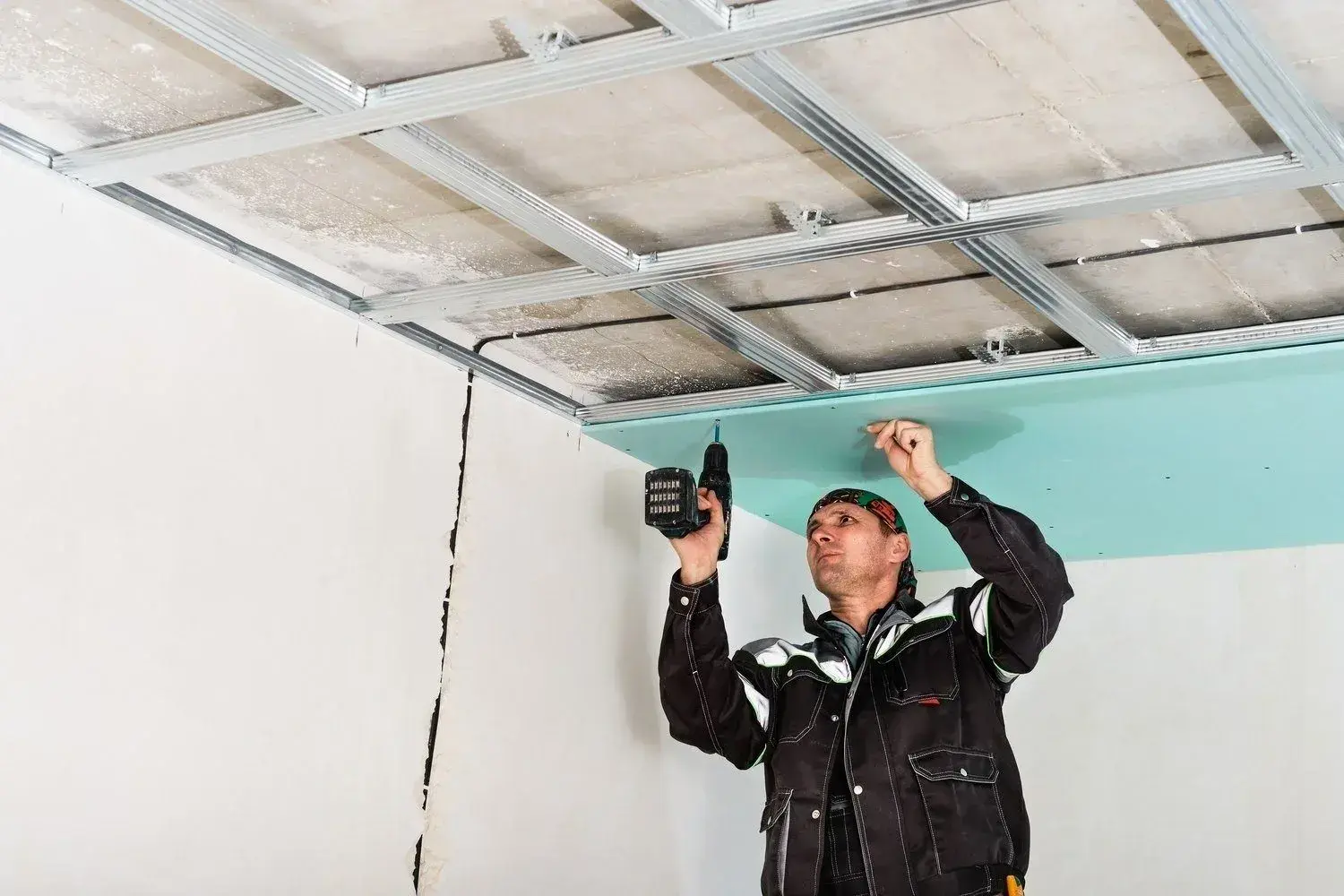
SilentDirect PES Fabric is an effective sound absorber designed for installation in suspended ceilings, such as grid ceilings.
It absorbs sound reflections that would otherwise bounce between the ceiling and walls, contributing to a shorter reverberation time.
The fabric-covered surface layer also provides a more cozy and professional look, making it ideal for conference rooms where both function and aesthetics are important.

SilentDirect PES – acoustic sound absorber for ceilings and walls
SilentDirect PES is a lightweight, high-performance sound absorber that effectively reduces echoes and reflections in rooms with hard surfaces.
It is particularly well-suited for conference rooms where many voices interact and where clear communication is crucial.
Installing PES on ceilings or strategic wall surfaces significantly improves speech intelligibility.

Silent Socks Original – sound dampening for chair legs
In conference rooms, disruptive scraping noises often occur when chairs are moved. Silent Socks Original are mounted directly on chair legs and reduce both scraping noises and vibrations against the floor. This creates a quieter meeting environment and reduces unnecessary noise spikes that can otherwise disrupt concentration during meetings.

SilentDirect Bulletin – sound-absorbing bulletin board
SilentDirect Bulletin combines sound absorption with practical functionality.
It functions both as a bulletin board and as a sound-absorbing surface, making it particularly useful in conference rooms where wall surfaces are actively used.
At the same time, it reduces reflections from the walls, contributing to more controlled acoustics.

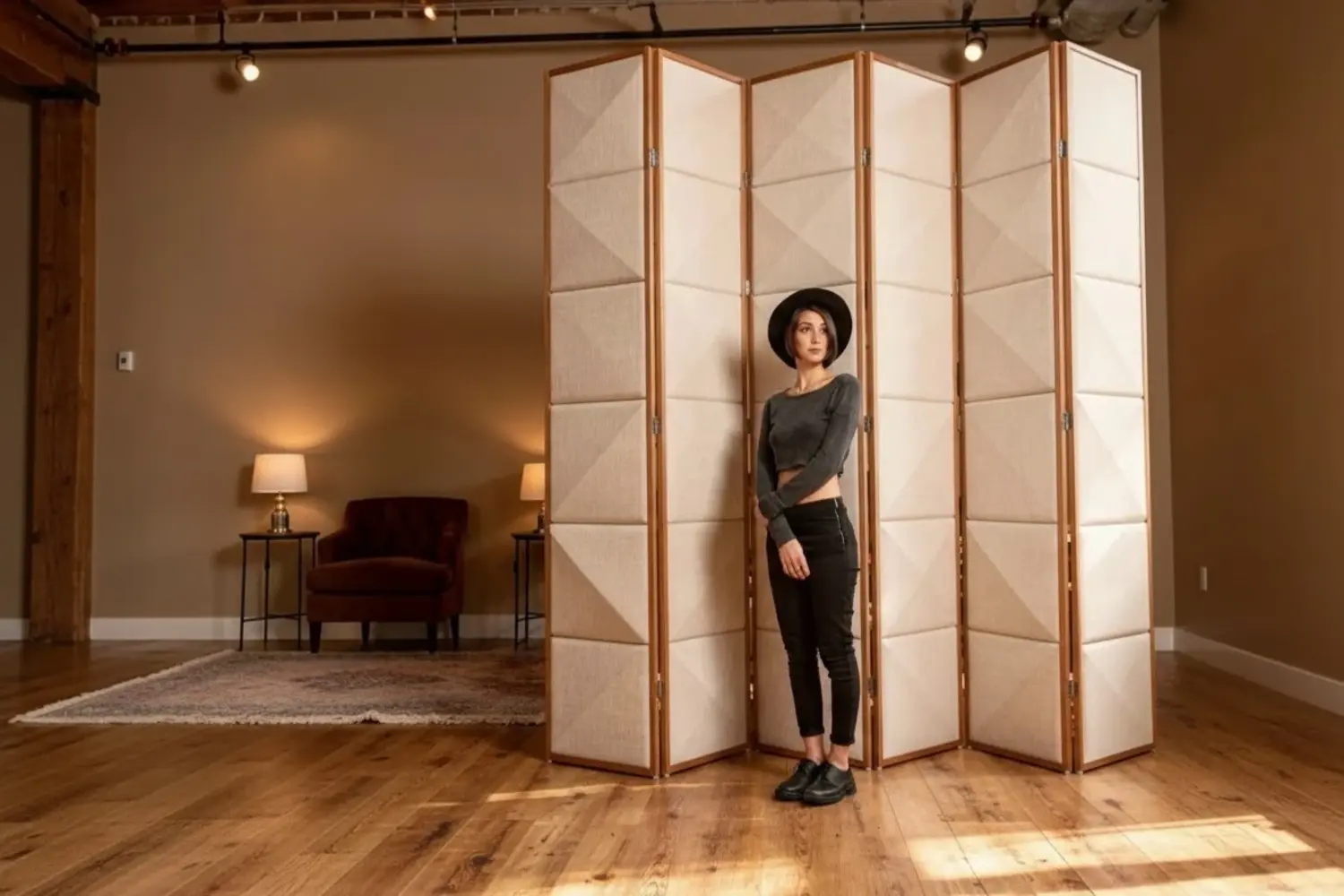
Silent Divider Felt – sound-absorbing room divider
Silent Divider Felt is a flexible room divider made of felt material used to create screening while also absorbing sound.
It is ideal for larger conference areas or open-plan offices where you want to create temporary meeting zones with improved acoustic comfort and reduced sound propagation.

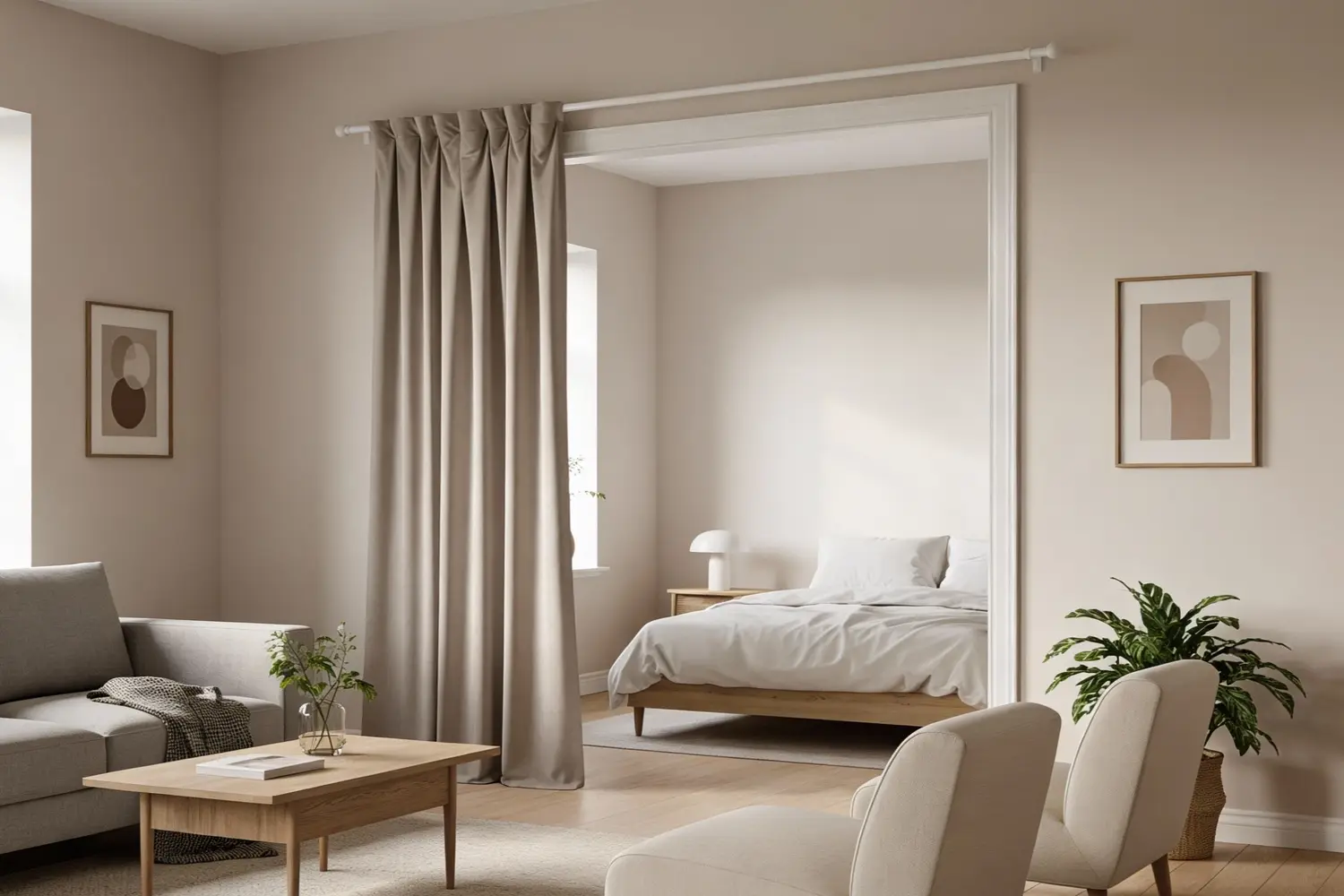
Silent Curtain Felt – sound-absorbing curtain
Silent Curtain Felt is a sound-absorbing curtain that effectively reduces sound reflections from windows, glass partitions, and hard wall surfaces.
It is often used as a complement to fixed absorbers and is particularly effective in conference rooms with large glass surfaces where sound would otherwise easily bounce back into the room.

Together, these solutions create a conference room with clearer speech, less reverberation, and a more professional and pleasant acoustic environment

Selected articles on "Soundproofing a conference room"

Use plants to reduce noise.

Plants can scatter (break up) and partially absorb sound waves through their leaves, stems, and other parts. The larger the plant, the better.

Sound-absorbing bulletin board.

Sound-absorbing bulletin boards are specially designed bulletin boards that serve both as bulletin boards and as sound absorbers.

Zoning with room dividers.

Room dividers are an effective solution for reducing disruptive noise, improving acoustic comfort, and optimizing space as needed.

Sound-absorbing panels.

Sound-absorbing panels are an aesthetically pleasing solution for improving acoustics, combining both sound absorption and visual appeal.

Did you know that…

…a conference room with a long reverberation time can reduce speech intelligibility by up to 30%, even if everyone hears things “loud and clear”?
The brain has to work harder to filter out echoes and reflections, making meetings more mentally taxing—especially during longer presentations.

…glass walls and large screens can act as acoustic mirrors?
Sound waves bounce off glass almost unchanged, causing voices to sound sharper and more intrusive despite low sound levels.

…poor acoustics affect remote participants more than those sitting in the room?
Microphones pick up the room’s reverberation and transmit it, making speech sound tinny and unclear to those participating via video link.

…it is often sufficient to treat 30–50% of the right surfaces to achieve a clear improvement?
Strategically placed sound absorption in the ceiling and at early reflection points has a significantly greater effect than randomly distributing materials.

…a well-sound-absorbed conference room causes people to automatically lower their voices?
When the room doesn’t “echo back,” conversations feel calmer, which in turn lowers the overall sound level without anyone even realizing it.

So the next time a meeting feels unusually exhausting—despite good technology and a clear agenda—it may be the room’s acoustics that are the real culprit.
Small acoustic adjustments can make a bigger difference than many people realize.

Selected articles on "Optimal Acoustic Environment in Conference Rooms"

How many sound absorbers do I need to install?

With our reverberation time calculator, you can easily determine how many sound absorbers you should install to create an acoustically pleasant environment.

Where should sound absorbers be placed?

Proper placement determines how effectively the absorbers dampen sound. Whether you want to improve the acoustic environment in an office, conference room, or home studio.

Sound-absorbing fabric room dividers.

Fabric sound-absorbing room dividers are a practical solution for reducing noise, minimizing reverberation, and creating a more focused and pleasant atmosphere.

Sound-absorbing and sound-dampening curtains

Sound-absorbing curtains are an excellent way to improve noise levels and acoustics in a room and create a more pleasant atmosphere.

*Free shipping

Free shipping to a pickup location

5-year warranty

5-year product warranty

Fast delivery

Usually ships the same day

The Best Ways to Soundproof a Conference Room – Practical Tips

Conference rooms are often the heart of modern office environments, where important meetings, presentations, and video conferences take place. But without the right acoustics, conversations become hard to understand, sound bounces off the walls, and participants’ focus wanes. With the right sound-absorbing solutions, you can create a better work environment with clear communication and a professional soundscape.

Why is sound absorption crucial in conference rooms?

Sound absorption aims to reduce reverberation time and dampen reflections in a room. In a conference room with hard surfaces like glass, concrete, and drywall, sound waves linger and bounce around. This creates a tinny and chaotic sound that makes conversation difficult and results in a poorer overall experience—both for participants in the room and on the other end of a video call. By installing sound absorbers in strategic locations, you can create a room with controlled acoustics where every word is heard clearly. This makes meetings more effective and less tiring for participants.

Soundproof the ceiling first—where the greatest effect is achieved

The most effective first step in a conference room is to soundproof the ceiling. Hard ceilings reflect sound waves straight down, creating disruptive echoes. Products like SilentDirect PES Ceiling and PES Ceiling Fabric are perfect for this. They are easily installed using the included brackets and come in several sizes and colors, making them easy to integrate into the room’s aesthetic.

Walls, corners, and diagonal surfaces – complete the setup for perfect balance

Once the ceiling has been addressed, the walls should also be treated. SilentDirect PES Wall and PES Wall Fabric are specifically designed for wall mounting and effectively dampen sound reflections from conversations, video conferences, and presentations. For further control over the sound environment, corner-mounted or diagonally mounted absorbers can be used. These effectively break up sound waves and prevent sound from concentrating in specific parts of the room.

Pay attention to the details—both form and function

Acoustics is not just about function, but also about how the solutions blend into the environment. SilentDirect’s sound absorbers are available in various colors, finishes, and shapes to suit both classic and modern conference rooms. The products are also mold-resistant, hypoallergenic, and maintenance-free—making them a long-term investment for both health and the work environment.

Combine with furnishings for even better acoustics

In addition to fixed absorbers on ceilings and walls, soft furnishings can also contribute to a better sound environment. Thick curtains, carpets, and upholstered furniture naturally absorb sound. Combined with SilentDirect’s acoustic solutions, you achieve a room that is both quiet and comfortable—perfect for focused meetings.

Create a conference room with an optimal sound environment

Soundproofing a conference room is crucial for creating a professional and comfortable environment where communication takes place without interruptions. By starting with the ceiling, adding wall absorbers, and considering corners and furnishings, you create balanced acoustics that improve both workflow and comfort. SilentDirect’s sound-absorbing solutions offer easy installation, high efficiency, and designs that suit all types of office environments.