





Sound absorbers for low-frequency sound
When bass and hum take over, deeper sound absorption is needed
Low-frequency sound is one of the most difficult aspects of acoustics to manage. Deep frequencies travel long distances, build up easily in rooms, and can be perceived as a rumbling resonance that can be felt in the body. In practice, this often means that sound energy lingers too long and creates an unbalanced sound environment where speech clarity is impaired and the room feels "heavy." Sound absorption with sufficient depth is therefore a key measure when the problem lies in the bass range.
Sound absorption is clearly different from sound insulation and vibration damping. Sound insulation stops sound between rooms by reducing the passage of sound through walls, floors, ceilings, doors, and gaps. Vibration damping reduces structure-borne noise by reducing mechanical vibrations that are conducted in the building's structure. Sound absorption, on the other hand, improves the acoustics in the room where the sound occurs by reducing echo and reverberation.
What is low-frequency sound and why is it perceived as disturbing?
Low-frequency sound often occurs below approximately 250 Hz and can come from ventilation, fans, pumps, traffic, music with a lot of bass, or machines. In rooms with hard surfaces, high ceilings, or large volumes, bass frequencies can be amplified by resonances and standing waves. The result is a dull hum, a wavering sound image, or a reverberation that makes the room feel stressful and difficult to work in, even when the overall sound level is not extremely high.
When are sound absorbers needed for low-frequency sound?
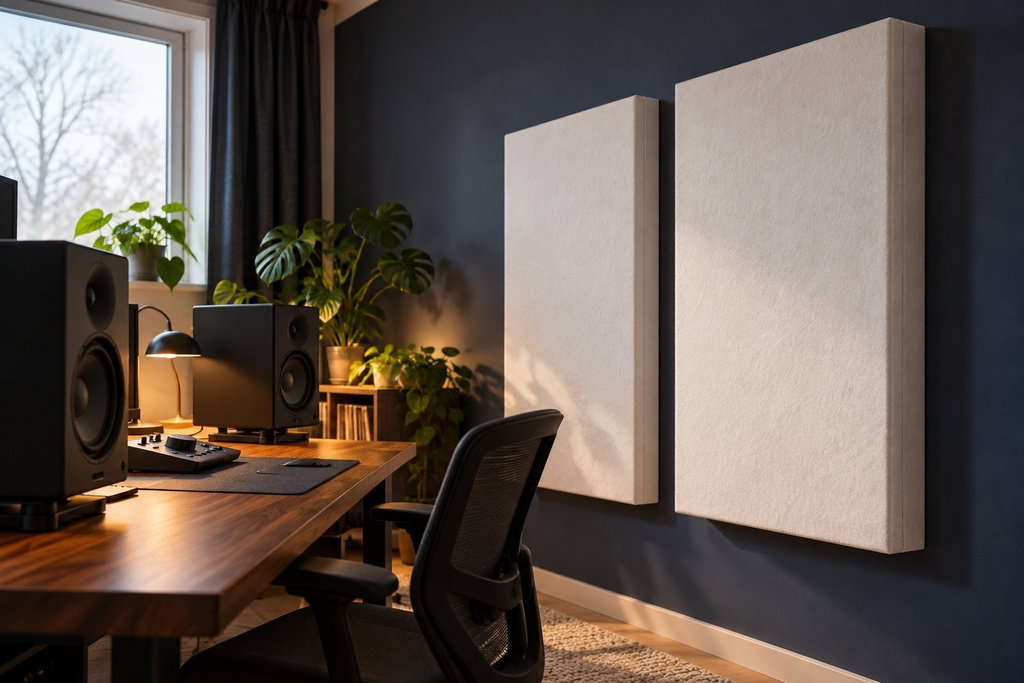
The need is common in premises where sound is perceived as "rumbling" or where music, machines, or installations dominate the sound image. This can apply to offices, schools, restaurants, gyms, home theaters, studios, and industrial environments. It is often noticed as fatigue, poorer focus, and more difficult communication. In sound-critical environments such as studios or home theaters, it is instead noticeable as unclear and muffled bass, where it becomes difficult to achieve a balanced reproduction.
How deep absorbers work on walls and ceilings
To affect long wavelengths, absorbers with greater material depth are required. Thicker absorbers can slow down more of the sound energy and help to shorten the reverberation time even in the bass range. A good basic principle is to create stable bass attenuation and then supplement this to achieve a uniform sound environment throughout the room.
Absorbers on the ceiling
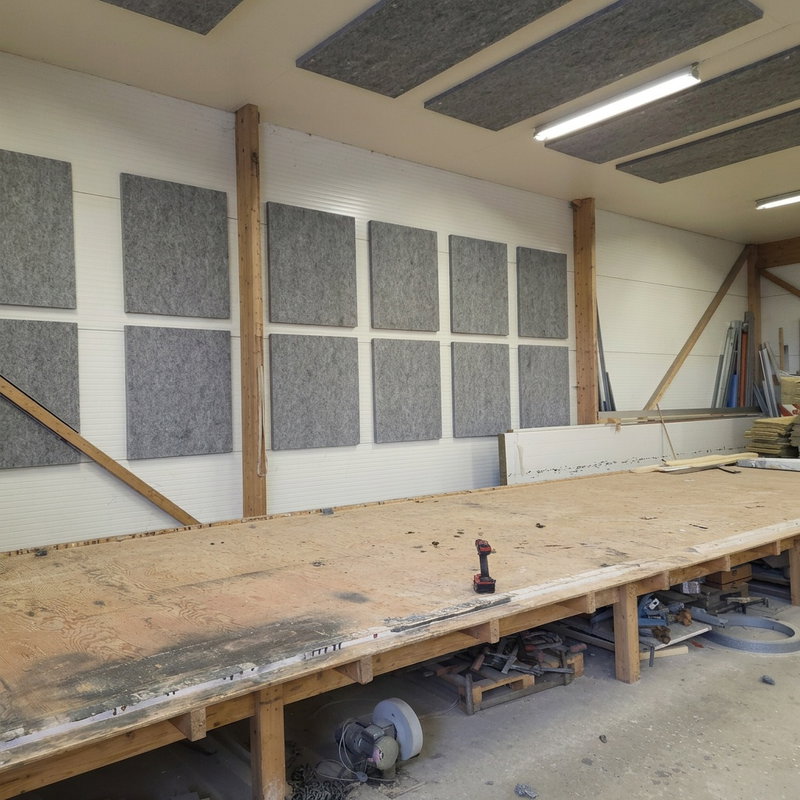
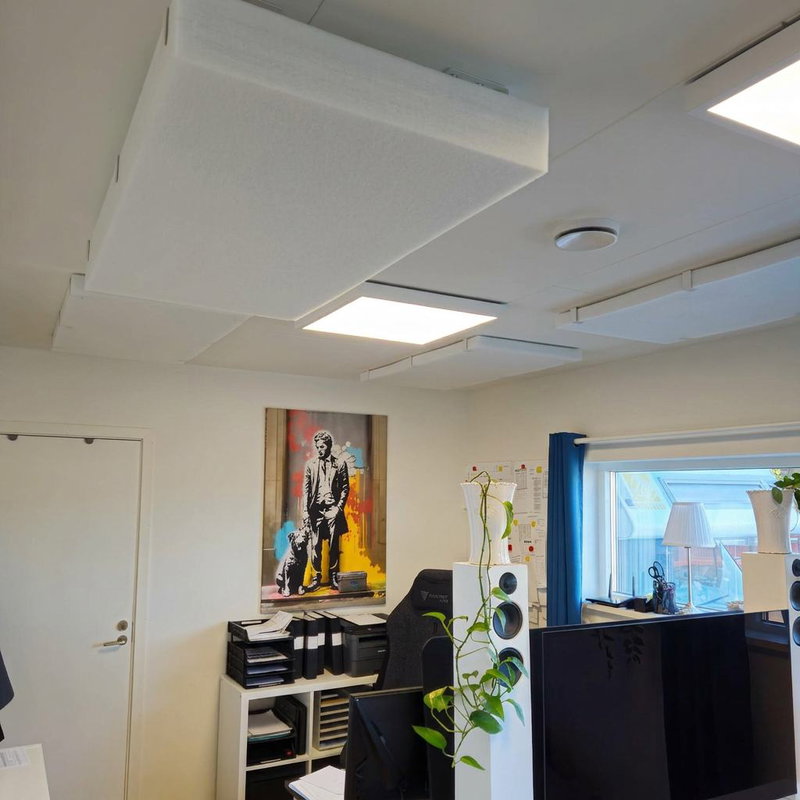
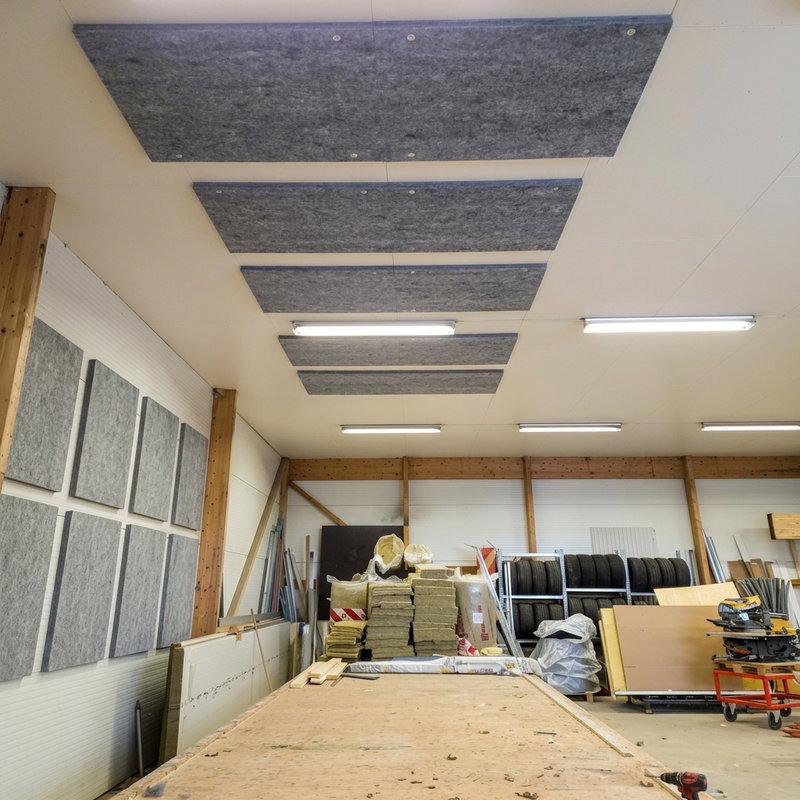
The ceiling surface is often one of the largest reflective surfaces. Ceiling absorbers provide clear basic attenuation and reduce the overall reverberation, which can make bass problems less noticeable.
Wall absorbers
Wall-mounted absorbers reduce reflections and can help to even out resonances, especially in rooms where bass builds up along walls and in corners.
Curtains and room dividers as a complement
Sound-absorbing curtains and room dividers cannot replace deep absorbers for bass, but they can contribute to a softer overall sound by reducing reflections from glass and creating more controlled zones in larger rooms.
Practical advice for better results
Start by identifying whether the problem is mainly echo and reverberation in the room, or whether it is sound coming from outside or between rooms. If the room feels "wobbly" in the bass, it is often wise to combine deeper absorbers with an even distribution of sound absorption on several surfaces. A common mistake is to use too few absorbers or to treat only a single surface. A more balanced solution is achieved by creating a foundation with ceiling absorption and then supplementing with wall absorption where the reflections are clear and where the bass is perceived as most dominant.
Sound absorbers for low-frequency sound are therefore an important tool for controlling bass resonance, reducing reverberation, and creating a more pleasant, clear, and functional sound environment for both private individuals and businesses.