





• Free shipping
  • 5-year warranty
  • Fast delivery

Soundproof your home gym – smart solutions for quiet training

A home gym gives you the freedom to work out whenever you want, but it also presents a challenge that many people underestimate: noise. From heavy weights hitting the floor to treadmills vibrating through the floor joists, noise can quickly spread further than you think. In an apartment building, a normal workout can be heard both one floor up and two floors down—and even in houses, structure-borne noise can travel through walls and floors, disturbing the rest of the household. What sounds "okay" inside the gym can be perceived as much louder in adjacent rooms.

Many people think that the solution is to lay down a standard gym mat or simply choose lighter equipment, but home gyms require more thoughtful measures. Different types of exercise equipment generate completely different noise problems: heavy weight training creates powerful impacts and structure-borne vibrations, while cardio machines often spread motor noise, resonance, and prolonged low-frequency vibrations that are easily transmitted through the building structure. In addition, airborne sound can bounce between walls and ceilings, further exacerbating the experience.

To create a quiet and sustainable home gym, you therefore need to work on several levels: dampen vibrations at floor level, break sound reflections in the room, and insulate the areas where machines and weights generate the most noise. SilentDirect's products are designed specifically for these challenges and offer solutions that combine effective vibration damping, stability, and sound absorption. With the right materials, you can dramatically reduce the noise level – not only where you exercise, but also in the rest of your home.

This guide provides a clear overview of the most common sources of noise in home gyms and how you can minimize vibrations, structure-borne noise, and airborne noise step by step. Whether your home gym consists of a treadmill in a bedroom, dumbbells in a garage, or a complete weightlifting set in the basement, there are smart and proven solutions that make your workout quieter and more comfortable. The goal is simple: to create a home gym where you can train freely – without disturbing anyone else and without compromising the functionality of your equipment.

Recommended products

Here are some advantages of soundproofing your home gym

Less vibration and structural noise
By soundproofing the floor in your home gym, you effectively reduce vibrations that would otherwise travel through the building's structure. Heavy lifting, jumping, and treadmills can create powerful resonances that can be heard far beyond the training room. With the right soundproofing, you not only reduce the noise level, but also the structural load on the property.

Increased training comfort
A soundproofed home gym creates a more comfortable training environment where you can focus fully on your workout. When disturbing noises and vibrations are dampened, the room feels calmer and more balanced. This contributes to better concentration, fewer interruptions, and a more professional feel—even in a home environment.

Better acoustics and less reverberation
Sound absorption on walls and ceilings reduces disruptive echoes and harsh sound reflections that often occur in home gyms with concrete, wood, or plaster surfaces. By installing acoustic panels, you create a more subdued soundscape and make the room less noisy, even during intense workouts.

Less disturbance for family and neighbors
One of the biggest problems with home gyms is noise that spreads to other parts of the home. With the right soundproofing, you can reduce the transmission of both impact and motor noise. This makes it possible to train early in the morning or late at night without waking anyone up.

Extends the life of your equipment
Vibrations and hard impacts not only wear down floors and walls, but also the exercise equipment itself. A sound-absorbing base, especially under heavy machines, reduces unnecessary wear and tear and can extend the life of treadmills, rowing machines, and free weights.

Increased safety and stability
Sound-absorbing floors and mats provide better grip and stability for both lifting and cardio training. They reduce the risk of slipping accidents and at the same time provide a shock-absorbing surface that protects both the body and the floor from damage.

Flexibility in how you use the room
Soundproofing your home gym makes the room more versatile. It can be used for training, games, music, or other activities without the sound becoming a problem. Soundproofing simply makes the room more useful—both now and in the long term.

Increases the value of your home
A well-insulated and soundproofed exercise room is perceived as more thoughtful and professional. It can be seen as an attractive extra feature in the home and thus contribute to a higher perceived value when selling or renting.

Step-by-step: How to soundproof your home gym

A home gym is a fantastic investment in health and everyday flexibility, but it can also create significant noise problems. Heavy lifting, jumping, treadmills, and vibration-generating machines generate both airborne noise and structure-borne noise that easily spreads through walls, floors, and building frames. By working methodically with the right soundproofing solutions, you can create a quieter, more comfortable, and more professional training space—without disturbing others in the home.

Step 1: Identify the sources of noise in your gym

Different types of exercise create different types of noise. Free weights cause powerful impacts and vibrations when they hit the floor, while treadmills and exercise bikes generate a constant motor noise that easily travels through the floor structure. Start by analyzing which noises are most disturbing – is it impacts, vibrations, motor noise, or bouncing noises in the room?

Step 2: Dampen vibrations and structure-borne noise from the floor

The floor is the main source of noise in a home gym. To stop vibrations at the source, you need to use vibration-damping materials under machines and free weights. Products such as SilentDirect Neo, Dampio, or Polaric are designed to absorb both impacts and structure-borne noise. Dampio can be placed under the feet of the machines, while a combination of Neo and Polaric can be laid out like a mat. By covering at least 30-50% of the floor space under the training equipment, you can dramatically reduce the noise that spreads to other rooms. A sound-absorbing panel or sound-absorbing podium can also be a good solution for larger needs.

Step 3: Install sound absorption in the ceiling

The ceiling often acts as a reflective surface where airborne sound bounces and amplifies. As in stairwells, ceiling absorption is one of the most effective measures for reducing reverberation. By installing SilentDirect PES Ceiling or PES Ceiling Fabric, sound reflections are broken up and the energy is absorbed instead of spreading throughout the room. This creates a much more pleasant sound environment, especially during cardio and explosive training.

Step 4: Add wall absorbers to reduce echo

In home gyms with hard surfaces – such as concrete walls, wood paneling, or plaster – disturbing echoes often occur when sound waves bounce between the walls. Installing wall absorbers such as SilentDirect PES Wall or PES Wall Fabric on strategic surfaces reduces these reflections. Place the absorbers in the middle of the wall or behind machines to catch the sound waves before they spread further into the room.

Step 5: Create sound zones for different types of training

If your home gym contains both weights and machines, it may be a good idea to divide the room into zones. Use sound-absorbing room dividers or acoustic curtains to minimize sound propagation between the training areas. SilentDirect's room dividers act as acoustic barriers and reduce sound by up to 9 dB, which makes a big difference when, for example, lifting barbells or doing high-intensity cardio training.

Step 6: Dampen impacts and bangs from heavy lifting

Heavy weights that are dropped or placed directly on the floor are one of the most disruptive sources of noise in home gyms. By placing SilentDirect Dampio, Polaric, or other shock-absorbing solutions under each contact point, you can significantly reduce both impact noise and vibrations. These dampers also protect the floor and extend the life of your equipment.

Step 7: Optimize the whole for a quiet and functional gym

The best soundproofing is achieved with a combination of floor damping, ceiling absorption, and wall absorbers. By breaking the sound path—from floor to ceiling, from wall to wall, and between different pieces of equipment—you create a balanced acoustic environment. This makes training much more pleasant and reduces disturbances for both family members and neighbors.

Create a professional home gym with the right sound solutions

Soundproofing a home gym is not just about reducing noise – it's about creating a space where you can train whenever you want, without restrictions. With the right products and a well-thought-out layout, you can build a home gym that feels as professional as a commercial gym, but with a significantly quieter and more stable sound environment.

Products that are good for soundproofing a home gym

Soundproofing a home gym is essential for reducing vibrations, impacts, and airborne noise that spreads throughout the home. When you exercise at home, loud structural noise is generated from weights, jumps, and machines, while motor noise and bouncing sounds can be amplified by the hard surfaces in the room. By using the right soundproofing materials, you can create a significantly quieter and more stable training space. Here are the best products for soundproofing a home gym.

SilentDirect Polaric – Damping mat for powerful vibrations

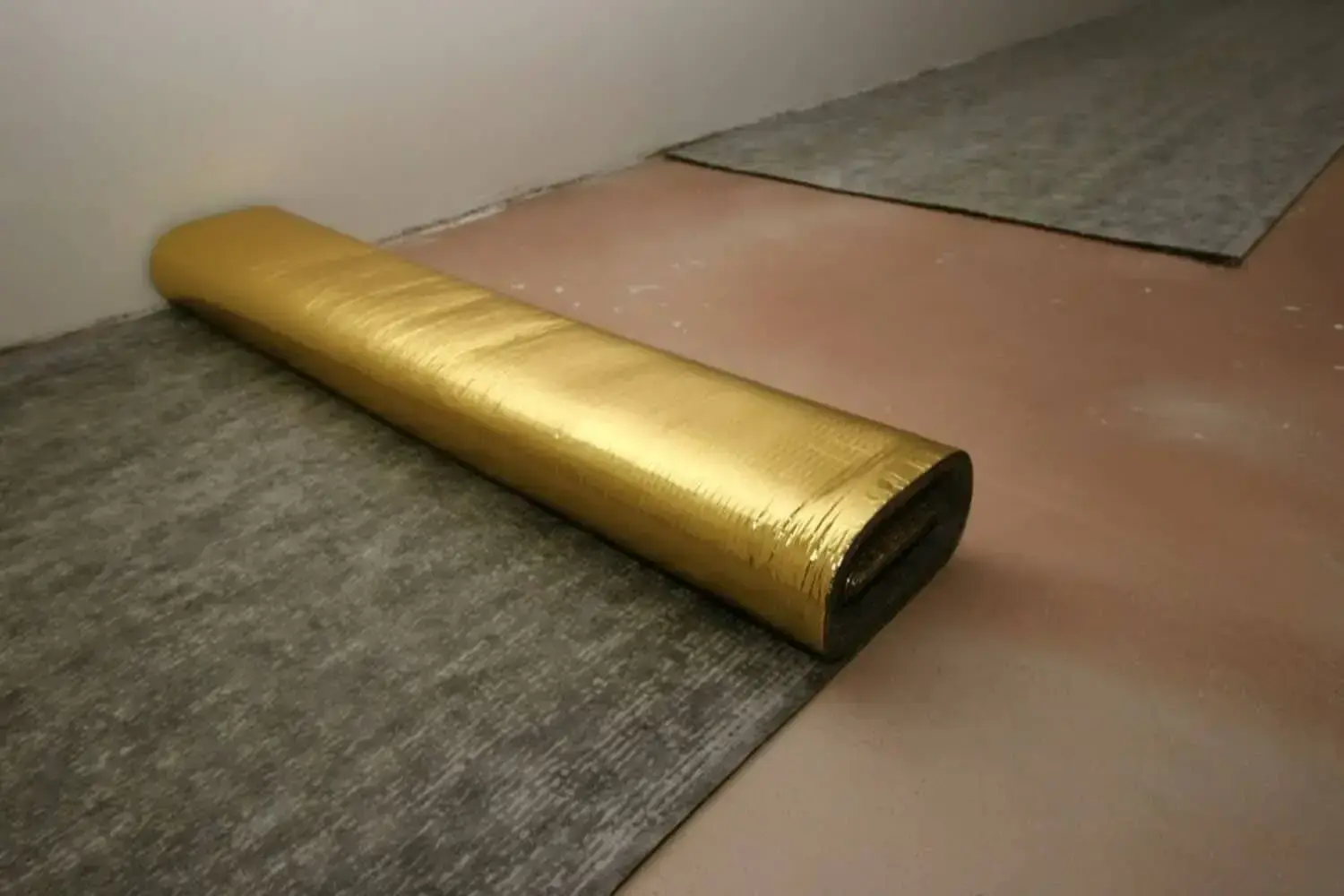
SilentDirect Polaric is a heavy damping mat with a butyl core and durable aluminum surface, developed to stop low-frequency vibrations. It is particularly effective under treadmills, cross trainers, and rowing machines where motor noise and resonance spread through the floor. By laying Polaric over the entire training area, you create a stable base that reduces both structure-borne noise and sound transmission to adjacent rooms and floors.

SilentDirect MLV – Mass-loaded vinyl for sound blocking

SilentDirect MLV (Mass Loaded Vinyl) is a flexible but solid sound barrier that blocks both airborne and structure-borne sound. The product can be installed under floor mats, rubber tiles, or along walls to strengthen the overall sound insulation of your home gym. It is particularly useful in apartments or houses with thin floors where sound easily spreads between rooms.

SilentDirect Egg – NBR-based vibration damping

SilentDirect Egg is a high-density solution in NBR rubber that is used to reduce resonance and vibrations from heavy equipment. By placing Egg inside the floor construction or directly under training platforms, you can effectively prevent vibrations from spreading through the building's frame. It is especially valuable for powerlifting, kettlebells, and other explosive loads.

SilentDirect Neo – Stable damping mat for machines and floors

SilentDirect Neo is a vibration-damping flat mat made of NBR rubber that is placed under exercise machines or floor tiles. Neo acts as an absorbent buffer between the equipment and the floor, reducing both impact noise and mechanical vibrations. It is an excellent choice for home gyms where treadmills, exercise bikes, or step machines cause structural noise.

SilentDirect Seal – Sealing strip for joints and construction

SilentDirect Seal is an elastic sealing strip used to seal joints between floors, walls, and exercise platforms. By preventing sound leakage at transitions and joints, Seal creates a complete and unbroken sound barrier. This is especially important in home gyms where sound would otherwise "leak" through small openings in the construction, despite the use of the right damping material.

SilentDirect Dampio – Shock and impact damping plates

SilentDirect Dampio are vibration and shock-absorbing mats used to absorb the impact of weights and equipment. Place Dampio under dumbbell racks, barbell stations, or on surfaces where weights are often put down. The product reduces high-frequency vibrations and makes the floor significantly quieter, especially during explosive lifts or heavy unloading.

Together, these products provide a complete solution for soundproofing a home gym – from dampening floors and machines to sealing structures and eliminating resonance. By using the right combination, you can create a training environment that feels professional, stable, and above all quiet, without disturbing the rest of the home.

Did you know that...

...a single jump in your home gym can send vibrations through the floor joists faster than sound travels through the air? When you land after a jump or drop a weight, low-frequency vibrations are created that travel through the entire house like small earthquakes. That's why someone two floors up can sometimes hear your workout as clearly as you can.

It may sound unbelievable, but a treadmill can generate more structure-borne noise than a washing machine on spin cycle—even though the sound in the room is perceived as lower. The secret lies in the frequencies: low vibrations are felt more than they are heard and spread more effectively through the building's structure. That's why a quiet home gym for you can feel like a noisy inferno for someone in the next room.

And here's something even fewer people know: a standard gym mat dampens almost nothing when it comes to structure-borne noise. Although it looks thick and shock-absorbing, it only stops high-frequency "small noises," while the low-frequency vibrations—the ones that cause the most disturbance—pass straight through as if the mat weren't there. Completely different materials are needed to break the path of the vibrations.

The most surprising thing? The room's acoustics can make your workout twice as loud. Hard walls, ceilings, and floors create a bouncing sound space where every rep, jump, and set is amplified by echoes that pile on top of each other. By installing just a few sound absorbers, you can "turn off" the echo and dramatically reduce the perceived noise level – without changing a single piece of training equipment.

So when you think about a quiet home gym, it's not just the floor that matters. It's about a whole chain of sound paths: from the vibrations you create, to how the room amplifies them, to how they travel through walls and floors. If you break these sound paths in the right order, you can create a home gym where you can train freely – while the rest of the house barely notices you're there.

*Free shipping

Free shipping to agent

5-year warranty

5-year product warranty

Fast delivery

Usually ships the same day

Selected articles on "Soundproofing your home gym"

Building a sound-absorbing podium

Here you will find tips for building a noise-reducing podium or raised floor.

Building a sound-absorbing panel

Instructions for a simpler soundproofing disc.

Soundproof exercise machines

Soundproof your exercise machines for the benefit of those exercising and the surrounding area.

Soundproofing a floor

Soundproof and dampen your floor, reducing disturbing noises and vibrations.

Soundproof a ceiling.

The ceiling makes up a big part of a room, so you should start by soundproofing it.

Soundproof a room.

How should you soundproof a room? Where should you start soundproofing? On a wall, the ceiling?

Soundproof a wall

Soundproofing one or more walls in a room will result in a shorter reverberation time and a more pleasant and softer working environment.

How to soundproof a room

Soundproofing a room effectively requires the right method. Here we go through step by step how to soundproof your room in the best way.

How to soundproof your home gym – the best solutions for quiet training

Working out at home has become increasingly popular, but it also brings acoustic challenges that should not be ignored. Home gyms often generate both airborne noise and vibrations that can disturb both household members and neighbors. Heavy weights being dropped, shaking machines, and the thumping of cardio equipment not only cause noise but can also create structure-borne sound that travels through floors, walls, and ceilings. By soundproofing your home gym, you can create a quieter, more pleasant workout environment – without compromising on workout intensity.

Why soundproofing is important in home gyms

Home gyms are often located in spaces such as basements, garages, conservatories, or upstairs—places where vibrations and noise easily spread to the rest of the house or property. Whether you work out early in the morning or late at night, disruptive noise from your workout can affect both your own home and neighboring residences. By investing in effective soundproofing measures, you not only create a more harmonious sound environment, but also increase the usability and value of your home gym.

Effective solutions for soundproofing your home gym

For best results, both airborne sound and structure-borne sound should be addressed. A first step is to focus on the floor – this is where the greatest vibrations often occur from jumping, treadmills, machines, or weights. A layer of vibration-damping material, such as SilentDirect Neo, together with SilentDirect MLV and SilentDirect Polaric, creates an effective sound barrier that absorbs shocks and reduces noise. This prevents vibrations from spreading to lower floors or neighboring apartments.

The walls are the next critical point. During intense training, sound waves bounce off hard surfaces and create a disturbing reverberation. Here, sound absorbers such as SilentDirect PES Wall or PES Wall Fabric work excellently to reduce sound reflections. If the gym is located in a small room with very hard surfaces, the ceiling may also need to be soundproofed. In these cases, SilentDirect PES Ceiling provides quieter and more controlled acoustics.

For particularly noisy machines such as rowing machines, exercise bikes, or treadmills, vibration-damping panels such as SilentDirect Dampio can be placed directly under the equipment to reduce resonance in the floor. These are easy to use and effective even under heavy loads.

If the gym is shared with other functions, such as in a living room or office corner, sound-absorbing curtains or room dividers can provide extra absorption while visually screening off the training area. SilentDirect's sound-absorbing curtains reduce both the sound level and the reverberation time – a particularly good option in combined home environments.

The benefits of a well-soundproofed home gym

Soundproofing your home gym offers a number of benefits: greater comfort, fewer disturbances, greater focus on training, and increased use. It also reduces wear and tear on the building's structure, as vibrations from weights and machines are not transmitted as strongly. The result is a professional training environment at home – quiet, functional, and tailored to your needs.

Whether you are building a home gym from scratch or want to improve an existing space, there are solutions for every situation. With the right materials in the right place, you can train effectively – without being heard.