







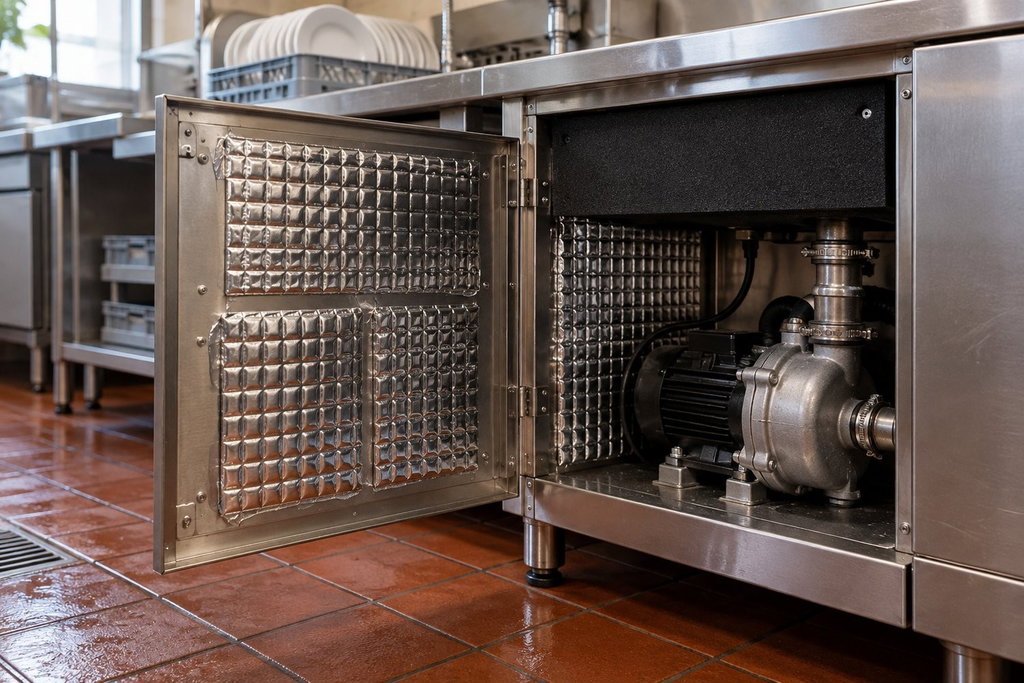
Soundproofing of machinery and equipment in restaurant environments
Reduce disruptive noise and sound transmission from technical equipment in restaurants
In restaurant environments, machinery and technical equipment are a common source of disruptive noise that spreads between different spaces. Kitchens, bars, dishwashing areas, and utility rooms often contain equipment that generates continuous noise, fan noise, and vibrations. When these sounds spread to dining rooms, serving areas, or adjacent spaces, both the guest experience and the work environment are negatively affected. Soundproofing of machines and equipment aims to stop this sound transmission and create better acoustic separation.
What does soundproofing of machinery and equipment entail?
Soundproofing of machines and equipment involves limiting how airborne sound spreads from technical sound sources to other rooms. Unlike sound absorption, which reduces echoes and reverberation within a room, sound insulation focuses on blocking the path of sound between different spaces. Vibration damping, in turn, is used to reduce structure-borne noise when vibrations are transmitted through the building’s structure. When dealing with machine noise, a clear distinction between these measures is often required.
Common noise problems from equipment in restaurants
In restaurants, noise problems often arise from dishwashers, refrigeration and freezer units, ventilation systems, fans, ice machines, and other kitchen equipment. These machines often operate continuously and generate a steady background noise that easily spreads through walls, doors, and openings. As a result, the noise is heard in the dining area or staff areas, even though the noise source is located in a separate room.
How does noise from machines spread between rooms?
Machine noise spreads primarily as airborne sound through walls, ceilings, doors, and gaps in the structure. If insulation is insufficient or if penetrations and connections are not sealed, the sound can easily travel to adjacent spaces. This becomes particularly evident in restaurants with open floor plans or shared utility areas.
Continuous background noise
Operating machinery creates a constant sound that affects the acoustic environment over time.
Sound leakage through structures
Inadequate insulation allows machine noise to spread to dining and serving areas.
Why choose sound insulation for machines and equipment?
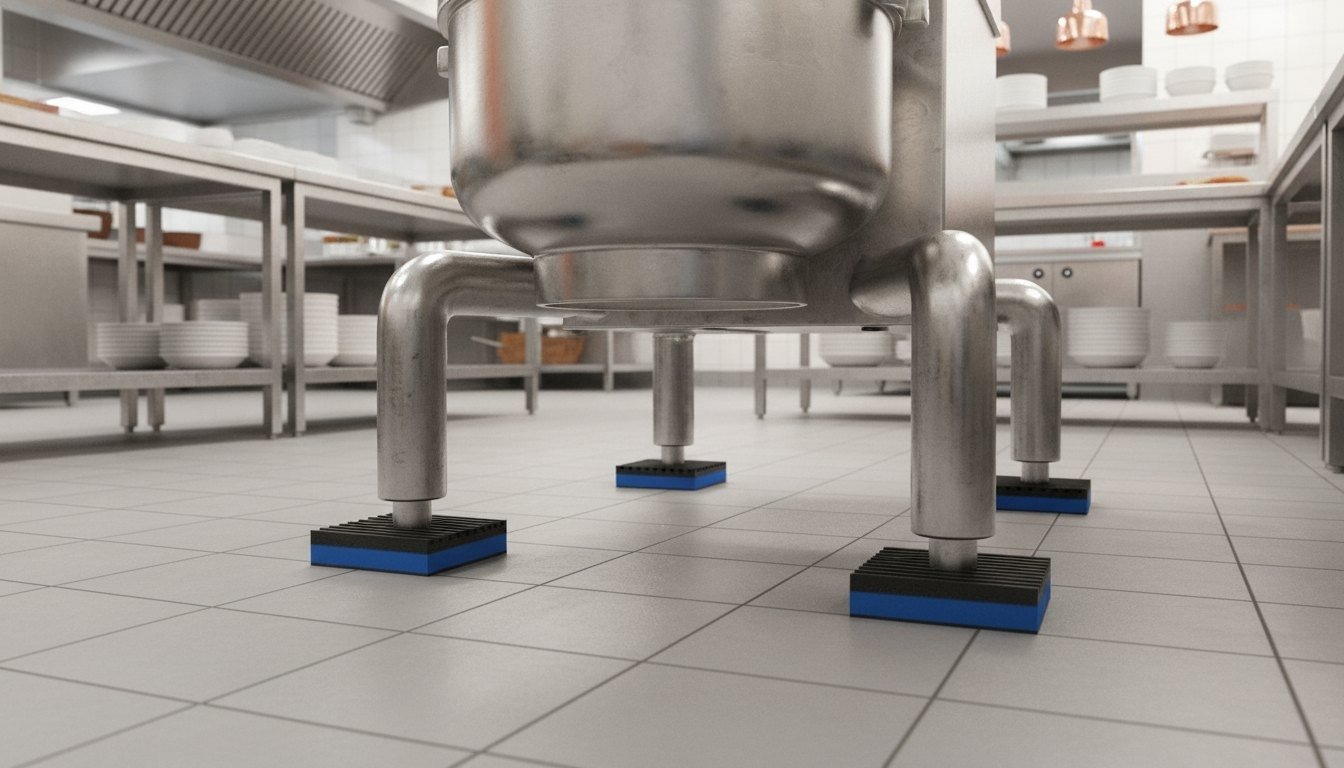
Sound insulation for machines and equipment is crucial for creating a clear separation between the kitchen, utility rooms, and guest areas. This measure reduces disruptive noise, improves the work environment for staff, and contributes to a quieter and more professional sound environment for guests. In many cases, sound insulation is combined with vibration damping at the machine’s mounting points to achieve the best possible results.
Well-considered advice for the best results
For maximum effectiveness, both the sound source and the sound’s transmission paths should be analyzed. A common mistake is to focus solely on the room’s acoustics, even though the problem is actually sound transmission between spaces. By taking a structured approach to soundproofing around machinery and technical equipment, a long-term, functional, and more pleasant restaurant environment is created.
Soundproofing of machinery and equipment is therefore a crucial measure for preventing disruptive noise between rooms and creating a better balance between the kitchen, dining area, and guest space in restaurants.