

• Free shipping
  • 5-year warranty
  • Fast delivery

Sound tests and acoustic measurements

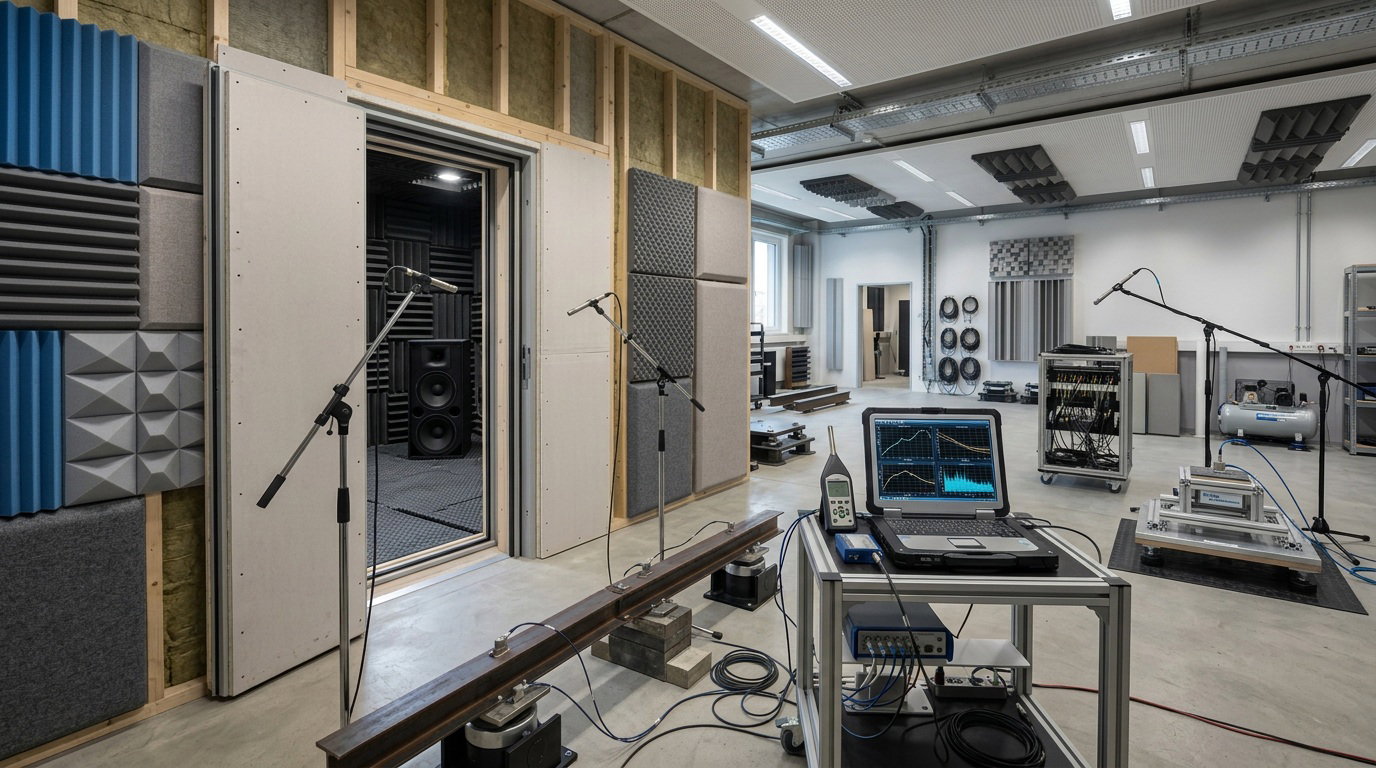
Sound is often perceived subjectively, but objective measurements are required to assess the effectiveness of an acoustic measure. Through sound tests and acoustic measurements, it is possible to analyze how sound behaves in a building or space, identify problem areas, and evaluate the improvements achieved after a measure has been implemented. Measurement data provides a fact-based foundation that makes it possible to compare results and make well-informed decisions regarding the sound environment, acoustics, and sound insulation.

Acoustic measurements are used in many different types of environments where sound affects comfort, the work environment, or functionality. This can include residential spaces with disruptive sound between rooms, offices where reverberation impairs speech intelligibility, restaurants with high noise levels, or industrial environments where noise and vibrations affect both people and equipment. By measuring and documenting sound conditions, it becomes easier to understand the scope of the problems and which measures are most effective.

In acoustics, several different types of measurements are used depending on the problem being analyzed. Reverberation measurements are used to assess how long sound lingers in a room and how the acoustics affect speech intelligibility and sound comfort. Sound insulation tests show how effectively walls, floors, ceilings, or other structures limit sound transmission between spaces. Vibration measurements are used to analyze structure-borne noise from machinery, technical installations, and building structures.

One of the greatest advantages of sound testing is the ability to compare the situation before and after a measure is implemented. By documenting the baseline and then conducting new measurements, the change can be quantified and reported clearly. This provides a more accurate picture of how different solutions affect the sound environment than relying solely on subjective experiences.

Fact-based sound tests also play an important role in planning new projects and renovations. By studying documented measurement results from similar environments, it is possible to gain a better understanding of which methods work in practice and which expectations are realistic. This reduces the risk of misguided investments and makes it easier to choose the right solution from the start.

This page compiles sound tests and acoustic measurements from various types of environments and applications. The aim is to provide a transparent and knowledge-based picture of how sound absorption, sound insulation, and vibration damping work in real-world conditions. By combining measurement data with practical examples, we create a valuable decision-making tool for individuals, businesses, property owners, and public entities seeking to improve their acoustic environment in a documented and long-term sustainable manner.

Recommended products

Acoustic testing with sound absorbers

Acoustic Test: Before and After with PES Sound Absorbers

The test was conducted in a 24 m² studio measuring 4 x 6 meters. A total of 4.026 m² of SilentDirect PES sound absorbers were installed in the room, corresponding to approximately 16.8% of the floor area. The absorbers were placed on both the ceiling and walls to reduce echo, reverberation, and harsh sound reflections.

Products in the test:

1 SilentDirect PES Ceiling, 800 x 800 mm
2 SilentDirect PES Wall, 800 x 800 mm
6 SilentDirect PES Wall, 592 x 592 mm

Acoustic testing with sound insulation

Coming soon.

Acoustic test with vibration damping

Coming soon.

*Free shipping

Free shipping to a pickup location

5-year warranty

5-year product warranty

Fast delivery

Usually ships the same day

Acoustic tests with measurable results

To get an accurate picture of how an acoustic solution works, measurements are required. Here we present tests in which various solutions have been evaluated before and after installation. The results can range from reduced reverberation and improved speech intelligibility to reduced sound transmission between rooms and reduced vibrations from machinery and installations.

Sound tests in various environments

Sound problems arise in many different types of spaces and buildings. That is why our sound tests cover multiple environments, such as residential homes, offices, schools, restaurants, studios, workshops, and industrial facilities. By testing solutions under real-world conditions, it becomes easier to understand which measures yield the best results in different situations.

Acoustic measurements of reverberation, sound insulation, and vibrations

On this page, you’ll find acoustic measurements that focus on several key areas of the sound environment. These may include measuring reverberation time to evaluate a room’s acoustics, testing sound insulation to assess how well sound is blocked between spaces, or measuring vibration damping to reduce structure-borne noise.

Before-and-after tests that show real results

Many of our tests report both the baseline conditions and the results after the intervention has been implemented. This makes it possible to clearly see how different products affect the acoustic environment and what improvements can be achieved. By combining measurement data with practical examples, we create a better basis for decision-making for private individuals, businesses, and public entities alike.

Knowledge for Better Decisions

The purpose of our acoustic tests is to provide a transparent and fact-based picture of how different solutions work. Whether you want to reduce echo in a room, improve sound insulation between walls, or reduce vibrations from technical equipment, the tests can help you understand which measures are most relevant to your specific situation.