






Vibration damping for office machinery and equipment
Reduce structure-borne noise and vibrations from technical equipment in office environments
In office environments, machines and technical equipment are a common source of disruptive vibrations. When equipment vibrates during operation, the movement can spread through floors, walls, installations, and joists. This often leads to structure-borne noise, low-frequency hum, or shaking that is felt in other parts of the office than where the equipment is located. Vibration damping of machines and equipment aims to break this mechanical transmission before the vibrations spread throughout the building.
What does vibration damping of machines entail?
Vibration damping involves reducing how mechanical movements are transmitted from a machine to the building’s structure. Unlike sound insulation, which blocks airborne sound between rooms, and sound absorption, which reduces echoes and reverberation within a room, vibration damping focuses on the movement within the structure itself. By reducing vibrations at the source, it also minimizes the noise issues caused by resonance and structure-borne noise in office environments.
Common sources of vibration in offices
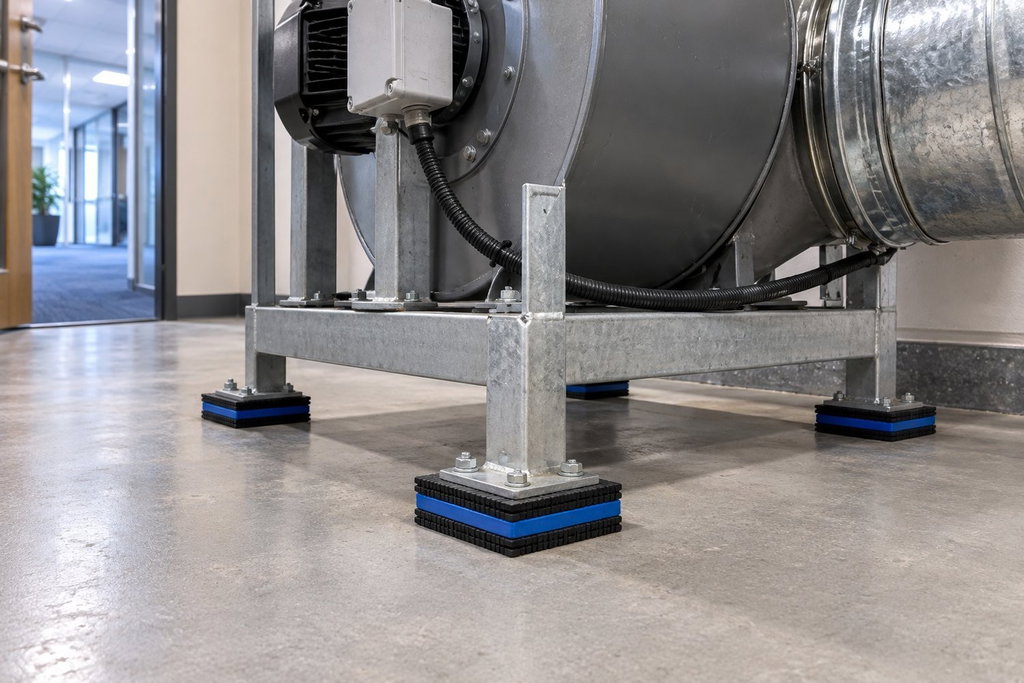
In office environments, vibrations often originate from technical equipment such as HVAC units, fans, server racks, network equipment, and large printers. Coffee machines, refrigeration units, and other equipment with moving parts can also cause continuous vibrations that propagate throughout the building.
Server rooms and technical spaces are particularly vulnerable, as the equipment is often in operation around the clock. Vibrations from fans and cooling systems can propagate through floors and walls and be perceived as a dull hum in office spaces, meeting rooms, or common areas.
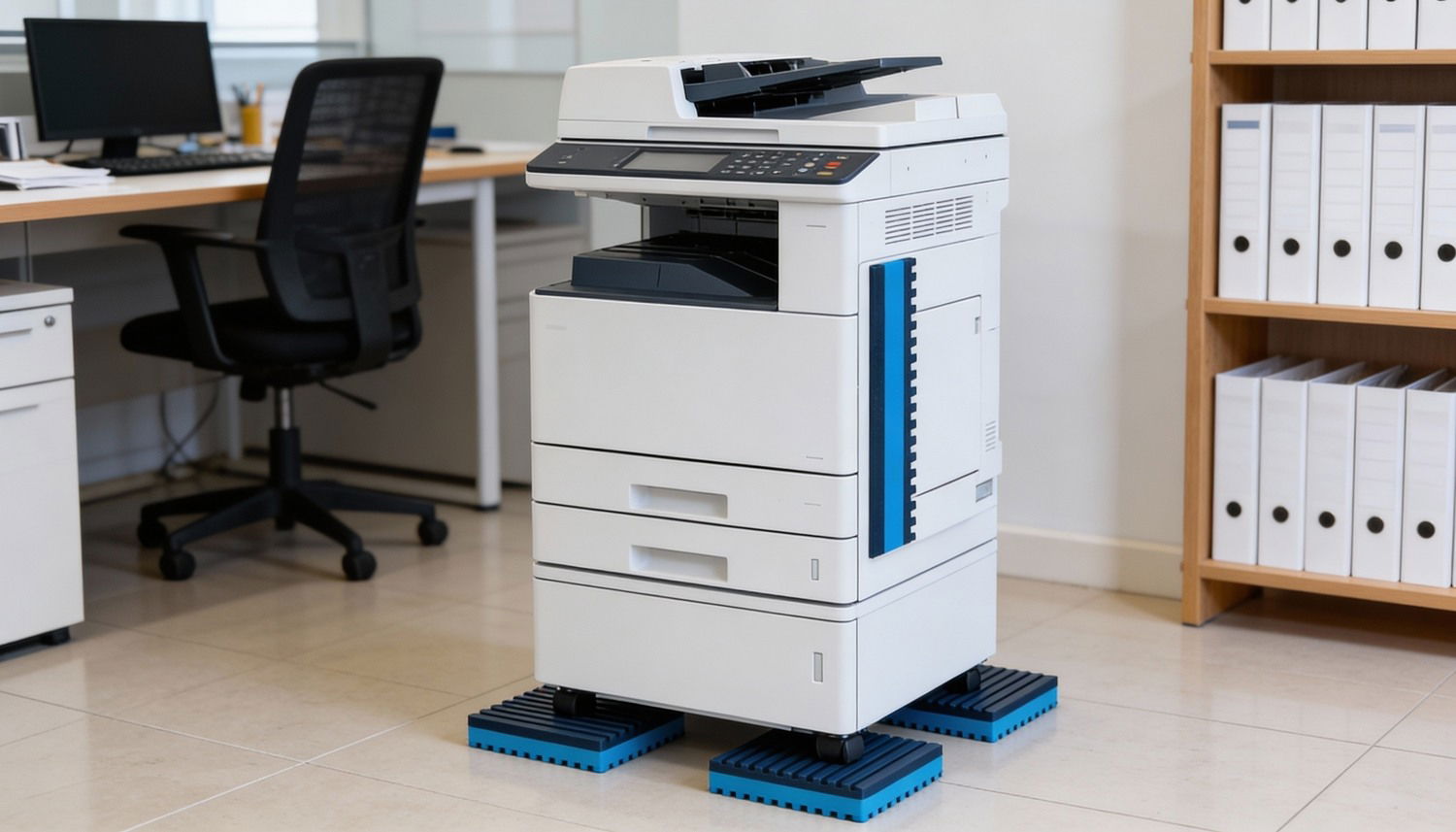
Even smaller equipment such as printers, copiers, and freestanding ventilation units can cause recurring vibrations, especially if they are placed directly on the floor or against a wall without vibration-damping measures.
How do vibrations spread throughout a building?
When a machine vibrates, the motion is mechanically transferred to the foundation and further through the building’s structure. Floors, walls, installations, and floor joists act as conductive structures where vibrations can be amplified through resonance. This means that the problems are often felt in locations other than where the equipment is located, which can complicate troubleshooting without the proper analysis.
Principles of Effective Vibration Damping
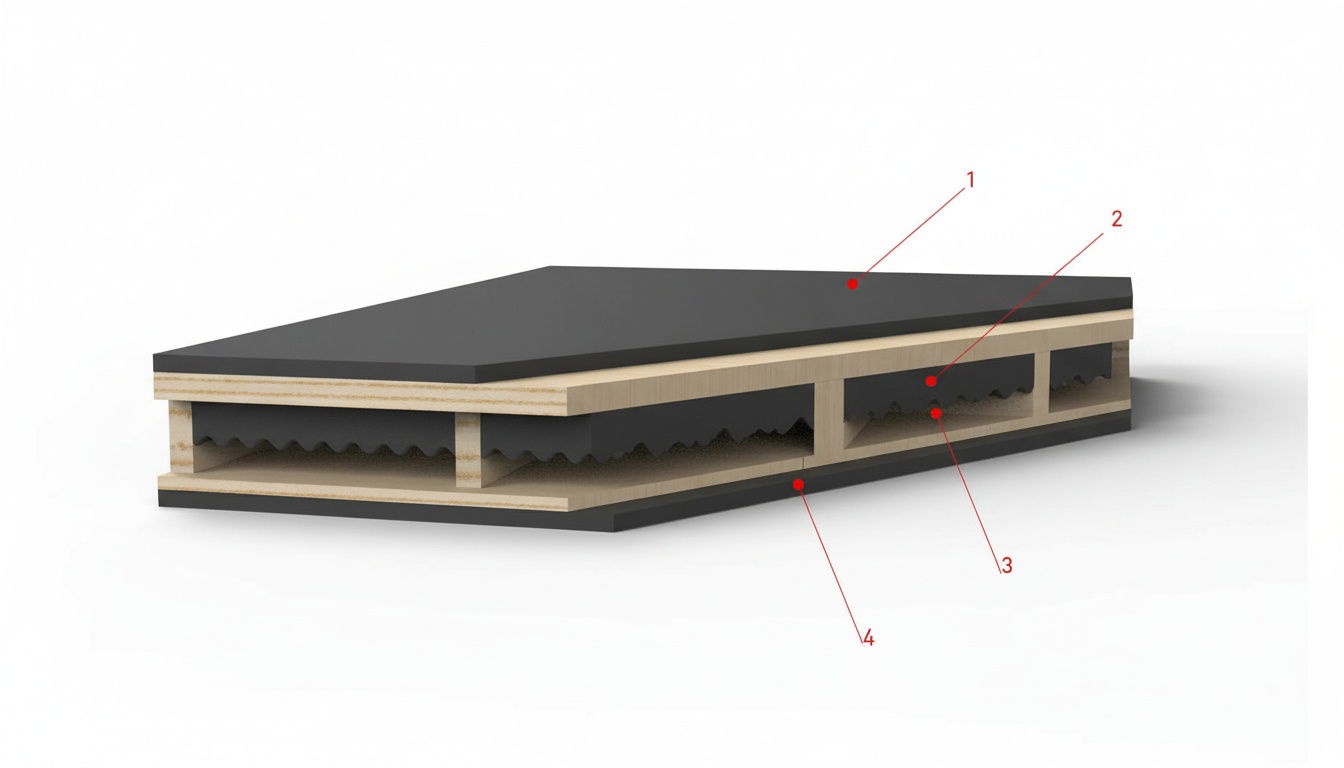
Effective vibration damping is based on reducing direct contact between the machine and the building frame. Through mechanical decoupling, the use of elastic materials, and reduced transmission at mountings, vibrations can be dampened before they spread further. The goal is to manage the vibrations at the source rather than trying to dampen the effects afterward.
Well-considered advice for best results
For maximum effectiveness, each machine or piece of equipment should be analyzed based on its location, frequency of use, and how vibrations propagate through the building. A common mistake is to focus on the room where the disturbance is noticed, even though the source is often located in a utility room or server room. By addressing vibration damping directly at the equipment, structure-borne noise, humming, and shaking can be reduced more effectively and sustainably.
Vibration damping of machines and equipment is therefore a key measure for creating a quieter, more stable, and professional office environment.