








Sound absorption – reduces noise and echoes in sports halls
Create better acoustics, clearer communication, and increased safety in sports halls
In sports halls, sound absorption is often a crucial measure for creating a functional and safe acoustic environment. Large open spaces, high ceilings, and hard floors and walls made of concrete or brick cause sound to bounce freely throughout the room. The result is a strong echo, long reverberation, and a noise level that quickly becomes exhausting for students, athletes, teachers, and spectators alike. With the right sound-absorbing solutions, noise can be effectively reduced and acoustics improved in a controlled and sustainable manner.
What is sound absorption?
Sound absorption involves sound waves being captured by porous materials and converted into thermal energy, which reduces reflections within the room. This differs from sound insulation, which aims to block sound between different rooms, as well as vibration damping, which reduces structure-borne noise from, for example, installations or equipment. Sound absorption is thus used to improve the acoustics in the space where the sound originates—something that is particularly important in large spaces such as sports halls.
Common acoustic problems in sports halls
Sports arenas often experience problems with excessive reverberation, causing shouts, whistles, ball bounces, and crowd noise to blend together. Verbal instructions become difficult to hear, and the sound level is perceived as significantly higher than it actually is. This can lead to reduced concentration, increased stress, and in some cases even safety risks when communication is not clearly conveyed.
How sound-absorbing solutions work in sports halls
Sound-absorbing products are placed on surfaces where sound reflections are strongest. When sound waves hit the absorber, they are slowed down, which shortens the reverberation time and makes the sound environment more controlled.
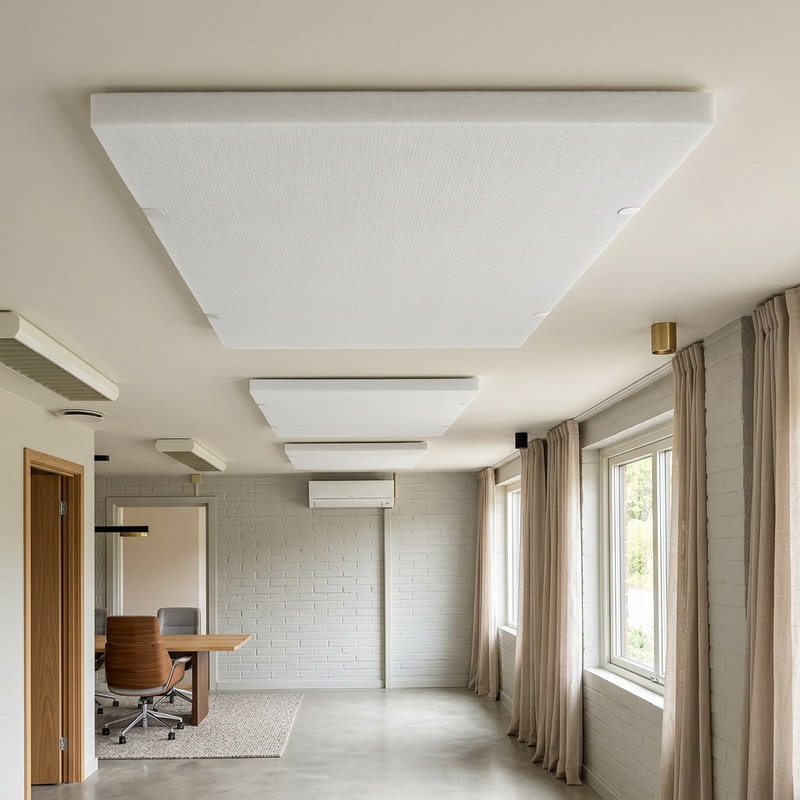
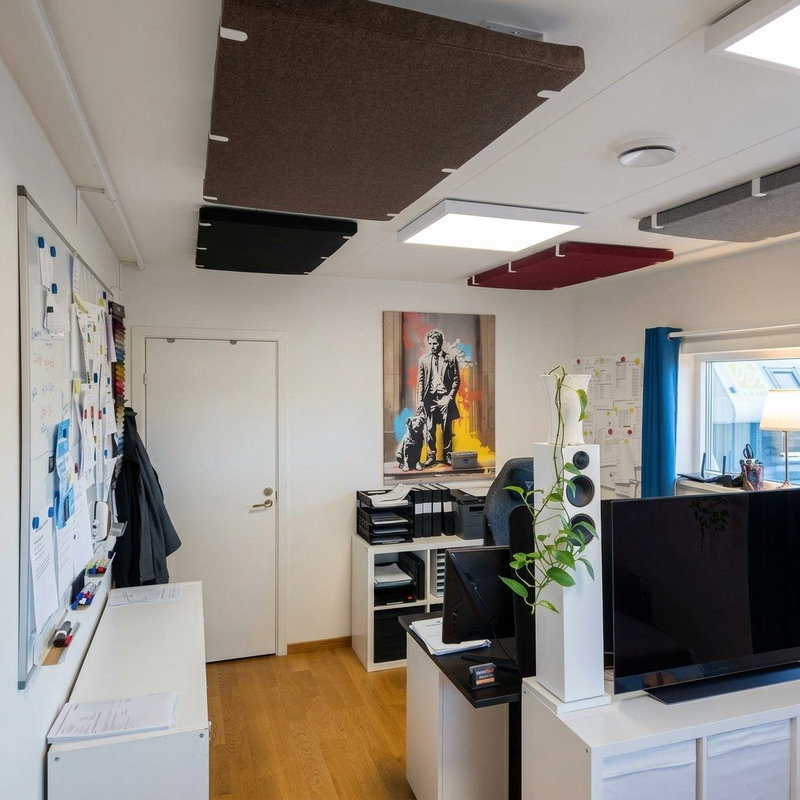
Sound absorption in ceilings
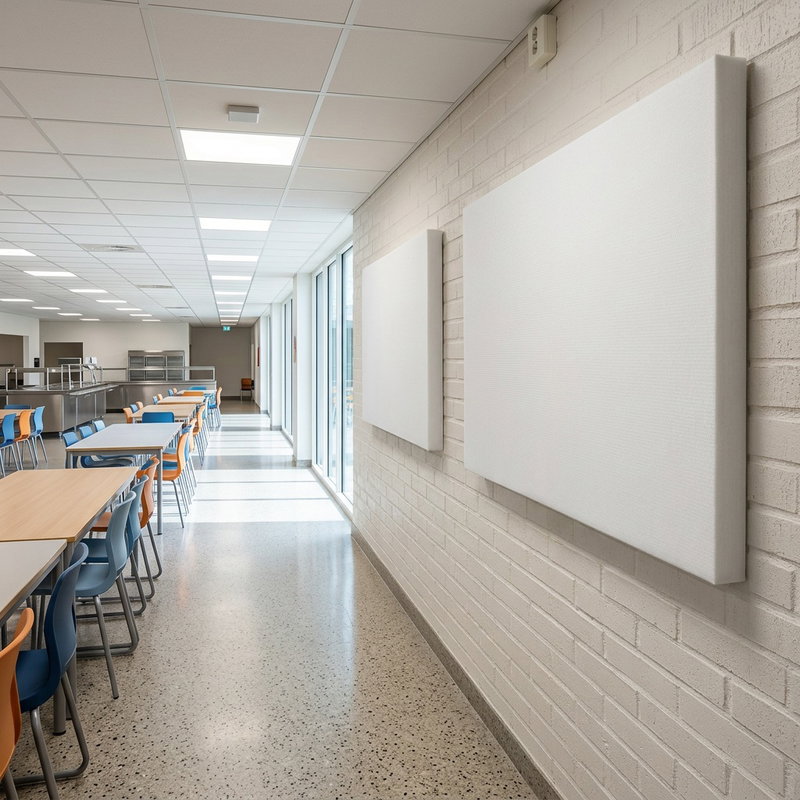
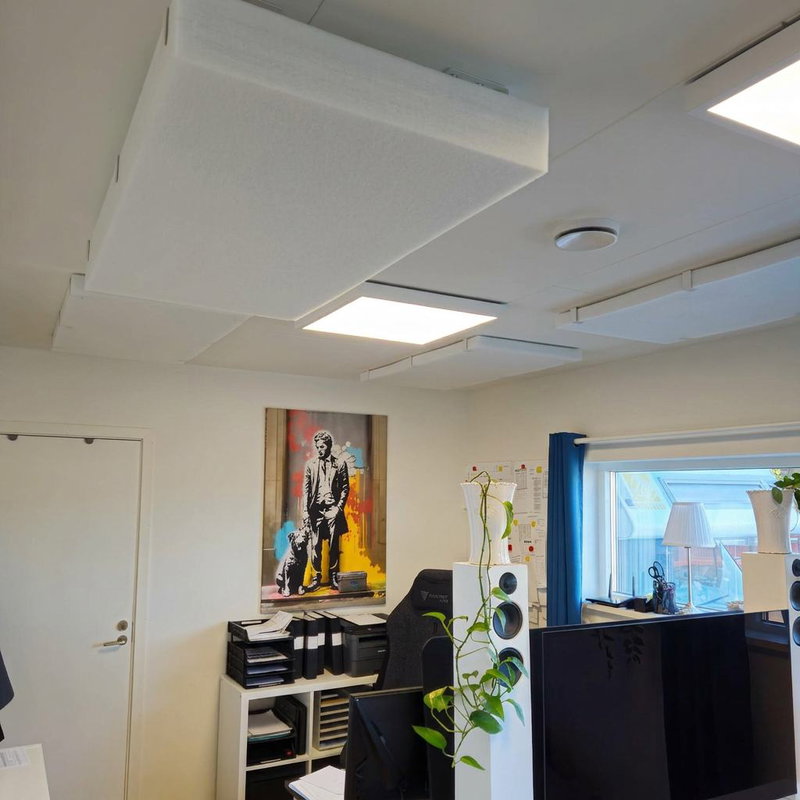
Ceiling absorbers are often the most effective basic measure in sports halls, where large open ceiling surfaces would otherwise significantly amplify reverberation.
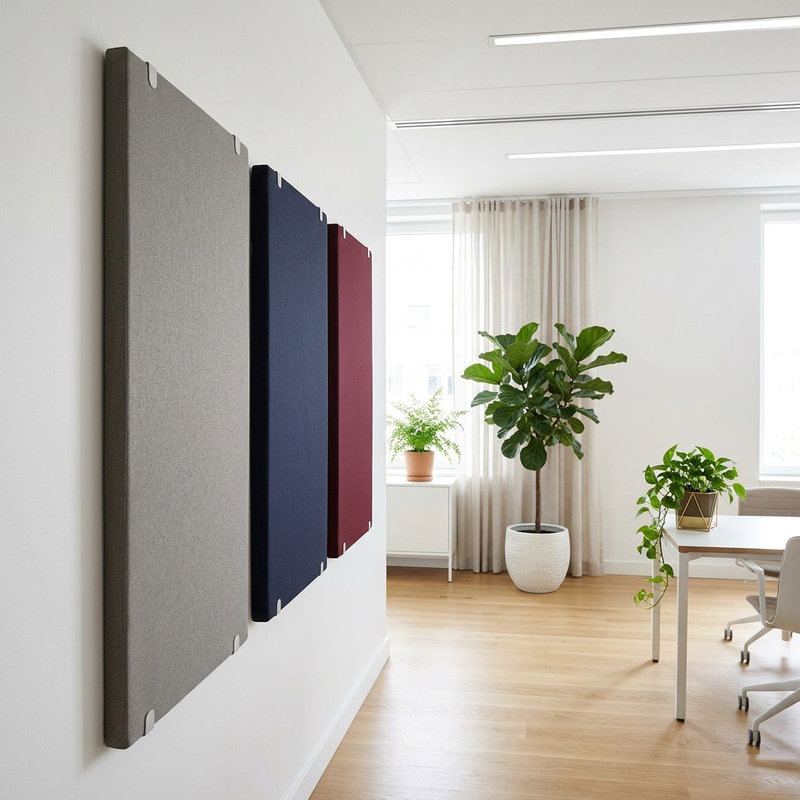
Sound absorption on walls
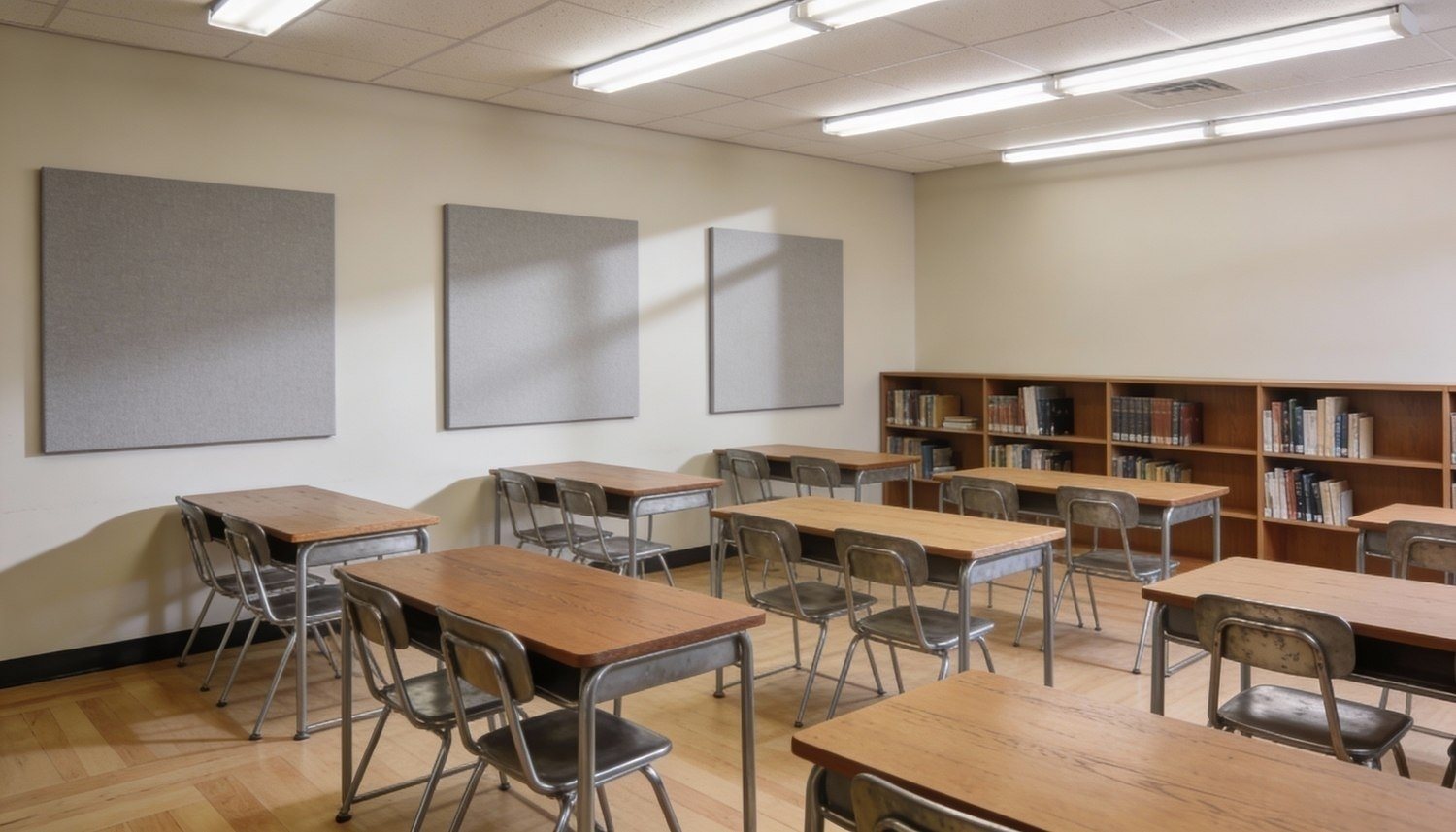
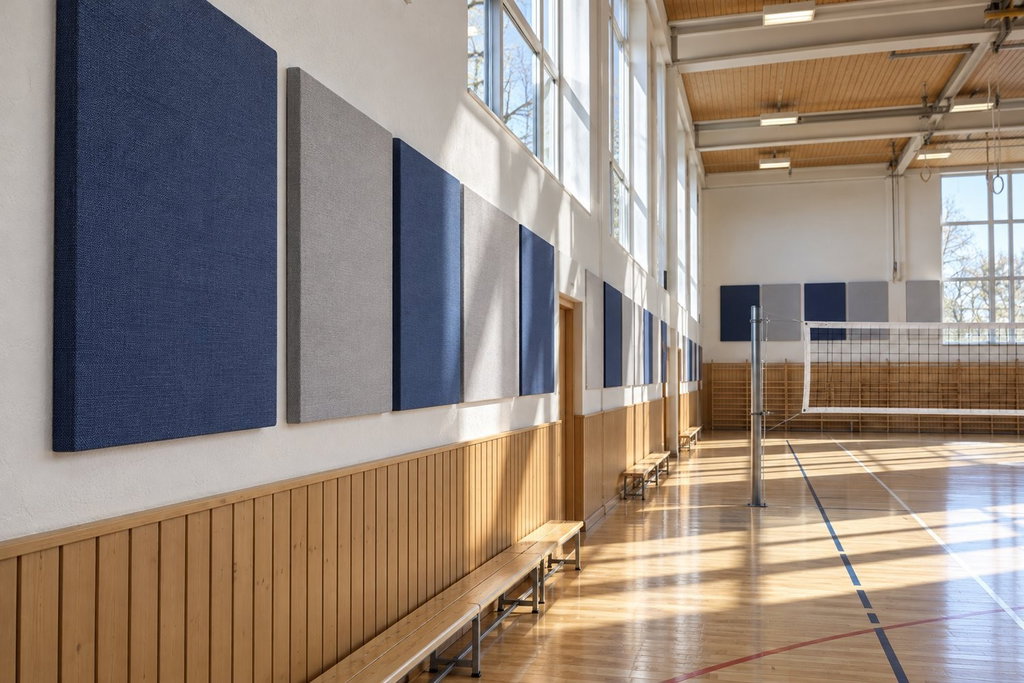
Wall absorbers reduce reflections from large, hard wall surfaces and improve speech intelligibility in the hall.
Sound-absorbing curtains and room dividers
In some halls, curtains or room dividers can be used to dampen sound locally or create zones with better acoustic control.
Why choose sound absorption in a sports hall?
Sound absorption provides a clear and immediate improvement in the acoustic environment without affecting the hall’s functionality. This measure contributes to better communication, a lower perceived noise level, and increased comfort for both athletes and staff. In many sports halls, sound absorption is combined with sound insulation or vibration damping to address more complex acoustic issues.
Well-considered advice for best results
For optimal results, sound absorption should be tailored to the hall’s size, ceiling height, and intended use. A common mistake is using too little absorptive surface area or treating only part of the room. By combining ceiling and wall absorbers and distributing the measures evenly, a long-term, functional, and safe acoustic environment is created.
Sound absorption is therefore a fundamental measure for reducing noise and echo in sports halls and creating better conditions for instruction, training, and events.