




• Free shipping
  • 5-year warranty
  • Fast delivery

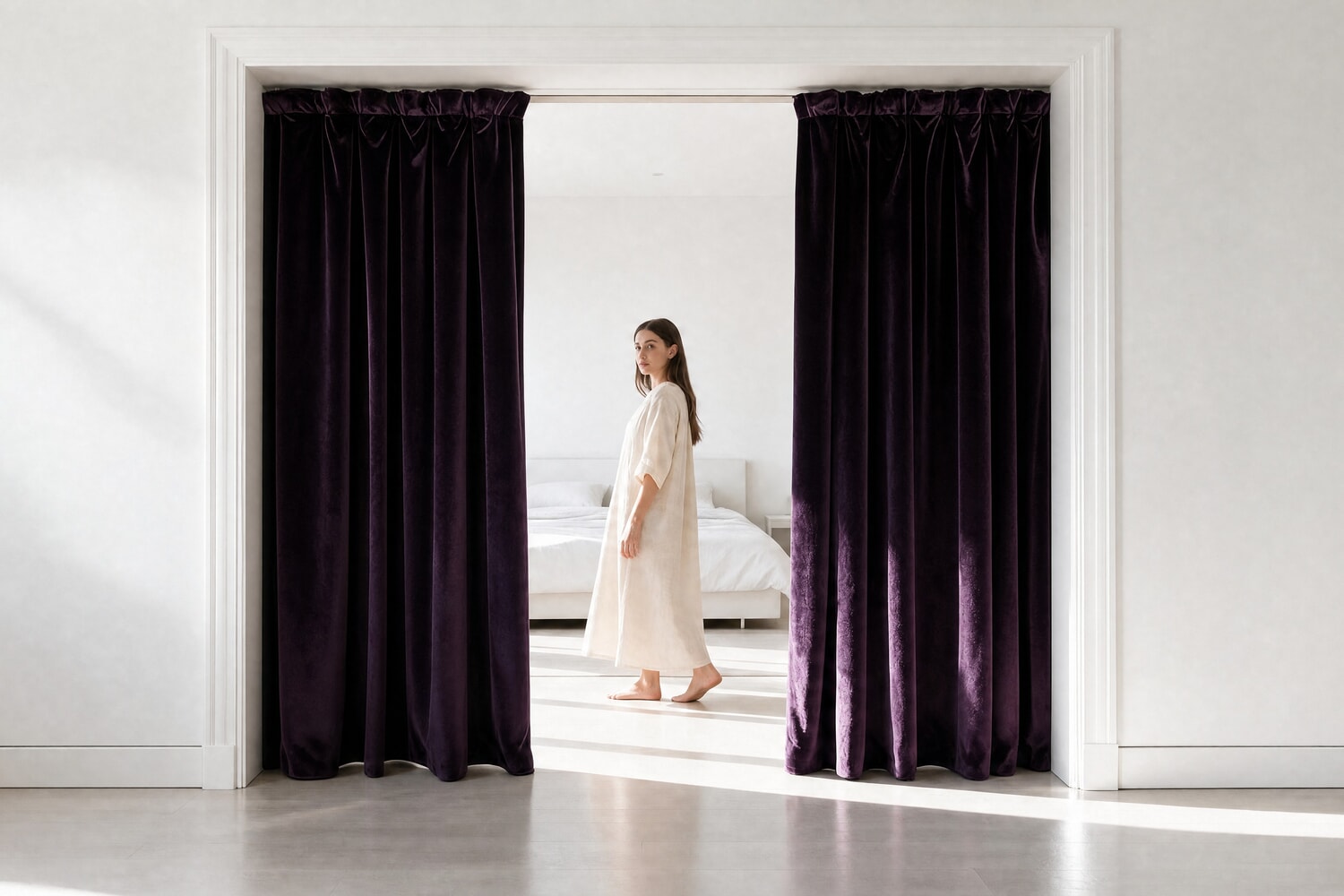
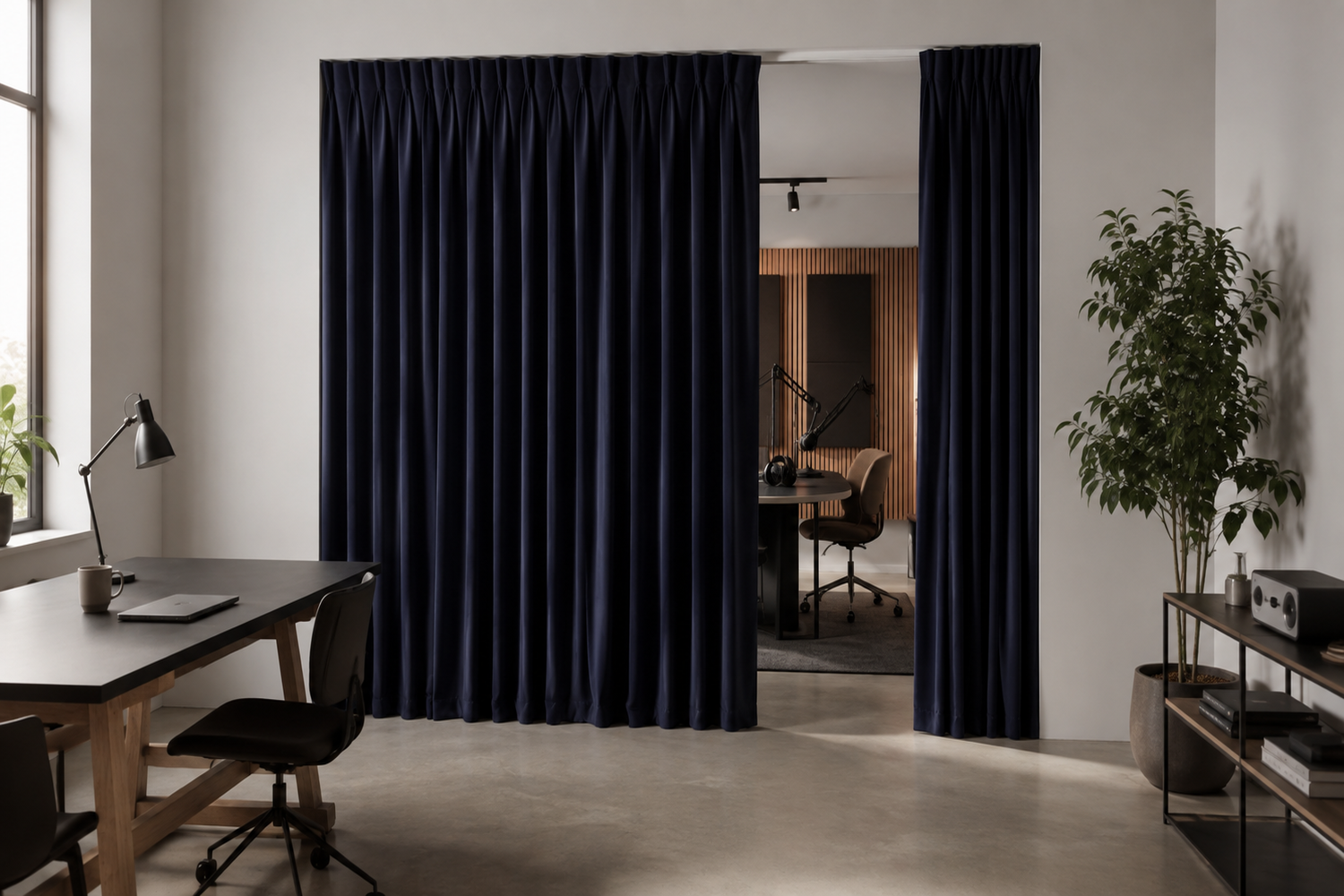
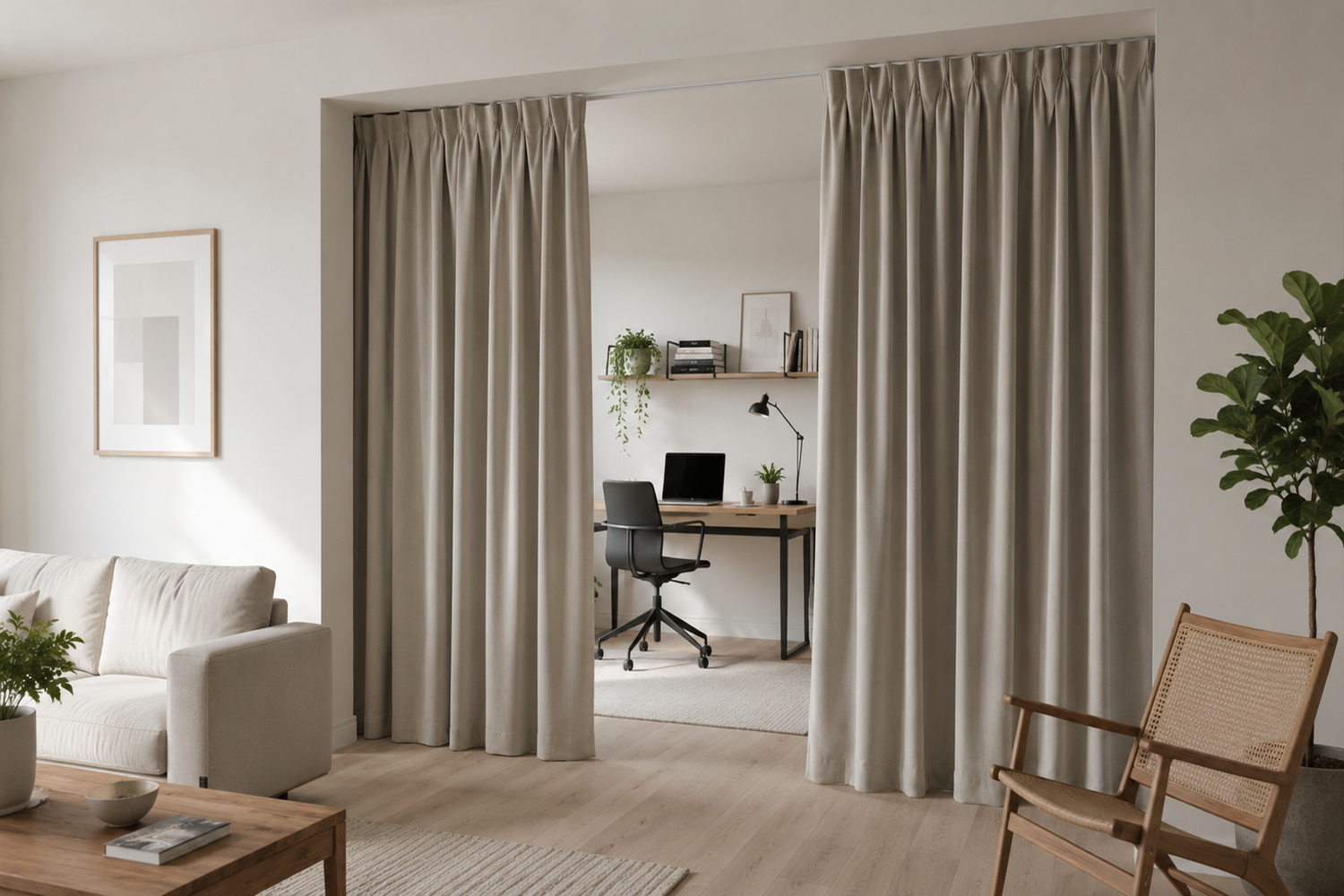
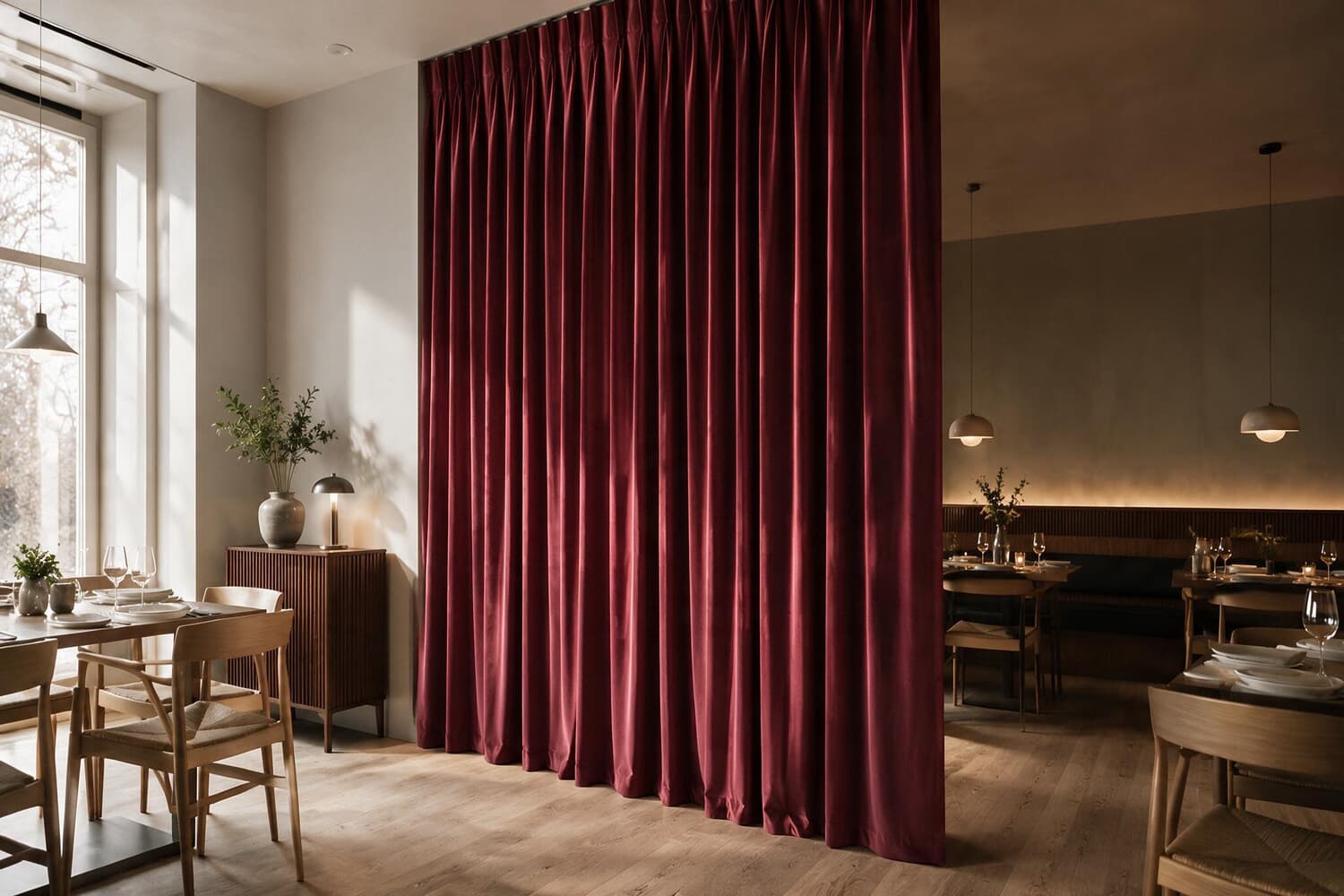
Sound-Absorbing Fabric Room Dividers – Easy Installation and Effective Sound Absorption

A sound-absorbing room divider works in two ways at the same time. The fabric absorbs some of the sound reflections that strike its surface, while the divider’s placement blocks the direct path of sound between a sound source and a listener. This combination can make conversation, activity, and background noise less intrusive in the area behind the divider.

However, this does not mean that a textile room divider provides the same sound insulation as a solid structural wall. A true partition wall can be constructed using mass, multiple layers, an air gap, decoupling, and tight joints. A flexible room divider is thinner and often has open paths for sound at the floor, ceiling, sides, or passageways. Sound can therefore bend around the divider and continue to spread throughout the room.

The room divider works best when the goal is to reduce disruptive direct sound, create smaller acoustic zones, and dampen reflections in a shared space. For example, it can be placed between workstations, around a conversation area, between dining tables in a restaurant, or between active play and focused work in a school. The better the divider blocks the line of sight between the sound source and the listener, the better the sound isolation is typically achieved.

Height, width, placement, and the amount of open space are all very important. A wide room divider that extends close to adjacent surfaces typically provides better sound insulation than a narrow fabric panel with large openings. Pleating increases the amount of fabric relative to the straight section and also contributes to a softer appearance. An extra-wide room divider can be practical in larger spaces because fewer fabric seams are needed.

If the problem is instead prolonged reverberation throughout the room, the room divider often needs to be combined with additional absorbers. SilentDirect typically recommends that the ceiling be sound-absorbed first, since the ceiling is often a large, unobstructed surface that can be treated without taking up usable floor space. The room divider is then used for targeted sound screening where the need is greatest.

If the sound is coming from another room, a neighbor, or through the building’s walls, floors, or ceilings, the problem should be investigated as sound transmission through the structure. In such cases, a fabric room divider is typically a supplementary measure, not the primary solution.

Recommended Products

What affects the sound-absorbing properties of a room divider?


Sound Absorption of Materials

Soft and porous materials can absorb some of the sound energy that would otherwise be reflected back into the room. Above all, this helps reduce reflections and creates a softer-sounding environment.

Height of the partition

The partition must be tall enough to block the line of sight between the sound source and the person being disturbed. Sound that can pass unimpeded over the partition reduces its effectiveness.

Width of the partition

A wide partition with few open spaces blocks a larger portion of the direct sound path. Narrow solutions can work locally but leave more room for sound to travel around the sides.

Placement in Relation to the Sound Source

Placing the partition close to the sound source can block a larger portion of the direct sound before it has a chance to spread. Alternatively, the partition can be placed near the workspace or zone that needs protection.

Openings around the fabric

Large gaps at the floor, ceiling, and sides create open paths for sound. However, a flexible fabric partition should never be installed in a way that impairs ventilation, accessibility, or escape routes.

Pleating and Amount of Material

A pleated installation means that more fabric is used over the same straight length. This provides a larger exposed surface area and can improve absorption compared to fully stretched fabric.

Other surfaces in the room

Hard floors, glass partitions, bare walls, and untreated ceilings continue to reflect sound. In such a room, the partition should often be combined with ceiling or wall absorbers.

Type of Acoustic Problem

Room dividers are suitable for direct sound, speech, zoning, and reflections within the same room. When sound is transmitted through building structures or heavy sound insulation is required, other designs and materials are normally needed.

What are the benefits of using fabric room dividers?

Using fabric room dividers is a flexible and practical way to transform a room both aesthetically and functionally. Whether you want to create separate work areas, improve acoustics, or control the amount of light entering the room, fabric room dividers offer a versatile and cost-effective solution.

Easy Installation and Customization Options
One of the biggest advantages of fabric room dividers is that they are easy to install. They require no extensive construction or permanent structures, making them a convenient option for both home environments and public spaces. They can be mounted using ceiling tracks, stands, or freestanding frames, allowing them to be easily adapted to the room’s needs. Thanks to their light weight, they can be quickly taken down or moved, making them ideal for environments where flexibility is crucial.

Space Division and Increased Privacy
In open-plan layouts, fabric room dividers can help create clear boundaries between different areas. They serve as a practical solution for dividing large spaces into smaller sections without having to build permanent walls. This makes them particularly useful in office environments where it may be necessary to create private workspaces or meeting rooms. Even at home, they can be used to separate, for example, a workspace from a living room or a sleeping area from an open floor plan. Using fabric room dividers creates a more organized and structured environment where each part of the room has a clearer function.

Sound Absorption and Improved Acoustics
Fabric room dividers have sound-absorbing properties, making them effective at reducing disruptive noise and improving a room’s acoustics. In open-plan offices, sounds from conversations, phones, and keyboards can create a noisy work environment. Using sound-absorbing fabrics reduces reverberation, contributing to a more pleasant and productive atmosphere. Even in home environments, fabric room dividers can be an effective way to lower noise levels, especially in rooms with hard surfaces where sound is easily reflected. For example, they can be used in music studios, home offices, or living rooms where acoustic comfort is important.

Cost-Effective Solution
Compared to building permanent walls or installing soundproof glass partitions, fabric room dividers are an affordable alternative. They offer a flexible solution that can be adapted as needed without requiring major renovation projects. The choice of material naturally affects the cost, but even high-quality sound-absorbing fabrics are generally more affordable than fixed wall structures. For businesses and organizations looking to improve their work environment without making extensive changes, this is a particularly attractive solution.

Aesthetic Customization and Decorative Options
Fabric room dividers are available in a wide range of colors, patterns, and materials, making them an aesthetically pleasing choice. They can be easily customized to match existing decor and contribute to the room’s overall ambiance. In modern offices, sleek, neutral fabrics can create a professional and cohesive environment, while patterned or colorful options can foster a more creative and inspiring atmosphere. In the home, fabric room dividers can be used as part of the decor—for example, by choosing fabrics that match curtains, rugs, or furniture. They can also be used to create a softer and cozier feel in the room.

Flexibility and the Ability to Transform a Space
A major advantage of fabric room dividers is their flexibility. They can be easily moved, folded up, or replaced to accommodate changing needs. In dynamic work environments where the layout often needs to be adjusted, mobile fabric room dividers can be an ideal solution. They can be quickly adapted to create new workstations, meeting rooms, or social spaces. In home settings, they can be used temporarily to create more private spaces as needed—for example, to partition off a guest room or create a separate workspace.

Sun Protection and Light Control
Some fabrics have light-filtering properties and can be used to control the amount of daylight entering a room. By using a fabric room divider, you can create a comfortable lighting environment, especially in rooms with large windows or where direct sunlight can be distracting. In work environments, this can help reduce glare on screens, while in home environments it can contribute to a more relaxed atmosphere by softening the light entering the room.


In both work and home environments, fabric room dividers can helpenhance privacy and improve concentration. In open-plan offices, it can be difficult to find privacy for important conversations or focused work. By using a room divider, you can create a more private workspace without completely isolating yourself from your surroundings. At home, a fabric room divider can provide a sense of privacy in shared spaces, which can be especially useful in small apartments or multi-room layouts where several people are present at the same time.

Temporary Room Division for Events and Meetings
In certain situations, it may be necessary to temporarily divide a space. Fabric room dividers work excellently for creating flexible solutions for temporary needs. At events, conferences, or trade shows, they can be used to create different sections, group areas, or backdrops for presentations. They can also be used to temporarily partition off a section of a larger room for private meetings or workshops. Since they’re easy to set up and take down, they can be quickly removed when no longer needed, making them a practical solution for temporary space requirements.

Summary
Fabric room dividers are a versatile and practical solution for improving the acoustic environment, increasing privacy, and adapting the room to different needs. They are easy to install, move, and customize, making them a flexible solution for both office environments and homes. Thanks to their sound-absorbing properties, they can reduce distracting background noise and improve acoustics. At the same time, they offer aesthetic possibilities that make it possible to create a cozy and stylish interior. Whether you need a permanent or temporary solution, a fabric room divider can help create a more structured, functional, and comfortable environment.

How does a fabric room divider work?

A fabric room divider is a versatile and practical solution for improving acoustics, creating separate spaces, and adding aesthetic elegance to a room. It is often used in offices, open-plan layouts, and home environments where there is a need to reduce noise levels and create a more pleasant acoustic environment. By combining sound-absorbing materials with fabric covering, these dividers function both as visual room dividers and as effective sound absorbers. They are designed to dampen reverberation and reduce disruptive noise, making them a popular solution in environments where acoustics play a crucial role.

Sound Absorption and Acoustic Properties
Sound-absorbing fabric room dividers are designed to reduce sound reflections and absorb sound waves that would otherwise spread throughout the room. When sound waves hit a hard surface, such as a wall or ceiling, they are reflected back into the room, creating elevated sound levels and prolonged reverberation. A fabric room divider acts as a barrier that traps sound waves and absorbs some of the sound energy, contributing to a quieter and more pleasant atmosphere. The choice of fabric plays an important role in how effectively a room divider absorbs sound. Fabrics with an open structure or loose weave—such as wool, acoustic felt, and sound-absorbing polyester—have better sound-dampening properties than dense or tightly woven materials. These materials have a porous surface that allows sound waves to penetrate and be absorbed, reducing reflections and improving the room’s acoustics. For maximum sound absorption, multiple layers of acoustic materials are often used. For example, a room divider may have a core of sound-absorbing foam or fiber material, covered with a specially developed acoustic fabric that further contributes to sound reduction.

Construction and Design
Fabric room dividers come in various styles and sizes depending on the specific need and the room’s layout. They can be freestanding units with a metal or wood frame, or suspended from the ceiling to create a more flexible solution. Freestanding room dividers are often modular, meaning they can be placed side by side to create larger, separate spaces. They can also be foldable or rollable, making them easy to move when needed. This flexibility makes them particularly useful in work environments where the function of the room frequently changes. Ceiling-mounted room dividers often use a track or cable system that allows for adjustment of their position. These models are ideal for open-plan offices where it’s important to be able to create temporary private workspaces without building permanent walls. In addition to their functional features, fabric room dividers also offer aesthetic benefits. They come in a wide range of colors, patterns, and textures, making it possible to customize them to match the room’s interior design. Some models even feature printed motifs or specially designed finishes that make them a decorative element of the room.

Strategic Placement for Optimal Effect
To achieve the best possible sound absorption, the placement of room dividers is crucial. By positioning them near sound sources—such as workspaces, conference areas, or open meeting spaces—sound levels can be effectively reduced. In rooms with high reverberation, such as large open-plan offices or restaurants, fabric room dividers can be placed in strategic locations to reduce sound propagation and create a more subdued atmosphere. By combining them with other acoustic solutions, such as sound absorbers on walls and ceilings, the acoustic environment can be further improved.

Limitations and Expectations
Although fabric room dividers can help improve acoustics and reduce noise levels in a room, it is important to have realistic expectations. They cannot completely eliminate sound, especially low-frequency sounds that travel through floors and walls. To create an optimal acoustic environment, they should be used in combination with other sound-absorbing measures. Supplementing room dividers with acoustic panels, carpets, and soft furnishings can contribute to more effective sound control and a more comfortable work environment.

Summary
A fabric room divider is a functional and aesthetic solution for improving acoustics, creating private workspaces, and adding a decorative element to a room. By using sound-absorbing materials and strategically placing the dividers, noise levels can be reduced and reverberation dampened, resulting in a more comfortable and productive environment. Thanks to their flexibility and ease of installation, they are particularly useful in office environments, open-plan layouts, and home offices where the acoustic environment plays an important role. With the right choice of materials and placement, fabric room dividers can be an effective solution for creating a quieter and more structured indoor environment.

How to Choose and Install a Sound-Absorbing Room Divider

A room divider works best when it’s chosen to address the specific sound problem and placed with consideration for both direct sound and the room’s overall acoustics. We usually recommend that you first figure out where the sound is coming from, who is being disturbed, and what paths the sound can take.

1. Determine which sound problem you want to solve

Listen to the room both when it’s quiet and when the disruptive activity is taking place. If you mainly hear conversations or activity from another part of the same open space, a sound-absorbing fabric screen may be appropriate. If all sounds linger for a long time and the room feels noisy even far from the sound source, there’s likely also a problem with reverberation.

If the sound is coming through a solid wall, a ceiling, a floor, or from an adjacent space, the issue is instead sound transmission through the structure. In that case, the room divider should not be treated as a substitute for a dense and heavy sound-insulating construction solution.

2. Identify the sound source and the sensitive zone

Mark where the main sound source is located and which workspace, seating area, or activity needs protection. Look at the direct line of sight between these points. The room divider should be positioned so that it blocks this line of sight over as large an area as possible.

In an office, this might mean between a conversation area and quiet study areas. In a classroom, it can be placed between group work and quiet reading. At home, it can separate the home office from the more active part of the living room.

3. Choose the Right Width and Height

Measure the distance that needs to be screened off and take into account how the fabric will be pleated. Don’t just calculate the straight opening: a pleated installation requires more fabric than the width of the opening. For larger areas, the Silent Divider Feltra – Extra Wide provides wider coverage with fewer seams.

The divider should be tall enough to block the line of sight between the sound source and the listener. At the same time, avoid a solution that blocks ventilation, sprinklers, doors, or necessary passageways. Always check the venue’s safety requirements before installing the track or suspension system.

4. Position the divider where it blocks the most direct sound

If possible, test the placement before making it permanent. A partition near the sound source can capture and block sound before it spreads throughout a larger part of the room. In other situations, it works better to enclose or shield the sensitive area.

Avoid unnecessarily large openings on the sides. Sound can bend around the partition, which means that a narrow fabric partition in the middle of a large room is often less effective than a wider solution that connects naturally to the room’s other boundaries.

5. Install according to the selected hanging method

The Silent Divider Feltra has sewn-in gathering tape or multi-tape as well as loops on the back. It can be hung on a curtain rod using the loops—provided the rod’s diameter does not exceed 35 mm—or installed with gathering tape hooks, finger hooks, eye hooks, or slide hooks.

Ensure that the track, rod, mountings, and mounting surface are designed to support the fabric’s weight and the intended width. Distribute the hanging points evenly so that the fabric hangs securely and the intended pleating is maintained. Always follow the product’s current installation instructions.

6. Add additional treatment when the entire room has a long reverberation time

A room divider primarily treats the zone where it is located. If sound is reflected from ceilings, walls, glass, and floors, it often needs to be combined with additional absorptive surfaces. SilentDirect typically recommends starting with the ceiling, as it is often the room’s largest free surface.

PES ceiling is suitable for all-around sound absorption from ceilings in offices, schools, homes, and public spaces, among other places. In larger rooms or spaces with long reverberation times, PES ceiling Deep Absorb can provide a more thorough solution. Near individual desks, the Bulletin Desk Screen can be used for local sound isolation, but it does not replace a complete acoustic solution for the entire room.

7. Test the results and make adjustments

Conduct the same listening test before and after installation. Use the same sound source, approximately the same sound level, and the same listening position. Check whether the direct sound has become less prominent behind the partition and whether conversations are perceived as less disruptive in the protected zone.

Move or widen the partition if a lot of sound is leaking around the sides. If the direct sound decreases but the room still echoes, more absorbent material needs to be added. If, on the other hand, the sound is clearly coming through the building’s structure, the problem should be investigated as sound insulation or vibration transmission.

When is more robust noise protection needed?

In temporary noise zones, workspaces, and machinery areas, a standard textile room divider may be too lightweight. The SilentDirect Sound Barrier 2.48 m can be used for temporary or flexible screening in an accessible area where a barrier can be conveniently placed. When soundproofing pipes, this can be a suitable solution if you cannot access the sound source. This product should not be selected when the primary goal is to reduce echo and reverberation within the same room.

Conclusion

A sound-absorbing room divider works best as a flexible combination of sound absorption, direct sound shielding, and visual zoning. It can make a big difference in terms of quiet working conditions and perceived sound propagation in a shared space, but it does not replace a solid structural wall when high levels of sound insulation between separate rooms are required.

Did you know that…

Did you know that a fabric sound-absorbing room divider can be more effective if it’s pleated rather than hanging flat? When the fabric is pleated deeply, it creates more surfaces for sound waves to be absorbed by, which can increase sound absorption by up to 50% compared to a flat piece of fabric.

Another interesting aspect is that the fabric’s density and layers play a major role. A multi-layered fabric with fleece, felt, or tightly woven materials captures a wider range of frequencies, while a thinner fabric primarily absorbs high-frequency sounds. Additionally, a heavy textile with an acoustic core can not only reduce reverberation but also block certain sounds from spreading throughout the room. By choosing the right type of fabric and strategically placing the room divider, you can create a flexible and quieter environment without having to remodel the room!

Featured Articles

What is the difference between sound insulation and sound absorption?

How do you soundproof a room with sound absorbers?

How many sound absorbers do I need to install on the walls and ceiling?

Products that go well with fabric room dividers

The products below demonstrate how a sound-absorbing room divider can be combined with ceiling, wall, and workstation absorbers to create a more cohesive acoustic solution. The selection should be based on the room’s size, where the noise originates, which zones need to be isolated, and the amount of reverberation in the space. We generally recommend treating the ceiling first and then adding room dividers, walls, or individual workstations as needed.

Silent Divider Feltra is a thick, fabric room divider for flexible space planning where sound reflections, speech noise, and visibility need to be reduced without building a permanent wall.

Silent Divider Feltra – Extra Wide is suitable for larger open spaces where wider screening is needed and where you want to create cohesive zones with fewer fabric seams.

Bulletin Desk Screen dampens sound near the workspace and creates a clearer boundary between desks, making it a practical complement to a larger room divider.

PES Ceiling is a flexible, 50-millimeter-thick ceiling absorber that reduces reverberation and overall noise levels in offices, schools, homes, and public spaces, among other places.

PES ceiling Deep Absorb is a 100-millimeter-thick ceiling absorber for larger rooms, high ceilings, and spaces where the room divider needs to be supplemented with deeper sound absorption.

PES wall is a 50-millimeter-thick wall absorber for rooms where conversations, echoes, and pronounced wall reflections need to be dampened around the partitioned zone.

Acoustic Wall Textile is a thin acoustic fabric for wall surfaces where you want to complement the room divider with lighter sound absorption and a softer visual appearance.

SilentDirect Sound Barrier 2.48 m can be used for temporary or flexible screening in an accessible area where a barrier can be conveniently placed. When soundproofing pipes, this can be a suitable solution if you cannot access the sound source.

*Free shipping

Free shipping to a pickup location

5-Year Warranty

5-Year Product Warranty

Fast Delivery

Usually ships the same day

Sound-absorbing fabric room dividers – a flexible and effective acoustic solution

Creating a pleasant acoustic environment is crucial in both work and home settings. Sound-absorbing fabric room dividers are a practical and aesthetically pleasing solution for reducing noise, minimizing reverberation, and creating a more focused and pleasant atmosphere. By absorbing sound waves and preventing sound reflections, they significantly improve acoustics, especially in open-plan offices, schools, libraries, restaurants, and other environments where many people gather at the same time.

How do fabric sound-absorbing room dividers work?

Sound-absorbing fabric room dividers work by absorbing and reducing sound reflections that would otherwise bounce between hard surfaces such as walls, ceilings, and floors. The acoustic fabric captures sound waves and reduces disruptive background noise, creating a more balanced and pleasant sound environment. Unlike hard materials, which often amplify sound and create echoes, textiles dampen sound and contribute to a calmer atmosphere. These room dividers can be mounted on ceiling tracks, on freestanding stands, or hung directly from the ceiling, making them both flexible and easy to adapt to the room’s needs.

The Benefits of Sound-Absorbing Fabric Room Dividers

Effective sound absorption and improved acoustics
In environments with high noise levels, sound-absorbing fabric room dividers can reduce disturbances and improve sound quality. This is particularly important in offices, schools, and restaurants, where clear communication and concentration are essential.

Creates private work and meeting areas
In open-plan layouts, it can be a challenge to find a private space for work or meetings. Sound-absorbing fabric room dividers serve as flexible barriers that can create distinct work zones without requiring permanent walls.

Easy installation and high flexibility
Unlike fixed walls, fabric room dividers require no extensive installation. They can be easily moved, replaced, or adapted to the room’s changing needs, making them a cost-effective solution for both businesses and individuals.

Aesthetic customization and decorative effect
Sound-absorbing fabric room dividers are available in a wide variety of colors, patterns, and textures, making it possible to integrate them into the room’s existing decor. They can be used to create a stylish and harmonious atmosphere while contributing to a better acoustic environment.

Improved concentration and a quiet work environment
By reducing both visual and acoustic distractions, fabric room dividers create a more focused and productive work environment. In open-plan offices and educational settings, this can lead to increased efficiency and reduced stress.

Suitable for a wide range of environments

Sound-absorbing fabric room dividers are a versatile solution that works excellently in:

Offices and open-plan workspaces
Reduces noise levels and creates a more comfortable work environment.

Conference rooms and meeting rooms
Improves conversation quality by reducing reverberation.

Restaurants and cafes
Reduces distracting background noise and enhances the guest experience.

Schools and libraries
Creates quiet study areas and reduces noise levels in classrooms.

Home environments
Perfect for creating quiet workspaces or separate areas in open-concept layouts.