




Shoals, ponds and graphic fish
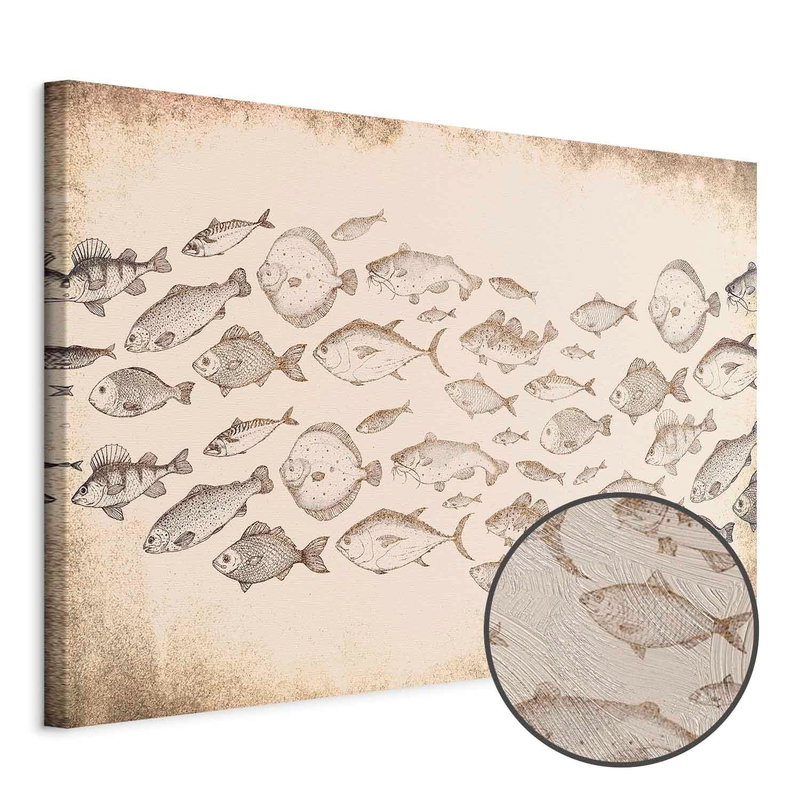
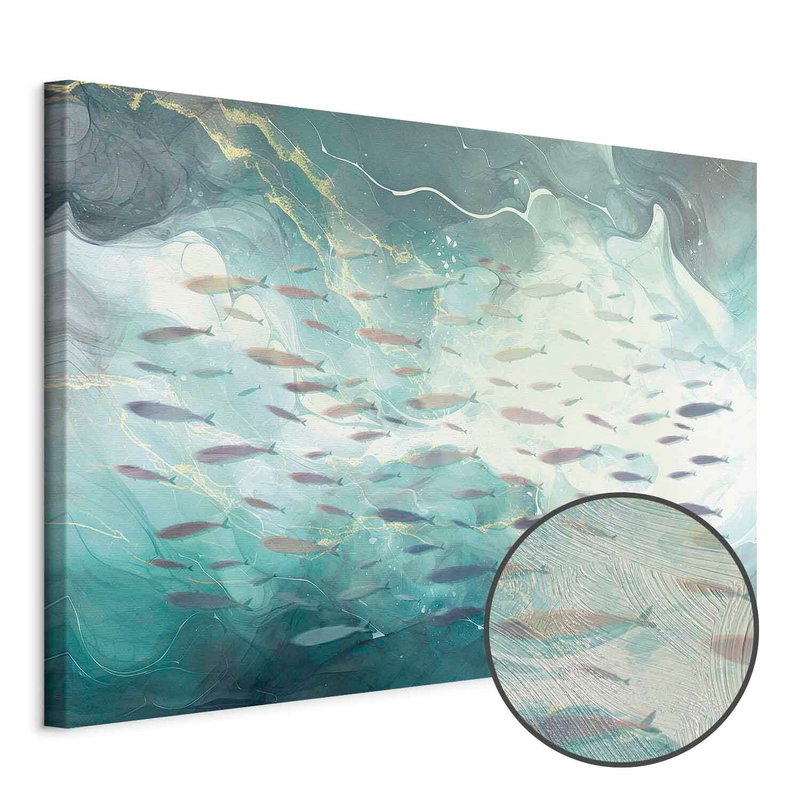
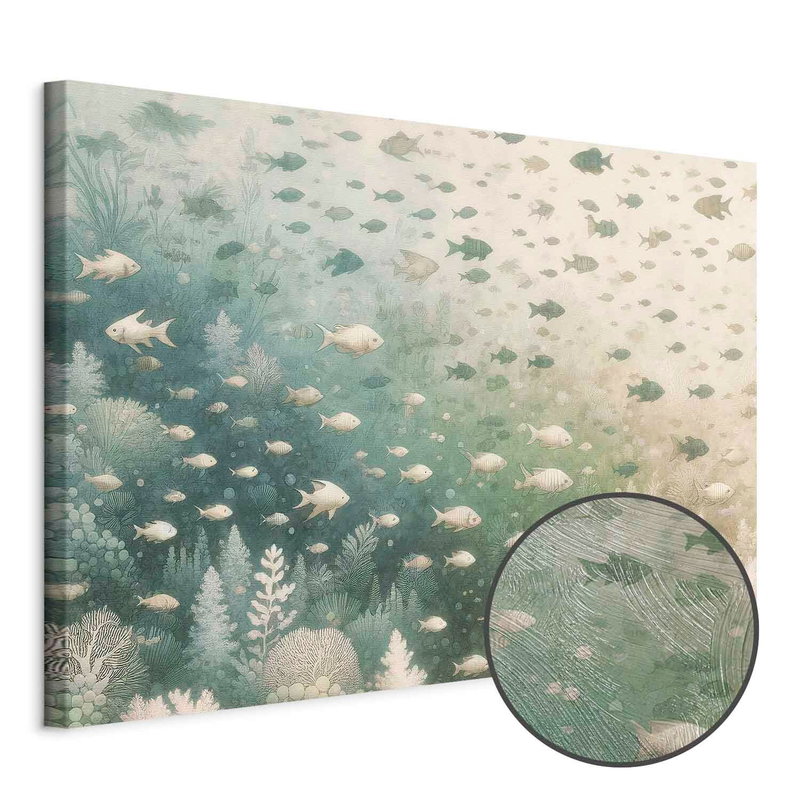
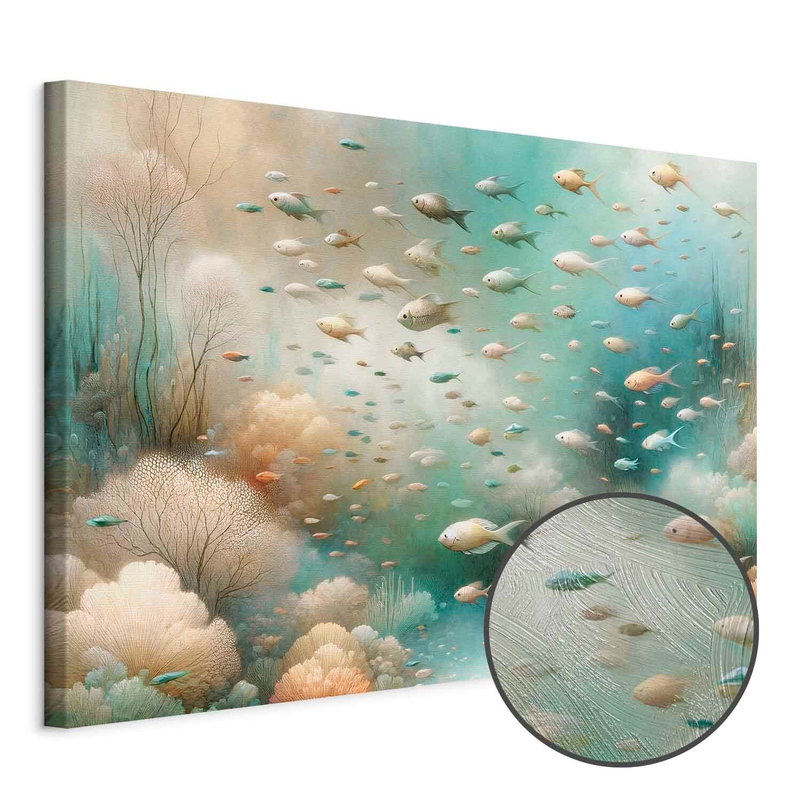
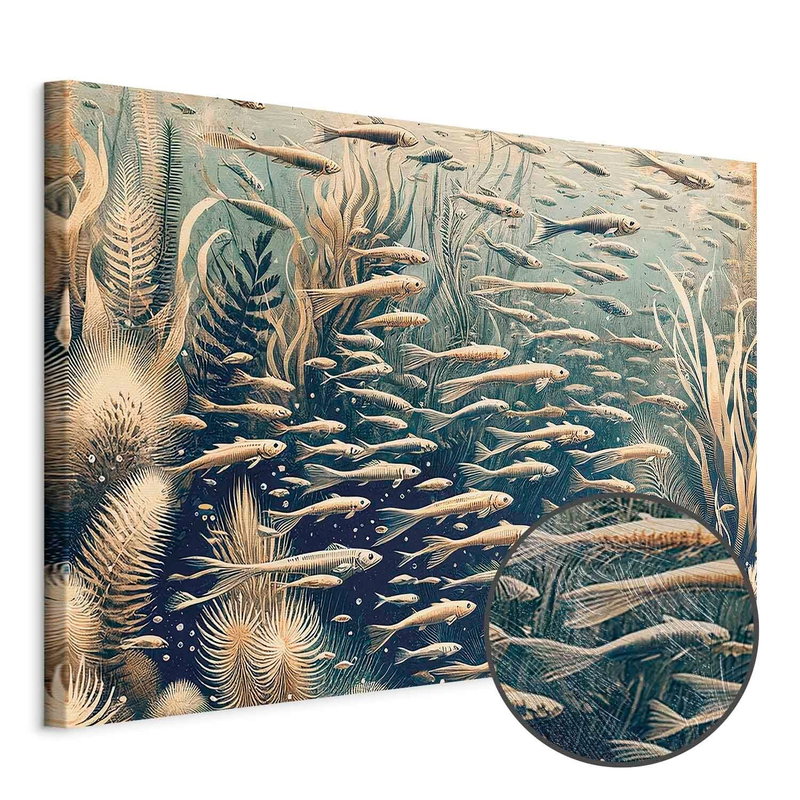
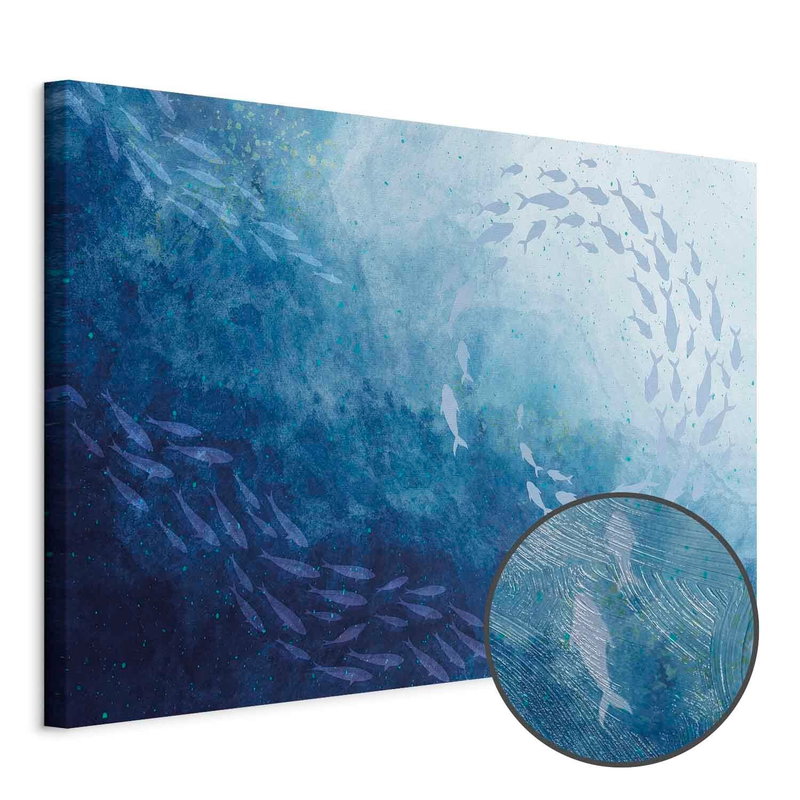
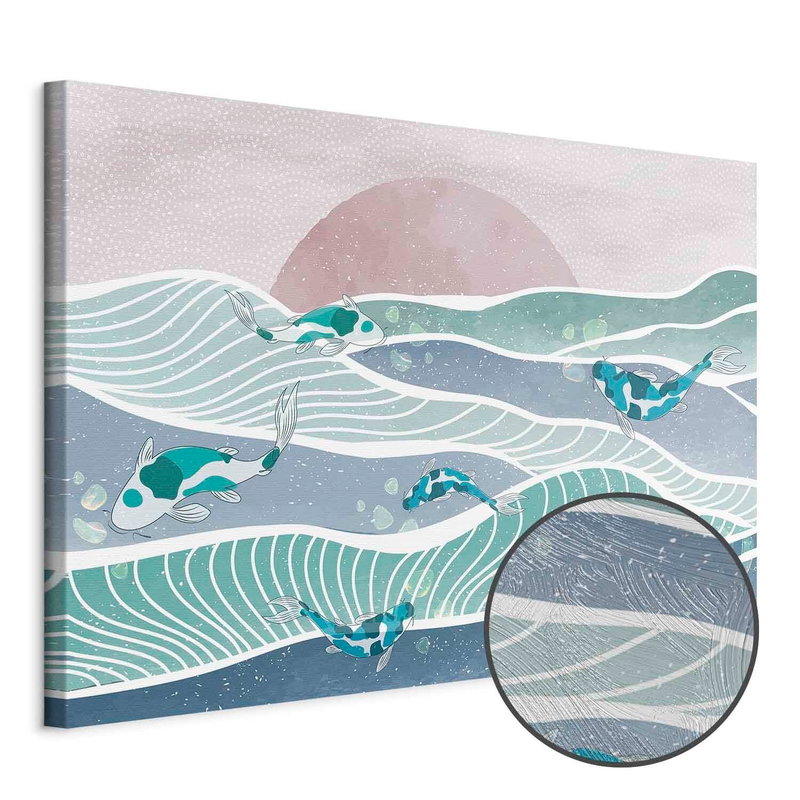
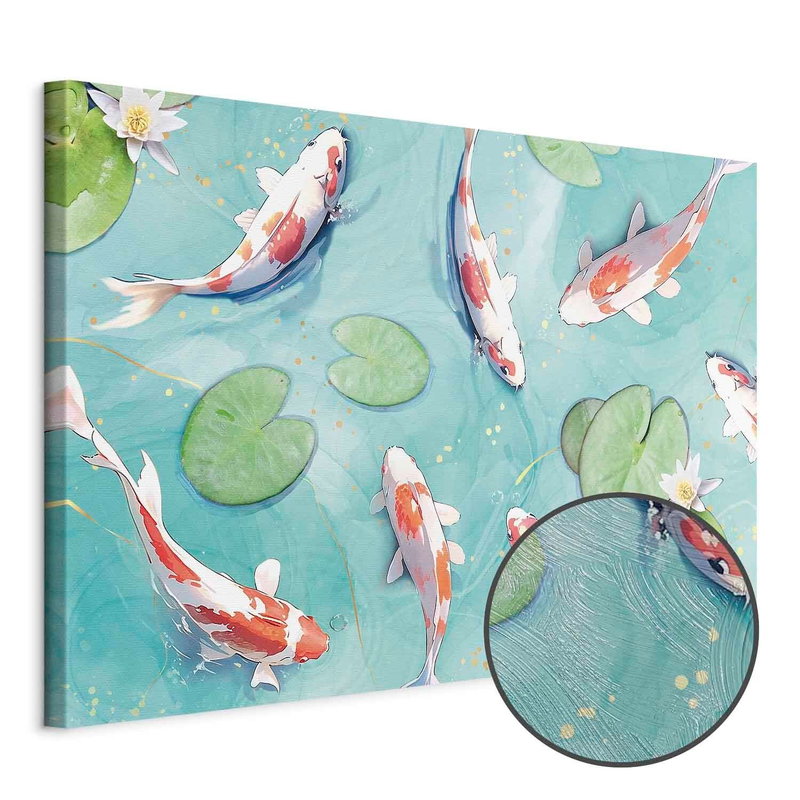
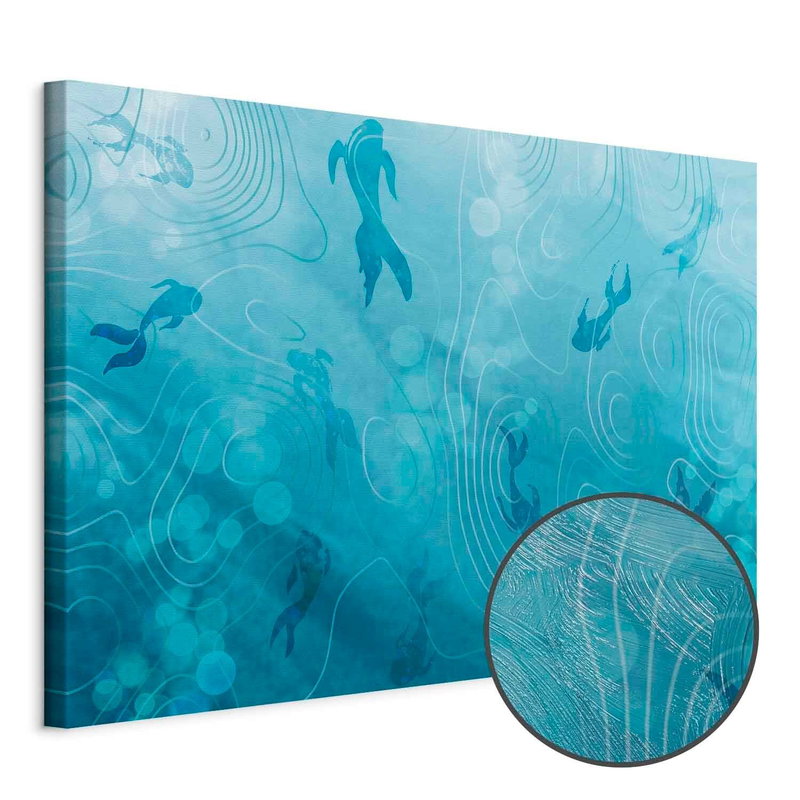
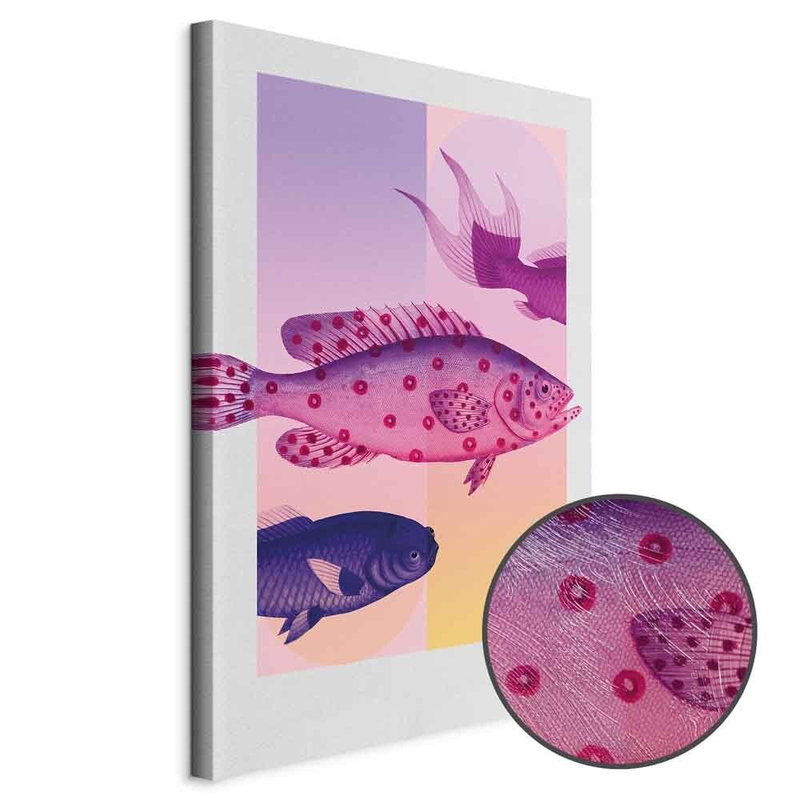
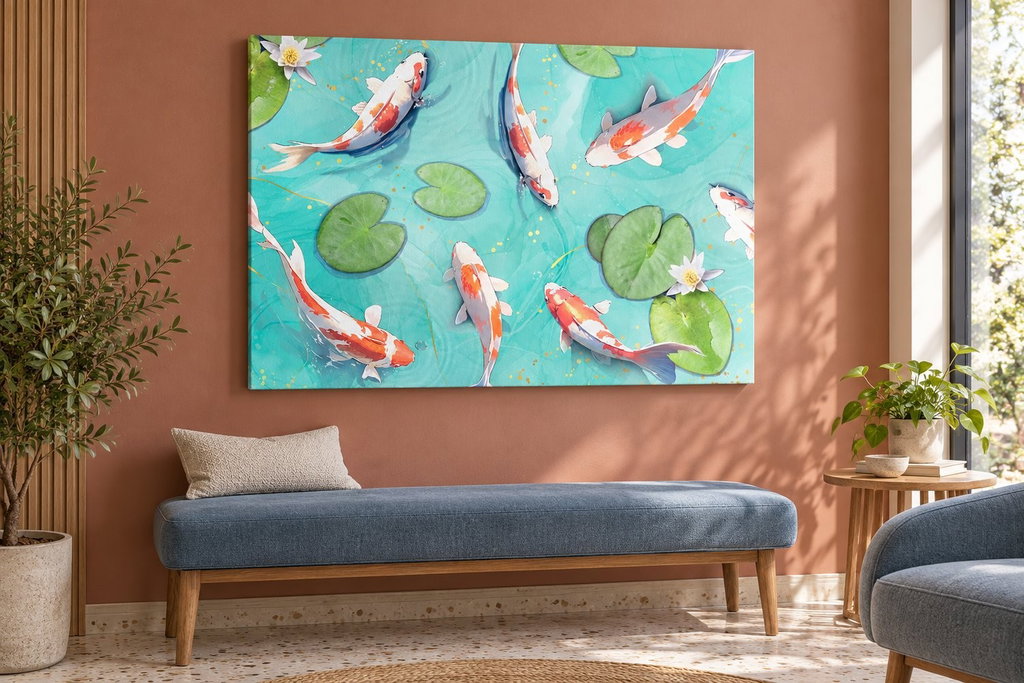
The images are composed in different ways. A shoal of many small fish creates a unified movement through the water, while a few larger fish among lily pads make each body clearer. Other images repeat fish shapes across a pale, drawn surface. Decide which kind of picture appeals before comparing colours. The fish should be clear within your chosen composition, even when their surroundings are detailed.
Water perspective shapes the pictured space
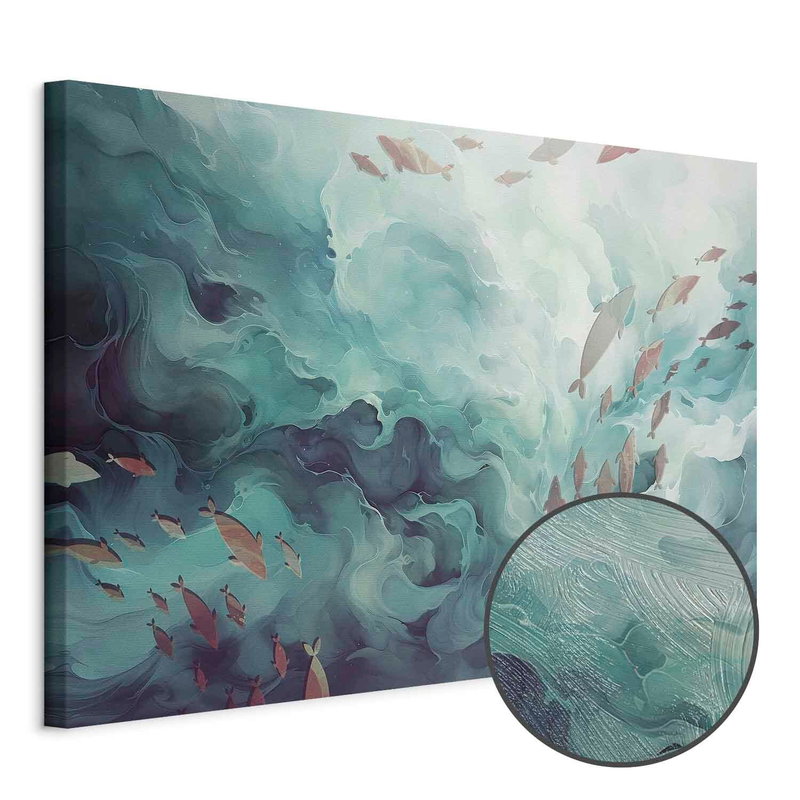
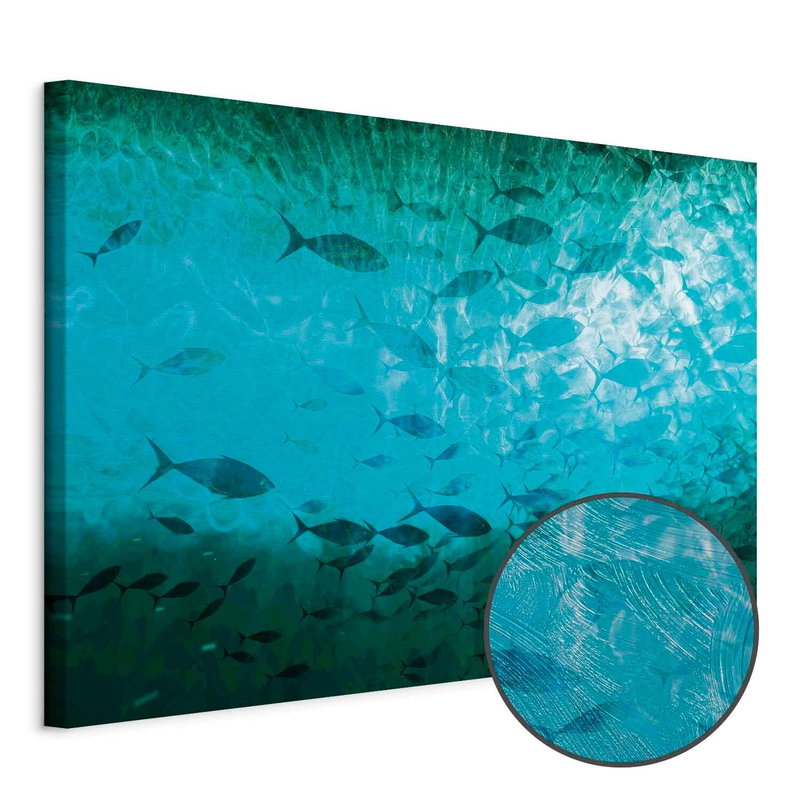
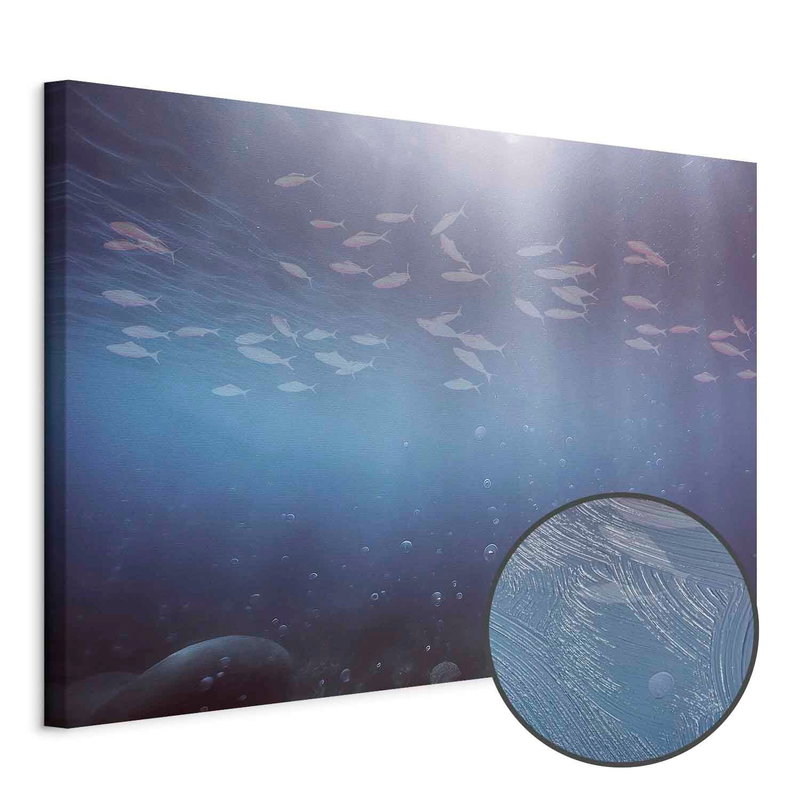
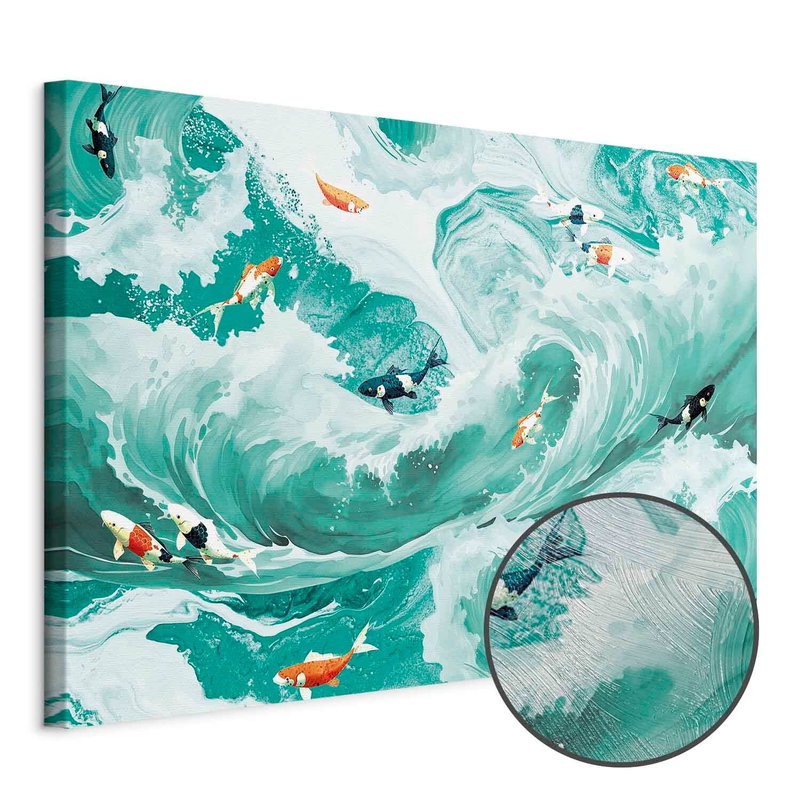
An underwater view may suggest depth through shafts of light and fish at different distances. A pond seen from above instead builds the image around the surface, leaf shapes and the directions of the fish. Stylised waves create a more graphic space. Consider how perspective relates to furniture and sightlines: clear movement across the picture may work differently from an evenly distributed view that leads the eye between several fish.
Blue depths and light colour contrasts
Dark blue and turquoise images can give the wall a broad, unified field of colour. White and orange fish create bright points of focus, while warm sepia fish drawings can connect with wood and neutral fabrics. Look at the largest areas from normal viewing distance. Small fins and thin lines may be appealing up close, but the overall distribution of colour shapes the impression from farther away.
Premium canvas with a worked surface
Clear gel is applied and worked by hand over the canvas print. This creates real surface texture, while fish scales, water highlights and pictured waves belong to the artwork. Check the product’s materials, size and available formats before choosing. The printed water theme says nothing about cleaning or mounting; follow the particular model’s surface-care and hanging instructions.
Plan the wall image and sound comfort together
Give the picture an open area where the direction of the fish and outer edges can be seen. Try the height from the room’s usual seats. The absorbing construction behind the print can help reduce reverberation. Hard surfaces, furnishings, placement and total absorbing area affect how much is needed. Choose the extent of treatment for the room while allowing subject and format to suit the interior.