




Shoals, ponds and graphic fish pictures
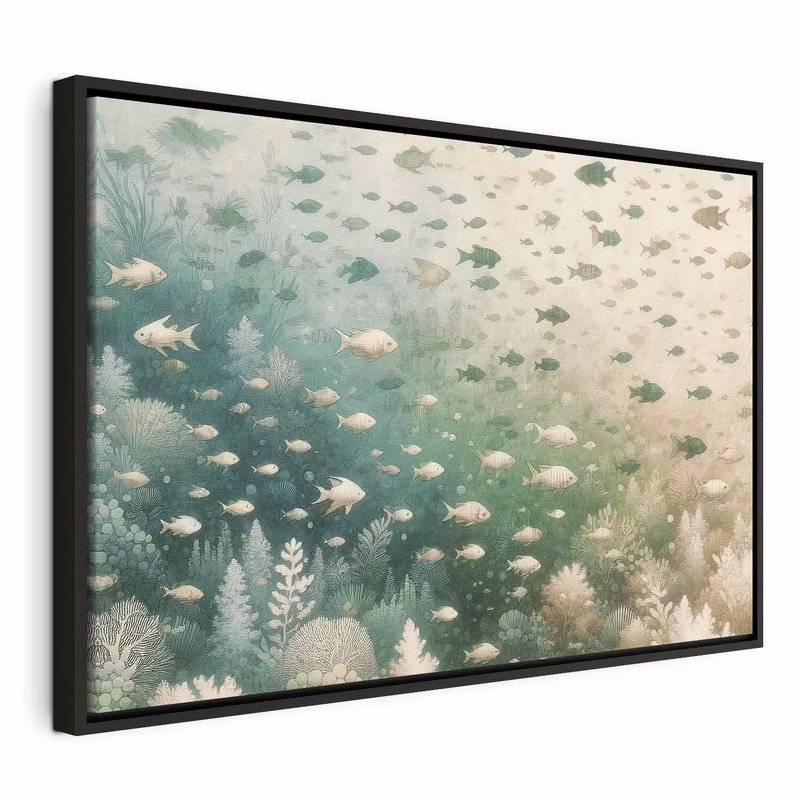
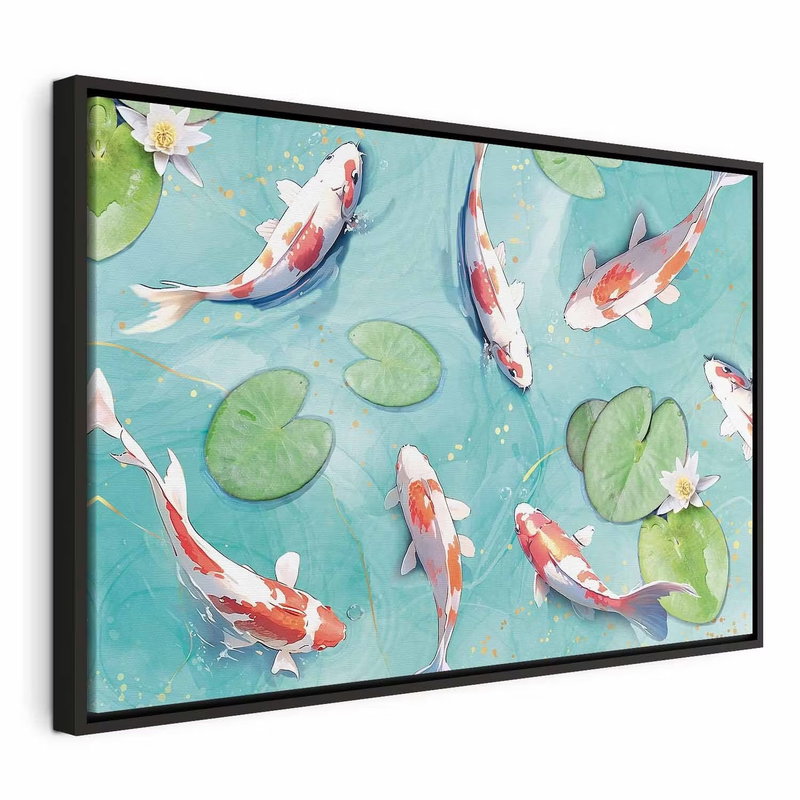
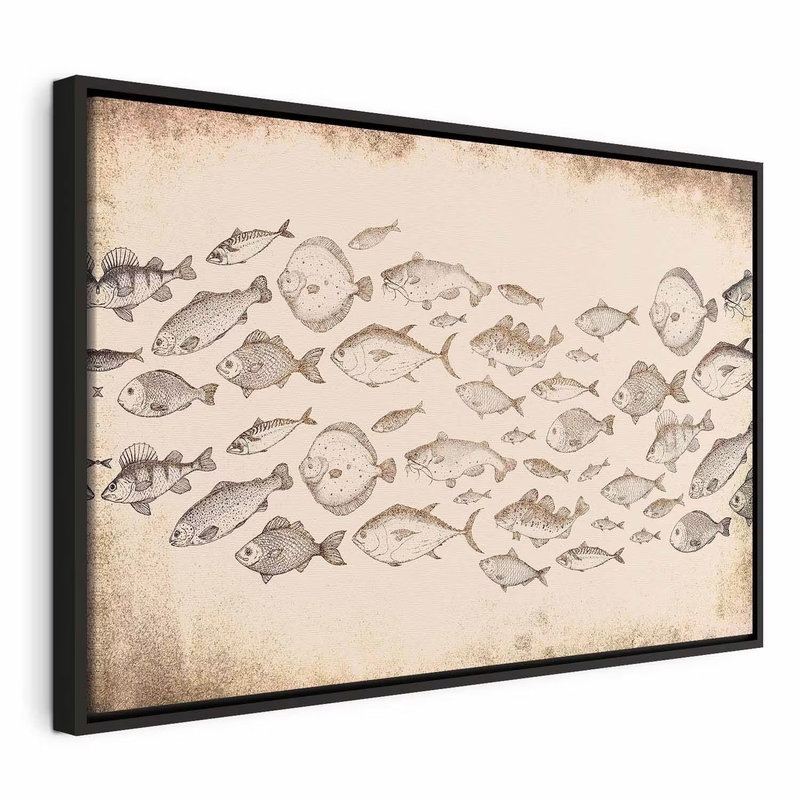
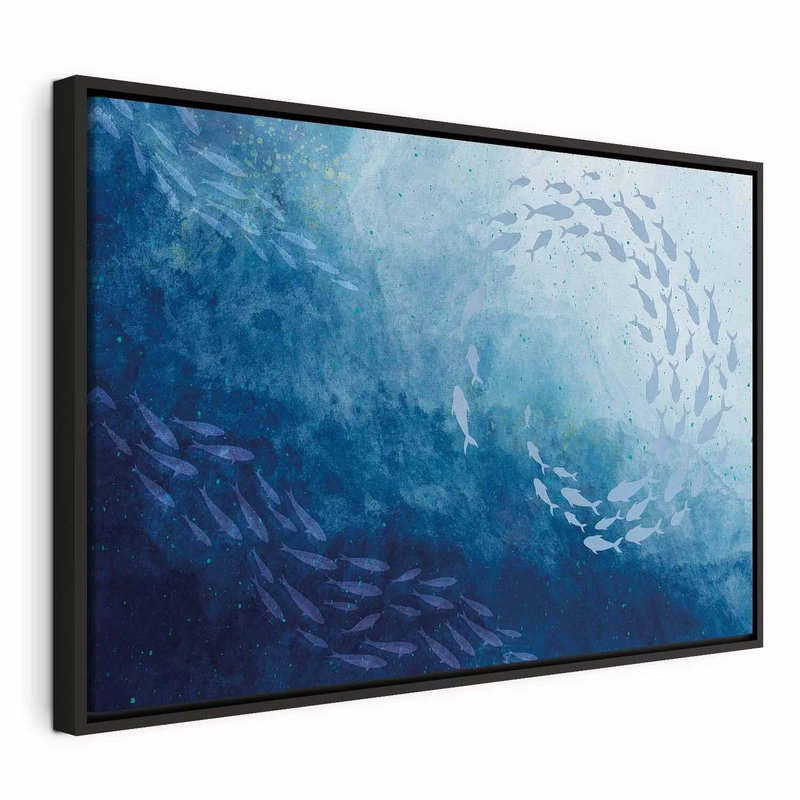
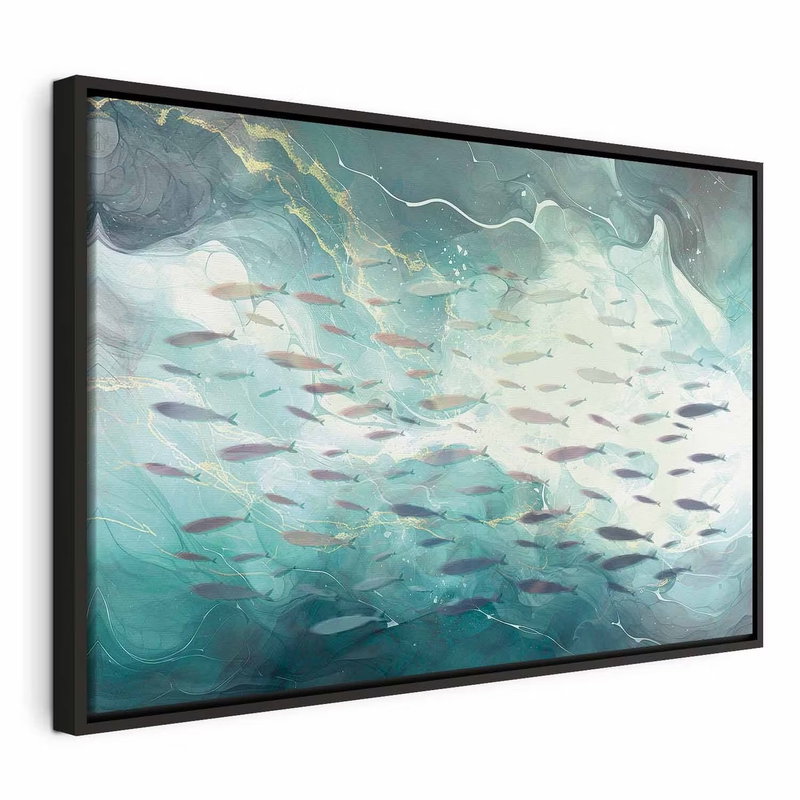
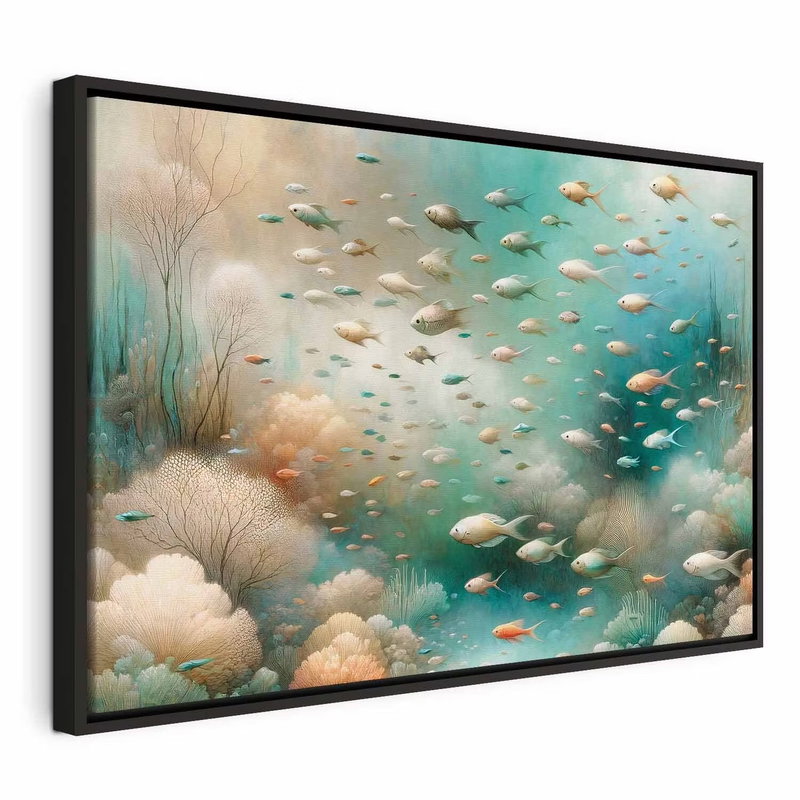
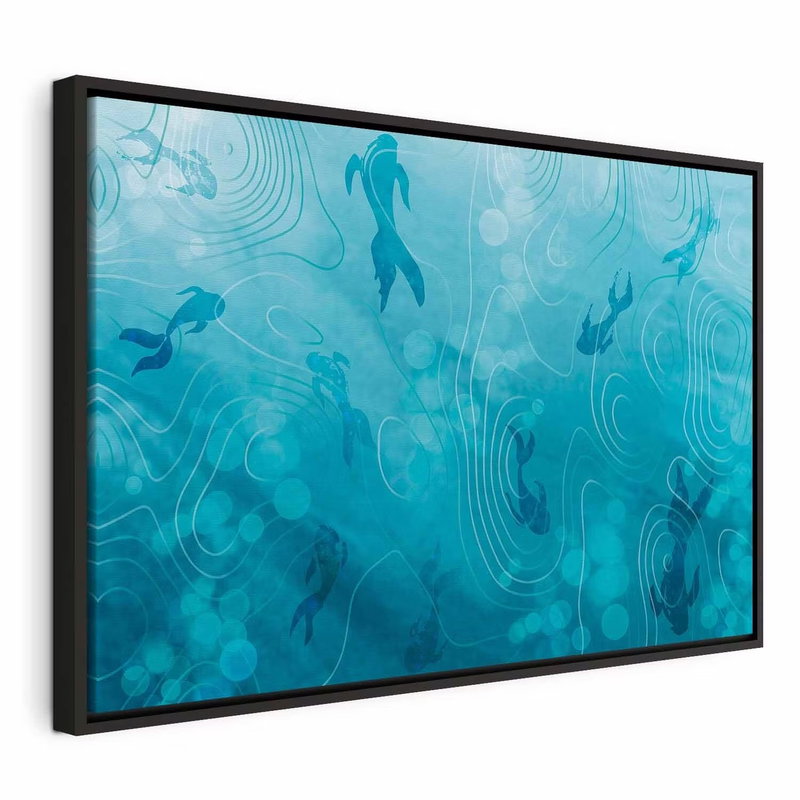
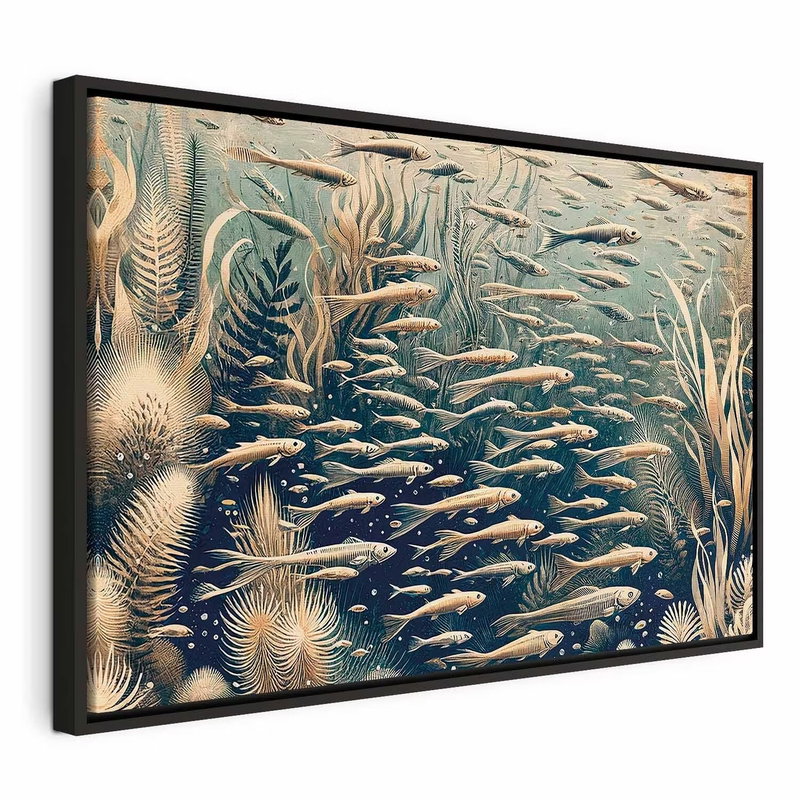
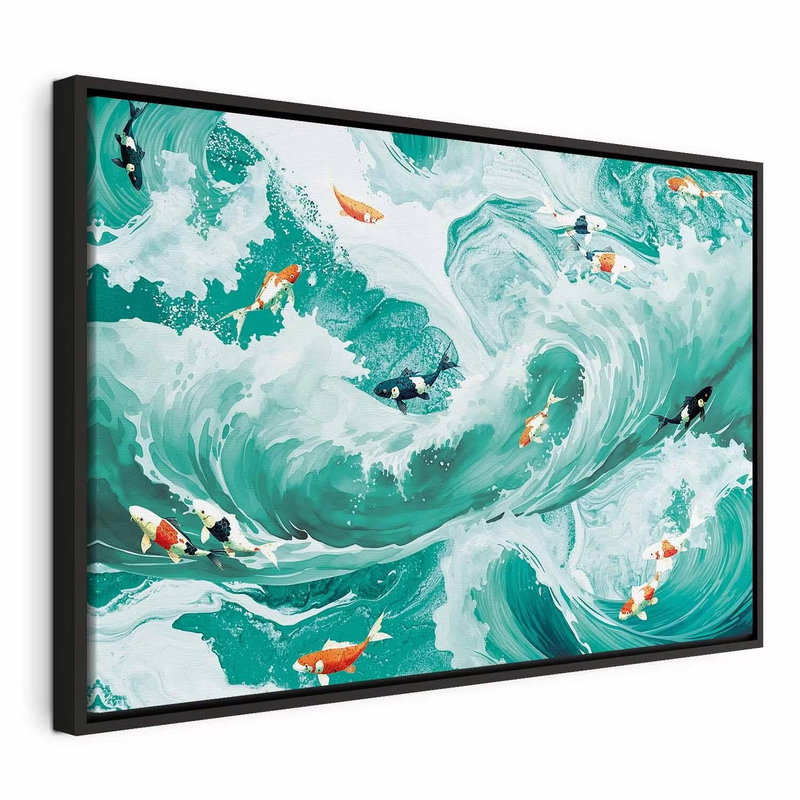
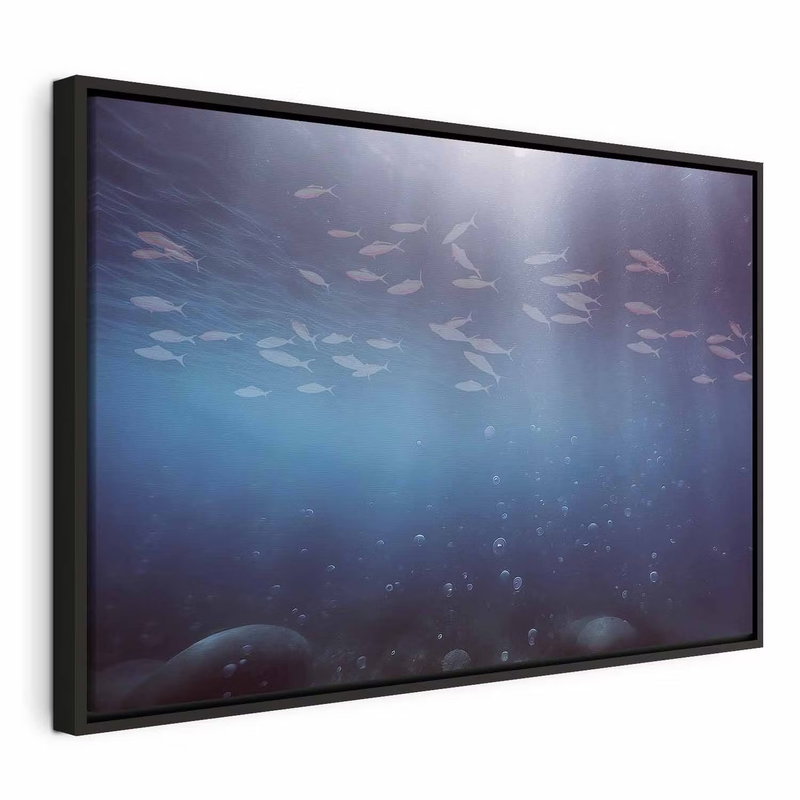
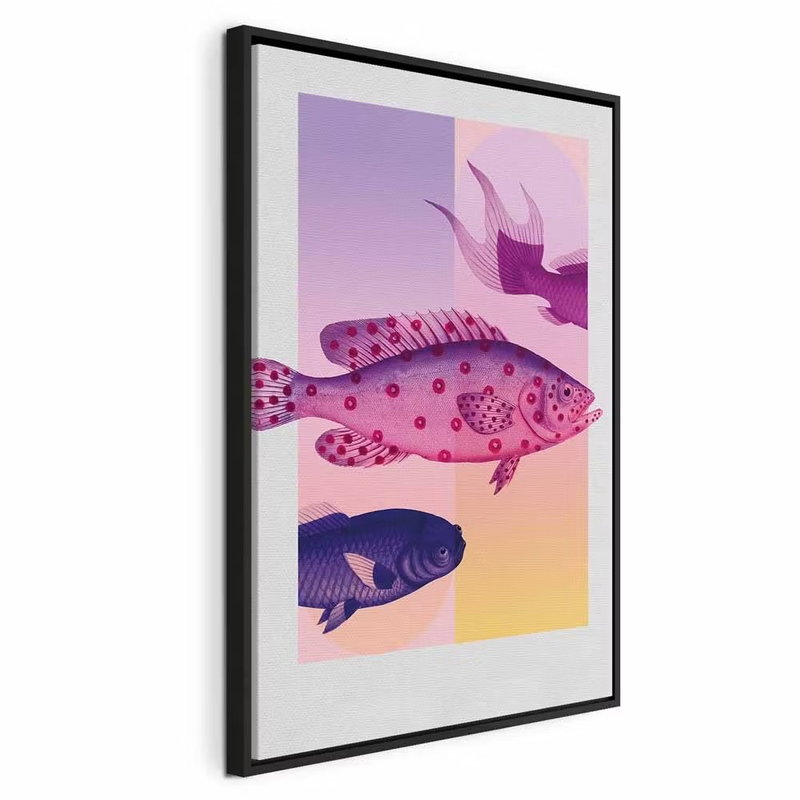
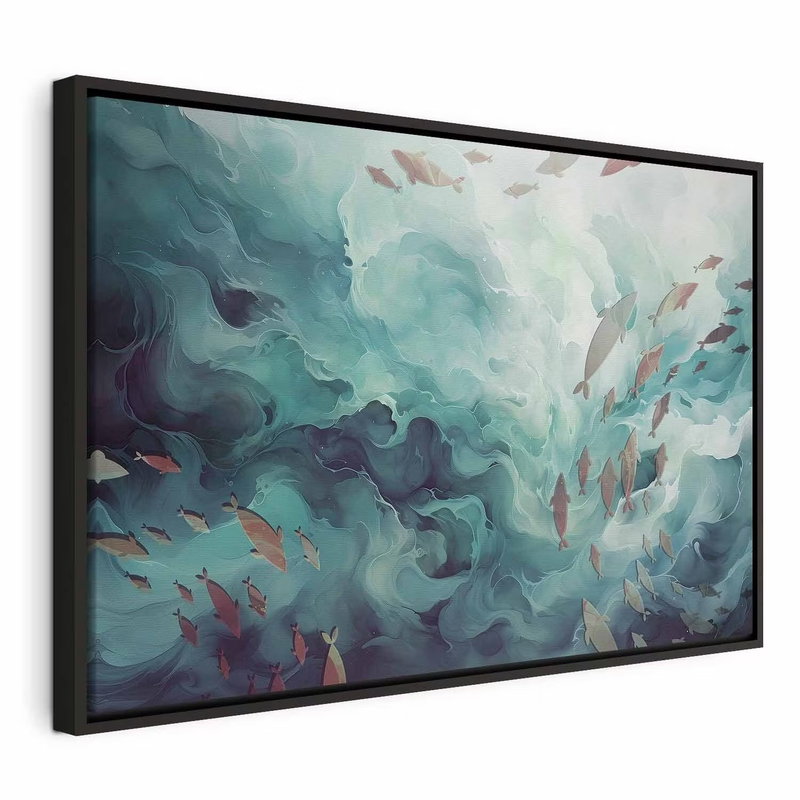
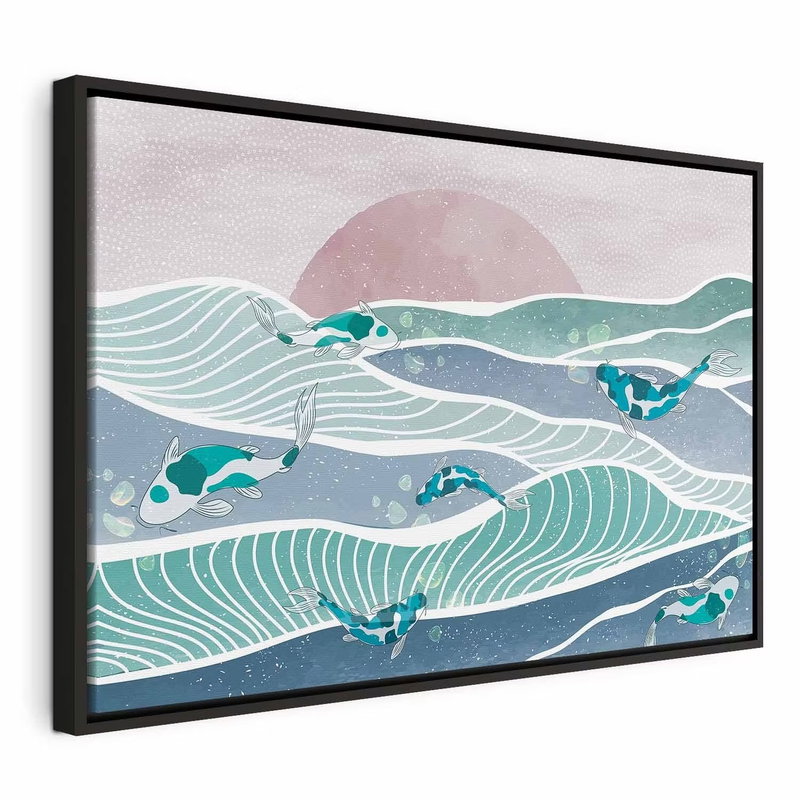
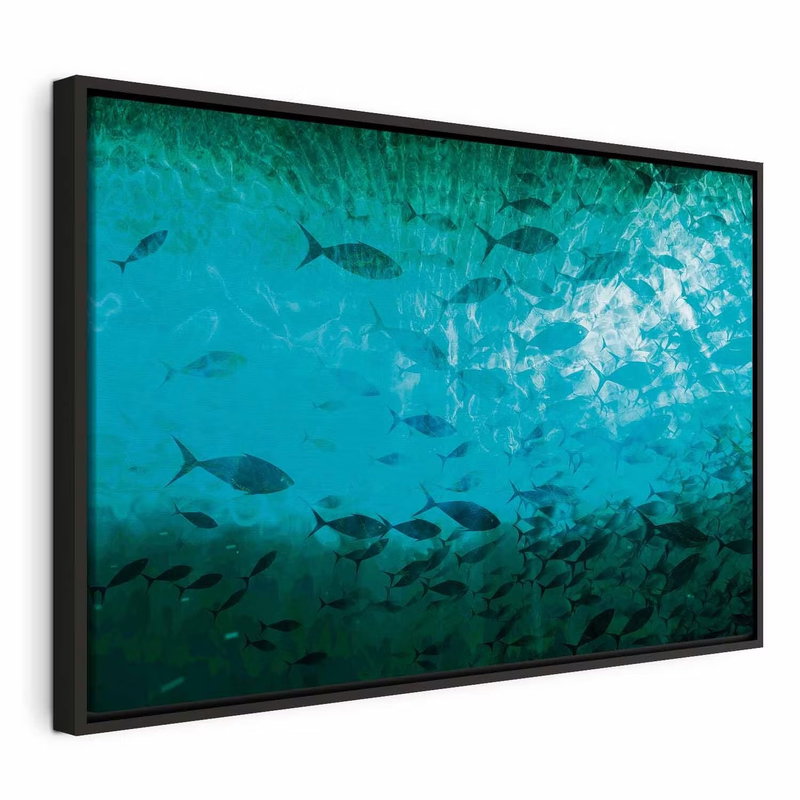
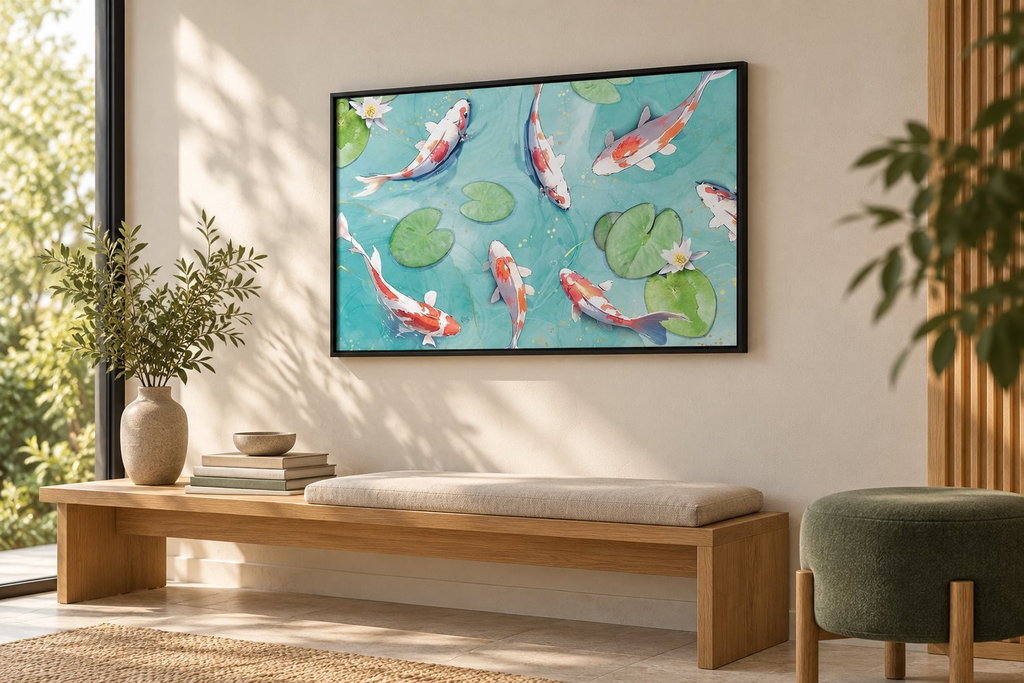
Fish play a prominent role throughout this selection. In some pictures many small fish move together through blue or turquoise water. Others show white and red fish swimming between green leaves. There are also simpler compositions where outlines, silhouettes or broad colour areas replace a detailed underwater setting.
These differences affect how a picture reads from a distance. A shoal can form a single shape even when individual fish are small. In a picture with fewer, larger fish, the direction of their bodies and their markings become clearer. Compare the whole image before deciding how much detail you want.
Choose the water's colour and the picture's movement
Blue and turquoise recur in many fish subjects, but the effect ranges from dark depths to a light pond surface. Beige line drawings and pink illustrations offer other possibilities. Use the colours actually visible in the image when comparing it with walls, textiles and furniture.
Consider the direction in which the fish swim too. A circling shoal gathers the eye differently from a long line across the picture. Lily pads, plant shapes and wave lines can add rhythm. Choose a composition with enough room above or beside the furniture where it will hang.
Framed fish subjects for different wall proportions
This selection belongs to the range with a visible outer frame. Its colour and outline affect the meeting of image and wall. Check each product page for the frame choices and dimensions offered for that particular picture rather than assuming every subject has the same options.
A landscape underwater scene and a portrait-format fish illustration need different areas of free wall. Measure the space and consider normal viewing height and distance. When combining pictures, a recurring water tone can create a connection while leaving each frame and subject room of its own.
Part of the interior and the room's acoustics
Fish and water form the printed image. Behind the print is the picture's sound-absorbing construction, which can help reduce reverberation inside the room. The acoustic contribution depends on the product's construction, the amount of absorbing area, placement and the other materials in the space.
Check both product information and hanging instructions once you have chosen a subject. Match the fixings to the wall and weight, and follow the care guidance. The fish subject is a decorative choice; assess the acoustic contribution according to the actual product and room. The picture does not replace sound insulation between rooms.