



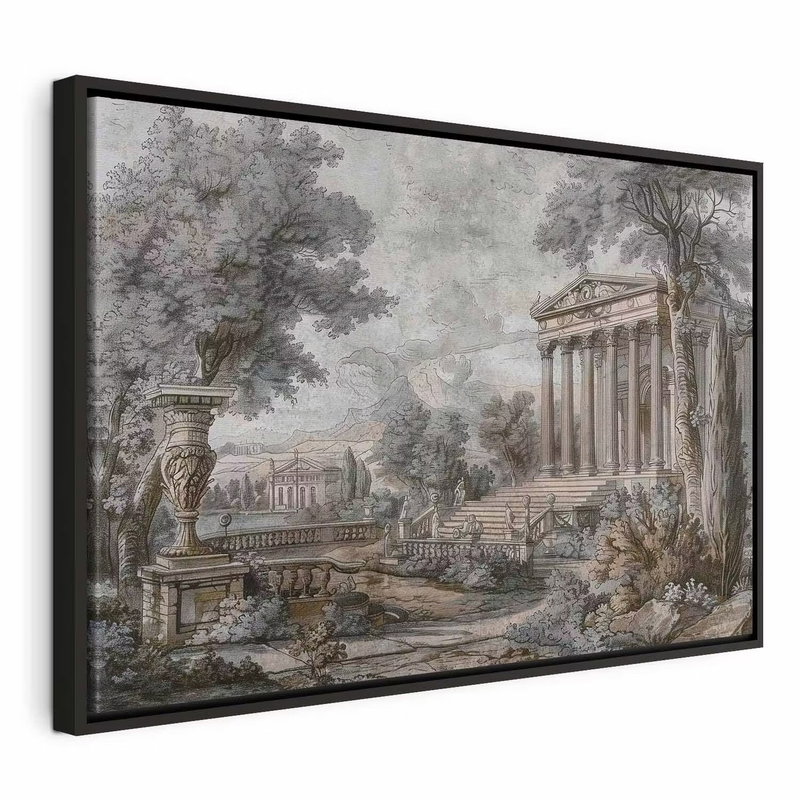
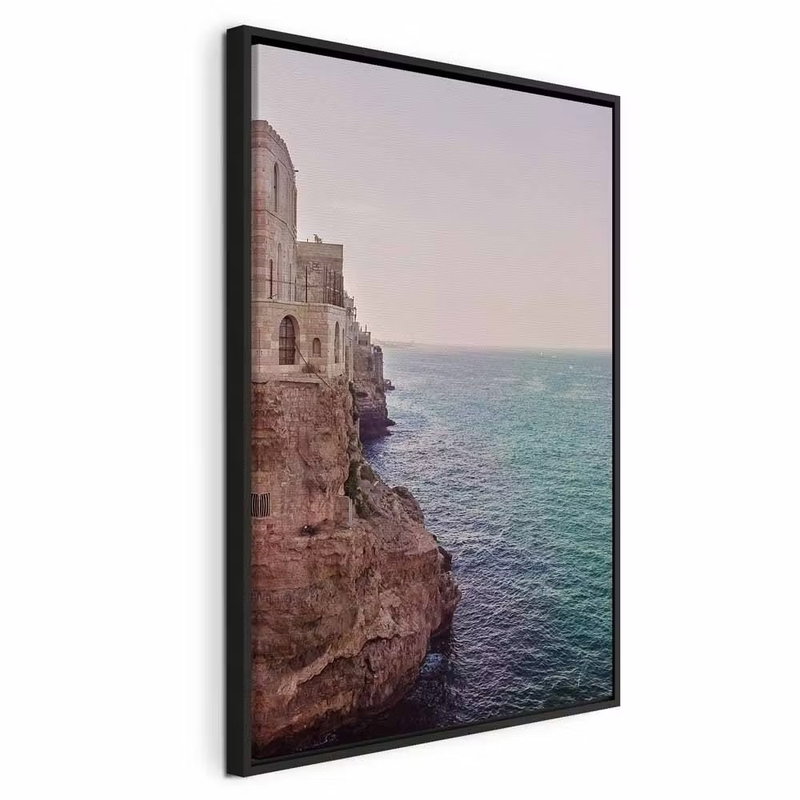
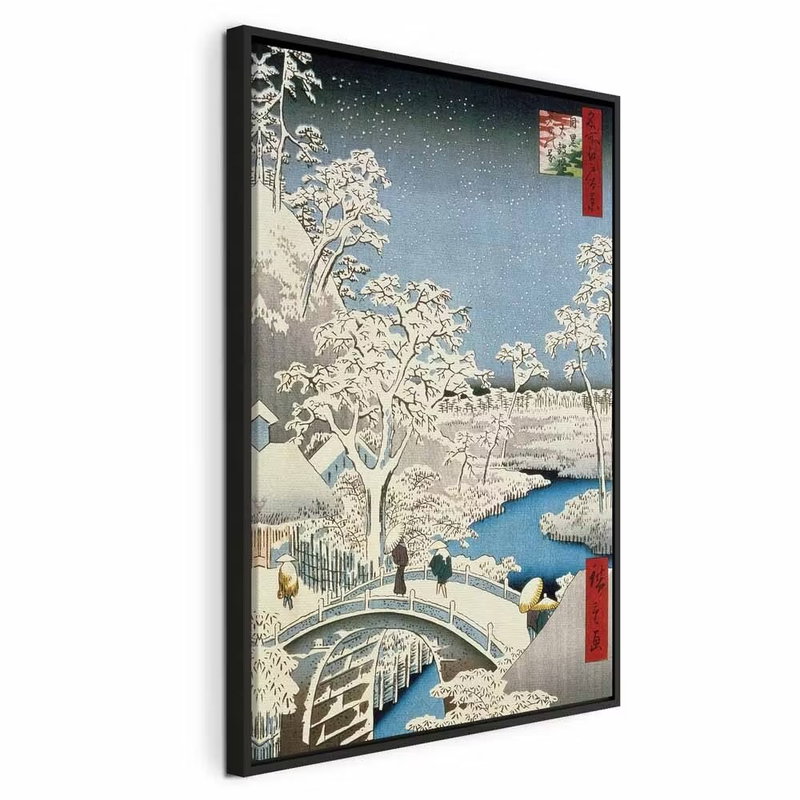
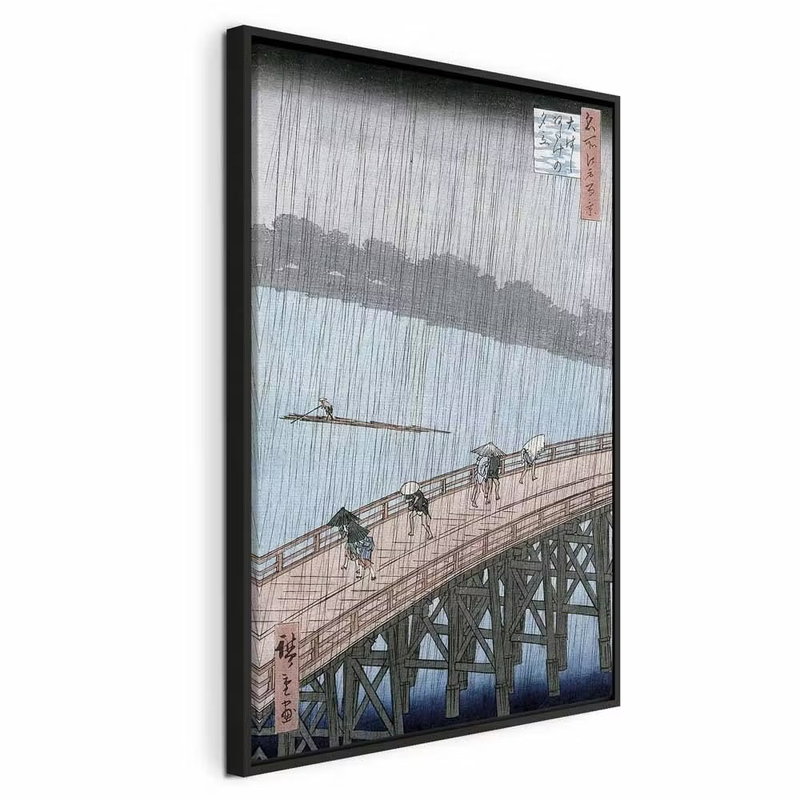
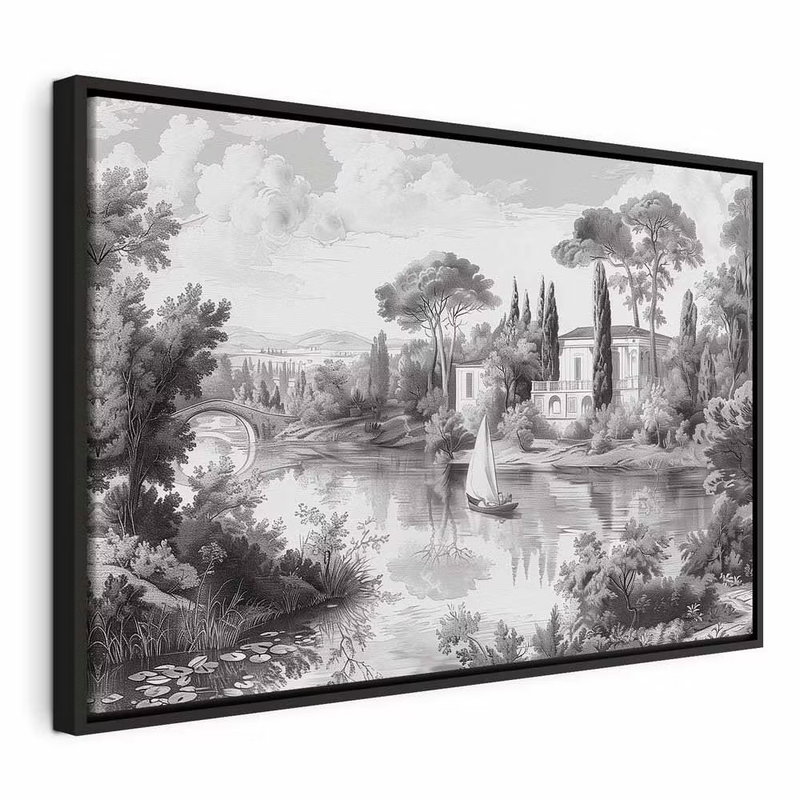
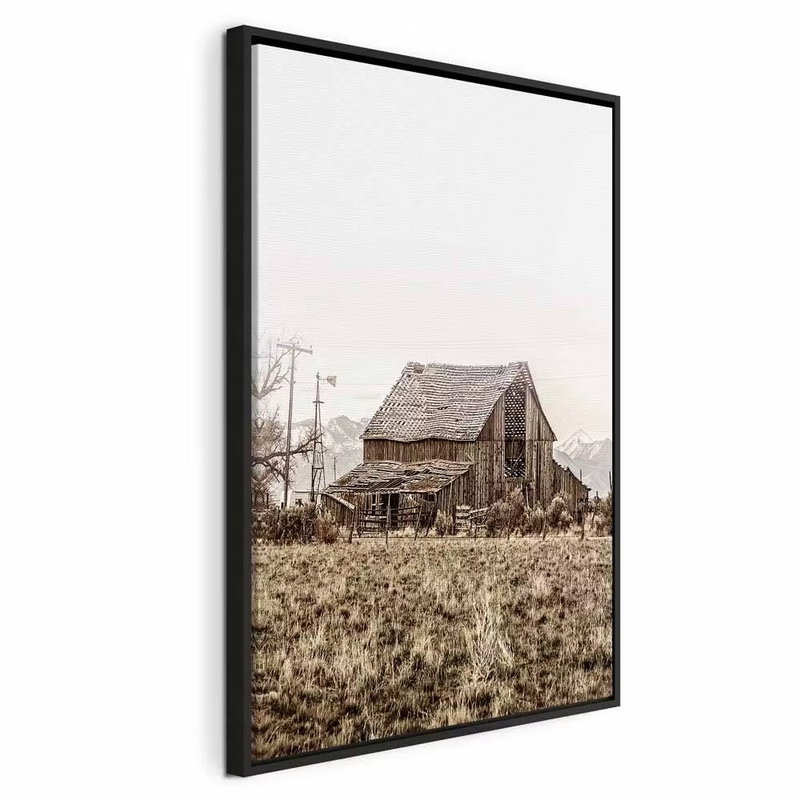
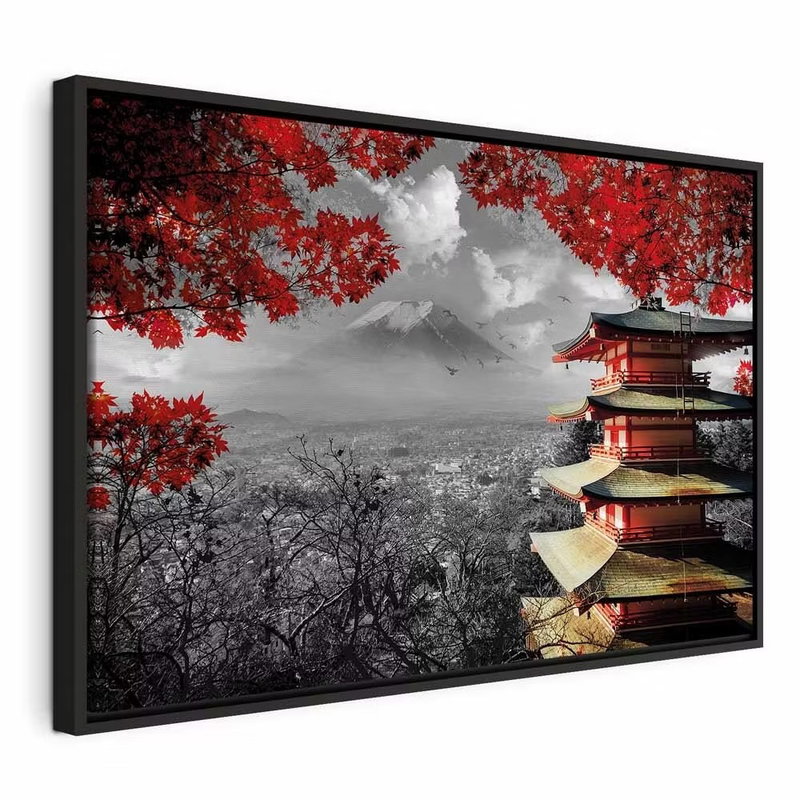
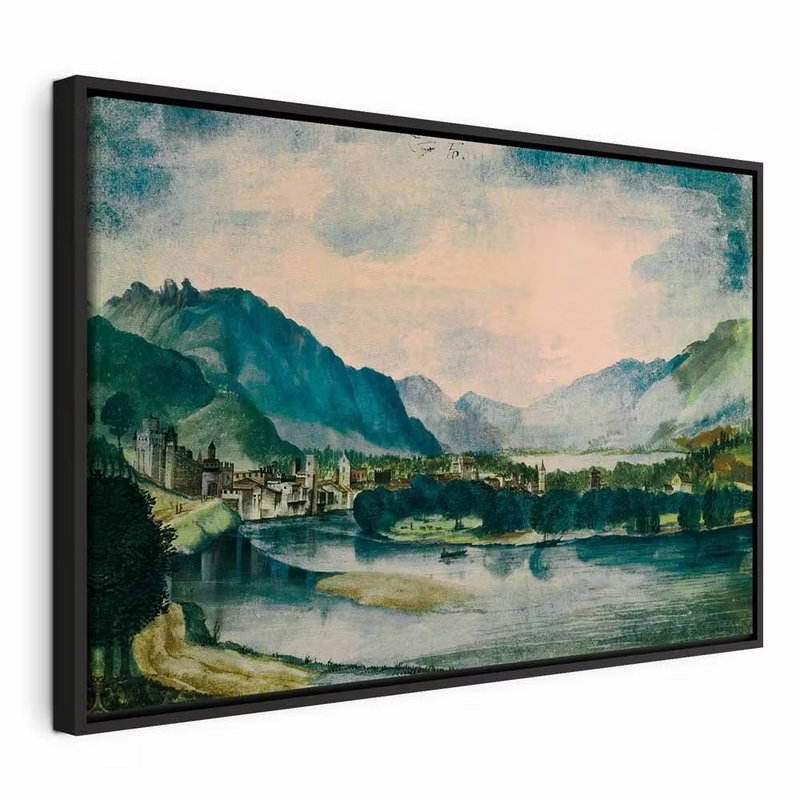

See how the house or bridge relates to its setting
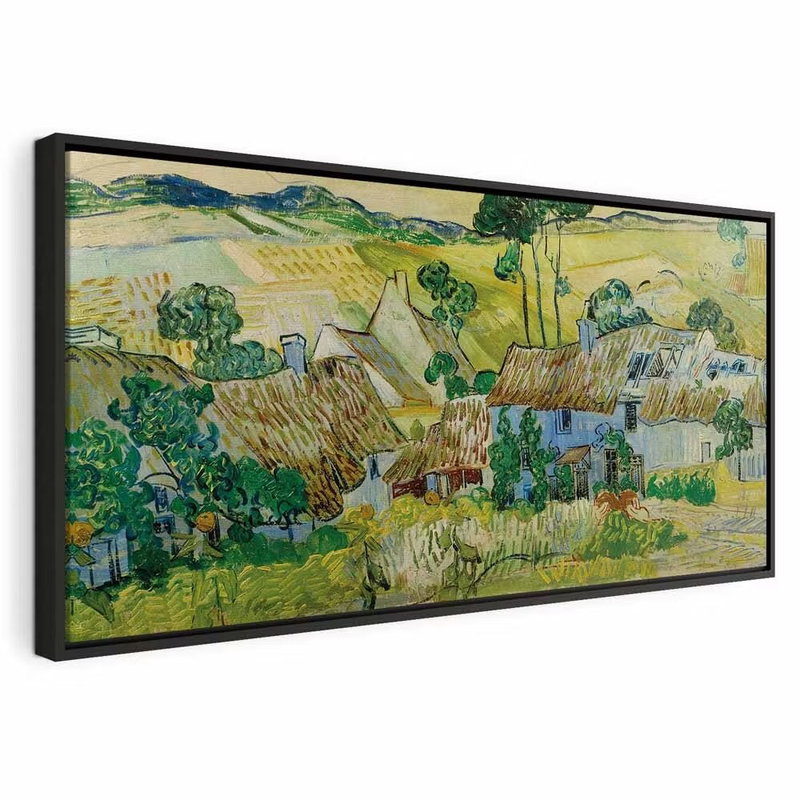
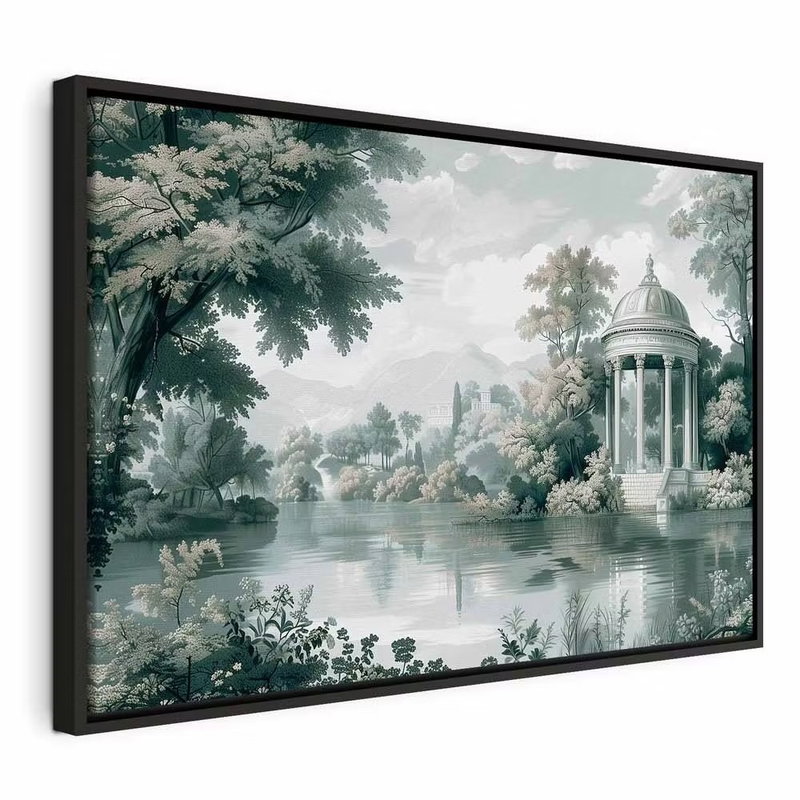
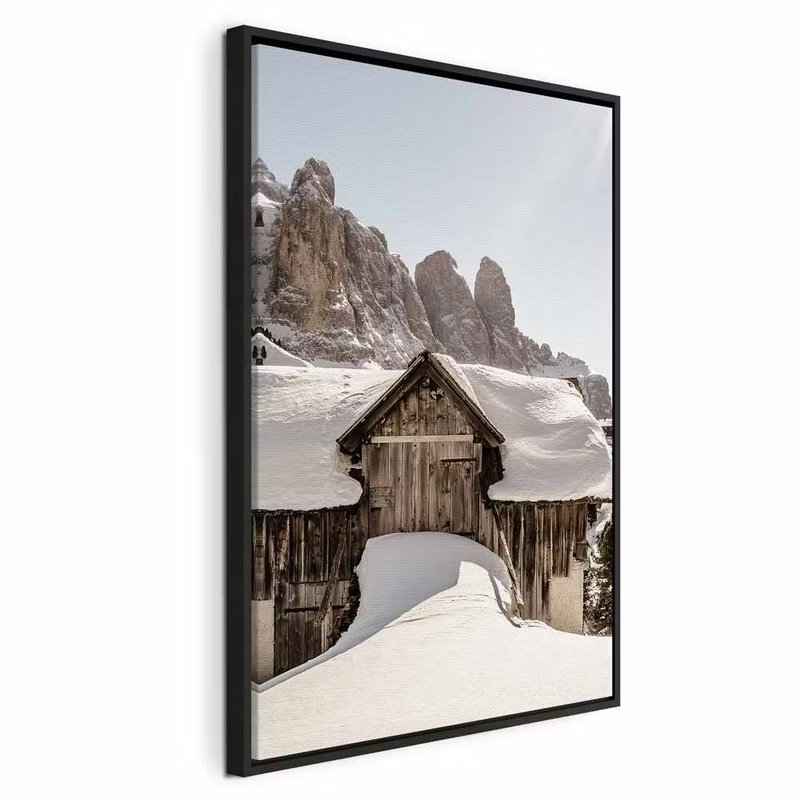
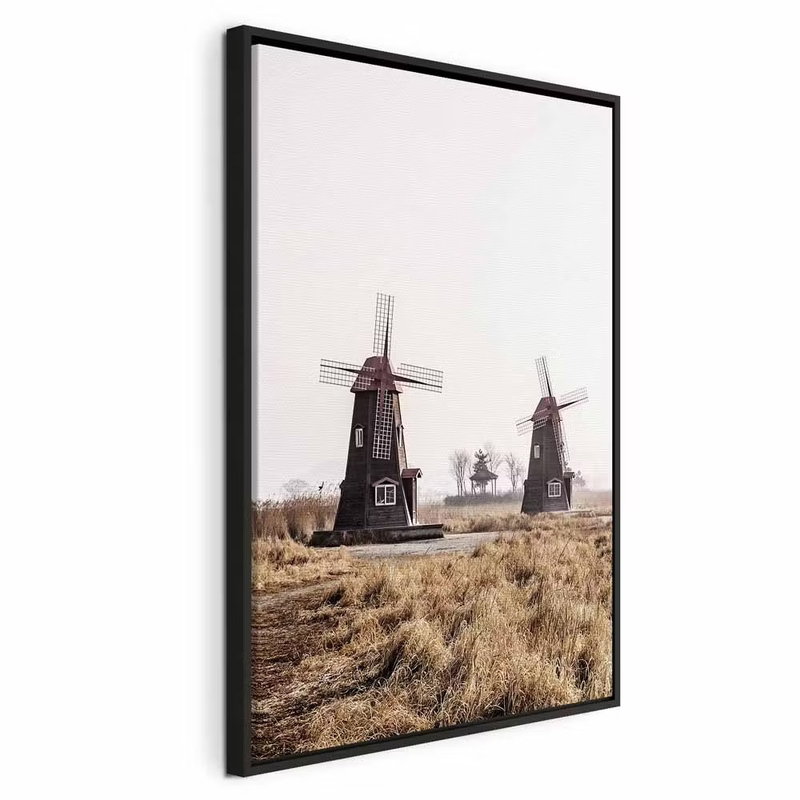
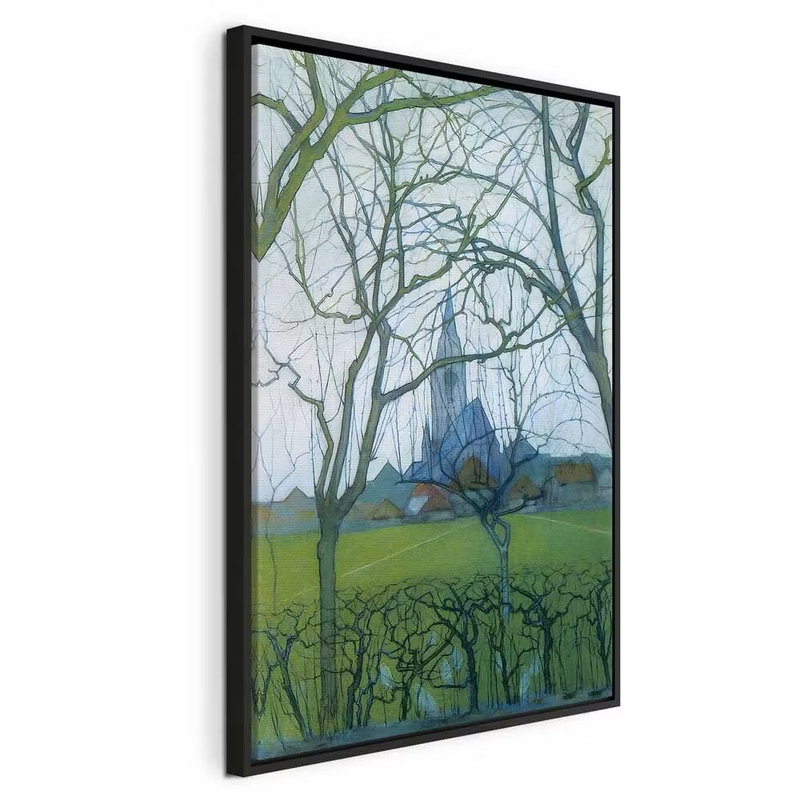
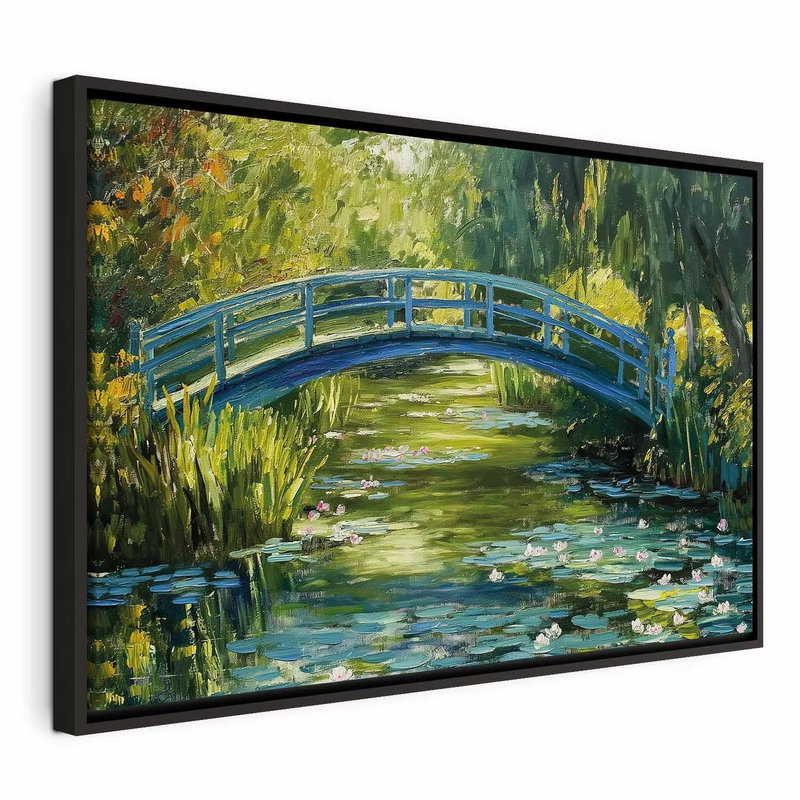
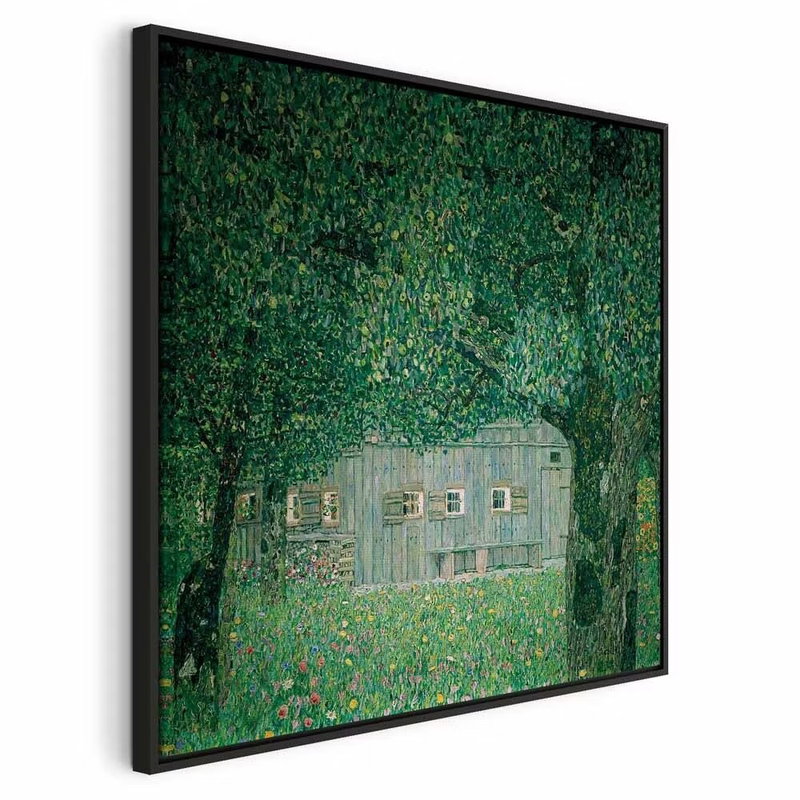
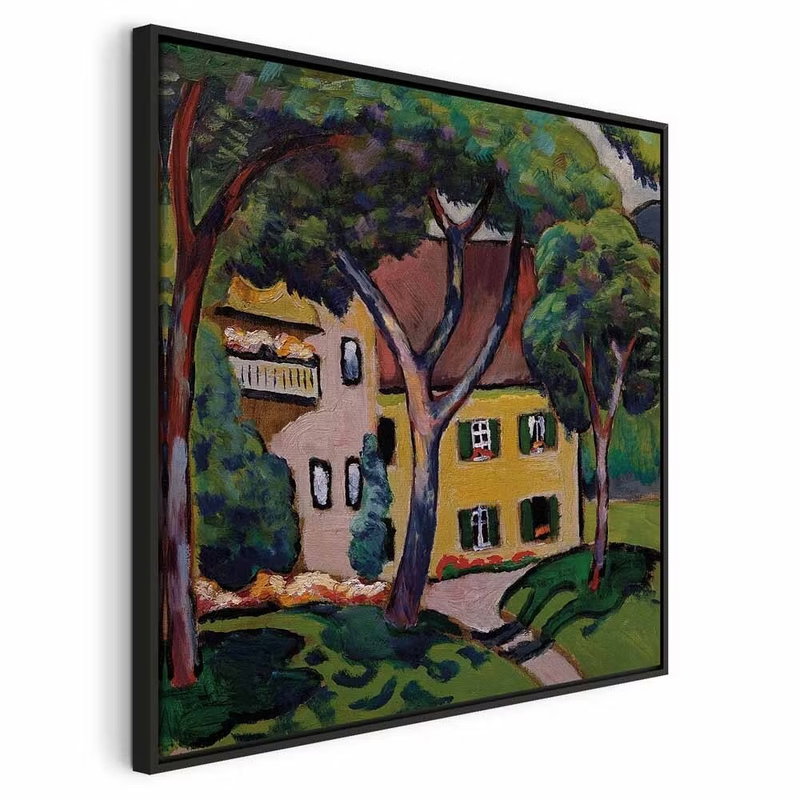
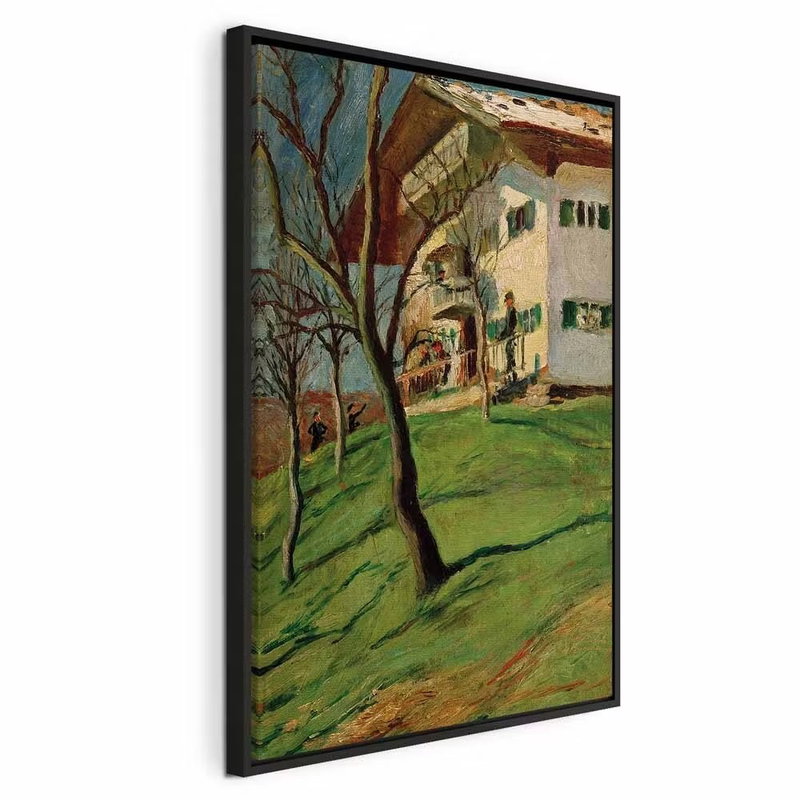
A single wooden building in a dry field can become a clear focal point against a broad pale sky. In a green park, a pavilion can instead connect with water and tall trees. A bridge often leads the eye from one side of the image to the other. Compare how much space the building occupies and whether you mainly want a strong focal form or a more continuous landscape setting.
Photographic light and painted seasons
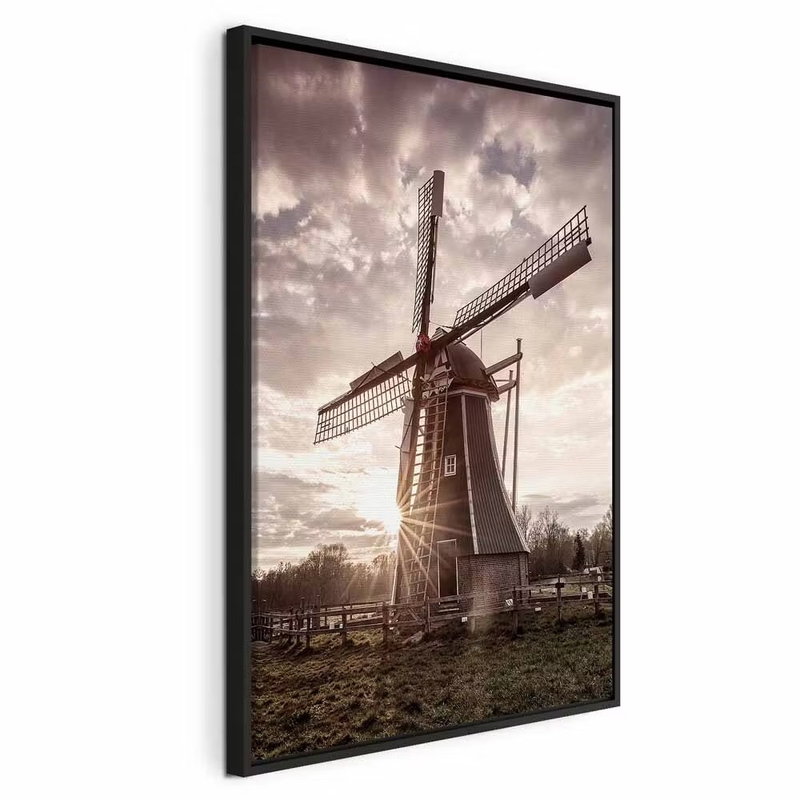
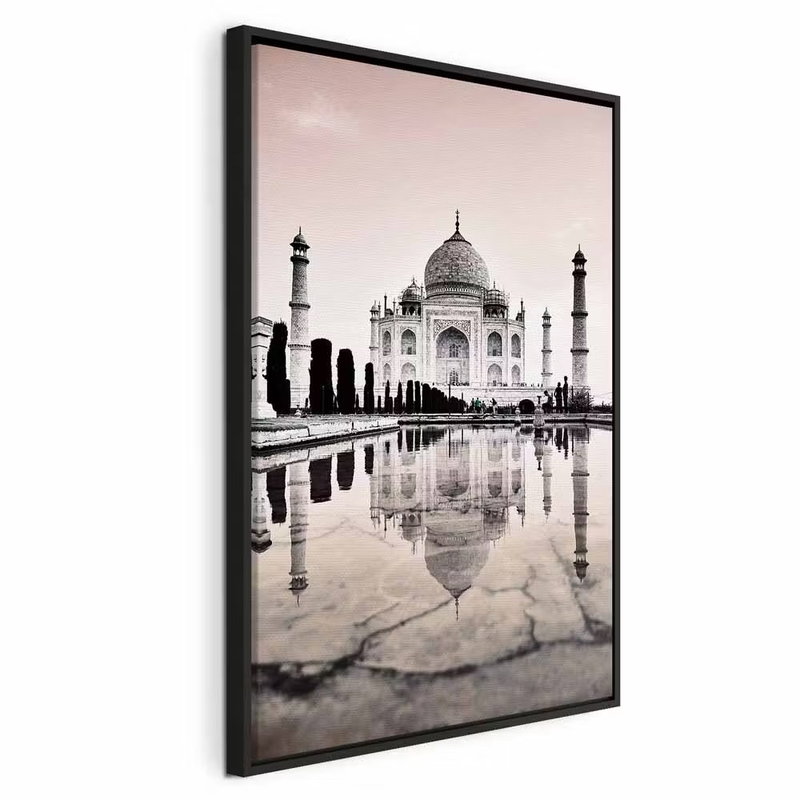
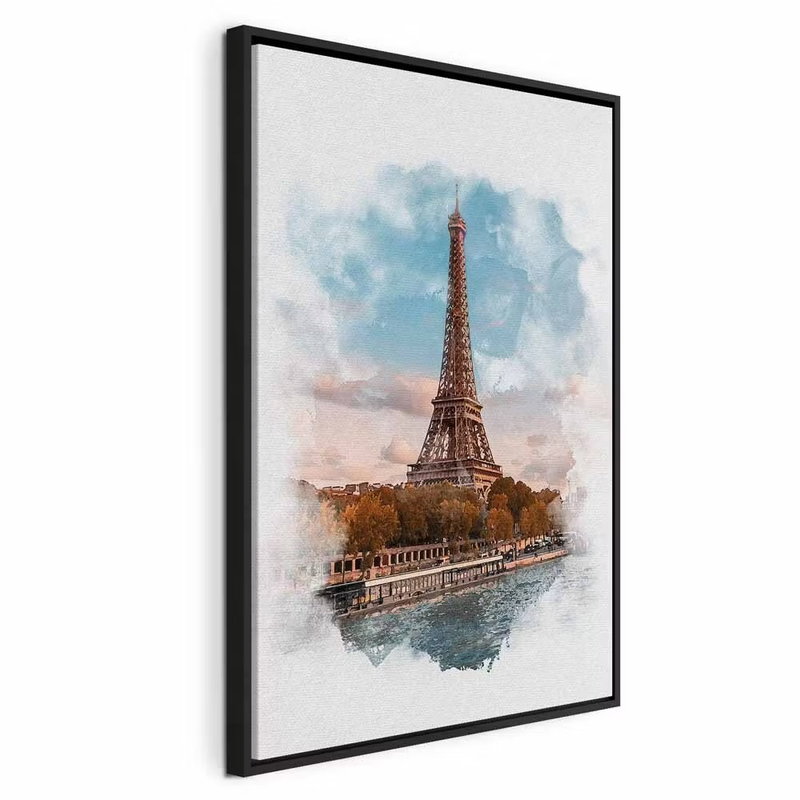
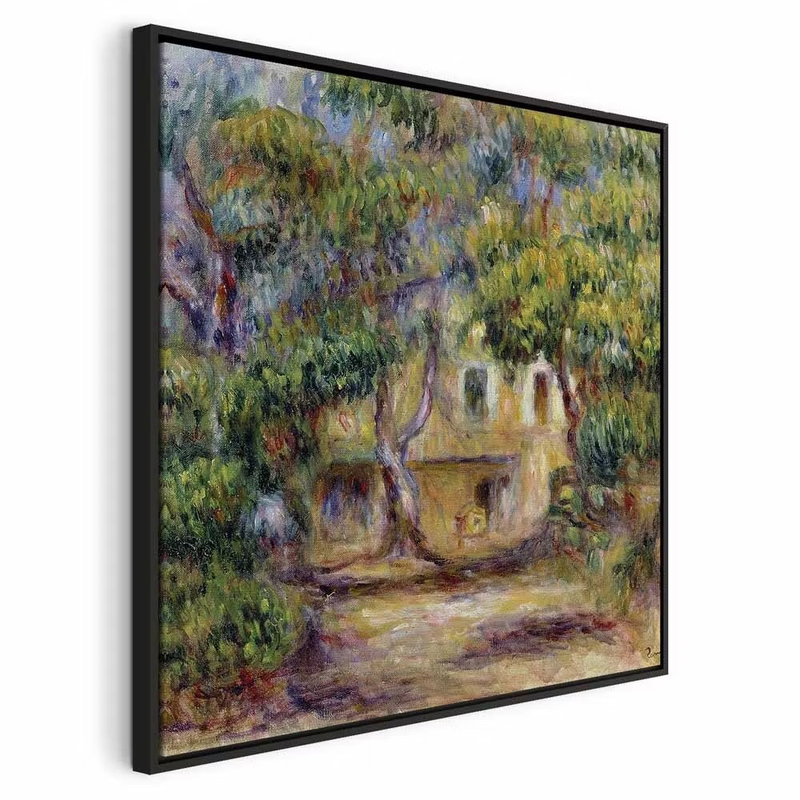
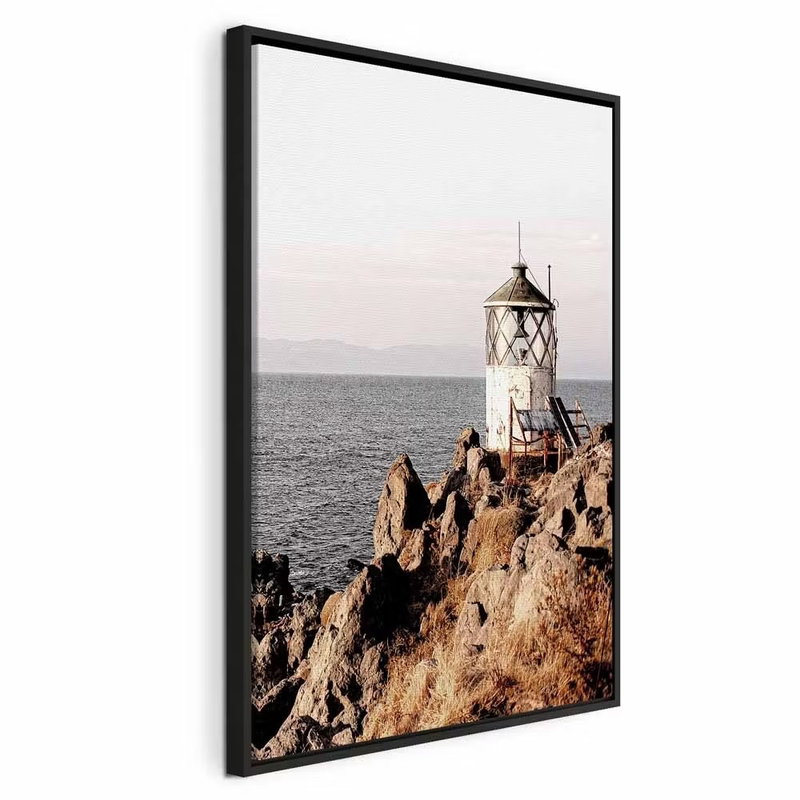
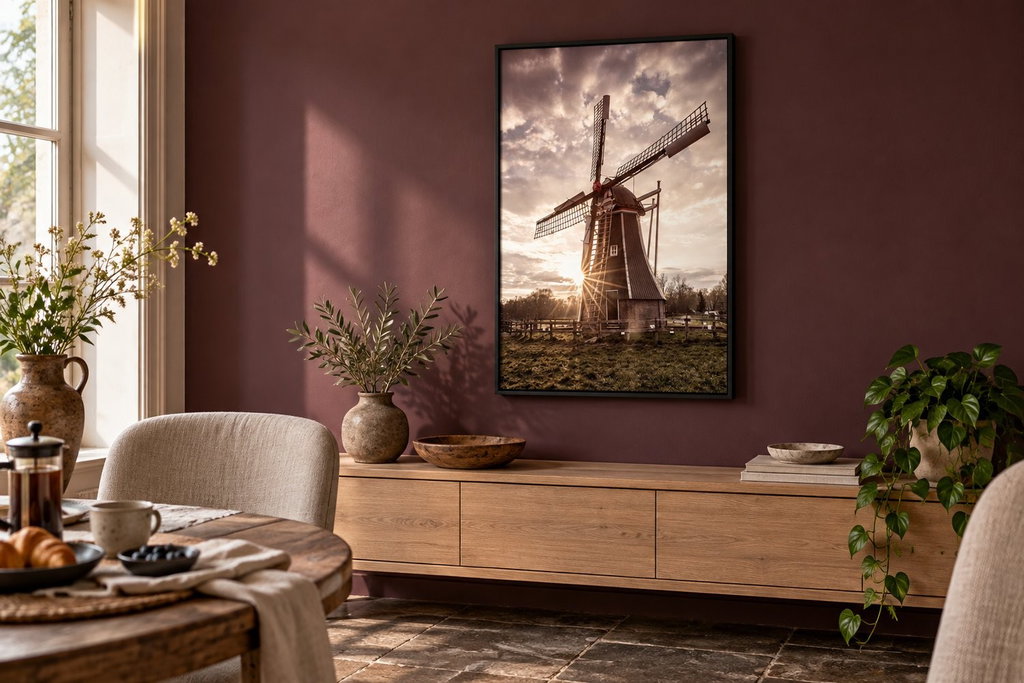
Clouds and low sunlight around windmills create different contrasts from white mountain cabins or colourful painted gardens. Snow, grass, water and foliage can strongly affect how the image works with the room’s colours. Compare the visual approach too: a photograph shows different detail from a freer painted interpretation. Choose a recurring tone when combining pictures rather than assuming every landscape will work together visually.
Use the frame to define the landscape’s edge
The visible outer frame creates a definite boundary between image and wall. A dark frame can connect with a windmill’s shadows or a bridge’s outline, while a natural-coloured option may relate to warmer tones and wooden furniture. Check the specific model’s frame choices. The brightest areas matter too: a broad sky or snowy ground can carry different weight depending on both frame and wall colour.
Plan width, height and viewing distance
A portrait lighthouse or windmill can suit a narrow wall, while a broad farm or park view needs more space to the sides. Measure the stated outer dimensions and leave room around the frame. From farther away, the building’s silhouette and larger landscape fields appear first; closer up, more branches, windows and brushstrokes become visible. Let the usual seating position inform both format and placement.
A landscape image that also contributes to room acoustics
Sound-absorbing material behind the print can help reduce reverberation. The difference depends on room surfaces, placement and total absorbing area. The depicted building does not imply particular acoustic performance. Read the product’s construction, installation instructions and care guidance once you have found your subject. The picture forms part of the room’s interior and acoustics; it does not replace sound insulation between rooms.