




When the flower fills the picture
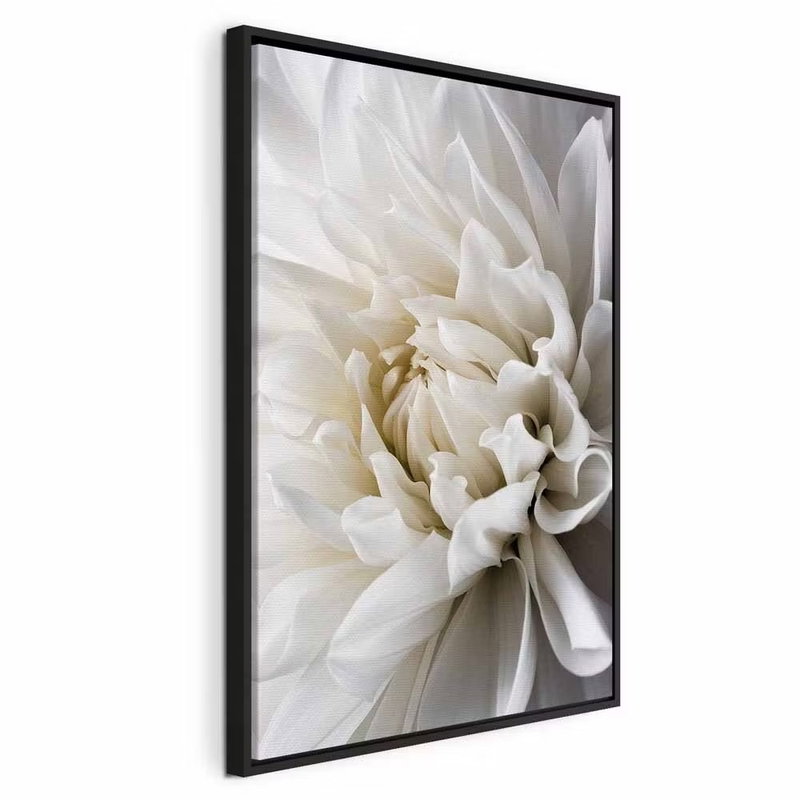
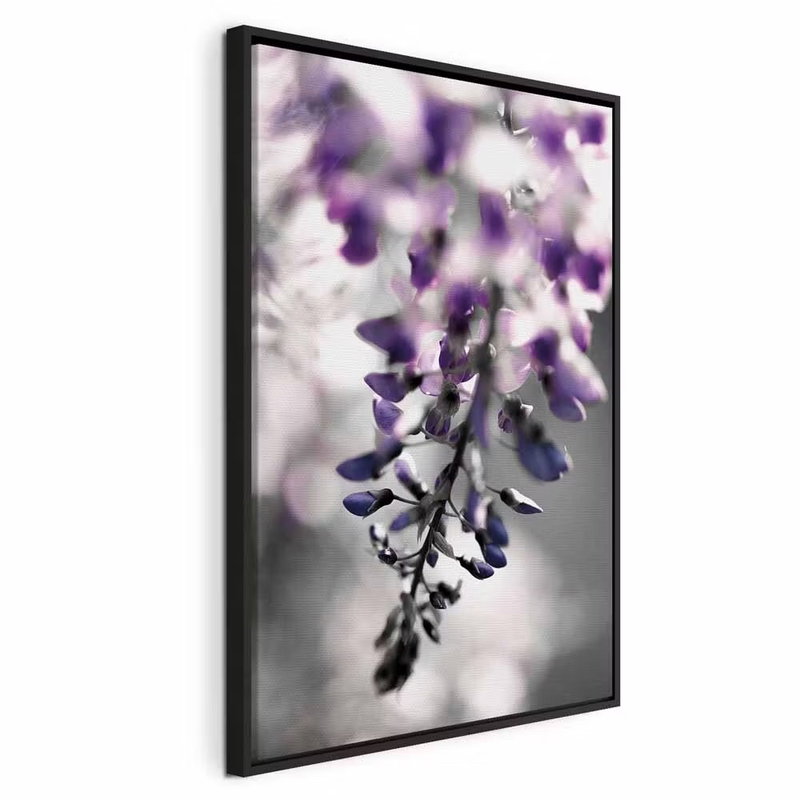
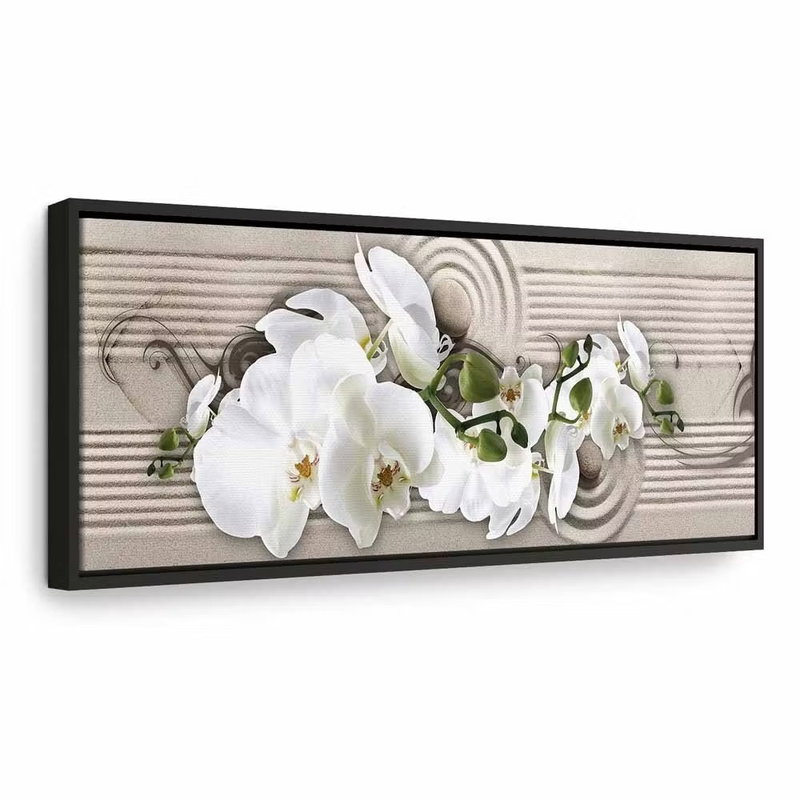
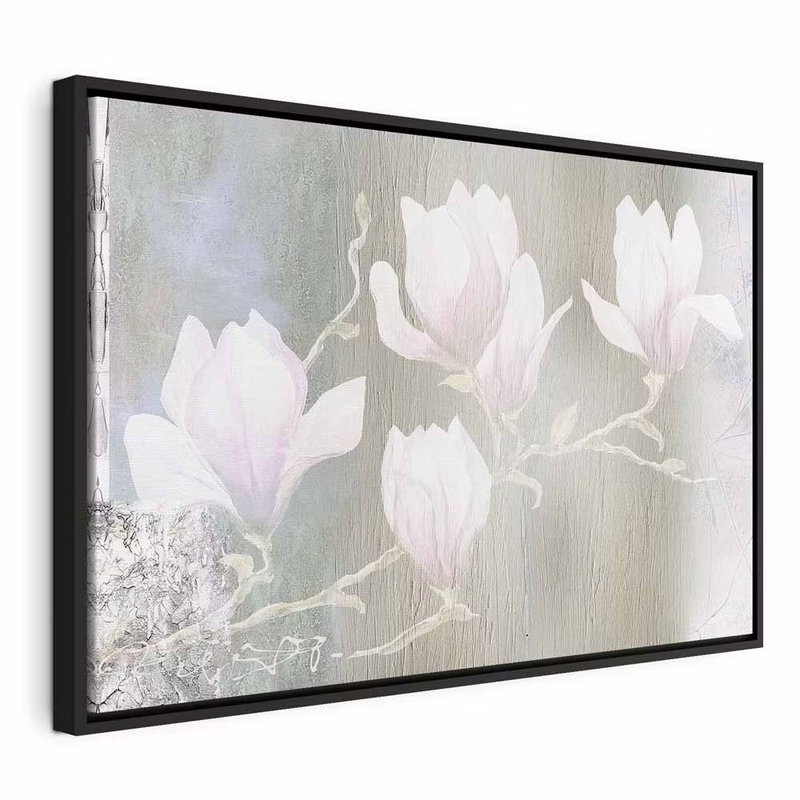
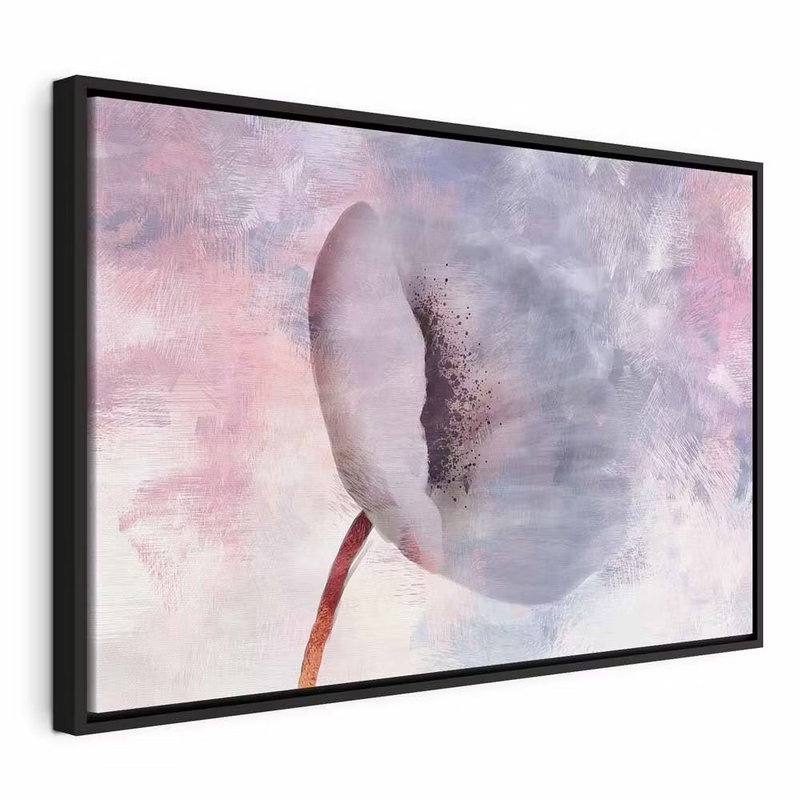
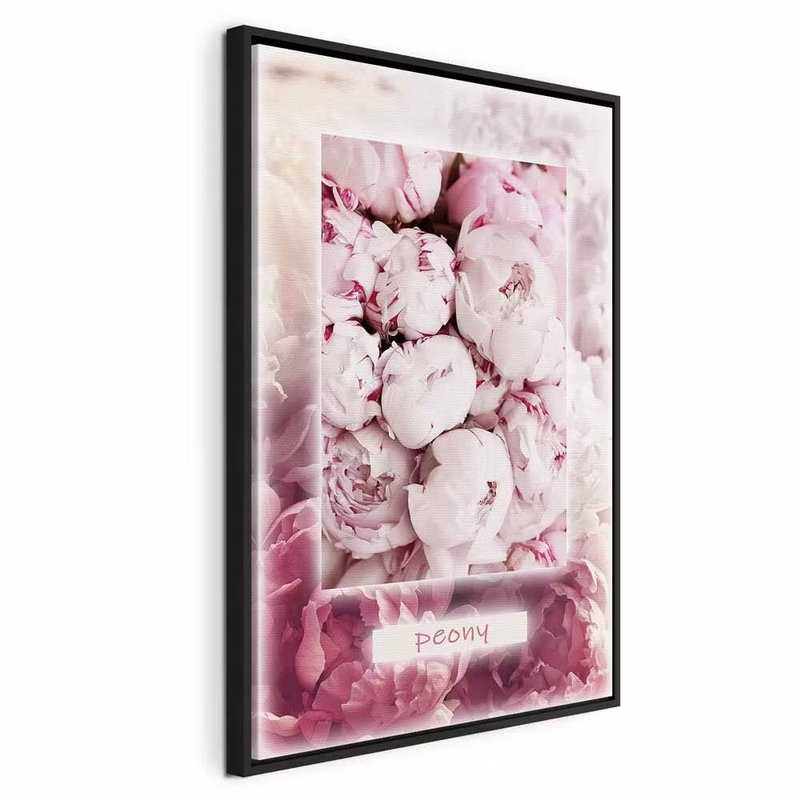
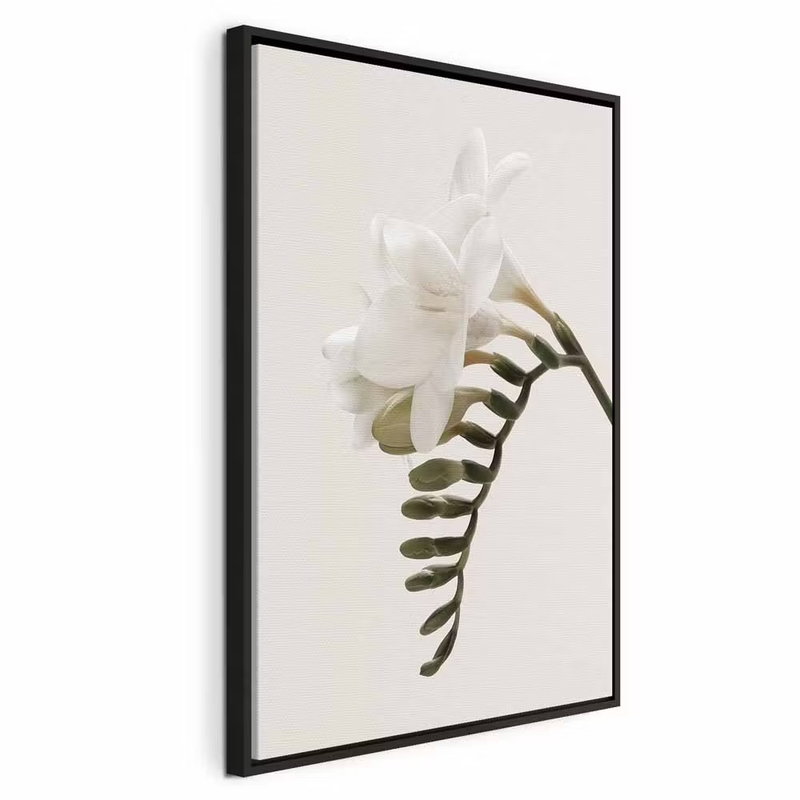
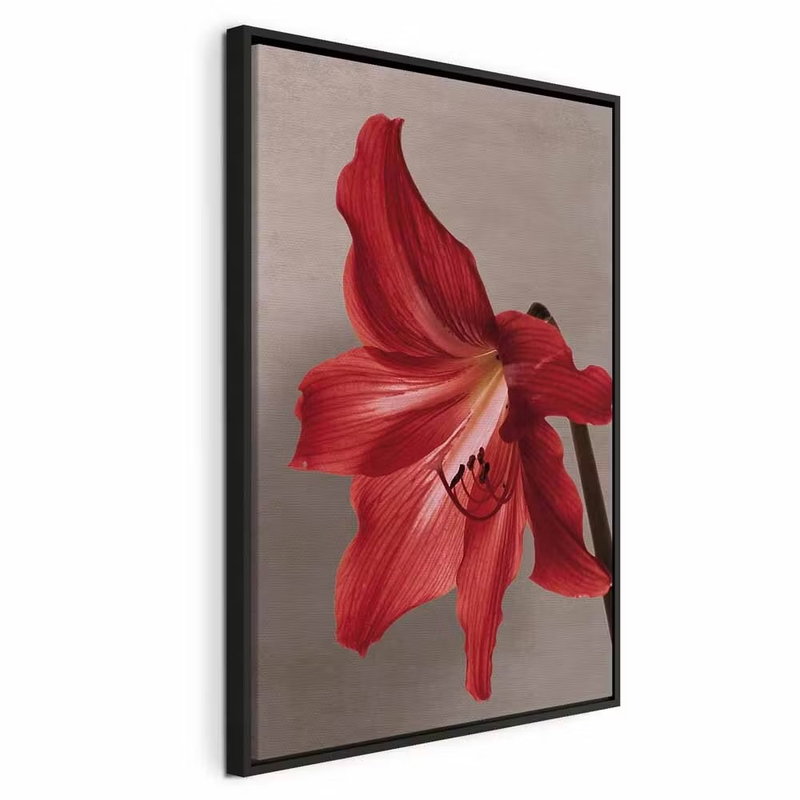
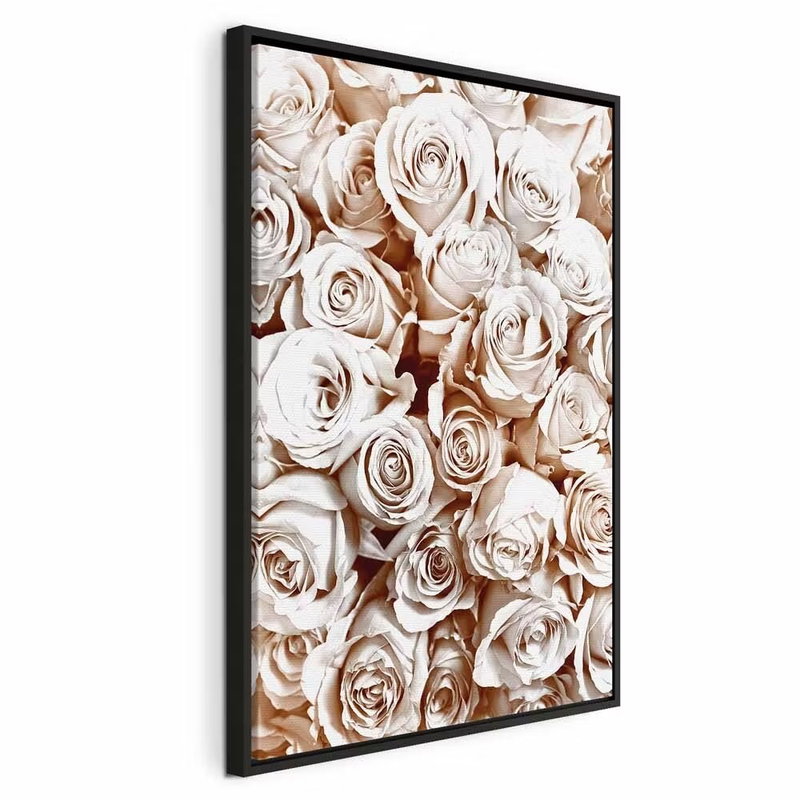
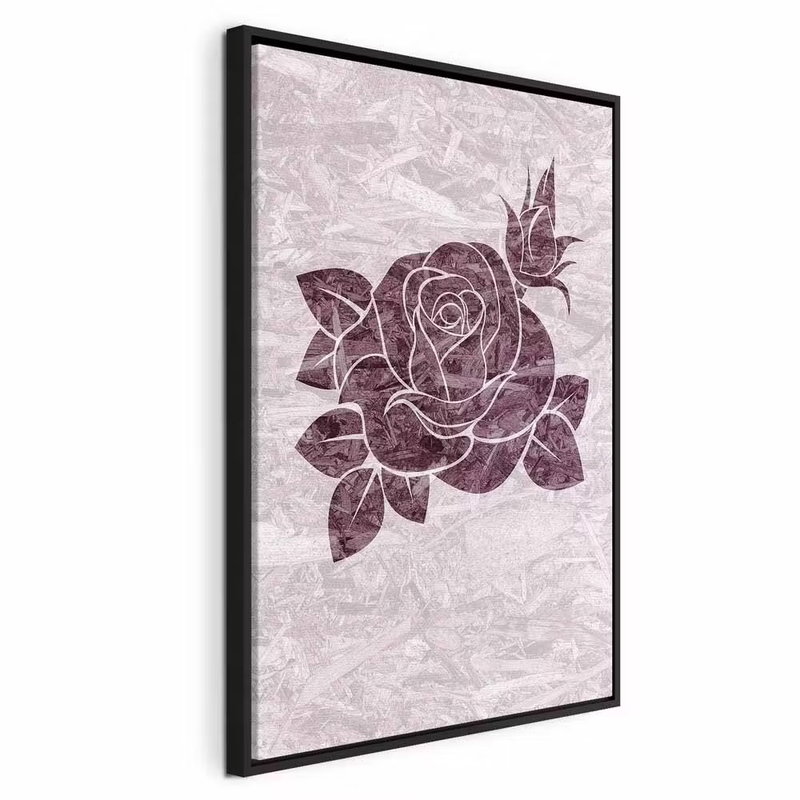
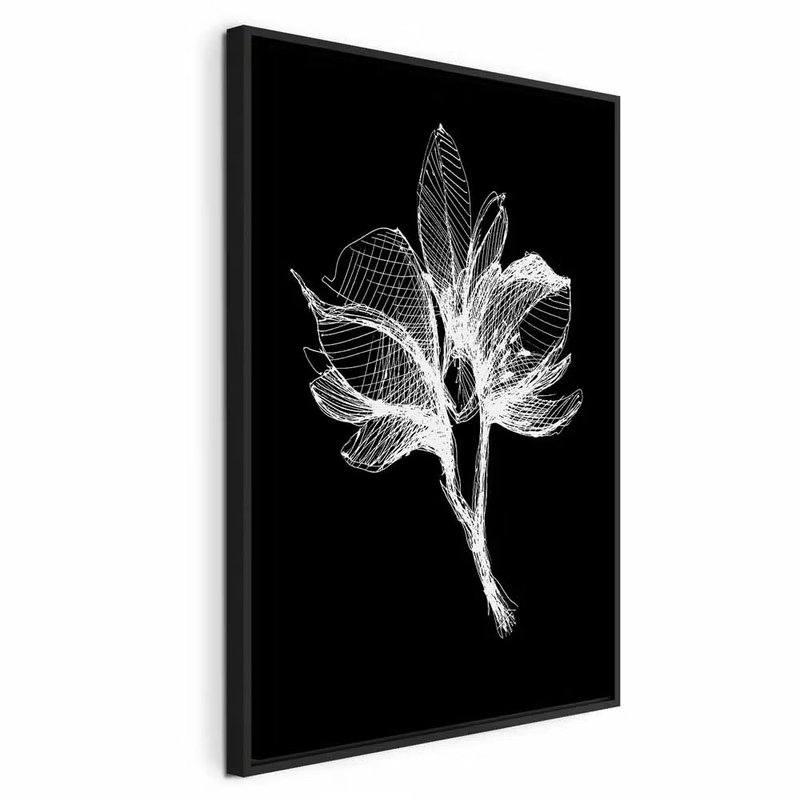
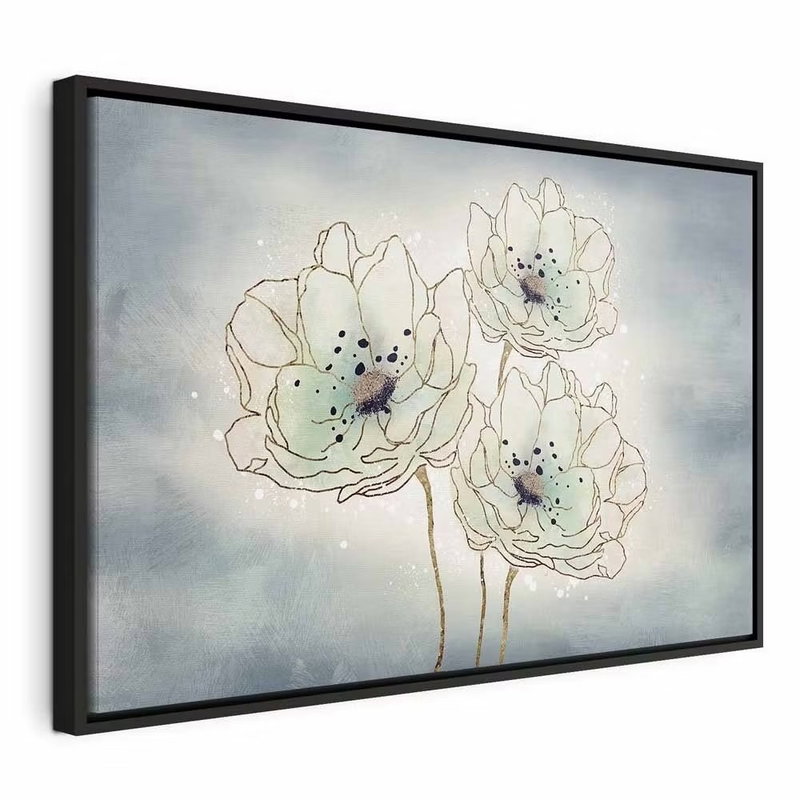
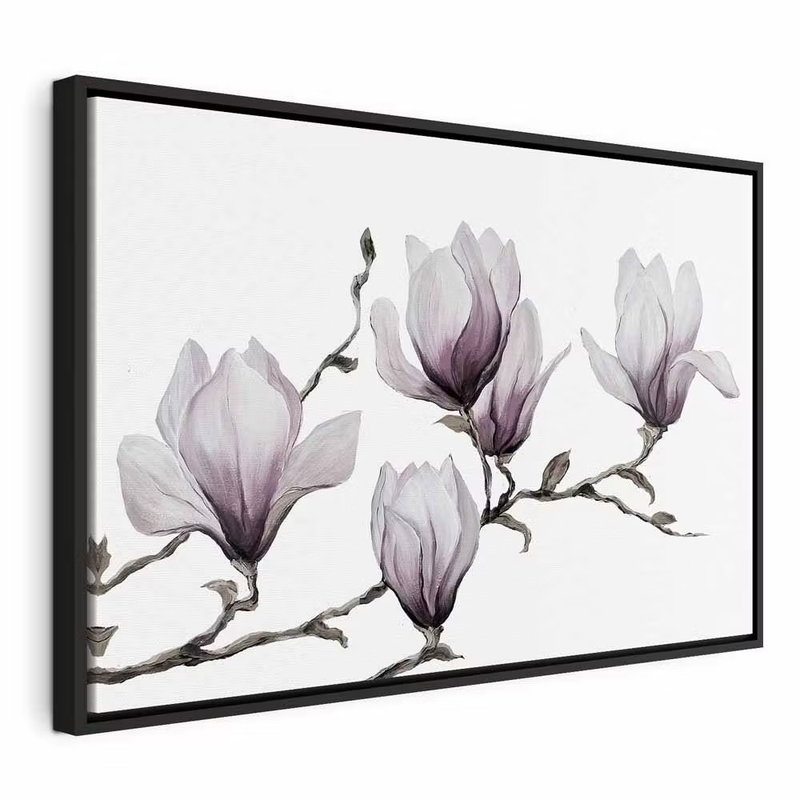
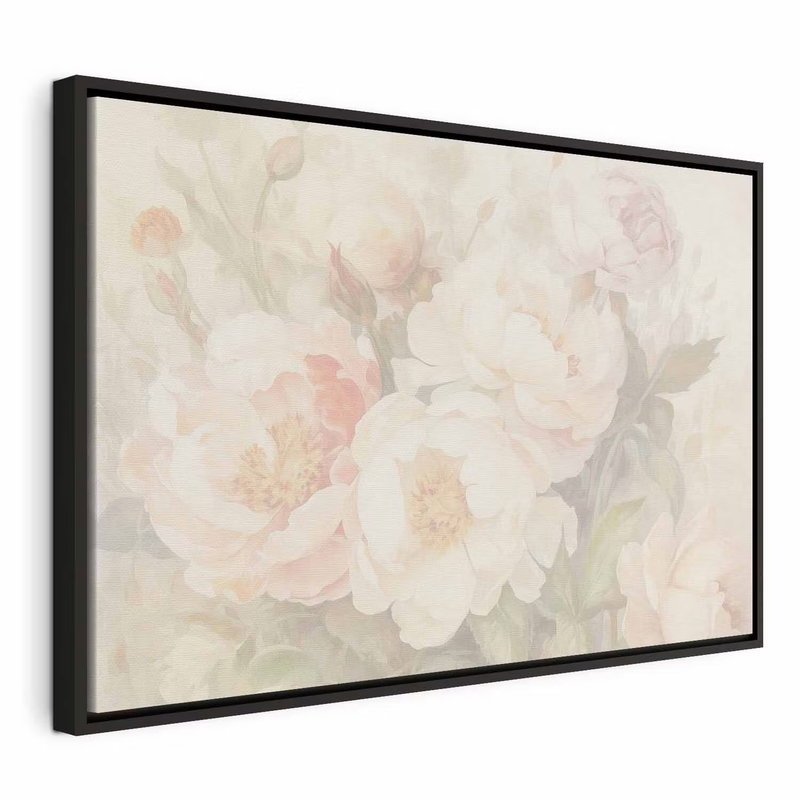
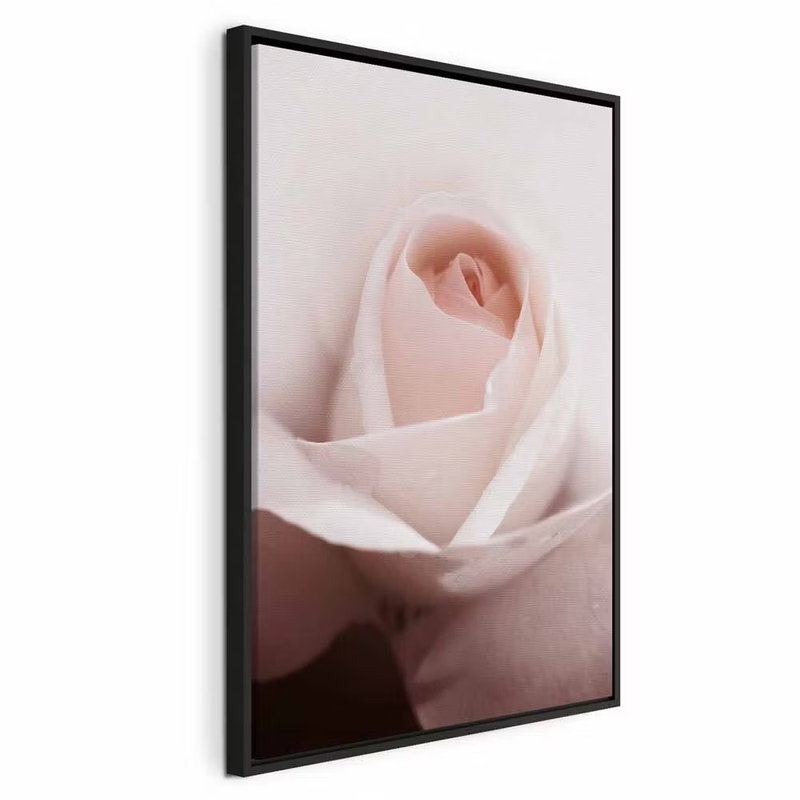
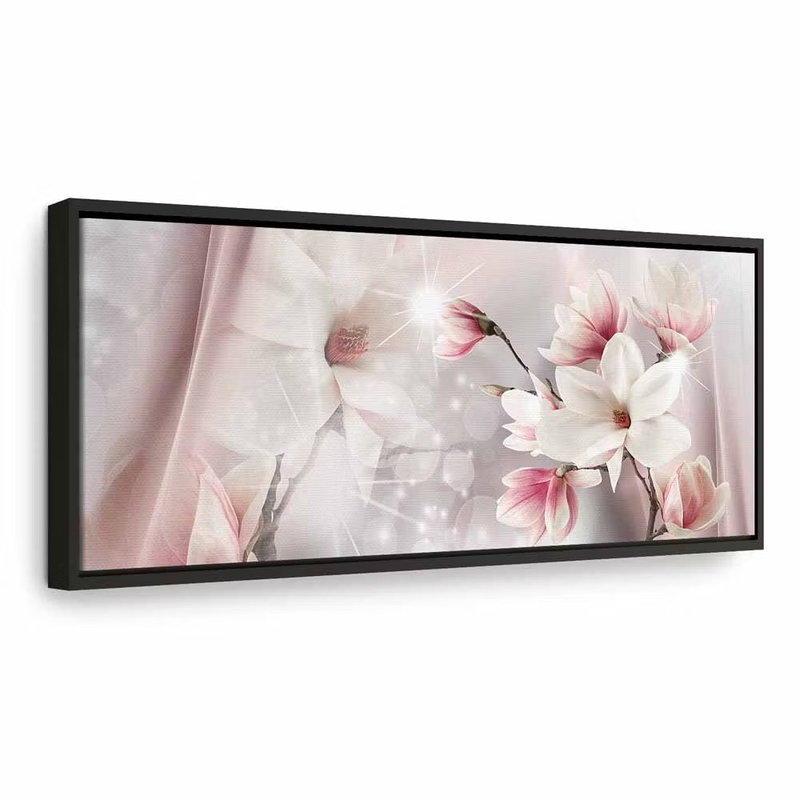
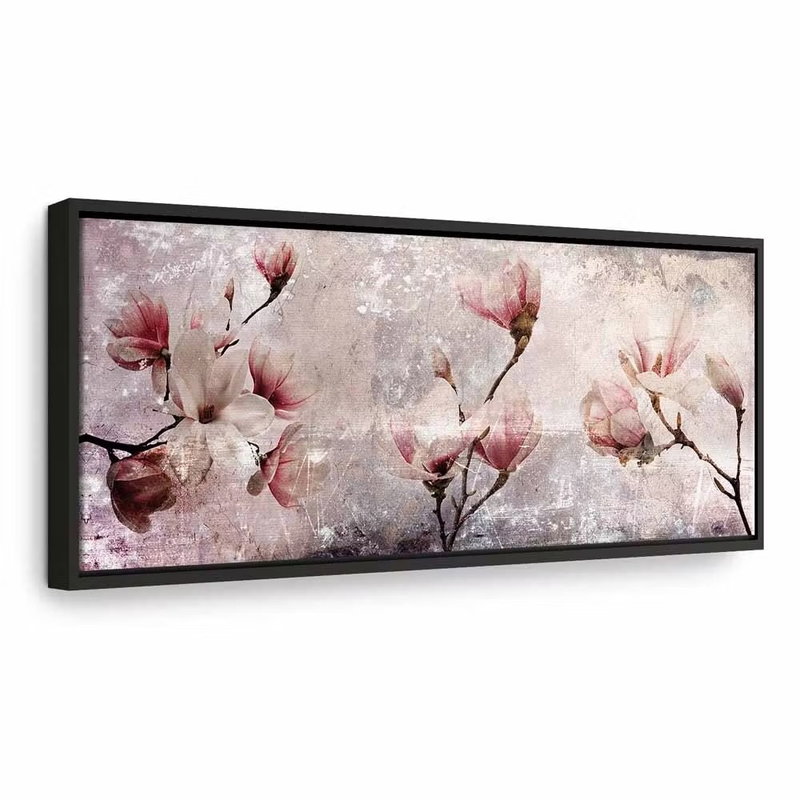
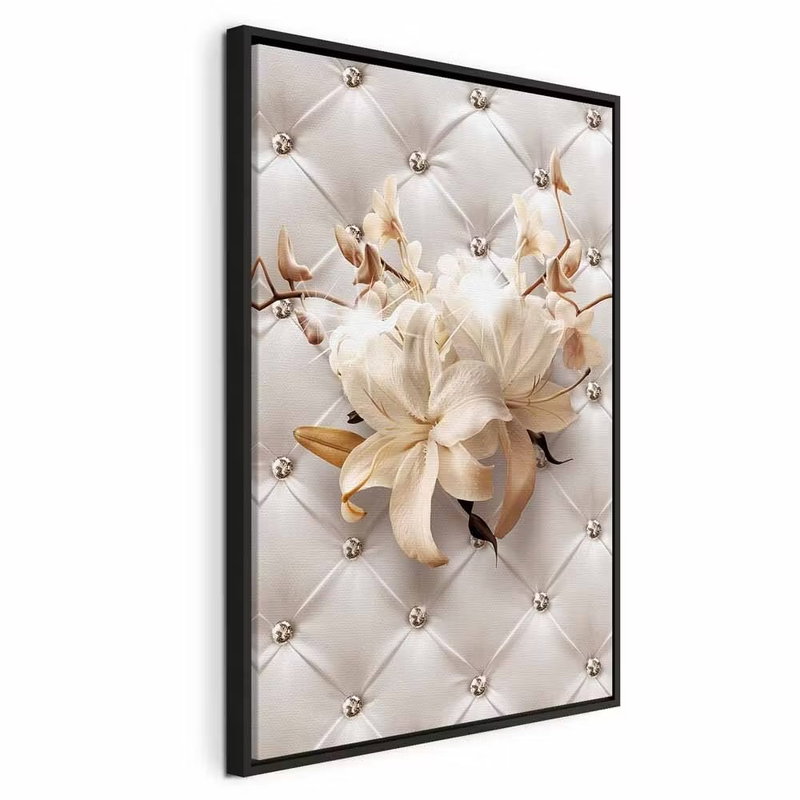
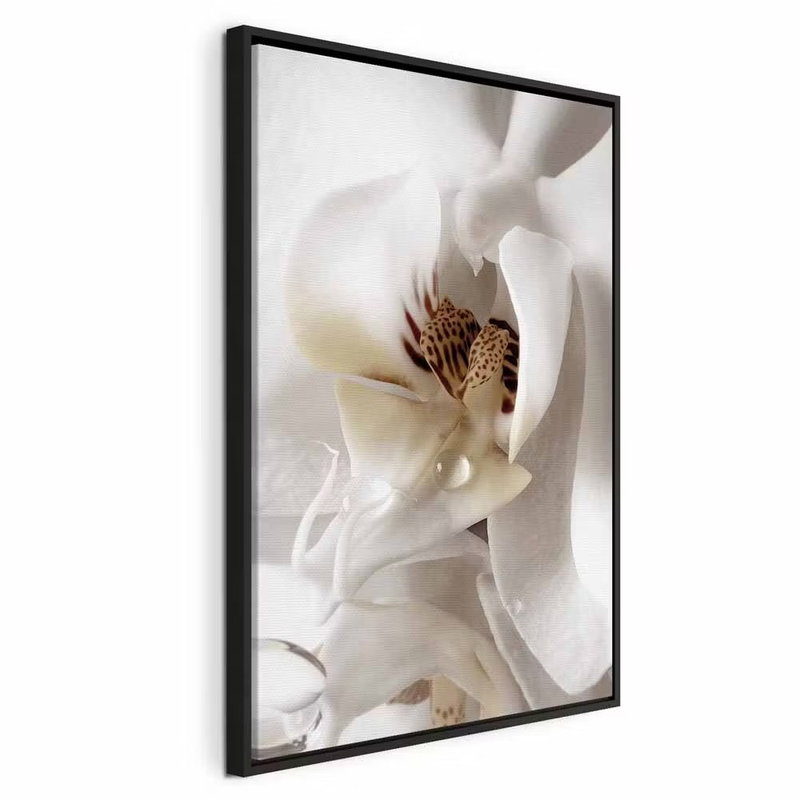
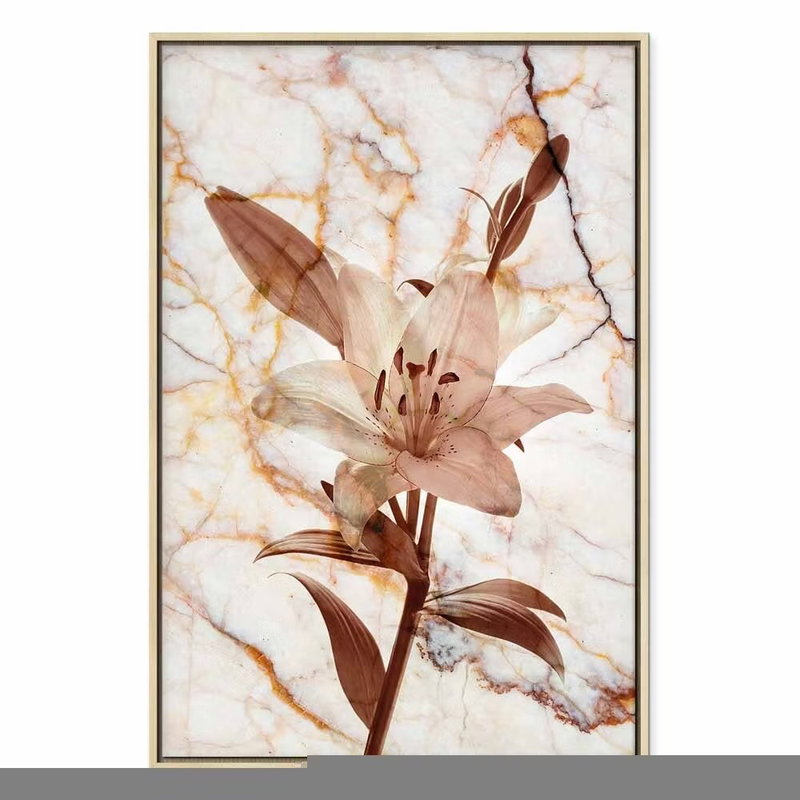
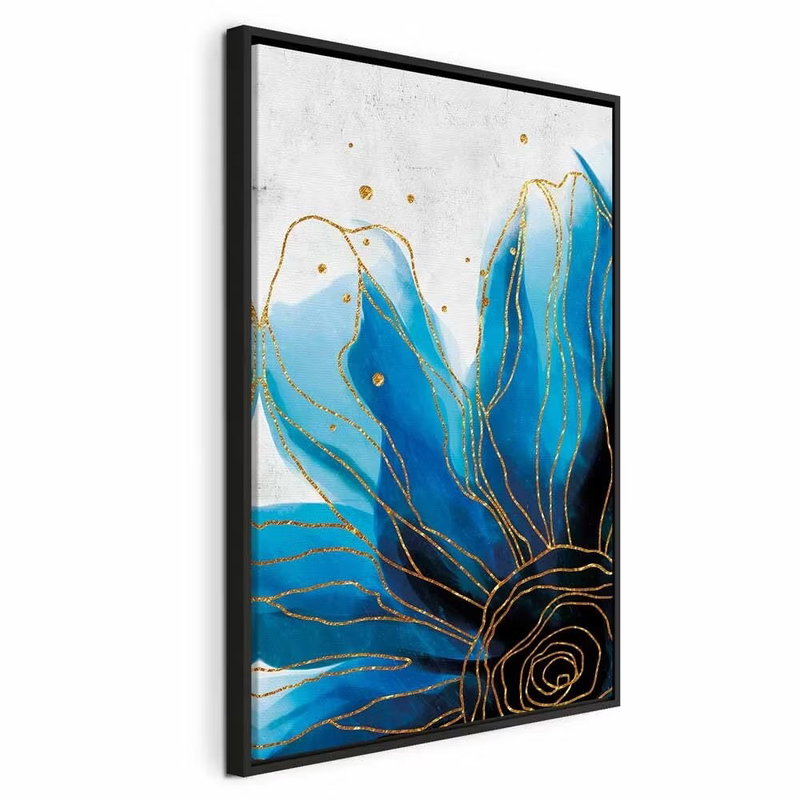
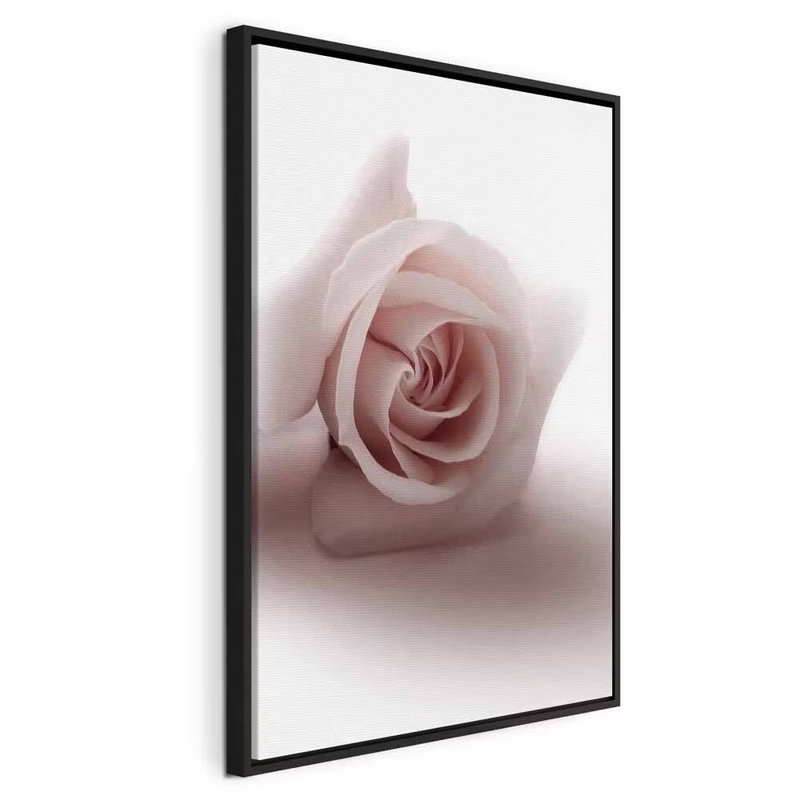
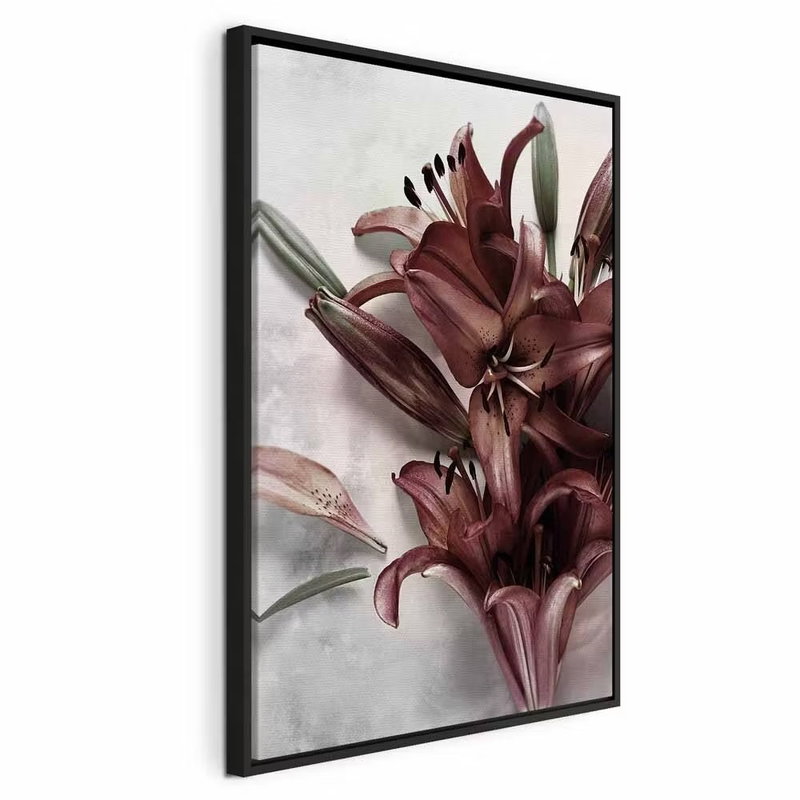
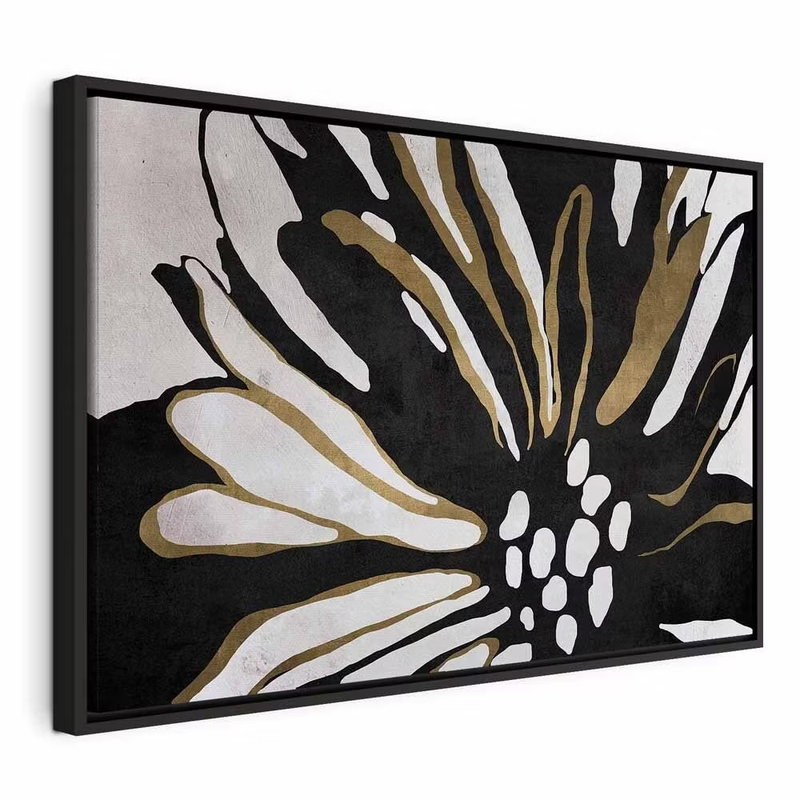
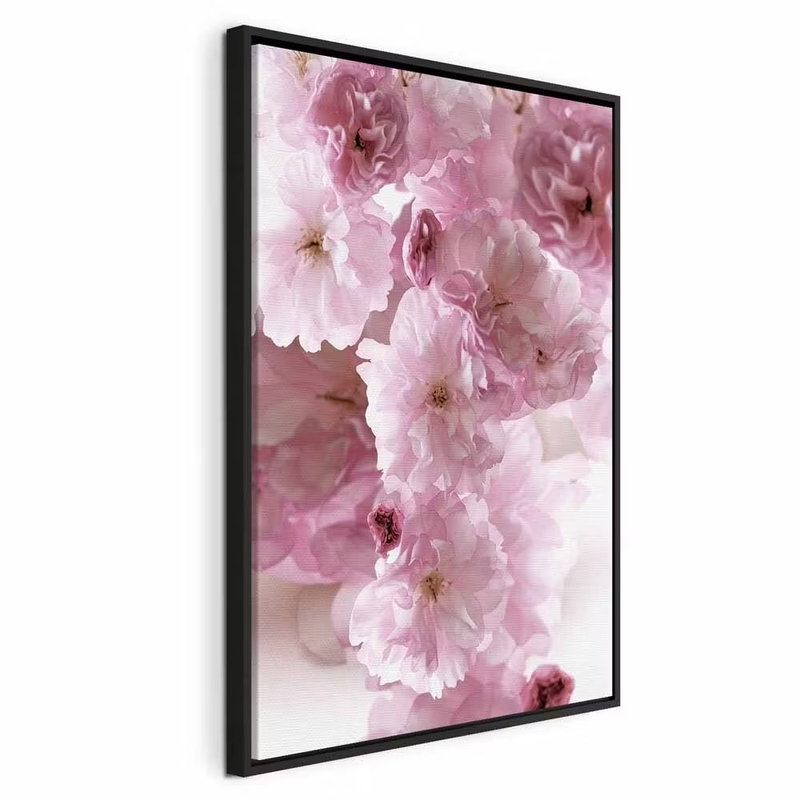
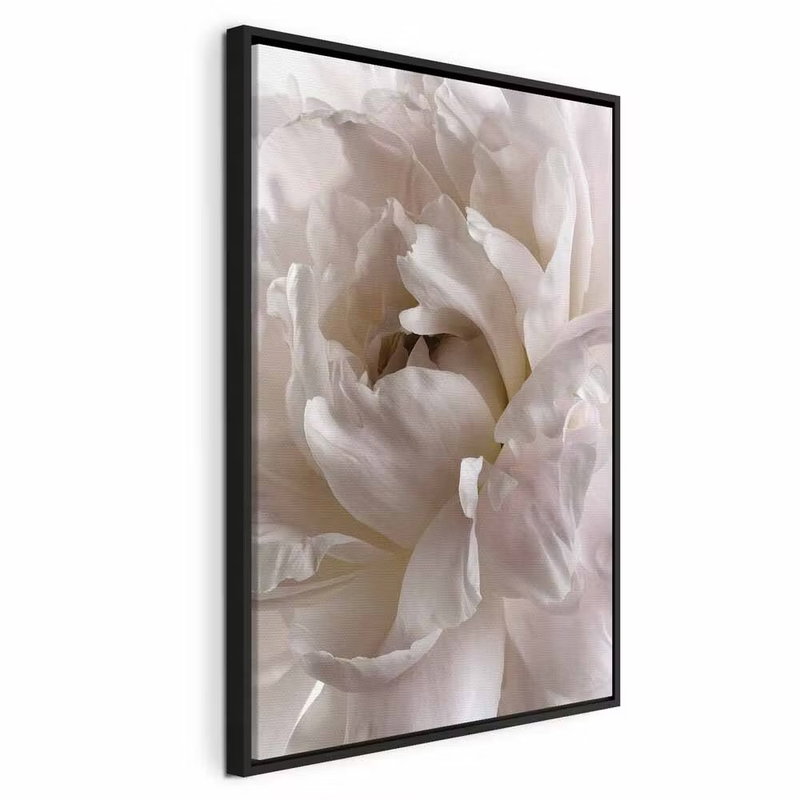
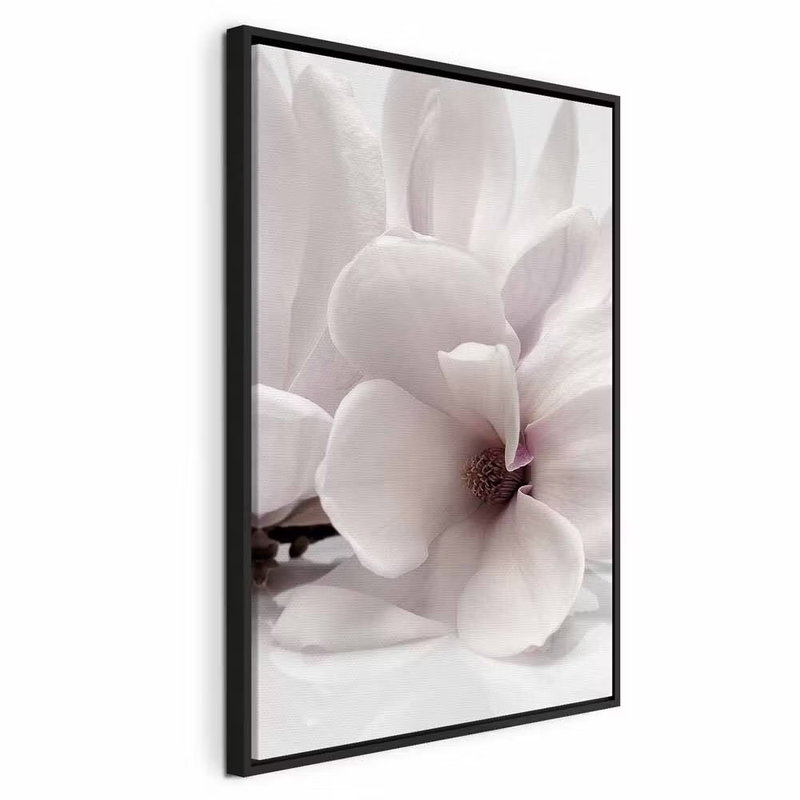
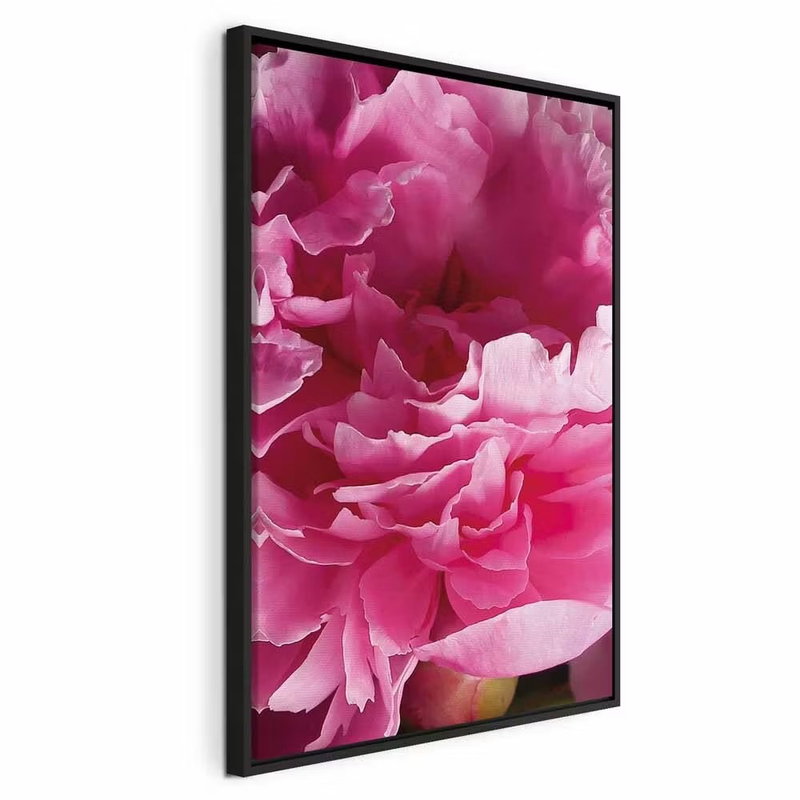
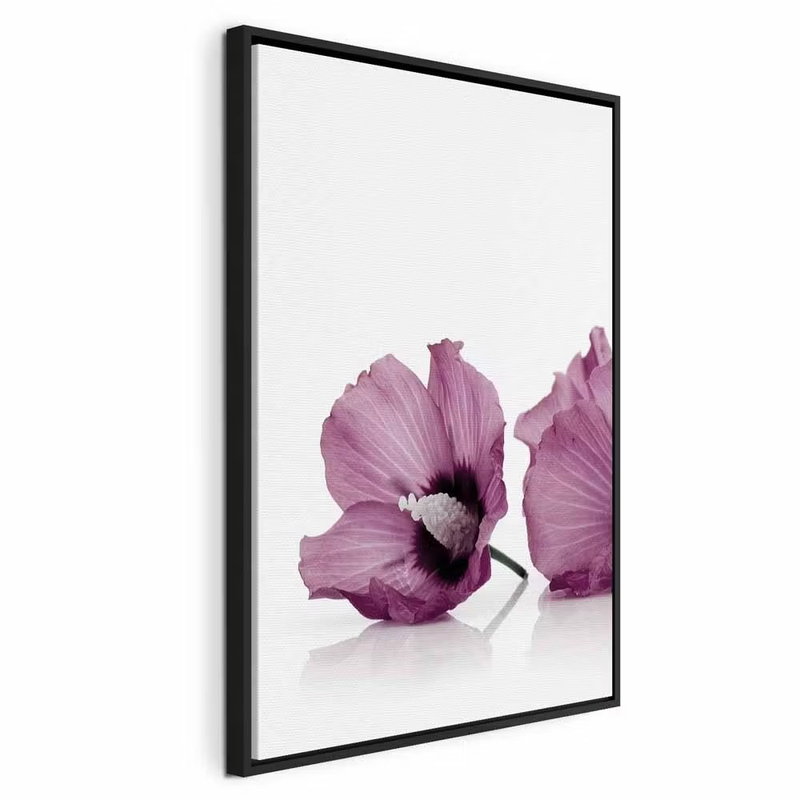
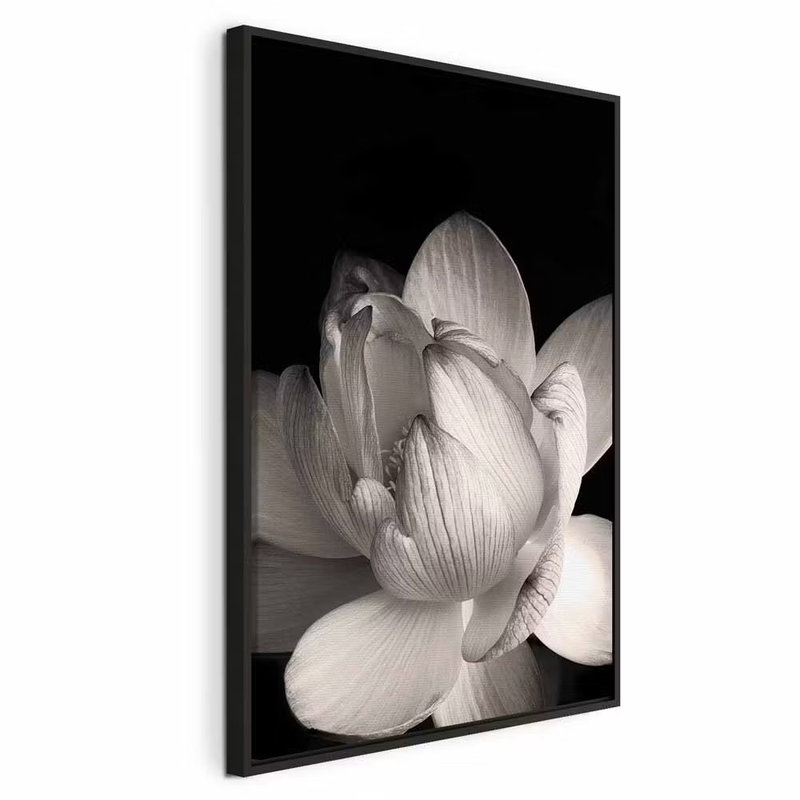
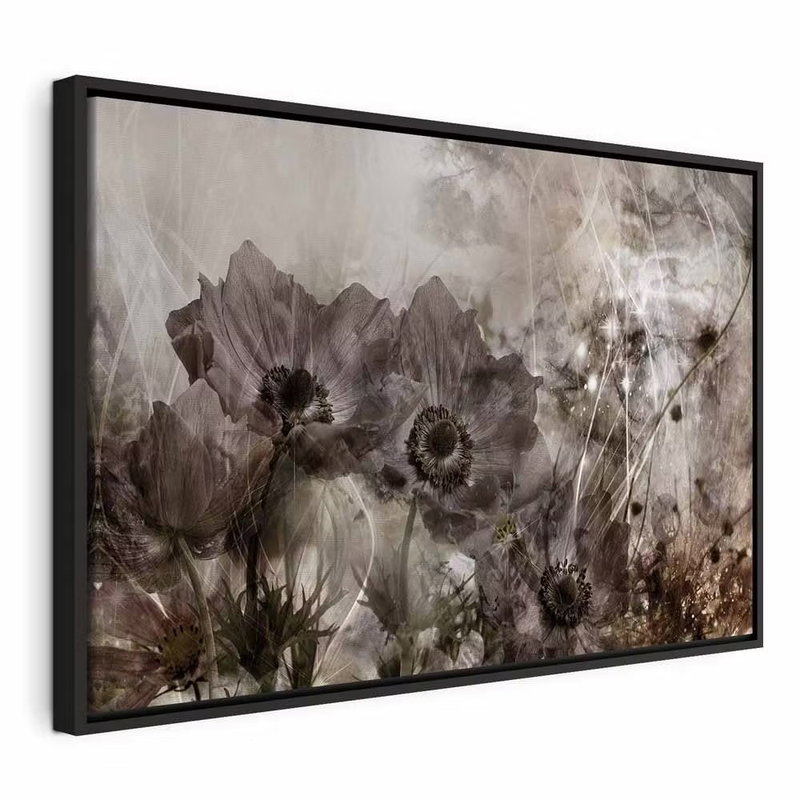
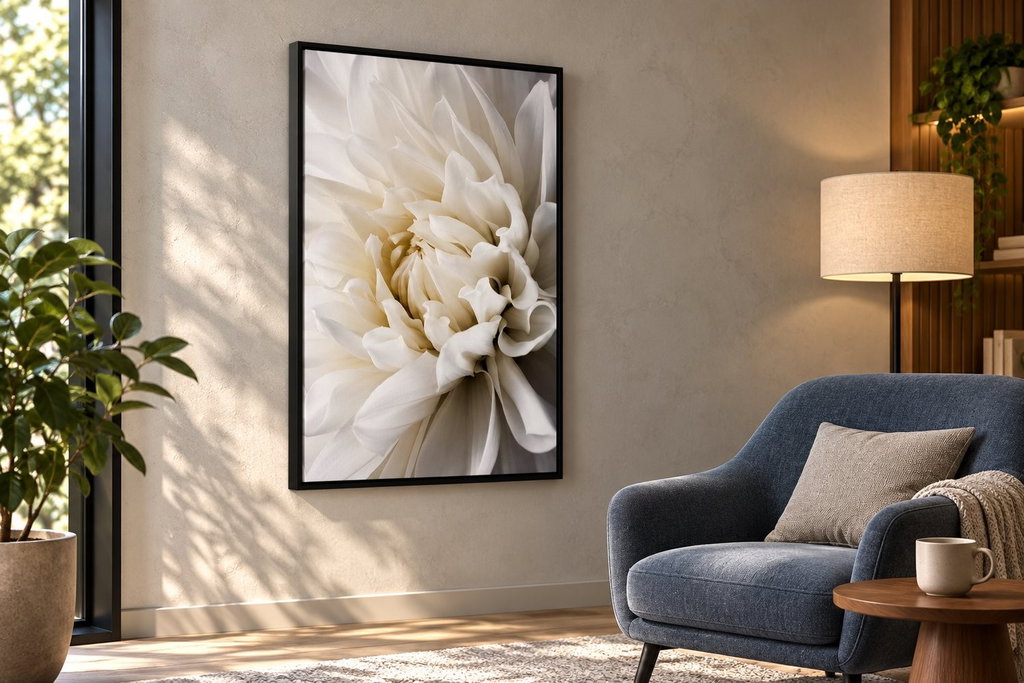
A closer crop makes petals, colour transitions and the flower's structure the main subject. The selection includes photographic floral details as well as painted and stylised interpretations. A pale flower may fill almost the entire surface, while other pictures bring several large blooms together against a simple background. Composition, rather than a particular species name, connects this category.
Study the main image when comparing options. Look at the position of the flower's centre, how much background remains visible and whether petals continue towards the edge. An asymmetric close-up can give the wall a clear direction, while a more central flower gathers attention differently. Choose the crop that works with the furniture around the picture.
Pale petals or a distinct colour accent
White and cream flowers often contain subtle differences between light and shade. Consider them against the wall's own tone so that the details have the contrast you want. Pink, red and darker flowers offer other ways to repeat colours from a chair, rug or curtain without making the entire room follow the same shade.
Also consider the image as a whole. From further away, a detailed flower head can read as larger soft areas. Up close, lines and overlapping petals become more noticeable. The same subject can therefore feel different above a seating area and in a passage where people walk close to the wall.
Let frame and format work together
These pictures belong to the series with a visible outer frame. Check the frame options and sizes offered for each product; do not assume they are identical for every subject. A dark frame can define the boundary around a pale flower, while another available option may relate to the room's timber and colours.
Measure the free wall area and compare portrait and landscape compositions with the furniture's proportions. If several pictures will hang together, a recurring flower colour or related crops can connect the group. Leave enough space between the pictures for their individual shapes to remain readable.
Floral artwork within the room's acoustics
Behind the design is the product's sound-absorbing construction. The picture can help reduce reverberation, but flower species, colour and artistic style do not determine the acoustic effect. Use the product information and assess placement and total absorbing area alongside the rest of the room's furnishings.
Read the dimensions, construction, hanging and care information for the model you choose. Match fixings to the wall material and picture weight. An acoustic picture contributes to acoustics inside the room and does not replace sound insulation between rooms. Let your choice of artwork and its practical position work together.