




Choose a work through colour and composition
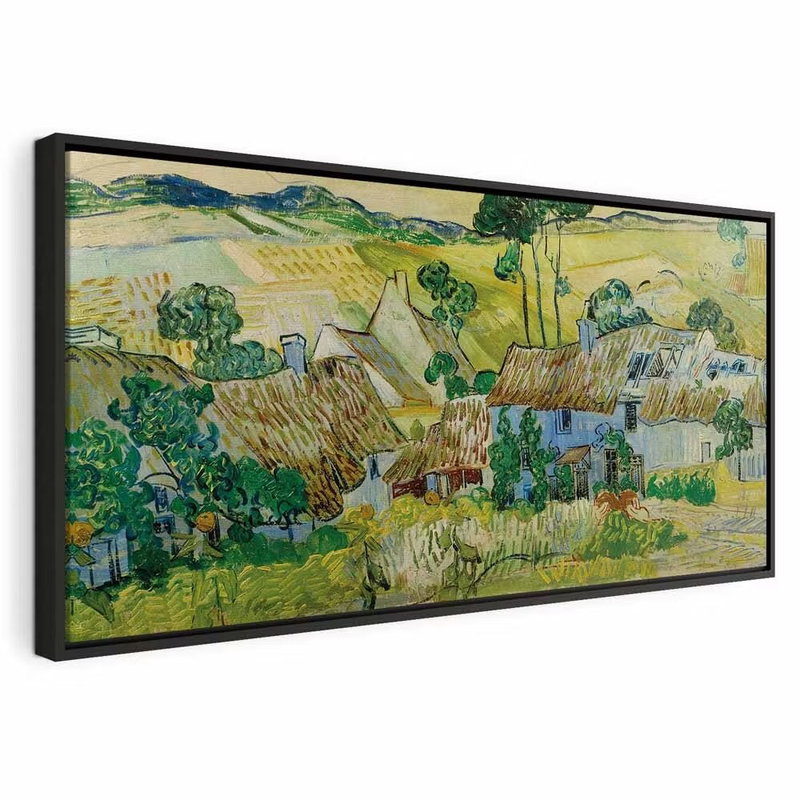
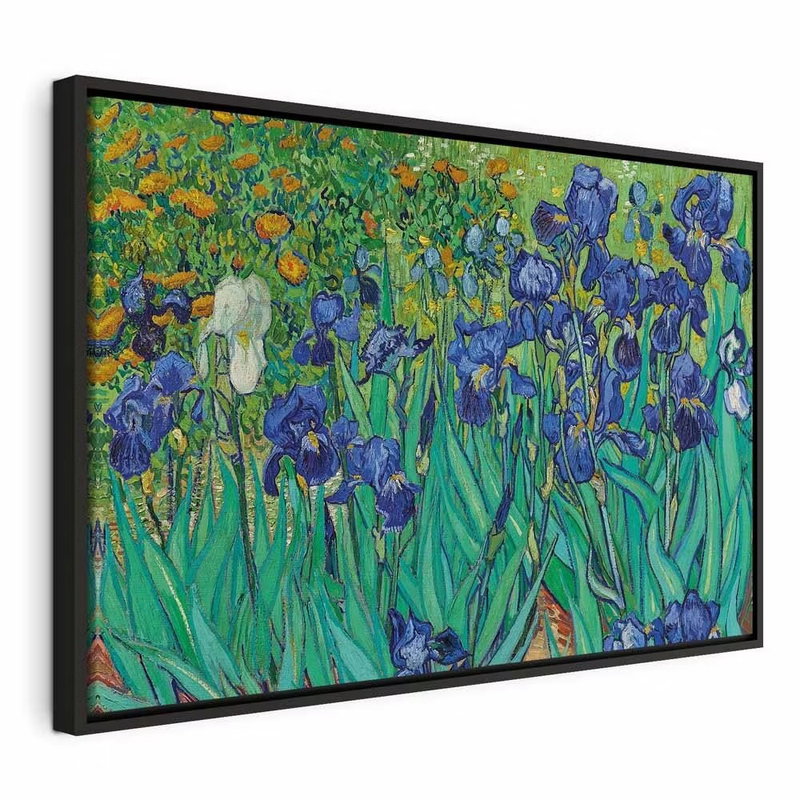
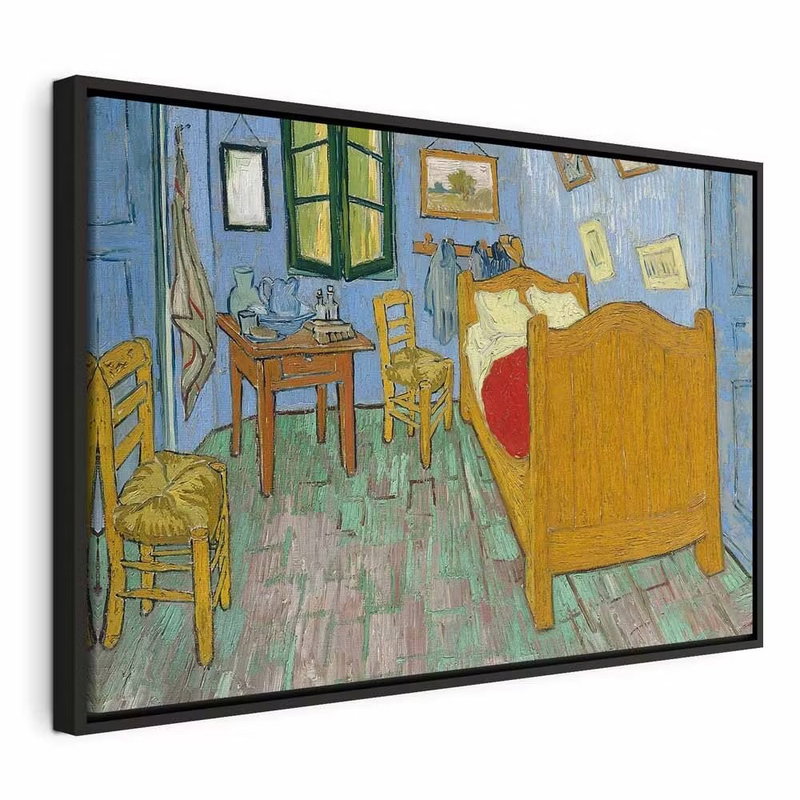
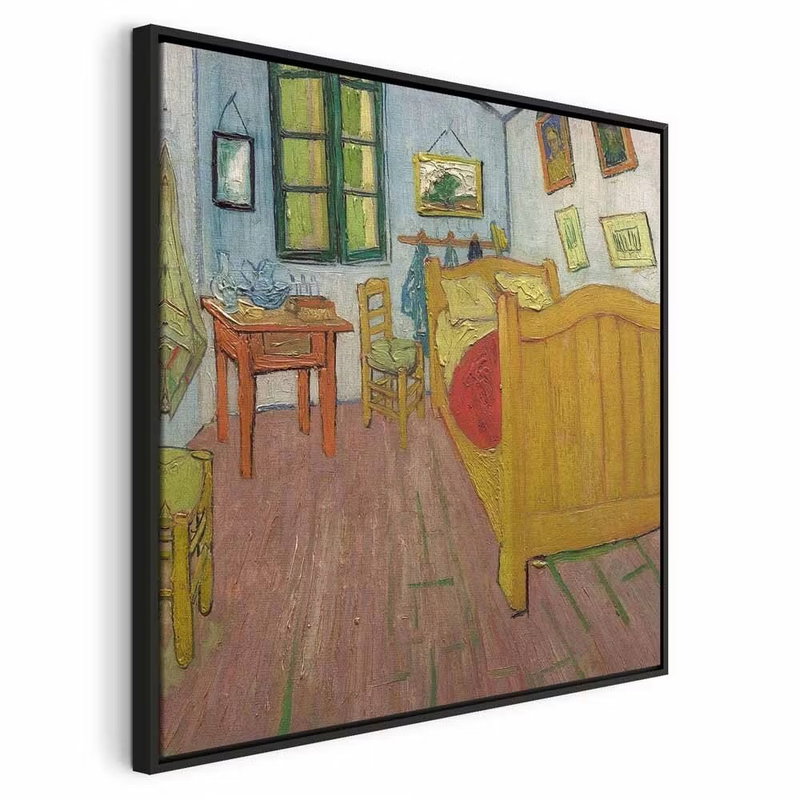
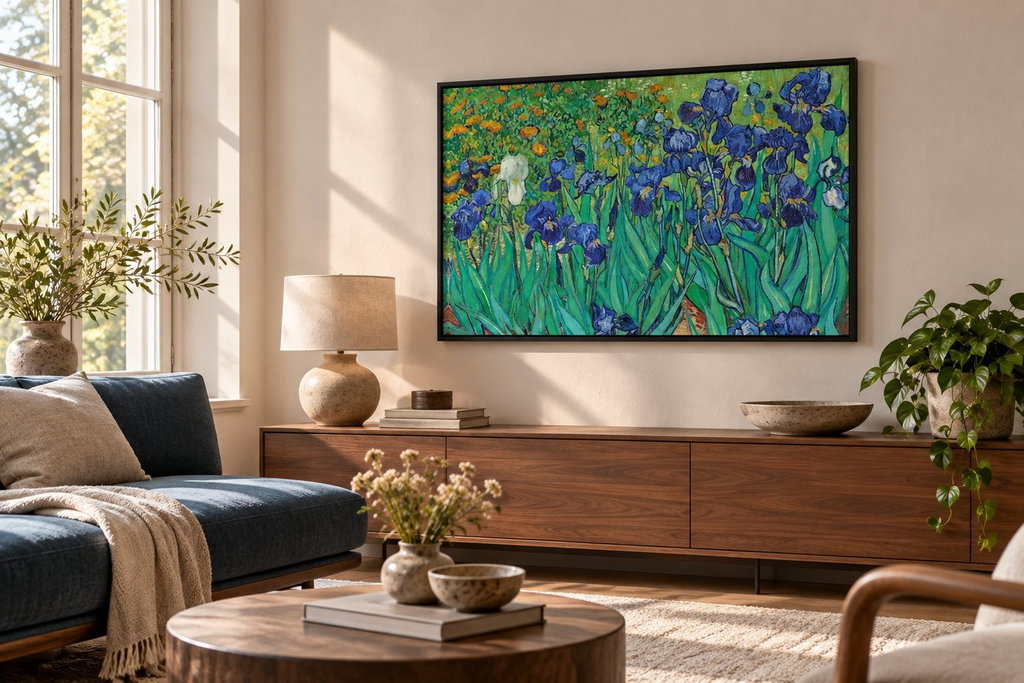
Blue irises and green leaves can fill almost the entire image, while the farmhouses near Auvers bring roofs and fields together in a broad landscape. The bedroom’s furniture creates distinct diagonals instead. Start with what you want to encounter in the room: a dense plant pattern, an open view or a more enclosed interior subject. Here you compare reproductions on sound-absorbing pictures, rather than original artworks.
Let the frame meet the picture’s outlines
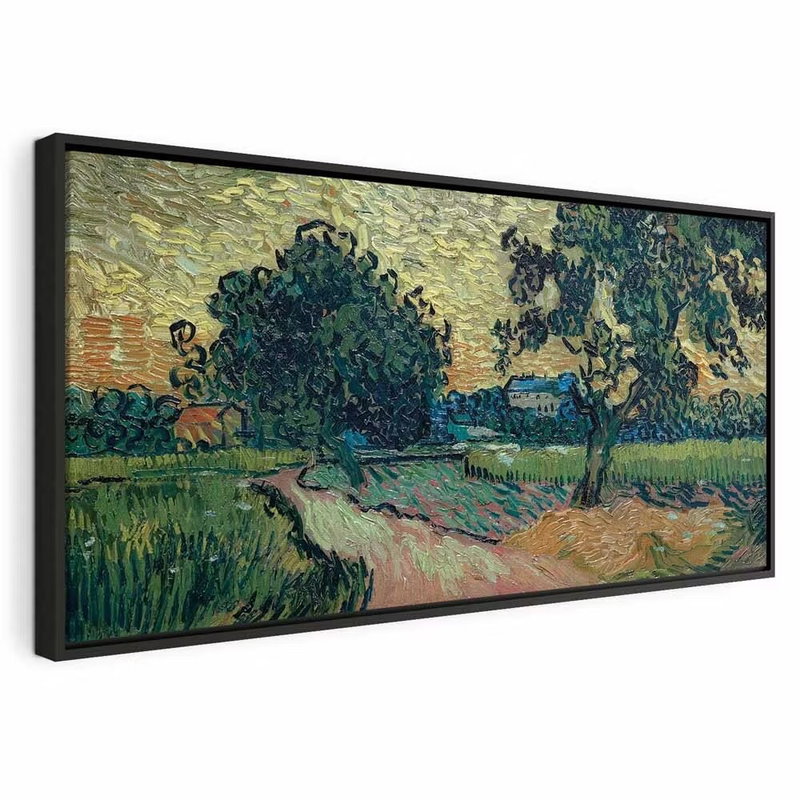
Van Gogh’s dark lines can find support in a black outer frame, while a natural-coloured alternative can connect with wood tones and warmer areas in the image. The product page shows the frame choices offered. Consider the relationship between frame and wall colour as well. A light area can stand out more clearly against a dark edge, while a darker composition needs enough light for its details to emerge.
Compare landscapes, portraits and still lifes
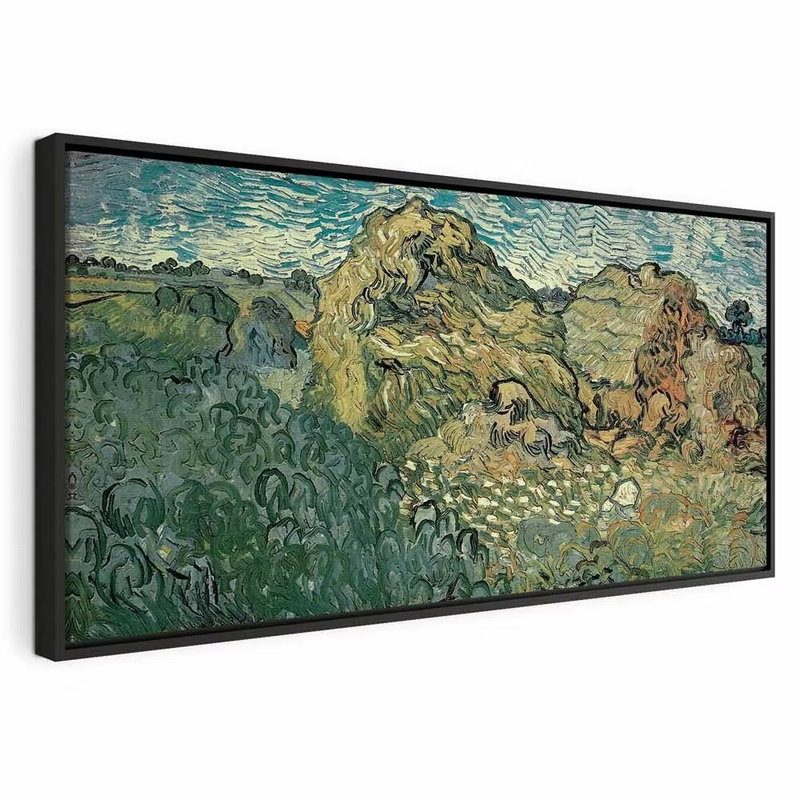
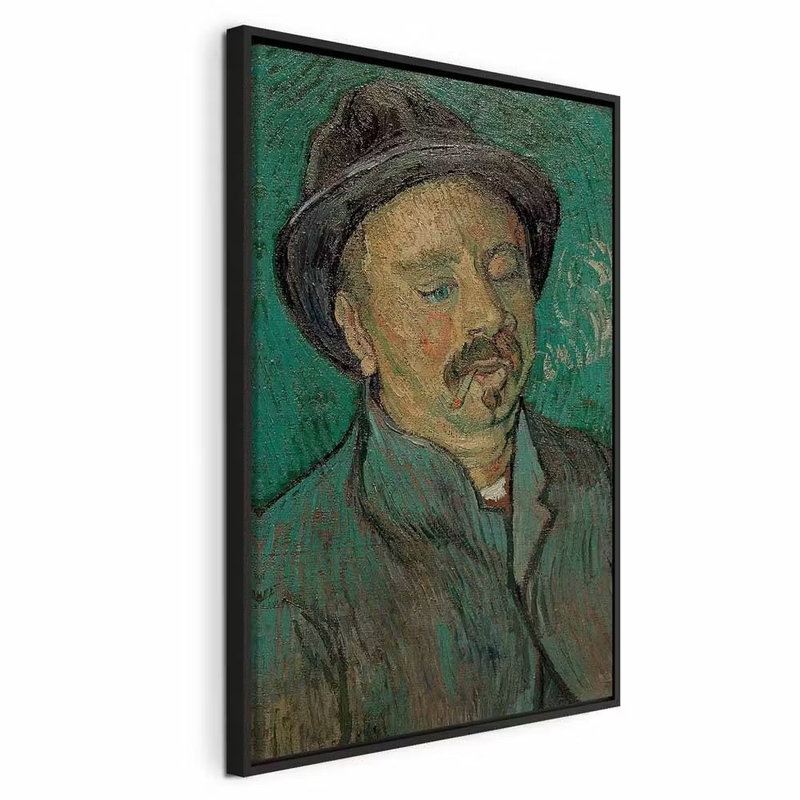
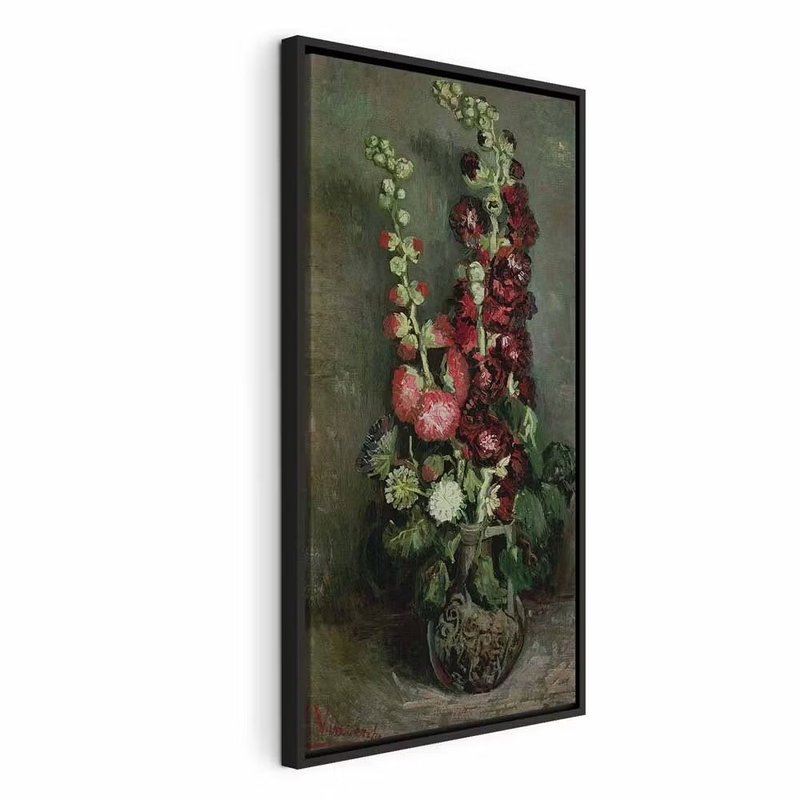
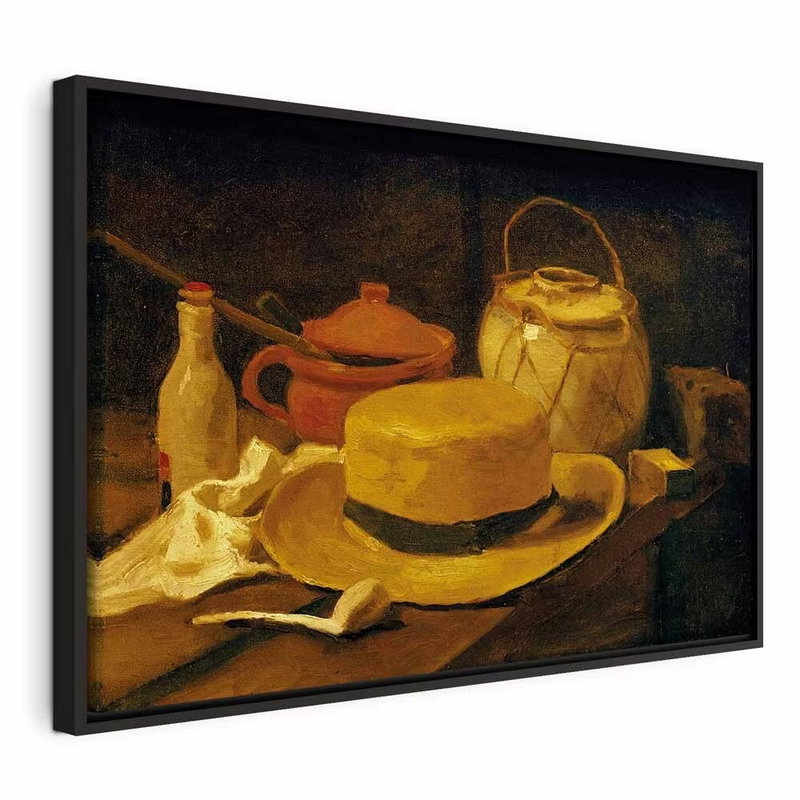
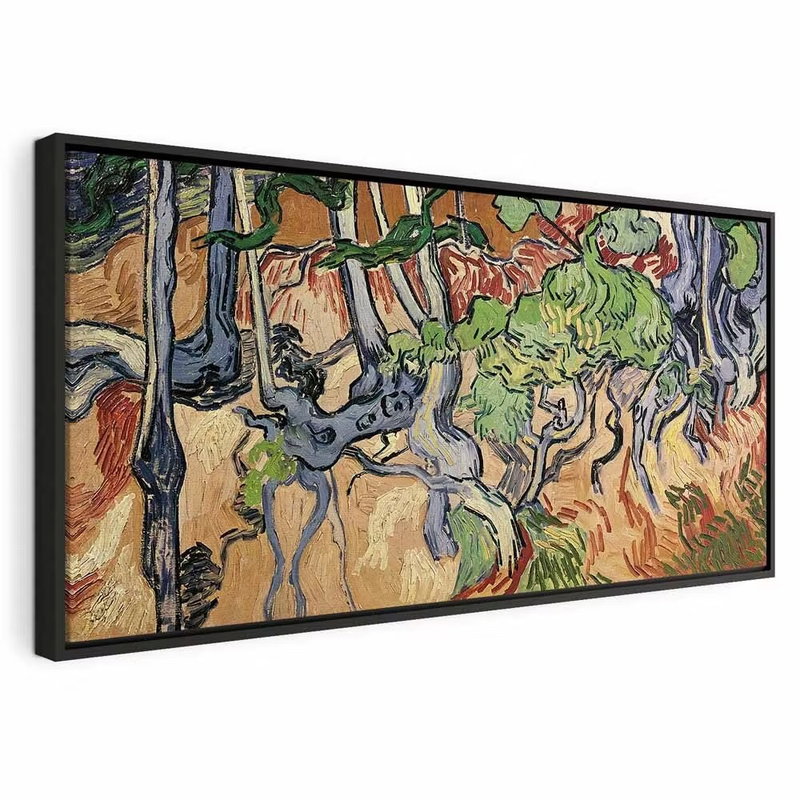
A haystack beneath a streaked sky distributes colour differently from a flower vase or a portrait against green. The dark still life with a straw hat may suit a setting where you want less intense colour contrasts. The roots’ winding lines offer a freer connection with nature. When combining several works, begin with a recurring blue, green or earthy tone, then consider how the directions in the pictures relate to each other.
Match the format to the wall and viewing distance
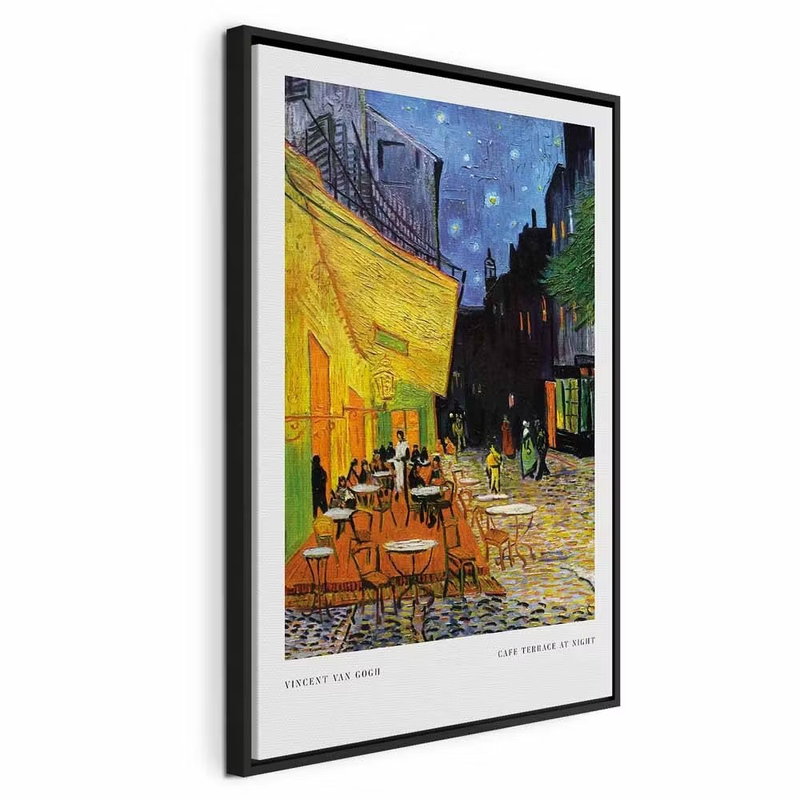
Portrait and landscape images offer different possibilities above furniture or on a narrow wall. Some motifs come in several sizes; check the selected model’s measurements and leave space around its frame. Look both close up and from the position where the picture will usually be seen. Larger areas of colour matter at a distance, while flower outlines and smaller objects become more noticeable nearby.
Combine reproduction motifs with sound absorption
Behind the print is the picture’s sound-absorbing construction. It can help reduce reverberation, but the result depends on the room’s surfaces, the pictures’ placement and their total area. An artist’s name does not imply a particular acoustic performance. Read the product information and follow the hanging and care instructions for the specific framed model. When using several pictures, include the wall’s load-bearing capacity and the furniture’s proportions in your planning.