




Desk screens for schools – a better acoustic environment in classrooms and study areas
Create quieter workspaces with targeted sound absorption
In environments where many people work or spend time in close proximity, problems often arise with disruptive noise, echoes, and difficulty concentrating. Conversations, keyboard sounds, and movements bounce off hard surfaces, creating a sound environment that feels stressful and fragmented. Desk screens and desk partitions are an effective form of sound absorption that improves local acoustics and contributes to a more focused and comfortable work environment.
What are desk screens and desk partitions?
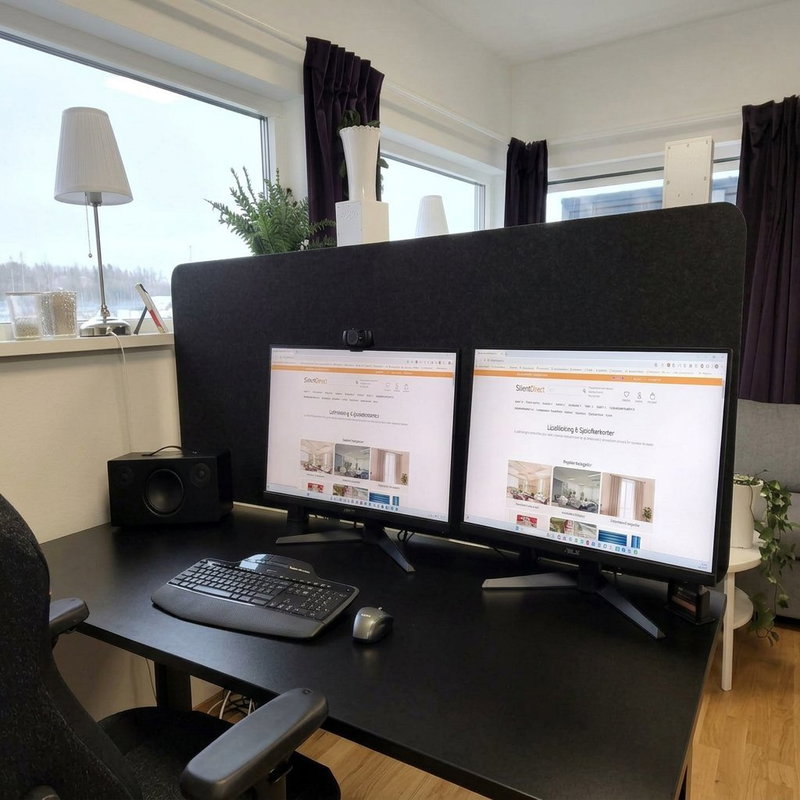
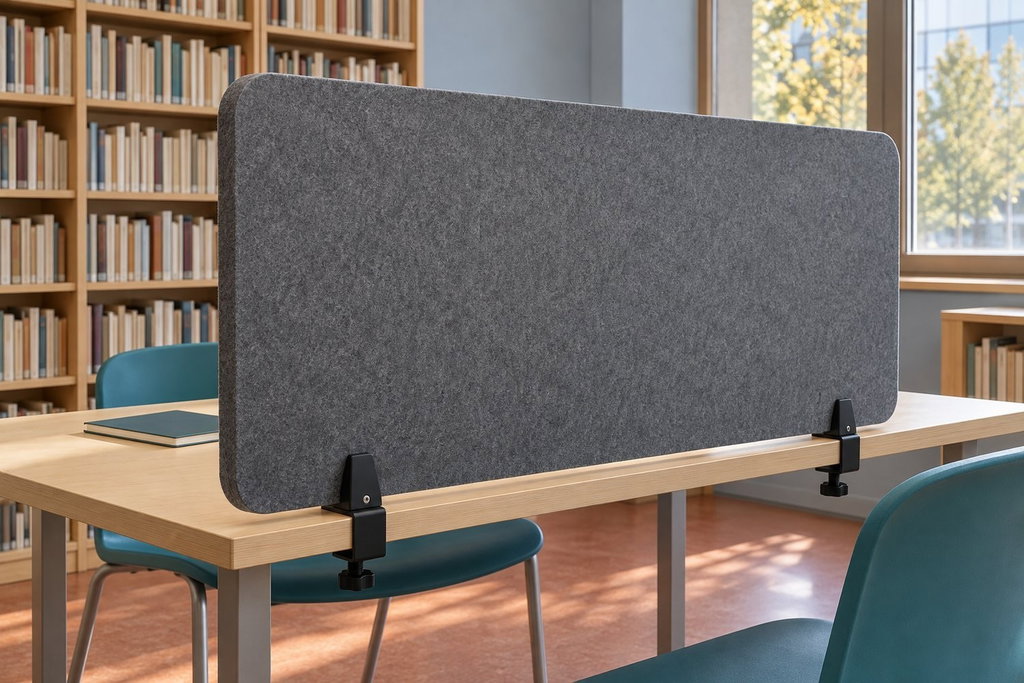
Table screens and desk screens are sound-absorbing screens that are mounted directly on or next to work tables. They are made of porous materials that absorb sound waves and reduce reflections in the immediate vicinity of the user. This differs from sound insulation, which is designed to block sound between rooms, and vibration damping, which reduces structure-borne noise from sources such as machinery or installations. Desk screens are used to improve the acoustic environment where the sound originates, not to prevent sound from spreading between spaces.
Common problems with echoes and disruptive noise
In open-plan offices, school environments, libraries, and study areas, reverberation and background noise are common problems. Conversations blend together, concentration suffers, and the noise level feels higher than it actually is. Even in smaller rooms, hard surfaces can cause sound to reflect strongly, affecting both work peace and communication.
How desk screens work as sound absorbers
When sound waves hit the absorbent surface of a desk screen, they are captured and dampened before being reflected further into the room. Since many disruptive sounds occur at ear level, desk screens are particularly effective at improving speech intelligibility and reducing background noise in the workplace.
Targeted sound attenuation at the workstation
Desk screens reduce noise from nearby workstations and create a more secluded acoustic zone.
Complement to other acoustic measures
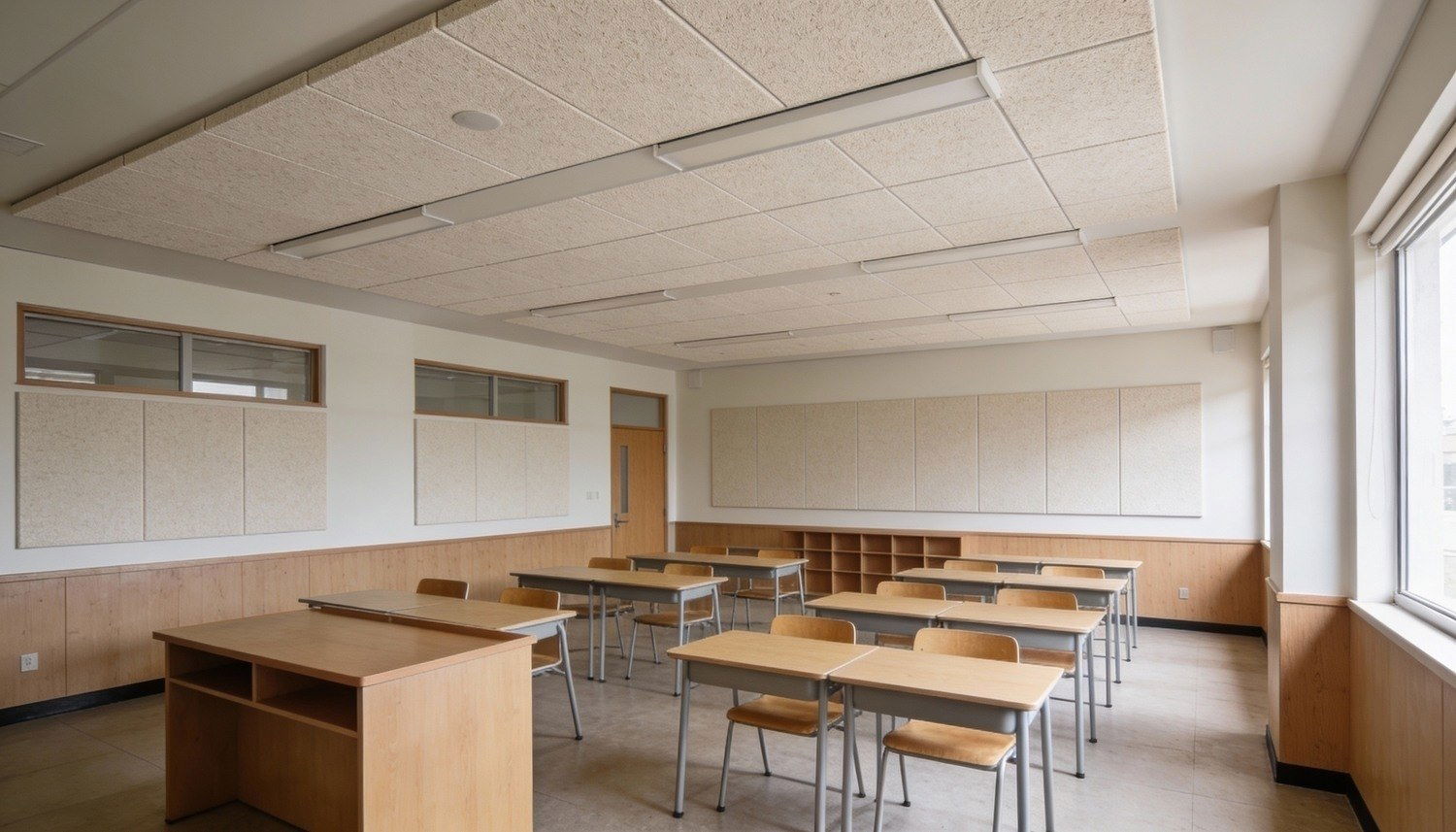
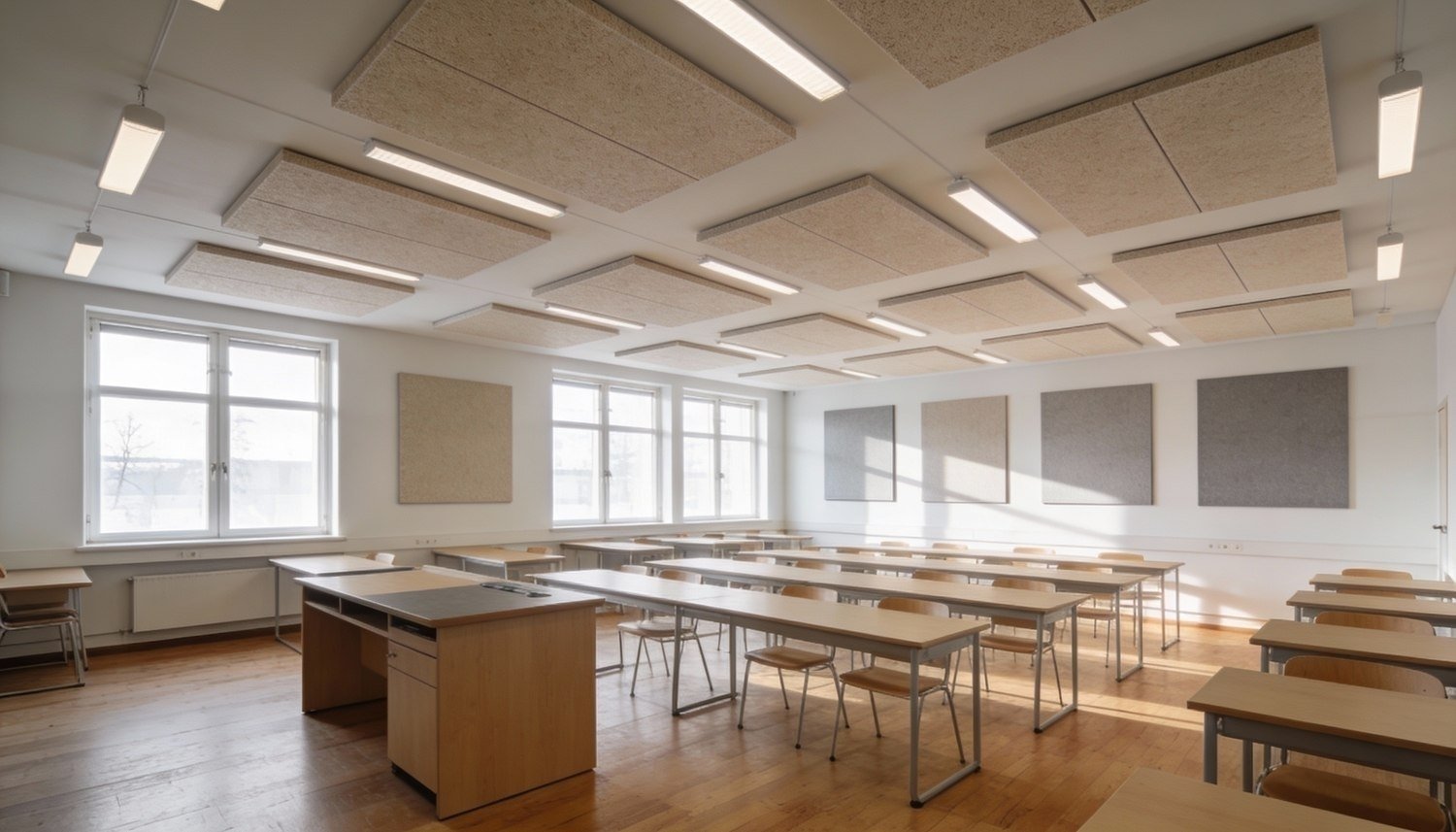
Desk screens work best in combination with sound absorption on walls and ceilings, as well as with curtains or room dividers when needed.
Why choose desk screens and desk partitions?
Desk screens provide a quick and noticeable improvement in the acoustic environment without requiring structural modifications. They are flexible, easy to customize, and well-suited for environments where workstations frequently change. The result is improved concentration, a lower perceived noise level, and increased comfort. In more complex acoustic environments, desk screens can be combined with sound insulation or vibration damping for a more comprehensive solution.
Well-considered advice for best results
For maximum effectiveness, desk screens should be of sufficient height and positioned to block direct sound transmission between workstations. In larger spaces, they should be combined with overall sound absorption in ceilings and on walls. A common mistake is to use too few screens or to rely on them as the sole solution. By viewing desk screens as part of a comprehensive solution, you create a long-term, functional, and professional acoustic environment.
Table screens and desk screens are therefore an effective and flexible choice for reducing echoes, improving peace and quiet, and creating better acoustics at individual workstations.