




Plant forms build a decorative surface
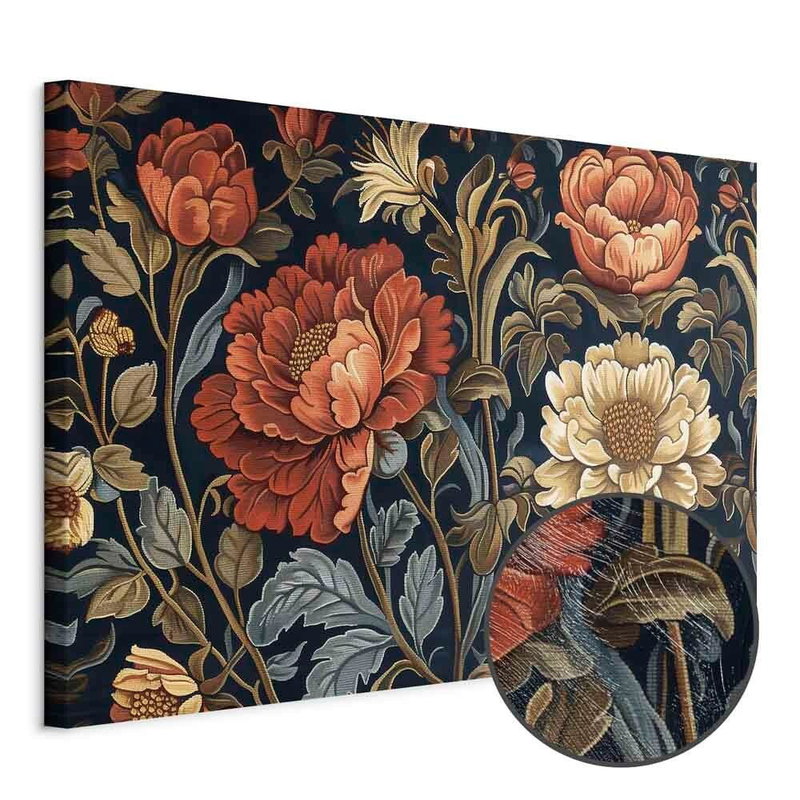
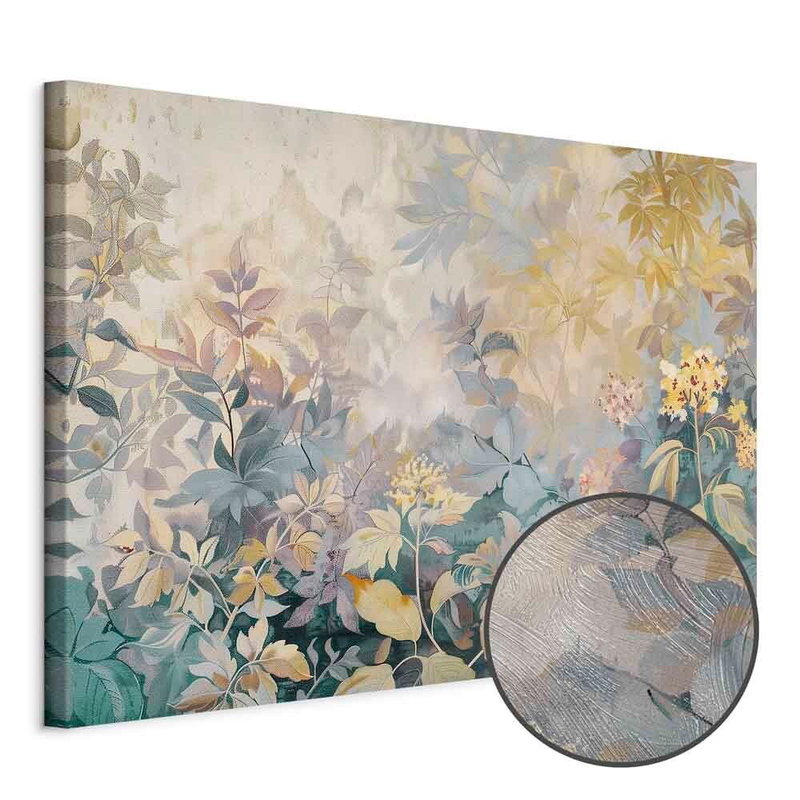
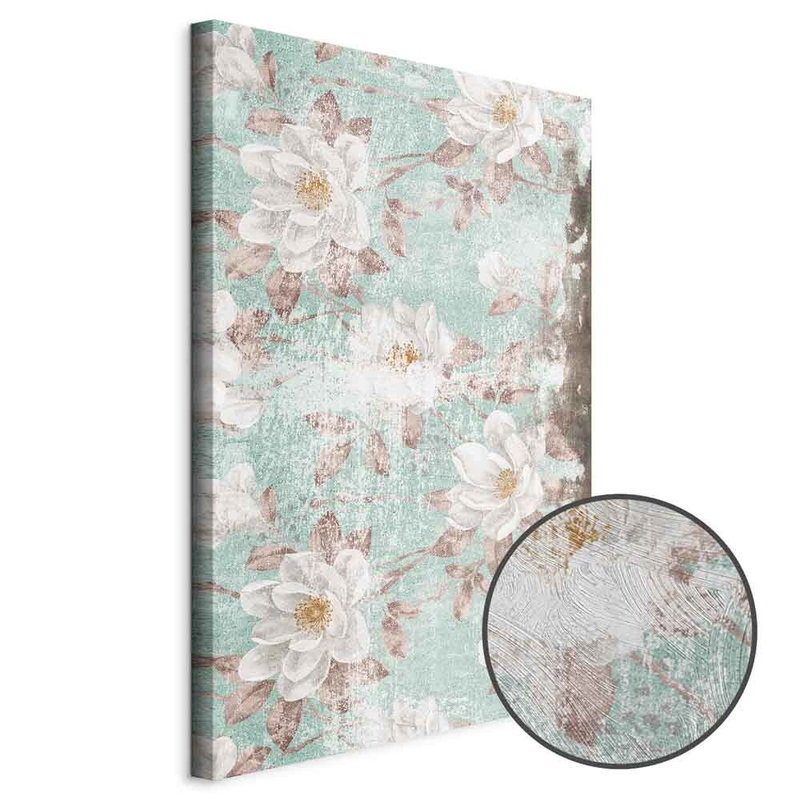
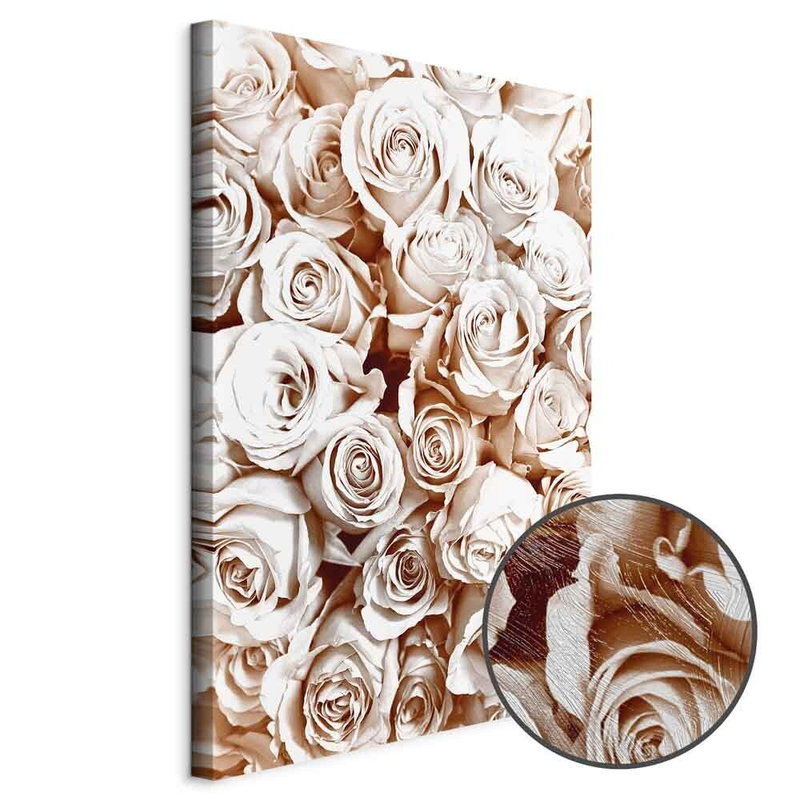
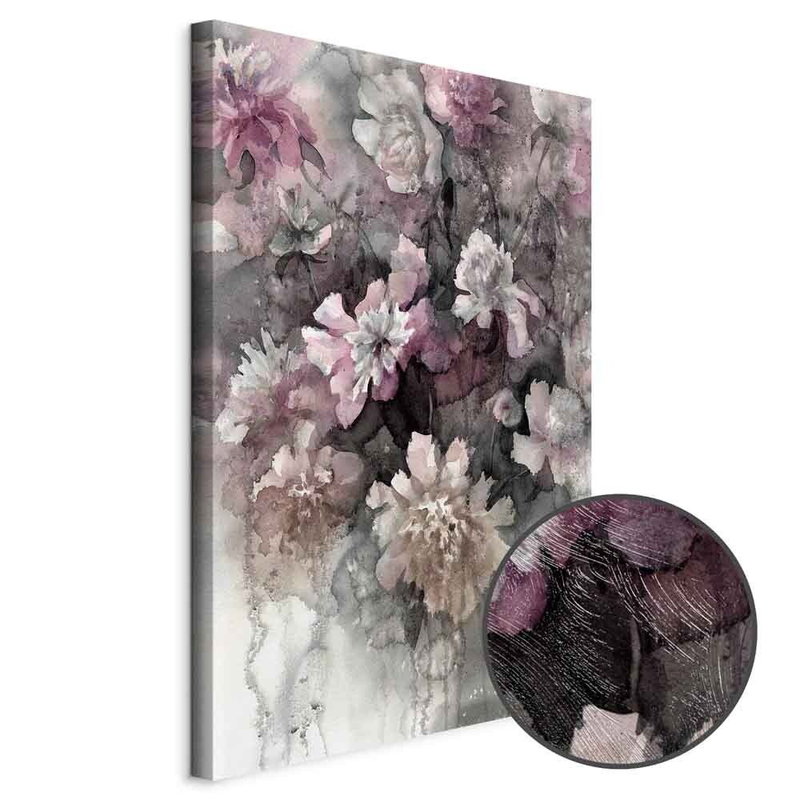
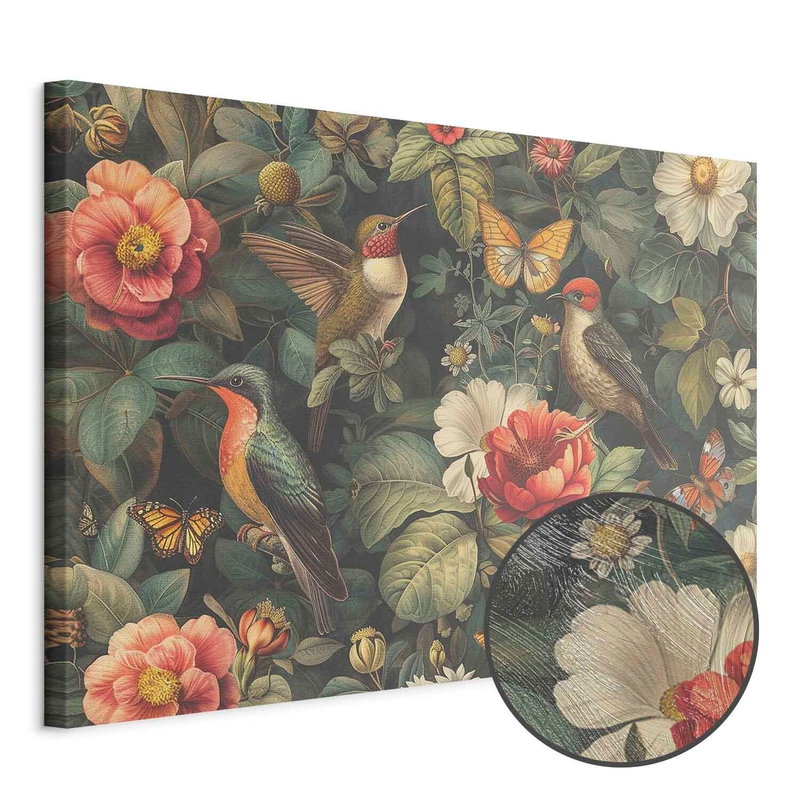
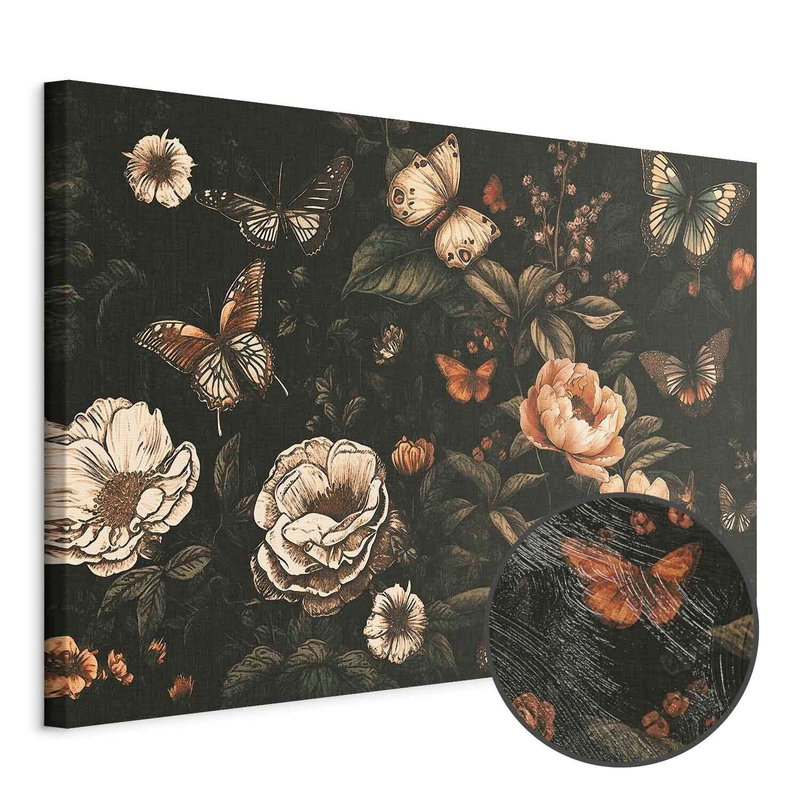
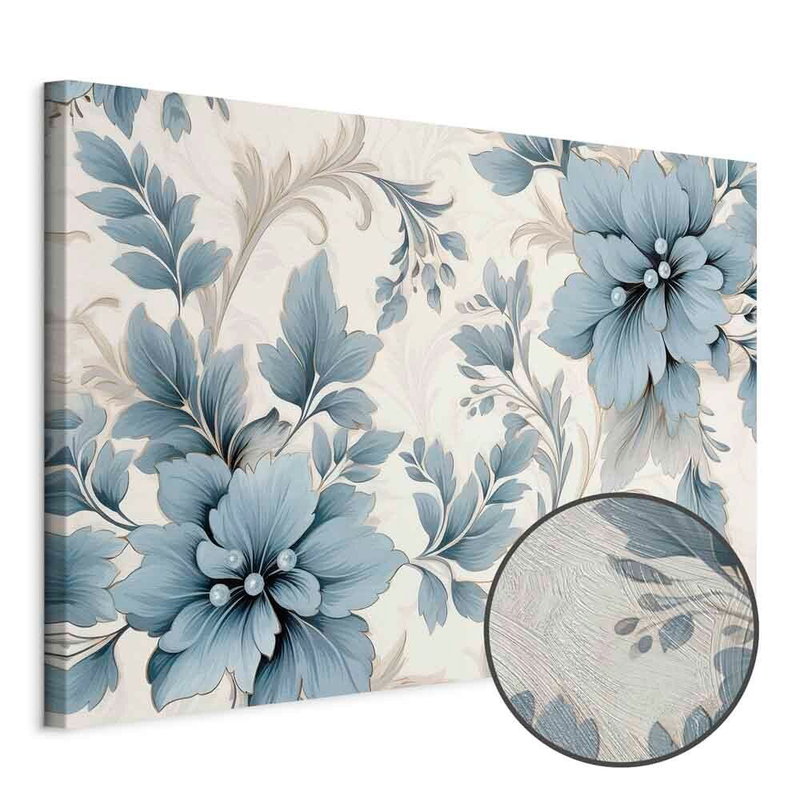
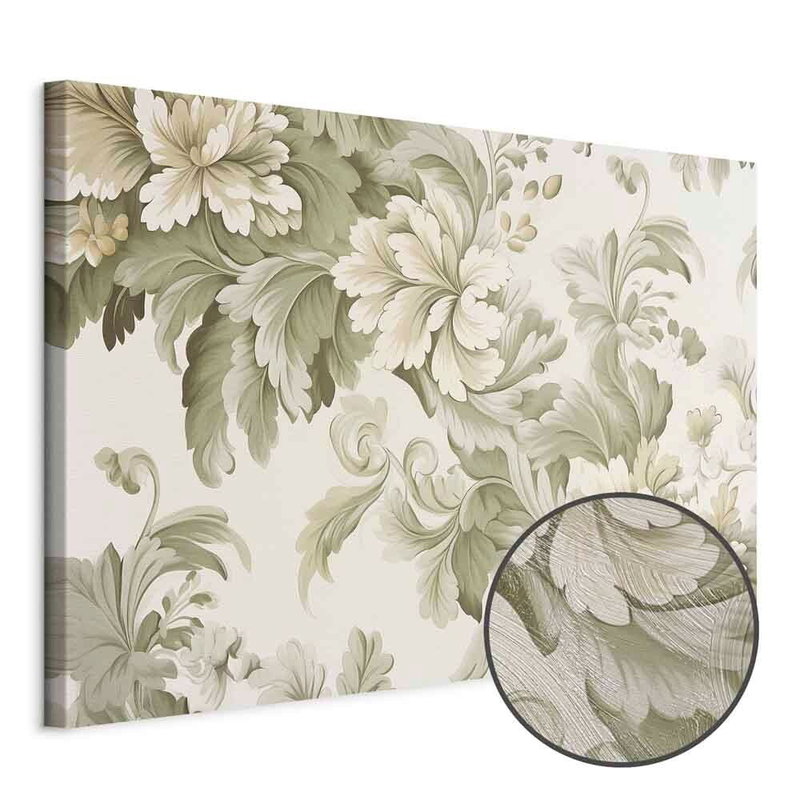
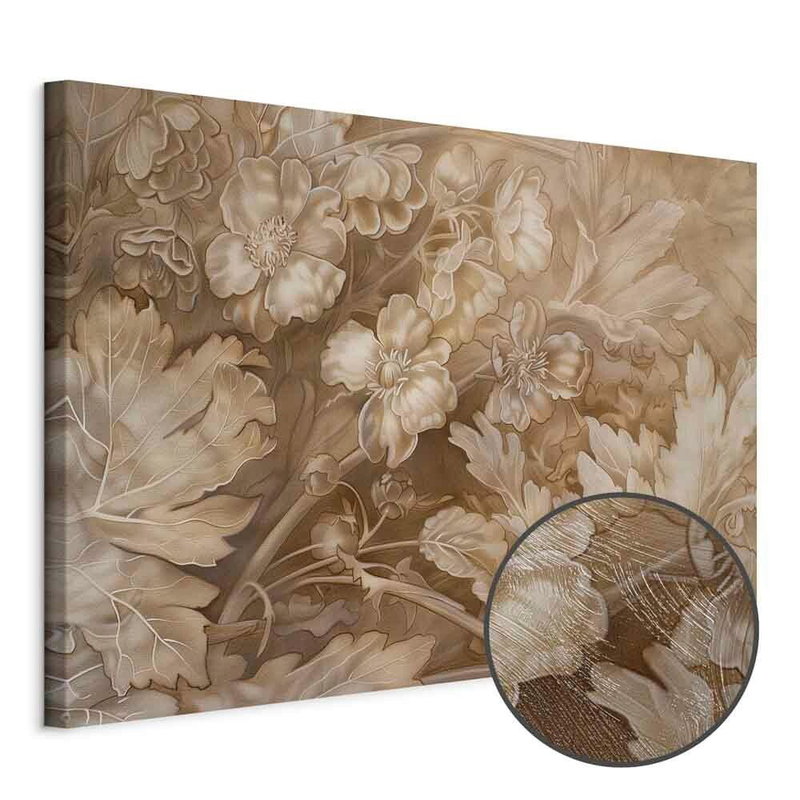
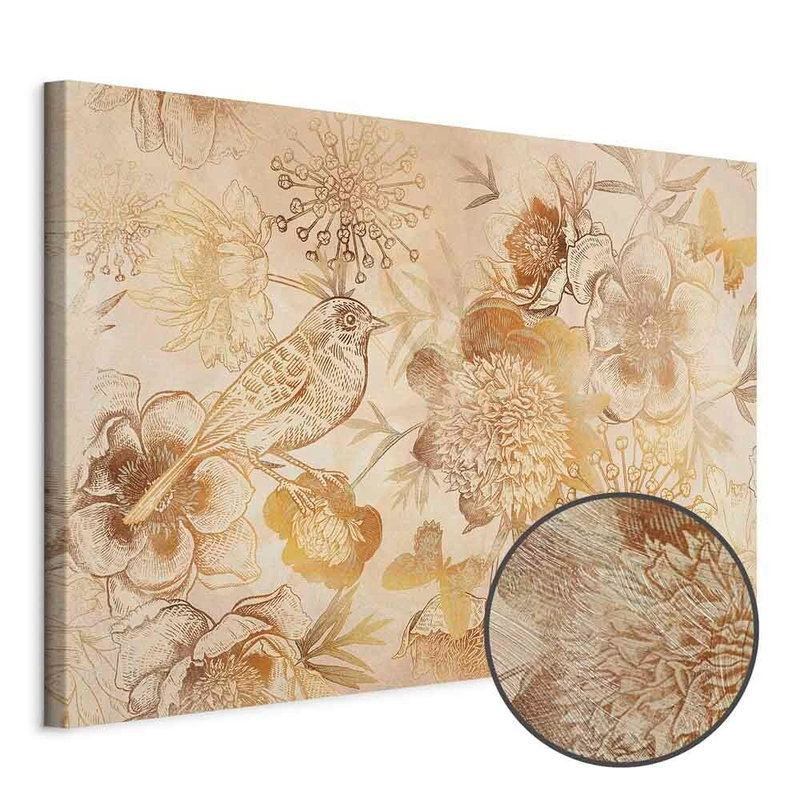
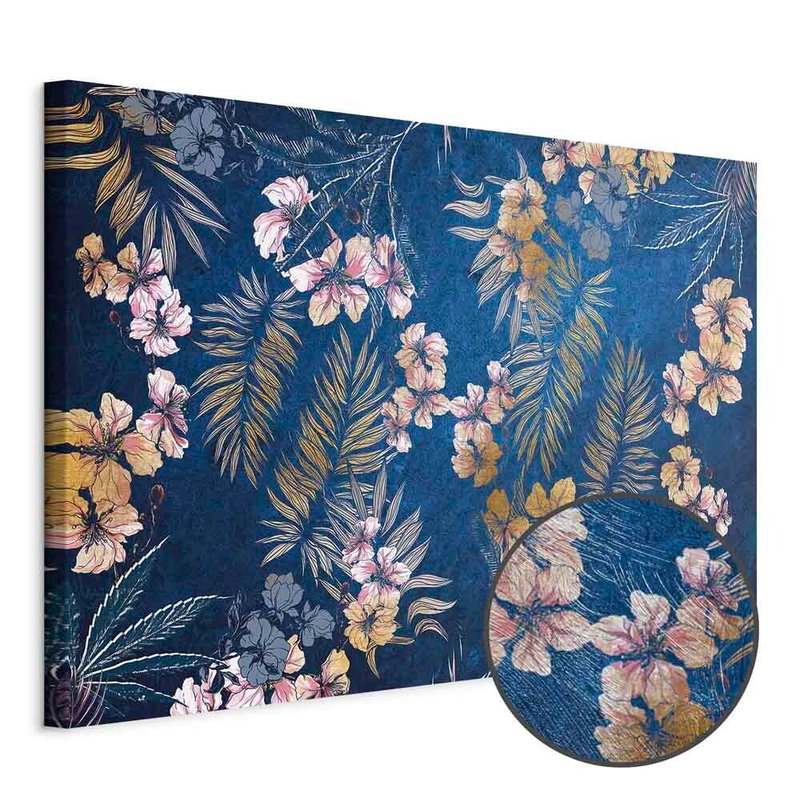
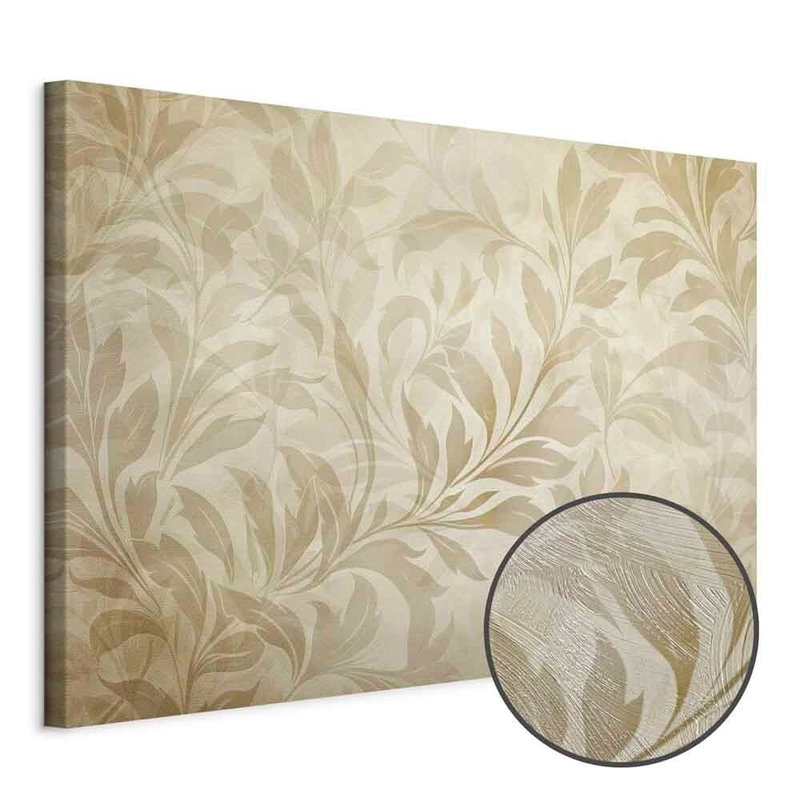
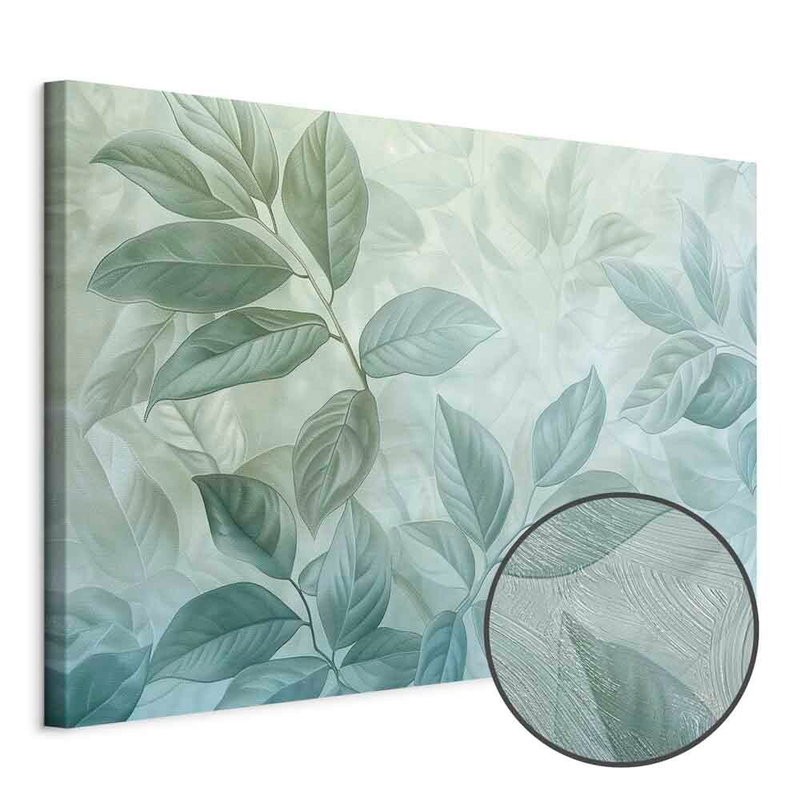
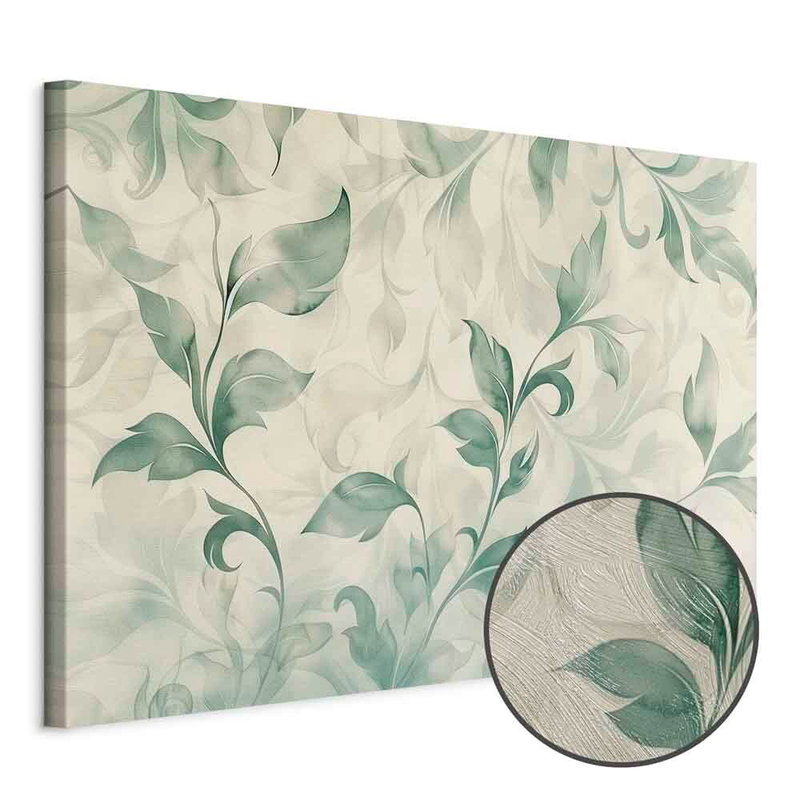
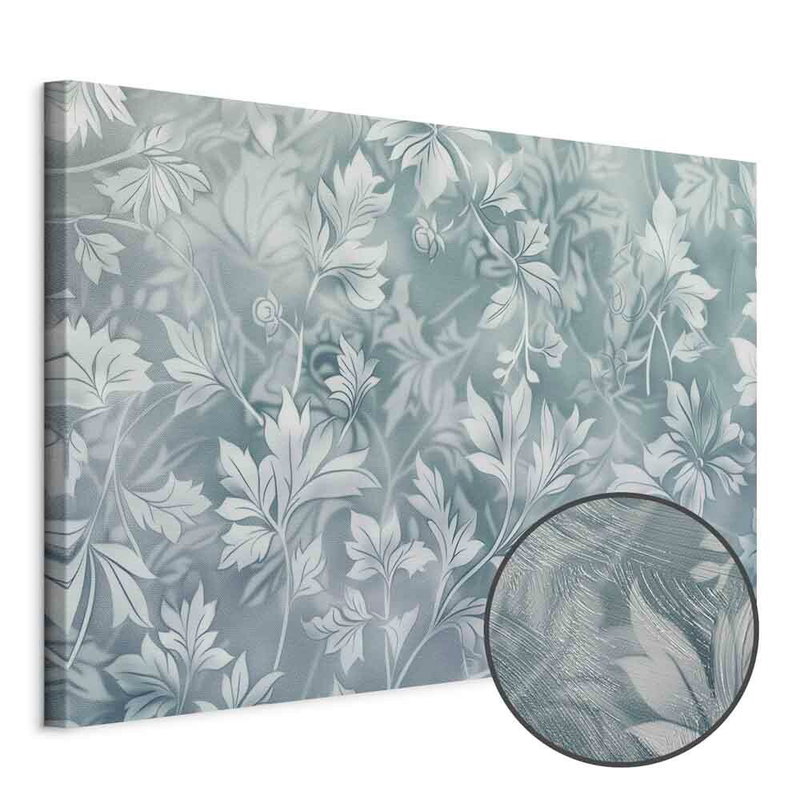
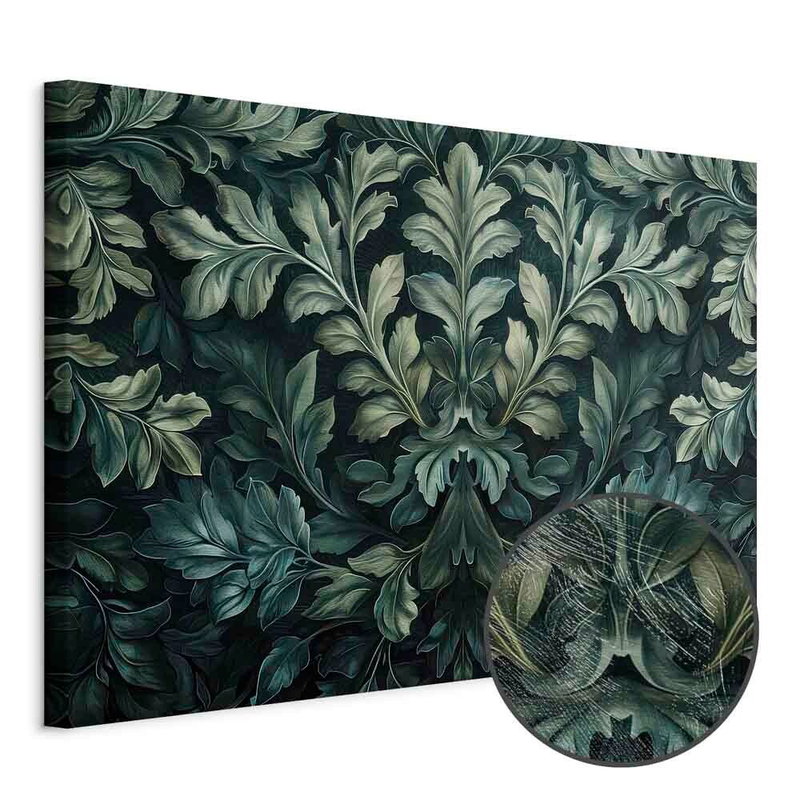
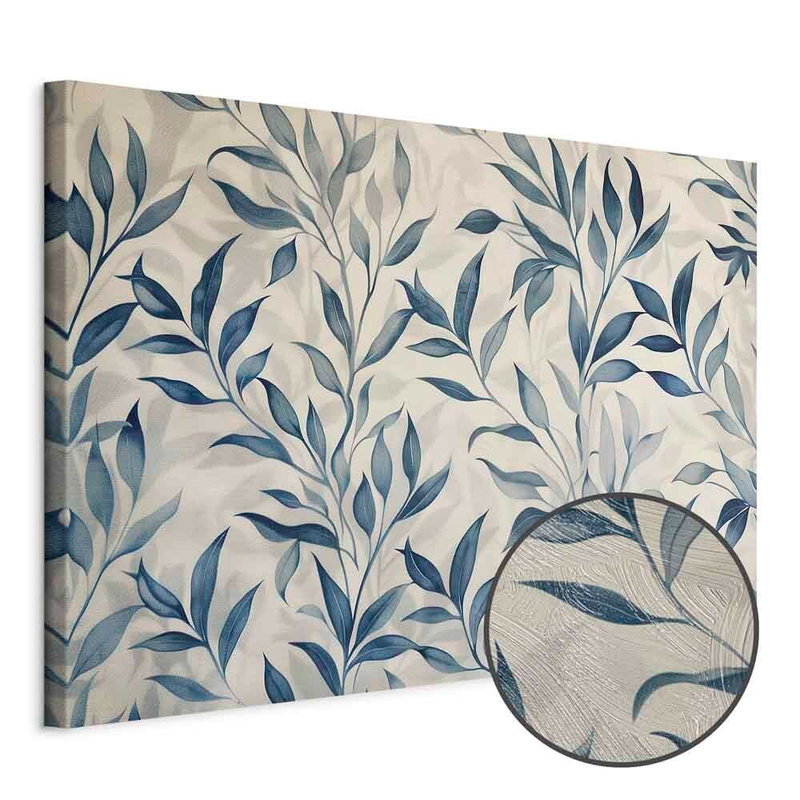
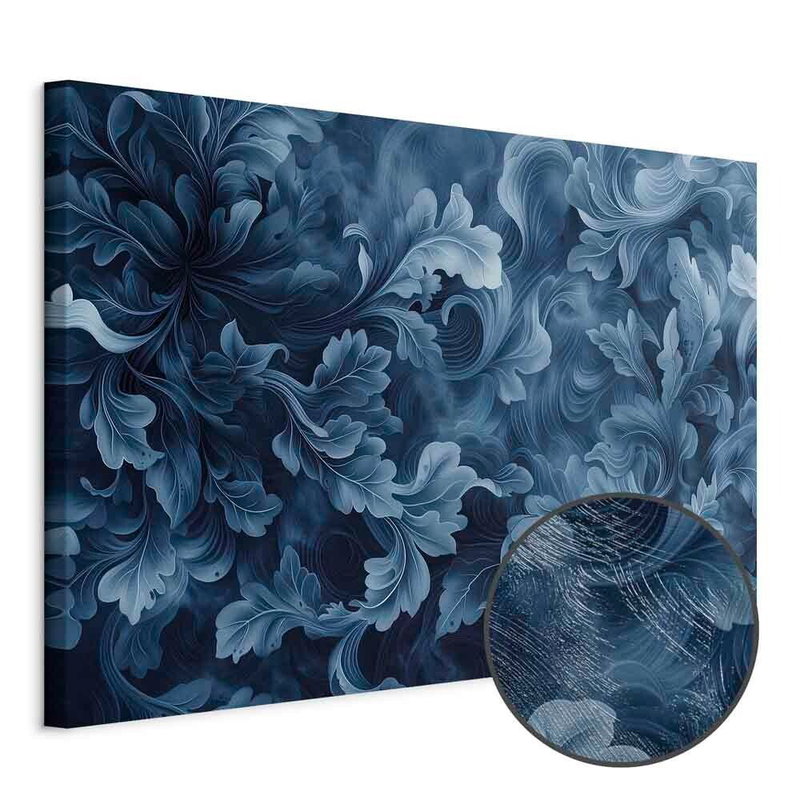
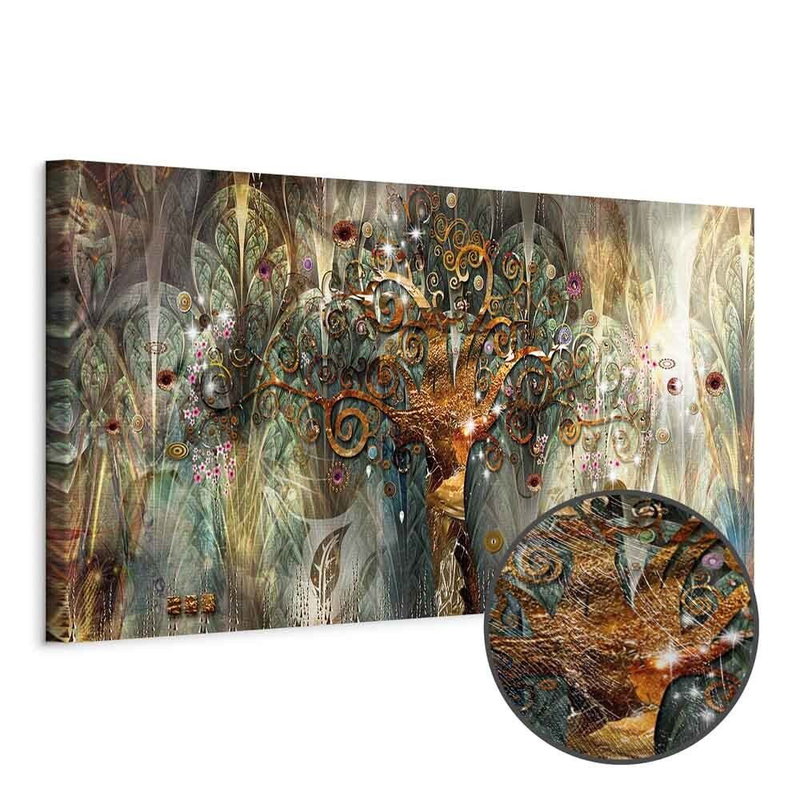
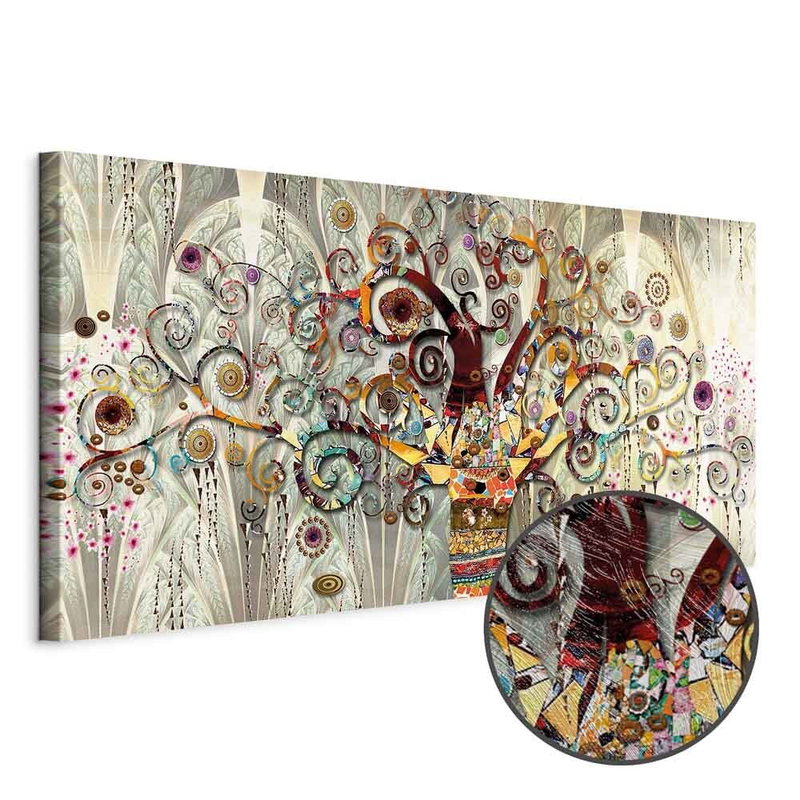
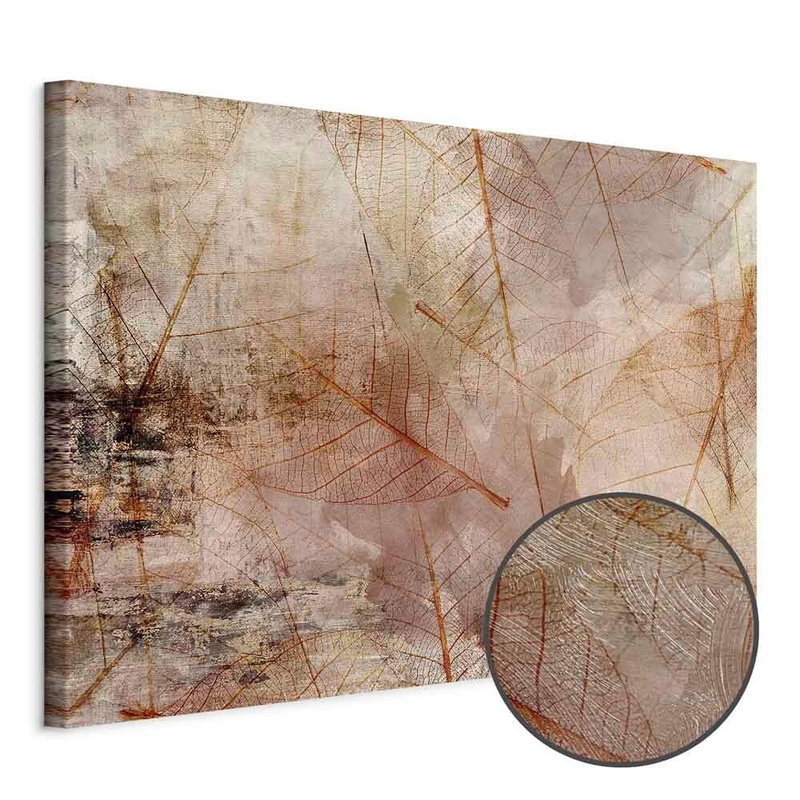
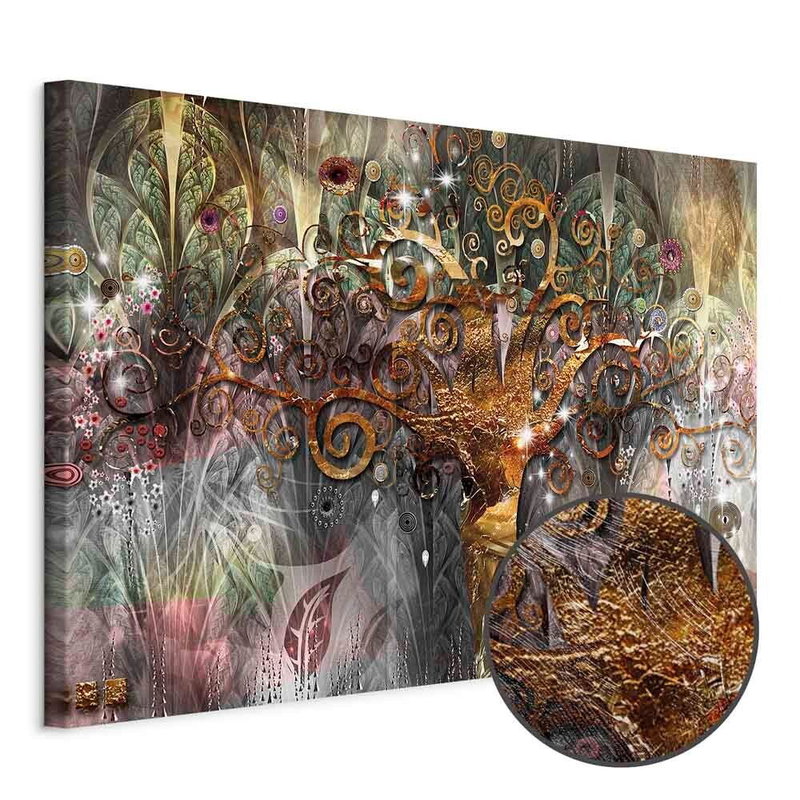
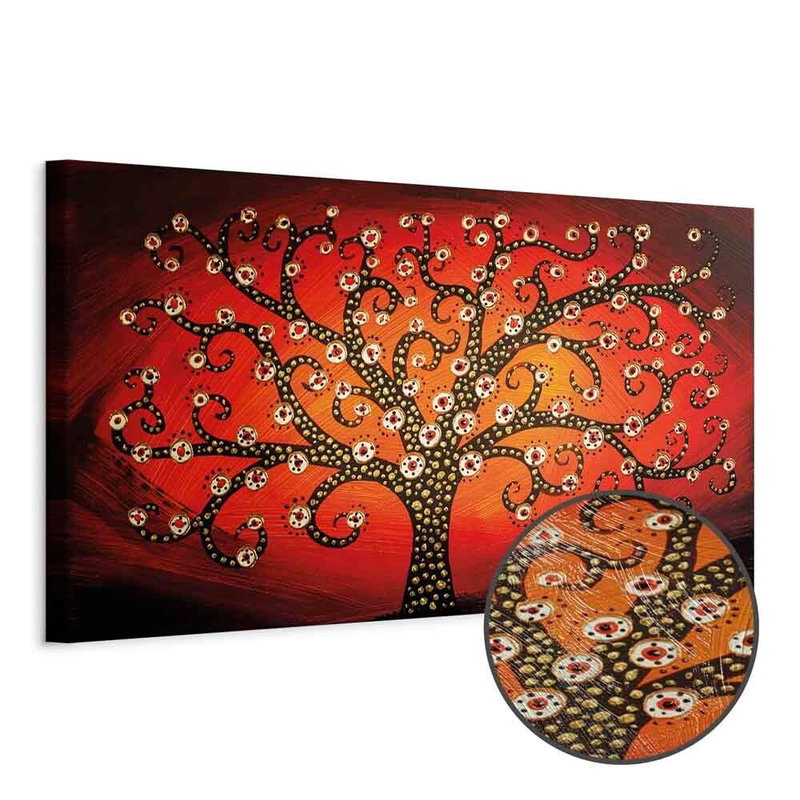
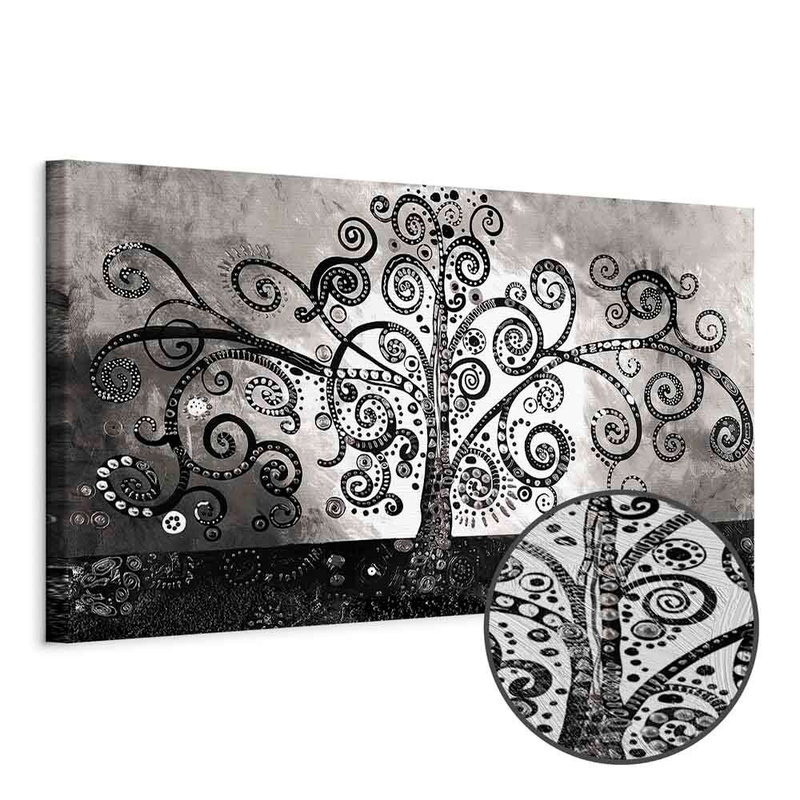
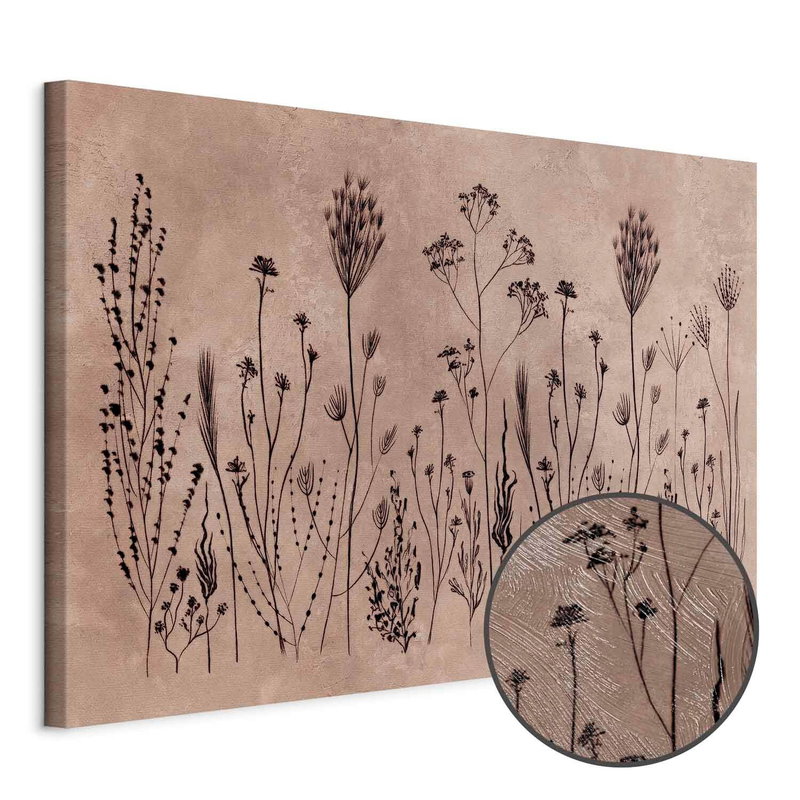
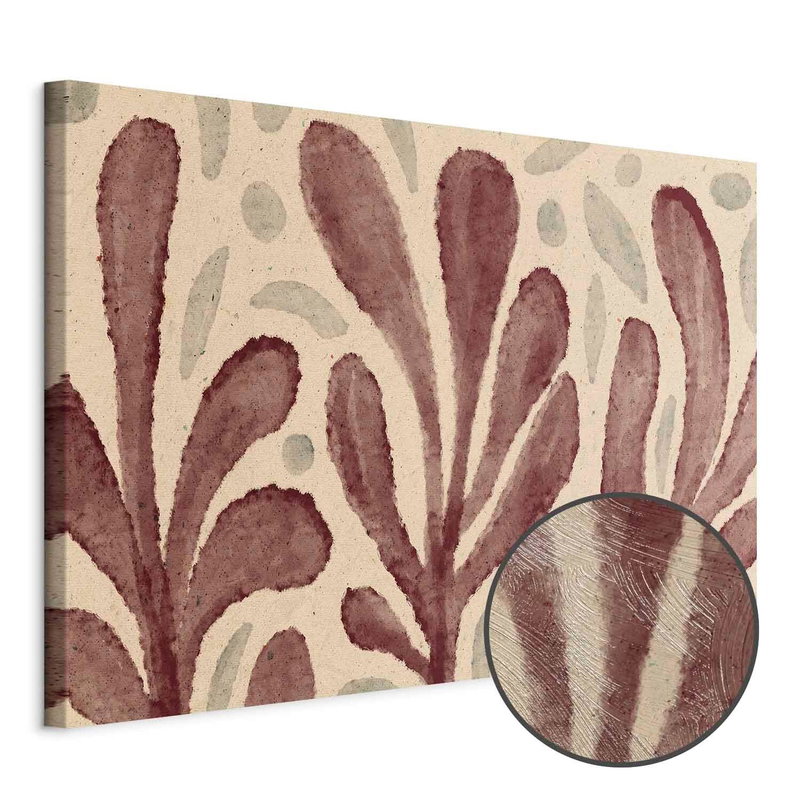
In this group, flowers and leaves are organised into patterns or ornaments. They may be interwoven stems, recurring flower forms or branches curling into clear spirals. The subjects do not need mechanical repetition to feel patterned. What matters is that the plant forms together build the decorative structure, rather than a small flower simply appearing within a larger scene.
Choose pattern scale for the way the room is used
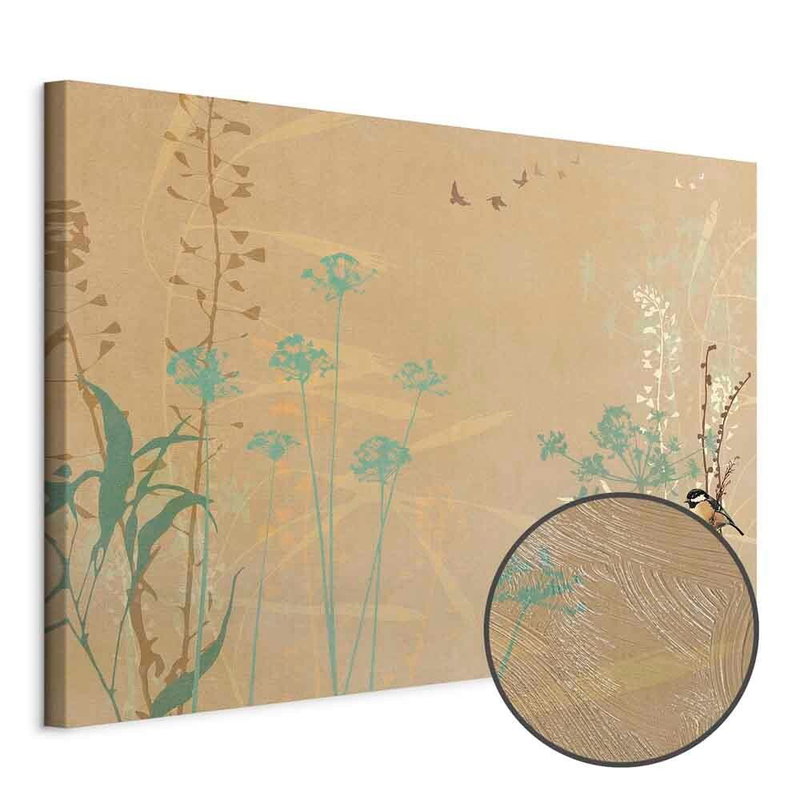
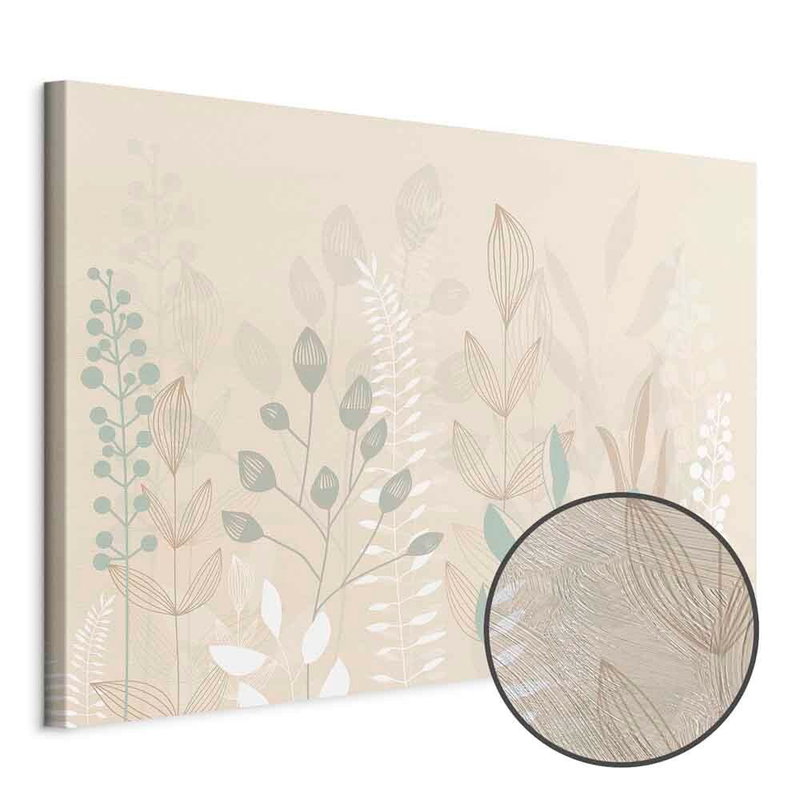
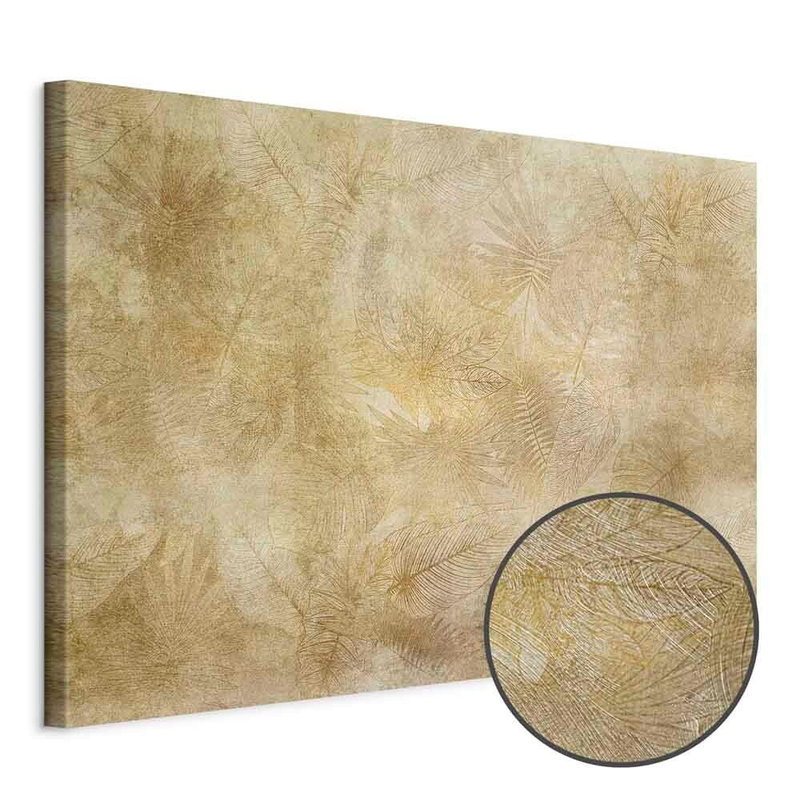
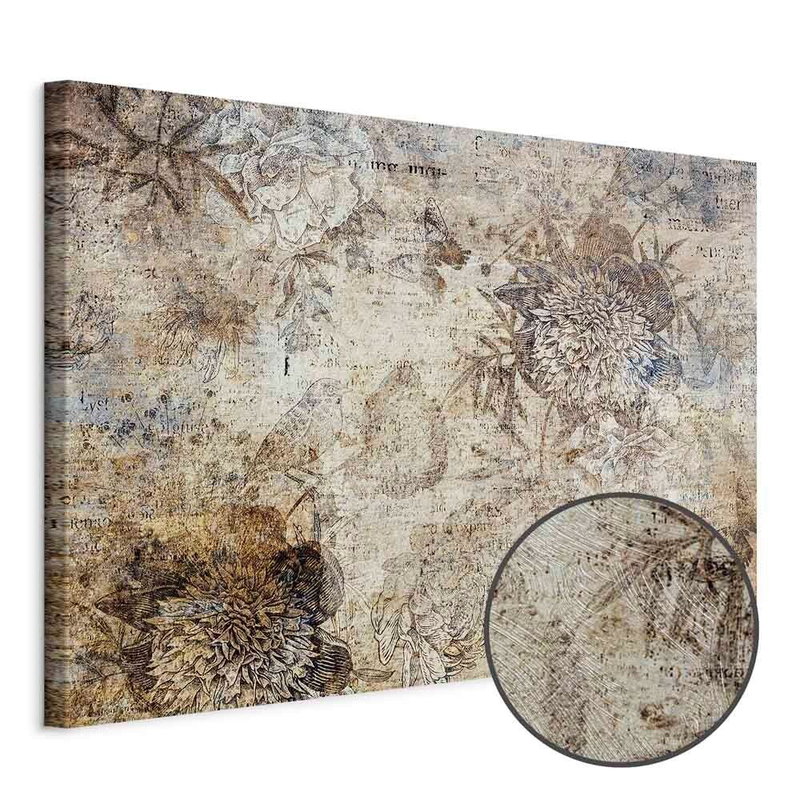
Large flower forms may be clear from the other side of a room, whereas dense small leaves reveal more up close. Look at both the whole product image and the details before choosing. A canvas near a seating area can draw interest through its linework; on a more distant wall, the overall rhythm and contrast are often the first things you see.
From pale scrolls to colourful ornaments
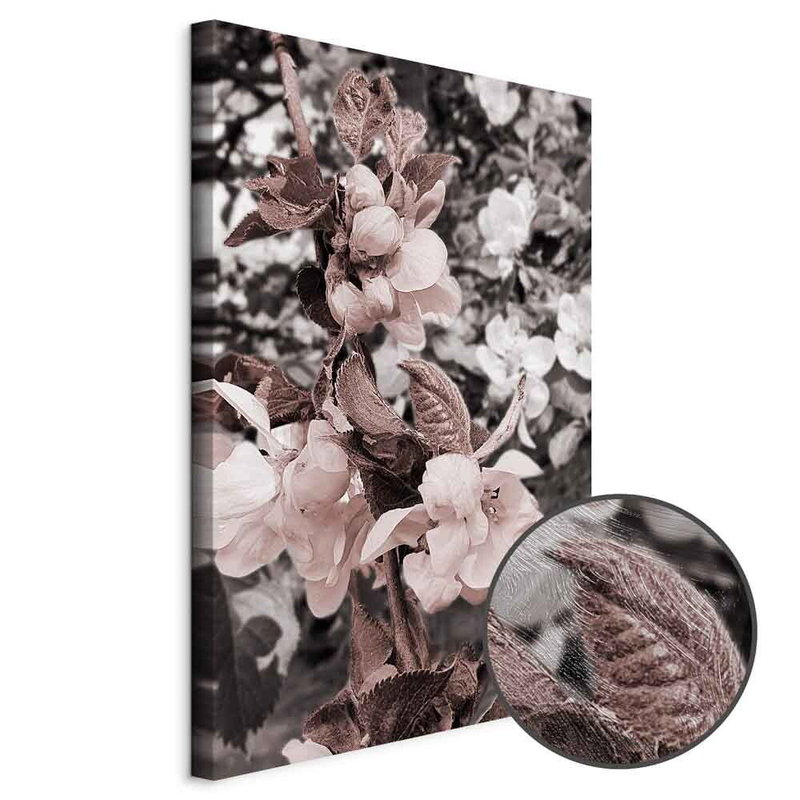
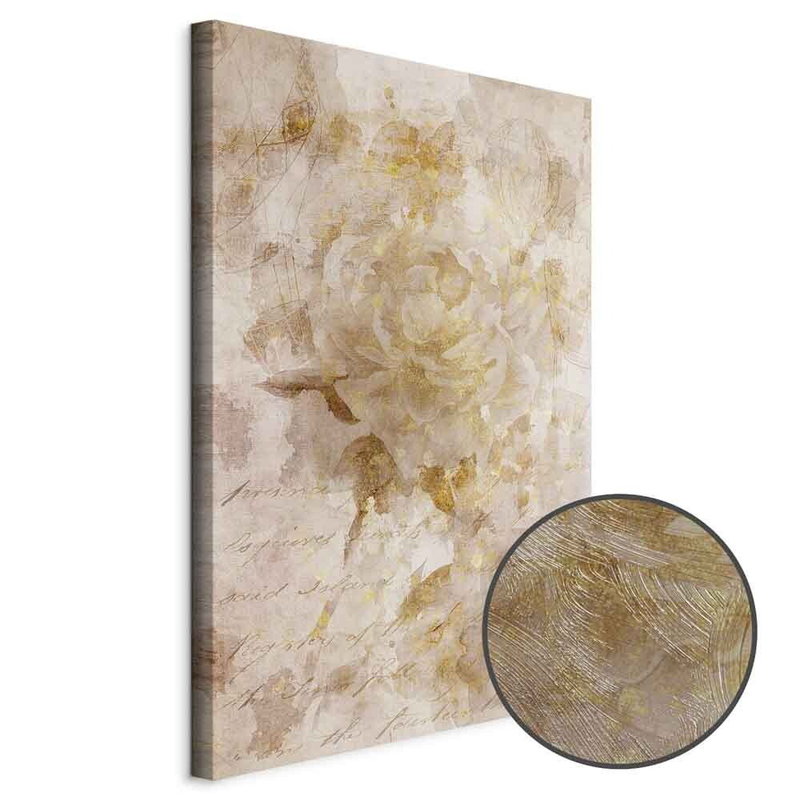
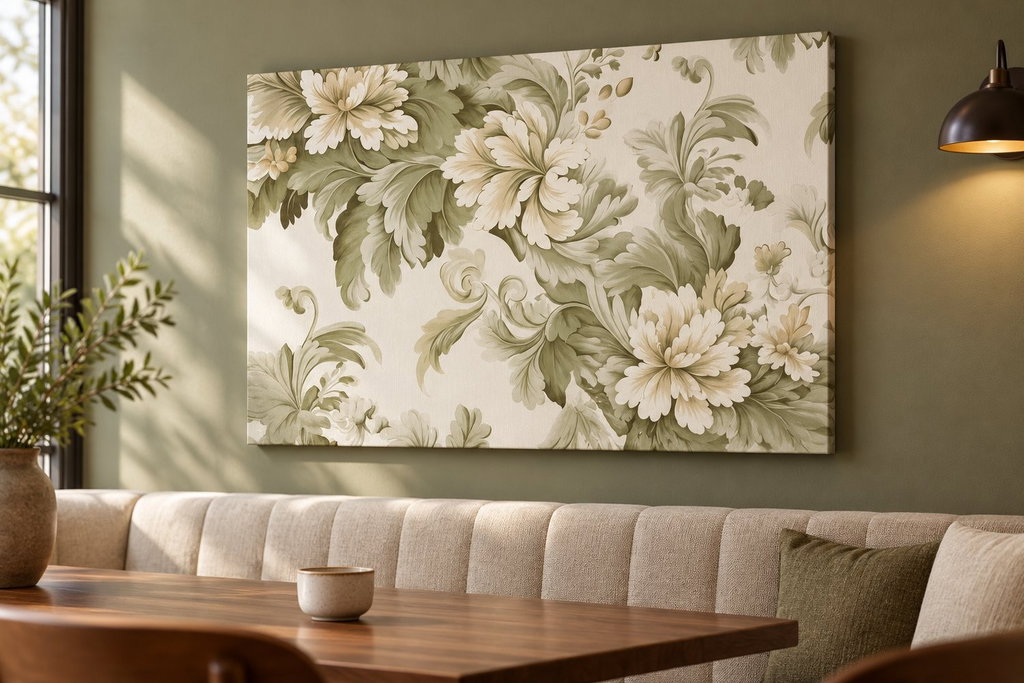
The palette affects how strongly the pattern stands out. Pale flowers and muted green leaves may connect with natural tones in a room, while darker backgrounds or strong colour contrasts make a bolder impression. Let a colour recur elsewhere in the interior without giving every surface the same pattern. Clear space around the canvas makes the ornament’s outer edges easier to read.
Printed relief effects and real premium texture
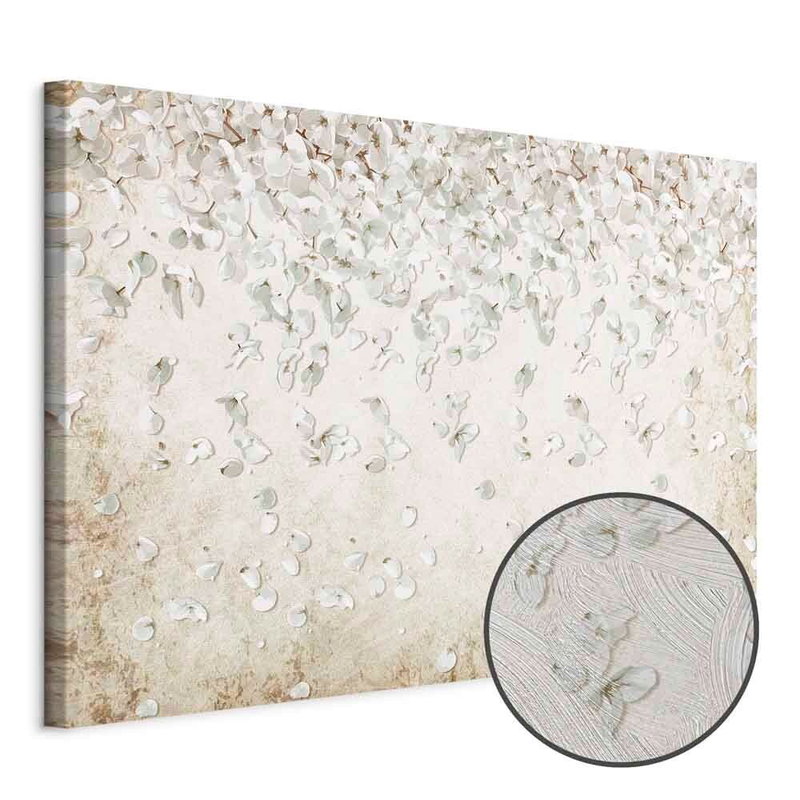
Some botanical ornaments are depicted with shadows that suggest relief. This effect belongs to the print and does not mean the leaves are cut out or the flowers sculpted. The premium range’s clear, hand-worked gel does provide real surface texture over the canvas. Read the product’s material and dimension information when comparing finishes, and check the formats offered for the chosen image.
Bring image, placement and sound comfort together
A botanical pattern can create a unified surface above a sofa, beside a meeting table or on another open wall. Keep important parts clear of tall objects and follow the mounting instructions. The absorbing construction can help reduce reverberation, but pattern density says nothing about sound absorption. Assess construction, placement, other room surfaces and total absorbing area when deciding how much treatment is needed.