



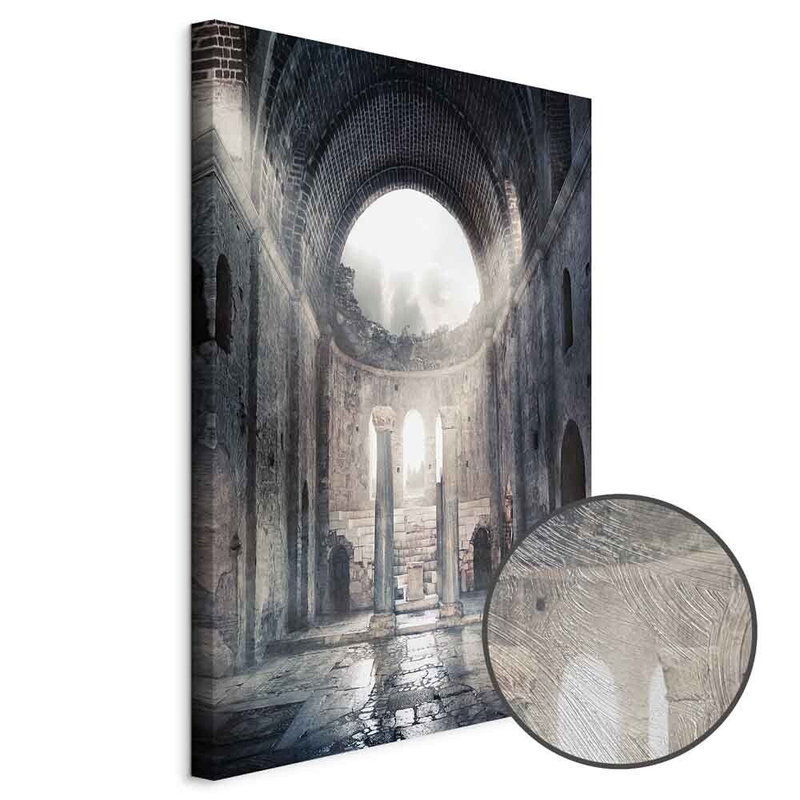
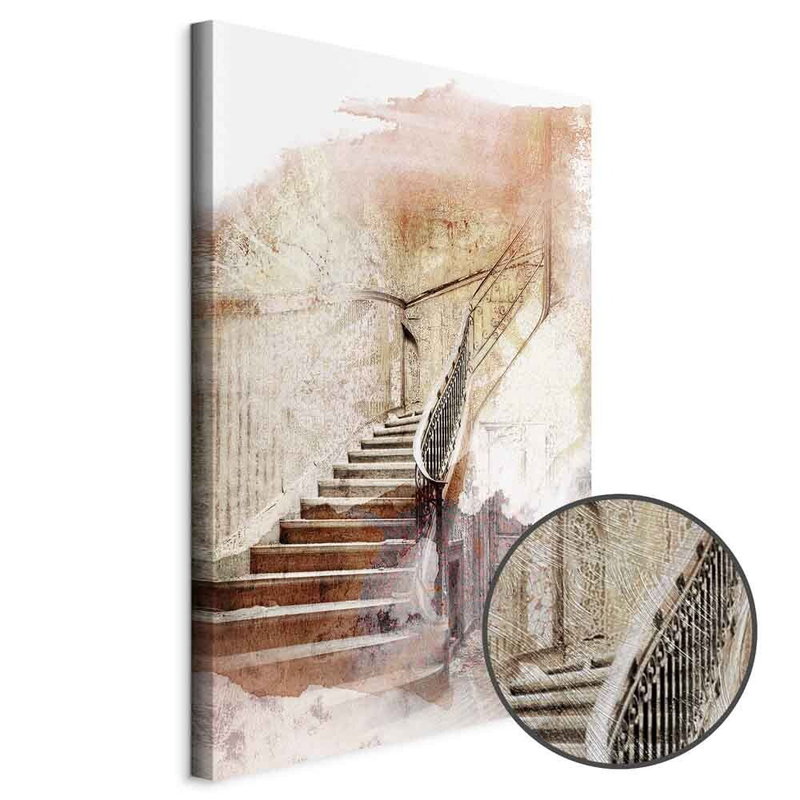
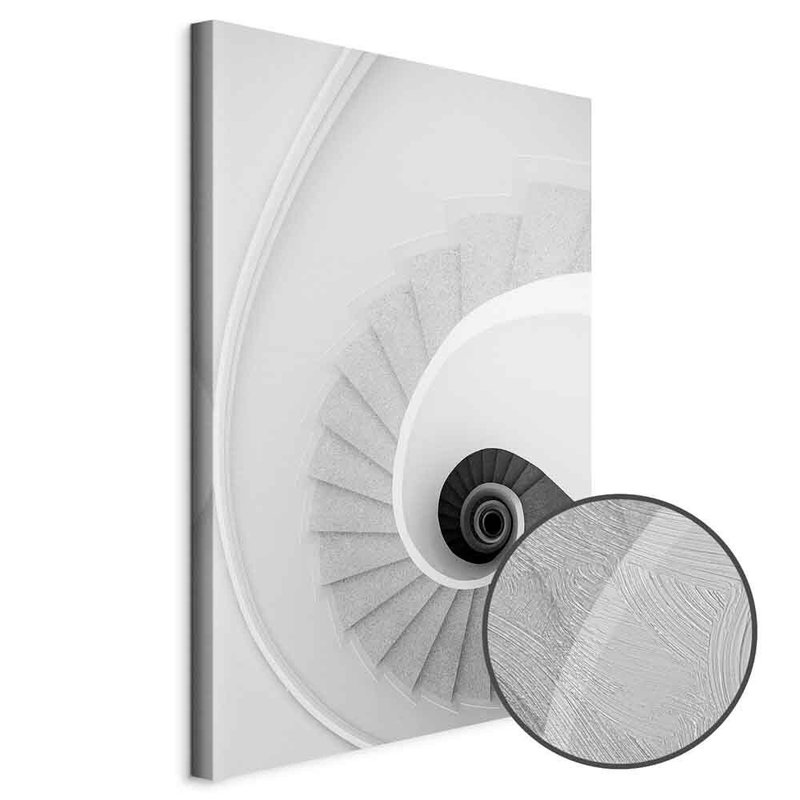
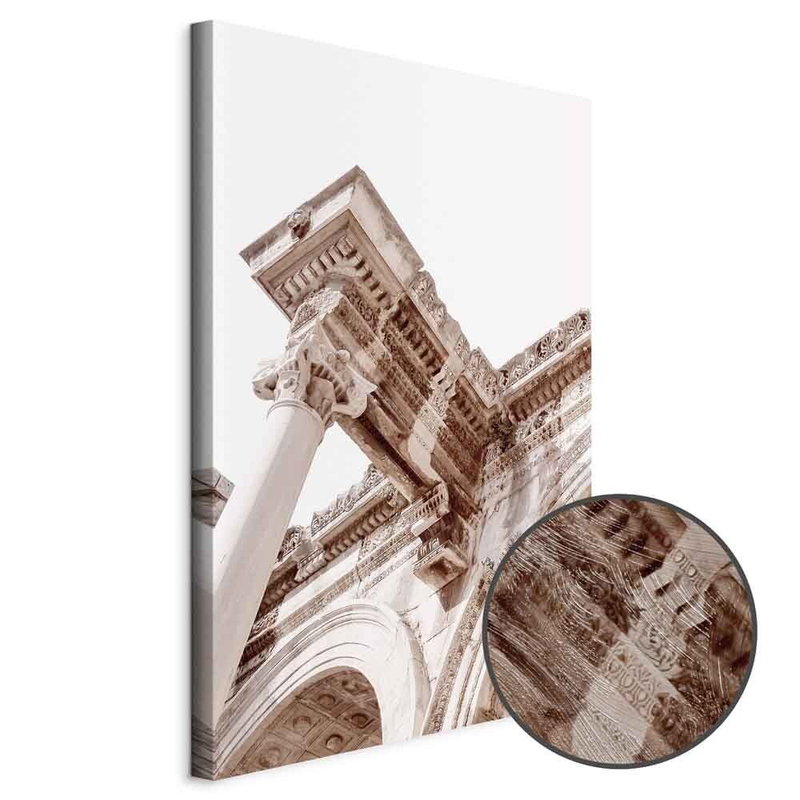

Stairs that guide the eye through the picture
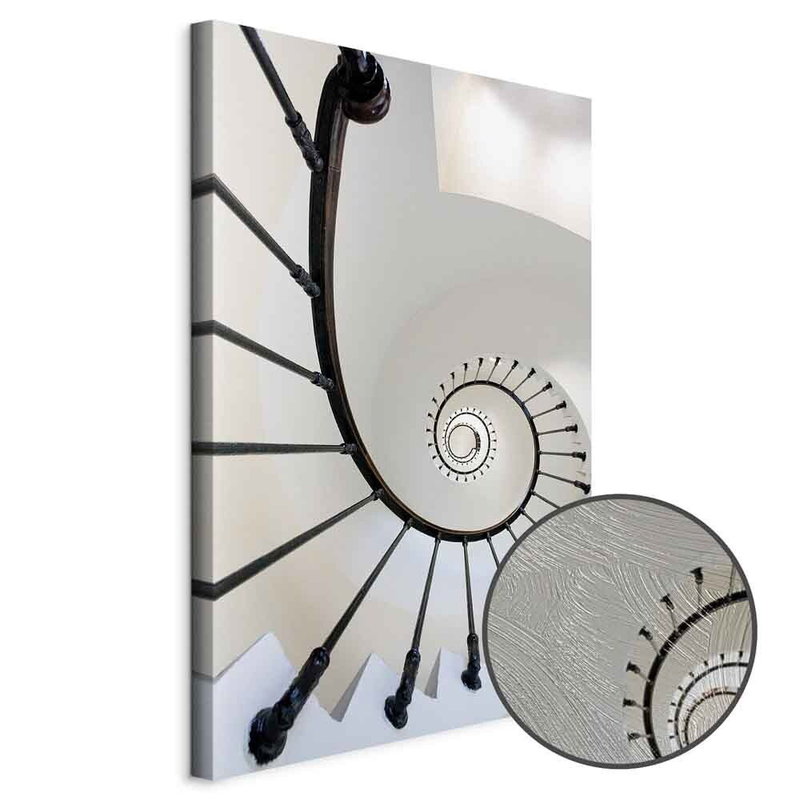
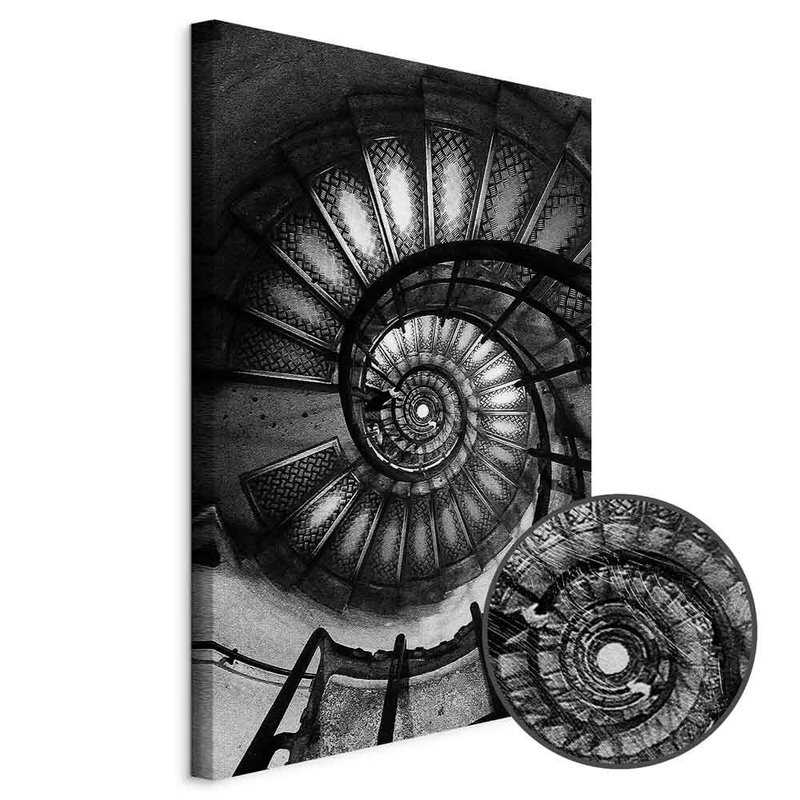
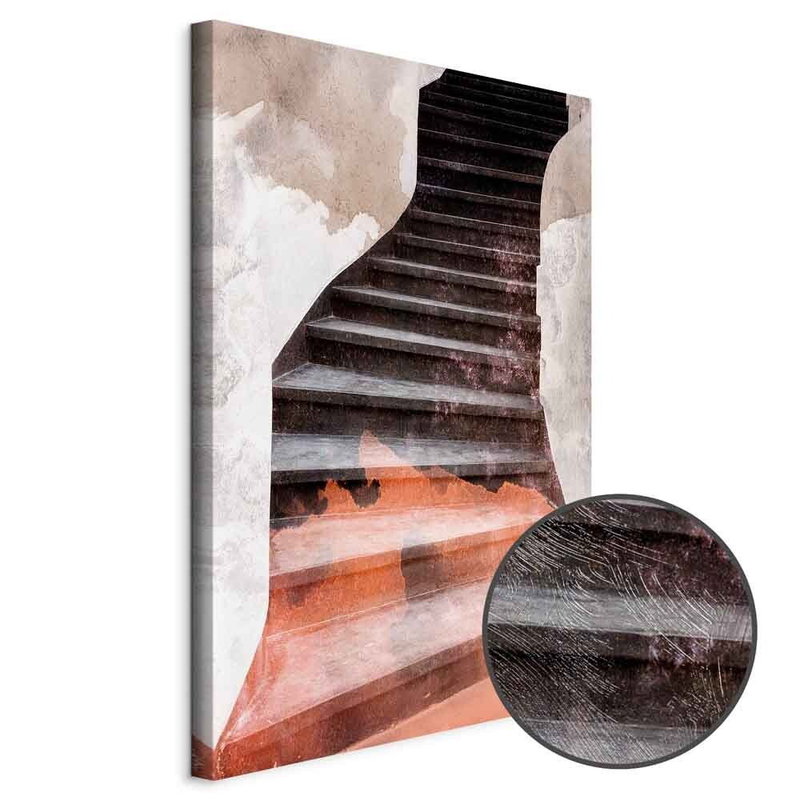
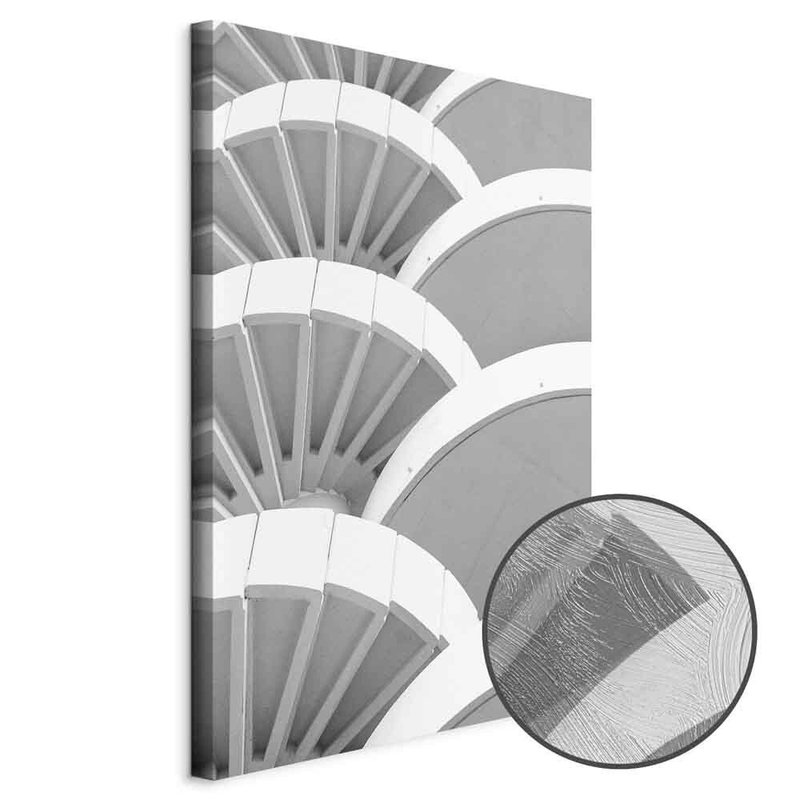
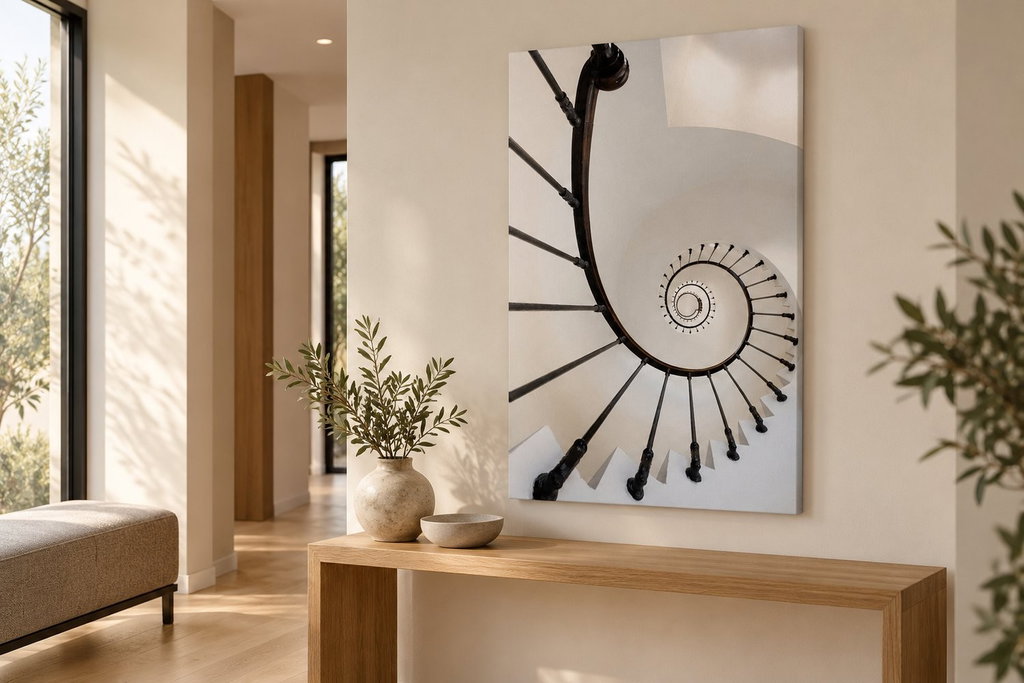
Spiral stairs appear in several different compositions. Sometimes you look down towards a small centre; elsewhere the steps rise along a worn wall. Railings, treads and light create direction without showing the whole building. Compare the density of the spiral and the amount of space around it.
A dark railing against white plaster creates strong contrast, while warm-toned stairs can connect with wood and textiles. Consider the usual viewing distance. Small details may need a larger format to remain clear from a seat farther away.
Façades, columns and constructed patterns
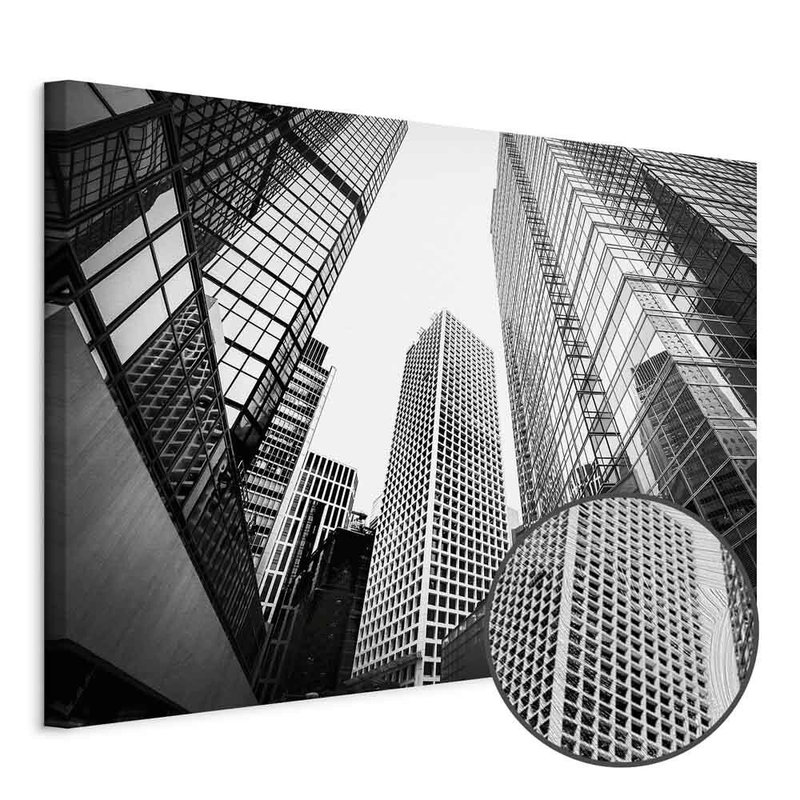
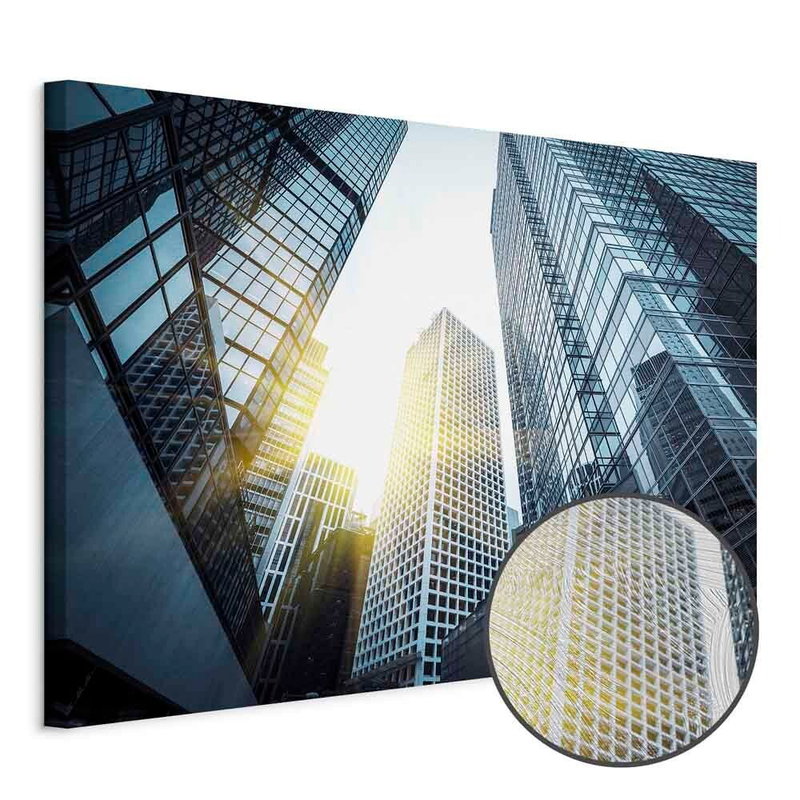
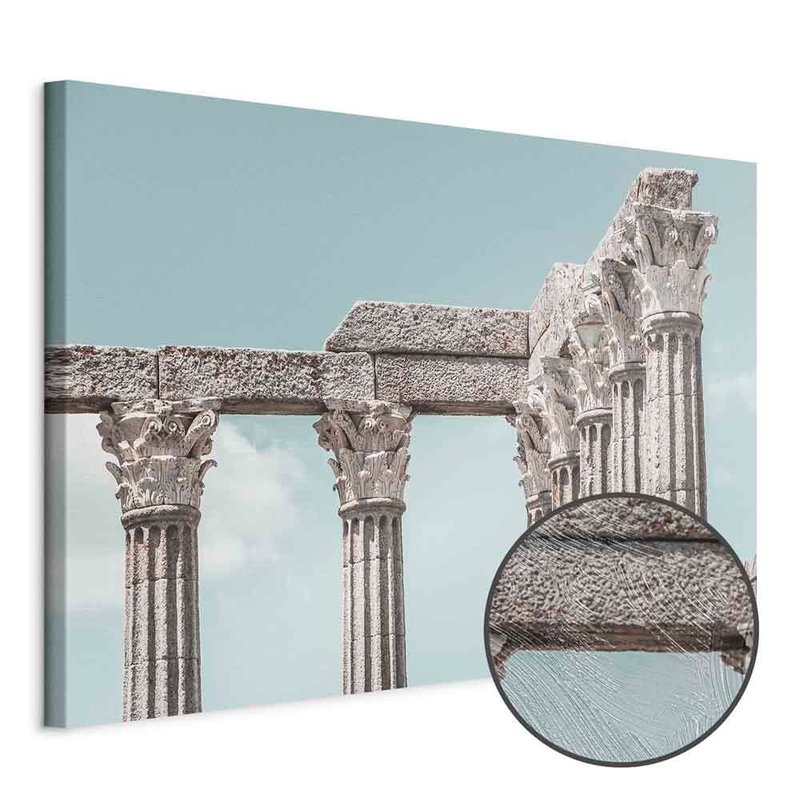
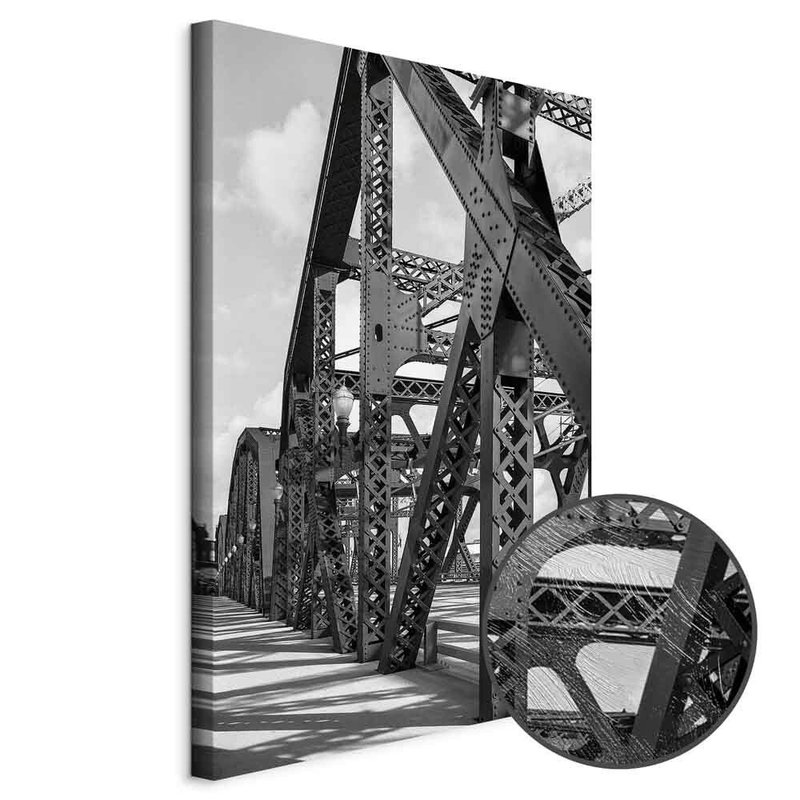
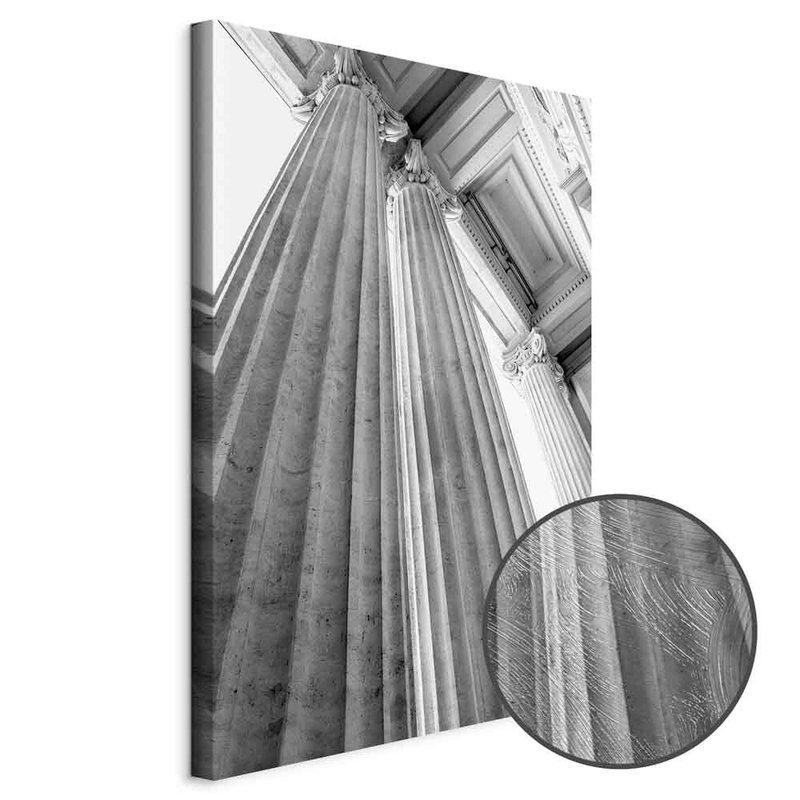
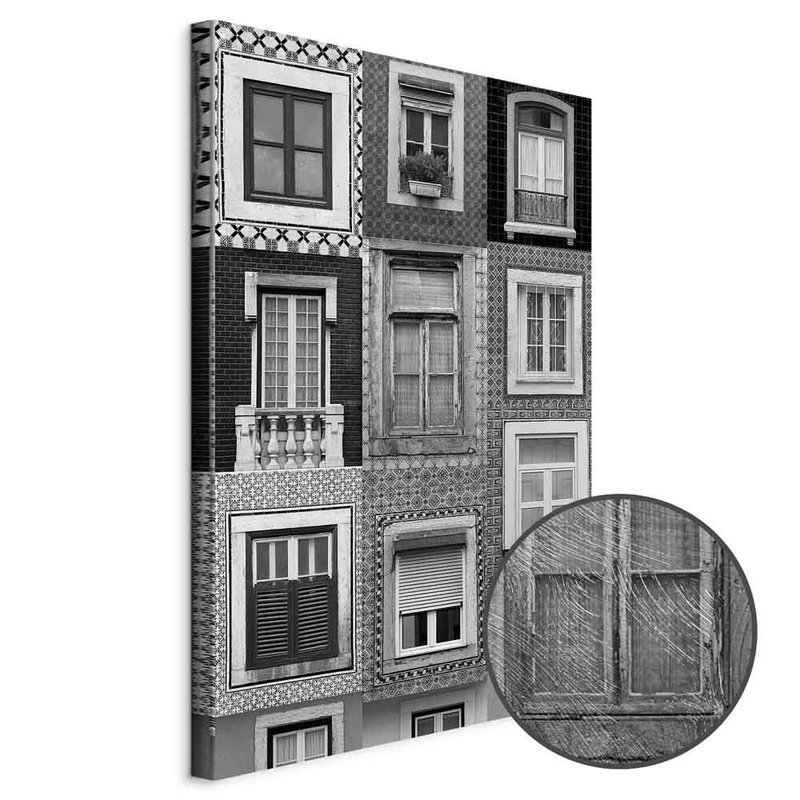
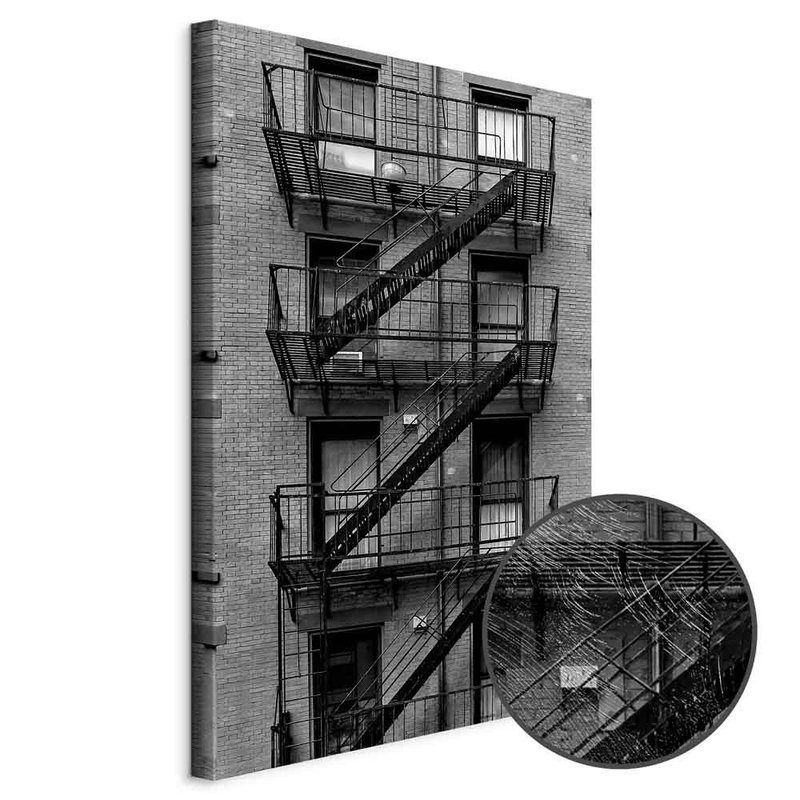
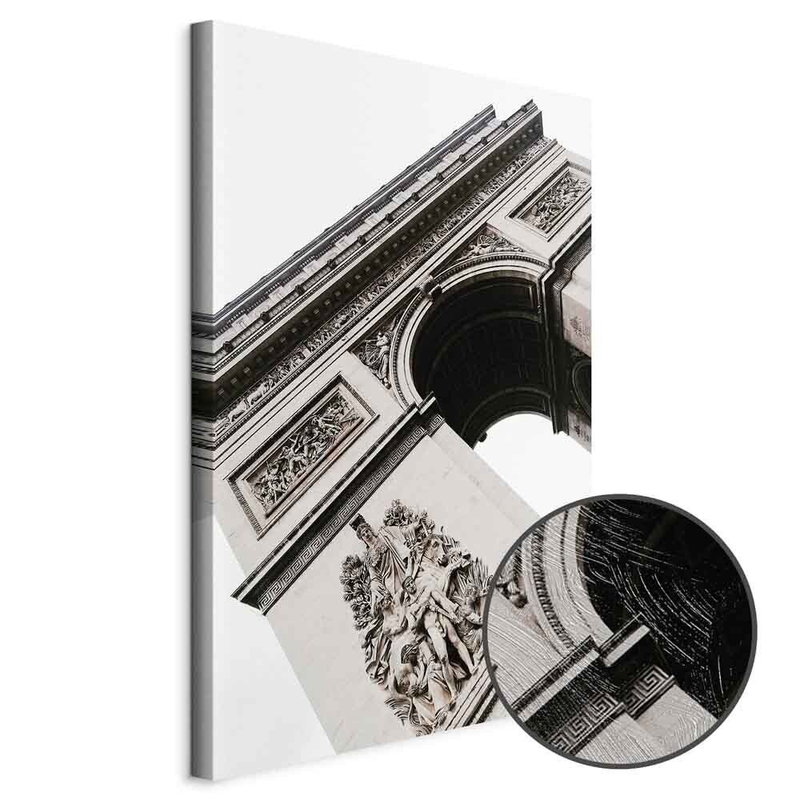
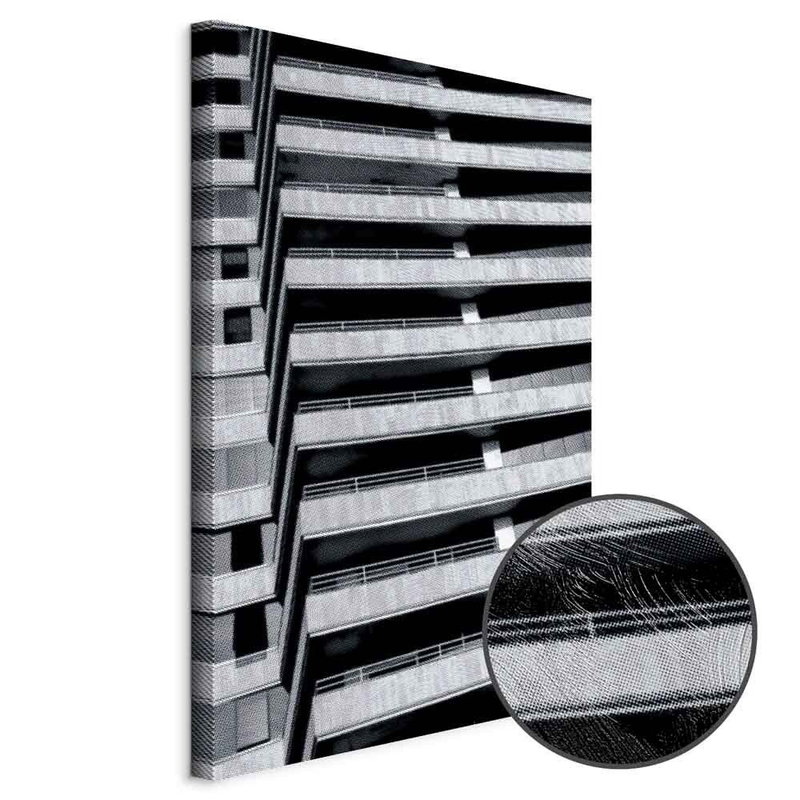
The selection also includes large glass façades, repeated windows, stone columns and steel beams. Some pictures use dense repetition; others concentrate on a single corner or decorated opening. They can relate geometrically to furniture without giving the wall the same expression as a city panorama.
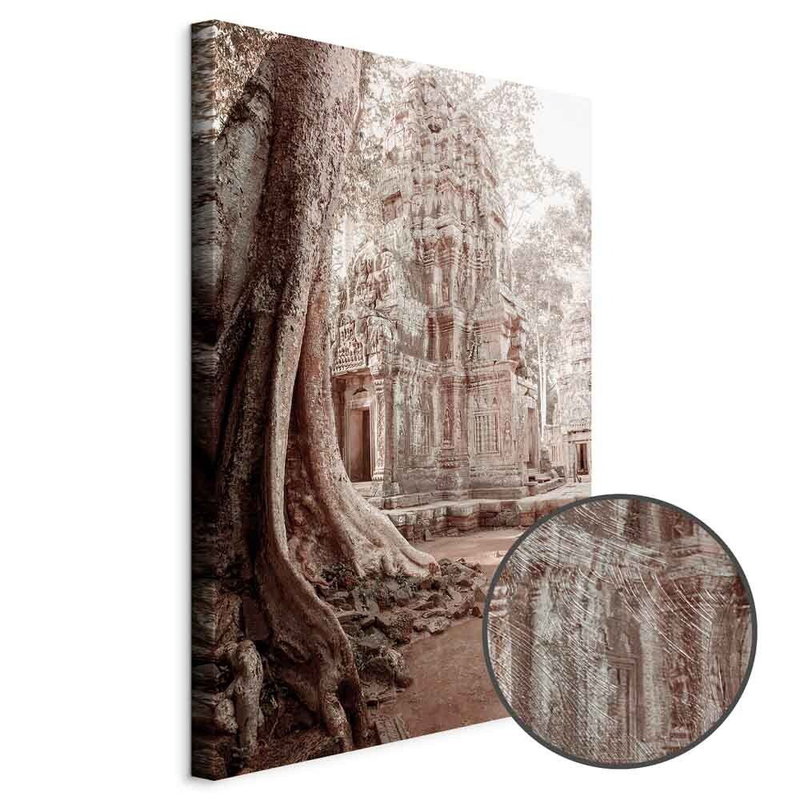
Compare the actual images when considering materials. Stone, metal and plaster are depicted subjects, not the materials of the picture itself. A print showing carved ornament does not become a real stone relief. Colour treatment and perspective also affect how heavy or airy the architecture appears.
A printed motif with a worked premium surface
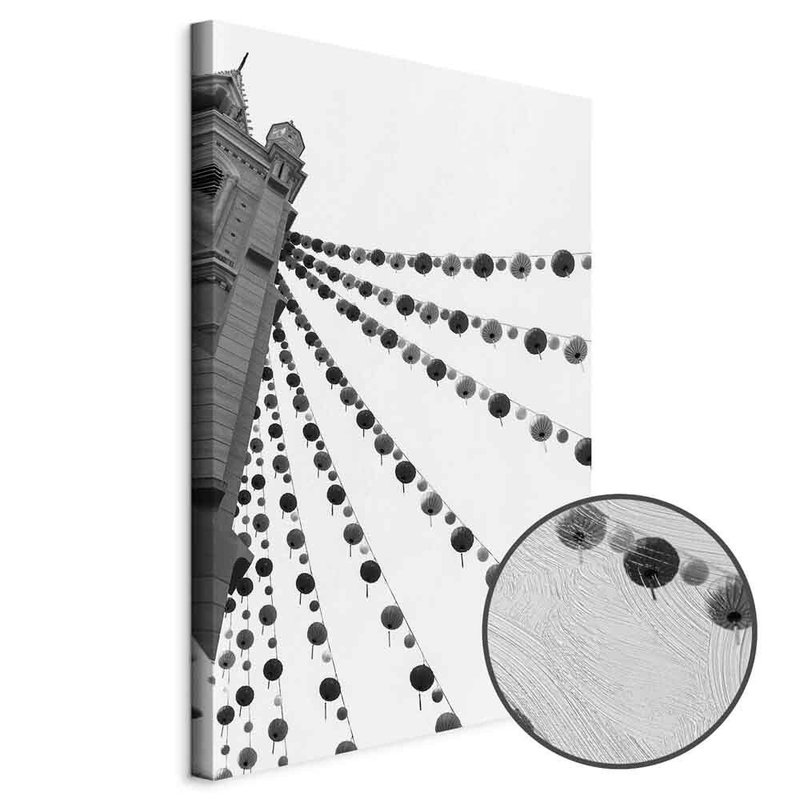
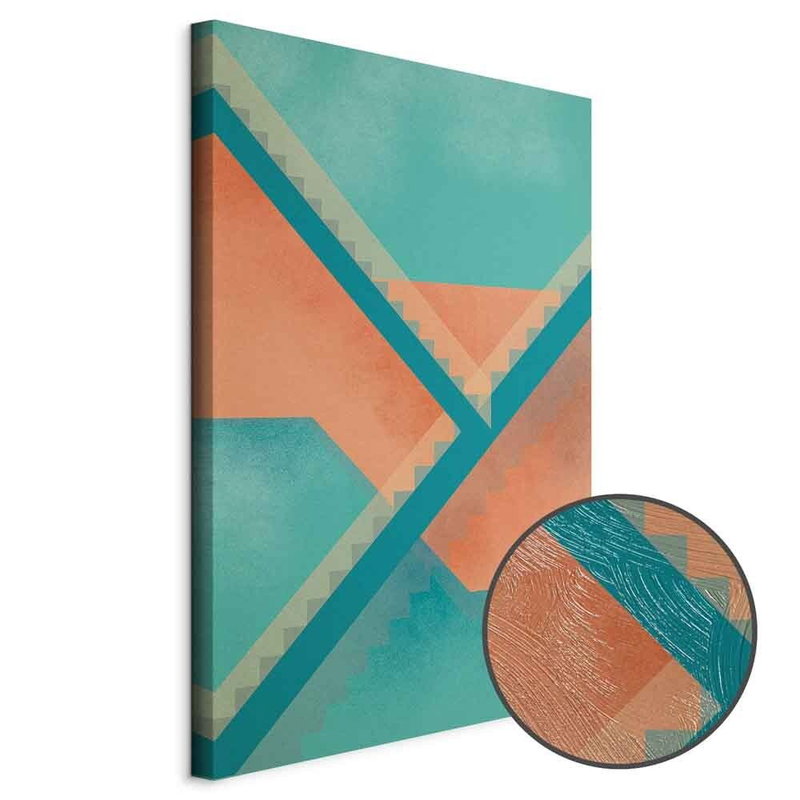
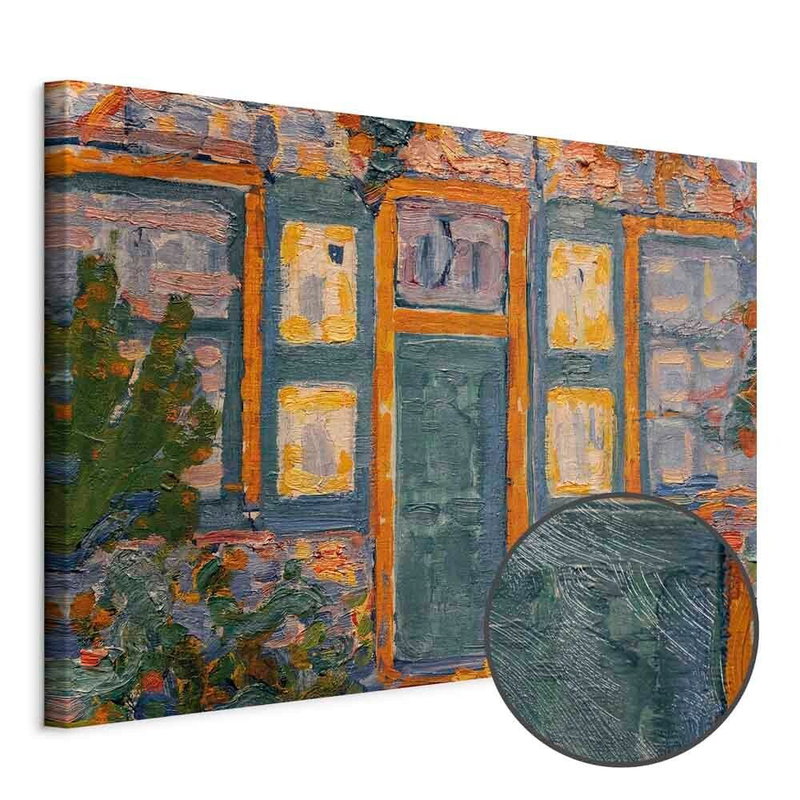
In the premium collection, clear gel is applied by hand over the printed motif. This gives the canvas physical texture, while the building’s lines remain part of the image. Product close-ups help distinguish depicted materials from the texture of the hand-worked surface.
Check the size and format on the individual product page. A tall stairwell, a broad row of columns and a squarer façade need different wall spaces. The room photograph suggests a placement; use the stated product dimensions when planning distances to furniture and other pictures.
Connect the picture’s lines with the room
You can echo one of the image’s directions in the interior: a low console below tall stairs, for example, or straight shelves beside a curved railing. Clear wall space around the canvas makes the perspective easier to read. Avoid having too many small linear patterns compete on the same wall.
The absorbent construction can help reduce reverberation indoors. Its contribution depends on area, placement and other room materials, rather than whether the print shows stairs or a façade. Follow the product’s mounting and care instructions for its hand-worked gel surface.