






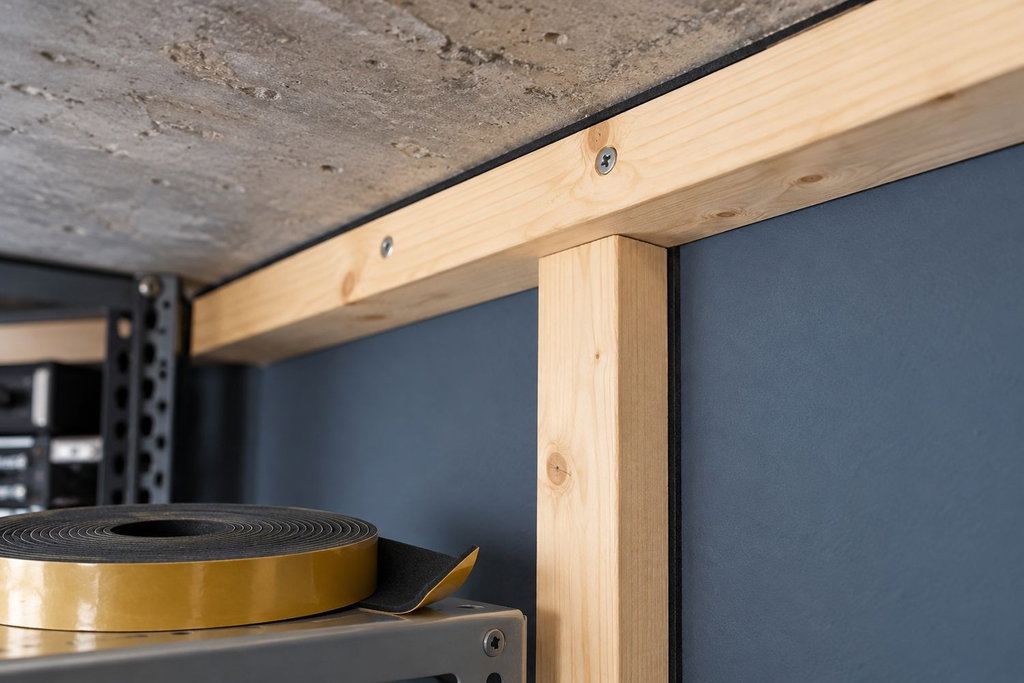
Vibration Damping for Walls and Ceilings in Studios
Reduce structure-borne noise and vibrations transmitted through walls and ceilings in studio environments
In studios, vibrations from technical equipment, installations, and building systems can propagate through walls and ceilings. When vibrations are transmitted into the building’s structure, they often result in structure-borne noise, low-frequency hum, or subtle vibrations that affect both the working environment and audio precision. These disturbances can be felt in multiple rooms simultaneously and are often difficult to pinpoint, especially in studio environments where silence and control are crucial. Vibration damping of walls and ceilings aims to limit this mechanical transmission and reduce the spread of vibrations in studios.
What does vibration damping for walls and ceilings entail?
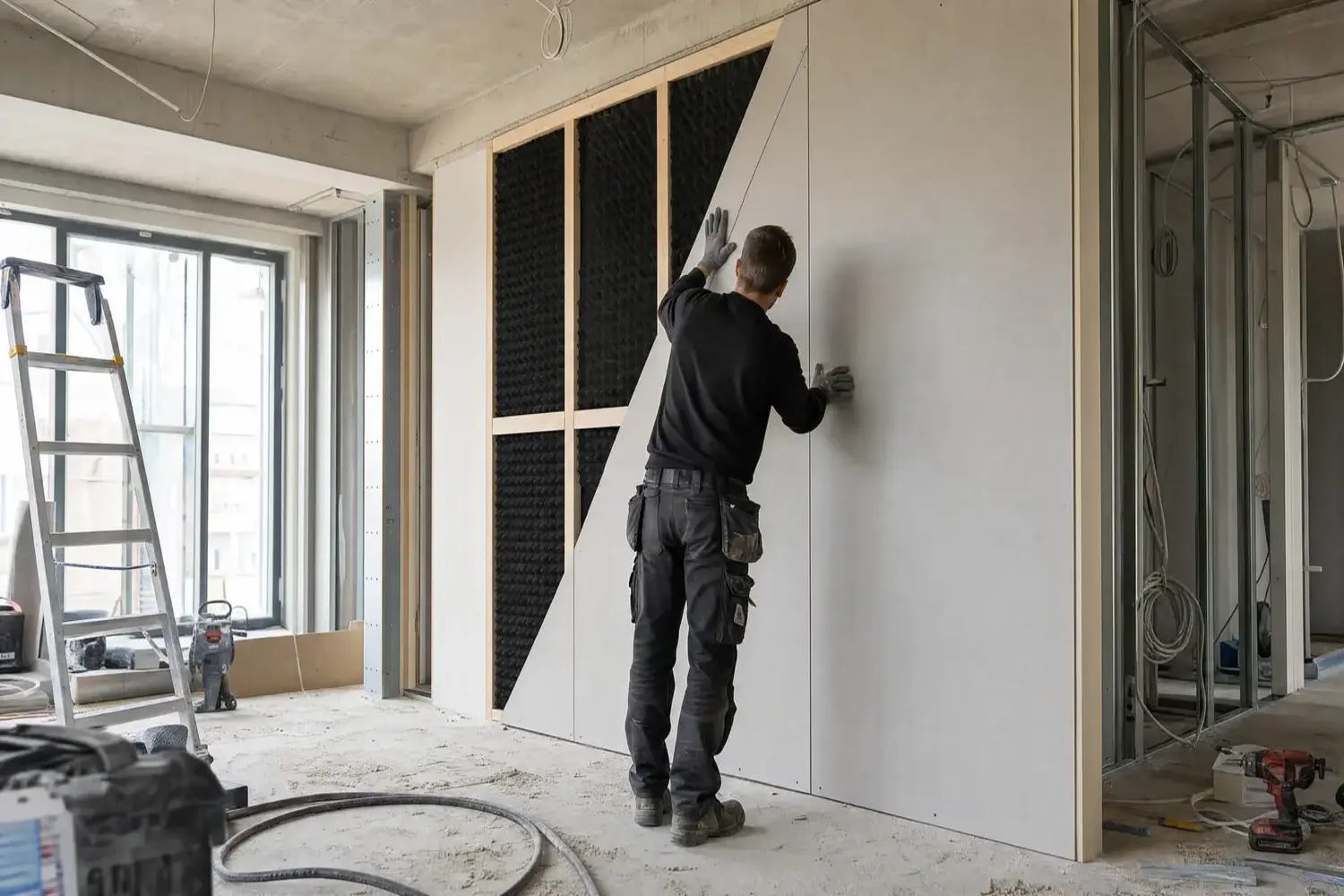
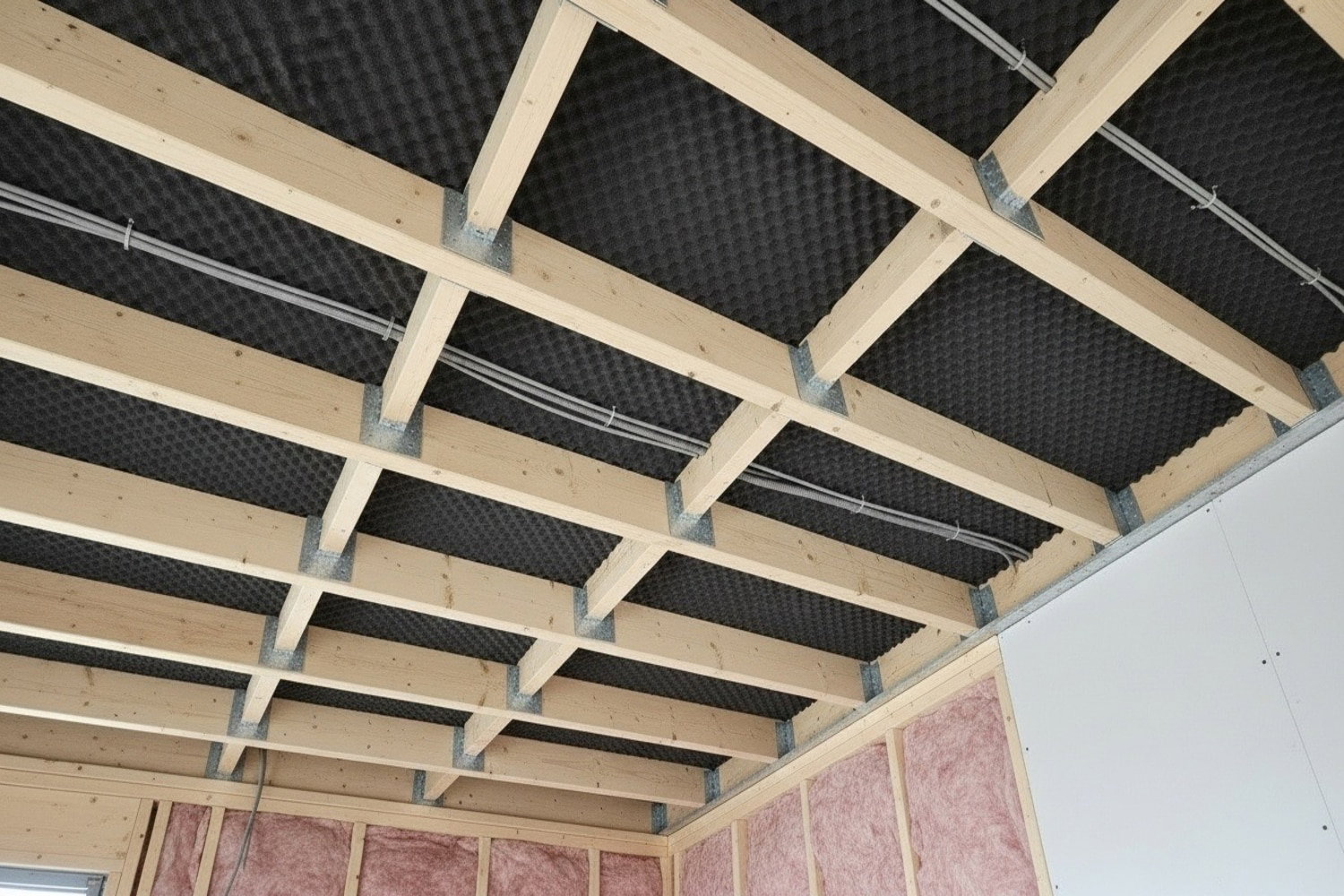
Vibration damping of walls and ceilings involves reducing how mechanical movements are transmitted through the building’s load-bearing elements. Unlike sound insulation, which blocks airborne sound between rooms, and sound absorption, which reduces echoes and reverberation within a room, vibration damping focuses on reducing the vibrations themselves within the structure. The goal is to break the mechanical connection that allows vibrations to spread through studs, fasteners, and interconnected building components in a studio environment.
Common vibration problems through walls and ceilings in studios
In studios, vibration problems often arise when equipment or installations are mounted directly against walls or ceilings. This can include ventilation systems, fans, cooling systems, piping, or technical infrastructure that operates for extended periods. Vibrations from machines placed on the floor can also travel upward through walls and ceilings and be perceived as disruptive noise in control rooms, recording rooms, or adjacent studios.
How do vibrations spread through wall and ceiling structures?
When vibrations are transmitted into a wall or ceiling, the motion continues through studs, panel materials, fasteners, and connections to other building components. The structure then acts as a conductive path through which vibrations can propagate further and, in some cases, be amplified by resonance. In studios, this means that disturbances are often perceived far from the actual source of vibration, which can affect multiple rooms simultaneously.
Vibrations via Mounts
Permanently mounted equipment can transmit mechanical movements directly to walls and ceilings.
Propagation Between Building Components
Walls and ceilings often act as conduits that transmit vibrations throughout the studio environment.
Why choose wall and ceiling vibration damping in a studio?
Vibration damping for walls and ceilings is often crucial in studios where disturbances cannot be resolved solely at the equipment or in the floor structure. By reducing the propagation of vibrations through these structural elements, both structure-borne noise and perceived shaking can be effectively minimized. This measure contributes to a more stable, controlled, and professional acoustic environment, where recording, mixing, and listening can take place without unwanted disturbances.
Well-thought-out advice for the best results
For maximum effectiveness, it is important to identify how vibrations enter the wall and ceiling structures in studios. A common mistake is to focus solely on the audible sound without analyzing the mechanical transmission within the building. By implementing vibration damping where the motion enters the structure, disturbances can be reduced more effectively and sustainably.
Vibration damping of walls and ceilings is therefore a key measure for reducing vibrations and structure-borne noise in studios.