




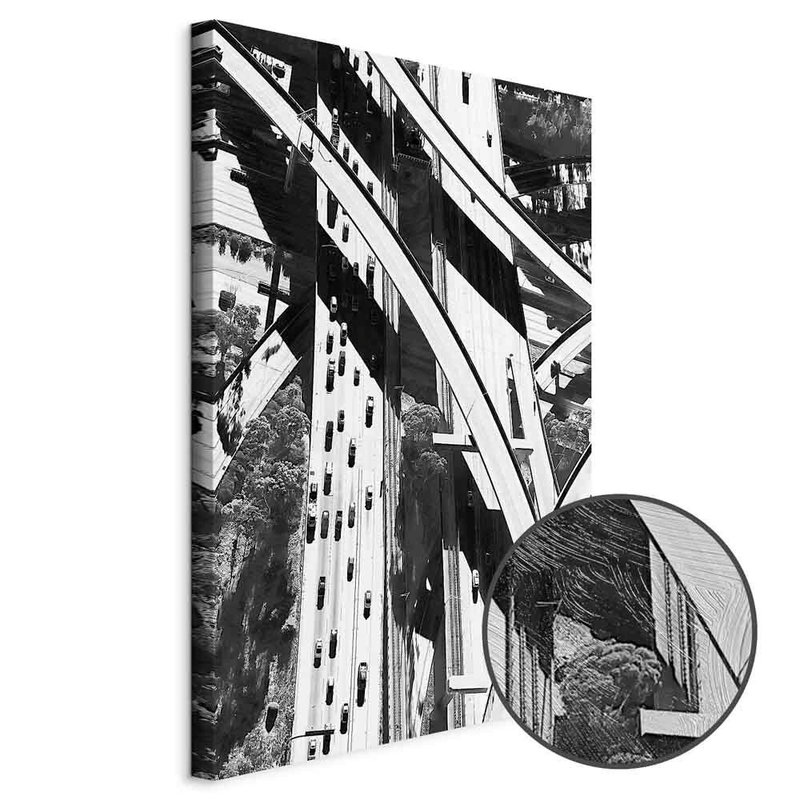
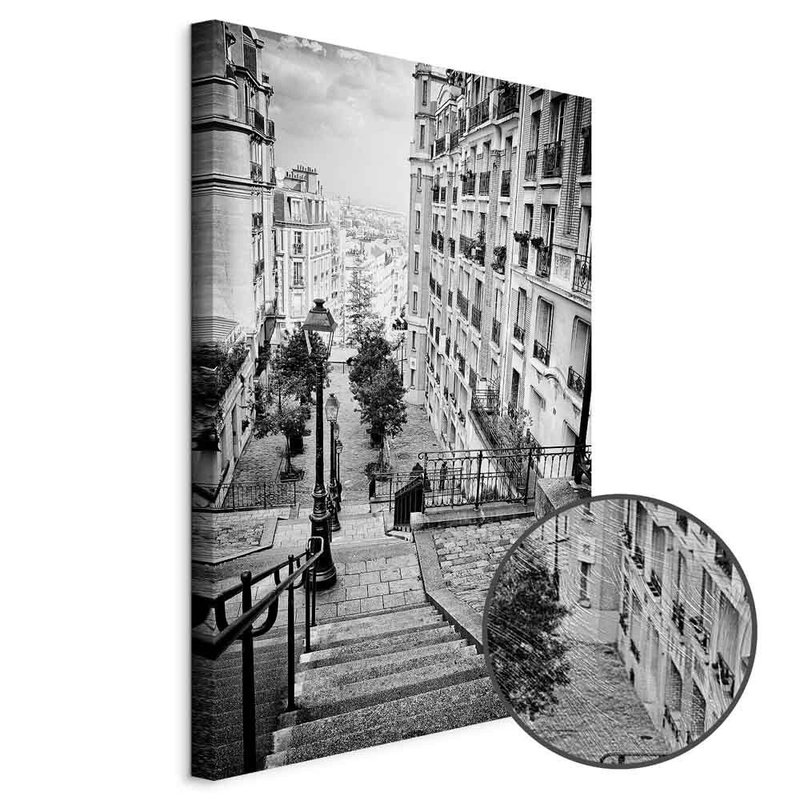
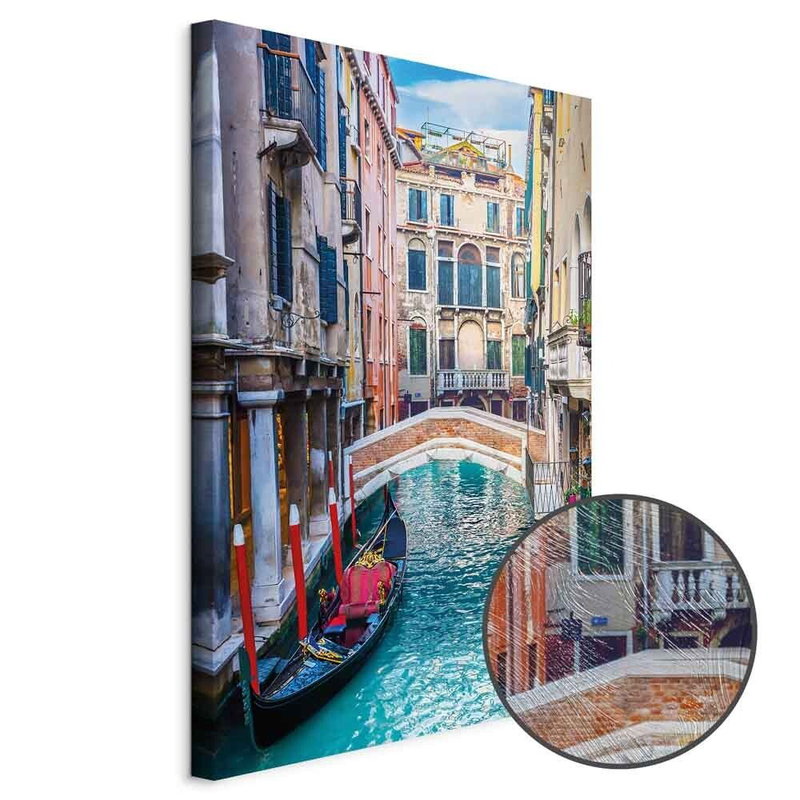
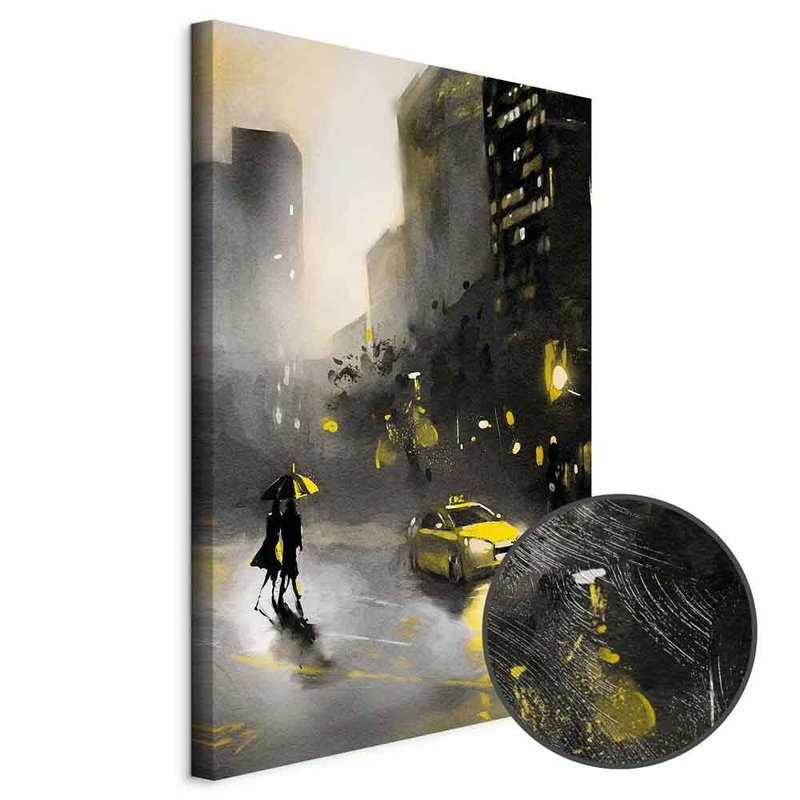




A street that draws the eye into the picture
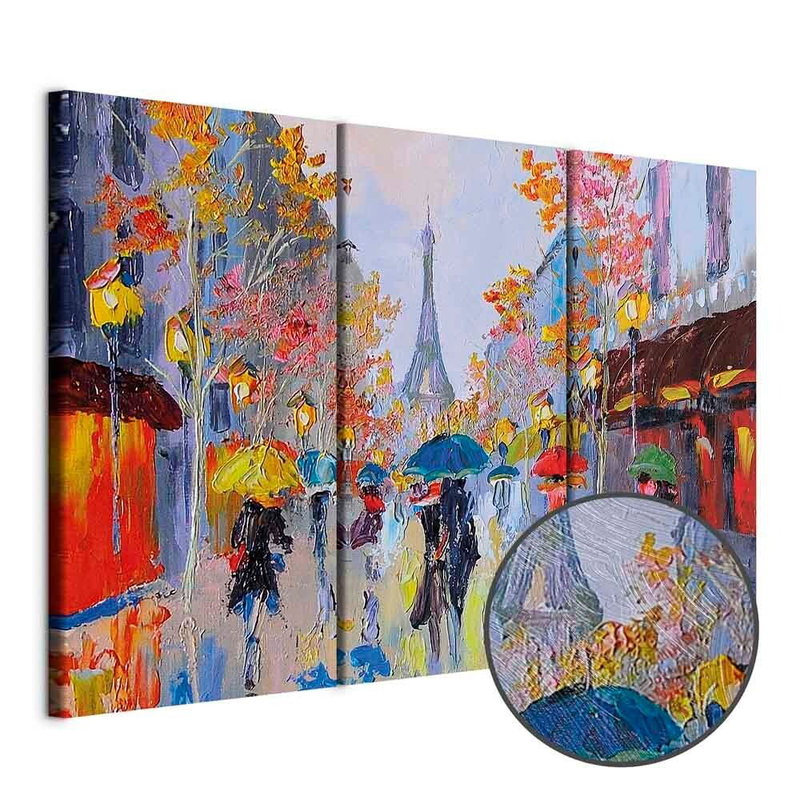
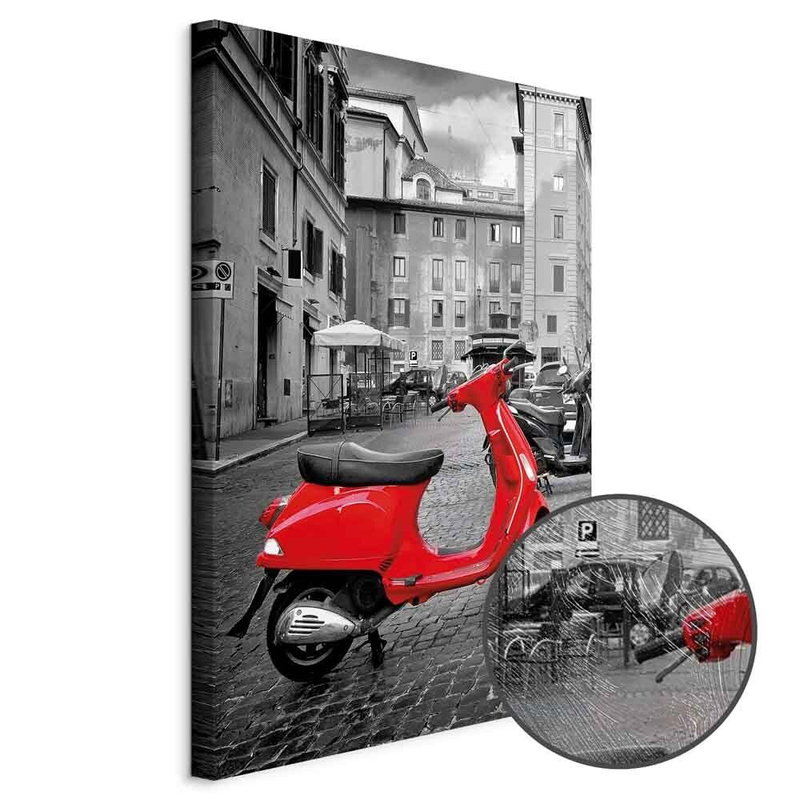
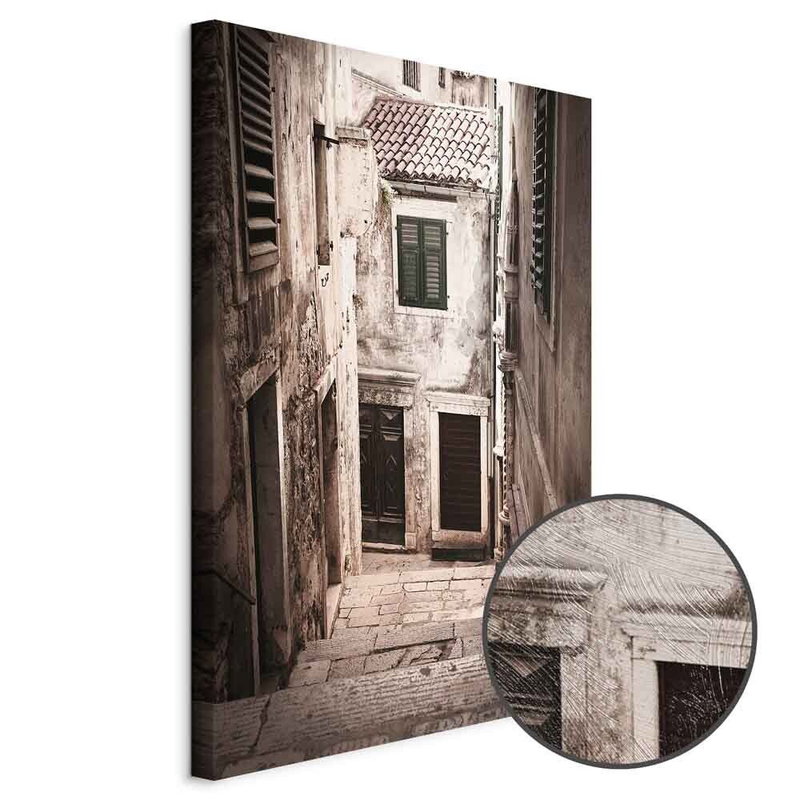
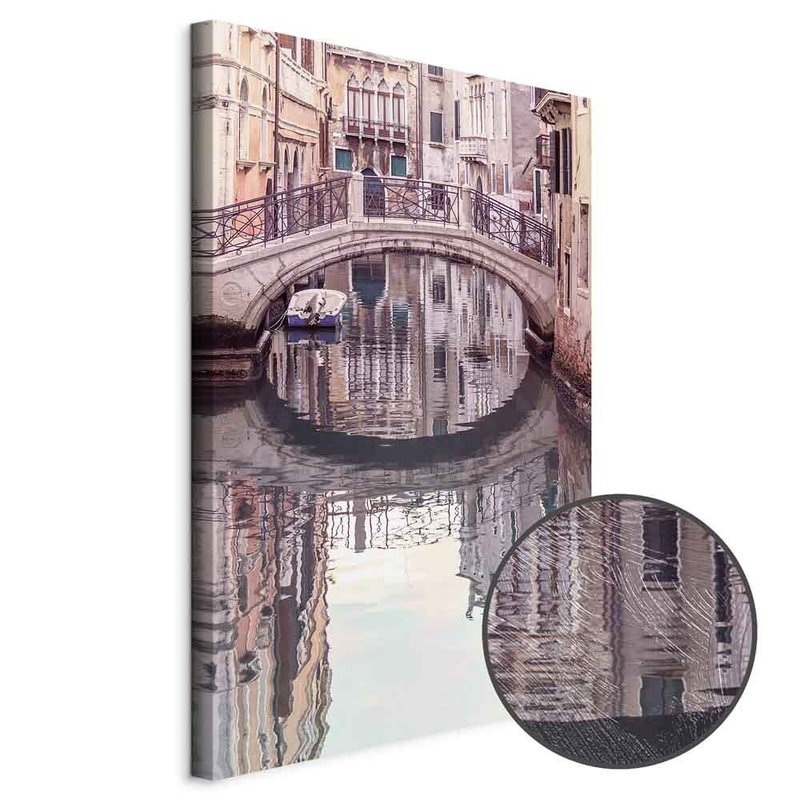
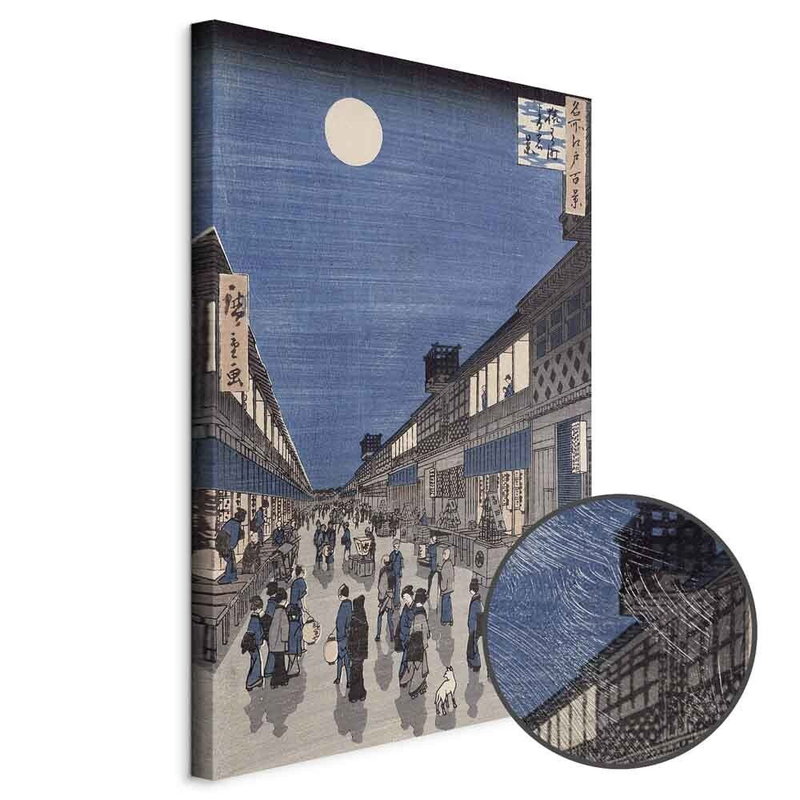
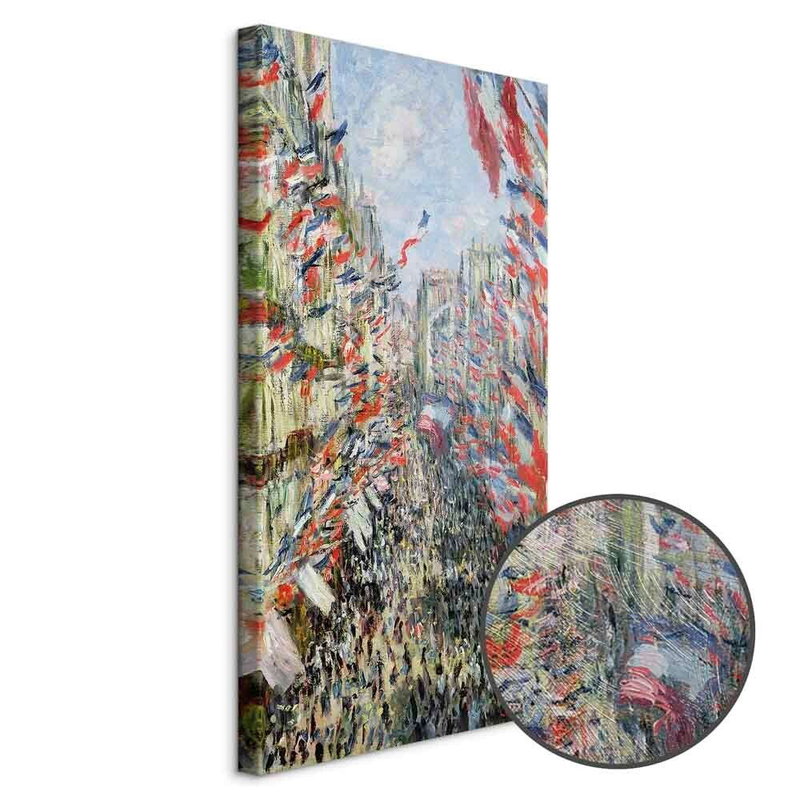
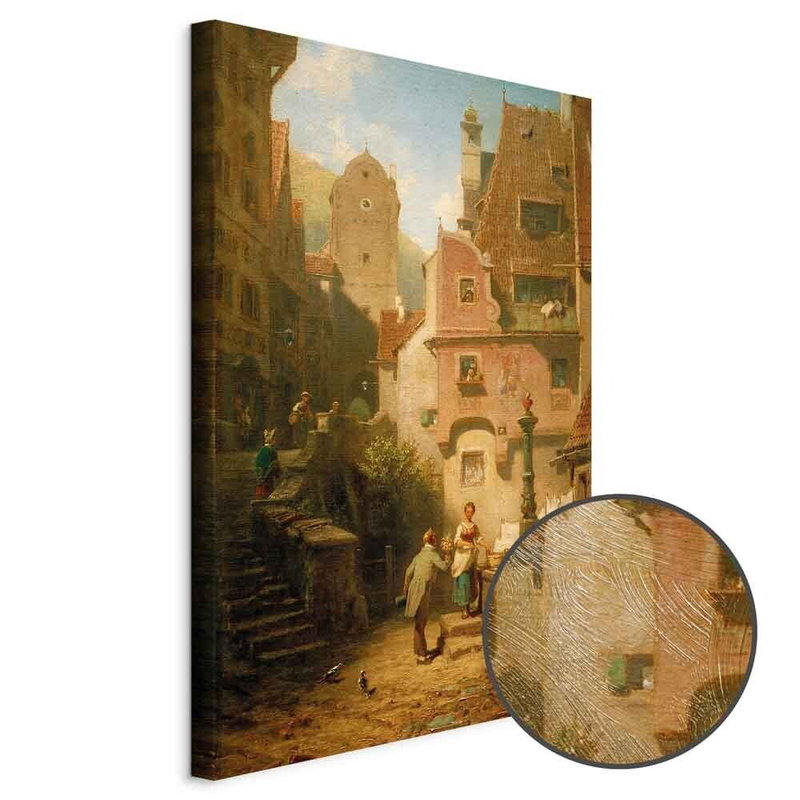
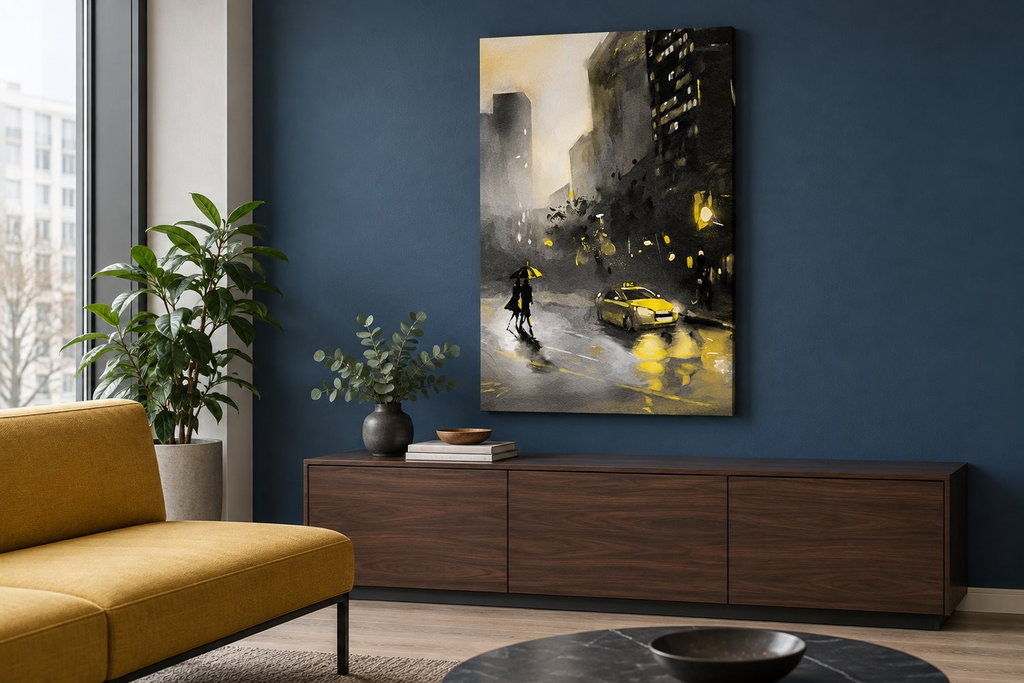
An alley, stairway or canal creates depth as buildings meet further into the image. This can give a narrow wall area a clear direction. In rainy city scenes, street reflections become streaks of colour between dark buildings. Compare whether you want the eye to follow a street, pause at a façade or reach a more open stretch of water. The chosen angle affects the image’s presence as much as the destination itself.
Night lights, skylines and graphic houses
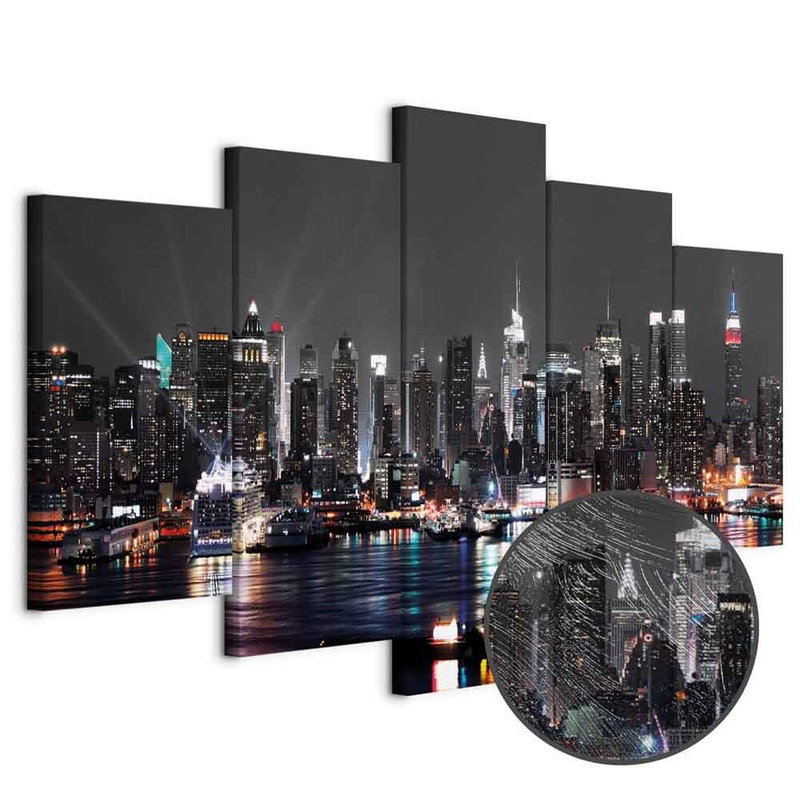
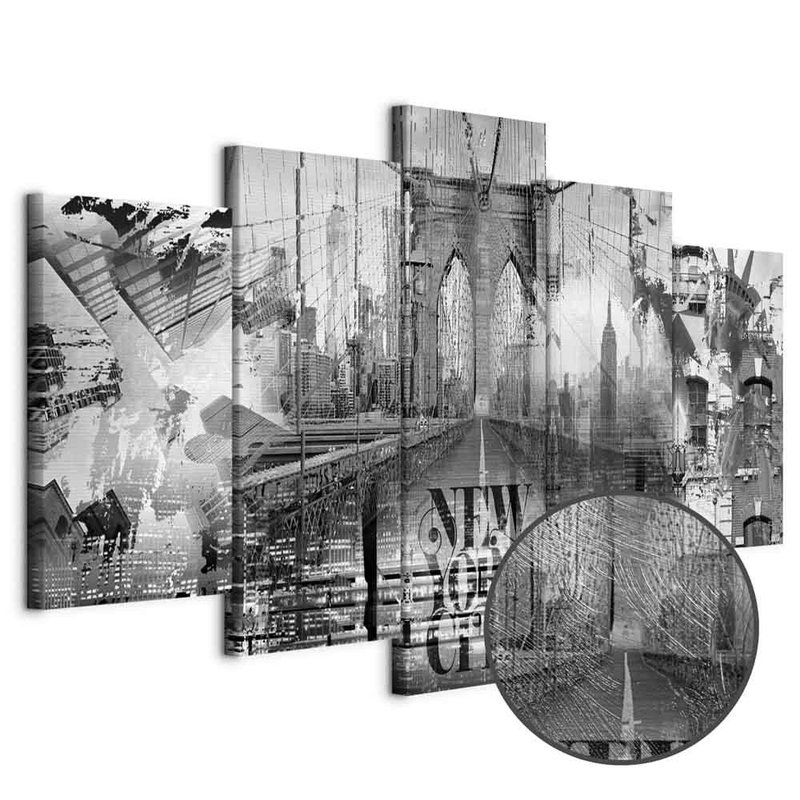
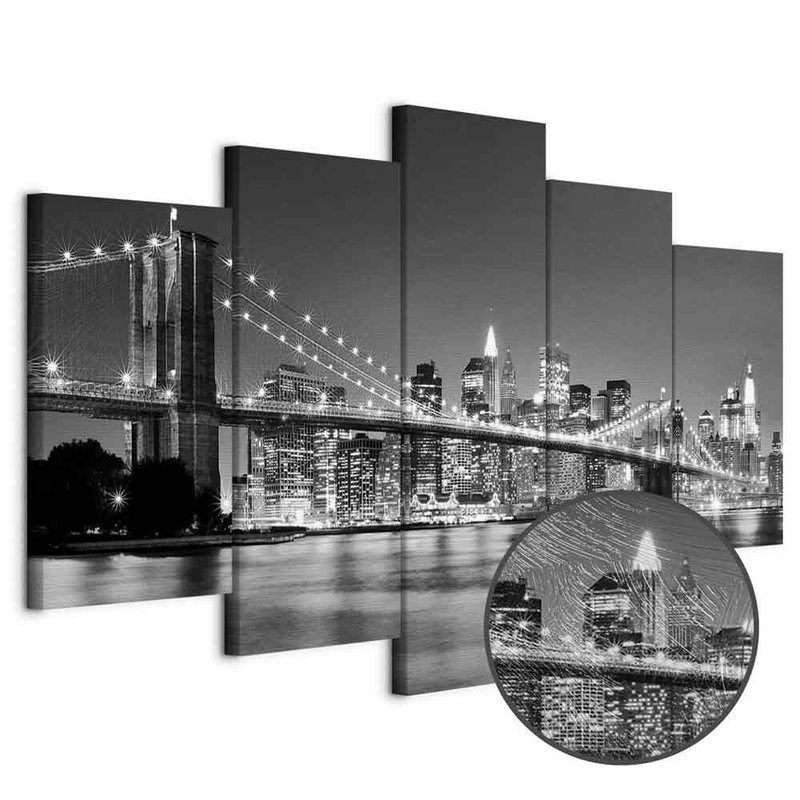
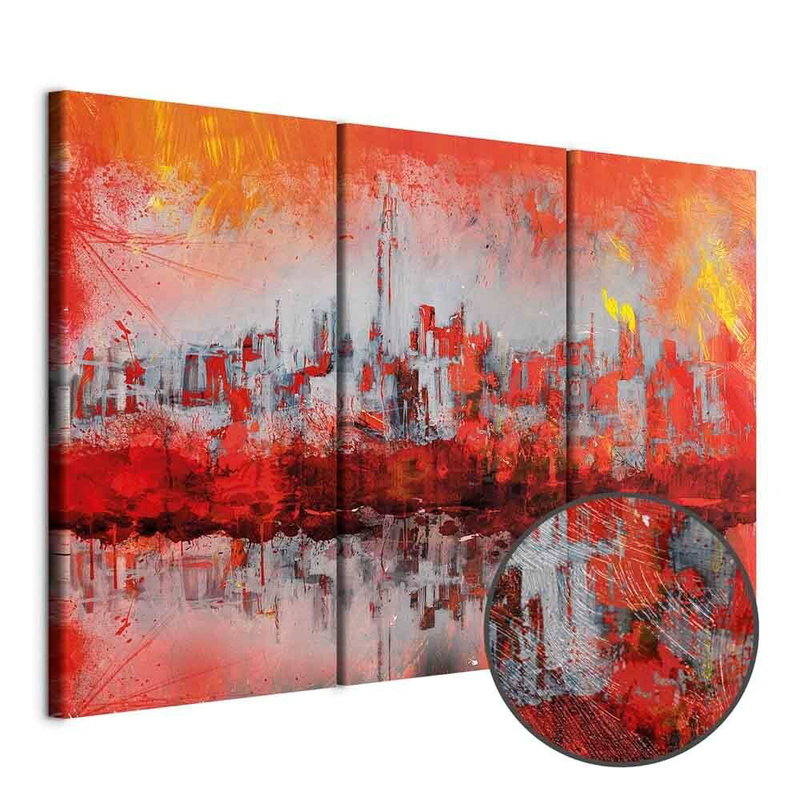
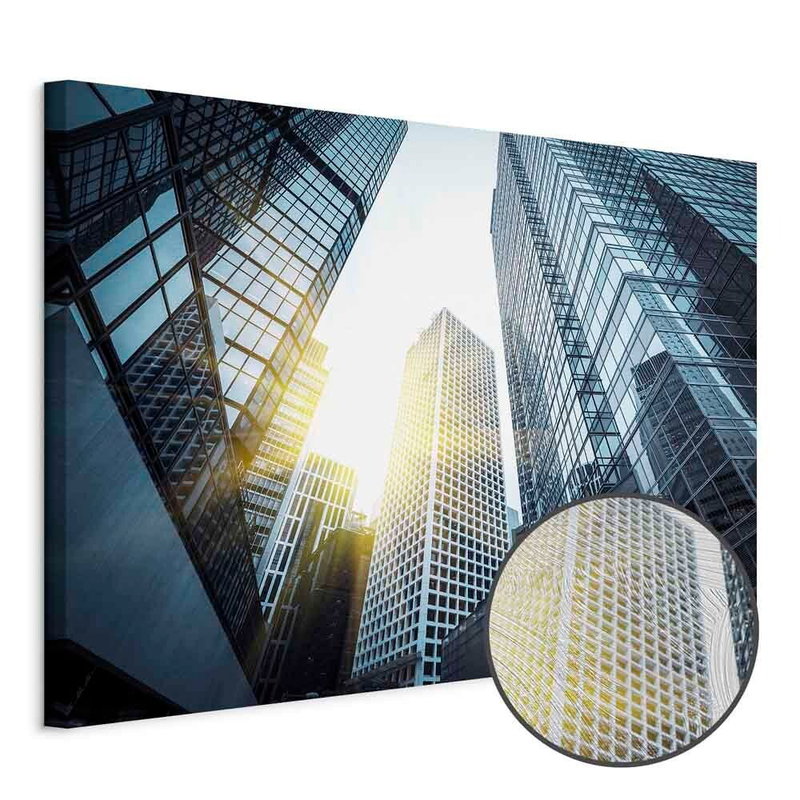
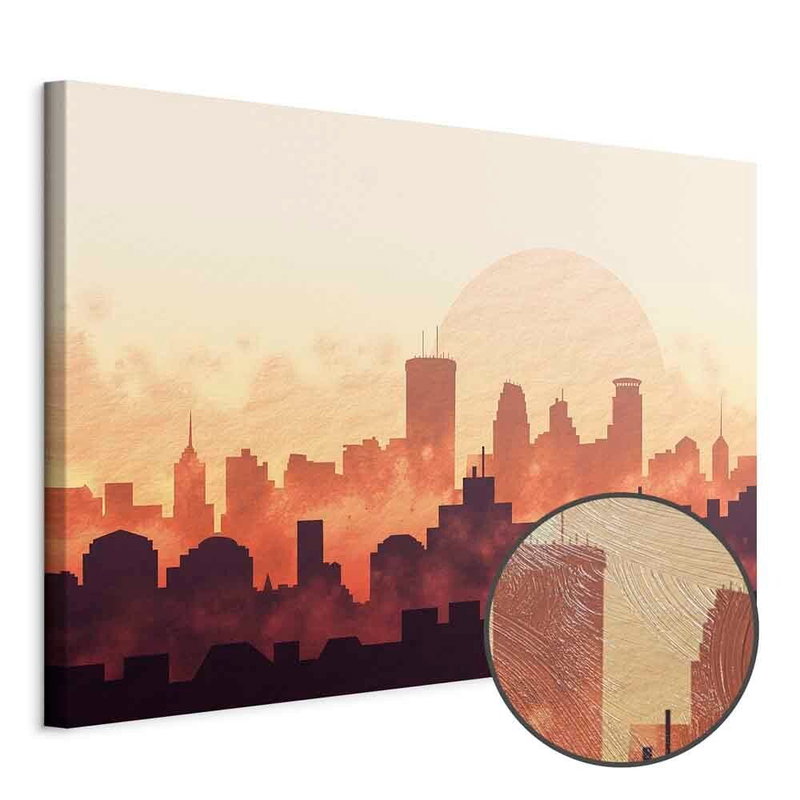
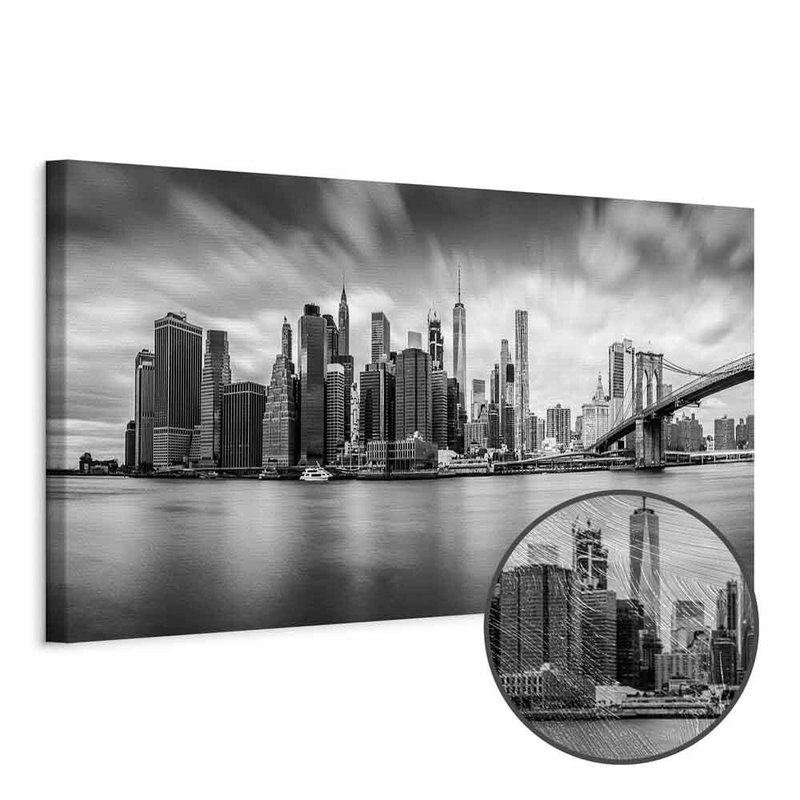
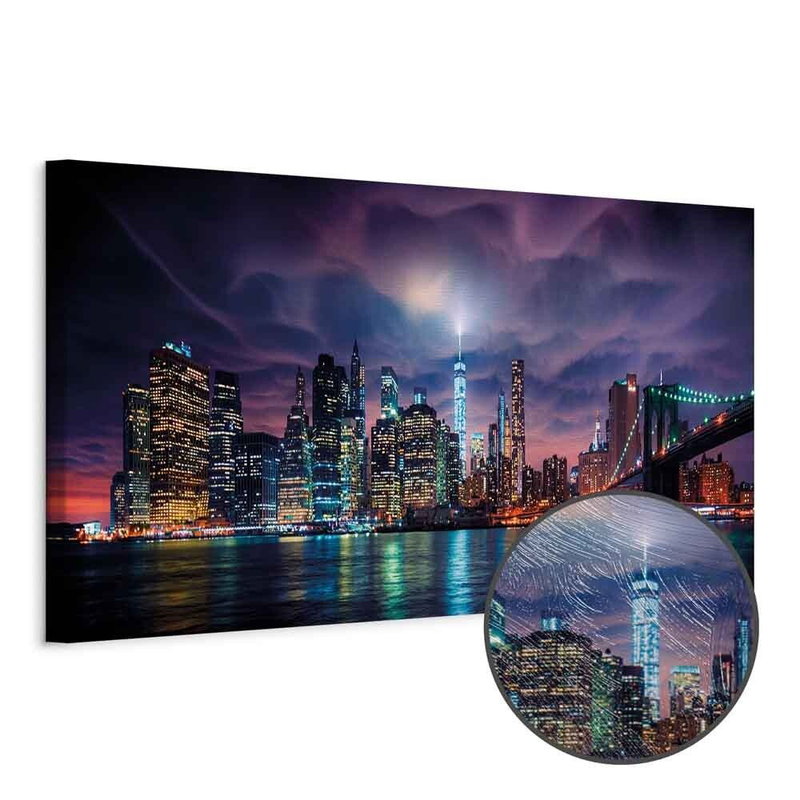
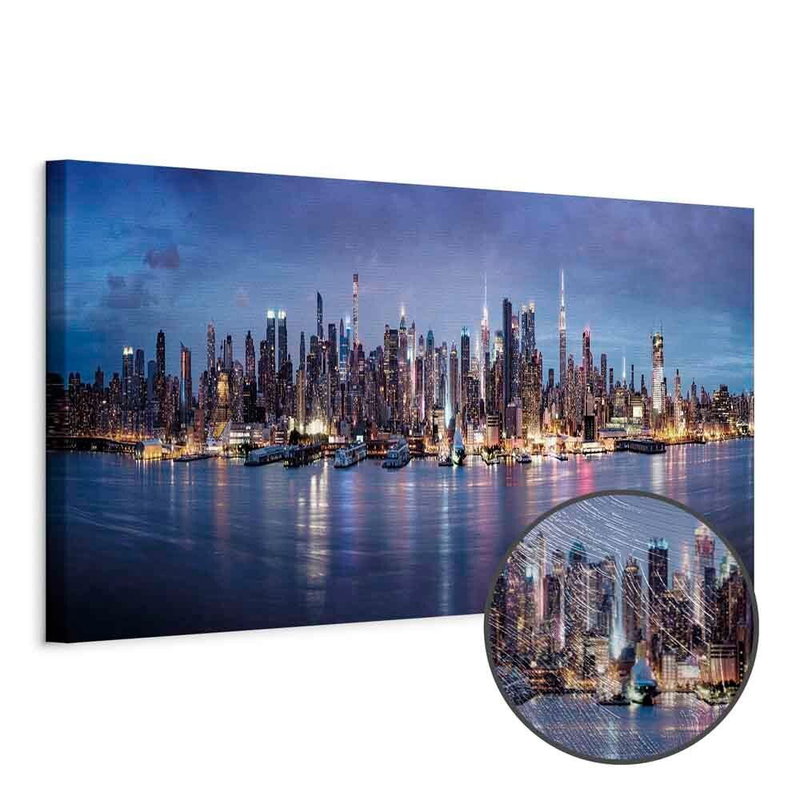
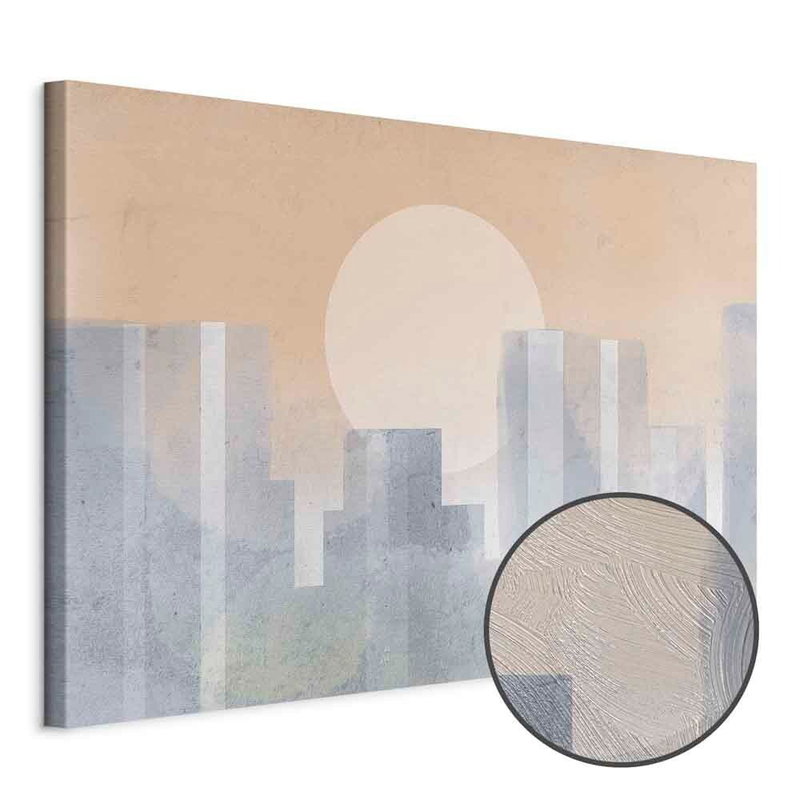
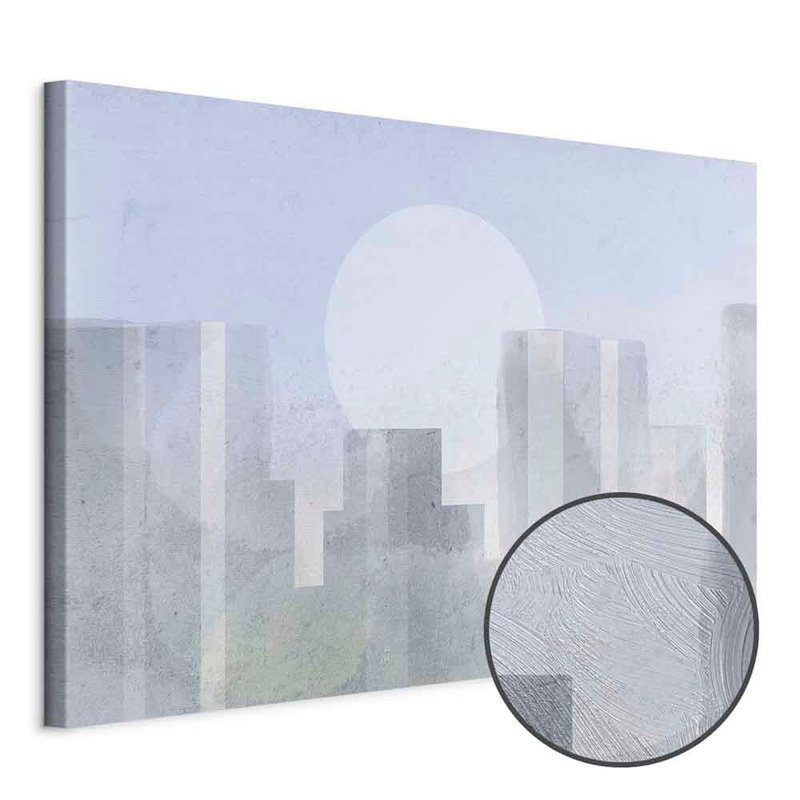
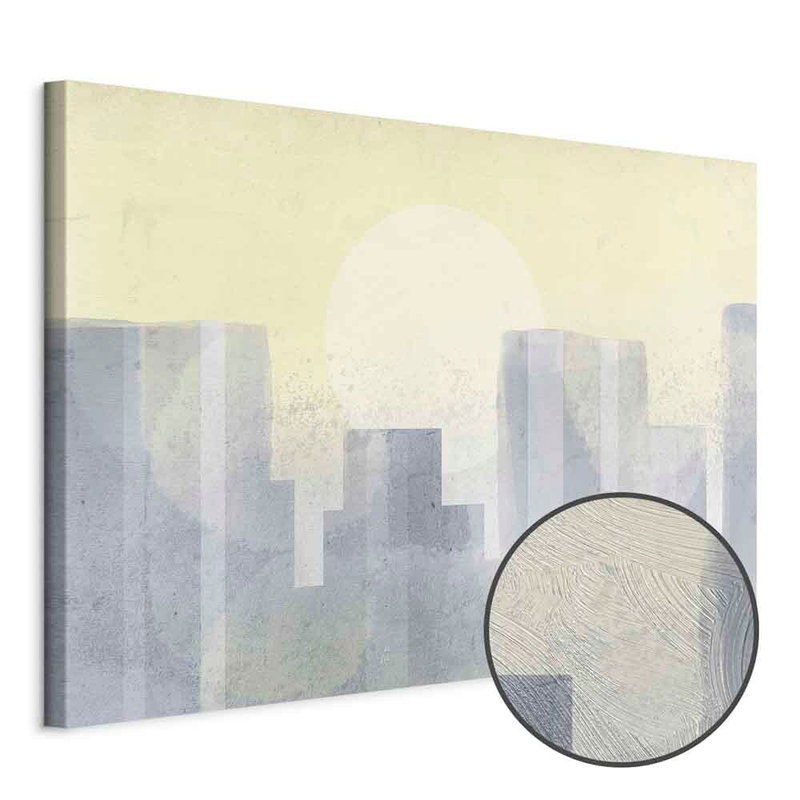
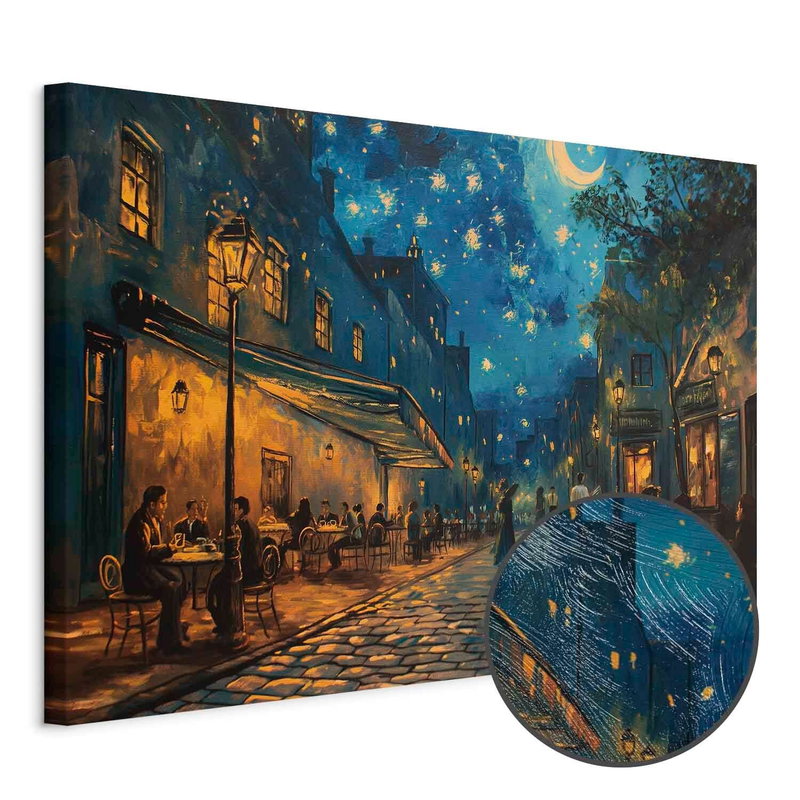
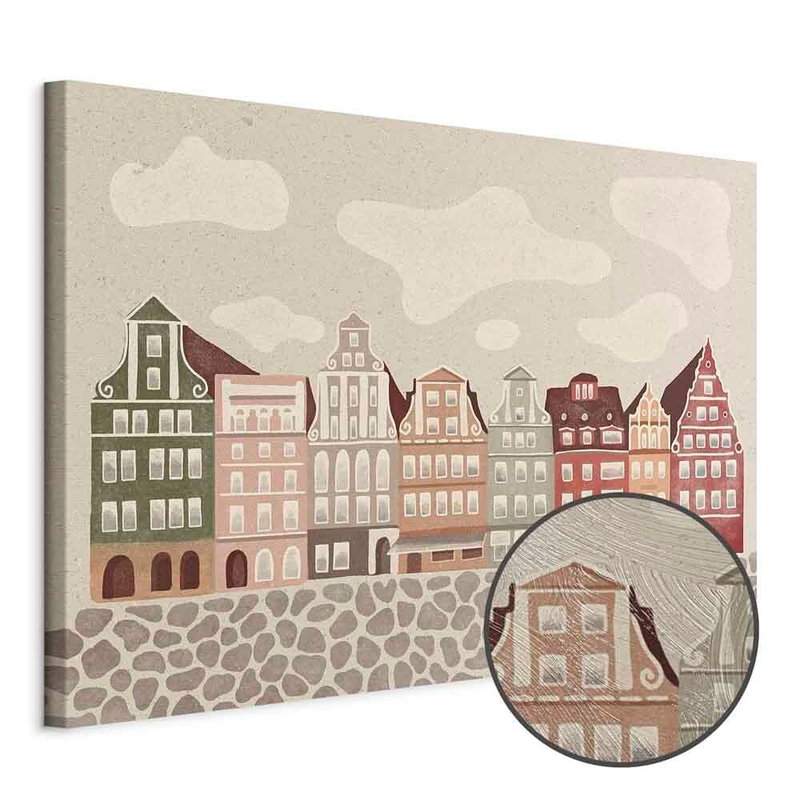
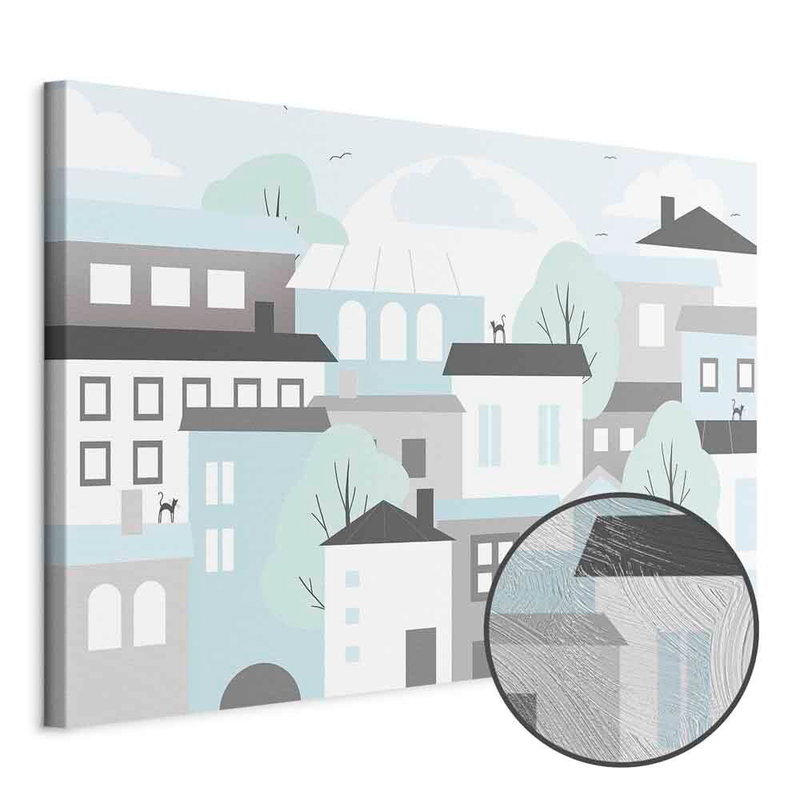
A photographic panorama can show many illuminated buildings and clear reflections. A simplified skyline instead works with larger shapes and calmer colour fields. Other subjects build entire neighbourhoods from drawn façades. Compare them up close and from where you usually sit. A detailed panorama may need more wall space and viewing distance than an image with only a few large house forms.
People and vehicles as part of urban life
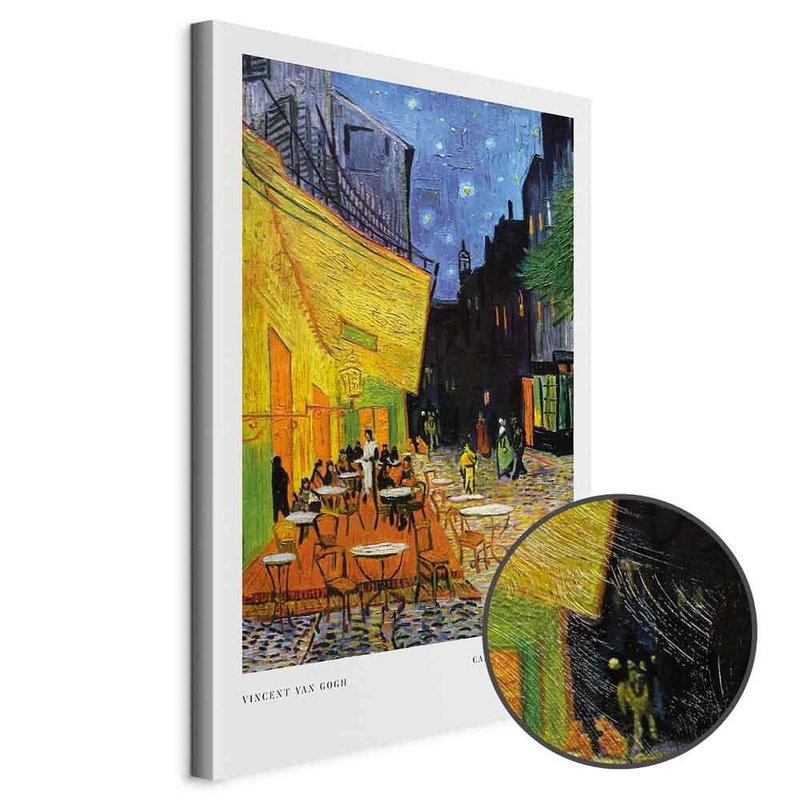
A taxi, umbrella or small figures in a street can give the city subject a particular situation. In other pictures, movement comes from brushwork, lights and the rhythm of buildings. Decide whether you want everyday street life or prefer to use the city’s lines as decorative shapes. Consider the whole composition so that its prominent details also work in the space where the picture will hang.
The premium surface and the print’s format
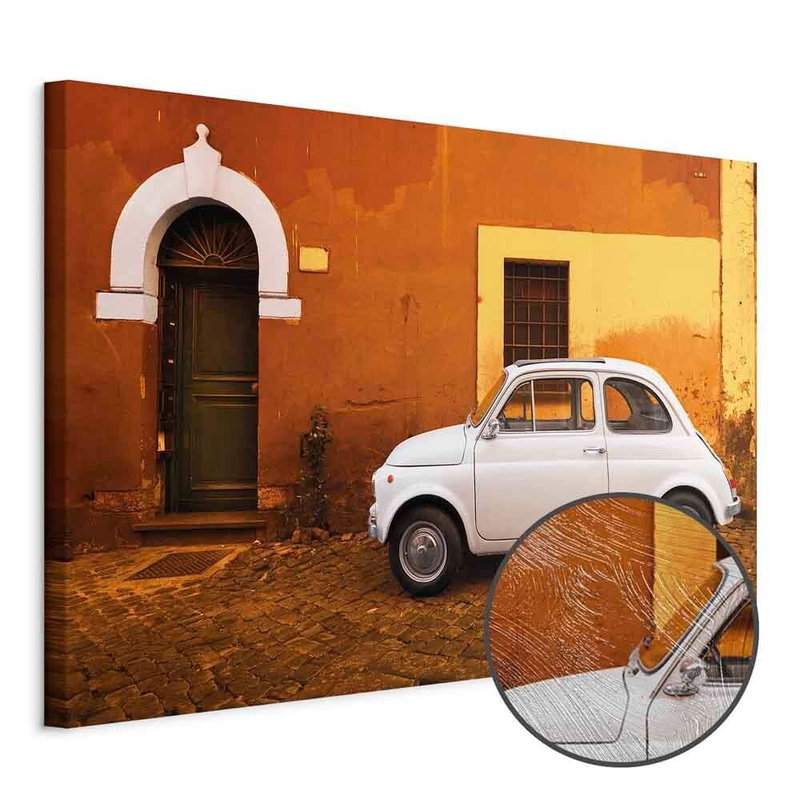
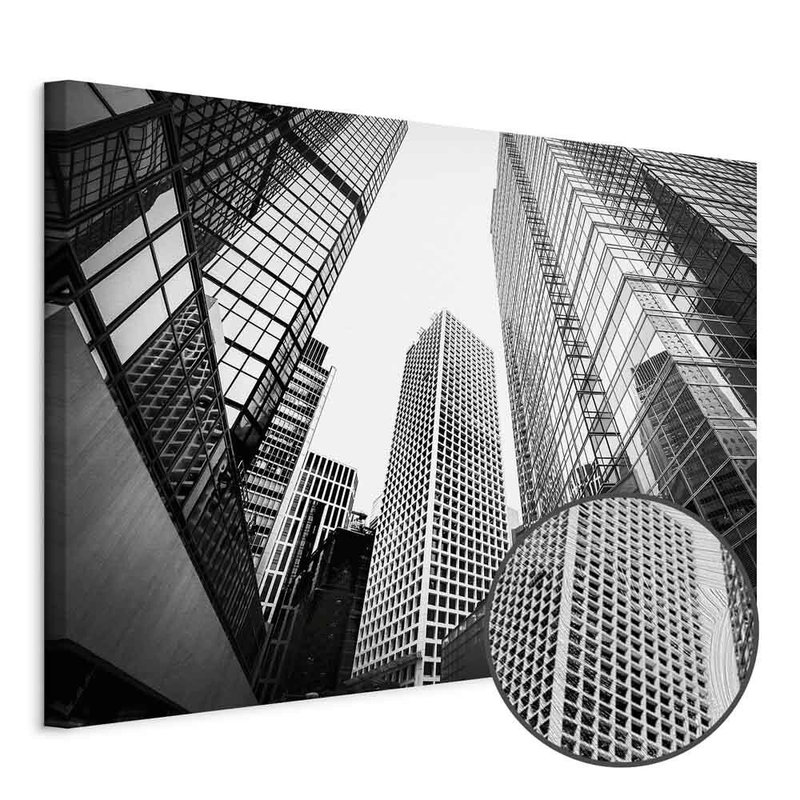
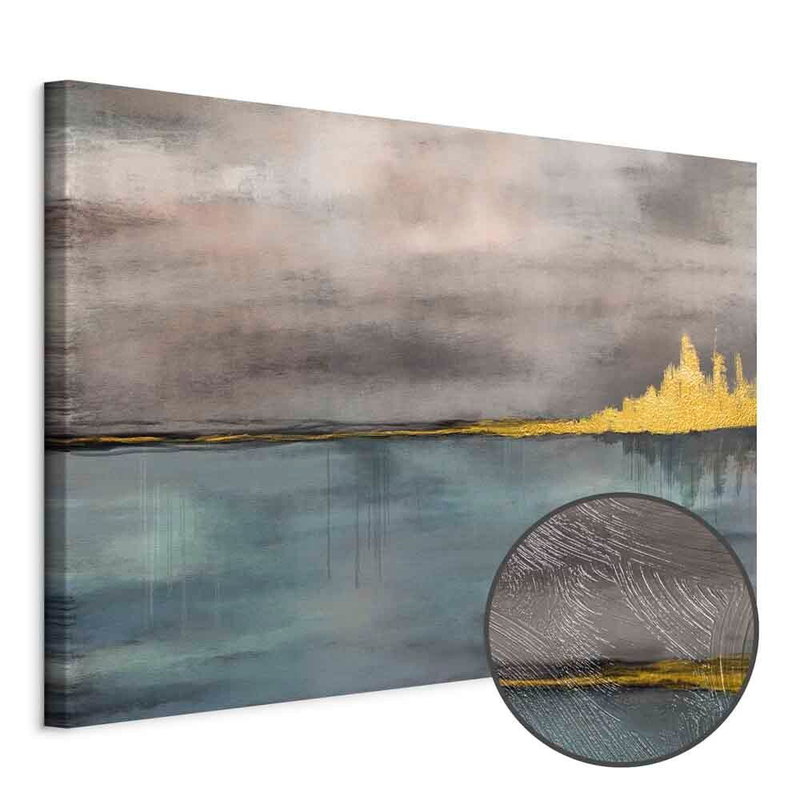
In the premium series, hand-applied clear gel sits over the print and creates physical texture. This does not change the depicted place or the subject’s meaning, but the surface can look different with the light and viewing angle. Check the specific product’s construction, available sizes and any division into multiple panels. A long city view and a portrait alley image need different wall areas; plan the gaps too when the subject spans several panels.
Positioning for both the image and room acoustics
Let the image’s colours work with the room’s furniture and light, and leave space around its outer edges. Sound-absorbing material behind the canvas can also help reduce reverberation. Its contribution depends on placement, total absorbing area and the room’s other materials. Read the product’s installation and care instructions, and choose the amount according to the room’s use. The pictures do not replace sound insulation between rooms.