




Start with the distribution of colour
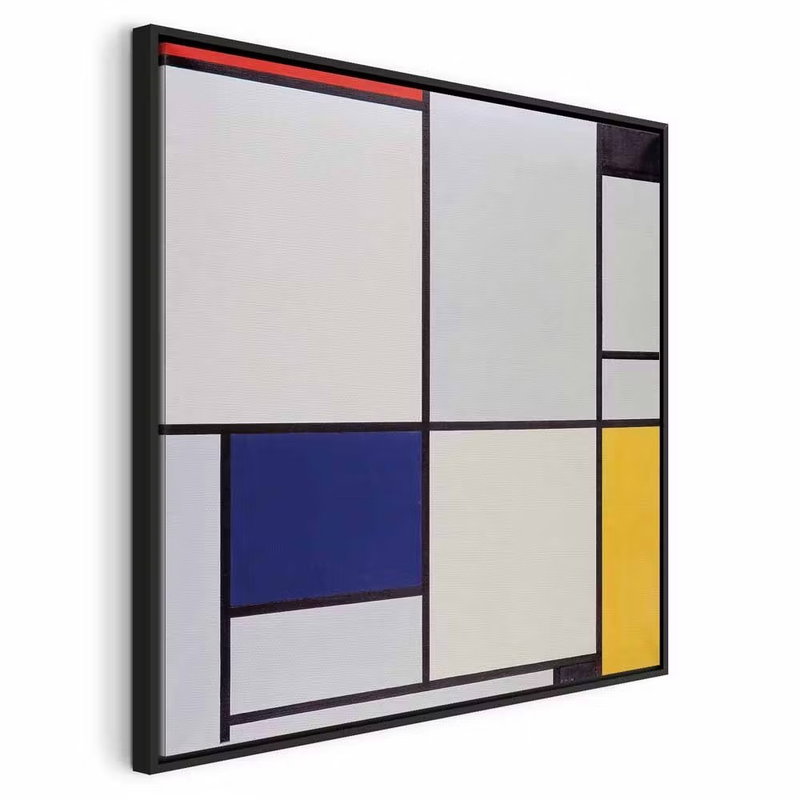
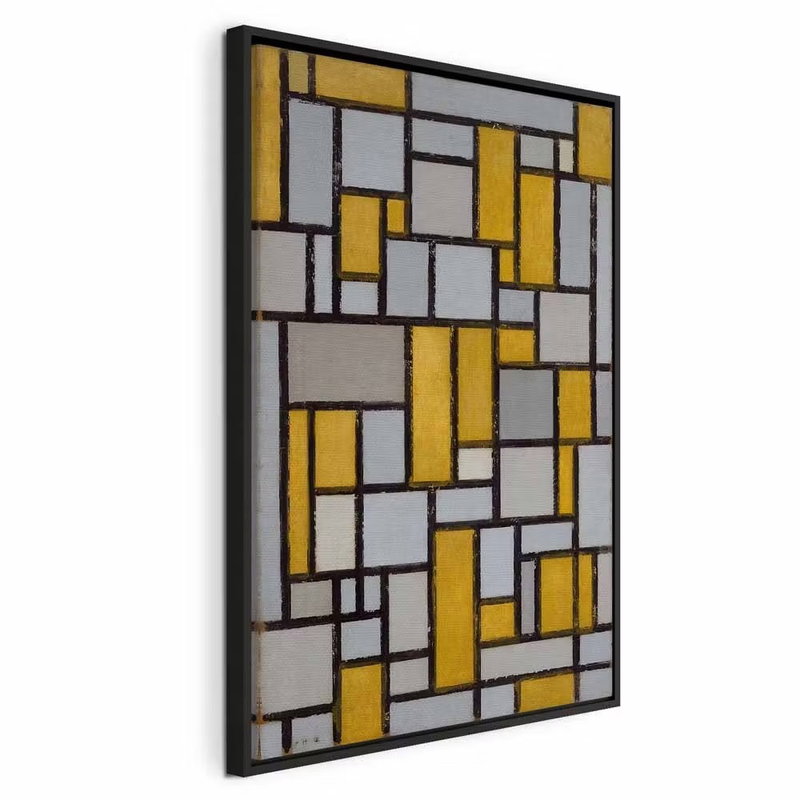
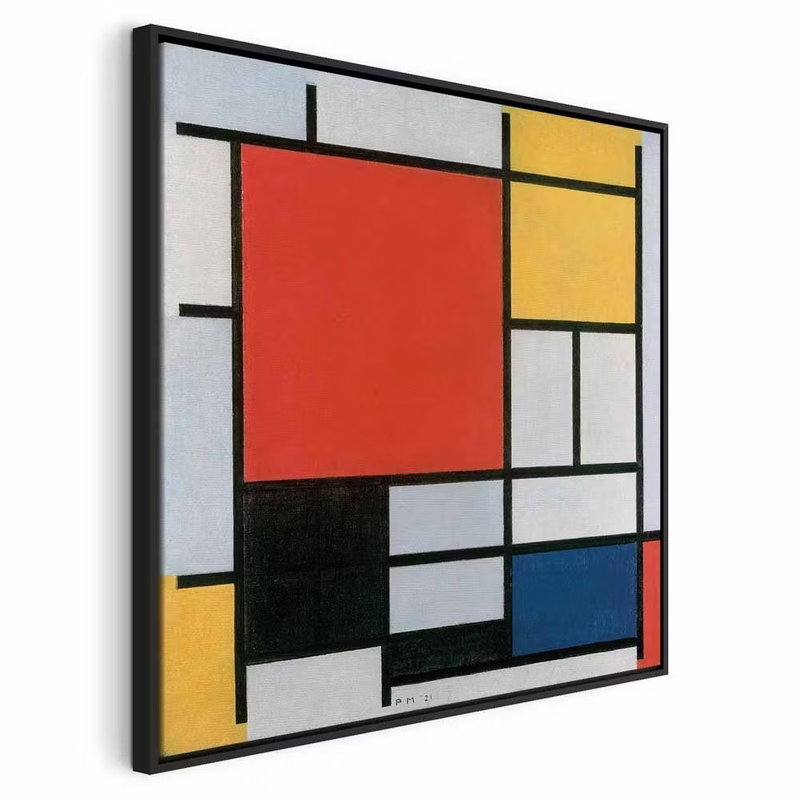
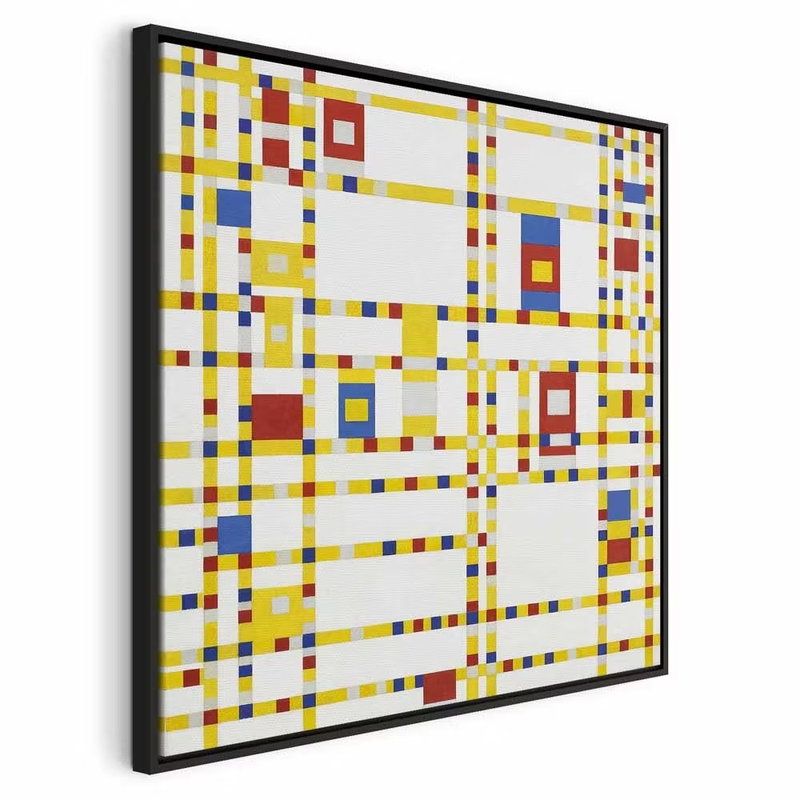
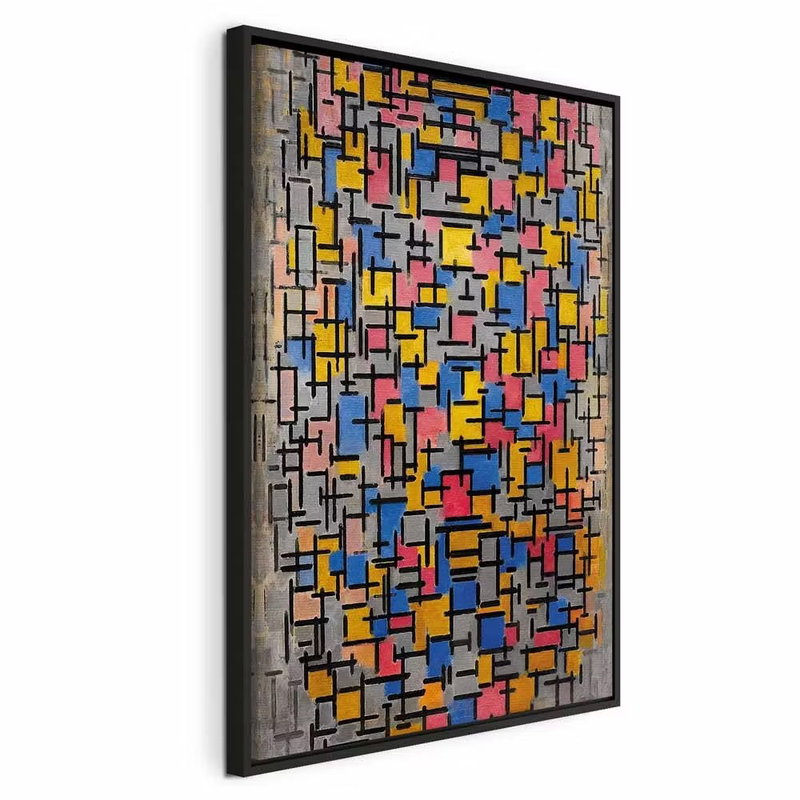
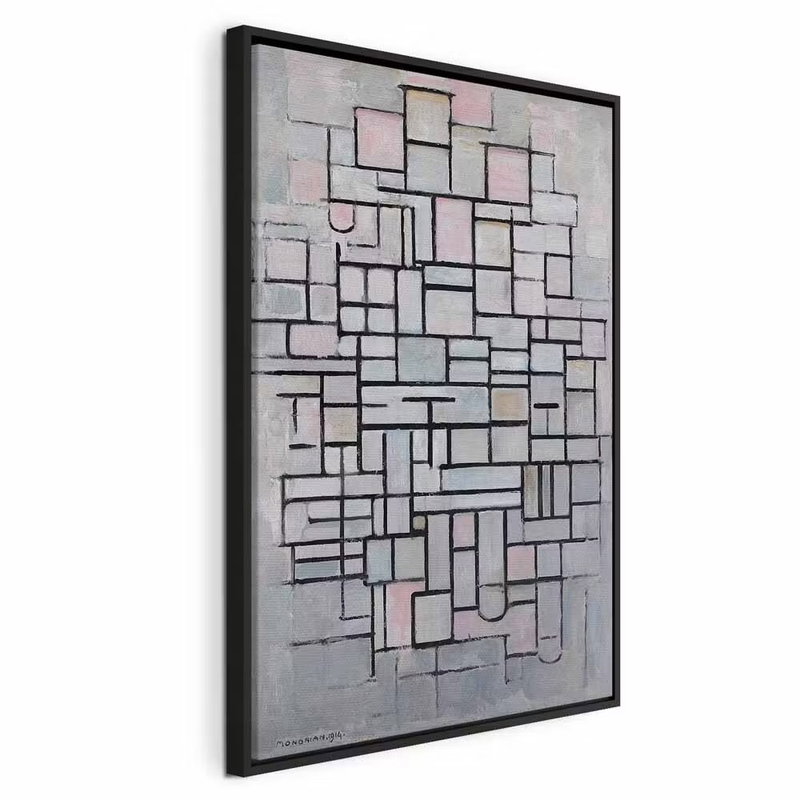
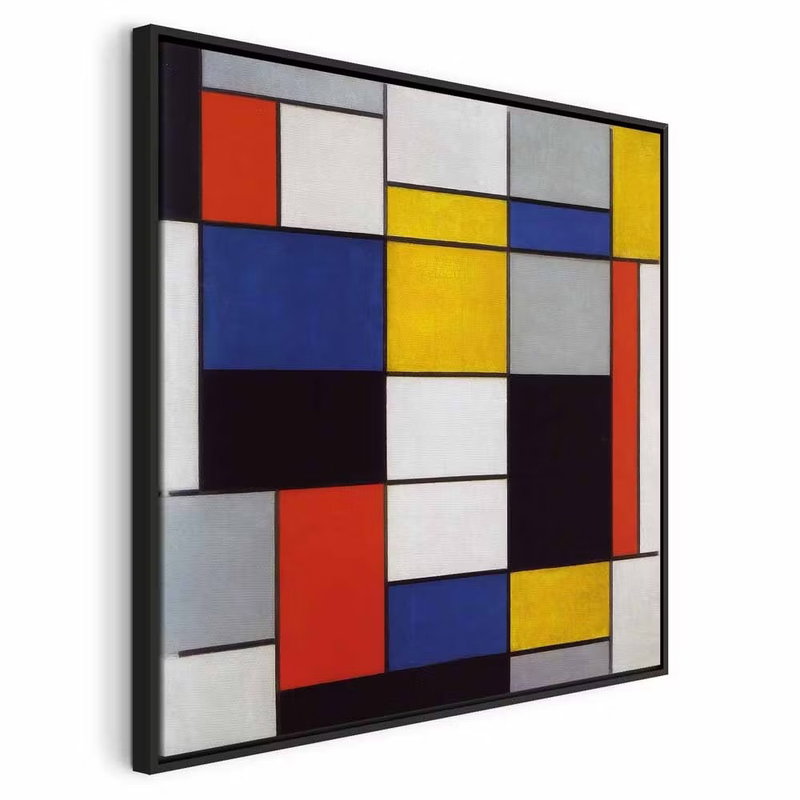
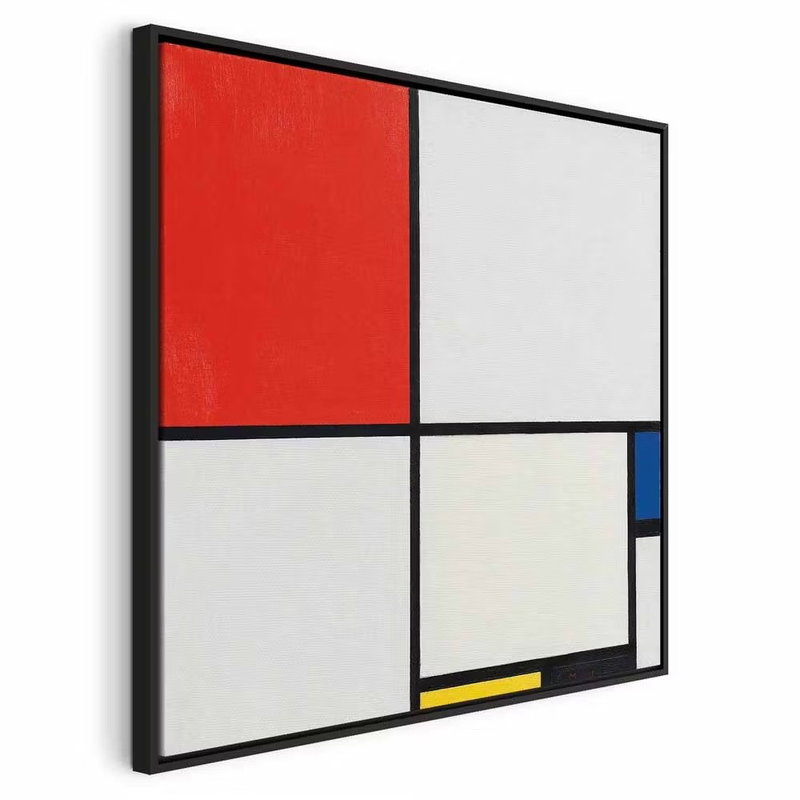
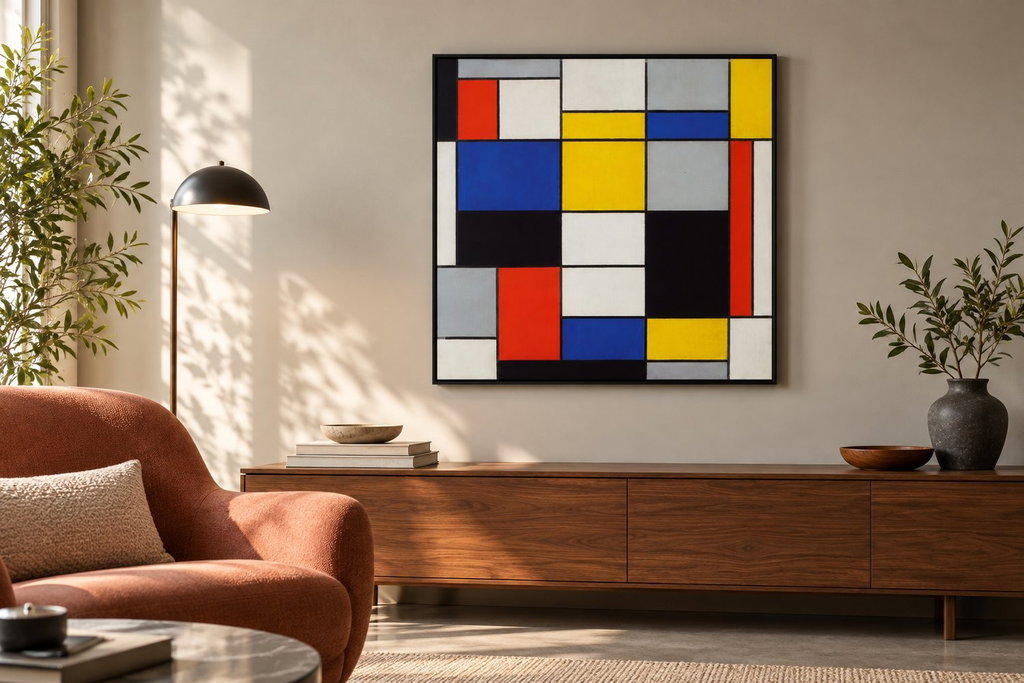
Two compositions using the same primary colours can feel very different. A large red plane draws attention to one part of the picture, while smaller yellow and grey rectangles distribute it across the surface. Compare how much space is occupied by white, black and colour. This helps you choose between a strong focal point and a composition that works more quietly with the surrounding interior.
Let the frame continue the picture’s lines
A black outer frame can connect the dark grid within the image, while a natural-coloured frame creates a different relationship with timber, fabrics and wall colour. Check the options offered for the actual product. Consider more than the frame alone: its width and tone affect the outermost colour planes. Leave space around the picture so that its edge and the room’s other lines have a considered relationship.
Look beyond the geometric compositions
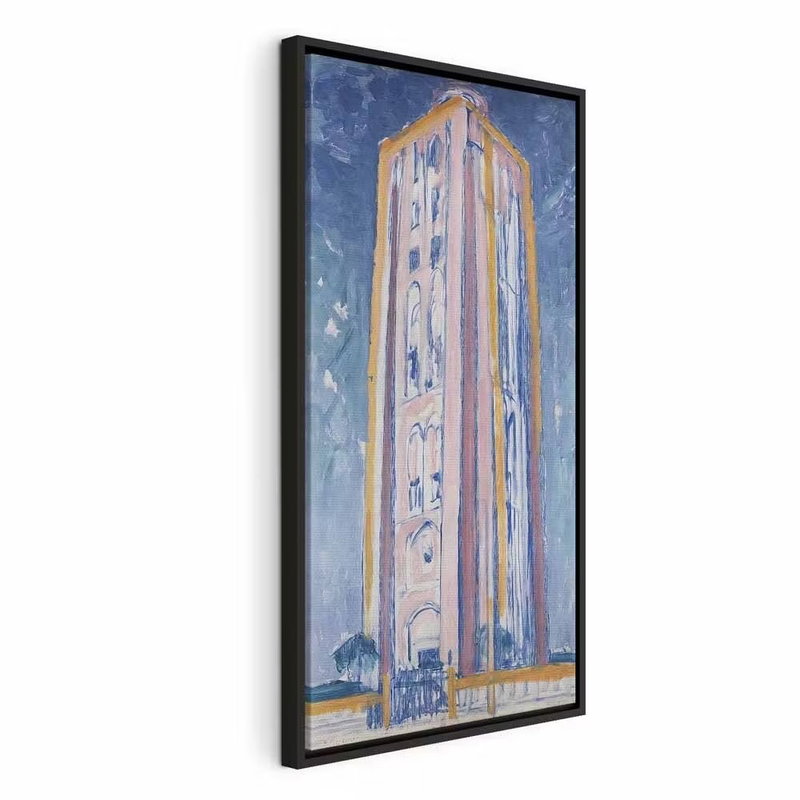
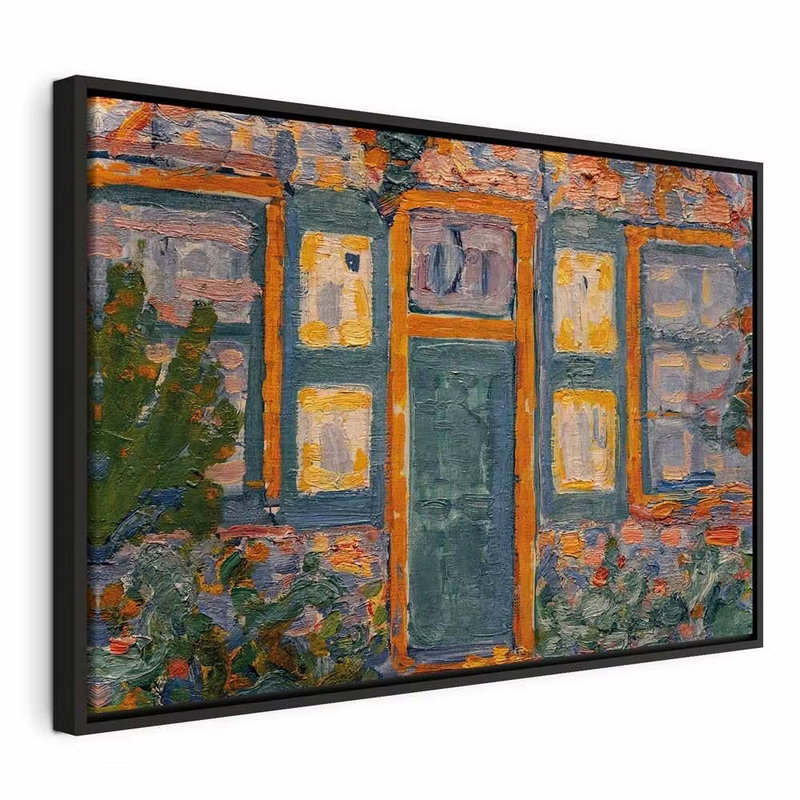
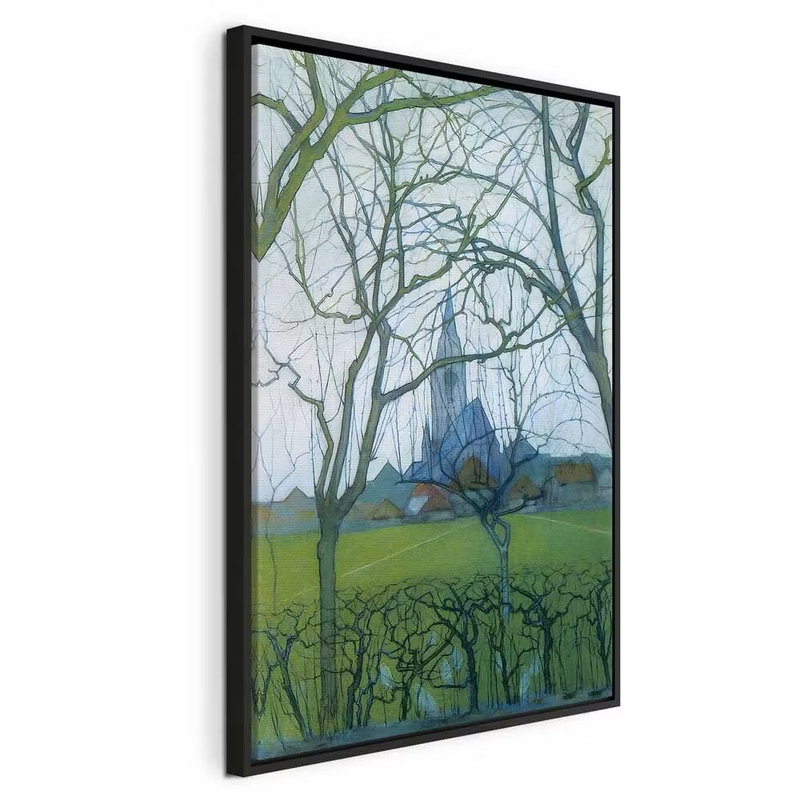
The selection includes more than the familiar geometric works. The lighthouse’s vertical form, the church behind bare branches and the house façade’s door and windows offer other arrangements. They may suit a search for an artistic connection to architecture or nature. These are reproduction subjects; judge cropping and colour reproduction from the actual product image. Compare pictures individually even when several have similar names.
Choose a format for the subject’s rhythm
A close network of small rectangles rewards viewing both nearby and from a distance. Large colour planes above a sofa work differently from a narrow tower on a limited wall area. Measure the intended position and check the available dimensions. If you combine several works, a recurring colour can connect them while different image directions provide variation. Use the products’ actual proportions when planning the spaces between them.
Plan the picture’s place in the acoustic setting
The sound-absorbing construction behind the print can help reduce reverberation. The result depends on room surfaces, placement and total absorbing area. Colour and artist name do not indicate acoustic performance. Read the model’s product information and follow its mounting instructions when selecting wall fixings. Also check the care guidance for the canvas and frame so that each part receives suitable treatment.