






• Free shipping
  • 5-year warranty
  • Fast delivery

How do you soundproof a room with sound absorbers?

Soundproofing a room with sound absorbers is about reducing reverberation, echoes, and harsh sound reflections inside the room. When sound bounces off the ceiling, walls, floor, glass, and furniture, the room often feels noisy even if the sound source isn’t particularly loud. Voices can blend together, conversations become tiring, and the noise level builds up quickly when several people are in the same space.

Sound absorbers work by absorbing some of the sound energy instead of allowing it to bounce off surfaces. This makes them particularly useful in rooms where the problem is poor acoustics, long reverberation, or disruptive echoes. They are used in homes, offices, schools, restaurants, studios, and other spaces where a softer and clearer acoustic environment is desired.

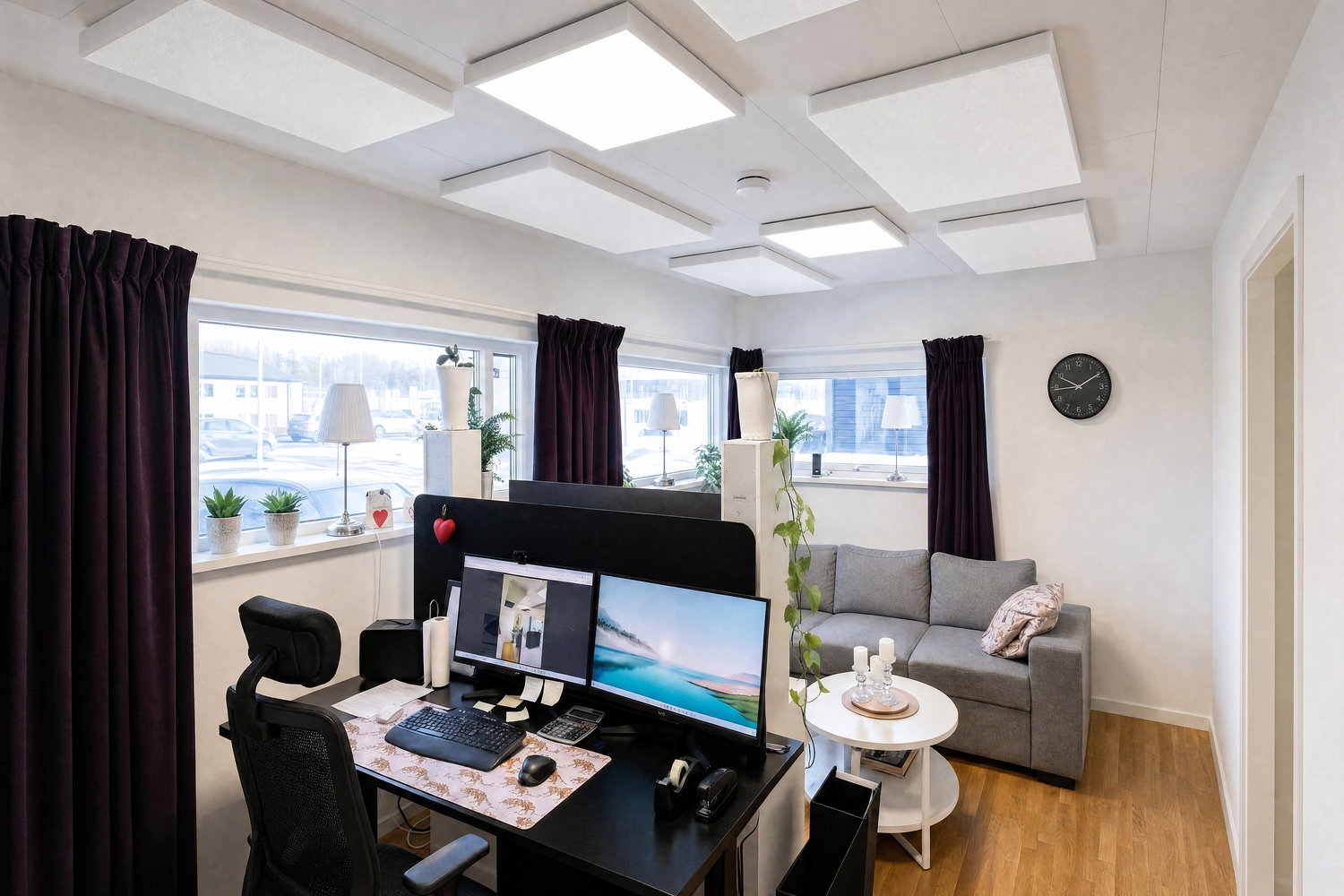
SilentDirect generally recommends starting with the ceiling when sound-absorbing materials are used to treat an entire room. The ceiling is often the largest unobstructed surface in the room and can reduce reflections without interfering with furniture, windows, or wall surfaces. Treating the ceiling first often provides a solid foundation, especially in rooms with hard floors, large glass surfaces, high ceilings, or a lot of conversation.

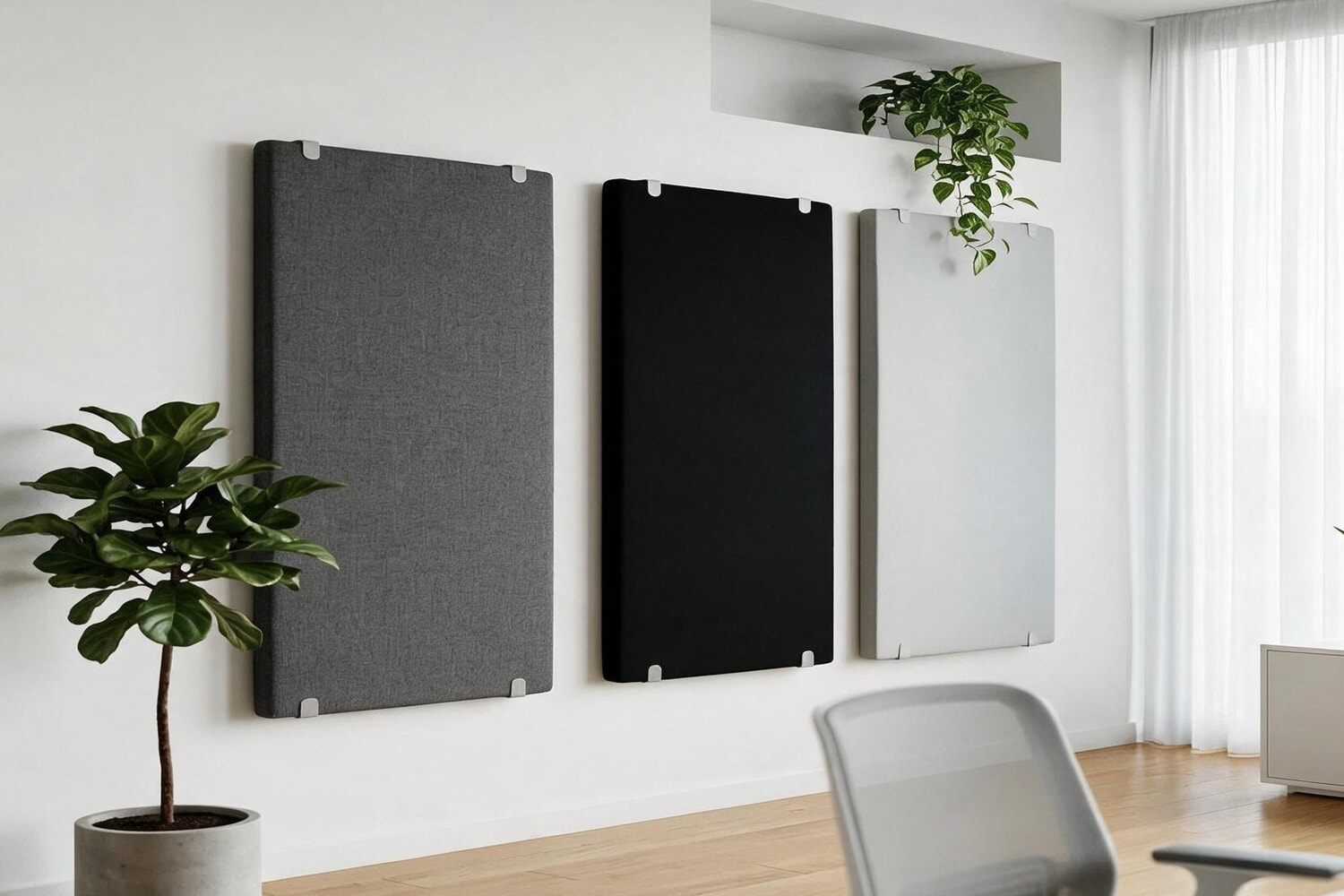
After treating the ceiling, wall absorbers can be used to dampen distinct side reflections and make the room even quieter. This is particularly relevant behind workstations, at conference tables, behind sofas, along hallways, or on large empty wall surfaces. Curtains can help near windows and glass walls, while room dividers and table screens can create more defined zones in open environments.

It is important to distinguish between sound absorption and sound insulation. Sound absorbers improve the acoustic environment inside a room, but they do not typically block sound traveling through walls, ceilings, floors, or doors. If the goal is to reduce echoes and make the room more comfortable, sound absorbers are the right solution. If the goal is to prevent sound from traveling between rooms, sound insulation involving mass, density, and decoupling is required instead.

Recommended Products

Important things to know before choosing sound absorbers.

Sound absorbers reduce echoes, reverberation, and sound reflections inside a room. They are not the same as sound insulation and do not normally block sound between rooms.
The ceiling is usually the most effective first surface to treat when addressing general room acoustics. Wall absorbers complement this treatment when large wall surfaces create distinct reflections.
Curtains and room dividers can help with glass, open spaces, and flexible zones. Larger rooms, high ceilings, and hard surfaces often require more absorptive surface area.
Placement should be guided by where sound bounces and where people spend their time. A good solution makes conversations clearer and the room less tiring to be in.

How many sound absorbers do you need?

If you’re unsure how much sound-absorbing surface area is needed, you can use SilentDirect’s sound calculation tool. It helps you estimate your needs based on the room’s size and acoustic conditions.

Go to the sound insulation and sound absorption calculator

Here are some benefits of installing sound absorbers

Sound Reduction
Sound absorbers reduce reverberation and lower the noise level in a room. This is particularly useful in environments with a lot of background noise or where conversations and work need to be conducted in peace and quiet.

Better Work Environment
Reduced noise and less reverberation create a more comfortable work environment. This can help reduce stress and improve concentration for people working or studying in the room.

Improved sound quality
Sound absorbers can improve sound quality by reducing unwanted echoes and distortions. This is particularly important in rooms where music or speech needs to be reproduced clearly, such as in conference rooms, meeting rooms, or auditoriums.

Increased privacy
By reducing sound transmission between rooms, sound absorbers can help create a more private and confidential work environment. This is particularly relevant in open-plan offices where multiple people share the same space.

Reduced noise
If the room is used for activities that generate a lot of noise, such as phone calls or machinery operations, sound absorbers can help minimize noise and create a more productive work environment.

Energy and Cost Efficiency
By reducing reverberation and improving the acoustic environment, it may be less necessary to raise the volume to drown out background noise. This can lead to energy savings and lower costs for sound insulation or acoustic treatment in the long term.

Aesthetic Enhancement
Sound absorbers can also be used as design elements to enhance the aesthetics of a room. They come in various shapes, colors, and materials, allowing them to be customized to match the room’s interior design.

How to Soundproof a Room with Sound Absorbers

To effectively soundproof a room, you first need to determine whether the problem is actually the acoustics inside the room. If there is an echo, voices are hard to make out, or the noise level feels harsh and tiring, sound absorbers are often the right solution. If, on the other hand, the problem is that sound is coming through the wall, floor, ceiling, or door, you need to look into sound insulation.

1. Listen for reverberation and harsh reflections

Start by listening in the room during normal use. Clap your hands, talk at a normal conversational volume, and note whether the sound lingers. Rooms with hard floors, large windows, bare walls, concrete, tile, or high ceilings often have a long reverberation time. This is exactly the type of problem that sound absorbers are designed to reduce.

2. Start with the ceiling

SilentDirect generally recommends sound-absorbing the ceiling first when soundproofing an entire room. The ceiling is often a large, open surface and affects many sound reflections in the room. Products such as PES Ceiling, PES Ceiling Deep Absorb, or PES Allergy Ceiling are suitable when you want to reduce reverberation from the ceiling surface and create clear basic sound absorption.

3. Supplement with wall absorbers where sound bounces

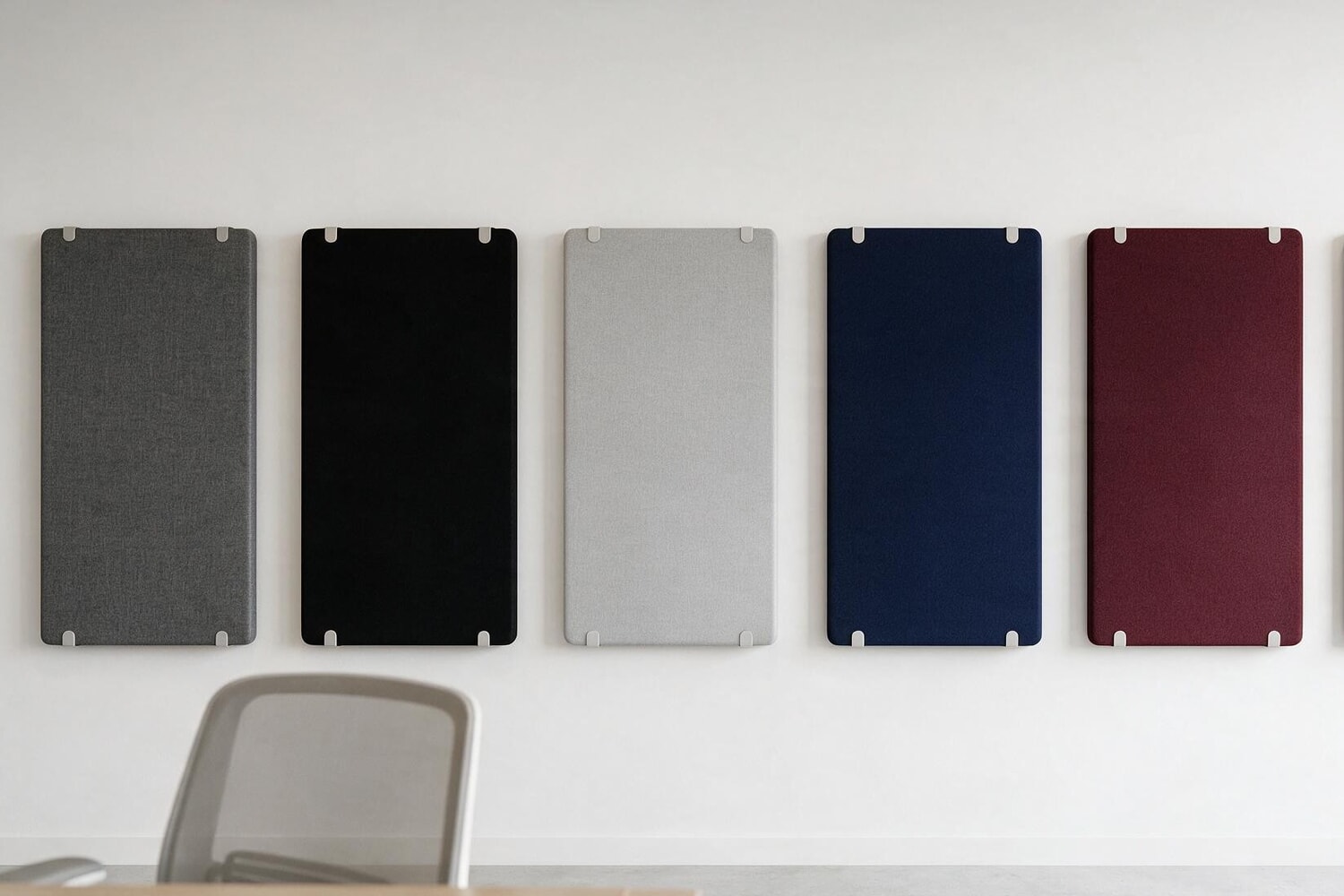
Once the ceiling has been addressed, you can move on to the walls. Large empty wall surfaces, as well as walls behind sofas, desks, conference tables, or dining areas, are often good surfaces to treat. PES Wall is a suitable flexible standard solution, while PES Wall Deep Absorb may be more appropriate in larger or noisier rooms.

4. Use curtains on windows and glass partitions

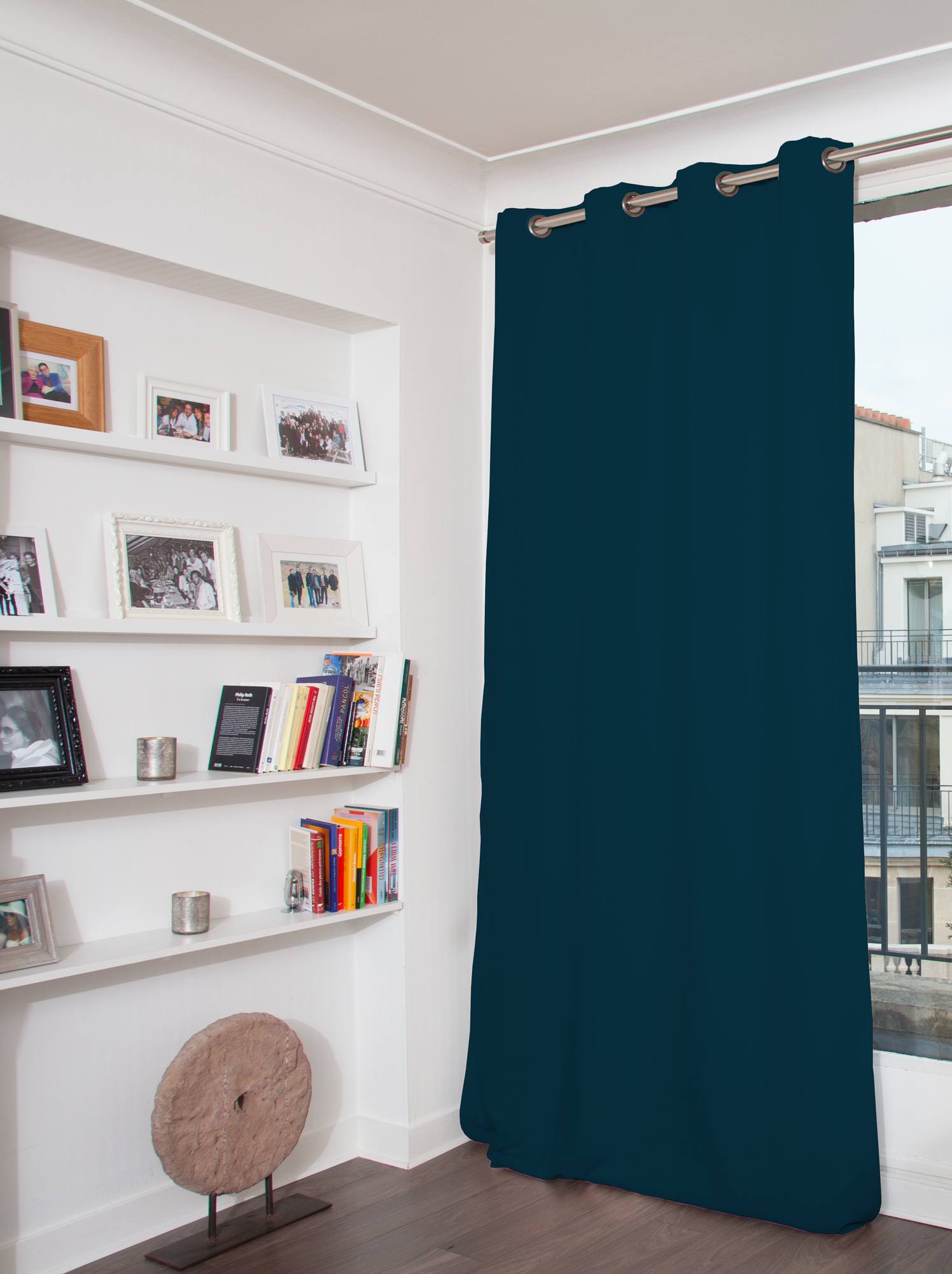
Glass clearly reflects sound and can make a room feel harsh even if the walls and ceiling are partially treated. In such cases, Silent Curtain Feltra can be used to soften the acoustic environment near windows, glass partitions, or openings. Curtains are particularly useful when you want to combine acoustics with a textile-based, cozier aesthetic.

5. Create quieter zones in open spaces

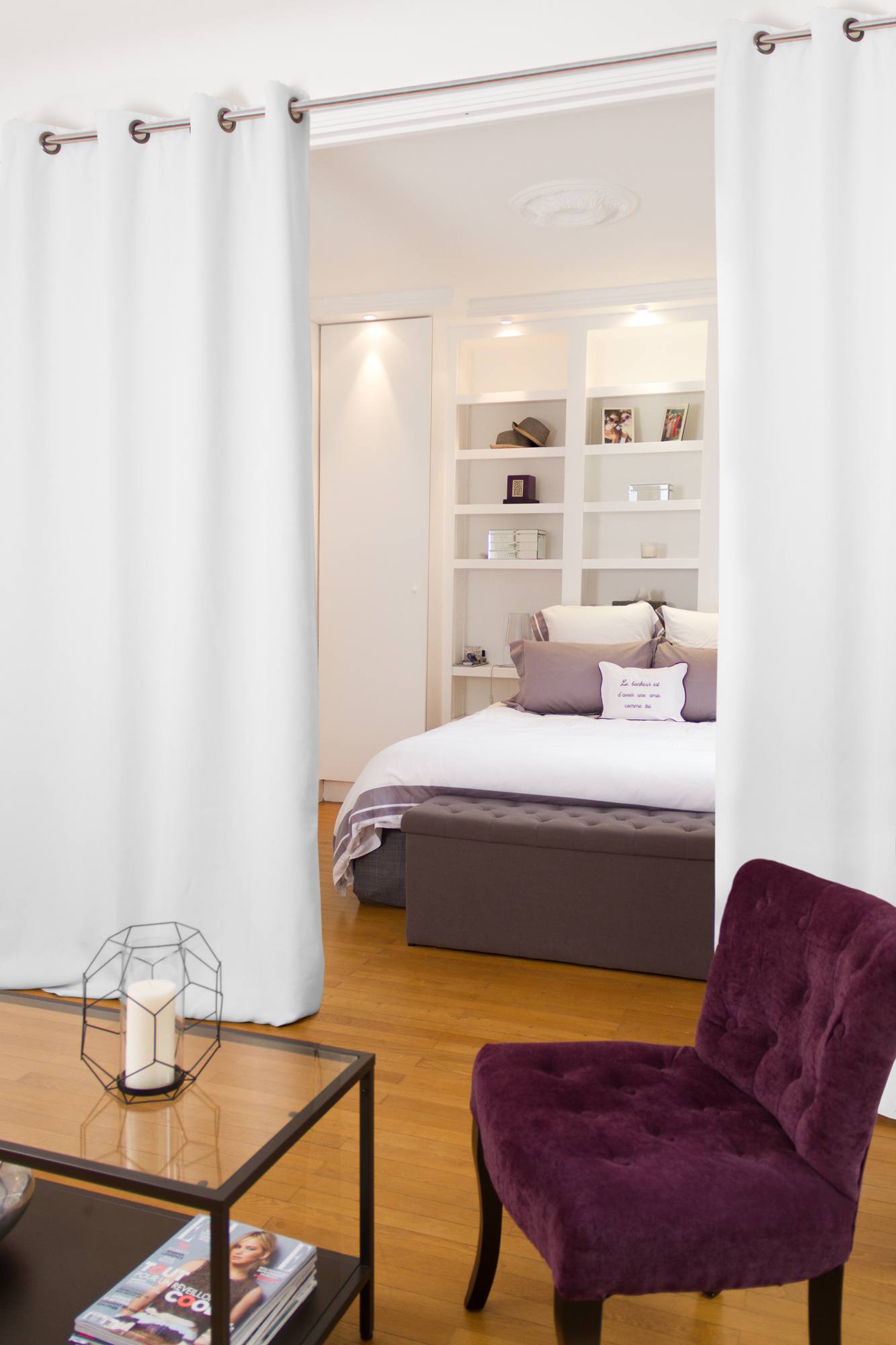
In open-plan layouts, offices, school environments, or larger common areas, sound may need to be dampened near the places where people sit and talk. Silent Divider Feltra can help divide the room while also providing an absorptive surface. At desks, the Bulletin Desk Screen can serve as a complement near the workspace.

6. Adjust the amount of sound absorbers to suit the room

A small bedroom does not need the same amount of sound-absorbing material as a dining room, an office, or a room with high ceilings. The larger the room, the harder the surfaces, and the more people present at the same time, the more sound-absorbing surface area is typically needed. If the acoustics still feel harsh after the first step, you should add more strategically rather than placing panels randomly.

7. Check the results and make adjustments

After installation, listen to the room again. Conversations should sound clearer, sound should fade out more quickly, and the room should feel less harsh. If certain areas still feel noisy, wall absorbers, curtains, or room dividers can be placed where reflections are most pronounced. The goal is a balanced acoustic environment, not a dead or stuffy room.

Selected Articles

Eco - Here's how to reduce your eco footprint.

Different Types of Sound Absorber Installation

What makes a sound-absorbing material effective?

Products for soundproofing rooms with sound absorbers.

To soundproof a room in a well-thought-out way, products should be selected based on the surface area, room type, and the amount of reverberation that needs to be reduced. Ceiling absorbers often provide the best initial effect, while wall absorbers, curtains, and room dividers can complement them in areas where sound continues to reflect.

PES Ceiling is a flexible ceiling absorber for offices, schools, homes, and public spaces where the ceiling surface can be used to reduce reverberation and create a quieter environment.

PES Ceiling Deep Absorb is suitable for larger rooms, rooms with high ceilings, or environments where a thicker 100 mm ceiling absorber is needed for more thorough sound absorption.

PES Allergy Ceiling is ideal when you want to sound-absorb the ceiling with an allergy-friendly absorber that does not have a fabric-covered surface.

PES wall is a comprehensive wall solution for rooms where speech, echoes, and harsh wall reflections need to be dampened after the main ceiling surface has been treated.

PES Wall Deep Absorb is suitable when walls require more powerful sound absorption, such as in larger or noisier rooms.

Wall Square is a square wall absorber that can be placed individually or in groups to create flexible and discreet wall sound absorption.

Silent Curtain Feltra helps soften the acoustic environment near windows, glass partitions, and open spaces where hard reflections might otherwise dominate.

Silent Divider Feltra can be used to divide open spaces while providing an absorbent textile surface that reduces disruptive reflections and speech noise.

Sound-Absorbing Ceilings – Effective Solutions for Better Acoustics

Sound-absorbing a ceiling is one of the most effective ways to improve the acoustics in a room. Since the ceiling covers a large surface area, it plays a crucial role in how sound is reflected and dispersed. Installing sound absorbers on the ceiling can significantly reduce reverberation, noise, and unwanted sound reflections, creating a more pleasant and peaceful indoor environment.

Whether in offices, schools, restaurants, conference rooms, or home environments, ceiling-mounted sound absorbers can effectively contribute to better acoustic comfort. They come in several varieties—from full-coverage suspended ceilings to flexible hanging panels—and can be tailored to the room’s needs and budget.

One of the biggest advantages of sound-absorbing ceilings is that they reduce reverberation and improve speech intelligibility. When sound waves are absorbed by the panels instead of being reflected between walls and the ceiling, conversations and other forms of communication become clearer. This is particularly important in environments where many people are present at the same time, such as restaurants, schools, and open-plan offices. Reducing noise levels creates a more pleasant and focused atmosphere.

Ceiling absorbers are also an excellent solution for dampening disruptive noise. In open-plan offices, conference rooms, and other work environments, reflected sound can become a problem, but by strategically placing absorbers on the ceiling, you can effectively reduce noise levels and create a better work environment. In addition, there are aesthetic and flexible solutions that can be adapted to the room’s design. Modern sound absorbers come in a variety of colors, shapes, and styles, making it easy to integrate them into the existing interior design.

To achieve the best results, there are several ways to install sound absorbers on the ceiling. The most effective solution is to use a full-coverage sound-absorbing suspended ceiling, where the entire ceiling surface is covered with acoustic panels or sound-absorbing tiles. This provides maximum sound attenuation and is an ideal solution for new construction or major renovations.

If a full-coverage suspended ceiling is not possible, good results can be achieved by covering 20–30% of the ceiling surface with sound-absorbing material. A flexible method is to use suspended sound absorbers, also known as baffles, which are mounted to the ceiling using brackets. This solution is particularly useful when you want to address specific problem areas without covering the entire ceiling. One of the biggest advantages of suspended absorbers is that they can be easily adjusted and positioned in front of cables or other obstacles without requiring permanent changes to the ceiling.

To achieve the best possible sound absorption, absorbers should be placed where sound reflections are most disruptive. Common areas to focus on include above conversation areas, such as conference tables and seating groups; above workstations in open-plan offices; and near sound sources such as speakers or musical instruments.

When selecting sound absorbers, it’s important to consider material, thickness, and design. Absorbers are available in a variety of materials, including mineral wool, polyester fiber, and acoustic foam. Thicker and denser materials generally provide better sound absorption. For those seeking a stylish solution, there are many options featuring modern designs and customizable colors. Depending on your budget and the scope of the project, you can choose between full-coverage ceiling panels or more flexible solutions with suspended absorbers.

Sound-Absorbing Wall – Create a Better Acoustic Environment with Sound Absorbers

Sound-absorbing walls are one of the most effective ways to improve the acoustics in a room. By strategically placing sound absorbers, you can reduce echoes, minimize unwanted sound reflections, and create a more pleasant listening environment. Whether it’s an office, a home theater, a restaurant, or a classroom, wall absorbers play a crucial role in optimizing sound quality and reducing disruptive noise levels.

To achieve the best possible sound absorption, absorbers should be placed on at least two walls, preferably in an “L”-shaped pattern. By selecting one long wall and one short wall, you can effectively break up sound waves and prevent them from bouncing uncontrollably throughout the room. However, you should avoid installing absorbers on walls that are directly opposite each other, as this can create a “bounce effect” where sound continues to reflect without being sufficiently absorbed.

Once the initial installation is in place, it’s important to evaluate the room’s acoustics and, if necessary, add more absorbers. The acoustic environment is influenced by the room’s size, furnishings, and surfaces, making it crucial to tailor the solution to the specific conditions. A flexible strategy is to start with a basic installation and then fine-tune it by adding more sound-absorbing elements where needed.

When selecting sound absorbers, it is important to use acoustic panels specifically designed to absorb sound. These come in various sizes, thicknesses, and materials, allowing you to customize both sound absorption and aesthetics. Absorbers can be made of materials such as acoustic foam, mineral wool, wood fiber, or polyester, and the choice of material affects both the effectiveness of sound absorption and the room’s design.

In addition to traditional sound absorbers, thick fabrics can be used as a complementary sound-dampening solution. To achieve the best possible sound absorption, the fabric should be hung a few centimeters away from the wall, creating an air gap that enhances the sound-absorbing effect. This is an aesthetically pleasing solution that can be naturally integrated into the room’s interior design.

The placement of absorbers is another important aspect to consider. To capture sound waves traveling through the room, they should be placed at eye level or slightly higher, depending on the furniture arrangement and sound sources. Symmetrical placement not only creates a better acoustic environment but also contributes to visual balance in the room.

For those seeking a more flexible solution, modular systems or portable sound absorbers can be used. These allow you to adjust and reposition sound absorption as needed, which is particularly useful in environments where acoustic conditions may vary over time, such as conference rooms, event venues, and studios.

Sound-absorbing wall treatments can effectively improve acoustics and create a more pleasant sound environment. Strategically placing absorbers on a long wall and a short wall in an “L” pattern can break up sound waves and reduce reflections. Using acoustic panels, thick fabrics, or other sound-absorbing materials ensures optimal sound absorption. By placing the absorbers at the correct height and creating visual balance in the room, you achieve not only a functional solution but also an aesthetically pleasing installation. For those seeking additional flexibility, modular systems or portable screens can be used as complementary solutions.

Sound-Absorbing Curtains – An Effective Solution for Better Acoustics and Sound Comfort

Improving the acoustics in a room can have a significant impact on comfort and well-being. One of the most effective and aesthetically pleasing solutions is to use sound-absorbing curtains. These curtains are specifically designed to absorb sound waves and reduce sound reflections, creating a calmer and more harmonious environment. By reducing reverberation and unwanted echoes, they can improve both speech intelligibility and the overall sound quality in a room.

Sound-absorbing curtains work by reducing the amount of sound reflected from hard surfaces such as walls, floors, and windows. They are typically made of thick, dense materials like velvet, wool, or specially treated synthetic fibers, which have high density and thus good sound-absorbing properties. The thicker and heavier the curtains are, the better their sound-dampening effect. Some models also feature a lining made of an additional sound-absorbing material, which enhances their ability to reduce noise.

To maximize sound dampening, it’s important that the curtains cover the entire window and ideally extend a few centimeters above and to the sides of the window frame. This prevents sound from leaking in or out around the edges. Curtains that extend from ceiling to floor are particularly effective because they cover a larger surface area and thus reduce sound reflections from both windows and walls.

The placement of sound-absorbing curtains has a major impact on their effectiveness. In addition to hanging them by windows, you can also use them to cover entire walls or corners where sound reflections are most pronounced. This creates more even sound absorption throughout the room. Another method for increasing sound absorption is to use double layers of curtains, with one layer hanging closer to the window and another further into the room. This technique creates an air pocket between the layers, which further reduces noise levels.

In addition to improving acoustics, sound-absorbing curtains offer several other benefits. They can block out noise from outside, making them ideal for rooms facing busy streets or other noisy environments. Curtains made of thick, dense materials also serve as extra insulation, helping to keep the room cooler in the summer and warmer in the winter—which can lead to lower energy consumption and reduced heating costs. In addition, sound-absorbing curtains come in a wide variety of colors, patterns, and styles, making it easy to find a design that complements your home’s decor while improving the acoustic environment.

Sound-absorbing curtains are a simple, stylish, and effective solution for creating more pleasant acoustics at home or in the workplace. By choosing the right materials and placing them strategically, you can drastically reduce sound reflections and create a more harmonious and quiet environment. Whether you live in an urban setting with a lot of ambient noise or simply want to improve the sound quality in a specific room, sound-absorbing curtains can be a valuable investment that combines function with style.

Sound-Absorbing Fabric Room Dividers – A Flexible Solution for Better Acoustics and Comfort

Creating a quiet and comfortable environment at home or at work can be a challenge, especially in open spaces or rooms with large openings and no doors. An effective solution for improving acoustics while creating a more functional interior design is to use fabric sound-absorbing room dividers. These dividers absorb sound waves, reduce sound reflections, and contribute to a calmer and more pleasant atmosphere.

Sound-absorbing room dividers work by reducing echoes and preventing sound from bouncing off hard surfaces such as walls, floors, and ceilings. They are often made of dense and heavy materials like velvet, thick cotton, or specially designed acoustic textiles, which effectively absorb sound waves and prevent them from spreading further into the room. The thicker and denser the material, the better the sound absorption. For maximum effectiveness, some models feature multiple layers, combining an outer decorative layer with an inner sound-absorbing layer to further improve acoustics.

To provide the best possible sound absorption, room dividers should be large enough to cover entire openings or partition off large sections of a room. The larger the area covered, the more effective the sound absorption will be. By using room dividers strategically, you can not only improve acoustics but also create more private zones within large, open spaces. This is particularly beneficial in open-plan offices, restaurants, home offices, and other environments where both acoustic comfort and flexibility are key factors.

Sound-absorbing room dividers are particularly useful in open floor plans where there are no doors or fixed walls. They can be used as flexible barriers between different rooms or areas to dampen sound and create a more structured layout. If an opening lacks a door, a sound-absorbing room divider can serve as a flexible solution that reduces sound transmission between rooms. Placing a divider in front of existing doors or windows can further enhance sound insulation, reducing both internal and external noise levels.

To optimize the effectiveness of sound-absorbing room dividers, they should be installed securely and flush with the floor to minimize sound leakage beneath and above them. Use sturdy rod systems or tracks to ensure that the dividers hang straight and steady. By placing the room dividers where they block the most sound—for example, at openings between rooms, near windows, or next to noise sources—sound absorption can be optimized. For added flexibility, modular room dividers can be used, allowing them to be adjusted and moved as needed depending on the room’s use.

In addition to their acoustic benefits, sound-absorbing room dividers offer several other practical advantages. They can enhance a room’s aesthetics and are available in a wide variety of colors, patterns, and styles, making it easy to match them to the decor of your home or office. In addition to being decorative, they can create visual barriers and enhance privacy in shared spaces, making them particularly useful in open-plan offices, home offices, and studio environments. Just like sound-absorbing curtains, thick fabric room dividers can also contribute to better energy efficiency by keeping heat inside in the winter and blocking heat from entering in the summer, which can lead to lower energy costs.

Sound-absorbing fabric room dividers are a smart, flexible, and aesthetically pleasing solution for improving acoustics in various environments. By absorbing sound waves and preventing them from spreading, these dividers create a quieter and more harmonious environment. Whether you want to divide a large room, cover an opening without a door, or reduce noise levels in an office or home, sound-absorbing room dividers are an effective and stylish option.

Room Dividers & Partition Walls – Flexible Solutions for Better Acoustics

Creating a comfortable acoustic environment is crucial for both productivity and well-being, especially in open-plan offices, home offices, and other shared spaces. Room dividers and acoustic panels are an effective and flexible solution for reducing noise levels and improving acoustics. These products act as sound-absorbing barriers that dampen echoes and break up sound waves, creating a quieter and more private environment.

When sound waves hit hard surfaces such as walls, floors, or ceilings, they are reflected back into the room, which can lead to echoes and higher noise levels. Room dividers and partition walls absorb and dampen these reflections, reducing noise and making it easier to concentrate. By strategically placing partition walls, you can create more defined sound zones, which is particularly useful in open-plan offices, phone booths, conference rooms, and studio environments.

The choice of materials is crucial to how effective a room divider or acoustic screen is in terms of sound attenuation. Soft and porous materials such as fabric-covered screens, acoustic foam, and fiber materials have high sound absorption capabilities and help reduce noise levels by converting sound waves into thermal energy. These materials capture both high and low frequencies, making them an excellent choice for creating a more controlled acoustic environment.

The placement of room dividers and partition walls is crucial to their effectiveness. To achieve the best results, they should be placed between sound sources and areas where sound is reflected—for example, between desks in an office or along the walls of a larger room. If noise levels are high in a particular area, a strategically placed room divider can help break up and absorb the sound, creating a quieter and more pleasant atmosphere.

One of the biggest advantages of room dividers and partition walls is their flexibility. Since they are easy to move, they can be easily adapted to changing needs and new layout solutions. This makes them particularly useful in environments where the workspace needs to be reconfigured regularly, such as in coworking spaces, open-plan offices, and conference rooms. In addition to improving the acoustic environment, they can also serve as visual dividers, creating a more structured and private work environment.

Using room dividers and partition walls is a simple and cost-effective way to reduce noise levels and improve the acoustics in a room. By choosing the right materials and placing them strategically, they can effectively dampen noise and create a more harmonious acoustic environment. Their flexibility makes them an ideal solution for a wide range of applications, from offices and conference rooms to home environments and studios. With the right selection and placement, room dividers and partition walls can contribute to a more pleasant and productive environment where acoustic comfort is a priority.

Soundproof the Room with a Rug – A Simple and Effective Solution for Better Acoustics

Improving the acoustics in a room doesn’t have to be complicated or expensive. One of the most effective—and aesthetically pleasing—solutions is to use floor mats. Rugs act as natural sound absorbers by capturing and dampening sound waves, which reduces reverberation and creates a more harmonious acoustic environment. Whether you’re looking to reduce noise in an office, create a more relaxed atmosphere in a living room, or improve sound quality in a home theater, a well-placed rug can make a big difference.

When sound waves hit hard surfaces such as hardwood floors, tile, or concrete, they are reflected and amplified, which can cause echoes and create an uncomfortable acoustic environment. A rug absorbs these sound waves, reduces sound reflection, and creates a more subdued and pleasant atmosphere. The thicker and more textured the rug, the better its sound-absorbing properties. The choice of material also plays an important role—shaggy rugs with long pile, such as ryamats, are particularly effective because their fibers trap and dampen sound waves better than thinner rugs.

For those seeking maximum sound absorption, wall-to-wall carpeting is an excellent option. By covering the entire floor surface, it creates uniform sound absorption throughout the room, making it ideal for offices, conference rooms, and home theaters where acoustic comfort is crucial. Certain materials, such as wool or specially designed acoustic carpets, offer even better sound absorption and can be a long-term investment for those who want to optimize their acoustic environment.

The placement of carpets is also a key factor in maximizing their sound-absorbing effect. Placing a large carpet in the center of the room helps break up sound reflections and create a quieter environment. In spaces where noise levels tend to be high—such as playrooms, open-plan offices, or common areas—a strategically placed rug can be crucial for reducing noise and improving the work and living environment.

To further enhance the sound-absorbing effect, rugs can be combined with other acoustic solutions such as room dividers, partition walls, and acoustic panels. By using multiple sound-absorbing methods together, you can create a well-balanced acoustic environment where both reverberation and background noise are reduced.

A rug is a simple yet highly effective solution for improving the acoustics in a room. Whether you choose a large, thick rug or wall-to-wall carpeting, you’ll notice a clear difference in sound comfort. By absorbing sound waves, carpets reduce reverberation and echoes, creating a quieter and more pleasant environment. With the right choice of carpet and strategic placement, you can create a room that not only looks stylish but also contributes to a more harmonious acoustic environment.

Use sound-absorbing furniture – Create a quieter and more comfortable environment

Furnishing a room with soft furnishings is one of the simplest and most effective ways to improve acoustics and reduce unwanted noise. By strategically placing sound-absorbing furniture and textiles, you can create a more pleasant and harmonious acoustic environment while maintaining the room’s aesthetic appeal.

Upholstered furniture works by absorbing sound waves rather than reflecting them. Hard surfaces such as floors, ceilings, and walls allow sound to bounce freely, creating reverberation and echoes, while textiles and porous materials capture sound waves and convert them into thermal energy. The more soft materials you incorporate into the room, the better the sound absorption—and thus the overall acoustic comfort.

Large sofas and armchairs are excellent sound absorbers because their padding and fabric upholstery effectively reduce sound reflections. By placing them strategically around the room, you can optimize their sound-dampening effect. For best results, arrange the furniture so that it breaks up sound waves and prevents them from bouncing freely around the room.

Seat cushions and pillows are not only a source of comfort but also help dampen sound. The thicker and softer the material you choose, the better the sound absorption will be. By placing cushions and pillows on chairs, benches, and other seating areas, you can further improve the room’s acoustics.

Fabric lampshades are an often-overlooked solution for sound absorption. Although their primary function is to diffuse light, they also help reduce sound reflections from hard surfaces. By choosing lampshades made of soft materials, you can easily incorporate additional sound absorption without negatively impacting the room’s decor.

Canvas art and wall textiles are another effective solution for reducing sound reflections. Artwork made of sound-absorbing materials or large textiles hung on the walls can serve both as decorative elements and as functional acoustic enhancers. This is a particularly good solution for rooms with bare walls where sound can easily bounce around freely.

Closets and clothes racks can also serve as unexpected sound absorbers. The clothes in a closet help dampen sound and can be particularly effective in bedrooms and hallways where sound insulation is important. An open clothes rack placed against a wall can also help reduce sound reflections.

To achieve an optimal acoustic environment, you should use a combination of different sound-absorbing furniture and textiles. Each individual component makes a small difference, but together they create a significant improvement. By combining sofas, throw pillows, soft lampshades, canvas art, and other textiles, you can effectively reduce noise levels and create a more balanced acoustic environment.

Only your imagination sets the limits for how you can use soft furnishings to improve acoustics. By thinking creatively and using elements such as decorative drapes, sound-absorbing curtains, or thick rugs, you can further enhance the effect. When combined, furniture and textiles not only contribute to a better acoustic environment but also make the room more inviting and cozy.

Using upholstered furniture as sound absorbers is a practical and aesthetically pleasing solution for creating a more pleasant and comfortable environment. By choosing the right furniture and placing it strategically, you can significantly improve the acoustics in a room. Whether you live in an apartment, work in an open-plan office, or run a business where acoustic comfort is important, soft furniture can help reduce noise and create a more harmonious sound experience.

Sound Absorbers Behind, Under, and on Top of Furniture – Sound Dampening Without Affecting the Room’s Aesthetics

Creating a pleasant acoustic environment in a room can be a challenge, especially when the walls and ceiling are already fully covered with furniture and decorations. A smart and discreet way to improve acoustics without making visible changes is to place sound-absorbing materials behind, under, and on top of existing furniture. By utilizing these surfaces, you can effectively reduce sound reflections and reverberation while keeping the room’s design unchanged.

There is often unused space behind bookshelves that can be used for sound absorption. By mounting sound absorbers on the wall behind the bookshelf, you can dampen sound waves and prevent them from reflecting back into the room. This is a particularly effective solution in living rooms, libraries, and office environments where bookshelves cover large portions of the wall surface. A product with a self-adhesive backing, such as SilentDirect Egg, makes installation simple and hassle-free without requiring any major modifications.

Sofas and armchairs are other pieces of furniture behind which sound absorbers can be placed to dampen sound reflections. In living rooms where sound from the TV or conversations often bounces off the walls, this can be a simple yet highly effective solution. By installing sound absorbers behind seating furniture, you can create a more subdued acoustic environment that makes conversations clearer and reduces distracting background noise.

There’s another opportunity to improve acoustics under tables and chairs. Hard surfaces, such as wooden or metal legs, can amplify sound by reflecting sound waves down toward the floor. By attaching sound absorbers under tabletops and chair seats, you can reduce sound amplification and create a quieter environment. This is particularly useful in dining rooms and home offices where many sound sources contribute to high noise levels.

Under the bed, sound-absorbing materials can dampen sound that bounces between the floor and the underside of the bed, which is particularly effective in apartments with thin floors and walls. This can contribute to a quieter sleeping environment by reducing sound that would otherwise travel through the building structure.

The tops of tall bookshelves and cabinets are another surface that’s often overlooked when it comes to sound dampening. Sound reflected from the ceiling can be amplified if there’s no material to break up the sound waves. By placing sound-absorbing material on top of tall furniture, you can reduce these reflections and thereby create a better acoustic balance in the room.

Closets are another place where sound absorbers can be used. By placing sound-absorbing material on top of the closets, you can reduce sound reflections and create a quieter atmosphere in the bedroom. This is particularly beneficial in homes where sound insulation between rooms is inadequate and noise from neighbors or other rooms easily penetrates.

One of the best solutions for soundproofing these hidden surfaces is products with a self-adhesive backing, such as SilentDirect Egg. These sound absorbers can be easily mounted on almost any surface and offer high sound absorption without being visible. This makes them a perfect solution for discreetly improving acoustics without disrupting the room’s decor.

By strategically placing sound-absorbing materials behind, under, and on top of existing furniture, you can effectively reduce noise levels in a room without having to make major changes to the decor. This method is particularly useful in tight spaces where traditional sound absorbers might not fit. With smart use of sound-absorbing products, you can create a quieter and more comfortable environment in both your home and workplace.

Did you know that…

Sound absorbers are most effective when placed where sound is heavily reflected. For this reason, the ceiling is often an effective first surface to treat in rooms with excessive reverberation, while walls, curtains, and room dividers are used to complement and fine-tune the acoustic environment.

*Free shipping

Free shipping to a pickup location

5-Year Warranty

5-Year Product Warranty

Fast Delivery

Usually ships the same day

How do you soundproof a room with sound absorbers?

Creating a pleasant acoustic environment involves reducing reverberation and dampening sound reflections, which makes the sound seem clearer and more balanced. By installing sound absorbers in strategic locations, you can effectively reduce disruptive noise, improve speech intelligibility, and create more harmonious acoustics. This is particularly important in environments where acoustic comfort plays a crucial role, such as offices, restaurants, studios, schools, and home theater systems.

Acoustic issues can arise in all types of spaces, especially in rooms with hard surfaces where sound bounces freely between walls, floors, and ceilings. By placing sound absorbers on these surfaces, you can drastically improve the acoustic environment. Sound absorbers are available in a variety of materials and designs, such as acoustic panels, fabric absorbers, and foam absorbers. The choice of solution depends on the room’s size, its intended use, and the type of sound that needs to be dampened. Often, a combination of several sound-absorbing solutions is required to achieve optimal results.

Sound absorbers work by converting sound waves into thermal energy, which reduces the amount of sound reflected within the room. They are placed on surfaces where sound waves bounce the most, such as walls, ceilings, and floors. This creates a more subdued and controlled acoustic environment, making the room more pleasant to be in.

Benefits of Installing Sound Absorbers on Walls

Installing sound absorbers on walls is one of the most effective methods for reducing noise and creating a more balanced sound environment. One of the biggest advantages is that they reduce reverberation and absorb sound waves, which helps lower the noise level in the room. This is particularly valuable in environments where background noise is disruptive, such as open-plan offices, meeting rooms, and classrooms.

Sound absorbers create a better work environment by reducing stress and improving concentration. Studies show that high noise levels negatively impact productivity and can lead to increased fatigue and irritation. By dampening sound and reducing distracting background noise, the work environment becomes more pleasant and conducive to focus.

Another major benefit is that sound absorbers improve sound quality by reducing echoes and distortions. This is crucial in environments where sound reproduction is important, such as studios, conference rooms, and auditoriums. When sound is reflected less, speech and music become clearer, creating a better experience for everyone in the room.

Sound absorbers can also help ensure greater privacy by reducing sound transmission between rooms. In open-plan offices or shared workspaces, this can make a significant difference by creating more secluded zones conducive to concentration.

For those who want to combine function with aesthetics, sound absorbers come in a variety of colors, shapes, and materials, making it possible to customize them to match the room’s interior design. They can be used as design elements to enhance the room’s visual appeal while also improving acoustics.

Strategic Placement of Sound Absorbers for Maximum Effect

To get the most out of sound absorbers, it’s important to place them in the right spots. Walls are one of the most important surfaces for sound absorption, especially if the room contains hard materials such as glass, concrete, or tile. The ceiling is another critical surface, as sound can easily bounce upward and create a long reverberation. By installing sound absorbers on the ceiling—particularly in rooms with high ceilings—you can create a more balanced acoustic environment.

Placing sound absorbers on the floor can also have a positive effect. Carpets with sound-absorbing properties can reduce sound propagation and dampen footfall and movement noise. In rooms where furniture is used as sound absorbers—such as upholstered sofas and curtains—you can supplement these with strategically placed sound absorbers to further improve the acoustics.

Energy Efficiency and Cost Savings

A more controlled acoustic environment can also lead to lower energy consumption. When reverberation and background noise are reduced, people in the room do not need to raise their voices to be heard, and technical equipment such as speakers and microphones can be used at lower volumes. This can lead to lower energy costs and a more sustainable use of sound systems.

Summary

Soundproofing a room with sound absorbers is an effective solution for creating a more comfortable and functional acoustic environment. By reducing reverberation and sound reflections, you can improve the work environment, increase concentration, and create a calmer atmosphere. Sound absorbers can be installed on walls, ceilings, and floors and come in various designs to suit different environments and needs. Whether it’s an office, a restaurant, a home, or a recording studio, the right choice and placement of sound absorbers can make a significant difference.