




Bridges that create direction across the water
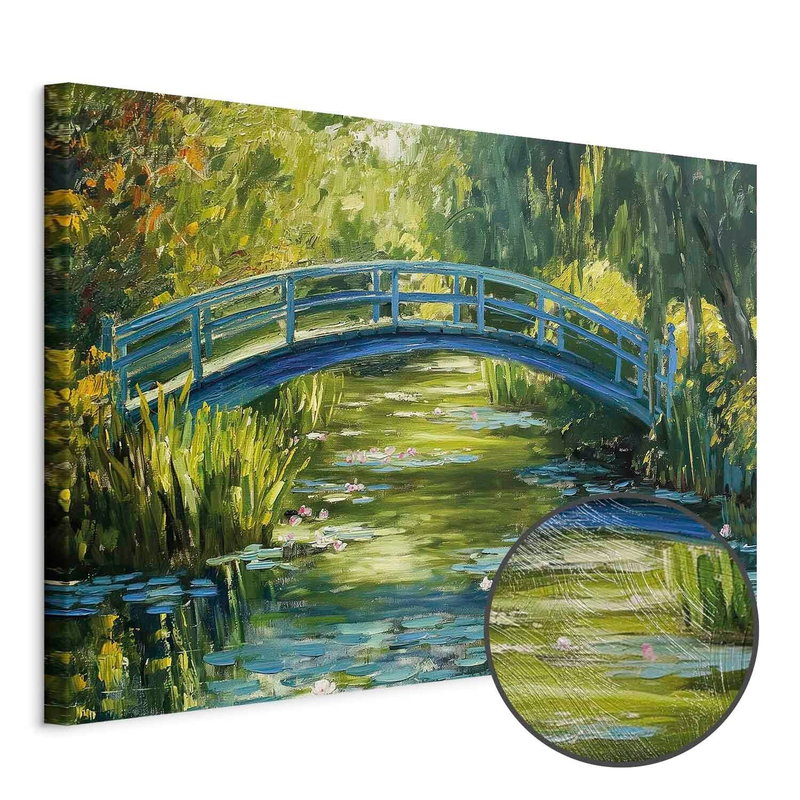
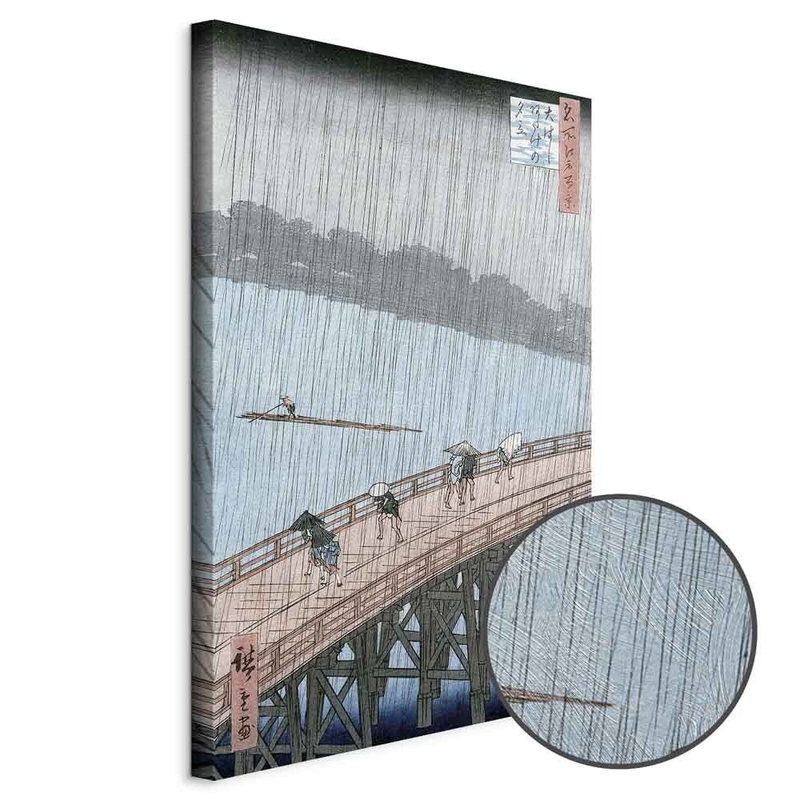
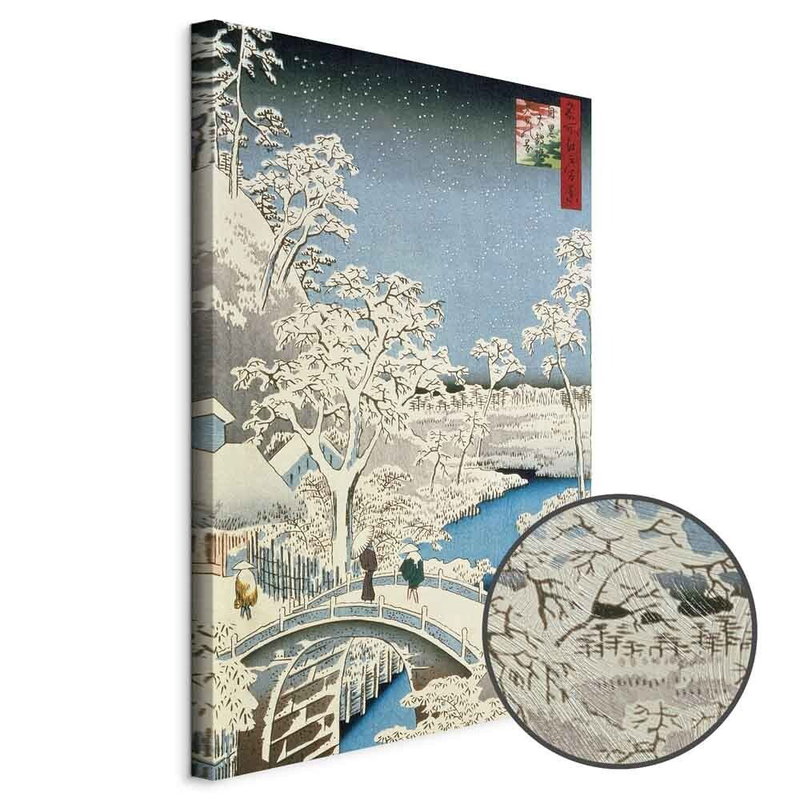
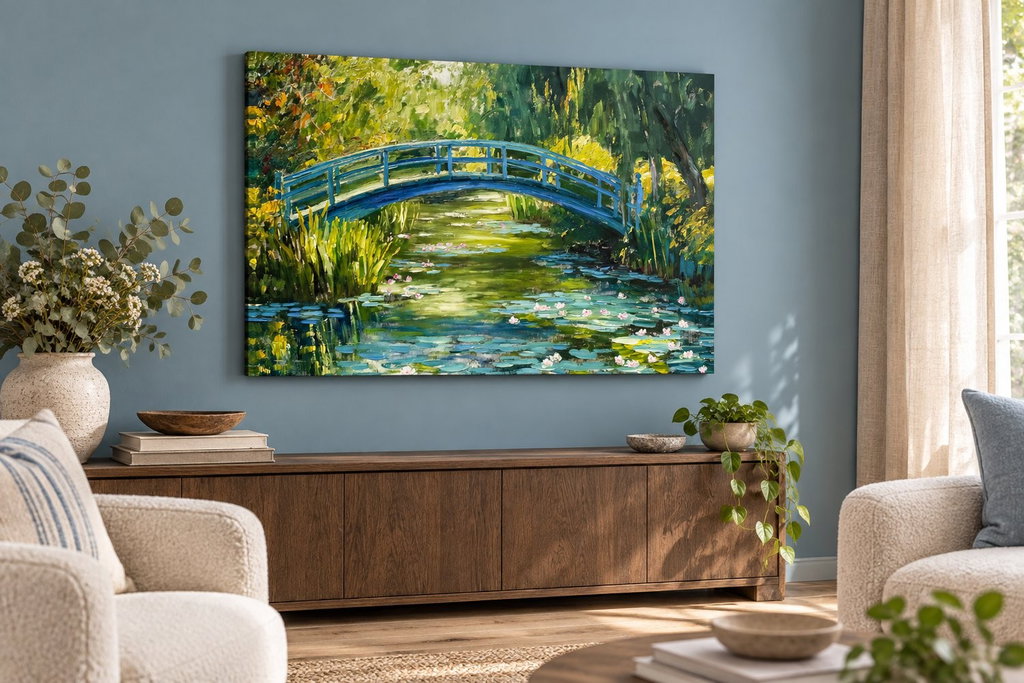
An arched footbridge can give the image a clear curve between trees and water. In Japanese graphics, a larger wooden bridge in snow or rain may lead the eye diagonally through the landscape. Compare how the bridge divides the image and how much water lies in front. Waterlilies, bank plants and reflections can provide many small details, while a simpler graphic river view often uses larger continuous areas.
Houses and pavilions meeting greenery
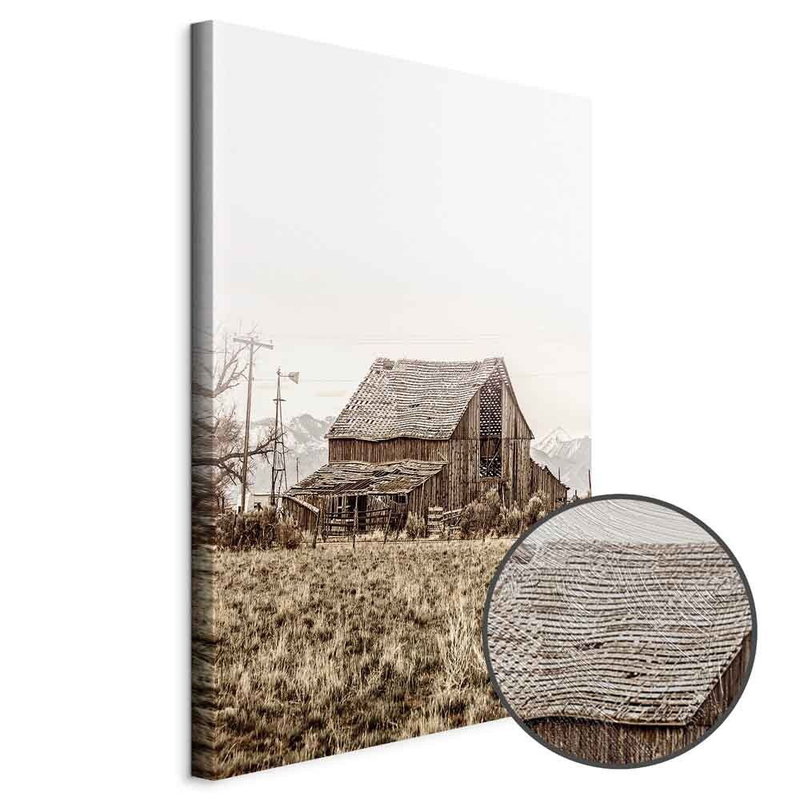
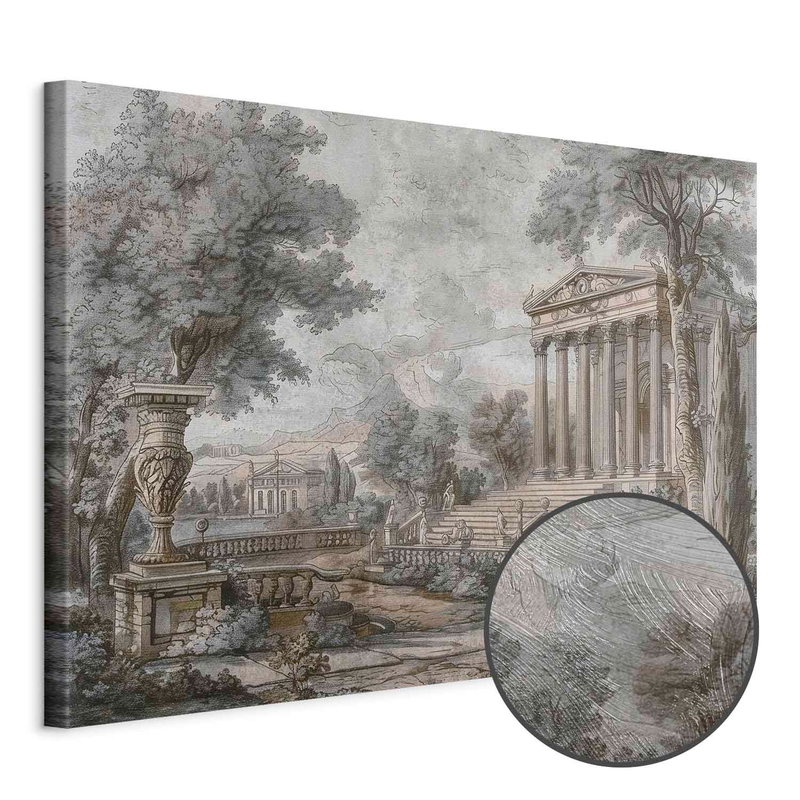
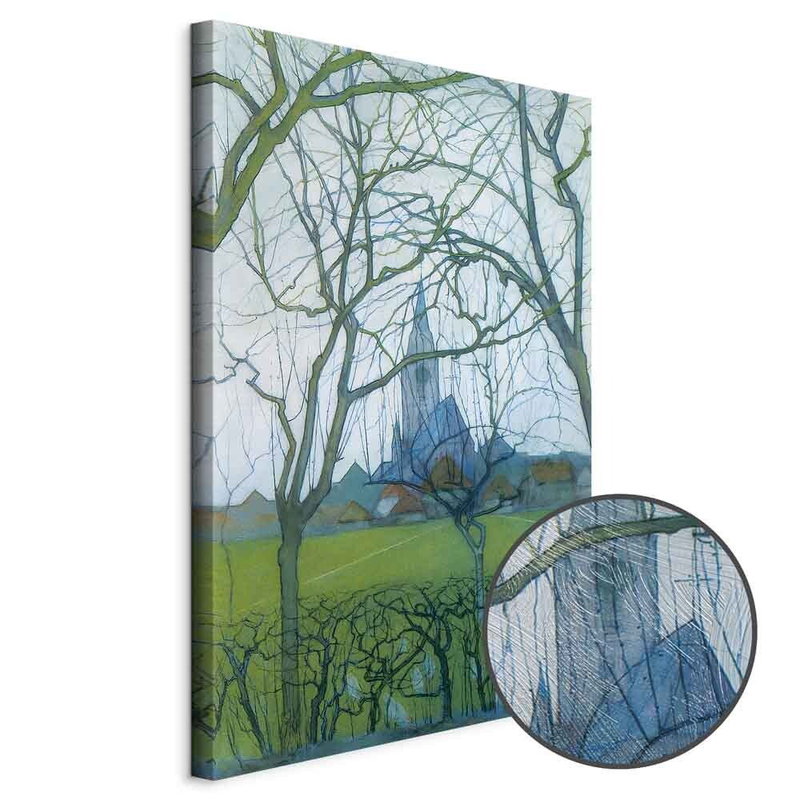
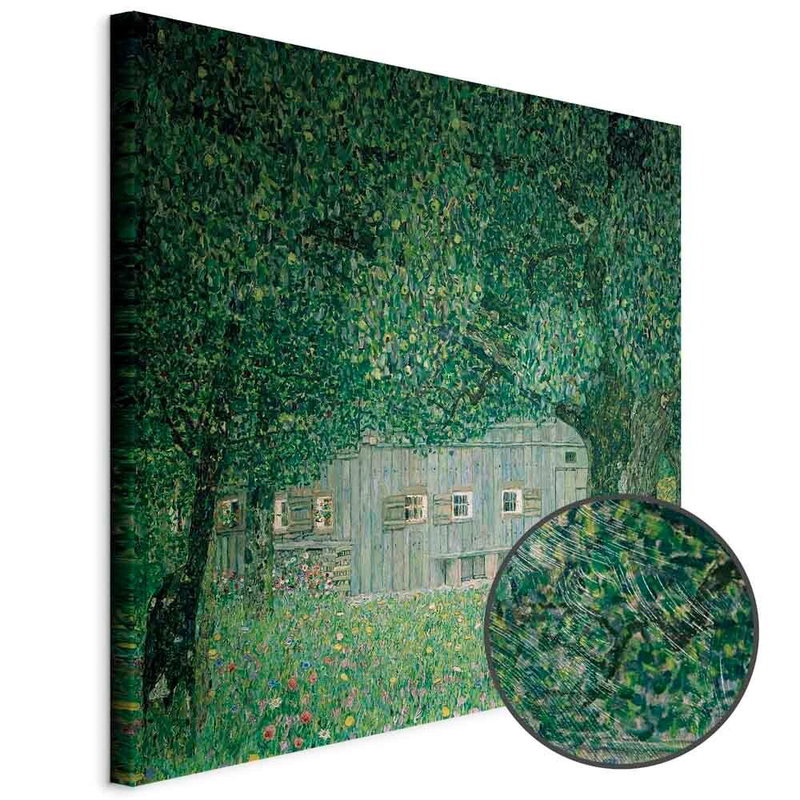
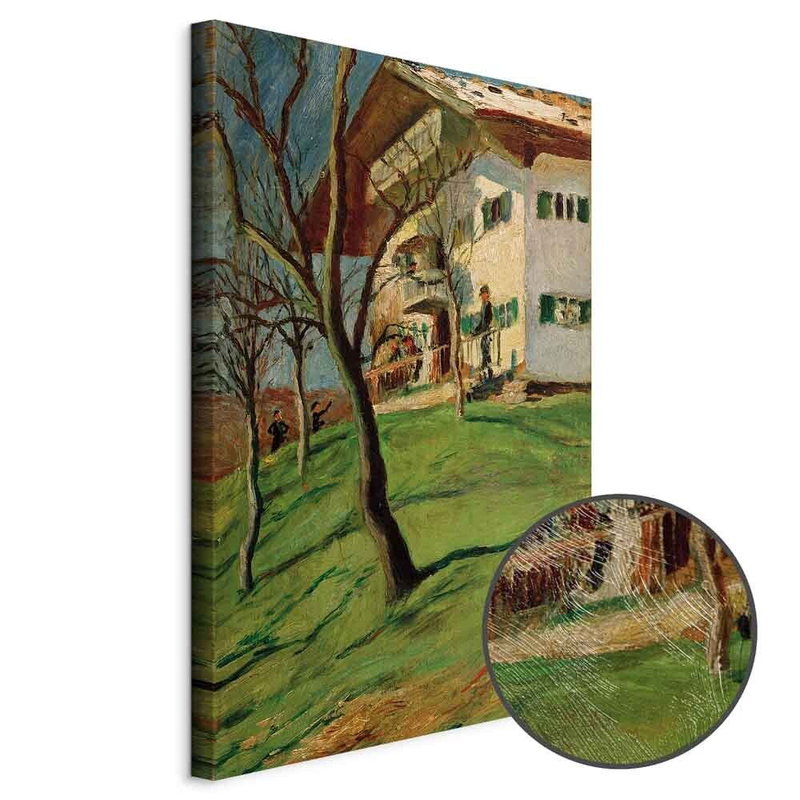
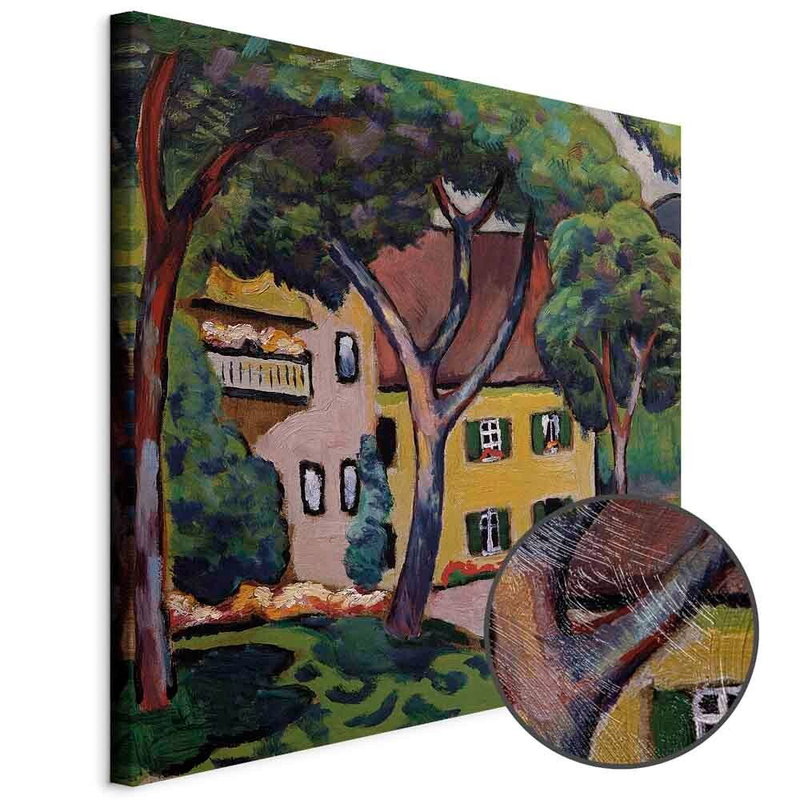
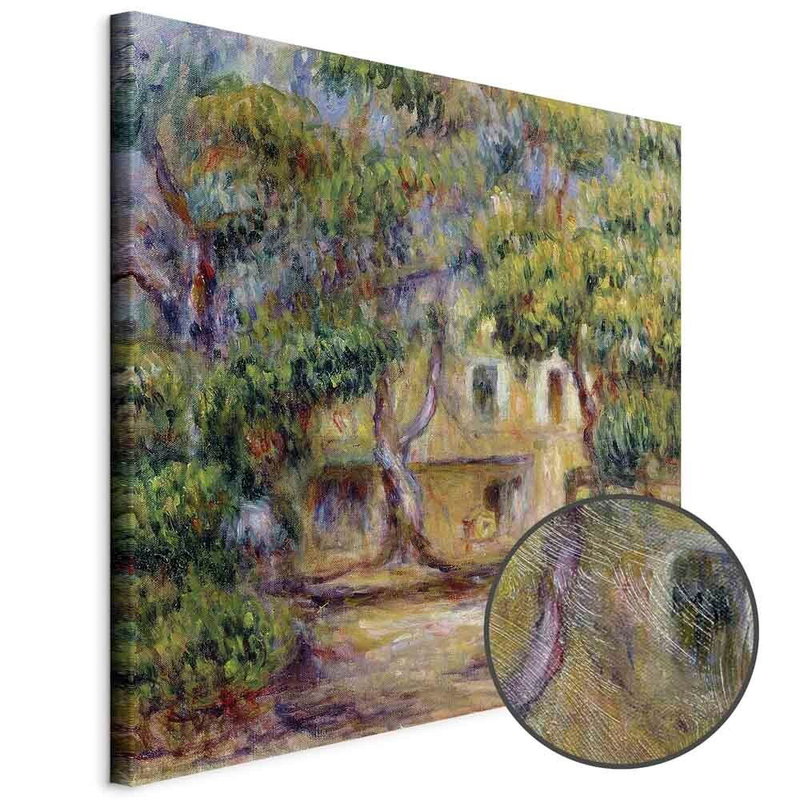
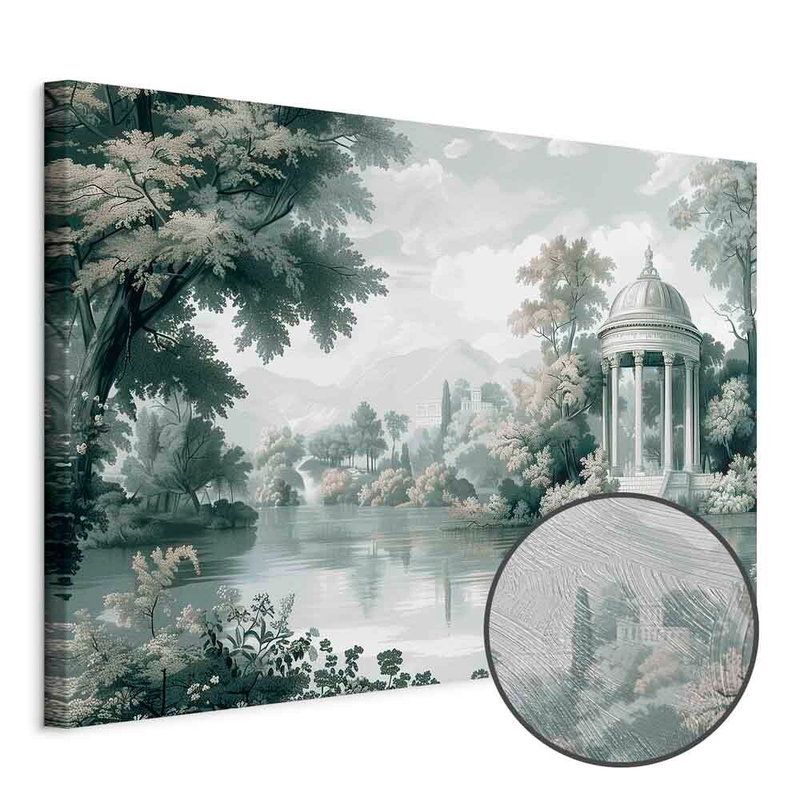
In painted garden scenes, a house may emerge through branches or sit within a dense green field of colour. A pavilion beside a lake has a different setting from a wooden building in dry grass. Decide whether the house should be a clear centre or share attention with vegetation. Compare the contrast between pale building walls, roof colour and the darker areas of nature too.
Cabins, windmills and coastal buildings
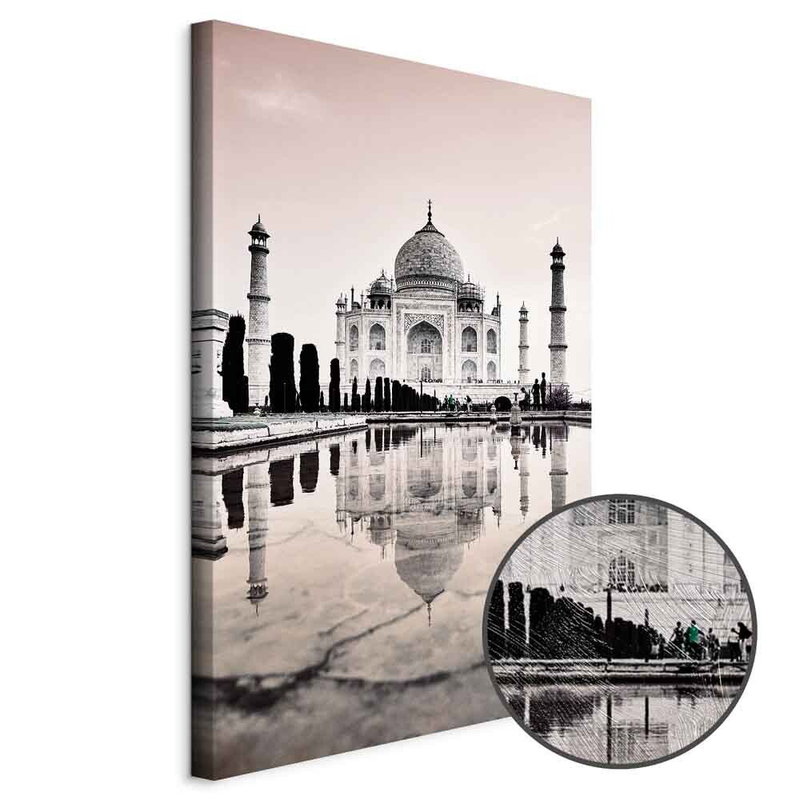
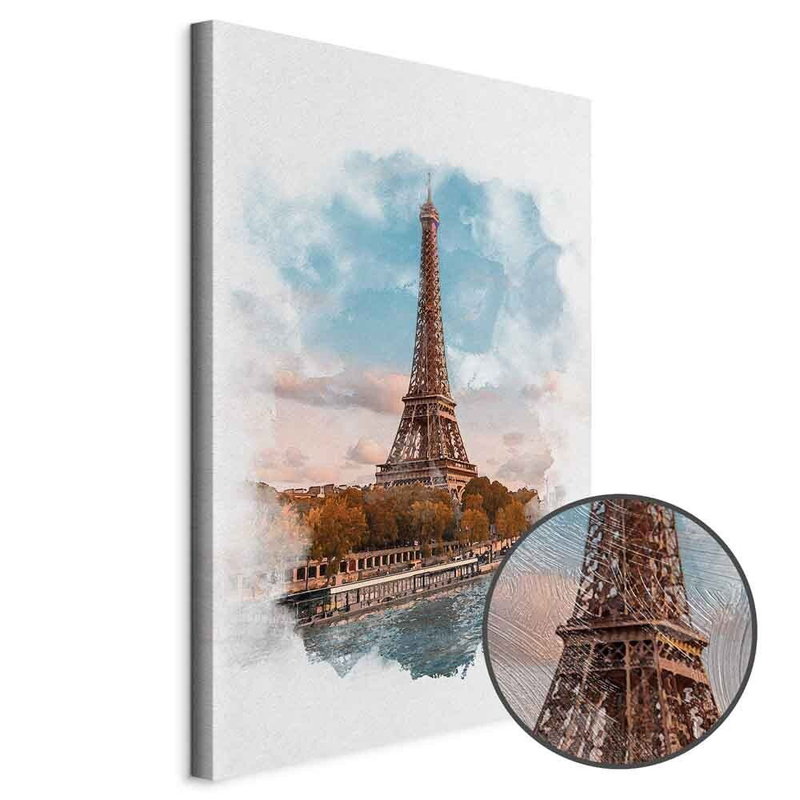
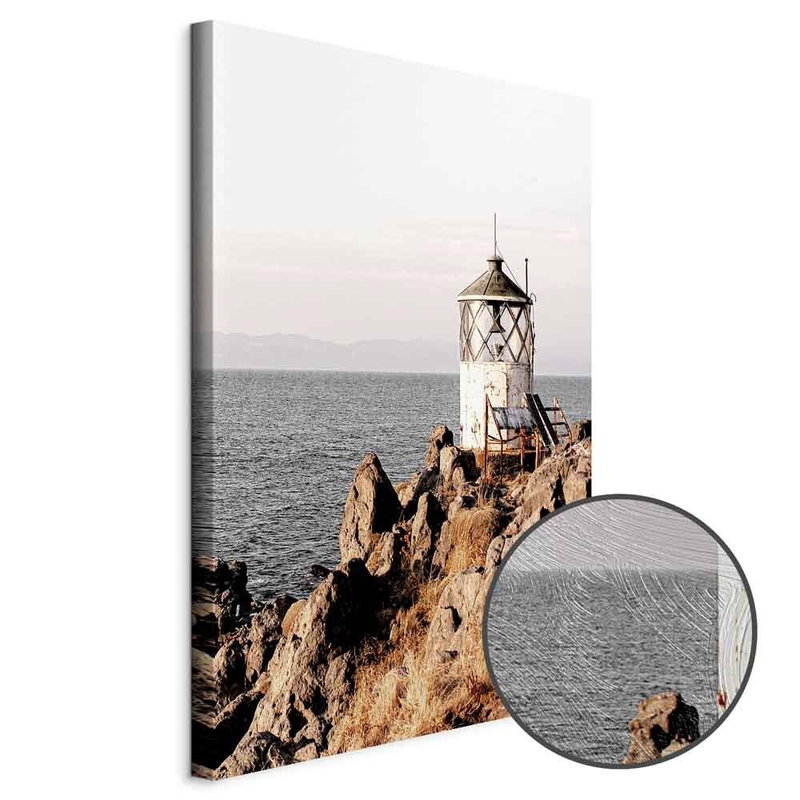
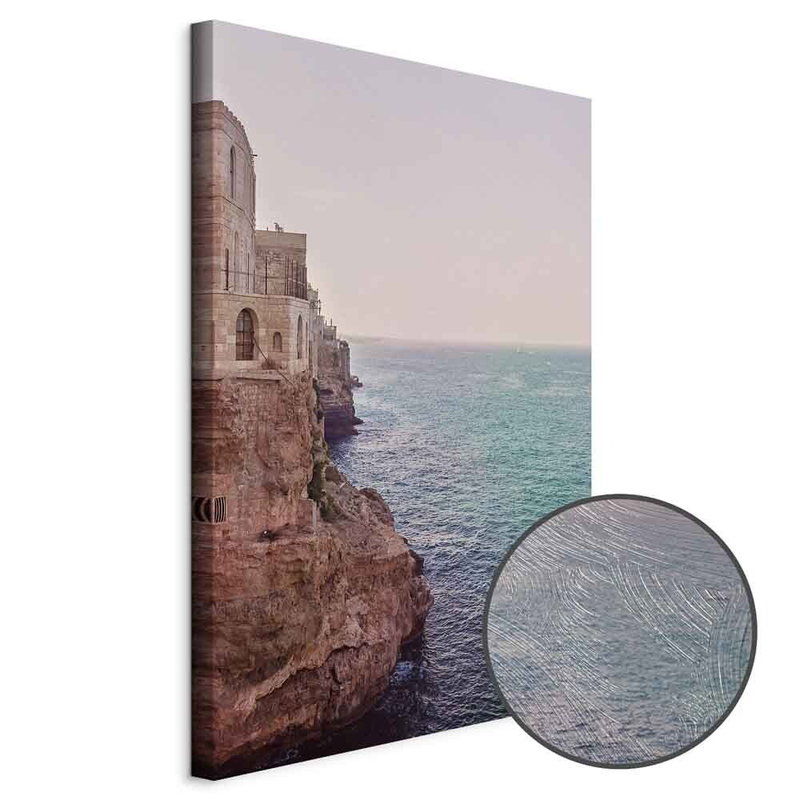
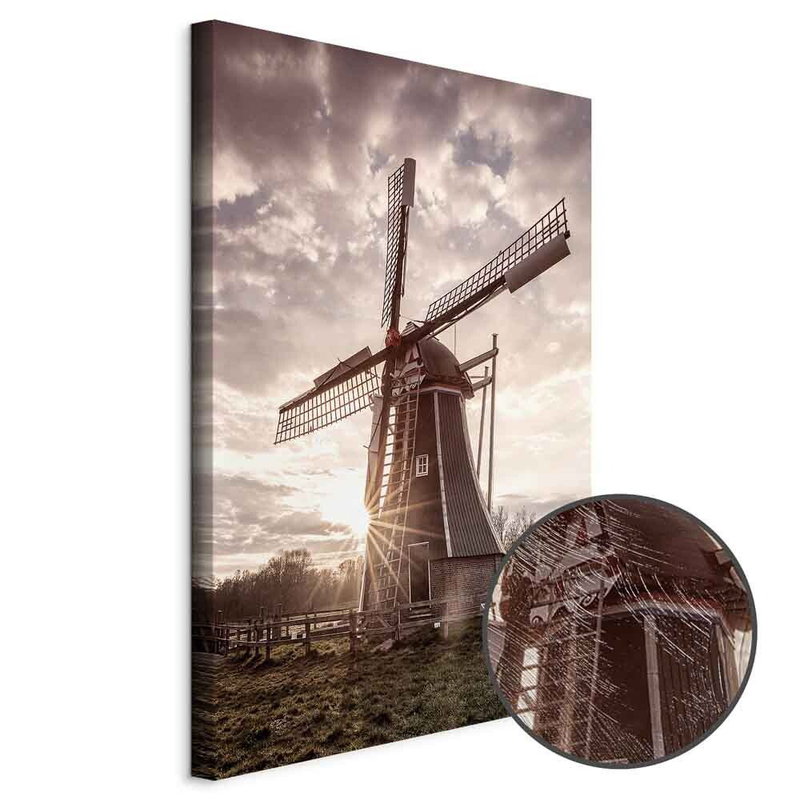
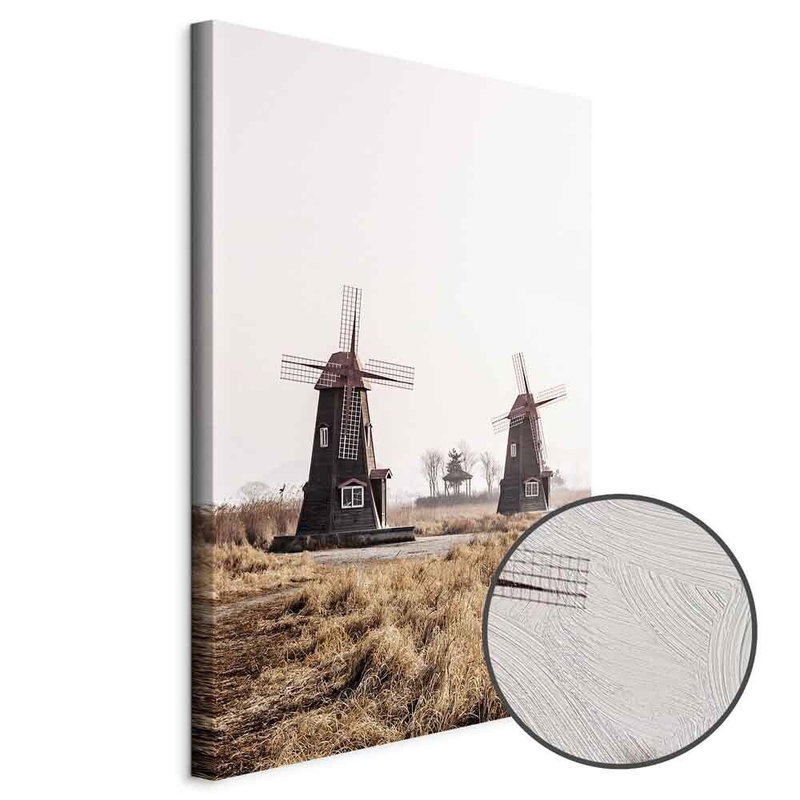
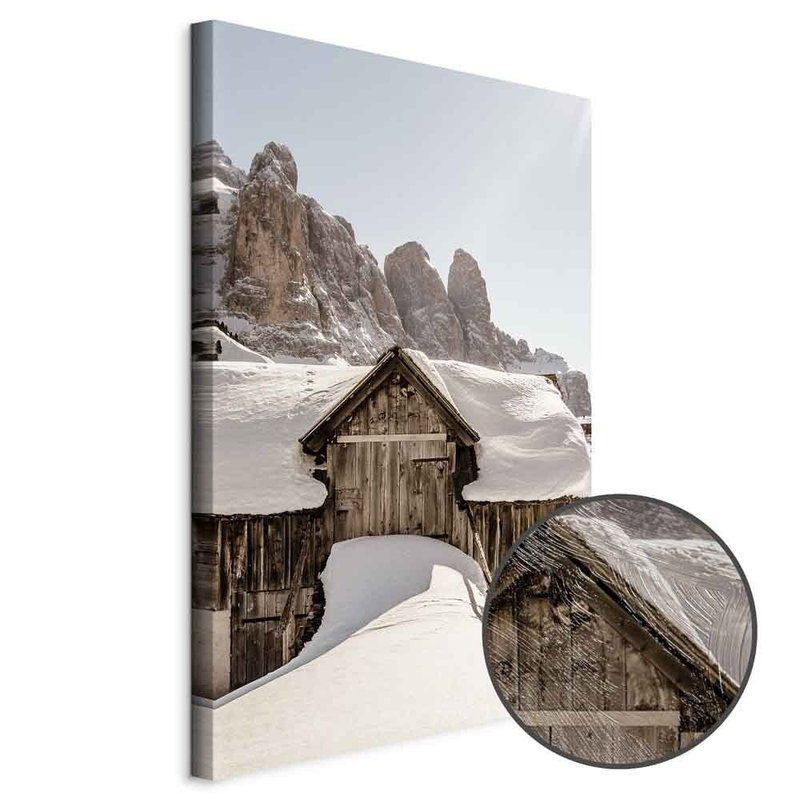
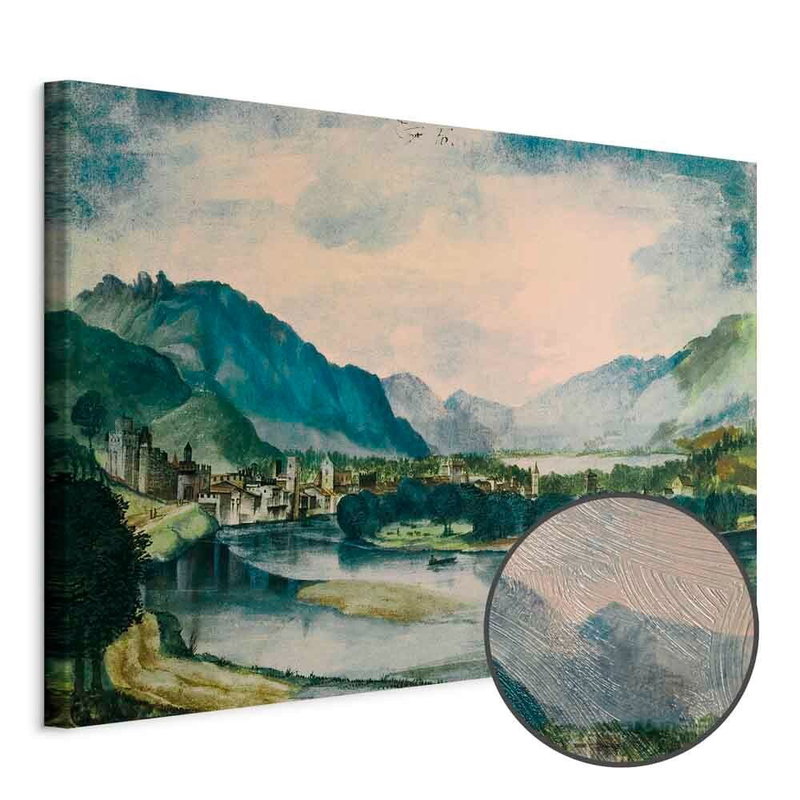
Snow around wooden cabins, a lighthouse above rocks and windmills beneath a broad sky show different open settings. Photographic subjects can capture a particular moment of light, while painted pictures interpret the surroundings more freely. Choose according to the whole image and its colour treatment. A familiar building name matters less to the interior than whether image scale, light and direction work from where you usually see it.
Separate depicted materials from the premium surface
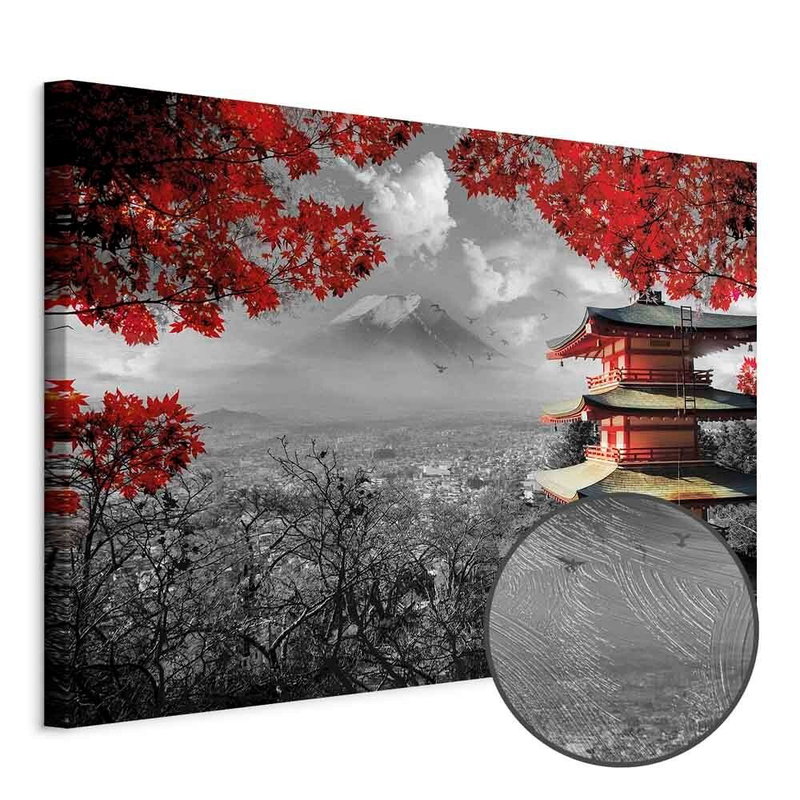
Wood, stone, snow and water are depicted elements in the print. Clear gel is applied by hand over the printed image, giving the canvas physical texture. Assess those two levels separately when comparing product photographs and detail views. Check the specific product’s format and dimensions, and plan clear wall around it. Side light can affect how the worked surface appears.
Position a broad view with the room in mind
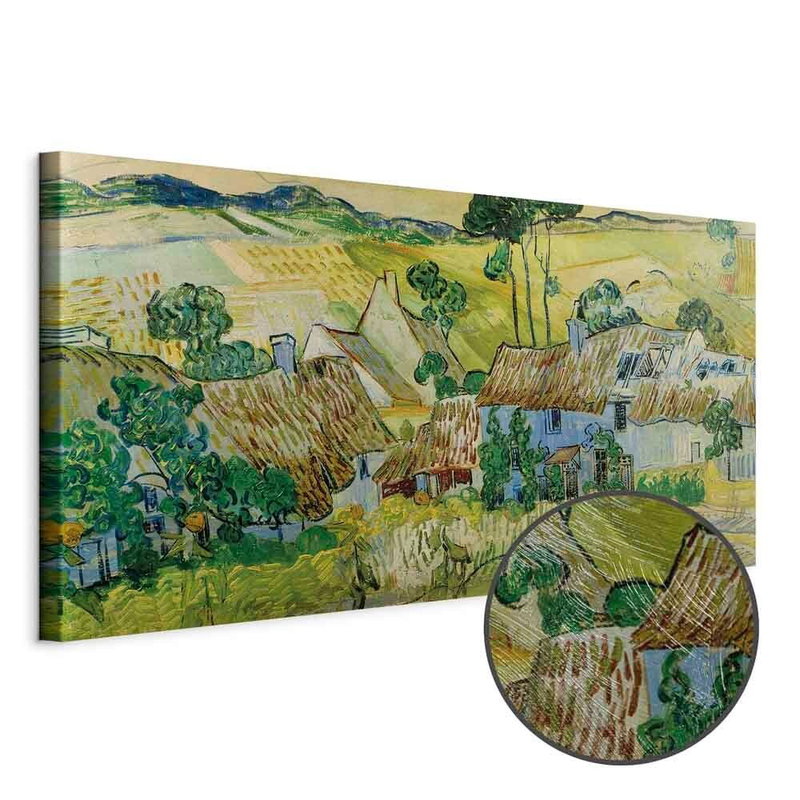
A landscape bridge or farm picture can relate to a broad piece of furniture, while a portrait windmill or lighthouse gives a different height-to-width relationship. Sound-absorbing material behind the canvas can also help reduce reverberation. Consider placement and total absorbing area alongside the room’s other materials. Follow the product’s installation and care guidance; the picture does not replace sound insulation between rooms.